Subscribe
Share
Share
Embed
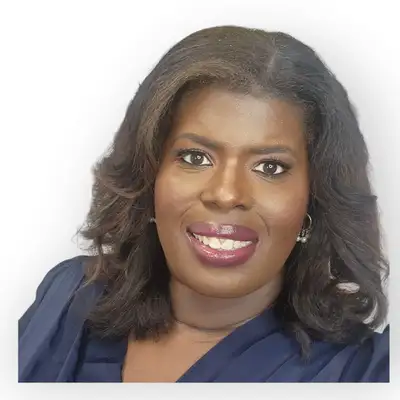
Passionate about modern feminist issues? Want to learn more about how today's political, academic, and cultural leaders strive for a future of universal equality and justice?
Join NOW in a podcast dedicated to intersectional feminist discussions in American society with leaders in entertainment, sports, politics, and science. From conversations on constitutional equality, to economic justice and reproductive rights, listeners will find new ways to learn, engage, and get empowered.
Listen for new episodes released every other Wednesday.
Bethany Brookshire [00:00:00]:
This is a note. This episode addresses gun violence and all that goes with it. So please take care of yourself when you listen. Hello, everyone, and welcome to Feminism now, the podcast from the National Organization for Women. I'm senior producer Bethany Brookshire. This season's theme is protecting women in a hostile world. One of the things that makes that world hostile is firearms, which many women face the danger of from the moment they first step foot in school at as children. If it's not us, it's our loved ones of all genders. In 2022, 48,204 people died from firearms in the United States. 2,526 of those were children and teens. And Black children are 18 times more likely to die of gun violence than white. As we've talked about previously this season, women's fatalities from gun violence are more likely when people are facing domestic violence and their abuser gets access to a gun. But many people also enjoy shooting guns or rely on them for food or safety. Today, NOW's national president, Christian F. Nunes speaks with Mikki Kendall, feminist activist and author of the New York Times bestseller Hood Notes from the Women that a Movement Forgot and the graphic novel Amazon's Abolitionists and Activists, about the often violent interaction between women and guns. And while we're here, we would love to hear your thoughts. How are you taking on gun violence? Contact us at feminismnow@now.org and now let's get to the interview.
Christian F. Nunes [00:01:41]:
Hello. Hello, everyone. I'm Christian F. Nunes, the national president of the National Organization for Women. And I think it should be clear to all of us by now that guns, the ownership of them, who has them, and the violence they can do are feminist issues. And I'm so happy today that Mikki Kendall is here with us. So we are so excited to have this conversation. I know Mikki's gonna unpack some things for us. Mikki, it is so wonderful to have you here. Thank you for joining Feminism now.
Mikki Kendall [00:02:14]:
Thank you for having me on.
Christian F. Nunes [00:02:16]:
Yes. So, Mikki, you have written some amazing work. Hood Feminism is actually one of my favorite books, books that often refer out when I'm on the road speaking because I think it really talks about some really important things that a lot of times people are sometimes hesitant to talk about or bring up. And so I appreciate the truth telling that occurs in that and just the naming of important issues that happen in the feminism space and those who have been left out of the space. So listeners, today we're talking about gun violence and that impacts on women because we know this whole season we've been talking about the hostile world women are living in. And in a lot of ways, gun violence has been one of those things that have really increased the violence, gender based violence that women experience. And so, Mikki, in your book Hood Feminism, you talk about being a veteran while you also have growing up around gun violence. So can you talk to us a little bit more about your own personal history with guns and gun violence and why you thought it was so important to really be an advocate and activist in this space with gun violence?
Mikki Kendall [00:03:28]:
So I grew up in a house with guns. I should start by saying this. My grandfather's from Arkansas. My grandmother's people originally from Louisiana. And if you know, you know, I live on the south side of Chicago. The guns were going to be present, right? But I grew up with people who treated guns like they were tools for a specific purpose. And otherwise they were put away. Right. They weren't just casualties were scattered around. Every time we hear a story where someone's just got like a gun stuck in the back of their purse or wherever, I'm so confused because that's not my experience. So I say all of that to say I have never been a person who was raised to be afraid of a gun. That was always about the person using the gun, right? But the simple presence of a gun has never scared me. When I was a little kid, I was a victim of gun violence. Although I was not shot, a gun was put to my head in an attempt to threaten my grandmother and my aunt into giving someone some money. There was no money in the house to give him in the first place. And also my aunt basically chased him off with a bottle of barbecue sauce. Can't explain that story in a way that'll make it make sense. Just go with it. Right? Couple years later, I met an atmosphere. Somebody attempting to rob people at that ATM again, pulls a gun on me to make my mother give him money, things like that. So I've grown up with guns around, but I've also grown up with gun violence. My grandfather once saved my life by pulling me out of the way of someone shooting at someone else. Got my hair cut from that one. Right? So I have always had a deep and sincere belief that guns were dangerous and were not to be treated casually. We have now moved into an environment where I see people posting pictures of their four year old, their five year old with an AR15. Right. That is not my experience as a child raised around guns. My grandfather's head would have come clean off at the very idea of 5 year old me Posing with any of his rifles. Right? Guns were for when you were A, big enough to control them, B, after training, all of these things. And so from my perspective, especially growing up in Chicago, where then of course you have drive bys and all of these other forms of gun violence, including the police shooting people, including violence that came from the state. I've always had the opinion that America's obsession with guns has opened a door that historically has never been opened before. As I sit here talking to you, there are more guns on the street in America than there are people. By around 200 million more guns than there are people. Right? We have around 350 million people. There's a little over 500 and I think, I think it's 560 now. Every day that number changes. Obviously, we produce guns faster than we produce life. And so when we're talking about gun violence, I want people to understand that the gun has become an extension of the violence as a culture we wish to do to our neighbors, to our family members, to women who want to leave us to total strangers that racism has told us we're supposed to hate. We have created a tool and a culture for that tool that is objectively unsafe for everyone, including the people who think guns make them safer.
Christian F. Nunes [00:06:43]:
Okay, so I want you to unpack this a little bit because I hear what you're saying and I totally agree with you how our culture has become. But it also is very frightening to me because Right now in 2025, our administration is almost like embolding people to even do this further. They're putting it into place to make people believe that their power is going to come from guns. What do you think about this? Because it's right on what you're saying. But I also feel like right now, when you have an administration that's encouraging this, what do you do?
Mikki Kendall [00:07:19]:
Well, so that's the problem, right? Because if violence is the question, violence is going to be the answer. And we've now created this situation where, sure, we could call for people to give up guns, but the cops aren't giving back their guns, criminals aren't giving back their guns. Right? We've let something out of the barn that we do not now know what to do with. And the government has emboldened racists. I'm going to say bluntly that their guns mean they can abuse people at will. Now we get into a history lesson, right? And that history starts with the Deacons of Defense. It's not just the Deacons of Defense, but I want people to understand that when we're talking about nonviolent resistance, even nonviolent resistance wasn't exactly non violent, right. There was still a culture of self defense and that is where we are now. I've seen people say, well those leftists, they wouldn't know what to do. We have guns. I've again always been around people who owned guns. The idea of who is a gun owner is wildly skewed by the people who want to tell you about their guns versus the people who simply own them, right. So we don't really know who is armed, who is not armed, a lot of like road rage and whatever other conflicts that end in gun violence. So sometimes in the back of my head I must admit, I think you are in America, anyone could be armed, right? Not just you're in Texas or you're in wherever. We tend to think of guns as though they're concentrated in specific places because those are the places where we see the most gun violence. But the truth is that guns aren't fruit. They can go anywhere. Anyone can have one in their car, their bag on their person, right? It is a question of who is holding that weapon and how they respond to aggression. That sort of dictates what we, what follows, right? And as we've built because the US is the world's arms dealer, right? Like let's, let's be really honest about who makes most of the guns used in most of the conflicts around the world. As we build bigger, better weapons, we have yet to build the sets to go with that. We have made them, but we have not created a culture of respecting what we built, right? And think of it like Frankenstein's monster. We did it because we could, we never thought but about whether or not we should.
Christian F. Nunes [00:09:43]:
So I'm curious though, because so many of policies and opposition to policies is all about that. I can do it, I can, so I will. I don't. They don't think about the consequences, they don't think about the impact, they don't think about the harm. It's just this power and control that's been driving so much. One of the biggest contributors to women homicide and violence is about power and control, you know, and when we have people who don't think about that, I think it's so dangerous and so harmful. And we just saw they just totally took away the gun violence prevention programs and pill goes back at the same time peeling back domestic violence supports and funding and efficacy and victim services advocacy. Do you feel like there's a direct correlation with this?
Mikki Kendall [00:10:35]:
Oh, absolutely. You must understand that the threat of violence in. In a domestic violence situation, the biggest indicator that lethal violence may occur is the presence of a gun. And there's a bunch of other indicators, but that's one of the biggest. Here's the thing though. So we've had murder clusters in America, okay? The 1920s in Chicago was one such cluster where women killed men. We've had several famous female serial killers. There is an idea in here, built in here, that the violence will be in one direction, that they will remove domestic violence protections and that women will be oppressed. Because let's be clear again, all of these things are with the goal of restricting women's freedom to choose. Not just to choose in terms of reproductive choice, but to choose their partners, to choose to leave a partner, to choose whether or not to remain in any given situation. Let's say it's not a partner. Let's say it's a parent or a roommate situation, right? And what we have historically seen is that when we restrict the rights of anyone, and in this case we're talking about women, and let me just say this is cis trans. However you identify trans women and women, let's get that out of the way. The idea is that those people will then be stuck. The execution previously has been that those people unstuck themselves or they died, but they did not stay in those relationships. Right? And right now, what tends to happen if a woman defends herself is that she is prosecuted. But if you tell someone that they won't be able to leave, you remove all hope of simply leaving and you tell them the state won't protect them them, and then you tell them they have stay trapped with someone who is threatening them with ongoing and continuous violence that could objectively result in their death. What have you put on the table as their solution? What is the only way out from their perspective? We've never done this part before, right? Historically, we've had women's rights be abrogated, We've had various groups have their rights limited, enslaved. All of this. We've never done it with modern weaponry. I don't want to do it. Let me just be clear, right? If we had to refight the Civil war right now, I will see you from Canada. Because I think people have romanticized the idea of a women don't have rights scenario without understanding what happened. When women's rights were limited, it was not a time where women just happily complied with, with oppression. That's why we have the feminist movement. The feminist movement saved men's lives. No fault divorce saved men's lives. We are about to enter a space where men will find out what it is to fight for their life against the people in their home who prepare their food.
Christian F. Nunes [00:13:22]:
And this goes back to like the thought about the fact that we are resistant, I'm saying resistant to actually create policy that could fix and solve a lot of this. You know, that we're resistant to have things in place, funding, prevention, resources, advocacy, laws in place that could prevent a lot of this. And it's just mind boggling to me that we're back on this place again. So many women feel like they have no other alternative. They result to that when they're constantly living in this traumatic place, in this threat on their lives. Daily they resort to that. But the reality of it is, is these women, especially women of color, right, are not given that understanding or their grace and then are experiencing severe consequences for a society that put them in a position where they had another choice when there could have been a choice.
Mikki Kendall [00:14:14]:
This is the part I don't think people understand. The choice to oppress always has consequences. You want to control so much that you are ignoring the part where children are being slaughtered in schools. You want to control so much. You are willing to sacrifice your daughter, your sister, your neighbor, whoever, to this threat of gun violence. You are willing to risk being killed at a movie theater, a mall in Vegas while you're playing games, right? Because someone got angry and had access to a weapon that fired 300 round bursts per second. We don't even have a good reason for the weapons that we have, right? You are selling weapons that can become fully automatic with extended magazines and all of this stuff. And then you're saying, why is violence on the rise? Why are there more crimes?
Mikki Kendall [00:15:07]:
Just imagine if we put the money that we put on designing those weapons into mental health care, housing, food, medical care, education, scientific research. We have spent so much money to deal death and for what? So we have the right to continue oppressing someone so we can feel better about ourselves. And that that's a, a we that doesn't objectively include women of color.
Christian F. Nunes [00:15:34]:
One of the things she sounds very interesting to me is that just kind of like how people have been viewing this and how they've been seeing this. And I know in your book, you, you know, talk a lot about the intersections of gun violence and feminism and how even the mainstream feminist movement has often overlooked this intersection. Right. Of gun violence and feminism. There was one quote that I remember from your book that you said, you may think that gun violence is a distant problem Nothing to do with you. But if you pause and if you look around, if you look outside the bubble that privilege has created where you don't have to worry about gun violence on a river basis, you'll see it as a public epidemic that we ignore. Talk to me about that. Tell me about why that is so, so important and so prevalent right now today.
Mikki Kendall [00:16:21]:
I'm going to say it in the simplest way possible. America has, I think it's three mass shootings per day now. We do not report, we even cover all of the mass shootings per day. We have, in fact, changed the definition of what is considered a mass shooting. Right. To cook the books, proverbially, to reduce the way that number looks. And most of those shootings were happening in red states, Right. The, the rhetoric is often around violence in Chicago and New York or la. And that's not to say there's no violence here. There's a lot of violence. But the culture around having those guns is different. When you get to a place where it is held up as masculine to have a gun where you are macho and strong and responsibly or whatever, and then you start getting into all of that disenfranchised youth, and they're never talking about black youth when they say that. They start talking about the struggle of lonely young white men, for example. Right. Well, you've told them that having that gun will make them a man. And then you've told them that women owe them things, Right. And when women don't give them those things. Because every time you scratch the surface on those mass shootings, statistically more likely to be white and male and all of that, you also find violence against women, whether it's their mother, their sister, several of the cases where the shooting has started in a school, the news reports it as though it's the fault of the girl that rejected him that he then tries to kill or in a couple cases, has successfully murdered, and not the fault of a society that told him she owed him a date.
Christian F. Nunes [00:17:57]:
So this brings me up to this new thing that's going on, and I think this is so important to point out what you just said. That society, these, these young men who are involved in this mass shootings who blame the woman or the girl for the, the reason why they had to kill. Right. And how society perpetuates that and sets it up. You know, there is this new thing going. I don't know if you've heard about it. You probably have. In this, this misogynistic propaganda about the incels have you heard about this?
Mikki Kendall [00:18:25]:
Yes.
Christian F. Nunes [00:18:25]:
Oh, oh.
Mikki Kendall [00:18:26]:
Here's the thing with the incels. We've been talking about incels probably about 12, 13 years. Right. And it's a term coined originally by a black woman. It was never meant to be what it is now. But for the first like nine, ten years of that, people told us we were crazy. Right. They're just lonely men. What's the big deal? And then the violence really picked up because let me just say that the group that has adopted the name incel, right. And the culture of violence against women, that is specifically gender based violence, let me just say these are hate crimes. They're not being defined as hate crimes.
Christian F. Nunes [00:19:04]:
Okay?
Mikki Kendall [00:19:05]:
Right. It's straight up femicide. And we love the word femicide for every country but America. We've acted like the incels were lone wolf, isolated incident. I don't know how many incidents it takes before you acknowledge something is not an isolated incident. You tell me that he was violent towards his mother, his sister, a neighbor, whoever, but it's usually a family member. You tell me that girls at the school didn't like him. Yes. Because those babies could smell the danger coming off of him. And then you tell me that someone gave him a gun and then violence followed. Well, we already had hit all the strikes that guaranteed we get to violence.
Christian F. Nunes [00:19:45]:
Yeah. It's just so interesting how easily this ideology has. It's been brewing up and brewing up even further to where, you know, they feel that it is totally okay for them to, you know, use this violence and like we're talking about a lot of times with guns to cause harm. And this is such a great conversation, but right now we have to take our action NOW break and we'll be back shortly. Listeners, the time is approaching. We're gearing up for our NOW national conference. We're so thrilled to be both in person and online this year. And our in person portion will be in Las Vegas. Who said feminists can't have fun? We know we can have the most fun because it's fun we can all share in. So join us this year at NOW National Conference. From July 11th to 13th. We will have inspiring speakers, we'll elect our national officers, and so much more. We love to see you there. So go to now.org and click on the banner that says Now National Conference to sign up. And before we get back to our interview, this is your other action now. We're trying to reach a wide feminist audience to bring together a movement that empowers all of us and to do that, we need your help. So please share the show and maybe even rate us on your podcast app. It will help get the word out. It's a little action, but a big help to. Now. So now let's get back to the conversation. All right, so as we were talking, Mikki, we're talking about this incel. We're talking about that intersection with violence, how this ideology, everything is staring up. And we're talking about how society really is. Is a big culprit, right? And how there's no accountability that's taking place and the consequences we keep seeing and we still have nobody saying, let's pause, let's assess, let's acknowledge, let's take responsibility. What do you think it's going to take for us to get there?
Mikki Kendall [00:22:00]:
I think, unfortunately, we do not truly believe women are people. And so because we do not believe women are people, let me just say this is not every culture. But here's where we get into colonialism and imperialism. And I'm going to call up the Catholic Church specifically because the missionaries. It's not just the Catholic Church, it is churches. Evangelical church is plural. We tend to have this idea that women are a resource and that that resource has gotten ideas above its station and things that it should be able to make decisions, right? Every time one of those articles runs about the problem of lonely young men, the subtext and sometimes the outright text is that this is a problem for women to solve, right? Because for the first time in history, in a Western context, men have to be more than financially stable. There comes a point societally in every culture where the women start to look around and say, this deal sucks. I'm not going. And then if you wish to be partnered with a woman, you have to be smart, kind, nice, smell good, all of these things, because otherwise, if she's got to do everything else by herself, and we've now pushed it into a situation where she has to provide, too.
Christian F. Nunes [00:23:25]:
She might as well do it by herself, right? But here we go again, like the responsibility in the women. And then therefore, I'm going to bring this back to what we see happening even in the courts, right, when we're seeing this violent relationships happening, that the woman's always held responsible for the violence that occurs for what pushed that man to the point where he had to act this way, and why should he have to lose his rights because he was pushed to this place because of the woman. And. And I find that this is, like, really prevalent, too. Even when this last Supreme Court case we saw with the US vs Rahimi about domestic violence orders and ability to have a gun. Like, we know gun advocates, statistics, everything tells us that when they have these guns, that they use it. And the fact that we had to make it all the way to the Supreme Court to say, this should not be okay, you know what I'm saying? Like, because they still, in some ways, Mikki, I feel like they still in some ways felt that the woman was responsible for it.
Mikki Kendall [00:24:29]:
Well, one of the things that we've heard said in response to reproductive rights, I'm gonna use this as my example, and I promise a little bridge. We heard the words your body, my choice come out as a joke, right? That is a joke. It's not a joke. And it's not just about reproductive rights. Is also, in this case, when we're talking about domestic violence, intimate partner violence, however, we're using terminology. We're really talking about a situation where someone believes, well, you must have done something to make him hit you, and it's up to you to solve that problem. You should figure out what it will take so he'll stop hitting you. But on the other side of that, you know what we'll do when something bad does happen? We'll ask why she didn't leave. Why did she stay? We did nothing to make it easy for her to leave. We did nothing to make it safe for her to leave. But we want to know why she stayed. But her choices were death and death. Let's be clear here. That's the choice we want put on the table. If we won't take away the guns and we won't support social programs, we want to socially punish her for leaving. What's less, she's picking her death.
Christian F. Nunes [00:25:39]:
Oh, my goodness. It's just so much crazy stuff.
Mikki Kendall [00:25:41]:
But.
Christian F. Nunes [00:25:42]:
But somewhat attend us back to why this is important in the feminist movement, right? Why this is also intersectional. Because, you know, we also see that there's not a lot of solidarity in the feminism movement around gun violence. So can you talk to us a little bit more about why in the feminist space, intersectionality is so necessary? We're trying to, you know, solve this gun violence issue.
Mikki Kendall [00:26:06]:
So one of the things that was happening for a really long time is that gun violence towards women was being presented as something other groups of women face. Right? It was a black problem. It was a Latino problem. It was those other people over there. And part of that was because we were obscuring the violence that happens in white flight suburbs. Right. We had just decided that the violence that could be happening In a home with a manicured lawn and more than five foot feet away from the nearest neighbor, that violence didn't count. Meanwhile, that violence was putting bodies. I mean, Investigation Discovery is an entire channel devoted to the murders that happen in homes. Right. They have entire shows centering around this. And what had happened in terms of intersectional thing was that because it was being presented as a your men do violence, my men don't do violence. Despite objective that being untrue, some conversations weren't happening. Indigenous women in the Violence Against Women act, they are one of the few groups where the greatest risk of violence is coming not from men in their community, but from white men. White women are most of danger from white men. Increasingly, violence against other groups is also coming from white men. We are still at most at risk from the men we are in community with. But because we were trying to do violence intervention for all those other groups and we ignored this big group, we're now seeing what happens when the violence intervention programs have never been applied. That's where intersectionality comes in. Because if the conversation had been between different groups of women all experiencing violence from men, we might have gotten a little further. But instead what we had was black communities trying to do something to stop violence in black communities, Latinx communities, Asian, indigenous and white communities just said, oh, that's somebody else's problem. And I've never quite understood how we got to that somebody else's problem. Because statistically the violence was always happening there, but it was always treated once again as a lone wolf, as an individual problem. None of the obstacles facing us are individual. They are all systemic.
Christian F. Nunes [00:28:12]:
Absolutely. Because I also believe that it's not like we talked about it earlier. It's not always for women to do this protection of itself, but for the whole system to change. But there's also still work that we can do on being in solidarity within the movement. Right. So how do you see us finally addressing this and resolving this to. So the women are not always living in such a hostile. It's one thing. It's not everything, but it's one thing, you know, is to always live in this hostile environment.
Mikki Kendall [00:28:39]:
So one of the things I think that would be important, that's a super difficult part of this, is that we would have to treat violence as a systemic issue. To treat not just gun violence as a public health crisis. It is a public health crisis. We would have to treat violence as a public health crisis. Yes, gun violence yields the highest number of deaths because it is a lethal weapon. But that doesn't mean you should be getting stabbed three times or choked or whatever, right? So at some point we have to talk about violence as a cultural problem. And it is not just an American problem. We can find femicide all over the world. We've got to be teaching young men and boys that girls are people and that has to start at the cradle. And instead we keep reinventing the proverbial wheel of doom and insisting that the real problem is that women want to be in the workforce and they don't want to take care of a family and they don't want this and they wanted that. I know of no one who wants to go to work 8, 10, 12 hours a day, then come home and start a second shift of cooking and cleaning and childcare only to be told they're a second class citizen. We are going to see people simply deciding, and we are already seeing it, that they just won't enter into a relationship, they won't have children, they won't do all of these things.
Christian F. Nunes [00:29:59]:
And $5,000 is not going to fix the problem.
Mikki Kendall [00:30:02]:
I even know what is it? $5,000 doesn't even cover child care for three months.
Christian F. Nunes [00:30:10]:
It doesn't even cover maternity like doctor care. So it's just, it's a joke. But this is also when you don't value the women in their experience and listen to them is where you come up with these asinine ideas about paying $5,000 to have a baby. Mikki, we are out of time for today. I have truly enjoyed this conversation. I have one last question for you. In this period of time right now, we know that we're seeing violence increase. We know we're, like you mentioned, gun violence happening every day. We know that women are experiencing gender based violence increases. You know, all these things are happening and it can feel very dark for a lot of us. But I believe in hope and I believe I am an optimist even though we're seeing all these things. But I want to know for you, if you were to give people any reason to have hope right now, what would be the reason you would give our listeners for having hope?
Mikki Kendall [00:30:58]:
The reason I would give our listeners for having hope is that when we fight, we win. And we are definitely willing to fight. Progress has never been linear. It feels like it should be linear. But every time we backslide, and this is a backslide, we push even further the next time. And though it can be daunting to be doing the fighting, we can't do any less than our ancestors did. We can't do any less than our best for the future. We may not be here to see it, but we should be trying to give the future to our children, grandchildren, other people's descendants in the best shape we can, because that's what we owe ourselves and what we owe them.
Christian F. Nunes [00:31:42]:
And I think that just sums it up so beautifully is, you know, especially when you said we cannot fight less than our ancestors did. We are the ancestors for our legacy. So we got to put it all in and just know that this is just temporary. And when we fight, we win. Thank you so much, Mikki Kendall, for joining us on Feminism now. For your talent, for your thought leadership, for your voice, your advocacy, and the important words you shared with us today.
Mikki Kendall [00:32:08]:
Thank you for having me on. Please, please do not lose hope. Do not give up. Please give yourself the gift of knowing that every day you fight back pisses off somebody who deserves to die mad about it.
Christian F. Nunes [00:32:24]:
Thank you so much, Mikki and listeners. We will see you in two weeks.
Bethany Brookshire [00:32:33]:
Thank you so much for joining us on the podcast this week as we delve into gun violence as a feminist issue. If you learned from this show, please share it with your friends and like and subscribe if you haven't already. You can also send us your thoughts and questions at feminismnow@now.org head to now.org to read up on NOW's core issues and our approach to advancing women's equality. Together, we can make a difference. Thanks for listening and we'll see you soon.