Subscribe
Share
Share
Embed
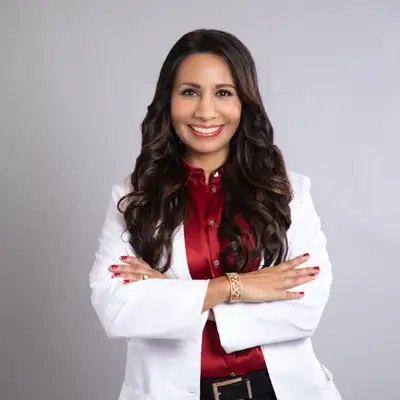
hol+ with Dr. Taz MD is redefining modern medicine through a comprehensive, evidence-based holistic approach; integrating functional medicine, integrative medicine, and time-tested healing systems to treat the whole human, not just symptoms.
Hosted by Dr. Tasneem Bhatia (Dr. Taz), triple board-certified physician in integrative, functional, and holistic medicine, bestselling Penguin Random House author, and founder of hol+; a comprehensive evidence-based holistic medicine platform with clinics in Atlanta, New York City, and Los Angeles, and virtual care available nationwide.
At the heart of hol+ is a revolutionary framework: the Five Body Map- physical, mental, emotional, energetic, and social/community bodies that create whole health. This whole-human approach connects hormone imbalances, gut dysfunction, microinflammation, cortisol dysregulation, metabolic disease, autoimmune conditions, perimenopause, and stress-driven illness to the full spectrum of who we are; body, mind, and spirit.
Each episode explores Dr. Taz’s original clinical frameworks ;The Cortisol Loop, Microinflammation, and The Invisible Load alongside conversations with leading experts, celebrities, and thought leaders including Sophie Grégoire Trudeau, Katherine Schwarzenegger, Cameron Mathison, Carol Alt, Jane Seymour, Tamsen Fadal, and Kris Carr.
Topics include hormone health, gut health, GLP-1 and metabolic therapy, thyroid dysfunction, weight loss, inflammation, autoimmune disease, mental and emotional wellness, energetic health, and the future of holistic medicine.
This is the show where science and spirit converge- driving health, happiness, relationships, and family ecosystems.
Want to go deeper? Join Dr. Taz’s private community, the hol+ Circle ; medicine beyond the exam room. (holplus.co/circle)
A 2025 Webby Award honoree, recognized alongside the Mel Robbins Podcast in the 29th Annual Webby Awards, hol+ is built on the foundation of Super Woman Wellness, which surpassed 1 million downloads over 8 years.
This is medicine beyond the exam room. Welcome to hol+
[00:00:00] My next guest was told by six different doctors that nothing was wrong with her. [00:00:05] She gained over 20 pounds battling crushing fatigue and watched her hair fall [00:00:10] out before she finally found answers outside of conventional medicine.
We do know that [00:00:15] birth control taken for more than 10 years increases your risk of [00:00:20] hypothyroidism by 283%.
Control increases your risk by what? [00:00:25] 283%?
283. Right. This is what the synthetic hormones do [00:00:30] to our thyroid. When we look at every system in your body, from your hair growth, your brain [00:00:35] function, your body temperature, your metabolism, your digestion, every [00:00:40] single system, every single organ has a receptor site on it for [00:00:45] thyroid hormones, specifically for the active thyroid hormone T3.
So when we [00:00:50] look at that, we can say, okay, the body is not going to run [00:00:55] without enough thyroid hormone, and we can't just address one system. We can't just address [00:01:00] insulin or just address your low testosterone without coming back and making [00:01:05] sure that the master gland that, that has the final say is, is working [00:01:10] properly.
Dr. Amy Hornaman is a doctor of clinical nutrition, a functional medicine [00:01:15] expert, and the founder of the Advanced Thyroid and Hormone Clinic. Known worldwide [00:01:20] as the Thyroid Fixer, she hosts a top-rated podcast in medicine and alternative health, The Thyroid [00:01:25] Fixer, and the author of The Thyroid Fix: The No Nonsense Guide to Fix Fatigue, [00:01:30] Fogginess, and Fat That Won't Budget.
Let us welcome Dr. Amy Hornaman [00:01:35] to the show. This episode is sponsored by WholePlus, a holistic health platform built [00:01:40] around education, personalization, and integrative care. WholePlus blends [00:01:45] holistic, integrative, and functional medicine clinics with learning resources like [00:01:50] blogs, YouTube videos, and of course this podcast, so you're not just treated, you're [00:01:55] informed.
The platform also includes holistic health quizzes and a curated wellness shop, [00:02:00] helping you make choices that support your body at the root level. Whole Plus [00:02:05] is holistic healthcare
designed for real life. Visit us at [00:02:10] wholeplus.co to learn more about the platform. Again, that's [00:02:15] W-H-O-L-P-L-U-S dot C-O.
All right, I am so excited about this next topic, Dr.
Amy. I don't know [00:02:20] if you know, but I entered the holistic and integrative space, I didn't know it at the [00:02:25] time, but my thyroid was a big part of the story. Essentially, I'd been losing hair [00:02:30] and gaining weight and all of these other things, and my winding journey, which we don't need to get [00:02:35] into, was basically that I had PCOS and I had hypothyroidism.
[00:02:40] And just going on a little bit of thyroid medication, along with adjusting my diet, like [00:02:45] completely turned things around for me. So this is a, a topic not only, you [00:02:50] know, one that my patients ask about all the time and so many people have so much confusion around, but one [00:02:55] that's definitely near and dear to my heart.
So thank you for joining the show. We're [00:03:00] excited to have you here today. But before we jump into all things thyroid, [00:03:05] very curious about how you landed in this particular space. Tell us a little bit about your story. [00:03:10]
Well, our stories parallel, because I too saw [00:03:15] six doctors who all misdiagnosed me. So my story actually started way [00:03:20] back in my 20s, similar to yours.
Same.
Oh my goodness. Yep. I know, I know. It's crazy. [00:03:25] It is crazy. We're like soul sisters, unfortunately tossed around in the medical system. [00:03:30] But my story started in my 20s. I was actually competing in [00:03:35] fitness and figure competitions, which is like in the world of bodybuilding, right?
Right.
[00:03:40] And it's when your diet is super strict.
Yeah. I mean, we're not just talking about [00:03:45] counting a few macros here and there. It is dialed in. There is nothing [00:03:50] coming into my body that wasn't on paper by my trainer, fish, broccoli, [00:03:55] asparagus, chicken, the whole deal. And then hitting the gym twice a day as well. So [00:04:00] from a nutritional standpoint, from an energy standpoint- [00:04:05] My body should have been losing weight, but it wasn't.
Every single week I got on the [00:04:10] scale, the scale went up, and I had to report this- Yeah ... to my coach, right? I had to send him [00:04:15] my, my weekly pictures, my progress pics. Well, there wasn't any progress [00:04:20] because I kept getting bigger and the scale kept going up, and here's my coach- Yeah ... thinking that I'm [00:04:25] binging on donuts and pizza, and that wasn't the case.
So of course, I did what [00:04:30] we all do. I started with my doctor to basically say, "Hey, what is happening with my [00:04:35] body? It's, it's like a runaway train here. I have no control." And there was the fatigue [00:04:40] and the hair loss as well. But girl, I was so consumed with the weight gain, [00:04:45] I didn't, I wasn't even paying attention to the hair.
I'm like, I'll just- Wow ... throw some extensions in, but I, I [00:04:50] gotta deal with why my clothes are all tight. So I went to my doctor and I [00:04:55] heard the famous words, "You're normal."
You're fine.
Everything's normal. You're fine. [00:05:00] Yeah. Nothing to see here. Right. Move on. So of course, like [00:05:05] you, I didn't accept that answer.
I kept going. So six [00:05:10] doctors all told me, "You're normal. Everything is fine." One of them told me to eat less and [00:05:15] exercise more, and I was like, "You have to be kidding me." You want me to starve [00:05:20] myself? Is that it? Um, I don't think that's a great idea.
Did you get the, um, anxiety [00:05:25] diagnosis? You must be anxious or depressed.
Did you get that one? That's usually goes in that same bucket.
[00:05:30] I'm sure it was in there somewhere. I did, I did get the birth [00:05:35] control option. Mm-hmm. Like, here you go. It must be your hormones. Let me give you- Right ... some birth [00:05:40] control. Yeah. Because ironically, I developed PCOS after that as [00:05:45] well. Ooh. So that's a whole other part of the story.
Oh, wow.
So the seventh [00:05:50] doctor actually finally diagnosed me. She laid hands on my throat, said, [00:05:55] "Swallow", and she says, "You know, I'm feeling some nodules here on your thyroid. [00:06:00] According to your labs", and of course I don't even know what she tested. We can all guess, right? Right, right. [00:06:05] Probably TSH only.
"According to your labs, looks like you have hypothyroidism. Here's a pill." [00:06:10] So I left her office all pumped up. I'm like, yes, I have a name for what's [00:06:15] going on with my body, and I have this pill that's going to fix me. And I took [00:06:20] that pill, Synthroid, levothyroxine, for five months, and it [00:06:25] did absolutely nothing.
Oh, no. So I start Dr. Googling, right? Yeah. 'Cause then that's what [00:06:30] we do. Then we jump out- Right ... and now we have ChatGPT. Back then- Right ... it was just Dr. Google. [00:06:35]
Right.
And I find that there's this other thyroid hormone called T3, and [00:06:40] there's this other thyroid hormone called T2, and oh my gosh, both of them are active and, and that's what gets to [00:06:45] your cells, and that's what gives you metabolism and gives you energy and grows your hair and all this [00:06:50] fun stuff.
So I go back to her and I say, "What about this active thyroid hormone? [00:06:55] Can't we combine these two? It doesn't make sense that you're giving me this inactive thyroid hormone [00:07:00] that my body has to, to change and transform and convert." And she says, "That's not [00:07:05] standard of care. I don't do that." And I said, "Thank you.
You're [00:07:10] fired. I'm gonna go find someone who does." That's what led me into functional medicine that [00:07:15] optimally, uh, saved my life. It saved my life. And so that's why I am here [00:07:20] with you today doing what I do, specializing in thyroid and hormones, because [00:07:25] I was in a major medical system at the time, and I was still tossed around and, and [00:07:30] given m- six misdiagnoses.
So curious, how long ago was that? How many years [00:07:35] roughly?
25, 30 years
ago. Yeah. Yeah. I mean, we, we are on the exact, probably the exact [00:07:40] same timeline. That's so interesting. But you know the sad part, and I don't know if you experience this now [00:07:45] with some of the people that you see, but I don't know that it's changed that much.
I think there's more [00:07:50] information. I definitely think there's more information, right? So people can maybe start [00:07:55] to ask better questions than maybe what you and I were able to ask at the time, but I [00:08:00] still think the delivery and the changing of the protocol really hasn't [00:08:05] happened in, in my experience. What, you know, from what I'm seeing.
I'm sure you're seeing the same thing.
You're 100% [00:08:10] right. It hasn't changed, and it blows me away. Yeah. You would think that that would have [00:08:15] advanced and more of a spotlight would have been, you know, shined down on, [00:08:20] on thyroid and hormones, but it's not.
Well, let's dive into the thyroid [00:08:25] specifically, because, you know, and you said something else that I actually wanna call out, because this really gets under my [00:08:30] skin, guys, by the way, that doctors nowadays will not touch you.
There's a [00:08:35] lot of, like, not doing a physical exam at all, not putting your hand on a thyroid. I don't know how much [00:08:40] thyroid I have diagnosed not through lab work, but by simply [00:08:45] palpating down through the thyroid gland and feeling it swollen or not quite right or it looking a [00:08:50] little bit off. You know, please make sure you're actually getting a real physical [00:08:55] exam.
There is still value in that, especially when we're talking about the thyroid. But [00:09:00] what... You know, you call the thyroid the master gland, right? You know, someone else may [00:09:05] argue it's, you know, the pituitary or it's the ovaries or the uterus. Why do you think the thyroid is the [00:09:10] master gland when it comes to all things hormones?
So what I always say is, from [00:09:15] head to toe it runs the show, meaning your... When we look at [00:09:20] every system in your body, from your hair growth, your brain function, your body [00:09:25] temperature, your metabolism, your digestion, even into your joints and joint pain, [00:09:30] every single system, every single organ has a receptor [00:09:35] site on it for thyroid hormones, specifically for the active thyroid hormone T3.[00:09:40]
So when we look at that, we can say, okay, the body is not going [00:09:45] to run without enough thyroid hormone. And even, like you mentioned, sex hormones, [00:09:50] progesterone- Mm-hmm ... estrogen, testosterone. They are fantastic. Hormones give us [00:09:55] life. And even now we are getting a little bit more attention to perimenopause [00:10:00] and menopause, because right now there's like 5,000 menopause books out.
Yeah. But we're forgetting [00:10:05] about the thyroid. Right. We're forgetting about the dictator of those hormones. [00:10:10] And you said it beautifully. I love your show and, and, and I was listening to an episode- Thank you ... and you said [00:10:15] it so beautifully. You said, you know, those, those hormones, they're [00:10:20] not going to work and they're not going to be balanced if your thyroid's off, if [00:10:25] your gut is off.
We have to look at how all of these hormones play on the same playground, [00:10:30] and we can't just address one system. We can't just address insulin or just [00:10:35] address your low testosterone without coming back and making sure that the master [00:10:40] gland that, that has the final say is, is working properly. [00:10:45]
You know, one of the fascinating areas of medicine, you know, for me, is that we're seeing more and [00:10:50] more how these, like, organs and hormones that we thought kinda lived in these silos, [00:10:55] right?
Like, your thyroid lives over here, your estrogen lives over there, your progesterone lives over here. All [00:11:00] kind of, we think of them visually in boxes, and conventionally that's how we were trained to think, but also I [00:11:05] think that's just how everyone thinks now. But, like, that idea that you have a T3 [00:11:10] receptor on multiple organs and tissues in the body, including your bone, [00:11:15] your brain as well, you know, that is very pal- powerful.
And I think with the [00:11:20] advent of GLPs and everyone talking about GLPs and saying weight is having more benefit than just weight [00:11:25] loss, I think it's the same idea, right? 'Cause we have GLP-1 receptors in so many different [00:11:30] other systems of the body. We have estrogen receptors and progesterone receptors. And so [00:11:35] fundamentally, you know, my goal and mission has always been we, we have to stop [00:11:40] thinking in parts.
We have to understand that all this stuff is interconnected, right? [00:11:45] So with T3, tell us about T3, because it doesn't get tested [00:11:50] routinely, and it doesn't get evaluated. So a lot of people walk around with a, quote-unquote, "normal [00:11:55] TSH" and a normal T4. They have no idea about [00:12:00] T3. So let's get into that. I have more questions, but let's start with T3 before, before we get too into the [00:12:05] weeds with the other ones.
Yes. Yes, yes. So T3 is the active [00:12:10] thyroid hormone. So when we look at every single cell, we see it as almost [00:12:15] like a lock and key, where T3 is the perfect key that [00:12:20] fits into the lock on your cell. You don't have a receptor site anywhere [00:12:25] in your body for T4, and that's what I was given in that pill.
[00:12:30] Synthroid, levothyroxine, that is T4. That is inactive. So like I said, T4 [00:12:35] has to go through a, a conversion process where it literally [00:12:40] becomes T3, because that's what's going to get to your cell and [00:12:45] activate whatever system it's activating. That's what's gonna give you metabolism, light up your brain, let you [00:12:50] poop every day.
That's all dictated by T3. So that T4 has to [00:12:55] convert properly. And here's where conventional medicine fails. [00:13:00] Doctors were taught that in med school, and this is, this is the [00:13:05] thyroid training given in med school, that you test that TSH, thyroid-stimulating [00:13:10] hormone, and if it is flagged high, then you give [00:13:15] T4, and that's all you need.
Because, you know, the body, it's just gonna take that [00:13:20] T4 and convert it. Well, wait, wait, wait. Time out. I'm sorry. When we look at that conversion [00:13:25] process of T4 to T3, it is a tough job for the body to do. [00:13:30] Yeah. And especially in this day and age that we're living in, we're living in a toxic soup environment.
[00:13:35] Those toxins, that excess cortisol, your disrupted gut from the [00:13:40] Frankenfoods that we're eating, the nutrient deficiencies from our depleted soil, [00:13:45] and not to even mention the genetic snips that can occur, all of those things get in the [00:13:50] way of T4 to T3 conversion. So of course, we have to [00:13:55] look at how much free T3, uh, unbound, [00:14:00] active thyroid hormone you have in your body ready to get to your cells to do its job.[00:14:05]
So why do you think conventional medicine misses the mark on that one? Where, where did that come from [00:14:10] to only give T4? Which, by the way, and this is probably gonna take us in a different direction, T4, [00:14:15] most of the T4 preps, like your Synthroid and your Levothyroxine, I think Tirosint [00:14:20] might be an exception, most of them have gluten in them.
Mm-hmm. And so a lot of people with thyroid [00:14:25] disorders also have, like, you know, some level of gluten sensitivity or gluten [00:14:30] intolerance, at least in my experience. Curious to see, uh, to know what you think about that. [00:14:35] So I'm... You know, just where did that come from that we could only... You know, that we were supposed to [00:14:40] only prescribe T4 if anyone had any type of thyroid condition?
Well, you're [00:14:45] right, this might go down a different rabbit hole, but when we look at the history of thyroid medication [00:14:50] and we go back to the 1800s, the OG thyroid med was [00:14:55] NDT. This is, you know, back in the day- NDT ... they dried out natural desiccated [00:15:00] thyroid. Okay. Gotcha. So we were literally drying out pig's thyroid glands and, [00:15:05] and giving people the, the glandular powder-
Mm-hmm
of a dried out pig [00:15:10] thyroid gland, and that was helping because that contained T4 and [00:15:15] T3. T3. It mimicked what our thyroid glands actually do produce. [00:15:20] We know our thyroid gland produces T4 and T3 together. [00:15:25] So we were given, we were using natural desiccated thyroid [00:15:30] for decades until Synthroid came along.
And [00:15:35] ironically, when you look at the history, which I dove into after last summer [00:15:40] when the FDA came out- That was crazy ... and said, "We're gonna ban your NDT," I started looking- Mm ... at the [00:15:45] history of these medications, and it turns out that T3 was actually [00:15:50] FDA approved in, like, the 1930s. T4 wasn't FDA [00:15:55] approved until later, '50, '60s.
So it makes me scratch my head and go, [00:16:00] "Okay, how did we shift to this-" Mm-hmm ... "message that T4 only [00:16:05] is now all you need?" And it has to be that you follow the money trail. It has [00:16:10] to be big pharma stepping in. Oh. Not, uh- Yeah ... we're going to give you [00:16:15] this, you know, billion dollar endowment to your med school, but you know, you need to train your [00:16:20] doctors that, um, Synthroid's all, all you need because the body will just convert just [00:16:25] fine.
Right. I, you know, I don't know. I'm sure there's more conspiracy theory behind it, but that's my take.
[00:16:30] If you're listening to this and thinking, "I know something is off in my [00:16:35] body, but I don't know where to start," this is for you That's why [00:16:40] I created the Circle. The Circle is my private community where I and my team focus on [00:16:45] understanding your body from hormones and stress to metabolic health and longevity [00:16:50] with real-life guidance that you can actually use.
This is about clarity and [00:16:55] consistency and support beyond the exam room and maybe [00:17:00] outside of all the different appointments and experts that you've been running around to. You can try the [00:17:05] Circle with a one-month trial using the promo code Podcast at [00:17:10] wholeplus.co/circle. Again, that's Whole Plus, [00:17:15] wholeplus.co/circle.
All right, let's jump back into the [00:17:20] episode. So interesting, because some of the things that we know historically work, I think there [00:17:25] has been such a push to push them out for financial interests. It's really [00:17:30] disappointing because so many people have suffered, you know, in the interim. So getting back to [00:17:35] the thyroid hormone.
So we know about TSH secreted from the pituitary, signals the thyroid [00:17:40] gland to make or not make thyroid hormone. But when y- when we think about the thyroid [00:17:45] gland itself, we have T4 that we now know about. We have T3 that is more [00:17:50] biologically active. Are there other thyroid hormones we should be thinking about?[00:17:55]
There actually are. So there's T0, T1, and T2. [00:18:00] Zero and one we're kind of putting aside because right now there's not enough [00:18:05] research on them. Right now we consider them inactive. They have a little bit of [00:18:10] a, a role, but not enough to dive into. T2, however, [00:18:15] is a very active metabolite of thyroid hormone. It is a thyroid [00:18:20] hormone.
We do find it naturally occurring in natural desiccated thyroid medication [00:18:25] because it is a thyroid hormone produced by the thyroid, so naturally we're going to find it in small [00:18:30] concentrations in that medication. But when we look at the studies of T2, which has [00:18:35] over 30 years of studies, we see that it's a fascinating [00:18:40] hormone.
I call it the forgotten thyroid hormone.
Hmm.
Because what it does is it actually [00:18:45] increases our basal metabolic rate. So the amount of fat that we are burning just sitting [00:18:50] around, the amount of calories we're burning at rest, it increases that. It [00:18:55] also decreases inflammation. It decreases reactive oxygen [00:19:00] species.
It helps convert T4 to T3. Interesting. I mean, it is [00:19:05] fascinating when you start looking at this, this thyroid hormone. The latest thing that I found, [00:19:10] and this is research that came out within the last year, is that it actually turns on a [00:19:15] gene that prevents fat accumulation, meaning it's, it's literally [00:19:20] telling our bodies, um, that excess, that, that donut that you had over the [00:19:25] weekend that, yeah, you probably shouldn't have, but you know, you really were craving a donut, it's okay.
Normally it would've laid [00:19:30] down, you know, somewhere on your thighs or butt and, and it would've been an extra five pounds. But [00:19:35] we're going to prevent that fat from accumulating while increasing [00:19:40] thermogenesis and the burning of stored body fat. Now, it does all of this [00:19:45] without sending a negative feedback signal to your [00:19:50] pituitary.
So what do I mean by that? Oh. Whenever we take a hormone, testosterone, [00:19:55] estrogen, progesterone, T3, T4 It's going to send a message back to our [00:20:00] brain to essentially shut down, I use that term [00:20:05] loosely, you're not gonna get a total shutdown, but you are going to get a slowdown of [00:20:10] that particular hormone production naturally in your body.
Now, when we're [00:20:15] replacing hormones, like let's say, uh, we'll take estrogen. When we're replacing that [00:20:20] beautiful estrogen in a woman who's going into perimenopause and menopause, we don't care [00:20:25] about the natural shutdown because it's shutting down anyways. You know, things are, [00:20:30] things are going south. You're not gonna be- Right
producing the right amount of estradiol, so let's just [00:20:35] replace it. Same thing with thyroid hormone. If your thyroid is, has been beaten up from [00:20:40] decades of having Hashimoto's, we don't care that it's not producing enough. But the [00:20:45] beautiful thing with T2 is that you can take it without that concern, [00:20:50] without that concern that all of a sudden your labs are gonna look like you're hyperthyroid- [00:20:55] Mm-hmm
or your doctor's going to tell you that you have a thyroid problem now. Anyone can implement the [00:21:00] use of T2 to experience that increased metabolism.
Is [00:21:05] T2 avail- Well, I've had two issues with T2. First of all, when I go to test it, [00:21:10] it's usually not approved or even not available sometimes even in traditional, like [00:21:15] LabCorp or Quest.
So curious about... We can talk about testing in just a second. And then [00:21:20] secondly, like can you write a prescription for T2? Is that even available? [00:21:25] No. Okay. No. So tell us how do we get around those kind of roadblocks?
[00:21:30] It's in supplemental form right now. Mm. So I actually have been researching and I, I put it [00:21:35] into my Fixer Formula line because when I started researching it, it was [00:21:40] only available in like a bro science formula with an angry- Ugh
gorilla on the front. Yeah. And that [00:21:45] wasn't flying with my 45-year-old menopausal [00:21:50] ladies. Right. So it is available in supplemental form, but you know, I think... I, I struggle with this because we [00:21:55] know how hard it is for patients, for our listeners-
Right ...
to get [00:22:00] T3, to even get their doctor to prescribe- Right
natural desiccated thyroid. Right, right. So it's like, do we [00:22:05] want to put them in that position where they now have to beg for T2, where it's, where [00:22:10] it's FDA control? You know, I, I don't know. I don't know. I kind of like it right now [00:22:15] available in supplemental form, but that's also why you don't have a test for it, because they're only gonna put [00:22:20] an assay at LabCorp for something that you can write a script for.
Mm. It's all [00:22:25] connected at the end of the day in terms of what we can and cannot do. So now when it does come [00:22:30] to testing your thyroid, which you've talked about as the master gland, and [00:22:35] we both agree that a TSH and T4 are not enough to understand what's going on with your [00:22:40] thyroid, what is the right testing panel for someone who really wants to dig [00:22:45] deep into their thyroid health and really understand what's going on?
Yes. So [00:22:50] beyond TSH and beyond free T4, the inactive thyroid hormone, [00:22:55] which we do like to look at, we like to look at the unbound inactive thyroid hormone as well, [00:23:00] we have to, have to test free T3, [00:23:05] we have to test reverse T3, which is your anti-thyroid hormone. [00:23:10] This actually gives us insight into how well you do convert your inactive to your [00:23:15] active thyroid hormone.
So we test reverse T3, and then we look at [00:23:20] TPO, thyroid peroxidase, and TG, or thyroglobulin antibodies. [00:23:25] This is what we're looking at to see if you have Hashimoto's. And when we're looking at [00:23:30] hypothyroidism as a whole, low and slow thyroid function, [00:23:35] 95% of all hypothyroid cases is indeed Hashimoto's. So we're [00:23:40] kind of looking at it to see where are you on the spectrum.
Even if those numbers came [00:23:45] back at zero, I would still retest and retest because those antibody [00:23:50] numbers can come back as a seronegative or a false negative. Sometimes [00:23:55] when people are going gluten-free, doing all the things, healing their gut, controlling [00:24:00] their stress, they could have Hashimoto's, but those antibodies continue to, to remain [00:24:05] at zero, which is a good thing.
We just wanna- Mm-hmm ... continue testing them to make sure. [00:24:10]
That's exactly all of those are in our panels at Whole Plus, and we've been checking [00:24:15] those over and over again on our patients. And sometimes even I think patients will push back and be like, [00:24:20] "Why are you doing all of these numbers?" I'm like, "Because you have to understand, you know, how it all sort of [00:24:25] fits together."
Now, if that is the ideal testing panel, [00:24:30] talk us through when should someone go on T3? Is there a place for [00:24:35] T4 at all? And then do you have a different approach when it comes to [00:24:40] managing more of sort of the Hashimoto's or the Graves' or more of the autoimmune thyroid [00:24:45] conditions versus thyroid conditions that don't fall maybe into that autoimmune c- uh, sort of [00:24:50] category?
Sure. Sure. Sure. So with T3 and T4, I always get that [00:24:55] question of like, "Why are we even bringing in the T4? If it's inactive, what's the point?" Right. [00:25:00] And here's what I'll say. If your body can tolerate T4, so [00:25:05] what I mean by that is when we look at all hypothyroid cases, and we were [00:25:10] talking about that T4-to-T3 conversion, I really see about 5% to [00:25:15] 10% are T3 only.
I am T3 only. [00:25:20] I actually have a genetic SNP that prevents me from converting [00:25:25] my T4 into T3- Mm ... properly. Now, I didn't discover this- Which
SNP is [00:25:30] that? Can I ask which one that is?
It, it's the DIO1 and DIO2 SNPs. Okay. [00:25:35] Gotcha. The deiodinase enzymes, that's what, that's what we need to [00:25:40] convert our T4 to T3, and I have a SNP on each one.
Now, we [00:25:45] know that with genetics, that's just propensity, right? That just tells us [00:25:50] you might have an issue converting your T4 to T3, but [00:25:55] when I experiment on myself and when I add in T4, I [00:26:00] know that that is correct because I will gain 10 pounds in a week and become clinically depressed when I add in T4.
So [00:26:05] for me It's not in the mix. For [00:26:10] 90% of other patients, I always say, "You know, T4 is like your savings [00:26:15] account. I want you to have some in savings, and that you can pull [00:26:20] into your checking account, which is T3. So we're going to give you [00:26:25] both checking and savings so you can continuously spend out of [00:26:30] your checking, i.e.,
you have enough T3 on board to fuel your body. [00:26:35] But at any point in time, if you need a little more, your body can pull from your savings account, [00:26:40] convert that T3 as long as your reverse T3 is less than [00:26:45] 12." That's where I like to see it. Your reverse T3 is less than 12, so we can see that you convert well.
[00:26:50] We have all of your systems supported with the nutrients needed to convert that T4 to [00:26:55] T3, and we're going to allow you to have some in savings. Now, that [00:27:00] ratio of how much can we allow each person- Right ... that's unique to each [00:27:05] individual. There might be some people that they need 80% T3, and [00:27:10] they can really only hold 20% T4 in savings.
As soon as you go higher than [00:27:15] that, they start getting those hypothyroid symptoms, and we see the reverse T3 go up. So it [00:27:20] really is about personalization. Yeah. But that's the beauty of [00:27:25] thyroid treatment is that we can combine therapies. We can [00:27:30] change the ratio. We can personalize this to you, and there [00:27:35] is no one size fits all.
So even if you've been in the conventional system, like [00:27:40] Dr. Taz and I have been, and, and you've been told that you're normal and this is all you need, or you've been given [00:27:45] T4, or if you are hearing the sound of our voices and you are currently on T4 only, [00:27:50] then I want you to know that you only have about a 2% chance of getting optimized on [00:27:55] T4 only.
Mm-hmm.
98% of us do need T4 and T3, with a [00:28:00] small percentage of that m- needing T3 only. So that's really how we figure it out. It's all about [00:28:05] personalization.
It is all about that. So we're all so different, and you even mentioned the genetic SNPs. Do [00:28:10] you advise people to get those tested to get an idea or do you think looking at an [00:28:15] RT3 is enough to kind of get a picture of what's happening?
Usually looking at the [00:28:20] RT3 is enough. I mean, you know, you always have the, the, the, the [00:28:25] biohacking nerds that they wanna go do- Right, right ... and they wanna know their genetic- Right And like I said, I [00:28:30] actually only got my D101 and D102 SNP, the DIO1, DIO2 SNP [00:28:35] tested a couple years ago, but I've known for two decades that [00:28:40] I'm T3 only.
So it was just kind of- Mm ... confirmation for me.
So [00:28:45] interesting. Well, you wrote The Thyroid Fix, and in it you have so [00:28:50] much information about the thyroid and protocols, and really tackling it, not just from a [00:28:55] thyroid perspective, but from a whole health perspective. Walk us through [00:29:00] some of the other variables that impact thyroid function that maybe aren't just about the [00:29:05] thyroid alone, right?
Like, we know T4, T3 conversion is highly dependent on the gut. You mentioned that. [00:29:10] I know that I've seen our T3 increase in high-stress states. That cortisol level [00:29:15] going up will impact that. You know, maybe talk us through the three or four things that [00:29:20] are critical when it comes to optimal thyroid function, maybe before y- we [00:29:25] even get into medications and all that other good stuff.
Absolutely. So when we're looking [00:29:30] at hypothyroidism as a whole, like we said, 95% of the cause [00:29:35] of hypothyroidism, 95% is autoimmune. Mm-hmm. So what do we know about [00:29:40] autoimmune? I like to refer back to Alessio Fasano's analogy [00:29:45] of the three-legged stool, 'cause I think that's beautiful. Where we have that one leg, that's [00:29:50] genetics.
Genetic predisposition. Your mom, your sister, your aunt have [00:29:55] some kind of autoimmune condition. It doesn't have to be Hashimoto's. It could just be [00:30:00] autoimmune in general. So you have that autoimmunity predisposition. Then the next leg [00:30:05] of the stool is leaky gut, and any gut expert I talk to goes, "Oh, yeah, about [00:30:10] 100% of us have leaky gut."
I'm like, "Right? Who, who doesn't at this point?" Mm-hmm. Unless you are [00:30:15] way, way, way ahead of the game, and you've been on a gut healing protocol for years, and you make it your [00:30:20] life's mission. And then the third leg of that stool is a [00:30:25] trigger. So this is where we see hormonal fluctuations, like [00:30:30] during pregnancy, during perimenopause and menopause, and that's a [00:30:35] time, especially in a woman's life, because we, we have wildly flush, fluctuating hormones.[00:30:40]
That's a time where we'll see that Hashimoto's switch that may be hanging out [00:30:45] in the off position for years- Hmm ...
just
the switch is on. And this is where [00:30:50] women say, "It was after my first child that my body went to hell in a handbasket." "It was [00:30:55] after I turned 42 that my body went to hell in a handbasket.
I never got it back." [00:31:00] Right, because that, that hormonal fluctuation that occurred, that occurs naturally, [00:31:05] is a stressor on the body. So never mind- Right ... all the other stressors, death, [00:31:10] divorce, uh, a move. I mean, all of those stressors, chemical stressors, [00:31:15] environmental stressors, the toxic soup environment that we're living in.
All of those [00:31:20] stressors are a trigger for Hashimoto's. Mm-hmm. [00:31:25] So that's the Hashimoto's bucket. Then over here we have this little 5 to [00:31:30] 10% bucket where we see things like- A history [00:31:35] of eating disorders. So over-restriction, which really could include [00:31:40] what I was doing back in the day with competing. I mean, it wasn't a, an eating disorder, but it was [00:31:45] disordered eating.
I mean, when you are counting your macros to that-
Right, right ...
to that extent and you are [00:31:50] that hyper-focused, um, that's extreme restriction, and that's extreme [00:31:55] exercise to go to the gym twice a day. But I understand it even outside of a [00:32:00] competition, women get into that mindset because they're so frustrated [00:32:05] with their runaway body, with the person that they don't recognize in the mirror.
They're trying everything. They're [00:32:10] doing five different diets in a week, and they're hitting the gym twice a day, three times a day [00:32:15] just to feel better and get the damn weight off, right? Mm-hmm. So we also see [00:32:20] kind of behavioral things over here. Um, we do know that birth control [00:32:25] taken for more than 10 years, and I'm guilty as well, I'm not, I'm not throwing shade.
I'm [00:32:30] totally guilty-
Yeah, yeah ...
increases your risk of hypothyroidism by 283%. [00:32:35] It's crazy. Wow. It's crazy. Birth
control increases [00:32:40] your risk by what? 283%?
283, yeah. Wow. I [00:32:45] don't know where they got the 83. It's kind of a random number, but it is a stat that I have [00:32:50] seen over and over again and confirmed it with a study.
I'm like, oh, yes, [00:32:55] this is true. And this is what the synthetic hormones coming into our body, that I'm sure [00:33:00] you and I were both offered- Right ... with our PCOS. Right. This is what the synthetic [00:33:05] hormones do to our thyroid.
Interesting. Wow. We don't talk [00:33:10] about that enough and how... Well, that brings us to a really important conversation around [00:33:15] all hormones, right, for women, and weight and metabolism and their [00:33:20] cycles and the loss of cycles.
Where, where's the thyroid in all this [00:33:25] shifting? What's happening with the thyroid, and how much is it playing into sort of [00:33:30] everything from fertility to, you know, the transition to perimenopause, to menopause, to [00:33:35] weight gain? You probably have different answers for all of those, but, you know, I just wanna paint for anyone [00:33:40] listening, like how the thyroid is a big part of all of these transitions as [00:33:45] well.
Absolutely. So when we're talking about fertility, we know that a low, [00:33:50] low thyroid function or having hypothyroidism, and you could have it and be [00:33:55] diagnosed and be on T4 only, but you're not optimal, or you could have it and [00:34:00] maybe be undiagnosed and untreated. But we know that thyroid [00:34:05] dysfunction is a huge contributor to infertility and [00:34:10] miscarriages.
Yeah. Uh, one of my patients, she had, she had trouble getting pregnant. [00:34:15] When she finally got pregnant, she had two or three miscarriages. She was, of course, [00:34:20] on T4 only. She had Hashimoto's. Her mother had it as well. She was on [00:34:25] T4 only for about 10 years. When we finally tested her, her reverse T3 was through the [00:34:30] roof.
We knew that T4 only was not... It was actually keeping her body in a, in a [00:34:35] lockdown hibernation mode state, so naturally she couldn't get pregnant because the body's not [00:34:40] going to let you when it thinks that you're dying. When it literally thinks that you're lying in a [00:34:45] hospital bed fighting for your life, you're not gonna get pregnant.
It's not gonna let you. Right. Our bodies are that smart. [00:34:50] So it wasn't until we changed her protocol, lowered her T4, brought in T3, [00:34:55] totally changed up her regimen, that allowed her to get pregnant. So I always joke, I say, yes, you know, [00:35:00] I, I, I got a woman pregnant, ha-ha. Uh, because we fixed her thyroid. So [00:35:05] that's, that's fertility.
Then we have actually the baby's brain development. My [00:35:10] stepson is nonverbal autistic. He will never, ever live a life on his [00:35:15] own. He will always need to be cared for until the day that we all die. Yeah. But I look at [00:35:20] mom, and I know that they had fertility issues, and I know they had a couple [00:35:25] miscarriages, and I see hypothyroidism in mom.
Mm. I [00:35:30] see that it was never treated, and that plays a huge role in the baby's [00:35:35] brain development in utero. Uh-huh. Then we move on to, like you said, my [00:35:40] answer might be different for perimenopause and menopause. Then we move on to midlife. So we get through the [00:35:45] pregnancy stage, right? So we know that even if you have a successful pregnancy, that [00:35:50] stressor of fluctuating hormones can turn on Hashimoto's.
But now we go into [00:35:55] midlife, and now we're in perimenopause, where what's happening? Our progesterone is [00:36:00] dropping, followed by our testosterone. Then our estrogen goes on a wild [00:36:05] rollercoaster ride where we're estrogen dominant one day and estrogen deficient the next [00:36:10] day- Yep ... before we go into menopause where estradiol just jumps off a cliff.
[00:36:15] Those fluctuating hormones are a huge stressor on the body, [00:36:20] so that's where we see Hashimoto's present itself during perimenopause and menopause, and [00:36:25] that's what I call thyropause. And this is why I'm, I'm kind of s- dying on a [00:36:30] hill, standing from the rooftop, shouting it out, "Hey, yes, we love that Halle [00:36:35] Berry is out there speaking about her misdiagnosis of herpes when it was really [00:36:40] menopause.
That's awesome." Right. Yeah. But what about the master gland? What about [00:36:45] thyropause? And again, we can throw testosterone, progesterone, estrogen at you all day [00:36:50] long. There's a, there's a bioidentical hormone clinic on every corner these days.
Oh, yes. We [00:36:55] know.
Right. Yeah, you and I can go off on that for a while.
Yeah.
Yep. [00:37:00]
But are they testing the thyroid? And if they are, are they giving everybody a [00:37:05] one-size-fits-all protocol? Yep. And that's what I see. Either they don't test it, or [00:37:10] everybody gets the same treatment, and that's not how the thyroid needs to be treated. It's a [00:37:15] nuanced, beautiful gland, and you are a unique, beautiful [00:37:20] person.
So you need that, that nuanced treatment that is going to [00:37:25] fit you and what we see in your labs, and that's why we spend time with patients [00:37:30] to really dissect what they actually need instead of just shipping them some hormones [00:37:35] in a box that everybody gets for $129 a month.
[00:37:40] Speaking the same language for sure.
These are things that get under my skin because, uh, you know, I would love for it to be that [00:37:45] easy for everybody, but I think you're just gonna get a very band-aided approach. So many women [00:37:50] go on, you know, that very standard HRT protocol and do [00:37:55] well initially, maybe for a month, maybe for two months, 'cause maybe they've gone from a depletion state to [00:38:00] now having everything.
But sure enough, you wait long enough and, and, and kind of the wheels start to [00:38:05] fall off again. So, you know, what, what should women be aware of? They're going out there. [00:38:10] They're... You know, now they can get HRT, like you said, from anywhere, whether it's a pellet, [00:38:15] bio-identical, a patch, a pill that's conventionally prescribed.
You know, what should they [00:38:20] be thinking about and pushing back on before they fill those prescriptions? [00:38:25]
So I would say, first of all, make sure that you are [00:38:30] thoroughly tested. So any doctor that says no to testing, it's time to get a new [00:38:35] doctor. Thank you. Because if they don't want to see everything that's going on inside you, [00:38:40] if they don't wanna be that, that medical detective with you in collaboration to [00:38:45] sit down and say, "Okay, here's your symptoms."
Oh, wait, first, my rule of thumb [00:38:50] is any practitioner you work with has to ask you four [00:38:55] words, that you have- Hmm ... to hear these four words: How do you [00:39:00] feel? Yeah. Because we have to know how you feel in order to lay [00:39:05] over those symptoms over your labs. Now we look at it together. Now we say, "Okay, [00:39:10] this makes sense why you're feeling this way.
We see this in your labs." Right? We're not [00:39:15] going to treat someone that's like, "I feel great. I'm living my best life." Well, we're not going to give you any kind of [00:39:20] change in hormone replacement or thyroid hormone when you're, when you're saying everything is [00:39:25] cool. So we wanna know how you feel. And then I would say yes, you have to start with [00:39:30] testing, and you have to have somebody that's going to sit down and explain to you that, [00:39:35] that, that puzzle, why you feel a certain way and what we're seeing in your labs, and then what are [00:39:40] we going to do about it.
And in The Thyroid Fix, I actually do guide [00:39:45] readers into knowing, being able to interpret their own labs, know [00:39:50] exactly what they need with thyroid hormone replacement, and even changes in [00:39:55] doses so that they can have that educated conversation with their [00:40:00] doctor. And then I also give tips as to what to ask for before you [00:40:05] even go in.
And this is... I don't care if you're going into an insurance-based medical [00:40:10] provider- Right ... or if you are going to pay thousands of dollars to a functional provider, you need to know [00:40:15] beforehand how they address thyroid and hormones, and there are some key [00:40:20] questions to ask that will give you the answer as to whether or not you should move forward.[00:40:25]
So helpful. And let's talk, uh, for just a couple minutes that we have [00:40:30] remaining. You know, you know there's an explosion, along with all the hormone clinics, there's an explosion of [00:40:35] information around GLP-1s or use of GLP-1s. The perimenopause and [00:40:40] menopause group, by the way, is the largest user of GLP-1 medications and [00:40:45] peptides, you know, all the different peptides that are coming out.
One of the big, you know, [00:40:50] there's... GLP-1 medications have gotten a lot of flack that all the side effects are not on there. [00:40:55] They're not really talking about them or, or they've gotten suppressed f- in terms of being, you know, uh, [00:41:00] revealed to the consumer. But one that is revealed is sort of the connection to thyroid, [00:41:05] and thyroid disorders, and thyroid cancer.
What do people need to know about [00:41:10] GLP-1 use and thyroid hormones?
So I [00:41:15] think you and I take a very similar approach to this. I, I feel like these GLP-1 [00:41:20] medications, it's like a double-edged sword. It, it, it's, it's the, it's the first [00:41:25] medication that has come to market where there's a Jekyll and Hyde effect, where on the one [00:41:30] hand we are seeing it save lives, uh, be the [00:41:35] answer to obesity and type two diabetes- Definitely
'cause we know, I mean, my goodness, carrying around [00:41:40] excess weight is detrimental to your health in so many ways. And then on the other hand, we have the [00:41:45] over users, we have the IG influencers pushing them like multi-level marketing [00:41:50] products, and we have people that are losing their muscle in droves, and we actually are having some [00:41:55] downregulation of the thyroid, not thyroid cancer however.
What we're, we have not [00:42:00] had, that I'm aware of in the literature, a single [00:42:05] case of medullary thyroid cancer that is the black box warning on GLPs. When [00:42:10] they came out with that black box warning- Mm-hmm ... they were basically testing rats at [00:42:15] a super physiological dose, 20 times that of, that what a human would actually [00:42:20] ever take.
Hmm. Interesting. And in addition to that, those rats, they have [00:42:25] different receptor sites on their cells that we don't have, that [00:42:30] basically set them up for that super physiological dose of a [00:42:35] GLP to induce thyroid cancer. So it's not really a, a, [00:42:40] an, an equivalent comparison to humans, so we can kinda throw that out.[00:42:45]
But honestly, the, the muscle loss, the hair loss that [00:42:50] thyroid patients- Oh, yeah ... are already dealing with- Yeah ... the nutrient depletion, the, the [00:42:55] lack of protein intake that women are already notorious for independent of, of [00:43:00] taking a GLP-1. They're not getting in enough protein, which is contributing to their hair loss and [00:43:05] their muscle loss.
You know, we're, we're seeing some detrimental effects when it's used inappropriately. [00:43:10]
Do you like microdosing GLP-1s? Yes. You like that. So, [00:43:15] so do I. I like the very small doses. But, but as I'm talking to you, I'm wondering, like, for [00:43:20] every patient who's thinking about microdosing a GLP-1, they should be checking their [00:43:25] thyroid as well.
100%. So I have a great story that I [00:43:30] actually tell in the book, and it's worth repeating over- Yeah ... and over, especially for the women out [00:43:35] there that they might be using a GLP-1 right now, and they're like, "This is supposed to work. [00:43:40] This worked for all of my friends and everybody on, you know, Beverly Hills [00:43:45] mom program" Yeah, yeah.
Mom Beverly Hills, "But it's not [00:43:50] working for me. Why is that?" So we had a patient, she came in, she was a [00:43:55] full-blown type 2 diabetic. Mm-hmm. I mean, she was one of those that she needed the GLP, and she needs it to [00:44:00] work. Right. Her A1C was an 11.9. She was- Wow ... 100 [00:44:05] pounds overweight. I mean, it was, it, it was full-blown.
It was full-blown.
Yeah.
She was on this drug [00:44:10] for about a year and a half. No movement whatsoever in her A1C, [00:44:15] no movement at all in her weight And we test her thyroid. Now she was [00:44:20] diagnosed Hashimoto's already, 15 years on T4 only. And of course, we [00:44:25] test her, free T3 is low, reverse T3 is high. It's like a 22.[00:44:30]
Mm. So again, just like the woman that I shared with the fertility struggles, [00:44:35] this woman, her body was in lock down survival mode. That's what that elevated [00:44:40] reverse T3 tells us. It's like you're basically a bear in hibernation in the winter. [00:44:45] Not much is going to work. So her body wasn't shedding the weight, it wasn't [00:44:50] allowing that GLP to actually impact her A1C.
So we start, we [00:44:55] change up her thyroid medication, reduce the reverse T3, get her body out of that [00:45:00] survival mode, bring up that active thyroid hormone, that free T3 from the bottom [00:45:05] of the barrel. Yes, it was within normal limits, but it was low. And then all of a [00:45:10] sudden, her A1C starts dropping. Wow. She actually got the [00:45:15] benefits of the GLP-1.
Her A1C drops to a 5.4, and she [00:45:20] loses 150 pounds. Wow. Finally. Now she was paying out of pocket for that [00:45:25] GLP, I mean, she was paying a co-pay, but she wasn't paying the hundreds or thousands of dollars a month that some people are. [00:45:30] I mean, she was just burning money at that point. People are burning money on [00:45:35] GLPs when they're not checking their thyroid and addressing that low thyroid function, or the [00:45:40] non-optimized thyroid function.
Mm.
Mm, mm, mm. Do you feel like everyone who [00:45:45] is digging into their thyroid should be starting with T3 as, as [00:45:50] their, as their starting point, not even starting with the T4 medications?
You know, it [00:45:55] just depends. I mean, I think some people are sensitive, so when we're seeing [00:46:00] cortisol issues, if we're seeing low ferritin, sometimes [00:46:05] starting those people on just T3, they can almost get a little bit overstimulated.
[00:46:10] They don't feel good. They feel kind of, I call it icky and sticky. Mm. Like they're a little bit too jittery, like [00:46:15] drank too many Red Bulls kinda feeling.
Yeah.
Well, then they might be sensitive to the T3. So [00:46:20] if we can balance it with some T4, or maybe we start them with [00:46:25] NDT and a little bit of liothyronine with that NDT just to change the [00:46:30] ratio, then in those cases, that's, that's kind of like the perfect [00:46:35] scenario.
Now there are some times where you see that reverse T3 super high- [00:46:40] You start on T3 only because if you give that person with a reverse T3 of a [00:46:45] 25, if you give them T4, they're just gonna continue pushing it to [00:46:50] reverse, and it's gonna keep them in that, that hibernation state. And I think it's important [00:46:55] for the readers to know the reason why I'm saying this, reverse T3 is built into our [00:47:00] bodies beautifully.
If you are lying in the hospital, if you're lying in [00:47:05] the ICU or the ER fighting for your life, our bodies know that at that point in time you don't have to burn fat, [00:47:10] think, you don't have to feel good. You just have to lie there and survive. So [00:47:15] reverse T3 will go up to do exactly that, shut down your metabolism, [00:47:20] shut down your energy, shut down your hair growth- Interesting
and shuttle all [00:47:25] energy to survival, survival, survival. The problem is, is when reverse T3 [00:47:30] is elevated when we're not lying in the hospital bed. Right. So we don't want it that high when we're [00:47:35] walking around trying to live life.
Oh my gosh, I could talk to you about the thyroid probably for [00:47:40] another hour, but you're the thyroid fixer.
Your book is The Thyroid Fix. Tell us [00:47:45] what readers can find in your book that maybe we haven't talked about today.
So the way I [00:47:50] structured this book is very unique. I mean, obviously I've been in the thyroid space for decades. I've read [00:47:55] every thyroid book out there, and I really wanted to give the reader what they're missing.
So [00:48:00] most thyroid books out there will talk about how to heal your thyroid naturally, and that's it. Or they'll be way [00:48:05] too clinical written by endocrinologists, and they still kind of hang on that TSH is the gold [00:48:10] standard theory. I come in right in the middle. We're talking about how TSH is not the gold [00:48:15] standard.
We need to look at free T3. We need to look at reverse T3. And then I walk [00:48:20] readers through... Well, we're kind of the same age, so remember the choose your own adventure [00:48:25] books?
Oh, yeah. Where
you got to like- Yeah ... if this, then you move here. If this- Right.
[00:48:30] Yeah ...
then you... So that's how I take readers through in The Thyroid Fix, where, [00:48:35] like I said earlier, I'm teaching them how to read labs.
I've done this with thousands of people. I can [00:48:40] absolutely teach you how to interpret your own labs, and then to move to that next column, [00:48:45] whether you're on thyroid medication or not, so this is for the diagnosed and the undiagnosed, [00:48:50] and to figure out exactly what you need. So in addition to that hormone replacement, the [00:48:55] thyroid hormone replacement, whether it's NDT, T3 only, T4 and [00:49:00] T3 com- combined, compounded, whatever that combination is, I teach you [00:49:05] exactly what you need.
Now, obviously you can't prescribe that for yourself, so that's [00:49:10] where we move down the pipe and I'm actually teaching you how to find a doctor and talk to that [00:49:15] doctor and really make that practitioner a collaborator in your [00:49:20] health, because it all starts with you being empowered, knowing exactly what you [00:49:25] need.
And of course, we get into the biohacking. We get into the nutrients. We talk about [00:49:30] diet. But it really starts with getting the right hormones on board, which most [00:49:35] people basically shy away from because, you know, I mean, how dare you actually [00:49:40] teach a person what medication and hormone they need? Right. But I truly believe [00:49:45] that we can put that power into the women's hands, into the reader's hands [00:49:50] and, and give them the, the, the advocacy, that power to have that conversation, that [00:49:55] educated conversation with their doctor.
I think that's so helpful for [00:50:00] everyone. At the end of the day, I, you know, continue to see and believe in, you know, even everyone that comes on [00:50:05] the show. I think we're in alignment with the fact that it's personalization, right? And, [00:50:10] and no one can standard- standardize, standardize personalization, [00:50:15] because at the end of the day, you are you, and you have your own unique set of [00:50:20] chemistry, stressors, you know, things that work for you, things that work against you.
And I think to [00:50:25] do medicine in any other way, when we try to take shortcuts, is not serving us [00:50:30] well. So I think this is hopefully gonna be an incredible resource for anybody out there [00:50:35] really trying to understand how their thyroid fits into the overall scheme of their health, [00:50:40] what to test, what to ask for, where to start.
I think these are the things that are [00:50:45] just so confusing when people are trying to wander this territory. So thank you for taking [00:50:50] time, joining us today to talk about all things thyroid. And if anyone wants to [00:50:55] connect with you, what's a good way for them to do that?
Absolutely. So you can go to my [00:51:00] website at dramie.com, D-R-A-M-I-E.com.
And on there you'll [00:51:05] find all the links to book a free call if you're interested in working together. You can join [00:51:10] the Facebook group, which is free to the public. It's called Just Fix Your Thyroid, and that's an [00:51:15] amazing group where you can post your labs if you're not sure. If you're like, "Ooh, this [00:51:20] sounds like I'm not quite optimized," or, "It sounds like I might have a thyroid problem," you can get your labs done, [00:51:25] post them in there, and we're in there loving and supporting you and really giving you real world [00:51:30] guidance.
And then of course there is the book, which can be found at any [00:51:35] major book seller, Amazon, Barnes & Noble, Target. You can also go to [00:51:40] thyroidfixbook.com.
All right, last question: What makes you whole?
What makes [00:51:45] me whole is family time and keeping [00:51:50] that sacred. You know, I think as entrepreneurs, it's so easy [00:51:55] to get pulled into that type A driver personality where we go, go, go.[00:52:00]
Mm-hmm. And then you overlay that with we're both women, too, so we, we put extra pressure on [00:52:05] us to super multitask and do everything for everyone. Whether it's our [00:52:10] family, our patients, or, or whoever, our friends. We need to take that time for ourselves. And, and I [00:52:15] found in this journey of health and healing and, and [00:52:20] entrepreneurship all combined-
Yeah
that I need to block out time and keep it [00:52:25] sacred or I don't feel whole. I feel discombobulated, disjointed, broken [00:52:30] apart. I have that coffee time with my husband in the morning. I have my dog walking [00:52:35] time, which I, you know, no is a, is a full sentence for me now. And I, and I'm very proud [00:52:40] of it. After turning 50, I've learned that no- no is a full sentence.
I love that. So I keep that time [00:52:45] sacred in order to keep me whole and sane as well. [00:52:50]
I love that. I think so many of us come back to family. I always say, you know, I always tell [00:52:55] everyone that if I didn't have my family, I think I could work myself [00:53:00] into a hole and not even realize that I was self-destructing in the [00:53:05] process.
You know? Yeah. It's, like, such a great check and such a great way to [00:53:10] experience all the highs and even the lows, right, that come along with whatever we're doing, you know, on [00:53:15] our journey. So I love that. Thank you again for taking time out to join us today. And [00:53:20] for everyone else, don't forget to share this episode with someone who may need more information [00:53:25] about their thyroid or their health in general.
And remember, don't forget to subscribe. We post new [00:53:30] episodes every week. I'll see you next time.
Before you go, take a second to reflect on [00:53:35] what stood out for you today. Then if you can, leave a quick review wherever [00:53:40] you're listening. It really helps other people discover Whole Plus
and start their own [00:53:45] healing journey.
And don't forget to follow me on Instagram, @drtazmd. I love [00:53:50] hearing how these episodes are supporting you.