Subscribe
Share
Share
Embed
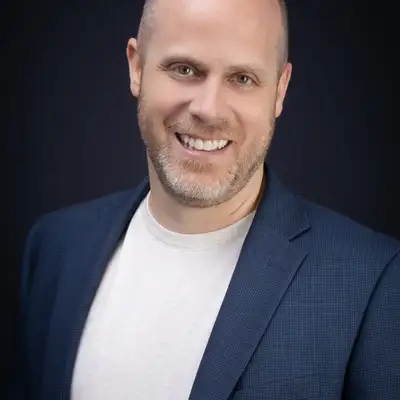
Welcome to Inside Marketing with MarketSurge — your front-row seat to the boldest business insights, marketing breakthroughs, and entrepreneurial real talk.
Hosted by Reed Hansen, Chief Growth Officer at MarketSurge and a digital marketing veteran who's helped scale everything from scrappy startups to Fortune 500 giants, this podcast dives deep into what’s really moving the needle in today’s marketing world. Find us at Marketsurge.io
Each week, we’ll break down the latest marketing and business news (minus the fluff), explore tech trends you actually need to know, and feature unfiltered conversations with the most interesting minds in entrepreneurship and marketing.
Whether you're a founder, a marketer, or just a curious hustler looking to level up, this is where growth happens—loudly, smartly, and with just the right amount of sass.
Subscribe, tune in, and let’s scale something legendary. 🚀
Speaker: Welcome to Inside
Marketing With Market Surge.
Your front row seat to the
boldest ideas and smartest
strategies in the marketing game.
Your host is Reed Hansen, chief
Growth Officer at Market Surge.
Reed Hansen, MarketSurge: Hello
and welcome back to Inside
Marketing with Market Surge.
Today's guest is Socrates Rosenfeld,
CEO, and co-founder of Jane Technologies,
the platform quietly powering the
majority of all legal cannabis
transactions in the United States.
SOC is a rare brand of operator,
technologist, and mission-driven founder.
He's a US Army combat veteran.
Former Apache helicopter commander,
who after returning to civilian
life, experienced firsthand how
broken and opaque cannabis access
was, especially for veterans.
That frustration became
the spark for Jane.
launching in 2017, Jane has grown
into the leading digi digital
infrastructure for the cannabis
industry, serving thousands of
dispensaries and brands across 39 states.
Solutions span, e-commerce, AI powered
personalization, payments, analytics, and
consumer discovery 13 software patents.
Very impressive.
And a product suite that is like Shopify
meets Amazon more so than weed tech.
Janus set the standard for how
regulated commerce can still be
seamless, personal and scalable.
So's got an impressive background.
I noted you.
I have a MBA from MIT.
You've worked for McKinsey.
And have achieved some recognition
in Forbes and Deloitte.
And today we're gonna dig into what
this all means and what other businesses
can take away from this learning.
And just learn a little bit more about
this industry and Jane Technologies.
Thanks for joining.
Socrates: Thanks so
much, Reid.
Appreciate the intro and I'm also
curious about what this all means.
So excited to dive in with you man.
Reed Hansen, MarketSurge: Awesome.
so You know, in the intro I mentioned
you have been flying Apache helicopters.
In your military service, you jumped
to building core infrastructure
for the cannabis industry,
which is highly regulated.
You know, the highly regulated
thing caught my eyes.
Maybe that's a synergy
that works, but also it's.
I'm sure there's some culture of a
little bit more, a little bit more
relaxed culture in this industry than
military, but what do you think are
some of the largest, similarities and
differences between those two fields?
Socrates: The differences
are fairly obvious.
I don't think, and this is myself
being included, would anyone would
wanna see me behind the controls
from an Apache helicopter these days?
Reed Hansen, MarketSurge: Let's.
Socrates: If you see me on the
road, I'm, I'm driving at the
speed limit and anything above
that's too dangerous for me.
So these days I like to play it safe.
I think the, the, another big difference
between the military environment and
the startup environment is particularly
in cannabis, is that the military
has protocol and procedure and
process and checklists for literally.
Everything like down to how you wear your
boots, there is a standard, and so when
you're unsure or uncertain, you just have
to know the reference, and you go and
you, you look at it and the army will tell
you what the standard is to do this task.
In the startup world, again, particularly
in this nascent industry that is cannabis,
the majority of the time,
there is no template.
There is no roadmap.
There is no standard,
and you're on your own.
And as daunting as that can be for
someone who's used to operating in
a very standardized environment,
it was very liberating reed.
And at the same time,
it was also terrifying.
And so you learn how to calibrate that.
And now I realize that for me, unknowns.
That's where all the fun is and
the moment something's known.
Okay, now you can go and set a process
and procedure and and, and standardize
that and go, but I like the unknown piece.
In terms of similarities, at the end of
the day, whether you are leading people
in the army, leading people at McKinsey,
talking to run you, running your own
podcast or leading a software company in
cannabis, it's a human connection and.
The ability to connect first with
yourself, your human self, meaning
giving yourself the grace to feel
feelings giving yourself the grace to
make mistakes to acknowledge when things
are hard to acknowledge, when things
are frustrating in yourself First.
I think it's something that came
to me a little bit too late in
the army and something that I'm
really leaning into here at Jane.
Uh, but my love for creating space for
people to grow and connect, not only
with themselves, but with each other.
I think that is a similarity that carries
forward from the military to Jane and
hopefully to other parts of my career and
future is that human to human interaction.
And, um, I've learned
some principles there.
I'm happy to get into when appropriate,
read that I, I learned in the military and
can, and have applied that here to Jane
and that's made a huge difference to me.
So the human piece is,
is really consistent.
Reed Hansen, MarketSurge: That's awesome.
Actually I would be interested, you know,
so are there, have there been frameworks?
You're an MBA too.
I, so I use the term frameworks
Socrates: Yeah.
Reed Hansen, MarketSurge: Mom spaghetti.
But have you taken some
of those frameworks
Socrates: Yes,
Reed Hansen, MarketSurge: military
life and, decision processing?
Socrates: Yes,
Reed Hansen, MarketSurge:
up in running Jane?
Socrates: yes.
Here are some frameworks I've taken.
Um,
you identify the what, meaning
you set the vision as a leader.
But it's not, once you set that
vision, you no longer own that vision.
It's owned by the entire company.
And so anybody from the CEO down to
your junior salesperson or engineer
should know why they're doing what
they're doing in the military.
That was very, very important.
If I talk to my crew chiefs.
I would ask them, Hey, do you know
why you're changing out this engine?
And they really weren't able
to, uh, communicate that.
The task itself gets pretty mundane and
the task itself, then you start looking
at like, okay, when can I get this done?
What's the least amount of output
that I need to just to check
the box and get outta here?
But if you can really distribute the why.
Allow everybody in the organization to
feel like they have ownership over that.
Why now you can mobilize
and do great things.
You can see that here,
at a broader scale.
When societies lose sight of
why they're doing what they're
doing, people will often just.
Gravitate towards the lowest common
denominator and do what's the
least amount they need to do, just
so they don't get yelled at or in
trouble, or they get their paycheck
Reed Hansen, MarketSurge: Right.
Socrates: at Jane.
And in some of the great units that
I was fortunately able to be a part
of in the Army, that why was shared.
I also think along those the same lines,
really, one of the biggest takeaways
was to do something on your own.
Is very limiting and very scary.
But if you can do it together,
you can go and do things that were
otherwise perceived to be impossible.
And that element of team, you know, we
did some scary things in the Army, but
not once did I ever feel like I was alone.
We do some
Reed Hansen, MarketSurge: Okay.
Socrates: scary things at Jane.
Different kinds of scary, not life or
death, building a business is intense.
To take different shots, to take risks,
to touch the truth, to go where it's hard.
If I felt like I was just
a founder by myself, man, I
would've quit a long time ago.
Since day one, I've had some
incredible teammates around me and
that team has grown since then.
And that's where we're able to take bigger
shots, do harder things, and it's really,
you can map it back to the fact that.
People understand that there's
a shared why and they understand
that they're not alone.
And if those two things are
prevalent and at the surface, that
organization can move mountains.
Reed Hansen, MarketSurge: That's awesome.
Well, very, inspirational.
If anything, the now you're
working in an industry that is.
Super highly regulated.
And also there's it varies state by state,
Socrates: Yeah.
Reed Hansen, MarketSurge: and
you've got a lot of different laws
and regulations to comply with.
What would you say that most
founders may not realize when
it comes to building a business,
building a software business in this
Socrates: Great question.
I think a lot of the shortcomings
that I've observed and tried to
avoid, can't avoid 'em all is when.
Founders or technology companies come in,
look at what's going on in other verticals
and we'll just copy that, template
it and try to push it into cannabis.
That is not going to be a
successful playbook because
cannabis, and I can say this.
With some level of certainty here
that this is the most complex retail
environment in the world, period.
Reed Hansen, MarketSurge: Is.
Socrates: Um, you see a lot of
companies try to replicate technology
coming out of the restaurant industry,
which is understandable, right?
You think fragmentation inability to
ship direct to consumer on demand.
That those, that, from that
perspective, it looks very similar,
but if you think about how people
order their food versus how they
order a CPG item is very different.
I know you're in Chicago Reed, but if you
came visit me in Santa Cruz and you wanted
to eat some Mexican food, I wouldn't say,
Hey, here's, you know, uh, chicken mole.
Which one has the best
chicken moley around?
You'd be like, oh, let's start
with that Mexican restaurant.
That's by my hotel, or
It's got the best ratings.
Now let's go into the menu items.
And those menu items never change.
So you can create a templated
technology and and try to apply that
to other quick service restaurants.
But the way cannabis looks is number one.
People very rarely stop,
say, you know what?
I wanna buy from this store as, and
I'm talking like CPG in general.
Thing about the last time you bought
anything on Amazon or you looked
for something on Google, you were
like, Hey, I want this product.
And to be able to tie a single product
across thousands and thousands of
different retailers across many different
states, those products are represented
differently across each retailer.
Things get very complicated very quickly,
and we had to, from day one, embrace that.
As refreshing as that was Reid,
it was like, dang, this would
be a whole lot easier if this
was a bunch of McDonald's menus.
It's not.
So what do we need to do?
Okay, we need to build a master catalog.
Then we need to build machine
learning and artificial intelligence.
We were doing this 10 years ago that can
locate this one individual skew across
every state market, across every retailer.
And then from there, now you can create a
shopping experience that looks and feels
like any other product on the internet.
So I think that's been a big aha
moment for us, and I think for a lot
of other technology companies is that
if you want to enter into the cannabis
space, you're building things bespoke.
But here's the, here's the interesting
kind of wrinkle to that Reed is
now, and you had mentioned in the
introduction that we have some deep
IP and some patents to our name.
Well, now we're like
groceries, same thing.
Convenience goods, same thing.
Pharmaceuticals, same thing.
Pet food, everything like, oh.
Could I have an Amazon like shopping
experience except unlike order,
unlike Amazon where I have to order
from Amazon and get shipped to me
can actually push that value into
the local brick and mortar ecosystem.
That is what we're creating and
it's really cool that it's being
born from the cannabis industry
and not the other way around.
So we're kind of flipping it.
We're not taking anything from the
outside trying to jam it in here.
We're actually inventing and using
cannabis as an incubator and taking that
IP to other retail verticals and, and
Jane is not the only one doing that there.
There are many examples of other
tech companies that are taking their
IP outside of the cannabis space.
Reed Hansen, MarketSurge: Okay your
your IP or software is primarily.
Socrates: Yeah.
Reed Hansen, MarketSurge: wrong,
this is just my understanding is
primarily infrastructure to support
like front end, applications.
So many consumers may not actually
realize that you're behind the scenes,
driving this is, was that always the
plan or did, do you have intent to
be direct to consumer, any talk about
Socrates: Yeah.
Reed Hansen, MarketSurge: And what's
maybe what's the difference in
Socrates: Yeah,
Reed Hansen, MarketSurge: that
Socrates: The benefit is that
from day one, we were never
able to ship direct to consumer.
And I think that's, that was so
fortunate to be the truth because
we would've just copied Amazon.
We would've said, okay, let's copy
Shopify and Amazon and then just
build that and, and there would be
no innovation coming out of that.
So here's another great example of.
The complexity and obstacles
becoming the opportunity.
So any entrepreneur out there
listening to this, like, Hey,
if it's hard, lean into that.
'cause that's, that means no
one else has figured it out and
you could be the one to do that.
So that, that was kind of the first piece.
We never had to consider it.
I'm so grateful that we didn't have to,
because really, if you think about it.
As, as much as you love an Amazon or one
of these on-demand delivery services,
I'm not going to order my food
because the technology is great as
much as I'm going to order food.
'cause I love that restaurant.
And so we made the conscious
decision to never put ourselves in
between the retailer or the brand
for that matter, and the consumer.
We don't want to take.
A take rate.
We're not trying to steal data because
in order for Jane to win,
this industry needs to win.
And in order for this industry to win, the
retailers and brands need to be empowered
to know their customer, know exactly
what to sell them, how to price it.
And that's Jane working behind the scenes.
Then empowering these retailers and
brands to connect with the customer.
'cause that's ultimately what's
gonna build this industry.
Jane is kind of the, the
mycelium of the space.
You won't see it, but we're
kind of connecting all the dots.
But the stuff that you do see, the
products that you love, the products
that you gravitate towards, the stores
that you love, let's go put them and set
them up as best as we can from a software
standpoint to set them up for success.
'cause that's really how the
industry is gonna be set up
for success for years to come.
Reed Hansen, MarketSurge: Okay, so
now you pointed out something earlier.
About, many different, product, similar
products, but delivered differently
or packaged differently, regulated
differently in so many different places.
So it's like, it's all the problems
of a retail infrastructure.
Ti, exponentially increased.
Sounds like a great opportunity for ai.
Like years ago we would've
said this is a great big
Socrates: Yep.
Reed Hansen, MarketSurge: example,
and, now, like is the face of that.
And do you tell us like,
how is AI a part of this?
Are there, things that ai you've
avoided to make it more bespoke?
I don't know to
Socrates: A great que I'm, I'm, I
can geek out with you about this.
My team's, uh, the two people on my team
that are listening are probably smiling.
'cause when AI first came out, I
was like, oh my God what is this?
Only to realize that my engineers
had to pull me aside and be like,
Hey man, we've been using AI for a
very long time to build our catalog.
Here's an example of that and then I'll
get into how a user is experiencing ai.
Different operators, but none of
this is AI is only as good as the
data set from which it learns, and
we right now have two, 3 million
SKUs in our master product catalog.
But here's the deal, Reid.
One sku.
Let's get outta cannabis for a second.
And I was a sorry consul at McKinsey
Clean in massive data sets to
find how a six pack of Coca-Cola
performs across the country.
Only to realize that the s skew of
six pack of Co Coca-Cola is named.
Almost like hundreds of thousands
of different ways across the
country, if not the world, right?
Some people might put six C, some
people might actually spell six pack.
Coca-Cola might put six PK Coke.
So it's just, it's insane, right?
And so what we've been doing is
we've been training our data set for
almost a decade now to understand.
If a retailer calls it this,
it's this product and, and
now we have a clean data set.
So now we can add agentic AI to
different parts of the platform.
One example is as a consumer, right?
We can tell you read if just by a
few clicks on, on a Jane powered
menu by what you're looking at.
We can curate.
Right now there's about seven,
800 SKUs that sit on a dispensary
store shelf every single day.
15% change out every day, which is nuts.
But we can take that 800 skew
set and bring it down to like 10
products that Reed would like.
Reed Hansen, MarketSurge: Yeah.
Socrates: the level we're kind
of, we call it the Spotify effect.
Can we take millions and millions
of products and curate it down
to that specific consumer?
That's beneficial for the consumer, that's
beneficial for brands, our advertising
business, et cetera, retailers love it.
We also tell retailers, okay,
hey, we know how skews perform.
You should be carrying this product.
You should be discounting this product.
You should be actually increasing
the price of this product
because you're, you're actually
leaving money on the table.
Here's when you should
reorder the product.
So that's another way that we are
taking raw data and transforming
that into actionable insights.
And then for brands.
What's really interesting now is
brands can, brands have to advertise.
This is just the nature of the internet.
Unfortunately most times brands have this
spray and pray model like, Hey, cool,
and I'm probably preaching to the choir
here re 'cause you, you're the expert
Reed Hansen, MarketSurge: Oh yeah.
Absolutely.
Socrates: and you know, you spend
some money with the platform.
The platform says, look,
you gotta lift in sales.
Congratulations.
And the, you know, the marketing
professional's like, okay, if I
turned off the ads, would they
have still bought my product?
Who's buying my product?
What else did they buy?
So it's not as much of an advertising
game as much as an attribution game.
And when you can come back to a
clean dataset, we can tell brands
now, not only the ROI down to the
sku, Hey, you promoted the sku,
here's how many SKUs got purchased.
From that promotion, but now it's,
Reed Hansen, MarketSurge: Wow
Socrates: Here's how they
interact with your sku.
So it, we are so excited and the
good, the good news for us is that.
Again, you can't just jump into this
and copy it and say, okay, chat GPT.
Tell me what product of
cannabis I should buy.
'cause chat, GPT doesn't have that
data set, that clean data set with
the attribution and billions of
touchpoints against those SKUs.
That's what we have.
So we feel like we have a pretty good moat
moving forward to personalize cannabis
for the next generation, and also help
retailers stay very, very competitive.
Ensure that they're carrying the right
products, putting it in front of the
right consumer at the right time.
Reed Hansen, MarketSurge: That's
awesome And that's exactly what you
know what kind of business can really
thrive In the AI environment I I you
did a great job describing how a data
set how valuable that continues to
Socrates: Yeah.
Reed Hansen, MarketSurge:
And the I love it.
That was a great explanation.
But, if we're talking about the future,
so five, 10 years down the road, what
do you think is going to be different?
Do you think that, do you think
that the purchasing experience will
change, regulation loads will change?
What
Socrates: Yeah,
Reed Hansen, MarketSurge: For this
Socrates: I think the only thing
guarantees is that things will change.
I think regulations will
change and they are changing.
Uh, if you and I were
having this discussion.
Just 5, 6, 7 years ago, there'd be like
eight legal state markets right now.
We operate in 40 state markets.
You're gonna see Pennsylvania,
Virginia, shout out to Florida.
They're doing their best to legalize.
So it's, it's happening.
Even, you know, when you, when you
start my friends in North Carolina,
when they, when that state starts
talking about, Hey, how do we
have a, a legal cannabis industry?
This is, the momentum is there
and there's no slowing this down.
This is the next great American
industry period, really.
It could be a job creator.
I won't get all that soapbox
for another podcast read.
So I think that's gonna change.
I think you're gonna see, if you don't
see full legalization within five
years, you will see, for all intents
and purposes, the ability to pay
with a credit card, the ability for.
Retailers to have a national footprint
and have national distribution.
Do I think you'll be able to order a joint
in the mail and have it shipped to you?
Probably not.
It's gonna look, look and feel a lot
like alcohol in my opinion, but that's
where I think things are, are headed.
And you and recently, uh, DC came
out, uh, with mandate to reschedule
cannabis from a schedule one to a
schedule three, uh, which is great.
'cause now the most important
thing is you can actually.
Put some research, some scientific
research to this plant and confirm
with data all the things that people
have been saying for thousands and
thousands of years, and that this
plant helps them across many elements.
I think more broadly, the way
people are going to be shopping
is gonna be digital first.
So again, I, let's leave cannabis
and go into grocery store world
where I like to live in the future.
You know, imagine I still
wanna go to the grocery store.
I still wanna like touch the apple and
smell the fruits and all those things,
but it'd be pretty cool if I had the
ability, the moment I stepped into
the grocery store or I was planning
to get to the grocery store in 15
minutes out, I'm like, Hey, I'm coming.
And it's like, okay soc, welcome
back to your favorite grocery store.
Here are the products that
you ordered last time.
Given on how you've been ordering,
we think you're probably gonna
run out of flour and bread.
we will get that stock for you.
Oh, there's a sale going on on
your favorite brand if you want
to put that in place for you.
And then it's a lot
more curated experience.
I have my card already set.
People are helping me out with that.
And then, ah, man, I'm, you know what?
I'm actually cooking a dinner.
I've never grilled salmon before.
Let me go talk to someone.
You know, at the fish station to
say, Hey, how do I prepare this?
That's the human interaction.
So it's gonna go from cashiers
to consultants, in my opinion.
I don't think
Reed Hansen, MarketSurge: Okay.
Socrates: I hope it's not this dystopian,
you never see anyone and you're just
walking around like some Amazon warehouse.
That's weird to me.
But I think there would be a marriage
of online and offline and that.
It'll be fully integrated, whether
you're just ordering from your laptop or
stepping into the brick and mortar store.
So that's the vision I have.
Whether that comes out, you know,
in five years or 10 years, I think
it's a matter of when, not if though.
Reed Hansen, MarketSurge: Yeah.
that makes a lot of sense.
And so you're a great explainer and I
think that makes, you're well positioned.
I think I've learned
a lot and I would, uh.
Definitely, I'd love to have a
longer conversation, the format of
this show is where, we're a little
Socrates: Hearsay.
Reed Hansen, MarketSurge: and do some
quick hits, I you've got a lot there.
If people would like to learn more,
Socrates: Yeah.
Reed Hansen, MarketSurge: Have you
on as a speaker, podcast guest,
where can they find you or where can
Socrates: Yeah, man.
Reed Hansen, MarketSurge: Jane?
Socrates: by.
I'm happy to come back anytime, man.
Reed Hansen, MarketSurge: Great.
Awesome.
Socrates: Because, you know, who knows,
a couple years, maybe if this whole
thing has changed and you can be like,
sock, you were wrong on all of it.
Uh, so I'll leave you a thought.
No problem.
Reed Hansen, MarketSurge: here,
Socrates: Uh, but if people
wanna reach out to me, find me on
LinkedIn, Socrates, Rosenfeld I
encourage people to check us out.
Go to our website, iHeart jane.com
if you wanna reach out
to our team or have some.
Suggestions for us info@iheartjane.com.
Follow us on our social, we're on
LinkedIn, Facebook and Instagram.
iHeart Jane.
And then we always love
hearing from the market.
So no, no topic is off limits.
Just hit us up whenever you can.
Reed Hansen, MarketSurge:
Thanks for coming on.
So this has been.
Definitely one of my
favorite podcasts, and
Socrates: Sweet.
Reed Hansen, MarketSurge:
You're a great explainer.
Did great.
And yeah, look forward to
potentially a future podcast.
I think there's just a
lot more to dive into.
So Thanks for
Socrates: Thanks re
really appreciate it man.
Speaker 2: Want to stay ahead of what's
actually working in marketing right now.
Head over to Market surge.io
and see how we're helping businesses
grow smarter, faster, and louder.
That's market surge.io
because your next breakthrough
shouldn't be a guess.