Subscribe
Share
Share
Embed


Welcome to the world of Peptides. New episodes every Tuesday.
I'm not against peptides, but
I have so many people
talking to me about using them,
and they tell me, "Well, you know,
I just want to be honest, Doc.
I'm already using it."
And the problem is,
even if you're going to use peptides,
they don't replace the normal treatments.
But when you are talking a significant
full-thickness tear that is retracted,
this is no longer really
a biological problem.
This is a structural problem.
It's like you having a hole in your roof
and then trying to paint
the walls inside your house
and saying that you fixed the problem.
If you've ever heard someone say,
"Have you tried peptides yet?"
and wanted to learn more,
well, you're in the right place.
We bring you a different perspective
every Tuesday,
so like and subscribe
and come along for the journey.
In 1992, the Winnipeg Blue Bombers
picked Chris Raynor
in the Canadian Football League draft.
Today he's an orthopedic surgeon
specializing in knee and shoulder
reconstruction.
You might also know him from YouTube,
where he breaks down sports injuries
for more than 700,000 subscribers.
Chris thinks peptides could
one day have a place
in routine sports medicine,
but for now
he doesn't use them in his practice.
So the question is, why? And what
would it take
for him to recommend them to his patients?
In this conversation,
we explore what the existing studies
can tell us,
why some patients
are turning to injections
instead of physio,
and who might pay for the clinical trials
Chris wants to see.
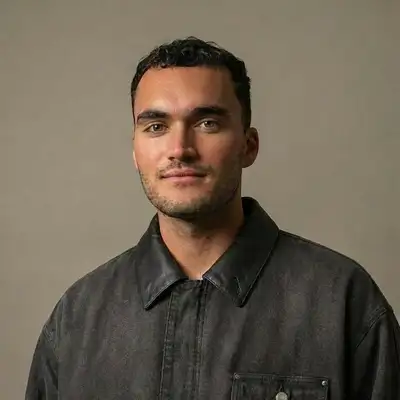
My guest today is Dr. Chris Raynor.
Welcome to Peptide Show.
Welcome to Peptide Show from Longr.
My name is Richard Skaife.
I'm a venture capitalist and entrepreneur.
My guest today is Chris. Chris,
thank you very much for joining us.
No problem. Thank you for having me.
Greatly appreciate the opportunity
to chat about this.
Not a problem. Now,
you describe yourself as somebody
who is a sort of
peptide agnostic.
And we have a lot of people
who join us on this podcast
who describe themselves
as peptide champions
or peptide evangelists.
What
sort of puts you into
a sort of peptide-agnostic group?
And does that mean you don't work
with peptides at all?
Well, let me say, first of all,
I don't really work a lot with peptides.
Well,
not really at all, because
they're not really
an established part of medicine
in mainstream medicine in Canada,
where I practice.
There are opportunities
for us to use them on a research basis,
but in regular day-to-day medicine,
they're not...
At least, peptides in the way
that people refer to them,
generally speaking,
they're not part of mainstream medicine.
Peptides are part of medicine.
Insulin is... or not insulin,
but, well, insulin being one compound.
And there
are other things that we use
that are part of
peptides as an umbrella
that are commonplace.
But in the parlance
that you're talking about,
where people are talking about TB-500,
BPC-157,
and,
you know, all those types of things,
those aren't part of regular stuff.
So why would I say that I'm agnostic?
Just because when it comes to those,
that latter group that I just mentioned,
I...
there's not
enough research for me to say
that these things are
or are not effective. Obviously,
in animal studies,
there is evidence
that they have some effect.
But we don't have,
you know, robust human studies
in large enough volumes
or with enough standardization
that we can say, "Yes,
this works. It works in this way.
Here's the dose that you need to use."
All of these things.
And so, without having that information,
I just...
I can't really tell people
that either they work
or they do not work.
I can just say it appears
that there may be an effect.
We don't know what the dosing is,
and we don't know
what the long-term effects are.
And so...
Yeah,
you make a really good point there.
I mean, in terms of somebody
who's potentially going to work with them,
you know,
in a clinical setting,
and if we take something like
BPC-157,
you know,
there's a limited amount
of animal data around that.
What would need to happen for you
to get comfortable,
you know, bringing those
into a practice environment?
Given there isn't a sort of...
there isn't a lead sponsor
for that molecule
in the same way that we would see with
a conventional therapeutic
which is going to go through
clinical trials,
how could that data sort of start
to come into fruition?
Well, so number one,
we'd have to have rigorous human trials
which had a large enough volume.
So N needs to be a high enough number.
Like, ten people doesn't count, right?
Like,
we need to have thousands of people
that go through.
We need to have rigorous protocols
to those studies
so that the studies themselves
are standardized.
We need to have
a standardized dosing scheme, right?
We need to know exactly
how much you're using,
for what duration of time,
how often it's being administered.
All of those things
would need to be established
and standardized
so that whatever information we got was
reproducible. And then
we'd have to do that
for a long enough period of time
that we could then say, "Okay, yes,
it has proven to be effective
over this period of time,
and here are some of the results.
Here are some of the negative results
or some of the problems that we have
seen during that time."
Because many of these things that
people talk about
could very well be effective.
But, you know, we don't...
One of the things
that we also don't know is
whether there are long-term side effects.
And so that's something
else that we would need to
have enough volume
and a long enough duration of study
so that we could actually
accumulate that information,
so that we could then report on it,
so we could give people an idea of,
you know, "Is this effective? Okay,
yes, it's effective,
but it has these side effects."
And then people could actually weigh
those various issues appropriately
to make a decision,
an educated decision as to whether
or not they're going to use it.
And do you see this as being a sort of
patient-physician decision? Or
do you see
there being more and more
of the similar levers
that we're seeing, which are being pulled
in the United States,
where very much it's patients
who are driving,
you know,
almost their own self-sovereignty,
their own autonomy?
How do you think it's going to
sort of start to manifest in Canada?
And then one final question
on that same theme is,
where's Health Canada sitting
from a regulatory perspective
versus the FDA? Is there
a potential for a compounding market to
appear in the Canadian market,
or is that
not something which is happening
in your local market?
Well,
I don't think... In my local market,
that's not happening,
the compounding.
I do see, like,
when you compare Canada
to the United States,
I would say that we probably have
a more stringent regulatory mechanism,
because there are lots of things that are
present in the United States,
that are approved in the United States,
that are not in Canada, or that take
substantially longer
to be approved in Canada
than in the United States.
So I think that
that is the difference
between our two markets.
And how I see this playing out,
potentially,
at least in Canada,
is that it will be more of a
doctor-patient relationship type of thing.
And patients may push this so that it,
you know,
it spurs
the regulatory bodies
to take a closer look at this
for consideration. But
I don't see it as being the same
as in the United States, where really
the patients and the market
are pushing this,
and that's kind of fueling
the whole progression.
I see it being
a more orderly and slow process
in Canada,
where they're really looking more
towards the data.
And what is the data saying about it?
What are the risks
and the complications associated with it?
And that is the framework
that I see us moving forward
with.
I don't think that we'll be able
to avoid it
because there is so much,
so much enthusiasm about its use,
about their use online
through social media, that
I don't think it's something that
regulatory bodies
are going to be able to avoid
in Canada. But
I do think they will still take
a more rigorous
and slow approach,
which is different than what's going on
in the United States,
and especially because of people like RFK,
who are very pro-peptide.
And now that he is,
you know, basically
the secretary of health,
you know, he's basically trying
to push things forward
so that they will be less regulated
and more available to people.
And to be honest, I don't...
We said at the start,
I'm agnostic, so I don't...
I'm not against peptides,
but the thing is,
I have so many people
talking to me about using them,
and they tell me, "Well, you know,
I just want to be honest, Doc.
I'm already using it. I'm doing this."
And they
think that what they're doing
is risk-free.
Or if they believe that there are risks,
they underestimate the risks
that are associated.
- And so...
- What would some of those examples be?
I mean,
you hit on
a really interesting point where,
you know, so many doctors are saying
that,
you know,
people come to them for sort of an
after-the-fact consultation.
"I'm already using this medication.
What should I be aware of now
that I'm already using it?"
Which is quite unusual.
I don't think we've ever seen this
in any other field of medicine.
What are some of those examples
of where people are coming to you
and they've already...
Let's call it what it is.
They've already self-prescribed.
Sure. Well,
I think you can probably
categorize these issues into
two categories. So,
first, there's the category
where people are using these things
because they basically want to shortcut
the things that are actually going to help
the problem that they have.
In other words,
they don't want to do the physio,
or they don't want to put in the work,
or they don't want to wait
the duration of time,
so they use them instead.
And the problem is,
even if you're going to use peptides,
they don't replace the normal treatments.
What they do is supplement
those treatments.
And so people who use them
thinking that they can avoid
doing the physio,
they actually just don't do
the things that they
actually need to do
to help their problem
in addition to the peptides.
And so they're losing out on the benefits
of all of those things
and potentially making
their recovery worse,
take longer or just not be appropriate.
- So that's one category.
- We've seen that with GLP-1s.
I mean, I think,
you know,
people
using GLP-1s
but not making lifestyle changes.
They're not adding, you know,
protein in a significant way
to their diet.
They're not doing
the relevant amount of exercise.
There's this sort of mindset that,
you know, the injection
or the pill is all that they need to do.
So,
are we leaning towards,
you know, a world where
peptides are,
ultimately,
more embraced by the medical community,
but then there will be specialists
in different domains
who will look at
sort of augmenting peptides
with the protocol of the domain that
they're most familiar with?
Is that something that's, you know,
looking like a potential future?
Well, I think,
once we have some sort of
standardization
and better acceptance
in the medical community
at large, then I think, yes,
that's what we will have,
those types of scenarios
where we have people using peptides,
but for whatever problem
a person presents with,
they are then
also paired with a specialist in that area
who is going to say,
"The peptide is not the treatment.
It is a part of the treatment,
and it is supplemented
by these other things."
And the treatment as a whole
incorporates all of these things,
of which peptide is just one, right?
Peptide is not the treatment.
It's just one of the additional tools
that we use to
treat the problem you present with.
Indeed. And I mean,
you
just...
You say yourself you're agnostic.
What would you say, if you're looking
at your peers who are practicing medicine,
where would you say
the agnostic percentage sits
versus the pragmatic, enthusiastic,
versus people who are,
you know,
on different degrees of cynicism?
I...
if I were to look probably
to my peer group,
I would say that the
- cynics are probably about 85% to 90%.
- Wow.
Agnostics are probably
5% to 7%, and,
you know, 3% is probably very generous
for people who are enthusiastic
about its use.
Why do you think that is?
Is it a pushback against what we're seeing
on social media?
It's very evident.
You look at one TikTok, and
that's all you will see
now for the next week.
Is it elements of that?
Is it medicine getting ahead of its skis?
What do you think is...
what do you think is sort of
causing that sort of divide?
So I think medicine as a whole is
relatively conservative.
You know, based on the fact that...
one of the main tenets
of the Hippocratic Oath
is that we do no harm, right?
And so we want to make sure...
Like,
medicine as a whole
is a very slow behemoth.
You really need to get a lot of data.
You need to really justify it.
You need to prove it well to your peers,
to everybody, before things change.
And nobody wants to be that person that,
you know, sort of supports a thing
and then we find out later
for it to be a disaster.
And I think that part of that is...
So that's just
the basic background for medicine.
But then I think
that there's probably even more hesitance
as a result of what's happened
over the last five years
with COVID. Because you see,
for example, that we had a pandemic.
People, the governments
and physicians as a whole,
we had this novel thing.
We were worried about
what's going to happen to people.
Are we going to have, you know,
a mass extinction event type of thing?
And so they implemented
these mRNA vaccines that,
you know,
those particular vaccines
did not have a lot of study.
mRNA vaccines in general have been
something that's been studied
for many years, but
those particular ones
did not have a lot of study,
and there was a lot of pushback
about that.
And so I think, as a group now,
medicine is kind of looking at,
"We're not just going to
promote this thing.
You know, we've kind of been
once bitten, twice shy.
So we're not interested in that.
We're going to take our time.
We're going to check this."
Because that was one of...
People who are anti-vax,
that was one of their big things.
"Oh, these are untested,
and you're forcing this on us."
And it's funny,
because I think it's ironic
that so many of the same people
who would not take the mRNA vaccine
because it was "untested"
are willing to just buy
something off of Instagram
and inject it, no questions asked.
Indeed. And they don't even know
the provenance
of where it's actually come from,
let alone what some of the potential,
you know, shortcomings could be.
I mean,
you know, as somebody who is
working directly with people
who are showing
an interest in peptides, what
do you think is the most
sort of common misconception that
you come up against from
a medical practice perspective?
I think the most common misconception...
And I'll have to caveat this by saying
I don't know if
this is a fact because
we don't have enough data.
But the most common misconception,
I would say,
is just the degree of efficacy
of the peptides. Like,
people come to me and they tell me
that they've been using it,
and they are telling me
that their rotator cuff tear,
with
a rotator cuff tendon
that was retracted as seen on MRI,
they injected peptides and
it reattached.
It healed, right?
Or things like this.
And I'm like...
And I see these people. Listen,
when you have a...
if you had a small rotator cuff tear,
small and,
you know,
partial-thickness tear,
and you injected peptide,
I said, "Maybe.
Maybe there's a biological mechanism
or a physiological mechanism
by which that could heal itself."
But when you are talking a significant
full-thickness tear that is retracted,
this is no longer really
a biological problem.
This is a structural problem.
It's like you having a hole in your roof
and then trying to paint
the walls inside your house
and saying that you fixed the problem.
This doesn't happen.
So the efficacy
that people attribute to these,
I think, is a huge misconception.
And again, I will
say my disclaimer is
that we don't have the data,
so I can't really speak
to whether that is 5%
wrong or 80% wrong. But
in my own clinical experience,
I would estimate that that's
hugely overestimated.
Absolutely. Now it's our final question,
and it's the same question
we ask every guest,
and they can take it
in any direction that they want.
So, jumping forward ten years,
where do you think
the peptide sector will be, or should be?
You know,
what would that roadmap look like for you?
Well,
I think,
jumping forward ten years,
we are going to have
a better understanding
of which peptides are,
you know,
which ones are effective,
what makes them effective.
We will have better data
about the long-term use
of these peptides.
And I do think that they are going to be,
just the same way as insulin is now,
or Ozempic is...
These have now become
part of our mainstream
medical culture.
I think that we'll start to see
peptides become part
of our normal culture.
They will be standardized,
and they will become part
of our treatment algorithm.
And physicians
will become familiar with them,
and they will be starting
to prescribe them,
I think, on a regular basis.
This is, you know,
ten years is, on the one hand,
a long time,
but on the other hand, it's not that long.
And I see probably that happening
- during that time frame.
- Quite a lot of hearts and minds
that will need to be won over.
I mean, you know,
when we touch on sort of 85%,
maybe 90%, of medical professionals
in your proximity
probably sit on the more
sort of cynical side,
there is going to be a lot of,
you know, a lot of education
and a lot of advocacy
that needs to be done,
which has to be supported by, ultimately,
large amounts of robust clinical data.
Is that a fair summary?
It is, for sure.
But, like, as I said,
you know, medicine is a behemoth, and
we need the information,
the data, in order to make
the change, right?
But I do see that.
I do see that happening.
And it's funny because,
you know, one of the things
that I've talked about
in some of my video content,
I said how nobody really wants
to do this study
because
they can't recoup the money
that they spend
in doing those studies. But yet,
if you look at the peptide industry
that is available online right now,
this is a multibillion-dollar industry.
- So, you know...
- Arguably,
arguably,
there's never been a sector
with more researchers
working in it,
if we're to believe
the "research use only" label.
Yes, for sure.
So, you know,
the...
somebody's going...
They may not have figured it out yet,
but somebody will. There is a way for,
you know,
pharmaceutical companies
to make money from this.
And once they figure that out,
then we'll actually get
the research data, right?
Like, somebody had to do that
with Ozempic,
right?
And then
they turned into
a multibillion-dollar company, right?
Yeah.
I mean,
there is no doubt
that this is a common argument
in the peptide space,
that they can't be patented.
Therefore, nobody will ever do
the clinical work,
because then there
isn't any upside for them
doing the clinical work.
I mean, ultimately,
these things can
have patentable opportunity around them.
There can be clinical work
done around them.
That's what Eli Lilly is doing right now
as it pushes through on its,
you know, its GLP-3 propositions.
I think where it becomes
sort of quite interesting
is where we have compounds where,
you know,
the genie is already out of the bottle,
whether there's more
sort of real-world evidence gathering
which needs to take place.
Because arguably, you know,
certainly this is
more of a US-centric
challenge.
If we move to a market where,
you know, six or seven of these
kind of restricted compounds
can go into a compounding pharmacy,
then there is going to be
a huge amount of people
who are taking them under,
you know, doctor supervision.
I think the opportunity
and the responsibility
for people is to gather that information
and to report that information back
and to build up, you know,
transparency and good quality
and provenance of data.
No doubt. I agree.
And I think,
you know, it's got to start someplace.
That's as good a place as any.
And then I do think
that there will be enough...
As I mentioned,
I think there's going to be...
there's so much demand
that eventually people
are not going to be able to
deny this, right?
So it'll just be a question of, okay,
well, how do we get this data
so that we can provide
the clearest evidence
and the clearest support that we can and,
you know, give people
the best information about dosing,
duration and side effects?
Chris, thank you very much
for your sensible,
pragmatic at times, and agnostic
views on peptides.
Not a problem.
Thank you very much for having me.
- I enjoyed this conversation immensely.
- Thank you.