Subscribe
Share
Share
Embed
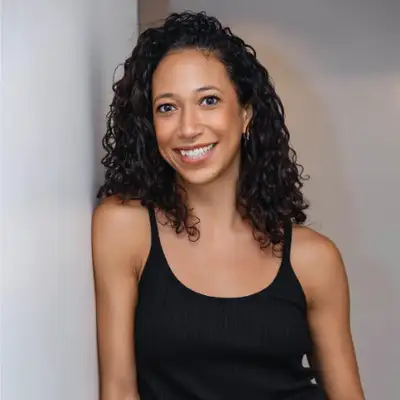
In this episode, social entrepreneur and visionary founder of The Village Market, Dr. Lakeysha “Key” Hallmon, joins Gabrielle to reflect on the call to gather, dream, and build together.
From her beginnings as an educator in Mississippi classrooms to her evolution into an ecosystem builder in Atlanta, Dr. Key shares the lessons that guided her shift from resisting growth to embracing her destiny as a village maker. She reflects on the love that fuels her legacy, her insistence that no one is self-made, and the collective power of ancestral practices of cooperative economics.
Dr. Key also opens up about learning to slow down, the spiritual guides who taught her stillness, and the intentionality required to create spaces of healing and joy. At the heart of her story is a call to remember: our freedom is bound to one another, and our legacies are written in community.
A conversation on dreaming boldly, building collectively, and choosing love as both blueprint and resistance.
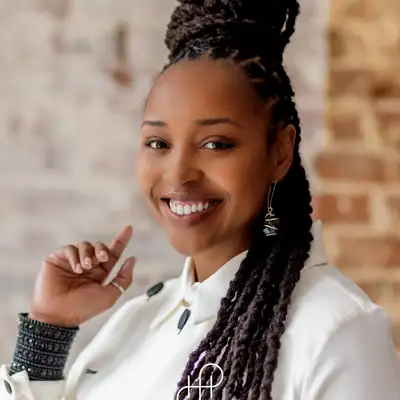
Meet Me at the Highland™ is a podcast and sacred space centering Black women's leadership, imagination, and legacy. Hosted by Gabrielle Wyatt, founder of The Highland Project, it offers intimate, intergenerational conversations with changemakers, artists, and cultural architects reimagining what it means to thrive. It's a rhythm of rest, reflection, and radical dreaming, where we remember who we are, reclaim our joy, and begin again.
Season Two, Seeding, is unfolding now, with Highland Leaders like Brittany Packnett Cunningham, Dr. Topeka K. Sam, and Brea Baker. Each episode arrives with a love letter, journaling prompts, and reflections that invite deeper introspection.
This is your invitation. To lead. To rest. To imagine forward. To meet us at the Highland.
meetmeatthehighland.substack.com
Building the Village with Love and Legacy with Dr. Lakeysha "Key" Hallmon
===
[00:00:00]
Warm Welcome Back
---
Gabrielle Wyatt: Welcome back to the Highland, Dr. Key. How are you arriving?
Dr. Lakeysha "Key" Hallmon: I am, I feel refreshed. I just got off a vacation with my nephews, so I'm feeling refreshed and refueled with love. It's nothing like being around young people to feel the warmth of their joy and innocence. So I arrive in this space. I just feel I'm very grateful to be here.
I'm so happy that you've created this sacred space for these, these powerful conversations. So I'm happy to be a guest today.
Gabrielle Wyatt: I'm grateful to have you here. I'm grateful for you to call in your little people because I've been thinking a lot about what reminds me in these times of 2025, about why I must abundantly wake up and why I must keep dreaming forward.
And I think about my niece and my nephew a lot and have tried to spend more time with them to keep me grounded in. Perhaps my [00:01:00] ultimate purpose, which is continuing to create the future for them that I see. And so I appreciate you calling in your little people.
Dr. Lakeysha "Key" Hallmon: Yeah,
Gabrielle Wyatt: they might be getting, they might be getting taller than you by the minute, so I'm not sure.
Dr. Lakeysha "Key" Hallmon: My nephew always measure my eldest nephew, Sean, he always stands next to me. He says, auntie, I'm getting close. He's 16. I'm getting close, I'm getting close. And I was like, oh, you're not getting close. You're not getting close. But it's the cutest, sweetest thing because that is one of our like acts of love.
He always stands next to see how close his shoulders are to my shoulder.
Gabrielle Wyatt: That's beautiful. That's a beautiful thing. Mm-hmm. I will, I would love to see the picture that day when he surpasses you. 'cause you are all individual.
Calling In Lineage
---
Gabrielle Wyatt: As we get started, I wanna keep calling in your lineage, your roots. Our sister Vanessa Garrison, introduced at our first gathering a practice of Girl Trek of calling in who we are the daughters of, and that's how we've [00:02:00] begun every episode at the Highland.
In honor of her legacy and offering to us. So as we begin, who are you the daughter of Dr. Key, whose legacies do you carry forward?
Dr. Lakeysha "Key" Hallmon: Yes, I carry the legacy of Carolyn, my mother. May she rest in peace. Of course my father Roger, as he worked hard in Mississippi and the leader of our family, my grandmother, Josephine Grandmothers, Josephine and Bobby all reside in Mississippi.
My grandfathers are deceased. But they reign with the beautiful ancestors, the great-granddaughter of Sarah and Polly, and Jim. And Jim, two Jims. But I, I am, I'm proud to, to come from such a beautiful lineage. I've been spending time with both of my grandmothers, asking them about their childhoods, asking them about.
Their moms and their grandmoms, and it's been beautiful to see women who are in their eighties, [00:03:00] early eighties and late eighties to I see the little girl in them come alive when they talk about their moms and their and their grandmothers. And so I'm so proud to be the daughter of such a beautiful, rich legacy of hardworking, beautiful black women and men who.
Pour so much love and continue to pour so much love and support into me and everyone else in the family, and also in the broader community.
Gabrielle Wyatt: I love how you called in what I think about as one of your legacy anchors to be a mirror to you. A few things this like cultivation of ancestral wisdom. There's never a conversation with you that I do not hear.
About what our ancestors practice and seeded in us. And I think that is a true part of your legacy making. The other is the word love and like what has me [00:04:00] lean forward when I say love to you now is that you've highlighted for me in your legacy that love is about reciprocity as we build relationships with ourselves, with our families and communities, and.
Knowing a little bit about you and your family's legacy in your lineage, you called in this focus on collective wealth building and collective wealth building as being much more than dollars in pocket. And so I wanna unpack really those anchors, but it felt important for me to uphold our tradition here of being a mirror to you of the legacy I see in you.
Dr. Lakeysha "Key" Hallmon: Thank you and absolutely. I have started to do a lot of my talks with, beginning with the daughter of, mm-hmm. So all the love from my cohort sister Vanessa, for guiding us in that beautiful practice. But it's something that I've implemented as I go out in the world. I start and ground the space that way [00:05:00]
Gabrielle Wyatt: as we continue to ground the space.
Our legacies are paths that are always winding. I remember one time Octavia shared with me, Gabby, if you know every step forward, then you aren't dreaming a legacy. You're just working through a plan.
Outgrowing The Classroom
---
Gabrielle Wyatt: I wanna take you back to your days in the classroom. You've continued a legacy of so many Highland leaders of beginning.
With young people beginning in school houses, and I'm curious in this spirit of, we don't always know the step forward as we pursue our legacies, can you recall a time when you began to feel that like gut fire when you were in the classroom of perhaps my heart's calling is not to stay within these four walls of a schoolhouse?
Dr. Lakeysha "Key" Hallmon: Yeah. Thanks for asking that question. I remember when I was teaching in my first job in Marks [00:06:00] Mississippi at Madison Shannon Palmer High School, and I think I was going into my fifth year there and I started to feel. I was still motivated, but I wasn't as in love as I was when I first got started. But I still love and I still love deeply.
And so what I felt is that it was just time for me to move to go to a new school district, not necessarily to leave education until, uh, after my fifth year I moved to Jackson, Mississippi, where I went to college at college. And it was a harder year for me, but still a beautiful year. I had a rough start getting going with a new environment.
I had to learn quickly. It was a different speed, different pace. The kids really challenged everything inside of me and they made me a better educator, but I was, I loved it. Again, I wasn't in love and so I said, okay, it is not Mississippi. Then I need to move to Atlanta. And again, you see, I'm still moving, but I'm staying in a [00:07:00] box, staying in a box.
So moved to Atlanta and I taught at South Cobb in Cobb County. Loved it. I wasn't in love and I couldn't figure out like why couldn't I feel that love, that emphatic love that oozes the way that I felt when I first became an educator. And it's because I was growing and so as I was growing, I was also resisting the growth.
I was resisting like the pullings of my heart that started to dream and imagine something different to long for something different. I started to get the entrepreneur bug after I left South Cobb and worked for the Georgia Department of Education, but that entrepreneur bug started to take over, but really just the vision.
But I resisted Gabby. I resisted and resisted because I was really afraid. To grow outside of the box that I placed myself in. And I didn't really fully understand that in your life's path, that you can have different purposes and you can grow and grow to the next purpose. But [00:08:00] I, I didn't know that I thought I was abandoning myself as I was growing into this new version, but it took some time.
It took some time when I started to recognize that it wasn't the city or the state. It wasn't that I didn't need to move to another place and pack, pack more boxes. It was time for me to go after what was in my heart and in my mind, it was time for me to really go after this village that I was pursuing.
But I fought with everything in me to stay contained in the in, in the box. And for people who are plant lovers the way that I am, if we keep our little plants in those small pots and it's time for them to grow, they suffer. And I found myself suffering because I was still, I was growing and I was suffocating, growing and suffocating.
But it was time for me to be able to start to really bloom. And this entrepreneur and village builder, that was a part of my destiny.
Gabrielle Wyatt: I think it's so important that you [00:09:00] continue to highlight for us in this response, this like importance of feeling and releasing and like really allowing ourselves to feel.
And I think that can be particularly challenging as black women in a society that doesn't honor our feelings, that doesn't honor humanities. And I think that can be compounded in a society that does have this sort of. One track mind, right? We go to school to become an educator. Then what? We might go to a department of education then, right?
Like we puts on these blinders that one can understand why they're on. And you've highlighted that there is nothing wrong with you to say, I loved this part of my life. And also. There are many more Dr. Keys who live within me with a purpose.
Dr. Lakeysha "Key" Hallmon: Exactly. I think in order for us to [00:10:00] continue to blossom and grow, then we must create space.
Grace for ourselves to outgrow the versions that we were and to trust that the women that we're going to bloom into will be just as you will live a life just as meaningful, and you don't lose anything. From my journey, Gabby, I haven't lost any, all the lessons that I learned as an educator, all the hard professional skills that I learned in that professional setting.
As an entrepreneur, as this version of myself that I've grown and matured to be, I didn't lose anything. I didn't lose myself. I found more of myself. I was able to reshape those skills and put them into new places, but I think sometimes we are afraid to move on because our identity is so bound to who we were.
In this other space is so unfamiliar and we don't really know her. We don't know that space. We don't know that air, and I think we become afraid, and I'm happy that when I was transitioning out of the educators [00:11:00] world. That I made a pact with myself. It was a pact with myself and God that I would continue to always be an educator, that my classroom would just look different, and I think making that pact with myself, I gave myself freedom to start to dream and really daydream of what was possible with for my life.
Building The Village Market
---
Gabrielle Wyatt: That's the perfect segue that just continuing to unpack where you went from this move from Mississippi to Atlanta, from classroom to department. To then one naming. I wanna reimagine a village. I wanna reimagine my classroom as I've watched her legacy from afar and up close. In my opinion, it's not one of seeding several businesses of supporting several businesses, but rather it's a legacy that's an ecosystem of reciprocal community care in pursuit of collective freedom.
As [00:12:00] you began to honor, nurture that entrepreneurial bug, can you think about a time in the beginning of the village that affirmed for you? Yes. I'm gonna keep continuing on this path. I'm gonna stand eventually 10 toes down in creating this ecosystem.
Dr. Lakeysha "Key" Hallmon: It was that familiar feeling of love. Again, love is my guiding force and how in love I was with education.
I found a similar love. Once I started to pursue building the village market. I was, I, I'm still enamored by it. I'm completely enamored by the vision in my mind. And for those who have built things, and you know this, Gabby, it takes over, you know, your entire being. It fills you up in a way that no one needs to charge you up.
The purpose does. And so when [00:13:00] I got going and started with the village market. Everything made me excited meeting other entrepreneurs that made me excited. Building a website made me excited. Having a social media page made me excited. Even being like when I was trying to establish strategic partners, that process was a headache, but I was like, wow, this is how this is done.
And so I was so motivated by, wow, this may not have worked out the way I wanted it to. I was so motivated by the yeses that I was. I would get and those in that pursuit of that, I will find the right partner. It fueled me, but just like when I was in a classroom, the thing that always signifies I'm doing exactly what I'm meant to do is how I feel.
I was having deep relationships and continue to have deep relationships with business owners just like I have with my students. And those human connections, oh, there is like a heart outside of the body. I love to be in, in sacred spaces with [00:14:00] people where we are just sharing energy, sharing imagination and dreaming together, and that's what I got to experience when I first started to build the village market.
I was meeting folks in Atlanta and getting people excited about creating this Martin Village and really. Gabby, I didn't have to build something that didn't exist before I had to. I simply had to remind the community like, Hey, we are co. We are a community. We are communal. Collective progress, collective liberation has always been a north star.
Let's just return to it so early on that love that I felt, and still it keeps me going. Now the love is what was so contagious. I didn't need any moti intrinsic motivation, external motivation. It was just took over mind, body, and spirit, and I was so moved to just build what was in my mind and what was in my heart.
Gabrielle Wyatt: You can't unsee your [00:15:00] legacy in the future you're building is like how I'm internalizing the ways, even the most simple, small things lit you up. I think about. Now, whenever I see a dark shade of green, my mind begins to see highland memories. Right? Or I think about my partner coming home being like, I found a green speaker that you can take with you to gatherings.
Like it becomes contagious and you can't unsee it. And not surprisingly, you called in that this isn't something new that you were creating, that you were calling forward. That our culture is not one that is self-made.
Dr. Lakeysha "Key" Hallmon: Mm-hmm.
No One Is Self Made
---
Gabrielle Wyatt: And this has been, I think the next fork in the road of your legacy building is screaming from the rooftops writing gently, [00:16:00] but with fierceness that no one is self-made.
Dr. Lakeysha "Key" Hallmon: Yeah.
Gabrielle Wyatt: And that, that might sound counter-cultural to some. Mm-hmm.
Dr. Lakeysha "Key" Hallmon: Mm-hmm.
Gabrielle Wyatt: But it's one that is black communities and black women in particular is in our core. Can you talk a bit about how you have navigated this truth that we cannot and should not go at it alone?
Dr. Lakeysha "Key" Hallmon: Yes. I will say it has been counter-cultural, especially in the business hemisphere.
It sounds that I'm negating, you know, a person's journey and that's not the goal. So it has been an, I've had interesting conversations around this. No one is self-made because we both know when you reach a level of success, the first thing they wanna say is that Gabrielle Wyatt is a self-made woman. And Lakeisha, Keith Hallman is a self-made woman.
And how I. Even in writing the book, my, my vision and [00:17:00] my intent is to show and to honor the self-determination that you must possess in order to birth a vision. But that self-determination is then paired with the people very gently and with a great deal of love, but also with a grave amount of My truth is that yes, we are self-determined people.
It takes a level of self-determination, self-reliance, to build anything. And so I am not, you are not without those days where it did feel that it was just you. That this vision that you had to produce, that I had to produce. We know the hours that we were on our laptops or daydreaming in our homes alone, but I also know that when we were not dreaming and building alone, it was those people.
Who helped us make phone calls, edit emails, listen to us, read an email or business [00:18:00] plan out loud. Let us practice our pitch in front of them. Wake up late at night because we can't sleep because the ideas just keep popping up. And it's also those sacred people that hold us together when it feels that all things are falling apart.
The reason why I challenged to know one is self-made is because it's not true that while we are self-determined people, they're always critical players on our life's journey that pour into us in some way and. Typically when we think about self made, we're always thinking about financially. We are thinking about getting investments and things like that, but to me, in order to be successful, it's less about it.
It financial investments are very important, but to be who we both have become, Gabby, and while we're still on this continuum of becoming. It's not just the financial investments, it's all those things that I just named as well. The relationships, those hard and soft skills that people bring to our lives, the way that people [00:19:00] take on our visions as if it was their own.
The way that our families encapsulate us with love, even I know for me when they have no idea what we're really building, but they're just so proud of us for doing something that we're passionate about and they go with it. I. That to me is community love, and I'm gonna continue to be on my little mountain screaming, get as loud as I can that we must write in the people.
Because in the writing, in the people, we tell a complete story of a village. And so when generations come after us and they're trying to follow the bru, the blueprint we left behind. I don't want them to see my journey or see your journey as a singular journey. I want them to see all the droves of people who've been impacted by the work we do, but who's also who supported us to do the work.
In that story, I believe we tell the collective story, and the collective story will always [00:20:00] outlive the individual story that is, uh, deeply ingrained in the struc, in the construct of the American society of being deeply individualistic. I think that individual mindset has really eroded the progress and promises of our community.
And so when no one is self-made, I write it, I believe quite lovingly, but I really challenge the reader to understand while it can be very lonely at times, you are not alone. And you will not be alone. Right. In your people.
Gabrielle Wyatt: I so appreciate this breakdown and notion that we are self-determined. Yes. Right.
We can be clear-eyed on what we are building of our legacies as individuals. And we do have a community that has shown up and poured in so many ways over time and that this is a collective story to use your words, that we have to write them in. And I wanna keep pulling the thread on this, of [00:21:00] this conversation about no one is self-made.
We have a community, we have a village. To then collectivism. I'm thinking back to, I think it was a year or so ago, I was sitting with you listening to Fawn Weaver talk about building her cap table and the stark contrast of who was at the table compared to the village that was pouring into her. And I think in a critical part of your book.
The village model is that this has to be about collectivism. A circular economy often comes up for me, cooperative economics, that when we reach these levels, however you want to define them, a financial and social capital, we have to write the next collective story.
Ancestral Collective Economics
---
Gabrielle Wyatt: Can you share a bit more about. How you've called in ancestral practices, traditions of quad [00:22:00] economics of collectivism to really go further.
Right? To say it's not just about a community supporting you in writing them in.
Dr. Lakeysha "Key" Hallmon: Yeah, absolutely. You know, in the book, I was very intentional to make sure that our history was not lost in my pages. While I wrote about present warriors, people like yourself, who was building the generation that someone else would benefit from, I had to call in the Madam CJ Walkers of the world, the Fannie Lou Hamers of the world, because they felt a social responsibility to lift as they climb.
If I to paraphrase. Madam CJ Walker's last word is that she really just wanted to do good by her people. She wanted the black race to be better and. In order to do that, she lived a life in such a way that she was able to armor a legion of women to be financially [00:23:00] free, to have independence, to create a job and path for themselves that they didn't even have the freedom to exist in certain spaces.
She said, I have built the village for you. Just come on in. And she empowered other leaders in the community to say, now what are we going to do together? Because in our togetherness, our communities would, will be in a better position. She lived her life with in well, ensuring that she didn't live well.
Only that people were able to have a better existence in her, in their lifetime. That is a. The call and the purpose of her life is far more than the wealth that she was able to acquire. It was the wealth of her soul and her spirit and the conviction that she had, that she was on a destined path to free people.
And the same for Fannie Lou Hamer, one of the greatest mississippians to ever live, walk in her footprint [00:24:00] because she also believed and built cooperatives. And so if I'm looking at some of the greatest women, our greatest ancestors, and they were able to reach a level of, so social status, which you know, comes with the level of privileges of being able to get some people on the phone and to call people out and to bring them in.
They wanted to make sure. That our community was better because of them. So when I think about these collective eco economies, Cooper cooperatives, I went to our ancestors and I think we can always go to our ancestors to find, resolve, to find access of the way that they thought and to follow the breadcrumbs that they left us.
So I. Wrote about many great people today who are doing great work. I even wrote about Issa Rae's business strategy and how she was able to ingrain her friends and it be very intentional with how she built and scaled her [00:25:00] enterprises. Write about Richard Lou Dennis and New Voices Fund and the way that he's been able to empower other black women, will empower black women to get the capital that they need to scale their enterprises.
So I put, and I was intentional with this collective economics and cooperative economics and social enterprises and social entrepreneurs. I was intentional to ensure that that history was wrapped in the present and present was wrapped in the history. Because in doing so, I want the reader to understand.
That every single thing that we have always needed has been created for us. Sometimes we have to turn the pages back to history, and sometimes we have to turn our gaze on each other and to celebrate the work that we're doing. And I write about you, Gabby, and not to make you uncomfortable on this call, but I have to do it.
But I write about your audacity, and I tell you this all the time because it's very important because [00:26:00] history is going what they will know about you. Is that you are bold enough to say that black women needed the financial freedom to dream and we, and when we get the financial freedom and the community to dream our communities will be better because of that investment.
I see this no different than Madam CJ Walker. I see this no different than the way that they live their life in such a pursuit that our people would be free. And one thing that they made sure that they didn't do. And I think it's important for us, capitalism was not, was not embedded into the constructs of what they were building.
And so while they didn't, and they didn't attack it head on, they attacked it in their actions, they attacked it in how they built. And so I think we have to be just as intentional when we reach a certain level of financial independence. What is the mission [00:27:00] impact of our work? What are the mission oriented goals tied to the access that we have?
For me and in my entrepreneur journey, I always share that I'm a social entrepreneur. I do work because I want good to come out of that work. I want people's lives to be changed. We're very similar, Gabby, and I do think even if a entrepreneur, a enterprising organization has reached scale. I challenge them to have a social impact focus.
I challenge them to think of as they continue to climb and reach certain heights, how, what is the trickle down effect of that rolling back into the community? And I don't think it should just be in these things that we do sensationalized things for the acts of social media. I think it has to be ingrained in our being to want people to be free because of our freedom.
Gabrielle Wyatt: Thank you for being a mirror to me and. Being a mirror to so many, and I think that is a Highland way, is holding up mirrors. [00:28:00] And you and I have practiced so much over the last two years, like the long gaze in one another's eyes, not just to see one another, but the women who are within us and our ancestors, known and unknown, met and not met.
And I think that's essential. I think it's essential. You named. We have to create and preserve blueprints right now and leave a breadcrumb trail. And you highlighted for me this recognition that a system might not be built for us and certainly not built for us to thrive, but it might not be our assignment to save and dismantle that system.
It might be our assignment instead to remember. A collective vision and begin to build that.
Blueprints For 2025
---
Gabrielle Wyatt: And I wanna use that as a segue to the right now, to the right now of 2025. So much is unraveling and yet so [00:29:00] much is also being reimagined. You said this book was meant to be a blueprint for future generations, but it's also a blueprint for right now.
Can you talk about. What is feeling particularly hard to lean into the blueprint of no one is self-made and how you're navigating that as a human?
Dr. Lakeysha "Key" Hallmon: Yeah. You know, and I'll answer this question this way. I think what's been harder to lean into this present moment and the moments that we have experienced in the last several weeks and months is that.
I've worked very hard not to be hopeless. I worked very hard not to be cynical. I've worked very hard to not [00:30:00] lose my belief and that greater will happen, and that takes a willingness every single day to say that I will be filled with hope and belief. This too shall pass. And when it pass, I will do my part to make sure that we are stronger together.
To me, the collectivism and joy is the greatest res. They are the greatest resistance. If we can continue to honor our joy and if we can continue to build as a collective, we will resist and beyond resisting, we will prevail. My, my North Star. In a time where we see that things are truly falling apart, I have remembered that this undoing is intentional.
This is not by accident, accident. This is intentional undoing, [00:31:00] and it's not our job to try to go sew it back together. Our job in this time is to ensure that whatever we are building, we're building. So with a collective mindset, it's our job in whatever that we are building, we're centering and calling in healing in that work, and that they can't be separated any longer.
That they have to be a blueprint of our business plans and whatever that we're building and creating. Because in order for us to really exist in this space and to do it well, we have to do the work of healing the way that we can invite in other sisters and even our brothers to invite them in and to be able to hold a long gaze with them and to see the promise of their life and not be intimidated by it is to do the work of healing.
To recognize the light that you possess, to be able to hold the light of another person that [00:32:00] requires us to do our work. And so while things are what they are, I know the power of who we are is even more evident now, but it has always been evident. And ancestrally, our people have, have always tapped into the evidence of who we are always.
And it didn't matter how bleak the circumstances, because I cannot imagine the America that our ancestors lived in and experience. I can't imagine it. But they still have the capacity and desire to dream of us. To believe that we would exist and that we will have a better existence. And so we must also have those radical wall list dreams as well, and that keeps me centered and focused.[00:33:00]
I also stay around healthy people. I keep dreamers close to me, so I am very intentional around my, my, my sacred community of those that I allow close because I'm also aware of what's also happening in the background of our lives to things that we can't control.
Gabrielle Wyatt: You're reminding me of Revolutionary Dreams by Nikki Giovanni, and.
I don't have it memorized, but the essence of that to me is what happens when we allow ourselves to naturally dream.
Dr. Lakeysha "Key" Hallmon: Yeah.
Gabrielle Wyatt: And trust our natural essence instead of dreaming about what was or what might be currently outside our window. And you're also reminding me. Actually how we met. And when we met, we met because a sister, [00:34:00] Kelly, English, hi Kelly.
Dr. Lakeysha "Key" Hallmon: Hey Kelly
Gabrielle Wyatt: said you two should know each other. I don't really know what's gonna come out it. And I think Highland maybe was like just had a website up or something like that. And we were in the middle of a shutdown, probably our second or third shutdown at that point. And you and I didn't know what was going to unfold in that.
And here we are.
Dr. Lakeysha "Key" Hallmon: We
Gabrielle Wyatt: are. But I'm reminded you not too long ago, introduced me to Dr. Joy and in reading her book about that same time, she talks about being on Zooms with you.
Dr. Lakeysha "Key" Hallmon: Yeah.
Gabrielle Wyatt: In a village.
Dr. Lakeysha "Key" Hallmon: Yes.
Gabrielle Wyatt: At a time that was equally dark, equally seemingly hopeless to say. We need to do something different and more of that different.
Gathering As Care
---
Gabrielle Wyatt: Can you talk about how we can make space for increasing our community [00:35:00] care in these moments of unraveling?
Dr. Lakeysha "Key" Hallmon: I think the first action is making space. It takes a grave level of intentionality to say that I will create and curate healthy spaces for myself. Other people. The reason why I say for myself and other people is because I think especially of those who are of us who are doers, we think about the healthiness for everyone else, and we're not in that equation.
So we have to nurture our own gardens first before we can begin to increase and open that garden to other people. But I think this time is requiring us to intentionally gather together. I went to a friend's house yesterday. I was just getting back in town and one of the questions in one of the little smooth small group huddles was like, how do we survive this time?
The question came to [00:36:00] me and I said, look around this room. We survived this time in rooms like this. It was so much joy and laughter. It was also hard and earnest conversation. It was in our gathering and I said that we must create more rooms like this. So even if you don't think you are a builder or a convener, there is power in two or three.
There is power of going to a coffee shop or a book shop, a bookstore with two other people and say, come with me this Saturday. And allow yourself to be in a loving space. And I will tell you, the way that you leave will be different than the way that you came. You will feel stronger, and we have to be deeply intentional in this time to create our [00:37:00] sisterhood and brotherhood spaces.
But we have to be clear that we're convening because of love. We are convening with love. We're not just joining together. This is not a time in our lives that we can't do anything no longer without intention. We must have intention with how we gather. We must have intention on the love that we will create, the joy that we will create, the conversations that may come, conversations that we may disagree with each other, but how will we disagree?
How will we handle a countering thought? All of that takes us being very intentional. In this time, we have to be reminded of the power that we possess. We possess power into seeing in a power in how we see each other, when we see each other, while we see each other, and what we are gonna do with it. But thinking of what Dr.
Joy, Dr. Joy, and my other [00:38:00] friend, Dr. Joy and Dr. Ayana, I got all these therapist friends, what we created during the pandemic of anchored. We created it because it didn't exist, and we knew that in a time that was so uncertain. We knew that weekly we would convene with love in a safe and sacred space for black women to come together and to speak freely, to be seen, to be loved, and to leave that space better.
And so what we didn't do is wait for anyone. We didn't ask anyone to come save us. We did it ourselves.
Gabrielle Wyatt: And you didn't make a way out of, no way.
Dr. Lakeysha "Key" Hallmon: Yeah. Good.
That's good.
Gabrielle Wyatt: I think I'm just reflecting back to you, but you know, your naming, I think [00:39:00] this journey of this conversation has been a remembering. And as you kept using the word intention, I felt my body and my breaths really slow, almost to a meditative state. And so I think there's this combination of, to realize we don't have to make a way out of no way to realize, we can be loved to realize.
We can imagine there has to be a tension, which for Gabby means there has to be slowing up.
Stillness Over Hustle
---
Gabrielle Wyatt: Can you share with us a bit about your journey? To really slow up?
Dr. Lakeysha "Key" Hallmon: Yeah.
Gabrielle Wyatt: To be still,
Dr. Lakeysha "Key" Hallmon: yeah. I would say that I've been on my journey for quite some time now, I believe maybe 27. 26 or 27 or maybe [00:40:00] 27, 28, I can't remember.
That's when I started to work with my first shaman and I write about Cherie and the acknowledgements of my book. She's someone that I know was sent here to love me, but taking a. From my upbringing, very religious upbringing, going to church at least two, three times a week to take a, a different and alternative path while still going to church.
It opened me to, to learning different modes of how to exist and how to love and how to self-soothe, and I learned the power of my of. Channeling my thoughts through Sheree, and in that learning how to channel my thought thoughts. She also taught me the power of stillness and following Michael Beckwith for [00:41:00] years and reading his books and listening to his meditations also helped me learn the practice of the power of my stillness.
Because I'm also a deep, deeply ambitious person, and when you're ambitious, being still is counteractive to what it, what you think it means to be ambitious. And I remember when I was coming to my own awakening and I'm still awakening and I'm grateful for that. When I was coming through my first level of awakening, and I remember, you know, folks were saying things like, oh, team, no sleep.
You know, the hustle grind culture and how I knew that I was growing. My spirit resisted those things. My spirit resisted. The whole notion that in order for me to be [00:42:00] successful, I have to show that I haven't slept to. In order for me to show that I'm successful, I have to show that I put 12, 13 hours in that day, and I was like, that's not healthy.
But if I didn't go and I, if I wasn't on my path of healing and vibrating to my higher self, I believe that I would've, I would have adopted. That mindset I would have thought and believed in order for me to achieve the things of my heart. It would come with many sleepless nights and the grind culture.
But because in my late twenties I was, I just wanted my spirit longed for a Cherie, my spirit longed for a Michael Beckwith. And I think our spirits call for these things because we're on a, we're on a life destiny [00:43:00] that requires us to vibrate to our highest selves. I'm sure Octavia is a, is that for you?
But your, our spirit longs for these people and what I'm learning is that there, that their spirit for us, because we must be united in this lifetime. So I really give Sheree all credit for. Guiding me in stillness. I give her all credit that I can be in a moment and be in that moment and be nowhere else and desire to be nowhere else but where I am.
I give her credit for rewiring the way that I thought about success, and I'm so happy that. She came into my life before I hit my thirties and before I became a full-time entrepreneur. So, and I think it was intentional that she came into my life in that time so I can [00:44:00] vibrate and evolve in the woman that I have become.
But it, there is power in our stillness. There's also power in us learning to be gentle with ourselves. And I hold myself with tender hands. Loving hands.
Gabrielle Wyatt: You're landing us really back where we began. As we took a trip down Legacy Lane for you. It began by listening to you share with us, like I felt something that wasn't aligned anymore, that didn't feel. And when I heard hustle till you drop, that didn't feel good. Even just hearing that and you took us on this journey of here's who has poured into me to help me vibrate higher and that I [00:45:00] know there's going to be a loop back, right?
There's gonna be a reciprocal loop back, not just to that human, but the human around them and.
Closing Intentions To Gather
---
Gabrielle Wyatt: You brought us back to the many shades, characteristics, multitudes of love, and that includes self-love, that includes stillness, that includes the courage to be gentle with ourselves as humans and each other as we begin to come to a close.
What's one intention? You want to leave on this proverbial altar for us?
Dr. Lakeysha "Key" Hallmon: Yeah. The intention that, or a call to love that I would love to leave to everyone that comes to this space is to give you the invitation [00:46:00] to gather the people. Gather the people with love, with intention, with safety. To take care of yourself in the process, but the invitation or the call the love is to gather.
Gather the people.
Gabrielle Wyatt: A legacy Madlib for you of sorts is anchored in gathering the people. The legacy Madlib to truly close us is because of them. I can blank and because of me. Blank because of them I can blank. And Because of being blank.
Dr. Lakeysha "Key" Hallmon: Yeah, because of them. I can dream. I can dream[00:47:00]
because of me, they can be.
Gabrielle Wyatt: Because of them. We can dream because of you. Dr. Key, we can be. Thank you for listening to your heart's calling to remember who we truly are, not as individuals, but as a community. Thank you for sharing with us your heart. Your loving reminder to us that we must gather, that we must be each other's mirrors, that we must move in reciprocity must move with gentleness, and we must certainly, as we move, cannot forget our imperative to dream.
Thank you for [00:48:00] meeting me here at the hin. It was an honor. To listen to your legacy. Thank you, Dr. Keith.
Dr. Lakeysha "Key" Hallmon: Thank you so much Gabby, and thank you so much for creating this sacred space and all the sacred spaces that you have created for all of us. Thank you.
Gabrielle Wyatt: You are welcome. I'll see you on the other side of the Highland.
Take care.