Subscribe
Share
Share
Embed
Passionate about modern feminist issues? Want to learn more about how today's political, academic, and cultural leaders strive for a future of universal equality and justice?
Join NOW in a podcast dedicated to intersectional feminist discussions in American society with leaders in entertainment, sports, politics, and science. From conversations on constitutional equality, to economic justice and reproductive rights, listeners will find new ways to learn, engage, and get empowered.
Listen for new episodes released every other Wednesday.
Bethany Brookshire [00:00:06]:
Hello, everyone, and welcome to Feminism now, the podcast from the National Organization for Women. I'm senior producer Bethany Brookshire. In our previous episode now national president Christian F. Nunes spoke with Azaleea Carlea, the legal director of Legal Momentum, the nation's first and longest running legal defense and education fund for women. They talked about the power and limitations of the legal system in protecting women and spoke about the ways in which the legal system does and doesn't protect us. And we realized we had way too much to talk about for just one episode. So this week, Christian is here with Lynn Schafran, the senior vice president of Legal Momentum, to talk about some of the specific cases happening now, ones that bring women's rights as a whole into the courts. Have you heard of any of these cases? What other cases are you following? Contact us at feminismnow@now.org. And now let's get to the interview.
Christian F. Nunes [00:01:05]:
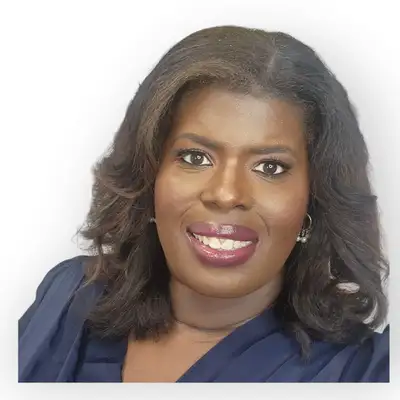
Hello. Hello, everyone. I'm Christian F. Nunes, the national president of the National Organization for Women. And this whole season at Feminism now, we've been talking about how to protect women in a hostile world. And one of the groups doing that hard work is Legal Momentum, which works to participate in cases that promote the rights of women. And so I'm so happy to have Lynne Shaffrin here with us today. She is the senior vice president of Legal Momentum. We're going to talk more about some of these cases and how they'll affect our rights right now. So thank you so much, Lynn, for coming and joining us today on Feminism Now. Are you ready to dig in?
Lynn Schafran [00:01:49]:
I am, and it's my pleasure to be here. Thank you.
Christian F. Nunes [00:01:53]:
Just to speak to now now really appreciates our partnership that we've had so long a Legal momentum and just amazing work that you all do, really, just to protect women. So let's kind of start right into it. I know one of the ways that Legal Momentum works to protect the rights of women is by participating in amicus briefs. Can you tell our listeners what exactly these briefs are and how they work to defend and protect women?
Lynn Schafran [00:02:22]:
An amicus brief means a friend of the court brief. Amicus is just the Latin word for friend, and it's a way for organizations usually, but it could be an individual who has information or expertise that would really inform the court, but that's not going to be brought to the court's attention in the briefs from the parties. I myself have been particularly involved, obviously, in amicus briefs or direct briefs that relate to issues of gender bias in the courts. So the Supreme Court actually has special Rules for filing amicus briefs, you have to cover things that are not dealt with by the parties. And you have to indicate in your brief if anybody paid you or somehow put money into this effort. It's an interesting issue from an interesting strategy, shall we say, from the point of view that over the years there's been a lot of discussion about whether these amicus briefs are worth the paper they're written on, do they make a difference? And it's been interesting over the years to me to see how often I see judges commenting on how helpful this information is. So, for example, I've done a number of briefs that relate to the Hague Convention. This is an international treaty which provides that a child who has been wrongfully abducted from what's called the habitual residence should be promptly returned unless doing so would expose the child to grave risk of physical or psychological harm. This has become a very problematic treaty because when it was written with good intentions, the expectation was that the taking parent was going to be a father who was not happy with the custody decision of the habitual residence Court and who was fleeing with the child to his home family. Well, it's turned out no one listening to this broadcast will be surprised to learn that the data show us that about 70% of the taking parents are mothers who are fleeing domestic violence, sexual violence, abuse of their children. And it's taken years to try to move this so the courts would begin to understand what the harm is to children in these cases. Because there is so much misunderstanding. These amicus briefs, these friend of the court briefs, really are a very important way to educate the court about the broader effect. What's the effect on society at large going to be? What's the effect on other areas of the law going to be which you judge so and so might never have thought of and which not is not in the party's briefs?
Christian F. Nunes [00:05:31]:
Thank you for that very detailed explanation. Because what I think it helps everyone understand is the fact these amicus briefs actually help bring, like, a holistic perspective to how something might impact community impact, a, a party or a player. And so I think it's very helpful to kind of hear about this. There are some particular cases that we know that you all are participating in that we definitely wanted to hit on. Because I feel like right now in this landscape we're experiencing, they also are very, very relevant to what we've just been experiencing in, you know, in our country. One of the most important ones of these briefs that you all have done in 2024 is us versus Rahimi and I know some listeners may know a little bit about that, but can you talk about this and talk about the intersections that we see coming up within this Rahimi case?
Lynn Schafran [00:06:27]:
United States vs. Zaki Rahimi is a 2024 Supreme Court gun safety case with literally life or death potential consequences for all of us. This federal ruling that was challenged provides that an individual who has been a victim of domestic violence can seek a protective order against the abuser and have that person barred from owning firearms. It is not exaggeration to say that these gun safety cases that involve domestic violence as Rahimi does. This is literally life or death potential, not just for the victim of domestic violence, but for children, family, friends, law enforcement, and the public at large. If you look at the background of the shooters in mass shootings, 60% have a background of domestic and or sexual violence being exposed to domestic violence as children and perpetrating it in their teen or adult lives. So it's been really important to be able to give, as you talk about the broader view, the more holistic view of what this individual case means. So this is a challenge to a 2024 statute which permitted a person who had a civil. A civil, not a criminal protective order for the court itself to impose a bar on the individual who is the abuser in these domestic violence cases to a bar to that individual owning a firearm. Now, the case itself, the plaintiff was a guy named Zaki Rahimi. Mr. Rahimi was the perfect offender, if you will, in this, for a case like this, because he literally had never met anyone he didn't want to shoot. I know that that sounds like exaggeration, but Mr. Rohimi, the civil protective order and the civil order barring his from owning a gun was imposed because he had assaulted his girlfriend. He had threatened to shoot her if she told anybody, and he did fire his gun at the observer in the parking lot, whom he saw observing his assault on his girlfriend. And then after the order was issued, he proceeded in very short order to be involved in five separate shooting incidents that had nothing to do with domestic violence. The police came to his home, and lo and behold, they found this civil order barring Rahimi from having a firearm and it's stalking, et cetera, et cetera, his girlfriend. And of course, he was violating this right and left. So he was convicted in federal court. But while this case and the appeals were pending, the Supreme Court heard a case called New York State Rifle and Pistol association versus Bruen. And this is a case which has literally thrown the entire judiciary into confusion. That is not an exaggeration because what we have is an opinion from Justice Thomas that says that any law that is regulating an aspect of gun ownership has to be judged not by its impact on public safety, but. But to quote Justice Thomas, consistent with the nation's historical tradition of firearm regulation. So in other words, if there was no law in 1791, you can't make that law, you cannot do that today. So obviously there were no laws about domestic violence in 1791.
Christian F. Nunes [00:10:33]:
Let me just tap in here for a second because I think it's really important what you just mentioned for listeners to understand that Thomas was relating to a law. I, I just gotta bring it out. Let's just. We're gonna speak the truth for a second. That existed when only white men had the rights. Had rights, right? Like women were second class citizens, people of color were second class citizens, children. I mean, this law, he's quoting a law before as a justice and recommending this law as a reason that we cannot have any other laws when most of the people live in this country today didn't even have any rights. Like. So it's just, it's flabbergasting to me that that is the choice to say that life has not evolved, time has not evolved, people don't have rights. I just had to say that. But please continue.
Lynn Schafran [00:11:22]:
Well, this is a way of interpreting constitutional law that's called originalism. The idea that you go back to the beginning of time and if it weren't so dangerous and leading to such hurt and harm and death, it would almost be funny because you see these judges who are turning into pretzels to try to figure out how shall we interpret constitutional law in 2025 when we have the Internet and AI and things that were not even thought of in 1791. I can't point to anything that anybody had an AK47 at home in 1791. So let me just go back to the Rahimi ruling. Looking at this case, legal momentum joined an amicus brief that was led by the Brady Organization, that was Everytown usa. And what we, our concern was and our reason for joining the case was that given the Bruin decision, we were really concerned that this really important domestic violence no firearms law would be declared unconstitutional. One of the really big problems with it is that in the various opinions that came out of the 5th Circuit to begin with, which is considered the most conservative circuit in the country, and in the particular writing of a Judge Ho, who's on the fifth Circuit, there are so many judges who and organizations, their attitude is if the victim of abuse does not go through the criminal court and have some kind of a protective order and a bar on gun ownership from the criminal court, a gun owner should not be deprived of his rights. Now, if you don't know anything about how the justice system works, that might sound okay, that makes sense. However, getting someone to pay attention, a law enforcement officer, a prosecutor, a judge, to take a domestic violence case through the system, to take it seriously, by the time that happens in the criminal system, the woman and her kids would very likely be dead. And that is not, again, not exaggeration. So getting a civil protective order provides a way for the victim of abuse to get into court and to get something on paper that is protective, that she can show to the police and that hopefully will have some impact. Now, what's happening as a result of this Rahimi decision, which came out the way we hoped it would? Well, you just never know what's going to happen. So we're seeing, for example, an issue that is really hot right now has to do with whether teenagers can own guns. And when I say that out loud, it just sounds insane, but that's what we're up against. So there was a case Last July, the 8th Circuit ruled that Minnesota's ban on 18 to 20 year olds obtaining a permit to publicly carry a handgun is unconstitutional under Bruin. I've done a lot of work on teenage domestic violence and a lot of research on neuroscience and what we know now about when brains mature. And I was wondering if anybody made an argument about what we've learned from neuroscience and how that might inform how we're going to deal with teenagers and guns. And I was told that that argument was made to no avail.
Christian F. Nunes [00:15:16]:
So here's the thing that's so interesting to me and, and when you brought up the point about, you know, the neuroscience and you know, my back, my background, I was child therapist and adolescent therapist and, and then also a trauma therapist and a victim advocate. And I, I've seen all this like, I used to go to court with people, you know, when they were trying to get protective orders and helping them through the court process. And then I've seen it on the side of working as a child and adolescent therapist and I've seen, you know, children actually get killed by their teenage partners. I've seen all of this, like, actually unfolding that I was thought to myself as like, there's a problem in our society where we have this bias actually to some, some teens, more than others. But like we want them to be teens, but we also want them to we assume that they think as adults and their brains have developed enough to really fully understand as an adult and they just do not. But yet we're making support decisions. Right. But it's at one point, Lynn, do we start looking further into how we have to also take in consideration things like neuroscience. And I'm going to bring up another case and why I'm bringing this up. But we're going to take a quick break for our action now and then we'll be back to talk more about this and how it links to other cases that we're seeing when science is being questioned for safety.
Christian F. Nunes [00:16:40]:
Listeners, a time is approaching. We're gearing up our NOW national conference. We're so thrilled to be both in person and online this year. And our in person portion will be in Las Vegas. Who said feminists can't have fun? We know we can have the most fun because it's fun. We can all share in. So join us this year at NOW National Conference from July 11th to 13th. We will have inspiring speakers, we'll elect our national officers and so much more. We love to see you there. So go to now.org and click on the banner that says Now National Conference to sign up. And before we get back to our interview, this is your other Action NOW. We're trying to reach a wide feminist audience to bring together a movement that empowers all of us. And to do that, we need your help. So please share the show and maybe even rate us on your podcast app. It will help get the word out. It's a little action, but a big help to now. So now let's get back to the conversation. Lynn, before we went for break, we were talking about, you know, the teenage cases of the gun violence and it brings up the point about neuroscience. So one of the other cases that this reminds me of is the FDA versus Alliance for Hippocratic Medicine, the mpristone case about this drug that has been approved for more than 20 years, right to use a medication, abortion to terminate pregnancy. That's needed. But now we're seeing that the fifth Circuit Court court decide to ignore all of that history, all of that science with this drug and make it much harder for individuals who need it to get it. So why do you think we keep getting in this place where we want to? We're willing to go back to laws are in place just hundreds years ago to apply for why we're going to justify someone's rights. But we're not willing to look at where we are right now in 2025 and what's taking place and how the world's evolved and most importantly, why we're not willing to look at science and safety and some of these court rulings.
Lynn Schafran [00:19:01]:
Well, now we have, in the wake of Dobbs, just this virulent attack by anti choice people on anything to do with reproduction. And I use the phrase anti choice very deliberately. Language matters. These people are not pro life. If you were really pro life, you wouldn't be concerned about standing aside and watching a young mother die of sepsis and leave her children, her living children with no mother, which is. We know ProPublica has been publishing articles about women who are dying in Texas and if they're not dying, they may never be able to bear their own children and their health compromised. And then of course there's, you know, very concerned about the being in utero. But as soon as they're in the world, well, we have no childcare and we have no decent education in many places. We have so many issues around what it's like to bring up a family that we're not taking care of. So I find that this is really the height of hypocrisy for these people to call themselves pro life, but we are stuck with it. And apropos your question of, you know, why not look at the science and what we've learned, I think that that's a logical question. But we're in an age of total illogic and we have to realize that the anti choice people are not interested in logic or truly being pro life. They're looking at any angle. And this case, FDA alliance versus Hippocratic Medicine, illustrates the insanity of what is going on. So this was a group of doctors who were anti choice and who came together to invent cases to challenge every possible thing that they could. And they were turned away and they lost air quotes in the Supreme Court. Not on the merits. The Supreme Court said we're not going to reach the merits of your claims that the FDA was sloppy in approving these medications because you do not have what is called standing. Now, standing is the polite way for saying you have no skin in the game. That's what it comes down to. If you don't have some injury, if you are not directly harmed by what you're in court for, you can't stand up for another party. If they want to come to court, that's their business. So the concern that we have is that the case is going to look Back at a law from 1873. I am not making that up. It is called the Comstock act. And it was the invention of a zealot from New York City who got this law passed. And it's an anti obscenity law. It has absolutely nothing to do with reproductive rights. It was about sending pornographic and obscene materials through the mails. The words abortion, et cetera do not appear in this legislation. So. But it did say that you couldn't send information about contraception through the mails and so on and so on. So there are people, anti choice people who are seriously raising the Comstock act and sort of giving it new life. They're pro life in that context. They want to bring back this 1873 legislation and have that applied to mailing contraceptive information. Contraceptive. A prescription or the medications itself.
Christian F. Nunes [00:23:15]:
Oh, my goodness, Lynn, this has been such a wonderful conversation. What's your good news? I need some, because we need some.
Lynn Schafran [00:23:23]:
There's a woman named Brenda Evers Andrew who has been on death row in Oklahoma since 2004 when she was convicted of murdering her husband. The prosecution in that case was so deeply gender biased that when you read the transcript, it just takes your breath away. Among other things, the prosecution elicited testimony about her sexual partners reaching back two decades, about the outfit she wore to dinner or during grocery runs, about the underwear she packed for vacation, and about how often she had sex in her car. But finally, this very tortured case. Remember I said 2004, she was convicted and she's been on death row and solitary confinement all these years. In 2024, the case got to the Supreme Court. It wasn't until January 2025 that they took this on and they issued an opinion, which is the good news that you want, Christian. They said this kind of gender bias may not be harmless error. And we're sending this back to the 10th Circuit Court of Appeals. So here we have a case where we have an opportunity. Well, first of all, what the Supreme Court itself has said is already a basis for going forward in many other different kinds of cases where stereotyping about gender or race or other issues is profoundly prejudicial. But depending upon what happens in the 10th Circuit, we could really have a strong statement about how damaging gender bias in the courts is and how we need to guard against this kind of free floating sense of prosecutors and others who feel that, listen, we know this is the biases that the public has and this is what works, and this is what we're going to do. So that's my good news for the day.
Christian F. Nunes [00:25:31]:
Well, I really appreciate that because to me, that case even speaks more than just gender bias. I feel like it's the intersections of racial bias and gender bias mixed together because we know that a lot of times women of color often are treated harsher and criminalize a lot faster than anybody else as well. And I see the intersection. But I think it's so important that this case that they made that, that, that statement because 20 years she's been waiting, right? 20 years. But I think this is why the work that you all are doing is so extremely important and so extremely needed. And I just thank you all for taking on these cases and doing this work. So I thank you. Lynn. I think you really showed our listeners today you know why this is important, why Legal Momentum is important, the work that you're doing, and why we all have to stay committed to the spike.
Lynn Schafran [00:26:27]:
Well, thank you. We. Oh, we appreciate appreciation.
Christian F. Nunes [00:26:32]:
If anybody wants to get more involved, you can visit legal momentum.org and find out more how you can be supportive of the work that's being done there. And on that note, listeners, we will see you in two weeks. Let's again, let's think. Lynn Schaffran, senior vice president of Legal Momentum, for coming with us today.
Bethany Brookshire [00:26:53]:
Thank you so much for joining us on the podcast this week as we get educated on the challenges to women's rights. If you learned something this week, we hope you'll like subscribe and share the show. You can also send us your thoughts and questions at feminismnow@now.org. Head to Now.org to read up on Now's core issues and our approach to advancing women's equality. Together, we can make a difference. Thanks for listening and we'll see you soon.