Subscribe
Share
Share
Embed
In today’s business world change is the only constant, and mastering transformation is the ultimate key to success. Welcome to Shift & Thrive!
Each week, Host Natalie Nathanson will bring you conversations with CEOs, who delve into how they successfully drove critical change in their organization.
This show is sponsored by Magnetude Consulting, bringing you the thinking power of a Growth Consultancy and the Getting-It-Done Power of a full-service B2B Marketing Agency.
Natalie: [00:00:00] I am super excited to introduce today's guest. He is a serial entrepreneur and founder who has successfully built and exited two companies and is currently leading his third. Earlier in his career, he held leadership roles across sales, financial services, and identity technology before launching his own ventures.
In 2024, as part of his last venture, he was recognized as a CMP Rising Star and named Fintech Startup Founder of the Year. Today, he's applying all of his lessons to two of AI's biggest challenges: building trust and accountability in a world of digital identity, fraud, and autonomous systems. In that, in that regard, he is the founder and CEO of DeepIDV, an AI-native identity verification and compliance platform.
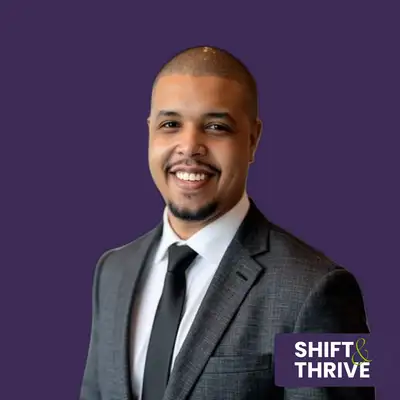
Sean Markmello, welcome to the show
Shawn-Marc Melo: Thank you. Wow, that was a great introduction. I should use that everywhere.
Natalie: Feel free. Feel
Shawn-Marc Melo: Yeah,
Natalie: Uh, I'm really excited to, uh, to dive in with you today. And, you know, one of the things that really stood out to me from our [00:01:00] last conversation was, uh, you know, while you're building in one of the fastest changing industries that's out there these days, in my opinion at least, um, I think, you know, a big transformation, um, actually started with you and how you're approaching this company, uh, after two successful exits.
Um, so wanted to hear a little bit about, uh, those shifts and kind of how are you approaching the company differently, uh, this time, and kind of how is that playing out?
Shawn-Marc Melo: Yeah, I think, um, you know, you, you learn something new every single time. Um, the very first time was retail-based, so there was a lot of lessons there, um, especially when it comes to how to get started on the next one, you know, dealing with a variety of different tax codes and things that just at the time I had no clue about.
Um, and so you bring those lessons in, into the second one. And then, you know, again, there's, there's mistakes and different things that happen, but you do your best and, [00:02:00] and you're, you're basically at this point by number three, four, there are some who have even been on number six, um, you pretty much have learned some of the initial stuff of getting started, how to actually get it started, what it looks like to scale, what it looks like to, you know, have down months, what to do in those down months.
Um, so you know, it's, it's, uh, this time around, um, the most important part was the launch. Um, how did we do that? Um, did we set ourselves up with the right tools to do that? And do we have the right team to do that? Um, those are some earlier mistakes that I made that, uh, you know, I was able to correct this time around and, and so we've had some, some great success
Natalie: Yeah, that's great. Um, I would love to dive into each of those. You mentioned kind of the launch, the tools, and the team. Um, so talk to me about the launch. You know, what did that look like, and, you know, what was important to you in kind of setting that up for success?
Shawn-Marc Melo: Yeah. So the [00:03:00] launch was impromptu. Um, we didn't really have a date. It was one of those things where we'd had been building heavily since February 2025, um, is when we can say the first commit went into a GitHub repo. And then, um, by about fall, we were like, "Why don't we just do this specific trade show?
You know, all of us will come, engineers, me alike, sales." So we went to, uh, SAS North, which is in Ottawa, um, and that was our first debut. We had like a really tiny booth. It was like... Yeah, it must have been like, just like a, a hotdog stand size. Like it was tiny. Um, fitting six of us there. And that was our launch per se, like our way to show the world what we were working on.
Well, at least in Canada. And so at the time we had like our DeepCam hardware, um, which is all about physical [00:04:00] verification, and then our online stuff. And so it was well received. I mean, after that particular show, we ended up anchoring who I consider like one of our best clients to date, um, and a couple more.
And, and then the official kind of public online launch was in January. Um, and since then, you know, it's, it's been a continuous ramp-up, and us also trying to just figure out what our sweet spot is. Um, but yeah, that's kind of the story. But really honestly, we didn't have a date. We were just like... I saw there was a spot open and we're like, "Let's do it."
And it was literally a week before the show, so we had to reach out to their team. We had to get all these logistics together. Everybody had to figure out, "Okay, where are we staying in Ottawa? What are we doing?" And, and that was it.
Natalie: Yeah, I like that. I mean, it definitely has the, the startup hustle of like, let's do this and quickly like getting everything together. Um, but it sounds like the, the lesson was really around, uh, kind of the done is better [00:05:00] than perfect of like we- we're comfortable with where we are. Like, here's this opportunity, let's, let's dive in rather than spending like six months like prepping for a launch.
And sounds like you wouldn't have had those early customers if you hadn't kind of pulled the trigger when you did.
Shawn-Marc Melo: Yeah. Um, it's true. And I mean, it, I guess it did end up being the right time. You never know really. You can say that the... But I, I liked it. I, look, I, I think that we got in a situation with that early customer at the perfect time because they really helped us fix a lot of things in the wintertime. Um, so we were juggling a couple, and a, a couple customers that I'd brought in from previous industries and, and, um, yeah, they really just helped us fix, improve.
And I mean, that's what it's all about, right? Um, oftentimes, you know, products are launched and founders disappear or, you know, they don't follow up with clients and [00:06:00] customers. Like, I try to be in every single sales call possible. Um, and I try to reach with the customer as often as I can. Um, one, because they're paying us to use the product, but two, we also wanna continue to make it better for everybody and for them specifically, um, no matter the size.
Doesn't matter if you're one of our enterprise clients or if you're a smaller client. So I think that that's the mentality in business that you should carry forward. And, and honestly, we've both probably read books about successful entrepreneurs, and the ones that do that are the ones that tend to be the most successful.
And, um, that's, going back, is another lesson that I learned from not doing previously, um, not listening to customers or not listening to staff or employees or... So it, uh, definitely was the right way to do it this time around.
Natalie: Yeah. Yeah. I'm curious if you have any thoughts around, uh, I hear you on kind of taking in as much customer feedback as possible, but then [00:07:00] deciding what to act on and, um, right, not trying to be all things to all people, but kind of where you put the stakes in the ground. Is there anything, uh, any way that you think about that or how you guide your team on that?
Shawn-Marc Melo: Yeah. Um, well, we'll start with taking in all the feedback, big or small, out of scope or in scope, and then we'll just kind of look at what our roadmap is today and say, "Is this something that kind of already is adjacent to what we're doing? Um, or is it something completely new?" That's step one. And then, "Okay, how long is it gonna take for us to do this?
Um, what is the... What does it look like in terms of getting it done, and what does it look like in terms of more than just this particular person using it?" Um, we lay that out, giant, you know, digital whiteboard, and get all of that idea and scrum together, and then we push them through. Um, there are some things that we were asked back in February that we've included in, like, our June [00:08:00] update, um, just because things also change.
Things are dynamic, right? There was a time where we weren't really focused on one particular module, uh, but then all of a sudden there's a lot of customer interest, and you have that feedback from back there. So I think maybe you don't need to add everything, but keeping inventory on what has been said might actually lead to, you know, other improvements once it comes into fruition that you need to make that change
Natalie: Yeah. Yeah, for sure. Um, we have a client that, uh, has been very, I guess, similar stage, uh, to your company and been very iterative in the kinda new feature rollout based on customer feedback and just frankly like their development practices being an AI native. Um, and it's created a real, like, both opportunity and challenge as far as like what, like, you know, feature rollout looks like, uh, feature enhancement, uh, from the marketing perspective, right?
Like, uh, and, you know, how do you [00:09:00] launch those announcements? How do you, uh, make sure customers are aware, updating your differentiation if it kind of puts you in a different competitive position, um, but also without, like, inundating your customers with too much communication, and then they start to drown it out.
So I think it's definitely a lot to, uh, to navigate in that.
Shawn-Marc Melo: There is. And again, I think we're still finding a, a sweet spot of communication in that way. Um, but the typical channels, typical channels, I think that i- it's, uh... Our, our current kind of thought on it is let's really take hold of, like, visuals. So we've been releasing, like, a lot of visual, very short visual commercials of new features or different things that we do, and it seems to be resonating quite well, um, on what we're releasing or what we're doing or, you know, just incorporating what we're planning to do into that.
Um, so it's, uh, it's, it's definitely something that's [00:10:00] dynamic. I think that there's no real solid answer of how to do it. Um, you more just roll with what works for your company and what works for, for you and, um, and go from there
Natalie: Yeah, for sure. Uh, I want to talk about the second area that you had, uh, called out earlier, and that was tools. And I know when we spoke previously, you said, you know, part of your shift is thinking more like a post-Series A company, uh, than kind of an early stage startup. So I don't know if that's, uh, kind of the, the crux of it, or I just want to hear you talk about, you know, how do you think about kind of your, your tools or kind of stack or whatnot?
Shawn-Marc Melo: Yeah, I think we, I think we operate definitely more like a, a post Series A company just because, um, I funded the company early on. Um, so it was all... Basically, I was the pre-seed investor and the main person, hired everybody, brought the whole team together. Um, and then more recently we closed a seed. Um, [00:11:00] so we're kind of a little bit ahead of the curve in terms of how our team has grown, um, and what we've actually been able to release because of that, and we're very thankful for that.
And so that correlates right into the, the tools and stack that we use. Um, obviously managing a team of, you know, 20-plus people is, uh, you need quite a few different tools. Um, but I think again, um, we're all learning it together, what tools work, what don't. Uh, I try to incorporate all these tools from my corporate days and from this, "Okay, we have to use this roadmap, and we have to use this and this."
And then so we have a lot of guys from the, from younger generation who are just like, "Well, we wanna use this," or, "We wanna..." So it's, it's finding a good middle ground of what works. Uh, so far we can all agree that Atlassian has carried us, uh, pretty well with, with Jira and Confluence. Um, and then, uh, more recently Notion, [00:12:00] um, absolute game changer and, and brilliant team as well.
Um, but we're just running on the typical stuff. I think that, uh, it's just funny to see the differences between, you know, what I believed the right corporate tools were and what some of the guys who are fresh out of university and very eager and, and, and zealous and what they feel is the right. So we're just finding a good middle ground and continuing to grow together.
Um, I don't like to pretend like I run the show. Um, and I think I mentioned before, like I personally am extremely fearful of my creative director. Like, I feel like my creative director is my boss sometimes when it comes to brand and vision. So, um, I'm equal to every single person there, um, because we're all just working to make this the best we can, and everybody's got a say.
Um, whether you're a fresh intern or whether you're the CTO, doesn't matter[00:13:00]
Natalie: Yeah. Yeah. That's great. Uh, and I know we wanted to touch on team, so I know we're, we're going there now. Uh, I wanted to hear a little bit about your sequencing, uh, in, in starting the, the venture and kinda sounds like within a relatively short span you've grown to 20, uh, people. Uh, you know, what were the, the first hires?
How did you think about, like, who to bring on immediately and then kind of to where you are now?
Shawn-Marc Melo: Well, I actually spoke about this recently, but, um, we It was kind of a... It was tough. Um, I like to believe that everyone's, like, got this ability to become, like, a superstar, and, and that's not always the case. I, I do wanna bring up that, like, every- not every hire worked out. There were some that aren't no longer with us just 'cause it didn't work.
But the core of it is we finally identified the type of employee we want here, or the type of [00:14:00] person we wanna work with. Um, so the initial guys would've been, like, Omar Tahir, and Joey Chan, and, and Luka Pipilica. Like, those guys have been here since day one. Um, and then from there, we just kind of grew the team based on what they needed and based on what I thought was a good quality of person to have.
Um, and I think one of those, I think I shared with you before, like, uh, we have one employee, Mo specifically, Mo Az, um, who I love his story, honestly. He... And this, by the way, if for people to understand, like, this is why sometimes taking a risk on something that doesn't seem like the right thing can turn into great things.
Because Mo was, like, my TV installer handyman at, uh, at my house. Like, I'm not a very handy guy, and so Mo would come and do the TVs, and do different renos, and different things. And, and when we had moved offices, [00:15:00] um, to... When, and we moved our Toronto office in, um, Mo was there to install all the cubicles and do all of that stuff, and he kind of just asked, like, "What do you guys do here?"
And I said, "Well, it's a, it's a tech company. We're just a startup." And he's like, "Well, I've, I just finished school for it." And I was kind of shocked, 'cause I'd known the guy for two years. I had no clue he was in school for that stuff, and I had no clue he had just graduated. And, um, you know, he was a very shy guy, very quiet, and I...
He didn't ask me for anything. I was just kind of like, "Well, are you looking to get into the field?" He's like, "Well, hopefully one day. Like, right now the market, the job market's not the best." I said, "Why don't you just start Monday? You just..." He's like, he's like, "Oh, well, I don't know anything. Like, I'm..." I said, "Listen, don't worry.
We'll just give you time to learn." So for, like, the first month I just paid Mo. He knew nothing. Didn't know a single thing. I think it would... It's f- I should have recorded how the change, 'cause it was incredible. He literally was fresh, and, uh, I paid him for the whole [00:16:00] month even though he, he didn't know what to do, and he ended up learning.
Every day after work, he would just immerse himself. He would just be so interested in getting better, and better, and better. And right now, uh, Mo's easily one of our top three engineers. Um, he... And it just goes to show that you can develop those skills if you want to, and you never know. Um, 'cause I always think to myself, "What if I hadn't have asked Mo?
What would Mo be doing now?" Or... And so part of the hiring process is just getting people like that. Not in terms of work crunch culture, where, you know, you've got people who you're working until 11:00 PM at night for your product, 'cause that's very common in startups, is crunch, and especially in the gaming industry.
But finding people who use their own time to get exceptional, and who are so driven by just being [00:17:00] better versions of themselves, not just for the company, but just for themselves. That's what we discovered through Mo, was what we wanted to continuously hire here
Natalie: Yeah. I love that story, and I think great testament to kinda you and your leadership a- and Mo for taking that on. So he mu- must have a, a great transformation story, uh, of his own. Um, and I, you know, I love, uh, kinda what that, what that can bring to the organization. Um, earlier you talked about, you know, some people not working out, and I know, like speaking for myself, have definitely had times where I've waited too long to let somebody go when it became very clear they weren't a fit.
Um, curious, you know, if you've had that experience, and just how do you, how do you think about that?
Shawn-Marc Melo: Yeah. I mean, it's my, it's like my number one problem. Um, I think, again, there's that part that believes that, you know, um, everyone's bound for excellence. And yeah, so yeah, I've definitely kept people [00:18:00] past their, their expiry date, and there's a couple problems with that because, you know, if you... I, I wanted to keep them around because I either felt bad or, you know, the job market's not great, or it's a friend of somebody who's working here.
And, and so the thing is, is that when you continue to let them work there, and at a certain point they know, right? At a certain point, someone who's not performing or someone who's not at that level, they, they know inside that they're not. And so there's very strategic things that they do to just try and stay afloat.
Um, I have... You know, I can name, like, at least 10 or 11 people that we've kept, even at other previous stuff. And then so when you keep them longer, what ends up happening is you actually become the person in the wrong because you're giving them the impression that they're doing good work or that they're great or that they're this, and they don't see the administrative part behind it.
It's costing money. It's you're losing money. The company's losing money. That's not their job to think about. [00:19:00] Their job is to be like, "I showed up today. I did something today." You know, that's it. Um, my job and the job of, like, Omar and Joey and Luca, who are all in their respective positions, to make sure not only did we do the job today, but what's the health of the company like?
What's the direction of the company? How much did we lose on this? Um, did this affect us in any way? So yeah, I think it's, um, something we've gotten a little bit better at more recently is just pulling the plug, even just on things that, you know, um, with contractors too. You know, it was always like we were always trying to find more work for them.
Say, "We don't have any right now. We'll see you in a little bit," you know. "We'll, we'll call you soon," or, "Hey, you know what? It's not working out. We're happy to give you a reference, a referral or, and what have you." So I think it's gotten a little better. Um, there's still some gaps in getting, in, in improving it.
Um, there'll always be, you know, the opportunity to get better at, to, to a point where we don't end up hiring in [00:20:00] those positions. So I think that that shows that there's a flaw potentially in how we bring people on. Um, so yeah. It's, um, yeah. It's an unfortunate thing, but it's all about learning, all about getting better and, and it's, it's made us better by making those mistakes
Natalie: Yeah. Yeah, for sure. I think for me it's, one, making sure that giving the feedback, uh, kinda early and often to that person, so it should never be a surprise, and that kinda helps me, uh, feel right about, uh, about the direction. And then, uh, the other part is, you know, when it impacts clients or our work, it's, you know, I make that shift, uh, much, much more quickly.
Uh, but then, you know, even when it's an internal-focused role, uh, just feeling like it's not fair to the team, right? So it's not fair to the person, uh, but, but not fair to the team either, and kinda reminding myself of all those things has, uh, has helped me kinda move faster and more, more confidently in cases where something wasn't a fit with someone.[00:21:00]
Shawn-Marc Melo: And that's great advice, to be honest, and that's just the way it should be. Is, you know, we can preach that we are all the same and we're all working towards the same goal, but if we have that there, it's, it's, it affects everybody. So again, it's on me, it's my onus or, you know, Joey or Omar, whoever's made the hire, it's on us to identify and purge that.
Um, and so that's sound advice. I think, um, I think there's definitely room there to keep getting better at it, for us at least
Natalie: Yeah, yeah. Uh, all of us, I'm sure. Um, I wanna take us in a slightly different direction, and I know, like, one of the biggest leadership decisions, like, every founder has to make, especially, uh, in the early stages, is kinda what investments to make, you know, where to invest next. Um, and I know one of the big areas, uh, these days is around, uh, or in growth stage companies is around go-to-market, uh, because it's, you know, changing so quickly and looks different than it did, uh, you [00:22:00] know, a few years ago.
Um, and I know that's an area you're actively, uh, kinda focused on at the moment. So can you talk a little bit about, uh, kinda what you're seeing in the evolution of go-to-market, and then how that, how is that, uh, informing your thinking around, like, building that capability for your company?
Shawn-Marc Melo: The evolution is so interesting because looking at it, you know, from an early 2000s, like mid... You know, yeah, early to mid 2000s, like just before the mid-2000s. Uh, 2010s, sorry. Um, we would see marketing was this huge thing. It was you, you know, you would go to school, you'd want to get into marketing. It was the in-demand role.
And then for a little bit, it kind of died out. Um, it became very saturated, uh, SEO and all this stuff. And, and then the reemergence of marketing in a sense where it's not the traditional stuff. It's like an encapsulating role that takes over your socials, that takes over, [00:23:00] you know, how you're building out product, how you're displaying the product, where it's going to outreach, um, through, you know, cold channels and warm channels.
And it's this all encapsulating role, um, has been super interesting to see because go-to-market is the most expensive role right now for a startup. Uh, I mean, someone can correct me, but I, I'm pretty sure that, uh, you know, these GTM roles that you see all over LinkedIn and Indeed and everywhere, um, they're commanding large salaries because they're bringing in large amount of volume.
Um, some of the most successful, like AI startups that I've seen, um, in the last little bit have had talented go-to-market, um, executives or founding go-to-markets who've just absolutely skyrocketed the company brand and the company sales. Um, so it's, it's, it's tough for us. I think that
It's gotten to a point now where a lot of [00:24:00] people are trying to shift into it, um, because it's the new hot thing. So now what's important is to find the right go-to-market, 'cause it is an expensive role, and it's one of those things that you don't want to trial out. Um, so we've mulled, okay, well, do we use a company to do this?
Do we, you know, use an individual? Do we hire internally? Do we... What do we do? Um, and so we're still going through those phases of, of who do we commit to on it. Um, like I said, they're commanding, you know, this amount because they're bringing in the equivalent of such. But you wanna make sure that you're making the right choice with it.
We're open to say that we haven't found the perfect fit. We've come close and, and engaged, and we're still engaging, but we haven't found that perfect one yet. Uh, but it is cool. It's definitely cool to see the resurgence of that. Um, it's a role that I would have never imagined would have its own title as GTM, [00:25:00] and it's, uh, it's now a pinnacle part of startups.
Um, it's now an essential role, and probably what founders who haven't even launched their idea are looking for now. If you're... You know, before it was like you have your, your CEO and your co-founder is a CTO. You know, you might end up wanting to add a third co-founder who's go-to-market. Um, that's the shift that's there.
So it's, it's cool to see, definitely
Natalie: Yeah. Yeah, for sure. I mean, I'm, I'm obviously a, a bit biased being in the, in the go-to-market world, but I think, uh, part of that, like, growing importance is, um, you know, the, the span of what you need to be thinking about in go-to-market and, like, having it all, like, truly aligned, not just kind of a check the box on kind of alignment.
Um, but right, like, your company's positioning, your product, uh, kind of how AI, you know, fits into the, the roadmap and day-to-day use kind of in the business, rev ops, customer success, [00:26:00] sales. Like, it's so many components that need to kind of come under that, which is both, like, why it's so important, but then, you know, to your point, why it's hard to, uh, to find that, that ideal person, and that looks different for every organization based on, uh, stage, based on your industry, like how technical of a sale is it?
Um, how much of your strategy, of your, like, revenue and growth strategy have you figured out versus, like, do you really need this person to do that? Um, so I think there's a lot of, like, costly mistakes that companies can make when they're, uh, maybe haven't defined their growth strategy and, like, bringing on, uh, a go-to-market person that they expect to, like, fix growth, like quote, unquote, um, but don't yet understand their, you know, their ideal client profile, their differentiation, their buyer journey.
Um, and you can figure that out with the right go-to-marketing and a partner re- or leader. Um, but recognizing that if that shifts, that might be a different [00:27:00] person or resource that is the expert in kind of how you're going to market. Um, so it's ... Yeah.
Shawn-Marc Melo: It's, um, it's something that, uh, we, we definitely hope to, to get and capture soon. Um, and just I feel like it would be just such an essential connection role, um, for all of our departments. That's another thing that becomes a, a little bit of an issue when the company gets so large, um, and as you get larger.
Um, and it's just kind of how do you connect everything that you're doing from the development pipeline to the sales to all of it, to your account. How do you connect all of that? And that's through the go-to-market strategist right now. So I'm welcome to, to all of your feedback and advice, um, on the direction that we should go
Natalie: Yeah. Yeah, for sure. Happy to, happy to share. Uh, I am curious to hear, you know, based on what you've learned about your kinda sales process, [00:28:00] um, how is that impacting kinda the type of, uh, person you're looking for?
Shawn-Marc Melo: So I think that I would like ... What I, what I thought in our, in our head was like, you know, I built out the sales team based on traditional sales that I've done in past. Um, and so the sales team today operates in that role. A lot of our new business and strategy has been, like, attending events, right?
Um, but on the outreach side, we have our SDRs that handle all that. I actually think that the strategy's not even the best. I think that we there's- we would want somebody to come in and actually identify all the areas that we're not doing well in. Um, so I wouldn't want what we're doing today to influence who's coming in.
I'd actually just want who's coming in to influence what we do today. You know? Um, our s- our s- yeah, our sales
Natalie: Though I do think, you know, you have a pretty... I [00:29:00] imagine you have somewhat of a technical sale, or the type of audience you sell to has a certain kind of profile. Um, you want to talk a little bit about that?
Shawn-Marc Melo: Yeah. It's, uh, it's compliance officers and it's CTOs. It's a totally different, um, buying demographic. They're very technical. They, they understand things a little differently, and they're not as quick to just purchase, you know, anything for the company. Um, it's, it's gotta be a decision that's a pretty big one for them, um, in the first place, especially in compliance, right?
Because you're dealing with regulators, you're dealing with auditors. So it's, it's an, it's a very important decision. Um, the buying time is a lot longer. The integration time can sometimes be two to three months, depending on, you know, the size of the company and their, and you know, how they're integrating.
Um, so it's slow. Um, it can be slow. It's not... Like I like to say, you know, we had a, a meeting once, um, with someone who was like, "Well, you know, we just, we [00:30:00] learned, uh, we recently put money into this, you know, go-to-market company that, uh, they did 5 million in sales in 90 days." I say, "Well, it's totally different."
Um, who they're selling to are teams that need marketing. They're the tools that are needed are being purchased by marketing and sales and founders directly. So the sales cycle is a little different. They're more eager to try what's new just to get a 5% increase in sales or to have these metrics increase.
Like for us, um, you're purchasing a product that oftentimes you're upset that you're paying for because it's a regulatory requirement. Um, you know, a fintech company is, would jump for joy if they found out that they didn't need to pay for their, you know, KYC anymore. We're not necessarily something that adds value all the time for every company in terms of like actual revenue.
We're a [00:31:00] safeguard that protects your company for sure. Um, we're there to help you with regulators and to help with compliance. Uh, but it's an added cost, not something that's going to bring you more, right? Um, all the time. There are certain situations where that's not the case. So, um, it's, it's, it's, it's a slower, different process, but it's, we've learned how to approach it, um, what compliance officers and CTOs are looking for and what they truly value.
So that's been a, a large reason why we've also seen success recently
Natalie: Yeah. Yeah. Um, I think that's really, uh, really helpful to think about, um, and kind of goes back to the point around why, uh, there's no kind of one-size-fits-all, like, go-to-market leader, right? It's so specific to, uh, like how your go-to-market needs to unfold and kind of who you're, who you're selling to, how they want to buy, how that's shifting, uh, in the market.
Um, and I think, you know, [00:32:00] because there isn't really, like, one-size-fits-all, uh, advice, uh, around kind of who or what to look for. But I do think, uh, generally, like you want someone, it might go without saying, but I see, I see mistakes happening here of like hiring someone that's too green, right? And so you want someone that's seasoned in business overall, uh, ideally that either comes from the industry background or selling to the same buyer type so that like, you know, one or both of those, they are not like learning too much and experimenting on the company's dime because I think at that point, uh, it can become risky that they're coming to the wrong conclusions because they don't understand the nuances of kind of the industry and especially, you know, being in identity and compliance.
Like there's a whole different language to learn before you're even kind of ready to start kind of putting your stake in the ground. Um, and like you were talking about earlier with, uh, uh, with Mo, right? You want someone who's passionate and plugged into the shifts taking place in the [00:33:00] industry, um, and figuring out who is truly kind of doing that work because there is so much changing.
And so someone who doesn't have that natural passion is gonna be doing, uh, the organization, uh, a disservice or relying too much on what worked, you know, three years ago, five years ago, et cetera, that like just does not, uh, apply the same way today. Um, and then I think there's a number of these like soft skills, um, that are prevalent across the board of being kind of humble, being eternally curious, being data-driven, being collaborative.
Like it's, it's such a key role where like one person can't be the expert in all of those things in the organization. And so someone who's really good at like asking the right questions, uh, not having presupposed ideas of what kind of, what that should look like, um, and then is kind of working well, like, you know, cross-functionally.
Shawn-Marc Melo: You, you nailed it on every single point. It makes sense. You're, you understand this business. It's, uh, it's, [00:34:00] um... Yeah, that's, that's ideally exactly. And then you hit it right the, with the collaborative part. Um, look, it, it's, it's something new to learn. You really gotta come here, you gotta learn this whole thing and apply a different strategy.
So that's another thing too, and, and what I've started actually asking, you know, as we approach finding the right person was, "I'm happy that you have great numbers there, but have you ever done this here?" 'Cause it's just different. Um, so yeah, as you just ab- I need to rec- I need to take that snippet and play it every morning when I'm, when I'm making the look
Natalie: There we go. We'll make sure you have that.
Shawn-Marc Melo: Yeah
Natalie: you know, Sean, I want to, um, you know, zoom out a little bit because you started talking a bit about the kind of audiences that you sell to. Um, and I think there's benefit for a lot of our listeners being kind of business leaders in different, uh, across different industries, just understanding the space that you're in, because I do think identity is evolving very [00:35:00] quickly, like the whole combination of identity, trust, compliance in the landscape.
So can you talk, uh, more generally about what are some of those big shifts happening in the industry, uh, that executives should be paying attention to?
Shawn-Marc Melo: Yeah. Um, the hot topic of pretty much the end of this year and probably all of next year is gonna be agentic commerce. Um, which essentially is, you know, agents, you know, whether it be Claude or local agents or, or ChatGPT, um, transacting on your behalf. Um, so this gives them a wallet. Um, this gives them the ability to buy things for you online, to open bank accounts.
Um, so that's a whole brand-new territory. Um, that's been the shift in focus that we've seen in the identity space, um, where new startups are emerging, specifically focused on agent identity, um, or existing identity companies are starting to prep the tools [00:36:00] for agentic identity, which is a mixture of, um, identifying the actual agent that's transacting on your behalf.
Um, kind of in simple terms, creating like an, an, an audit trail, a digital audit trail for this agent, a digital capture of, um, where this, this agent is, is transacting, and then who's behind the agent as well. So with the traditional method of KYC of like, hey, so this is John Smith, he's 19 years old, he's transacting on this specific agent, um, and this is what they're attempting to accomplish, be it opening an account or buying a new shirt from a, from a Shopify store.
Um, so that's the biggest shift that we've seen. How it's being handled, it-- everyone's got a different opinion. Um, I mean, we've created a solution, and I say it with lackluster in my voice because it's like I don't... I have a controversial take that I just [00:37:00] don't agree with the way that a lot of companies are approaching agent identity in the first place.
Um, one of the biggest struggles in identity today is that there are so many providers out there. Like, there's thousands from all over the world. Um, with that being said, of those thousands, you know, they're servicing a bunch of different companies. So you as a consumer might open an account with Chase Bank and you're doing a KYC from your, from your phone with one company.
Then you go over here and you wanna order something off Uber Eats, and now you're doing a KYC with another company and another company and, and it just keeps on going. Your, your stuff is spread out into so many different places. You're doing it six, seven times a week. Um, and do we really want- To do that with agent identity as well, where it's like you've got to use this specific vendor to get to this specific product.
Now your agent has to get an identity with [00:38:00] this specific vendor to go to this. So, I mean, did we build the solution? Yes. Am I excited about it? Not really. We're trying to actually do a lot more research and a lot more, uh, with our research team, um, of what is a better solution than what we're doing today.
Uh, we've got some ideas. We've been working on a couple different things that, you know, we're hoping to release around fall. Um, but, um, yeah. And it's not to knock anyone who's built great agent identity products or even the existing... Like, they're awesome. Um, you know, I, I, I think of companies like Vorum.
Um, they've built an infrastructure layer for agent identity, uh, for enterprise, for, for big enterprises' internal agents. Like, that is... It's really cool. When you actually rip out the technology and how it's built and what it does and how safe it is and its guardrails, it's brilliant. Um, I just think that there's a different way to approach this en- en masse.
Um, and so [00:39:00] that's what we've been trying to discover and think about. And I don't think it's a problem that, you know, DeepID or Deep Identity, which is, you know, the company that operates DeepID, I don't, I don't think it's gonna be just us to solve that. I think it's a multi- multi-provider effort. Um, be it something I bring up at a future, you know, association meeting, um, you know, where a lot of us con- conglomerate anyway.
Um, I, I... Yeah, it is something I plan to bring up, but it's, it's more so how can we all come together and make something that actually is just unified, or at least that has an easier method for consumers. Um, that's my thoughts on it. I know it's a controversial take, but, you know, it's the new hot topic of 2027 for sure is gonna be that.
And, uh, the identity space in general has been pretty much stagnant for a while in terms of it's a simple process. Snap ID, snap your face, compare it to ID, make sure it's not fraud, done. [00:40:00] Um, now we're adding a whole different approach. Okay, it's no longer just snap your ID and take a picture. Now we've actually got to identify, is this a deepfake?
Which is what I was gonna get into next. Um, deepfakes are the hot topic of this year, and I think will be for many years to come We have, we consider deepfake to be one of our important modules here at DeepIDV. Um, and a lot of companies as well consider the same, um, are starting to consider it more. Um, they're rampant, rampant, especially in Asia and Africa.
Um, lots of advanced romance scams, and I've spoken about this a couple times in the last month, um, and at an event as well. These, these romance scams now are not even often being reported by the people who are being scammed. They are
Natalie: Can you explain for us kind of what, you know, what's a romance scanner and a, and a
Shawn-Marc Melo: Sure, yeah. [00:41:00] So a romance scam traditionally used to be, you know, you, you think you meet somebody online and you develop a relationship with them, and it isn't the person that's being advertised to you.
Um, and you're s- you know, they're a- they, at some point they ask you for money, be it for some stuff, or maybe they're just asking you for help and you think that you're giving money to someone that you have a relationship with. It's not that person. So traditionally it used to go through email, as a lot of, of people remember.
Um, it went through email, then it upgraded to different various platforms that exist today, um, for that. Um, but it never extended to, like, phone calls and video. Oftentimes that was a massive red flag that a lot of, um, older folk especially, um, just didn't clue in on. You know, there'd always be an excuse why you can't go on a video call or why y- your, the phone is muffled or they're using a voice changer, you know?
So that was the old way of doing things. [00:42:00] The new way is we have the tools to swap the video live in real time, and we have the tools to synthesize voice that are actually released publicly, for everybody to use. So, and this, even take a step back. AI's advancing every day at this rapid pace. Every week Anthropic's got a release.
OpenAI's got a new release. There's all these new tools. We're not really dissecting what's happening on the dark side of things. Um, a lot of things are moving at a very fast pace, and we're, you know, we're in some of these groups to really check and see what things are going on in the deep fake space.
So there are a couple Telegram groups that are out that, you know, they're exchanging, "Oh, there's a new deep fake pack to pass a specific identity provider." Like, they're naming identity providers, and here's the pack to pass this, or here's the age re- That's what's going on. So we're, we're purchasing these, training on them, reversing [00:43:00] them, really trying to continue to fight it and, and one week we're ahead.
One week we're like, "Yes, we're, we're better. We can, we can catch this." And then two weeks go by and then those same guys have new packs that are out that are ... So you're just, you're going back and forth. And so that's the danger of deep fake is agentic commerce, like I said before, is just we'll have a standard And we'll improve upon that standard, but it's a standard.
With deepfakes, you're dealing with the people who are actually using them, and so they're gonna continue to get better. We're gonna always need to continue to get better. It's like people who used to print fake IDs for you to go to a bar when you're underage. It's the same thing. Um, eventually we have tools that fight that.
For now, we're fighting something that's fairly new and very, very, very advanced, Natalie. Like, it's... These, again, these romance scams are not being reported by the people who are experiencing it. They're none the wiser. They're on the phone. They're video calling with these people. They're doing all the things that used to be red [00:44:00] flags before, are perfectly green now.
Most of these scams are being reported at a bank level because the bank is noticing unusual activity, and they're the ones that end up reporting, and that's when the authorities get involved, and they're like, "You are not this person," and they have to break the news. And these, these poor folk, usually elderly, are mostly like, "No, I got on video.
I have photos and calls," and it's, it's like that. And there's even a whole industry in marketing. You think about that, Na- Like, and I know you know this, Natalie. We have AI-generated UGC content, right? Where people are... They get on their, their, turn on their webcam, completely changes their appearance.
They're talking. They're interacting. But it's a completely different person. Um, so that's, that's the level at which we're at today. And so we need the right tools to fight that, um, because it will be used for more and more advanced fraud when it makes its way [00:45:00] to North America on scale. Um, not that it's not here today, but it's just a much worse problem over in, in Southeast Asia and, and in, uh, Africa.
Uh, but it will make its way en masse here eventually. So we're just... Yeah. That's the topic that I
Natalie: why we need the solutions now from companies like, like yours and ecosystems like, like the one you're, you're working through. I think it is, you know, very overwhelming to think about all the different ways that this plays out in, in everyday life and, like, not being able to trust anything you see online.
I think today's kids are, like, being taught that in school. Uh, but even as an adult who's in this space, like, I am constantly questioning what I'm seeing. But then if the default becomes don't trust anything, the... You know, we need to get reliable content from somewhere. And so I think it just creates, like, really big challenges in, in, you know, day-to-day life, like, not to mention kind of our, our business lives.
Shawn-Marc Melo: Yeah. And it, it's, it's, yeah, it, it's gonna get much, much worse. But the tools are important, and not [00:46:00] just any one tool. Um, I think that in this particular industry, a lot of us have to come together. We've partnered with a lot of different deepfake companies, um, in order for us to combine research and data.
Um, one of them being Scam AI. It's just like, you know, they're, they're researchers, they're very, very brilliant guys. And so we're saying, "Okay, well, yeah, we do sell similar products, but let's bring our research together," 'cause this is just a problem that, again, not one company can handle. Um, it's gonna require lots and lots of, of continuous improvement and data in order for us to get to a place where, you know, we're ahead of them by a couple months, not just a couple weeks.
Maybe even a couple years, right?
Natalie: Yeah. I know it's a, a very kind of big and complex topic, so this might not be a totally fair question, but if you had to summarize, like, what can, what can leaders be doing now to prepare their [00:47:00] organizations? Like, if you're thinking of, like, a kinda SMB lower mid-market, like CEO, founder, other executive, what should they be thinking about?
Shawn-Marc Melo: So I think that start with where you have the most contact. So if you're getting a lot of applications via email, for instance, it'd be great for you to have, like, an Outlook extension. If a part of your problem is if you're doing a lot of bank meetings. So a couple banks, for instance, they do their meetings on, like, Zoom or Google Meets when they meet with their clients or set up accounts.
Um, having deepfake meeting bots are important. So just identify where you would probably run into that the most, and then assess if you can get a tool in there for that purpose. Um, 'cause not everyone is going to have, like, an onboarding where somebody has to do deepfake detection. That's gonna be exclusive to, to, like, onboarding for an app that requires KYC.
But if your organization's just worried about fake invoices, [00:48:00] um, impersonating, you know, uh, a vendor and pretending for-- to your accounts payable that you need to be paid. Like, just identify that channel and apply the tool specifically there. Um, and I think it's something that needs to be roadmapped now.
It's not a future problem, it's a today problem. Um, and having something in place at least so that you can trigger it is going to be important. You don't wanna lose and then do it, right? Um, the importance is, is, is huge. Uh, another good strategy for it is, you know, figure out from now, even if it-- you're not making the decision, you know, in the immediate future, at least look at what it's going to be like in, say, six months for you to add this tool in and how it can be used.
Um, so for example, to give you an example, we had a, a company [00:49:00] that gets a lot of invoices and bills in to their email, um, to be paid. So what they've done is they essentially have a new inbox that all bills and invoices go here. It goes through a deepfake scanner, and then it shoots into their AP department once everything's been filtered.
Right? And they'd been planning to do this months ago. They, they reached out to us and said, "Hey, what, what can we do?" And I gave them this, and so they built out that infrastructure. 'Cause you also don't wanna just add something that doesn't fit with how you do business today, right? It's, it's-- it needs to, it needs to be frictionless.
So just take time. Depends on your business. But definitely, uh, prepare for it
Natalie: Yeah. Thank you. That was very well articulated and, uh, and compelling. Uh, you know, we're talking a lot about kind of, you know, business technology and the risks ahead. Um, I know there's also a lot of, uh, kind of exciting and, and fun things going on, and [00:50:00] you had briefly mentioned to me previously that you've done some robotics, uh, projects with your kids.
Uh, wanted to just spend a couple minutes and, and, and hear about that
Shawn-Marc Melo: So yeah, I, I, I don't do much in my spare time. I, you know, I'm pretty, pretty laid back person, but, uh, I, I really have enjoyed recently just... I've been fascinated with robotics, um, humanoids especially. So there's a small robotic dog, it's called, uh, Luna. Um, and the developers, they, they did a great job with this thing.
It's, it's super cool as is, but just playing around and kind of editing some of the parameters there, um, just seeing how far we can take it. 'Cause right now Luna's limited to whatever the software that's being shipped, which is fine. You know, that's what you have to do to get the, to sell en masse. So what I've done with them is just had fun kind of tuning and tweaking Luna so that it's more interactive, has a little [00:51:00] more, more emotion, has feelings, can, you know, really act like that robot dog that, you know, my kids envision, right?
Um, and it's been very interesting to see the results of how fast it improves when you give it, you know, the ability to self-improve. That's the difference. Um, 'cause out of the box when we bought it, it was like, it can... You know, it has an LLM built in, so you can ask it questions, and it follows you around the room, and it knows when you have a sad face on or when you have a happy face.
But this takes it a step further where it's actually learning, "Okay, this is when I can expect the kids to come home. Okay, this is when, you know, oh, she's sad," or, "Hey, she's really excited about something. Like, let me..." You know, so there's a routine now of learning and continuous development there. So I use that as a test because we do work right now with actual humanoids, um, out of our California office, and just working on the [00:52:00] identity for those things, which is a whole nother subject.
But, um, just tinkering with them to see, okay, well, if I'm doing this from my house for fun with my kids, imagine what some companies are gonna be deploying and shipping en masse in just a couple years. Um, that dream of a, a robot dog is not that far off. Maybe, maybe the Jetsons had it right back in, uh, back in the day.
One of my favorite cartoons, by the way. Um, but uh, it's, we're, we're eerily close to that, and it's, it's fun. It's, it's good to see. So yeah.
Natalie: Yeah, yeah. I love that. Um, I'm curious if there have been any kind of most surprising or, like, interesting interaction that your kids have had with Luna?
Shawn-Marc Melo: Um, yeah. So they love the, the AI generated, um, art feature for sure. 'Cause it does have an LLM built in, right? So it just, you can ask it to do things, so it's taken to another level. But the other part too is, like, it can [00:53:00] learn to play. So there are certain games that you can teach it, um, like, um, play dead or dance party or different things like that.
So that's where the, the age that they're at is, is more in line with that. Um, and it's just, again, it just, what we've done as, like, a kind of to work on it is just give it that ability to do it on its own without us having to prompt it. Um, which is, you know, I guess the whole movement into autonomous AI and, and all of that.
So that's one of the more fun things are the dance parties with it for sure, 'cause it, it does this really cool, cute robot dog dance that, uh, that makes them laugh every time
Natalie: Yeah. That's amazing. And I love being able to take technologies that we, like, should and want to be experimenting with professionally and, like, bringing them into our, our personal lives. Um, uh, just a good way to, uh, kind of bring, bring some of that to children and have them explore, and also just experiment differently.
So I love that you're doing
Shawn-Marc Melo: they're also [00:54:00] growing. Like, that generation is fully growing up in a situation where AI's going to be, like, an, a real time partner in their lives. Um, they're growing up in a situation where there will be, you know, humanoids and robot dogs that are fully functional and that do do things. So it's important, you know, to really introduce certain things from that age, including even just simple stuff like deciphering what's AI from what's not.
Um, I actually didn't mention that, but you brought it up. Like, I've had to do that with my kids because you're ... They watch YouTube, and they'll be, like, watching this car- this cartoon or what they believe is, and I'm, and I'm looking at it and I'm like, "This is, like, AI generated content." And, and it's not that that's a bad thing, it's just you just have to be careful because sometimes those generated things, you know, [00:55:00] they can, they can cause people to
They can cause kids to be confused about what's real and what's not. And so it's important to just explain and, and, and have it be their, their partner from now. You know? 'Cause that's just what's gonna happen when they're older anyway. They're gonna be the generation that leads AI, um, and probably leads AGI.
So yeah, it's just, uh ... It's, it's one of those things that I'll continue to do on a daily basis
Natalie: Yeah, yeah. I love that. I could go, uh, so deep into this area because, again, how we're teaching and training the future generation is something I'm very, uh, passionate about. But I know that we are, uh, at the end of our time, uh, Sean. And so if somebody wants to, uh, connect with you after hearing this, uh, episode, can you let listeners know how they can get in touch?
Shawn-Marc Melo: Yeah. So LinkedIn always there, um, but also to, you know, by email, just, um, sean@deepidb.com is great. And, um, or hello@deepidb.com too
Natalie: All right. [00:56:00] Wonderful. Wonderful. Well, thank you for everything that you shared, and I loved so much of what we talked about, but really appreciated, uh, hearing a bit more about your leadership, uh, philosophy and creating the space for, uh, new leaders to, to grow and your, your st- example with, with Mo. Uh, the conversation around go-to-market and why it's so hard to find that right person, but so important to kind of put in the time until you know that you do.
Um, and then just the future of, of digital trust. So thank you so much for everything that you shared with us today
Shawn-Marc Melo: Thank you. It was a pleasure. Thank you so much
Natalie: Uh, my pleasure completely. And thank you too to everyone who's listening. If today's conversation sparked something for you or you learned something new, and I am sure that everybody did, please pass this along to another leader, because we know that insights like this fuel fresh thinking and help all of us drive real transformation both in our companies and in ourselves.
So thanks again, Sean, and this has been another wonderful conversation on Shift and Thrive. I'll see you all next time