Subscribe
Share
Share
Embed
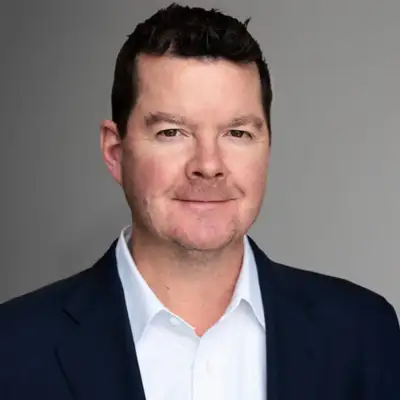
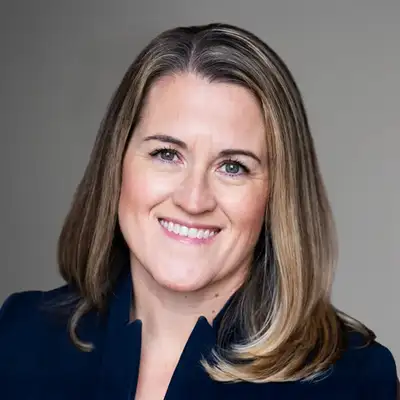
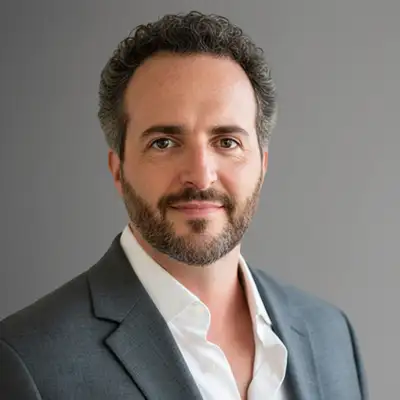
Meet the Insiders rewriting the rules of influence. Pulitzer Prize-winning journalist Brody Mullins and veteran DC strategist Lisa Camooso Miller interview the leaders who shape perception, move policy, and win when it matters. Not pundits or commentators – these are the operators driving some of the most critical strategies and outcomes in today's Washington.
S1E22 — DOUG THORNELL | TRANSCRIPT (TRANSISTOR)
August 18, 2026
DOUG
We need to act with a sense of urgency. Stop being the party of no and slow, and be the party of yes and now.
ANNCR
Behind every major policy decision. Every corporate strategy. Every Washington power play. Are the insiders.
And the new rules to win it. The Deciders with Pulitzer Prize-winning journalist Brody Mullins and veteran D.C. strategist, Lisa Camooso Miller.
LISA
Welcome to The Deciders, where we talk to the insiders rewriting the playbook for effective advocacy in Washington. Today we're talking to Doug Thornell. He's the CEO of SKDK, one of Washington's most influential public affairs firms. Doug, thanks for joining us.
DOUG
It's great to be with you guys.
BRODY
Doug, tell us how you went from Silver Spring, Maryland, to the cornfields of Iowa and then back to Capitol Hill.
DOUG
So I never wanted initially to be in politics or government. You know, Brody, you grew up around here, too. And I think there's this, like, natural rebellion for people who grow up in D.C. against politics. Right? So my idea was I would — I did college, came back home, I was like, maybe I'll move out to LA and do something in sports or entertainment.
And I was sitting in my parents' basement without a job, and my mom was like, you should think about a campaign. I did the Robert F. Kennedy campaign back in '68. You should think about it. So I got an internship on the Gore campaign in DC before they moved to Nashville, then got deployed to Iowa because I was told that if you like politics, it's the place to go to figure out if you can sink or swim.
And I fell in love with politics in Iowa. I tell young folks all the time that if you want a career in politics, you've got to do two things. You've got to work on campaigns and you've got to work on the Hill. That's where you learn to be an advisor. I sort of got to this point in my life — I mean, I wasn't that old, but it was a crossroads. I wasn't sure if politics was what I wanted, so I left and moved to Costa Rica. I know — I lived on the beach there, and I learned to surf and learn Spanish. And at one point I realized, though, that it was what I loved, and I came back from there.
I worked at a PR firm and then ultimately at the DCCC under Chris Van Hollen. I did four years there. And then at that point, you know, SKDK had approached me. I always loved the idea of going to a public affairs, advertising and strategy firm. It was a new firm at the time in terms of the public affairs piece of it.
Anita Dunn had gone back from the White House. Hillary Rosen was there. You had people like Bill Knapp and, you know, I sort of took a leap of faith because that part of the business for them was new and, yeah. And from there, I've been there for 15 years, became a partner in 2020 and then became the CEO in 2023.
BRODY
So you were at the top of the Democratic leadership in the House during the ACA, during Dodd-Frank, during the American Recovery Act, many other pieces of important legislation. What has being on the inside of that process taught you about how power actually works compared to how people think it works?
DOUG
So much of it, I think, involves compromise and collaboration. You know, even at that point in time, in 2007 and 2008, the Democrats had a massive majority, but there were still so many politics within the caucus that had to get right in order for us to pass those things. I just remember just watching the Speaker, and she was just masterful in terms of bringing people together and running meetings.
And so in that collaboration and then the compromise to pass the ACA, I mean, you know, that took about a year and a half and so many different ups and downs. So I really understood the actual nuts and bolts of how you make deals in Washington. And everyone says, oh, well, these sort of backroom deals that happen, but you kind of want those deals to happen in Congress.
You want members of Congress to be meeting and talking it through and figuring out — and some people have to give a little, some people gain a little — because at the end of the day, and I see this in all the reams of polling that I see, people want to get shit done. And Nancy Pelosi understood that better than anyone.
We got to get stuff done.
BRODY
Your firm also does a lot of campaign work. I saw that you produce something like 7 or 800 ads per cycle. How does that strategic process look?
DOUG
Yeah, we did. I think we did 1,000 in '24. So, it's hard. I mean, look, we've got a great team. You know, we've got a great creative team, a great production team, a great team of strategists. It starts with the candidate. I want to know what makes this person tick. And I don't necessarily want your resume.
I can read that on your website. I want to know the stories behind you, because that ends up being nuggets that you can put into ads that really sort of, you know, make you authentic. And so we do this exercise where we meet with our candidates, we have a conversation with them. We try to learn about them, their family, what makes them tick, why they're doing this. From there, that informs the research. So you'll do polling, you'll figure out the sort of the places where the circles intersect between their story and what the people are looking for. And then you build a narrative and a message around that. You know, our team works incredibly hard around just making sure — one — that we're portraying our candidates in a very authentic way and we're telling a story that relates to voters.
So it's like the compromise. It's where the candidate is and then meeting the voters where they are.
BRODY
What are candidates and companies still getting wrong?
DOUG
You know, there's a growing number of independent media sources that exist that, you know, I think brands and candidates and campaigns need to engage more with. There's, you know, a much larger group of creators and influencers out there who have sway with voters and consumers. And so treating those folks as if you were going to treat, you know, the traditional journalists that I worked with ten, 12 years ago — and building relationships with them — is really important.
And then there's a whole group of voters who, you know, they just don't trust traditional news outlets. You know, back in 2016, Pew had this study that, you know, 51% of adults trusted traditional news. Now that number's 36. But at the same time, understanding that you've got to understand where you can reach these folks in a way that is authentic to, you know, the brand or the candidate — that's great.
We've got a lot more questions, but I think it's —
LISA
We'll be right back with The Deciders.
BRODY
Welcome back to The Deciders with Doug Thornell.
LISA
Doug, I want to come back to one of the things you said about the advice you give, specifically about authenticity. How do you help them find that authenticity, that voice that they need in order to make them be and appear more palatable to audiences they're trying to reach?
DOUG
Well, really digging down to who they are and what they stand for, you know, and not being ashamed of it. One of our sister companies does, you know, a reputation index for a bunch of different brands. The Harris Poll. And one of the interesting things about this poll is when they talk about the sort of the reputation of companies, there are two that always perform really well.
And that's Patagonia and Chick-fil-A. What do those two have in common? They, you know, they are fairly out front on their beliefs. While I may disagree with Chick-fil-A's approach to certain things, and I'm sure there are conservatives who disagree with things that Patagonia has stood out on, they still sort of respect the brand, but that is a fundamental understanding of who you are as a brand and a candidate, and understanding what the expectations are of your stakeholders.
And I think if you don't know that, you're more likely to make mistakes and be inauthentic because you haven't spent the time to really fundamentally understand — what do the people that mean the most to you expect you to do? And then what are they trying to accomplish? You see these brands do certain things and it's like, well, what was the end game?
And sometimes it was just, well, we just wanted to be in the moment, right? We just wanted to be a part of the story. Or now, you know, it's, well, we're sort of overcorrecting for the administration and Trump. Well, you know, there may be a Democratic Congress next year. And so what happens then?
LISA
I'm glad you said that, because I was going to ask you a little bit about that. There's certainly been a lot of conversations about how the Democratic Party moves forward. How do you get beyond sort of this impression that folks have that they can't win back, which we know historically will happen? How are you advising and how are you seeing direction going forward for the Democratic Party in terms of being successful?
DOUG
This past year, 2025, I think the objective for the Democrats was to sort of stall the momentum of the president, bring him down a bit in terms of his approvals and show some fight. I think they've done a good job of that. Now they've got to keep doing that. But also, I think, put forward a fairly clear and simple message of what Democrats would do if they were in power.
And I think it's based off of costs, fighting corruption, and I think it's based off of cleaning up a system that no one thinks works for them anymore. And I think if you can put those three together and have this party singing off the same song sheet, I think we can win.
And I think those are the foundations for a winning campaign in '28. I think we just got to be clear — we're putting you first. The system that you all are struggling — you're playing by the rules — but so many other people aren't. We're going to fix that.
LISA
You've been a Democratic operative at the highest level for 22 years — 20 years. The relationship between the Democratic Party and the business community has shifted over time. I'm curious about how you see that relationship and what's happening there today.
DOUG
At the end of the day, if we have American businesses investing in this country, building plants and hiring workers, that's a good thing. Now, they should pay the workers what they deserve, and the conditions should be top-notch. But we have to both welcome business into our communities and to our states — but obviously insist that they play by the rules.
That seems to me a pretty reasonable position for Democrats to hold that isn't anti-business and doesn't screw workers.
BRODY
Yeah, it's fascinating. At a time when so many companies seem to be moving to do whatever Trump wants, you know, it's a short-term strategy. And you mentioned the work with the ACA, and you mentioned a year and a half worth of negotiations. Trump has completely changed that model of how Washington works by acting through executive order, ignoring Congress.
Democrats will take over the White House at some point in 2028 or thereafter. Will Democrats keep that same model of acting through executive order and skipping the year and a half of negotiations — just sign an executive order into existence? Or do you think things will go back to normal?
DOUG
Governor Moore went down to South Carolina when he gave a speech to the party there. And he said that the party needs to act with a sense of urgency and stop being the party of no and slow, and be the party of yes and now. And I think that's a real important piece of advice that he's giving to the party.
You know, obviously I have my deep disagreements with the president, but I think one of the things that he does move with is with a sense of urgency. It hurts him a lot of times, obviously, you know, with foreign policy, with some domestic policy, some of this stuff doesn't seem to be well thought out. But he does act with a sense of urgency.
And I think that's how Democrats are going to have to approach legislating and potentially leading this country in the future — we don't have a lot of time to wait.
BRODY
You're one of the first advisors, friends, consultants to Wes Moore in Maryland. Can you tell us about what his strategic vision was for that campaign and how it sort of shows how things could translate well for the Democrats going forward?
DOUG
We started the campaign down. I mean, we were at 2% when we polled. We were basically at zero. And I think it was clear that there were a couple of things that we needed to do. One, he has a background and a story and a bio that is very compelling. How do we tell that story in a way that actually connects to people, so that they trust that Wes is going to be an advocate for them if he were to win?
And then how do you have a crisp message — and how do you build an identity in a field of a lot of people that makes you stand out? So it was putting together a plan and just chipping away at it over and over again, being very clear about a message which was about how do we make sure that everyone can succeed in Maryland?
Not just if you live in a particular zip code, not if you're born in a particular place, but everyone. And it wasn't just about getting by — it was about getting ahead. And I think one thing Democrats will get wrong is that people don't just want to get by. People want to get ahead. A lot of these things around affordability, you know, we were talking about back then because I think Wes was and is outside of the system.
He was an outsider who was not of politics. And I think people appreciated that, and they liked to have someone that they felt like they could connect with. Yes, we can trust this person because we know that he cares about us. And that was a real important piece of the campaign.
LISA
I'm not going to ask you the question that you're expecting me to ask you — unless you'd like to break news today. I'm more curious about what qualities from that state race would be the kind of qualities that would play well on the national stage.
DOUG
I do think an outsider is appealing to voters. I think it's someone who does act with a sense of urgency, who moves fast, who can build bridges. I do think the idea of being bipartisan should not be a relic of the past. People want someone who is tough, but they also want someone who can deliver fast.
And so I think the candidate that is able to put those pieces together is probably going to be the candidate that wins.
BRODY
Let's take a quick break and we'll be right back with —
LISA
Welcome back to The Deciders. We're with Doug Thornell. Doug, in every episode, we ask each guest the same three questions.
BRODY
What's the decision you made in the last year that you're the most proud of?
DOUG
This year, we announced a partnership with Wavelength Strategy. They're one of the top — if not the top — digital firms in politics. That took a while. It was hard. M&As are hard things to do. And there are ups and downs. But I think just getting that done was a huge thing for SKDK. And I think it's a big thing for Wavelength.
And I think the combined entity is stronger than ever.
LISA
What is one thing you would either do over or handle differently?
DOUG
I think when I became CEO of SKDK in 2023, there was a lot of pressure, obviously, to run a company that's been around for 40-plus years and has the name and recognition. You know, I think I put a lot on my shoulders and could have been more collaborative, especially with the most senior people at the firm.
And I've learned that towards the end of that year, in terms of how as a leader, it's really important that you trust — and entrust — your people to do their jobs. The important thing about a leader is you learn from mistakes, and you make sure they don't happen again. And I think this is an instance where I tried to do that.
BRODY
What is one thing that people in Washington are not talking about, but should be?
DOUG
I think patriotism and how it plays in our culture. You saw that with America turning 250 years old and the World Cup. It's very complicated depending upon who you're talking to. It's an amazing country that has obviously had its challenges. And so, you know, understanding how you talk about it is going to be, I think, an important thing for brands and for candidates and organizations to figure out.
LISA
That's a really good point. Doug, we could talk to you for another hour. We're really, really grateful to have you today. Thank you for being with us.
DOUG
My pleasure. Thanks, guys.
BRODY
Welcome back to The Deciders. Lisa, what do you think?
LISA
I have so many comments about that conversation. That's a good conversation. I mean, I think what's the most fascinating to me is how Doug has figured out how to really unlock that great experience he had in campaigns on the Hill and really turn it into a successful career in the private sector. I love that he talks about how he helps his clients and the candidates that he works with find their authentic voice.
You know, I've been talking and coaching that for so many years in my career — that to me is just a really great process. I really enjoyed that conversation very much.
BRODY
Yeah. You know, my takeaway was that's the first time I've heard a Democrat say that Democrats should speed up. I mean, Trump has sped up Washington so much, and every Democrat has said, well, once Trump leaves, once Democrats are back in the White House, things will return to normal. They'll give power back to Congress and move through regular order.
And the slow, you know, 18-month negotiation process for the ACA will be back to normal. And Doug is saying, no, the Democrats need to speed up. And if that's the case, then we've got a Washington where both Republicans and Democrats are skipping Congress acting to executive order, and the whiplash that companies and industries are going to face with various policies coming out of DC is going to be extreme, and that might be the new normal.
LISA
Yeah, and I think that's exactly right. We're just not going back to the way things once were.
BRODY
It's amazing. Thanks for joining us on The Deciders.
ANNCR
The Deciders is hosted by Brody Mullins and Lisa Camooso Miller and produced by Dave Tobey. Subscribe wherever you get your podcasts. Find more online at deciders.show and follow The Deciders on YouTube, LinkedIn and X.