Subscribe
Share
Share
Embed
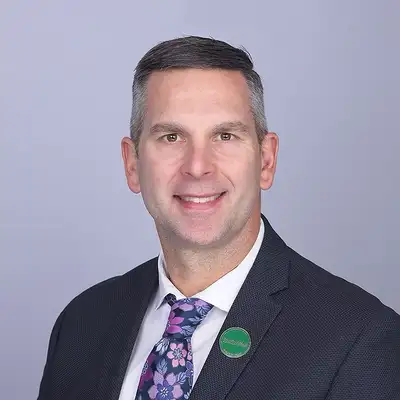
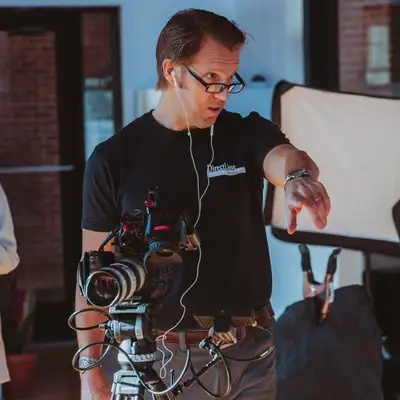
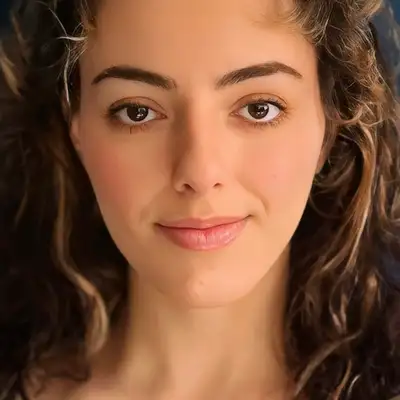
Eric Feeney talks with #friends! Eric is the founder of the nonprofit organization Friends of Feeney. Their mission is to help children and families who need assistance after heartbreak and tragedy. www.friendsoffeeney.com
All right, all right.
Episode 147
we're here at Feeney Talks with friends.
My name is Eric Feeney, founder
and president of Friends of Feeney.
I use this podcast,
Feeney talks with friends,
and I talk to a wonderful people in
the community that are doing great things.
And I'm very excited
to have our guest here.
How are you doing, Jamey? I'm good.
Thank you.
Jamie, the executive director of services
for the supporting Living group.
Yeah, supporting living group.
That's interesting, I love that. I'm glad.
So, I teach third grade.
Okay.
How would you explain supported
living group to a third grader?
So we provide support services
to individuals with disabilities.
We help individuals with disabilities
live in the communities of their choice.
And we specialize in brain injury support
services, autism support
services, and eldercare support services
across the entirety of Connecticut.
Nice. Yeah. Very good. And,
now, as so was founded by,
Brian.
Christopher Brisson
and his wife, Kimberly Brisson.
I know bristle might be our I got the BRP.
The be all right.
And you have offices in Danielson.
Avon and Bethany, Connecticut.
Yeah.
No. It's great.
I'm so excited to talk with you again.
Our mission is to help
children and families that need assistance
after heartbreak or tragedy.
So our our missions align. Yeah.
I want to thank you for reaching out.
I want to thank you
for your generous donation.
And again, I'm very excited to talk
with the executive director.
Jamie. Yes.
So, what you've been up to?
Working. Working diligently.
There's always a need for support
services.
There's always a need for developing,
supports out for the individuals
that we provide services to.
Cool. So what kind of supports do you do?
We do the full range to assist individuals
to live independently in the community.
So five miles from here
is our Avon office.
That's a 20,000 square foot location
that sits on 6.3 acres of land.
So we've just finished out
a whole courtyard
rebuild there
with, healing by growing farms.
So there's a big horticultural program
going on.
Hired an artist to come in to work
with some of that individual brain
injuries to develop a mural.
And we're really working on that project
at the moment, and it enhances
the lives of the individuals.
We provide support services to.
It's kind of the ethos of the agency.
It's not just providing in-home care.
It's providing a sense of purpose
and giving a reason
to get up in the morning,
and especially for the brain injury
survivors, autism spectrum,
which really trying to change the way
that that's done as well.
Not just in-home services.
We've developed our own clinical support
services, and it's holistic
care, working in conjunction
with the parents and the individuals
that are on the spectrum.
Nice, nice.
And, so personally,
what inspired you to get into this field?
I actually fell into the field.
2010, I was in sales and marketing
for a Swedish antiques
and interior design company.
Shout out to at least Van Brims.
I just finished my master's
degree in community psychology,
but the market crashed,
so there wasn't many people buying Swedish
antiques and interior design services.
So I had an option to work for a hedge
fund doing hydro
or a mom and pop brain
injury organization.
And I chose the mom and pop brain
injury organization
because it was in keeping
with what I had gone to school for.
And the first day I was working
with the organization,
I sat down with one of their clients
and noticed they had scars in exactly
the same places that I do.
Back in, I think it was probably 2019,
wrong place at the wrong time.
I was visiting England.
I used to go back every summer, and I was
a victim of a pretty significant assault.
I got hit with lumps of iron.
Woke up in hospital.
Was very, very lucky to be alive.
They kept
me in hospital for almost a month.
They wouldn't
let me fly back to start college
because they were worried
about into cranial pressure and bleeding,
and nobody had really gone
into the whole brain injury piece.
And then sitting down with that one
service participant that day
made me realize this is where
I needed to be and what I needed to do.
Having that mindset has been successful
for me, from wanting to make sure
that how I would want services
to be for myself or a family member.
Wow. Yeah. Wow.
That's that's serious.
That's crazy.
That's that's unfortunate. Yeah. Crazy.
But you're giving back.
And you walked in the shoes
and you have empathy
with the people that you're working
with. Yeah.
And it makes it makes a big difference.
To those individuals as well.
And seeing how people progress
over a period of time.
Some individuals have followed me
in terms of where I've been professionally
since that point.
So I've got to
I've been able to see the growth
and how they've really,
really developed a sense of purpose
and rediscovered
who they are after their injuries.
Yeah.
Because you have
you had the degrees in, psychology
from the University of East London?
Yeah, I've got an undergraduate degree
from the University of East London
and then a master's degree
from the University of New Haven.
New Haven?
Yeah,
I went to southern. Okay. Okay. Very nice.
So practically brothers.
Practically. New Haven.
How long were you there?
University. New Haven, master's degree,
I think.
I was there for three years
and then went on to get my.
I had to take some additional classes
for my license.
Functional counselors qualification
at Central Connecticut state.
Okay, so I've been around,
a few of the state universities.
Yeah, I have,
undergraduate in
sociology and a major in sociology,
a minor in psychology.
So very interesting classes.
And then I got a master's
in elementary ed.
Nice.
And then as an educator,
you can get a six year degree in a,
administrative administration
and supervision to be a principal.
Okay, I have that, too.
I did an internship part
as part of my master's degree program
in the guidance department
at Wilbur Cross.
Okay.
So that yes, that was that was eye opening
and definitely
taught me some things and showed me
the importance of giving back.
There was a wonderful gentleman there,
nonprofit guy as well, Larry Conway,
who actually developed the children's,
a family center in New Haven
who was who was very inspirational
during that period of time for me.
No. Nice. Yeah. I love New Haven. Yeah.
So happy that we lived there.
I met my wife.
Found out we're having twins, so we moved
to West Hartford, and here we are.
That's great.
Did you now talk in New Haven?
Yeah, we had a talk. Pizza. Do you.
Did you have a pizza spot?
Where was your go to? Well,
that's interesting.
Now I live in Wallingford.
Okay. Chris goes is very, very good. Okay.
I mean, Pepe's in New Haven is always.
Yeah. Is the go to.
Yeah, that's that's the spot I got.
I think I heard good things about this.
Chris goes yeah, that's it's very,
very good.
Yeah.
The guy that the Barstool guy did.
Yeah. The Barstool guy went there.
There's three Bob brothers.
They all own different ones.
Yeah, that's the closest one to me.
And that's the one that that food goes.
Yeah. In Cheshire. Yeah.
Luna and Naugatuck.
I think Chris. Crystal's in Wallingford.
Yeah. Yeah.
They're known as the three King,
the three Kings.
And you see that on their pizza boxes?
All of them are great.
I really do like all three of them, but.
But Chris has my heart
because it's it's close.
And they've got some very, very.
Good people
there. A picture of them on the bus. Yeah.
The character tours
with three of the guys.
Yeah, in black and white.
Their characters out, their characters.
Yeah.
They probably make a good podcast guest.
I think they would get those. Friend.
Let's get them on the Three Kings.
Talk to him, show him this.
What minute are we.
We're going to show the Chris go guy
and then.
Seven and a half.
That's great. No, that's so cool.
And we have a common friend and I want to
thank him for making the connection.
Do you want to talk about our friend
Jonah Francis?
Yes. Of pansy home care.
Jonah, I have to say, he's
probably the nicest guy
in in the home care field.
We get we work together a little bit
on the Connecticut Medicaid DSS committee
for the Home Care Association of,
America and Connecticut chapter.
So we kind of interact there a little bit.
And he's he's been great.
When we moved into the home care market,
we were a little bit concerned
that we would be
looked at as a major competitor.
And in the brain injury field
in Connecticut, it's a very competitive
marketplace. People don't play nicely.
It's interesting.
So then to move into the home care market,
Jonah was a so friendly offering advice
because there were some things that
we were kind of scratching a head around.
And Jonah was open,
sat down, had a conversation.
It was it was very
it was a very, very pleasant surprise.
Yeah. I had a great time
talking with Jonah.
Episode 112. Yeah. 112.
Where the players dwell.
That's a little saying.
It's a it's a band. 112 is a band.
So he said that
multiple times on the podcast.
But thank you for the connection, Jonah.
So our motto, be a good friend. Yeah.
Hold the door, pick up trash,
give compliments and be charitable.
Yeah. What makes Jonah a good friend?
I think Jonah's always willing
to help with advice.
If we have questions, he's
willing to be completely transparent.
And as I said, it could be an environment
where he identified himself
as a competitor.
He saw us as a threat.
That wasn't the case.
Yep. Jonah was very much about
helping those in need
and seeing it as a benefit
that we were coming into the spaces,
the supported living group,
with our resources to benefit
the elder population in this area
and beyond.
Very cool.
So all right, good answer.
You get a sticker. Perfect.
And I also love how your name has
a lot of letters after it.
So I know Emma that's Masters.
Is. CBS.
So it's certified brain injury specialist.
Okay.
I got that through the Brain
Injury Association of America.
Now was at a college.
Was that through New Haven?
No, that's an additional class.
That's an additional qualification
through the Brain
Injury Association of America.
It's it's it's
an intensive course of study.
And at the end of it, you,
very well
were versed in brain injury support.
And then the actual brain
in terms of brain trauma and brain damage.
Yep. And, LPC.
Licensed professional counselor.
So I hold that qualification as well.
I worked that's
part that tied into my master's
degree program
and then 5000 hours of clinical services
that are supervised.
I specialize in trauma.
And I've got additional certifications
in eMDR
and hypnosis,
which I link in to the brain injury pace.
Okay.
Yeah, eMDR got it right here.
I movement desensitization reprocessing.
Yeah. It's now explain that explain that.
So yeah traditionally
most people when you talk therapy
kind of come up with talk therapy.
Two people sitting in a room
and talking back and forth
with eye movement
desensitization and reprocessing.
It was originally really designed
for PTSD.
And essentially trauma
gets stuck in the limbic system
and you don't process through that trauma.
So if you're a child
and you had trauma growing up,
you go back to those moments in time
when the trauma happens.
As an adult and you attempt to navigate
what's going on in the same,
in the same manner,
you don't even realize it's going on.
Eye movement
desensitization and reprocessing uses
something called bilateral stimulation.
It can be a light bar
like what you see, the easiest thing
to think about is, Kit at a night, right?
Yeah.
That red flashing light
that goes back and forth.
But you can also do it with your finger.
And there's also sensitization
where you can do it with ferrite tappers
or even just tapping on the legs
or the shoulders, and also sound
that opens up that, that processing
center and allows us to work on the
the trauma.
It's not directed by the therapist.
The individual was, is, is reliving
or bringing up
that trauma
and reprocessing through with my guidance.
It works especially
well with the brain injury population.
But anybody who's had any type of trauma,
it's very, very beneficial for.
Okay, I had Jenny LCT, she's a therapist,
and we started the podcast
doing the tapping.
Okay.
And positive self-talk
as you do the tapping CBT.
So that's a little bit different
with the eMDR piece.
Okay.
The the Farah tapping, essentially
it's all about opening up those,
those networks within the brain
and where the trauma is stored.
So as you start to open up those networks,
then you start to
to be able to process through the trauma,
a lot of the stuff isn't even,
in conscious awareness again,
which happens
as a kid or it happens,
you know, it could be a car accident.
It could be multiple things that go on.
It gets stored away
and locked away in our subconscious mind,
because in that moment in time,
the brain couldn't deal with it.
So with the
with this therapeutic approach,
what ends up happening is it gets released
and the therapist is there to assist you
to work through it and then move forward.
Some of the most horrendous things
can get worked for you very, very quickly.
Far quicker than it would be under,
you know,
the more traditional talk therapy buys.
Interesting.
And and you host counseling sessions.
Yeah, we do a lot of
I do a lot of virtual pieces.
That's that's a second business for me.
I'm a private clinician.
But I do incorporate that into
I have the ability to incorporate elements
of it into my work
with individuals with brain injuries.
Very nice, very nice. And CCH.
Certify
I'm a certified consulting hypnotist
through the National Guild of Hypnotists.
Now, would I dare let you hypnotize me
right now on my show?
I wouldn't do it right now on the show.
That may be for that special episode
you could be doing live.
I, I kind of for myself,
I lean towards more
of the clinical approach
to hypnosis as opposed to the stage show.
That's that's very much a specialization,
which
I let them do that stuff.
I do more of the clinical stuff
and tie it into some of the elements
of the year where they.
Would you have someone that had trauma,
like, I'm an adult, say I had trauma
as a child, would you hypnotize me to
to speak to my younger self.
Or in the process?
That's the interesting piece.
With the overlap between MDI and hypnosis,
what I would say is with hypnosis,
that's the band aid.
With eMDR.
You're actually going in there.
Really? You're sewing closed the wound.
But I've used hypnosis in the
same in that for reputed capacity as well.
Anxiety elements like that.
It's definitely the first steps
in teaching skills
and anchoring points of safety
and then after that,
when the individual feels secure enough,
we can then go and do the eMDR
with that individual
to help them clear out the trauma,
anxiety, problematic memories, etc.
for good.
Wow, this is great.
Did I miss anything?
Anything you want to share
about the Supported Living Group
or some of the programs
that you that you do?
I think we touch base a little bit
on the On the Arts program.
We, it's truly one of a kind arts program.
We hired individuals
from outside of the home care field.
We hired legitimate artists to come in.
We trained them in supporting individuals
with brain injuries
and the amazing work that's gone on.
If you get a chance to look up
inspire Art, CTE,
that's the website for our artists
where they showcase their work.
We have individuals that have amazing,
amazing
creations and, you know, brain injury
and art kind of tie together
because art's all about perspective
and these are the individuals we support
have they experience the world
in a different way to you and I.
So it gives you a window into their world.
We have individuals that have had strokes
who have as a
as a consequence, expressive aphasia.
So they have word finding difficulties.
But you're able to work with them
to create these amazing pieces of artwork
where they find their voice again
within the work.
Yeah.
And also it's a it's an easy access point
for members of the public
to start to get to know
are they start to get to know
the individuals behind the artwork,
and it shows them that individual brain
injuries are not dangerous.
They're they're not aggressive
for the most part.
They're just everyday,
normal people that you wouldn't
even realize have a brain injury.
That's the big piece
with the brain injury component.
It's a hidden injury.
It's a silent epidemic because people
don't realize what's going on.
They don't.
A lot of individuals
don't have the physical disabilities
that are associated
with the standard disability network. Yep.
So that's that's something interesting.
And the art program has been hugely,
hugely successful.
And we have that
both in our Avon program location
and our Bethany program location.
That's great.
You know, so inspire Art CT yeah.
And you said you're working on a mural.
We just finished
a mural in Avon, Connecticut.
We have a courtyard in that
in that building space that we just
completely reconfigured.
We redeveloped it.
It's a healing garden.
There's an art mural there.
Big shout out goes to Aqua Scapes of,
Portland, Connecticut, who came in
and did a wonderful water feature.
And it allows our individuals
to to be somewhere comfortable
where they can be creative,
they can take moments to themselves.
And there's a big, healing garden,
as I said, that we've developed there,
healing by growing Farms is
another amazing nonprofit in Connecticut.
The owner of that organization,
or the founder of that organization,
is a brain injury survivor herself.
She used to work for FEMA.
And what happened was she simply,
went to relax on a hammock
on the hammock, snapped.
She swung back, hit the tree,
and was never the same again.
And after, you know, going through the
rehab and recovery stages of brain injury
she developed at this amazing program
where she's teaching,
horticultural skills and farming skills
to individuals on the disability spectrum.
All great things.
I mean, it's amazing stuff.
I wouldn't mind.
Can you find the picture of the mural?
We'll pull it up right
here. We'll have it.
We're going to show the mural page.
I'll get you there.
If you go onto our Facebook page,
the Supported Living Group Facebook page,
you'll see pictures of the mural.
And I'm gonna put it right here.
Perfect. Beautiful mural. You'll see it.
Stephanie is gonna add it in after she's.
She's a magician.
Wow. That's great.
Oh, I have a follow up question,
but first,
let me shout out some podcast sponsors.
We're here at Maximum Beverage.
Thank you, Matt Whitney.
Maximum beverage.
Thank you Direct Line Media
Stephania and Dave thank you Luna pizza
the fix IV float 41 Parkville management
Brooke Gough law group, Keating
Agency insurance, People's bank, Sally
and Bob's and New England dawn security.
So with New England Dawn security,
what are three keys
that make you a great executive director?
Oh, I think listening
is an important piece.
Not trying to control everything.
Allowing my management team, staff
and I, our clients,
are service participants
to have buy in to the process.
And I think always pushing
to learn new things
and being open to learning new things.
There is no one way of doing business.
There is no one way of providing
support services.
Being able to pivot,
especially in this current environment.
You know, fiscally
it can be challenging, being open
to being able to pivot very quickly
and new ideas and philosophies has been
has been very beneficial.
Sounds like a teacher can pivot,
learn new things, be a good listener.
Yeah.
And what was the middle one for?
Taking, taking,
taking feedback from from the managers
and the individuals that work within
the organization and collaboration is.
Yeah, we hired talent.
Let the talent do what they need to do.
Don't try micromanage.
Mary. Good. Now, do you oversee,
because I saw
on the website you have the south area.
North area, East west?
Yeah. Are you in charge of all of them
or do you have.
So I travel between all the offices.
Typically Mondays
and Wednesdays I'm in Avon.
Tuesdays and Fridays I'm in Bethany
and on Thursdays I am in Danielson.
Kimberly Burson, the vice president.
She sits in,
in, in Danielson, Connecticut.
So she's overseeing that that location.
As I said,
we've got an amazing management team
who make my job really, really easy.
I get to be the nice guy
nine times out of ten.
And everything's going well.
And I get to focus on trying
to grow the business and just handling,
issues.
If they come up that that that saves me
a lot of gray hairs.
Yeah, it's the supporting living group's.
Yeah.
SLG. Yeah.
You can be reached at (860) 774-3400.
Got that info at Sgml hyphen
ktvb.com. Yes.
Get your info email.
Reach out to my guy, Jamie Arbor,
the executive director.
Now, you were the director.
Is that a promotion
or is that just a typo? Or.
When I came in, yeah,
we I came into the business in 2017.
Chris, Chris and Kim hired me.
They didn't really have a presence
in western Connecticut at that point.
So Chris basically said, what do you need?
Sorry, I need a building.
That's what I need.
I can do everything else.
And what I found is the people
that are meant to find you, find you.
So we we started to find really great
staff members really quickly.
And we found a location, actually
in Plainville, Connecticut,
and in under a year
with growing that space.
And we spent a year looking,
and that's where we found the
spot in Avon, Connecticut.
And then the pandemic hit, which was fun.
We just purchased essentially $1 million
building, and then the pandemic hit.
But we were the first agency
social service agency in the state
to have pandemic associated policies
and procedures.
Chris went out.
He had an account with Restaurant Depot.
So put together a food pantry
for all of our participants to ensure
that they weren't going to go without
if that if that issue came up,
and we were able to continue
growing during the pandemic period,
we were very fortunate
there wasn't for that first year
no cases of Covid occurred.
And as I said, the agency
went from strength to strength for other
agencies, were closing their doors.
That's great. That's great.
Where in Avon is it located?
I know it says Simsbury Road, but where?
147 Simsbury Road, right
across the way from the Commons.
Okay, you can't miss the building.
It's up past the new Walmart
and all that or no, no, you're.
Going to take,
as you're going as you're going towards
that, you're going to take a right
where the post office is heading down
towards Simsbury,
and it's right there
opposite where the Commons are.
Beautiful building.
We're very, very fortunate.
We were able also to secure
housing on that on those grounds.
So that's another thing
that we do, this very difference.
A lot of the other companies out there
that we are our individuals
to live as independently as possible
in affordable housing,
especially in the current market,
you know, the affordable
housing is not really there anymore.
So we've gone out of our way
to try and do that.
For individuals accessible,
affordable and well maintained.
Nice. Yeah.
What's the mission of SGA, SGA?
The mission would be to,
I mean, it's to help
everyone, help individuals
to live the best life possible.
I mean, that's
that's really it's a it's a be
as independent as possible
in the communities of their choice. Yep.
That's
what we try to do each and every day.
Each individual that comes in,
we create person centered programing
based around their needs
rather than our needs.
And if we keep that in mind, I think
that's how we help each individual grow.
Now are you ready for a test?
Oh, this is.
There's a culture called
do you know the culture code?
There's five of. Them.
I wrote the Culture Code a number of years
ago, but now you have there on the spot.
I might I may need a clue from this. Okay.
That's what you do. You need a clue?
Yeah. Can you.
All right. So you're committed.
We are committed to providing
the best possible services that we can.
Each and every day. Okay?
You're fixated.
Fixated
on on being the best that we can be.
Okay. It's all just strive.
We strive to benefit those.
We provide support services.
True. We strive to be recognized
as the best provider in Connecticut
each and every day.
And we strive to continue to grow
our philosophy everywhere that we land.
All right? And we believe.
We believe
in the ability of our participants
to grow, to develop, and to find happiness
after their injuries.
And we invest.
In our people, in our participants
and in our infrastructure
and the way that we provide services.
That's a big piece as well, in terms
of the owners of the company are committed
to reinvesting any profits
that the agency makes.
Those have shrunk because
because of the environment that we're in.
But back into the programing space.
All right. You nailed it.
I think I did well having the B-plus.
I think I wrote those in like 2017, 2018.
You got to get those like tattooed
on your arm or something. Yeah.
I mean way to do it. Culture
code. That could. Work.
No. It's great I was good.
That was funny.
That was good stuff.
It was stressful for a second.
No no no.
All right. Great.
All right, so we got another another game.
First last best worst.
So, like a program or an event? An event.
And I said,
SLG. Yeah.
So your events or programs,
what was your first event or program?
Your last event or program,
your best one and your worst one.
Any order I.
Think I think the best program
we have put together, as I said,
is the arts program.
We actually have a an art show going on.
This starts this Friday.
It's going to be for the whole month,
next month.
With the Keshi Art Gallery
in Avon, Connecticut.
Okay.
Individuals across the state
who have sustained brain
injuries are going to have their work,
showcased at the KC Gallery.
It is a curated show.
So any the best piece of work are there?
If anyone is an art collector
or anything of that nature,
definitely stop by and take a look
because you have a
you have an opportunity to to purchase a
one of a kind piece of artwork and support
the artist.
This isn't about supporting the agencies,
it's about supporting the artists.
And for some individuals,
that first piece of artwork
that they sell enables them then
to hold that mantra of being an artist
because you're not an artist
unless you sell a piece.
Okay. That's great.
And, make it official.
Yeah, make it official.
And I'm going to be honest,
you see the changes in people
because in terms of trying
to find a purpose and an identity,
the nature of the brain injury
is you wake up one day,
you could be a teacher, you're
driving the school, you get in a car
accident, you're no longer a teacher
because you can't go back.
You're a victim of a car accident.
You're a brain injury survivor.
You don't want to be known as a brain
injury survivor for the rest of your life.
So programs like what we offer, there
are other agencies that offer programs
as well, enable the individual
to find a new purpose and a new identity.
So helping that individual become
known as an artist is a huge step
in that person's life.
And that would be probably yeah.
That's amazing.
That's awesome. That's the best one. Yeah.
Did you ever have something
go wrong or missing.
Programs?
Yeah, we've had programs go right.
Essentially what ends up happening,
we have like a woodshop program.
It's an interesting thing because,
you know, 5 or 6 years ago, great program.
Everything was working fine.
And you kind of those those individuals
that have sustained brain injuries
from the older generation,
you know, those grizzly
guys that were coming through school
in like the 70s and 80s
that did tech programs
and stuff like that, that
when we get the new generation of brain
injury survivors, the woodshop
is they kind of look at it
and they're looking at the tools
and they're trying to figure out
what's going on.
So that was that was that was
tough in terms of having to again, pivot,
find a new individual
who was going to be able
to take over the woodshop program when,
you know, kind of the gentleman
that helped develop that, Mr..
Keith Merwin, decided to retire.
And there was
there was a period of stress.
We had to hire somebody, actually,
from South Carolina.
He had moved into the state very,
very recently, and we lucked out.
But that was a moment where it was
it was stressful when we had to pivot.
He's come in, he's got his own ideas
and he's changing it up.
But, yeah, that was
that was a moment of stress for me
because we have the woodshop.
We've invested heavily in all those tools
and all that equipment.
Yeah.
And there was a moment. Do we keep it?
Do we do something different?
As I said, there would have been
a lot of grizzly old gentleman who.
And there's some ladies
that participate in that program
that would have been without,
you know, that that purpose
and having to change them over. Wow.
Do you remember your first program.
First Pro. Around 2017 when you. Started?
When I first came in, it was
it was the art program and I think.
So that's the longest running program.
The whole program with the agency.
Other programs have changed and developed.
Probably the best
and most memorable program that I ever had
was I developed
actually at a custom bike shop.
We called it the Bespoke program.
And we hired actually a brain injury
survivor who, you know, had been doing
had been successful without brain injury
waiver support or anything of that nature.
His name was Kevin Hickey,
and he came in with actually brother in
law, Joe Galasso, and we worked together
to develop a custom bike program.
They were building
mini bikes with some of our participants,
and this nobody else had done a motor.
Or pedal. Motor. Oh, no.
Because and,
you know, looking at individuals,
their eyes lit up in terms of the program
because a lot of the time programs
before that stage were were kind of soft
softened down because nobody wanted to
nobody a lot of individuals
didn't think that that program could work.
And it worked really, really well.
And it changed the way I think.
A lot of other provider agencies took
a look at what could be what could occur
in terms of services and individuals.
You know, that
that little cluster of guys and gals
together were doing custom artwork
on the gas tanks, and elements like that
build out mini bikes and different pieces.
And it was a very, very good program.
Awesome, awesome.
So that's first, last, best, worst.
I think we hit them all.
Or what's your last most recent one?
I think. Most recent
honestly that's. Happening on Friday.
We got the we got the
for the short gallery and then the Healing
by Growing Farms
Collaborative has been very beneficial.
Just seeing individuals lined up
with planning the gardening,
the healing gardens that we're developing.
Connecting with doctor that Ruiz
and then the gardens taking shape
for Bethany.
I was literally we had a meeting
with Doctor Ruiz a couple of weeks ago.
We're going to be doing a koi.
We have a large pond, in Bethany.
So we're going to be stocking that
with koi fish. Nice.
And we're probably going to be probably
going to be looking to grow that program
where individuals are tending
to the koi fish and then selling them
as another revenue stream
and developing out some healing gardens.
There.
Very nice. Yeah. Awesome.
That was first, first, last, best works.
You can play it at home with the kids.
Your favorite teacher,
your first teacher, your last teacher,
your best teacher,
your worst teacher, vacations, whatever.
You know. Have you ever sitting
around? It's a great game.
Oh, so you're in the Avon community.
Do you ever work with, like,
Avon Old Farms or the high school
or the police department?
We've actually done a bit of.
We donated artwork
to the police department.
The police department, a great
every now and again, one of the clients
that we
we supports provides support services.
We may have a medical emergency,
something like that.
They're there in a heartbeat.
Yeah. The, the EMTs as well.
Amazing people.
They're there.
And you know, the participants
that we provide service to.
A very thankful
one of our artists, Larry Pablo,
created a custom piece of artwork
for the police department.
And she also created a custom
piece of artwork for the, probate judge
in Farmington, who was very, very honored
to receive that piece of artwork.
She went out of her way.
She used to work at the Halstead Museum
before she became a probate judge,
took a day off to show that artist around
Halstead was a one of the.
You know,
if that doesn't normally happens,
it says a lot about that
individual community. Yeah, right.
And the police department is great.
One of my good friends
is, is on the job there.
Great little workout area in the back.
Yeah. Did the Murph there once.
It's a great it's a great it's
a great community. Out, out.
And where about is your artwork in the PD.
So the hallway when you first I.
Believe it's in the I believe it's
in the hallway when you walk in.
For the probate court, it's actually in
the the probate court office of the judge.
That's beautiful. Yeah, I love it.
That makes me happy to hear that. Yeah.
Very cool.
Supported living and know, everyone
as a teacher,
you know, there's varying abilities.
Yeah. So.
And everyone should find success.
Yeah.
So I feel like you're making sure
everyone finds success.
That's what we aim to do. It's.
And again,
it goes back. Fight in that purpose.
Fight for that reason
to get up in the morning. Yeah.
Because a lot of individuals, you know,
they lose everything after the injury.
They lose the person that they were.
So helping them get back on track,
helping them move forward in
life is is very, very important.
And we go back to it.
The management team, the support staff
all have that motivation
and that makes my job so much easier.
And it benefits our participants
who are grateful each and every day.
It's definitely a sense of community
there.
And, you know, you see the happiness,
you see the joy.
And that's
that's really, really important.
Now, do you have varying,
injuries?
Do you have people that are wheelchair
bound, nonverbal and.
Okay, yeah, we have we have you know, it's
definitely a spectrum
in terms of the brain injury community.
We have individuals
that are a hands on care.
We have other individuals
that you wouldn't even know
had an injury
until you started speaking to them.
And after five minutes,
they're having the same conversation
with you again because of,
because of, you know, one gentleman,
it was a road rage incident.
He can tell you all the stories
that happened when he was a child.
Father was a famous film
director, lived in, lived,
lived in the Middle East, was kidnaped
multiple times, speaks multiple languages.
But in the early 90s,
he was a victim of a road rage assault.
After that road
rage assault, my five minute memory.
So. But, you know, and working
with him, it's, you know,
you're trying to help him navigate
through the day,
trying to help him
store things in long term memory.
Because, you know,
the short term memory is so impacted.
So do you have what would be a strategy?
Does he have note cards?
Does he have.
There's note cards,
cell phones, support staff.
Some individuals have 24/7 support service
unlike a lot of other agencies as well.
We have our own internal
clinical department at the Avon location.
So we have a neuropsychologist on staff.
We have two occupational therapists
and a board certified behavioral analyst.
They all work within the Acquired Brain
Injury Waiver Program
and the Autism Spectrum program,
to benefit the individuals,
which is a huge help for us
because if we are struggling,
we get to talk to the clinicians
who can make suggestions and they can make
suggestions on the fly as well.
Nice.
Is there anything our listeners can do
to help support the your programs?
I think awareness is a big piece.
Everybody knows
somebody who's had a brain injury.
I would definitely recommend
if you have kids playing
sports, concussions, take them seriously
because the long term consequences
and when you're working elderly relatives,
if they have a fall,
get them checked out and be cognizant
that,
you know, with brain injuries,
it can be something innocuous.
It bleeds and elements like that.
I've worked with multiple individuals
over the years
where you just scratch your head
how the injury occurred. Yeah.
One of the gentleman, he was an architect
stood up that switched his office around.
He stood up in the new office, hit
his head, just stood up.
Hit his head. Was never the same again.
Needed 24/7 supports.
This thing goes on again and again. Yeah.
Everyone thinks like football. Boxing?
Yeah, it's. It's
sometimes even happened on a trampoline.
Can happen on a trampoline.
It can, it can happen
just simply falling down.
We all fall.
Everybody
that's ever sustained a concussion
that could have transitioned to a full
brain injury, that's the difference.
That's that's that that's the scary part.
So it's like luck of the draw.
It's very much luck of the draw.
Oh man.
I mean, even some of the most
famous stories that Oliver Sacks is
was an amazing author. He was a clinician.
The cold sore virus. Everyone, everyone.
A lot of people have cold sores.
The virus can spread to the brain.
And there was a famous concert pianist
who'd that happened
to another one that that transition
to a five minute memory.
They could play piano wonderfully.
That never went away. Long term memory.
Every time his wife walked out of the room
and walked back in the room
as though he hadn't seen it for 15 years.
So yeah.
And these stories happen again
and again and again.
I think overall, it's
not for the listeners.
If you see somebody with a disability,
don't run away,
learn their stories
because they all have stories.
Yeah.
The best is to learn just to say hello.
Yeah. Get to know them. Yeah, yeah.
Be a good friend. Be a good friend.
This reminds me, the notebook.
Yeah.
Have you seen that?
Yeah. Jonah Francis has not seen that.
It's disgraceful. Right?
Come on. Jonah,
he doesn't want to cry, that's why.
Yeah. Doesn't want to cry.
I told that story.
I won 12 with Jonah.
Like I watched that movie.
I'm like, I don't want to watch this movie
with my wife.
I'm like, this movie's stupid.
By the end,
I'm sitting up at the TV bawling.
That was me.
Yeah, my wife had fallen asleep.
I'm crying. Yeah, yeah.
So suggest that's why we haven't gone
to the recommendation portion of the show.
But see The Notebook, people?
Oh, man.
Any questions for me?
So. So what what experiences have you had
with Brian and you?
I mean, we've spoken about it.
I kind of gave you a little bit of
education around, you know, some of that,
some of the TBI stuff.
I acquire brain injury.
Have you had any family members that have
had strokes or anything of that nature?
So, yeah, I fell once.
Ice skating. Okay. And I remember,
like coming
to and being sitting on the bench.
So I fell on the ice.
But all I remember is sitting on the park
bench taking off my skates.
Yeah.
So that time frame of banging my head
to take you off my skates,
I had no recollection.
So that was my,
I think, one and only concussion.
I played football a couple times
and got my bell rung, you know.
Yeah. And then,
and then my grandfather,
had Alzheimer's.
So in his house
they would say today is Tuesday
with the date because he would constantly
just drive to church.
Every day was Sunday.
So we had to tell him it was Tuesday.
So those are my two experiences.
I think that's it.
And again, working with so many students
in the past 22 years,
I don't know if
it's any head injuries or something,
but definitely a variety of abilities.
Yeah, sure. Definitely. See that?
Yeah.
So and the outside piece
unfortunately kicks in
a lot earlier for the brain
injury population.
Neurological decline
happens sooner for the population.
And those issues
that you were talking about go on top
of potentially already already
occurring memory deficits.
Yeah.
No. It's scary.
You know, a dad, my daughter, we went to
go to the New Bern Rockettes game.
My girls were like 4 or 5 and Elsa
and on over there from frozen.
So we're waiting in the line and,
you know,
they're playing and spinning and pushing.
She fell, hit her head and like,
blood came out of her head.
And I'm like,
immediately, oh my God. Yeah.
You know, do we need stitches?
We could check her eyes.
Or do they look dilated?
But. I think we go back.
I definitely recommend
taking any head injury seriously.
I know nobody enjoys going to the,
But take it seriously.
Get get get the kids checked out.
All the kids play sports.
And it's also trying to move away
from that,
that mentality of like,
man up and carry on playing.
Yeah.
Growing up in the 80s, that's kind of my
my father was famous for frozen peas
and I even though we had universal
health care, nobody went to the hospital.
It's frozen peas grown on stuff.
Knowing what I do now,
I should have gone to the hospital
quite a few times to get just checked out.
Yeah. So I definitely recommend that.
I understand
nobody wants to sit in any as I said, er
for a few hours, but it makes sense today.
Speaking of your injury,
do you have any scars or anything?
Yeah, I got,
I have a piece of my scalp missing.
And I have a scar across the front of my
head, over the top of my eye.
When I hit the floor, the gentleman,
the guys that did
it were kicking me as well in the head.
My friend had to come back
and lay over to the top of me. I.
I woke up in hospital, in a room,
and I can remember my mom,
my mom and dad were there.
My dad was like,
he's got a hole in his head.
What's what what happened?
But there was a whole conversation
that happened, like with the EMTs.
I don't remember at all.
Similar to your story,
my friends who traveled with me
in the back of the ambulance told me.
Yeah, you were talking.
I don't remember any of it.
Wow. So, yeah, very, very lucky.
And, you know, wrong place, wrong time.
That's the story of brain injury
for a lot of individuals.
Wrong place, wrong time. Yeah.
I remember watching a TV show.
I want to say it was
like America's,
was that show America's Most Wanted?
Yeah, but a woman was on the back
of a motorcycle, and some guy, like,
hit her with a stick or something.
Yeah, or something
like awful act of nonsense.
Not, you know, nonsense, violence.
But, that one stuck to my.
I've just had that call back of a brain
injury, and then she was wheelchair bound.
Yeah. Couldn't speak.
You know, they go for a nice bike ride.
Some guy's an idiot.
And and, like, hit her.
Takes a second,
takes a second to change your life.
Awful, awful.
But you know, with that
negative, negative stuff
and that the pain that
the person's going through your company
in supporting living group
is trying to turn them around, ensure
that they have a healthy and happy life.
And yeah,
you know, become an artist and yeah.
Chance of. Success. Yeah.
We help other individuals re
you know re secure jobs
in the community,
not just art based competitive employment.
We, we work very diligently with that.
And then for the autism spectrum,
we do a lot of work
with we specialize with teenagers
and adults.
A lot of companies
focus on the kids and the feedback
we got from parents in that communities.
That's great.
But what happens when they leave school
or what happens when those school based
services are not available?
So we do a lot of a lot of supports
with those individuals
to try and help them be successful,
find employment.
Help them link with housing opportunities
and elements like that in the long run.
So that, that
that's a big concern for that population.
And there's, there's a big waitlist
to get services for them.
Yeah.
So your boss, we didn't really talk.
We talked.
What inspired you?
Yeah. What got Christopher in in.
Well, Chris.
Chris had worked in the disability
support field for a number of years.
He'd worked for a number of different
agencies, both brain
injury based and DDS base,
which is developmental differences.
And he had decided to start his own
be a private provider.
And because of his success
in being a private provider,
a lot of individuals were coming
from wanting to provide support services.
But there's only so much time in the day.
So that's how the Supported
Living group came about.
And he you know
definitely family mentality
working with individuals giving back.
And that mentality
really really cemented him
in eastern Connecticut
to be a really standout service provider.
Chris and I had come close to working
with each other a number of times,
and in 2017, the stars aligned and worked,
and philosophy is very similar.
Wanting to give back to individuals, and
wanting to support the staff and wanting.
If you provide good services,
then the company grows.
That's kind of how we look at it. Cool.
And then that's a husband and wife
team. Husband and wife.
His wife is Kimberly Brisson.
Yeah, she is the vice president.
She oversees the billing, which is
very important, very detail orientated.
I'm I'm like the bad guy.
She's like the good guy.
And so I was wrong with having to do
with the state and stuff like that.
So complement each other.
Another, another
person who comes from a culture of giving,
her father and mother was very much
in, in the community
giving back to individuals.
And, she, she followed through with that.
Now is Danielson, eastern Connecticut.
Yep. It's on the it's on the border
of like
Putnam and Massachusetts and Rhode Island.
Gotcha. So fun drive.
I know it sounds far away. It's far away.
A lot of, podcasts
and books on tape on those days
I go through, and I get a lot of work done
going back and forth.
Gotta listen to the Feeney talks
with friends.
I do, where they're.
Consistently. Nice. Nice.
Thank you.
A couple questions. So,
Oh, yeah.
Do you have a memory of working
with someone or seeing
someone find that success
that kind of gave you, like, goosebumps?
Like you were like the the client
was here, and then they they reached.
Yeah. Probably one of my earliest clients.
I'll give her first name. Larry.
When I first met Larry,
she was very much a closet placer.
Is Adrian a have Rocky one?
The glass is the very, very timid,
very shy.
Great analogy.
Yeah, and she likes the
analogy. It makes a laugh,
and only willing to work on, like,
an A4 piece of paper.
And over the years, I, you know,
I pushed her a little bit and.
Come on, you can do better.
You can do more than this.
Because she was really, really creative.
She suffered a stroke at the age of 26,
recovering from the stroke.
She had expressive aphasia.
So word finding difficulties
and left sided paralysis.
She had two kids at the age of 26.
Those children
had to go and live with the grandma.
So she couldn't really take on that role.
And she was provided
24/7 support services for the Connecticut
Abi Waiver Program,
which is a state and federal program
which ensured she wasn't in a nursing home
for the rest of her life.
Working with her over the years,
she is now a recognized artist.
She went from working on
those A4 pieces of paper
to doing eight foot
by six foot individualized.
Her artwork is all torn pieces
of individualized paper. Wow.
And she creates
these amazing pieces of artwork.
I'll definitely send over to you.
I have a it's a it's a copy of a Banksy,
the street artist, Winston Churchill.
And, it's called Turf Wars.
She it's probably it's easily
five foot by six for it
hangs in my office.
She's a piece of that piece of artwork
is hand torn piece of paper.
Amazing piece. She did another one of the,
Sex Pistols album cover.
That one is absolutely huge in a
in a Danielson location.
And the pride that comes from
that was Connecticut green screen from,
Thomaston
did actually did a documentary on her,
a little video
that can still be found on her story.
And she the sense of pride
that she's got on her growth
and development has been has been amazing.
So she's one that really stands out.
Yeah. That's amazing.
Thanks for sharing that.
What was her name again? Larry.
Larry, Larry, if you look up on our
on our Facebook page on our social media,
she's she's highlighted her work is going
to be at the key she gallery.
And it's and it's also listed on
the inspire art CTE page as well.
So she is
what's a commissioned artist?
Yeah, she's a commissioned art.
If she sells pieces independently.
And she, you know, we employ her
competitively to create the artwork.
That's something that we do
within the arts program.
We employ individuals competitively,
create the pieces of artwork, which is.
A little bit.
So now she's Adrian and Rocky four.
She's Adrian in Rocky Force. She's driving
the Will not. Yeah.
She's not driving the Ferrari yet
but hopefully one day.
That's amazing.
And you did mention,
the acquired brain injury waiver.
Yeah.
Can you elaborate a little more on that?
So in Connecticut has an Acquire Brain
Injury waiver program,
which essentially covers
the costs of services for the individuals.
It's limited.
There's a roundabout 700 people
all told, on the waiver
one program and waiver two program.
Waiver one is closed. Waiver two is open.
There's a 6 to 7 year
waitlist to get onto this program.
Because, you know,
there are limited number of waiver slots
and the majority of individuals are on it
for the for the trajectory
of the rest of their lives.
That that the state
has definitely developed a good program.
Compared to a lot of other states.
I'd love there to be more slots open.
There isn't at the moment,
but it definitely benefits individuals.
And it was to assist individuals
like LA, right?
Not to end up in nursing homes in long
term care facilities.
It was problematic
for the care facilities.
And it was also,
you know, it was definitely problematic
for the individuals
if they suffered their injury.
18 what where was the future?
That was the hope.
Because the acquired brain injury waiver
is mentioned on the website.
Yeah.
So if you're interested
or need to check the website,
what's the website.
Supported living group.org.
If you go there
you can jump on to the website.
There's a lot of information
about the brain injury
waiver, ISD waiver
and our elder care services.
And now do com clients,
tenants, residents call them.
We typically try and use the word
participants and clients.
They're kind of interchangeable.
Stephanie person Senate.
If you come into the program, you're going
to hear people we use first name times.
Gotcha.
And I made my first name.
I know each and every individual.
That's the beautiful thing
about the program spaces.
We're all interacting all day long.
Nobody sits in an ivory tower
miles away, even down to Chris and Kim.
That they're walking in and introducing
themselves to, to participants.
They know who they are
so that that that's an important part.
Yeah.
That's good.
The rapport and building
relationships is key.
Yeah. No. That's great.
And then do the participants
have a voice and say, like you said, oh,
some want to do the woodworking,
some want to do the horticulture,
some want to be artists.
They have they can participate
in whatever they want.
To play and what they want to do.
They can indicate,
I don't want to do this.
I want to do something in the community.
I want to find an employment
in the community.
I say it's all the managers
and all of the staff.
We're not there to say no.
We're there to support them, to
get as close to their dreams as possible.
And, you know, sometimes there is failure,
but then it's about helping that
individual recover from that and maybe
work towards something different.
But they're not going to know that they're
not going to experience that failure.
And so you support them towards it.
They they it happens.
Okay.
Now we're going to support you to want to
move toward something different.
I think that's important.
Nice.
Now, where do you see yourself
and where do you see the supported group?
Supported living group in five years.
I think we're probably going to be moving
into,
New York and Massachusetts marketplaces.
It's just, you know, New York has
an acquired brain injury waiver program.
There is no waitlist for that program.
And they have they have a need.
Massachusetts also has a program
that we've been asked to go to.
For myself, my role consistently
and constantly changes based on need.
I'd love to do more clinical pieces.
That's kind of my my heart and desire.
It's also less stressful.
But yeah, I'm always going to be involved
in some capacity of program development,
identify new ways to grow.
And you know, with every new staff member
that we bring in, every new clinician,
there's new ideas that keeps things
percolating in my mind,
going to new trainings, elements
like that, a lot more advocacy
work as well,
I think is going to be important to do,
especially in the current climate.
Cool, cool.
Is there anything that I missed?
Anything you'd like to share?
Oh, I think I think you hit everything I
yeah, yeah, I.
Think, you know,
our listeners are listening. Come on in
this that Feeney Talks with Friends
podcast.
Check it out.
Our listeners
hear an accent now, is that new Jersey?
Yeah. Close. Good.
They make it another shrimp.
Little bit of Australia.
I grew up in east London. Okay.
East London.
I was there until my early 20s,
and then I moved, I moved
here, I've been here longer than there
at this point.
I'm a U.S. citizen.
My wife's an American,
but the accent never went away.
If I try to do an American accent,
I sound like I'm from the Midwest.
Yeah, and my wife yells at me.
So we can't do that.
You got.
Yeah, definitely. So. No. That's great.
And then who do you support for soccer?
Tottenham.
Tottenham Hotspur there's my team.
I had a cousin who played for them, my,
back.
And my father also played for them
back in the day and anyway.
And he's in his teenage years,
so there's some connection there.
Very nice
bloke.
My mate. My mate.
East London. Yeah. Is that a mate? Yes.
Look, mater bloke.
It's a bit of both.
Most of the time it's my bloody bloody.
Some of that goes on. Yeah.
There's a few we use a lot of cockney
rhyming slang.
So like apples and pears,
stairs, whistle, flute.
So stuff like that.
What's the whistle on flute suit.
Well, whistle a flute.
So cockney may look nice. Yeah. Well you.
Well it was, it was,
it was basically created.
That whole language was created
by the working class
to avoid the police
knowing what was going on.
So it was rhyming language
that was used amongst the, the EastEnders
to avoid people knowing if there was
something a little bit naughty going on.
Yeah.
So as I said,
like jam jar car with someone flute. So,
different pieces like interesting.
Yeah, I know, elevator's a lift.
Yeah. Over there.
Mind your head.
On the on the mind.
The gap in the gap on the trains.
Yeah,
definitely stand to the right hand side
if you're going up
and down on the escalators,
because you will get knocked over
if you go and visit London, as you were
taught, as we were talking about before.
Yeah,
I would, I would love to check that out.
I'm going to go.
And so okay.
Favorite restaurant
this is sponsored by Luna Pizza,
his favorite restaurant in the world.
Anywhere. Could be Connecticut.
London.
Yeah. London I it's that's a tough one.
I, we do like our restaurants.
I actually like artisan.
Oh in, in in West Hartford
I yeah I do like that.
The Delmar.
And the Delmar. That's very. Nice.
That's a very nice restaurant.
That I eat outside
and yeah Tiger Woods was just there.
I didn't I didn't know that.
It's all the golfers for travelers
stayed at the Delmar.
Okay.
And my buddy
got a picture of Tiger at the artisan.
Okay. Yeah. So great. Right.
That's the that is the restaurant.
Yeah. Food's amazing. Yeah.
New Brook kitchen is another one that I
highly, highly.
It was the.
That's in Cheshire.
What's it called? New Brook kitchen. Okay.
The youngest. That one.
You've never heard of that one.
That's one you have to you have to sign up
to get onto their list.
And they have special events
all created in front of you.
Open kitchen.
They actually this past Saturday
they did a it sounds a little cheesy,
but it wasn't.
It was murder at the disco.
So it was a it was a five course meal.
Yep. And a murder scenario
that was involved in it.
But, it was a great sign. Like actors.
Yeah.
Yeah.
But you know, what's this called?
It's the new Brook kitchen.
Definitely check it out and look it up.
I highly recommend it.
It's bring your own bottle.
But the chef is there. She's.
She's amazing.
And it's in Cheshire. It's in Cheshire.
Newburgh kitchen, new York kitchen.
I try to go to all the recommendations.
It's a good one.
That would be my.
That would be my my highest record.
Wait.
Can you make a reservation
or you got to get on a failing list.
And a mailing list
and they have limited openings, so
you have to as soon as soon as it comes
up, you have to jump on you book, you see.
And they're booking
typically a month to two months.
And that's.
The only way to get in there to.
Anyway to get in this week and it's custom
menu, all of it is gluten free.
And hand created kind of in front of you
with an open kitchen concept.
It's amazing I like it. Yeah.
Thank you.
That was great. Yeah, yeah, I've been to,
so many different ones.
I haven't been to San Suisse.
Yeah, it's a steakhouse. Okay.
That was Brook Goff's recommendation.
The vulgar chef suggested Santiago's.
I've been there.
That was in,
I want to say, Massachusetts somewhere.
So I definitely go
to my food recommendations.
So thank you. This is interesting.
I like it.
All right.
So you're at new Brook kitchen. Yeah.
And you could eat with four guests, dead
or alive.
Anyone in the world who you eat
with? Well, that was there. Anyone.
If I could go back,
my wife will always be by my side.
Good. Good answer.
Audience I would, United States. Yeah.
Smart man. I've been trained.
It's just the right answer to provide.
I think I would like Freud. Okay. Sigmund.
And I think at
this stage, because he's so fresh in the.
Imagine that, Ozzy,
you've got to have Ozzy.
Yeah.
Next year you need some of that
just for the Sharon at some point.
Yeah, yeah. Rest in peace.
Rest in peace, Ozzy.
Oh, because he's an English. Guy, right?
Yeah. It was originally from Birmingham.
And then and then moved over. That's
right.
And Sigmund and Ozzy would be a great pair
to sit down and have dinner with.
Yeah, I know I felt they hurt me.
Hurt me more. Hulk Hogan hurt me.
Real American. Yeah, the real American.
What's your take on Hulk?
He was a character. He was the first.
He was outside.
It was him and Rocky growing up. Yeah.
That was my first introduction
to American culture.
Crikey. Three thunder lips.
Yeah. Quickly followed by,
what was it, Beverly Hills Cop?
Okay, those were my interpretations of.
Eddie Murphy of.
America. Yeah.
Eddie Murphy ex Axel Foley. Yeah.
Very good. Yeah, that was that.
Oh, that was it.
I can still remember
sitting and watching those shows.
Okay. Yeah.
No. I had a wonderful time
talking with you.
I learned a lot about everything
that the Supported Living group is doing.
I think you're doing wonderful things.
Thank you.
I you gave me all your acronyms,
and I just learned so much.
And again, it was great to know
that there's great things going on
and people are finding success.
No matter their abilities. So,
I just want to shout out
a couple upcoming events.
We have our whiskey first.
Do you like whiskey?
I do, so we have our whiskey fest
at tumble Brook
630 to 930 September
27th, hosted here by Maximum Beverage.
Thank you
to all of our friends at Maximum Beverage.
This is our biggest fundraiser.
This our fourth annual do golf.
I do not you would not want me to.
It would probably late
September 13th.
We have breakfast lunch and dinner.
All right.
So registration is going fast.
Get in there.
It's at six.
Any closing remarks?
No, I think I think it's been great.
I thank you for your time.
And I thank you for
for holding this podcast with me.
Yeah. Please check it out
for any talks with friends.
We're on Google, Apple, YouTube, Spotify,
wherever you could find a podcast.
Oh, we do even get the chance to eat.
We'll eat these,
mini almond horns from Crown
Market after for,
shout out to Crown Market.
And I will say be a good friend on three.
Ready? 123. Be a good friend.