Subscribe
Share
Share
Embed

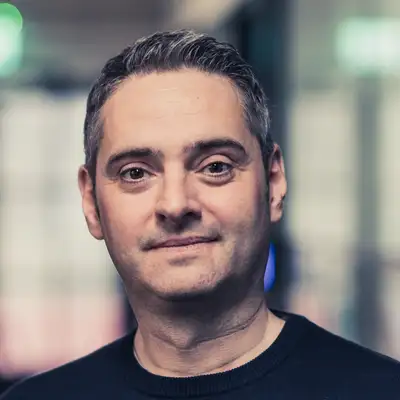
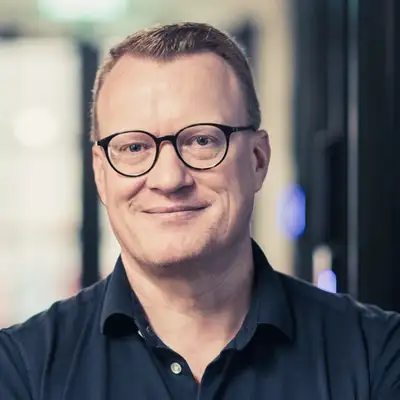
From the award‑winning team behind Cloud Realities, Realities Remixed explores what happens when people, culture, industry, and technology collide, because real breakthroughs rarely come from technology alone.
In each episode, hosts Dave Chapman and Rob Kernahan dig beneath the surface of innovation to understand what’s truly shifting. They speak with leaders, practitioners, vendors and thinkers across industries to explore how technology reshapes human behaviour, organisational culture, and society, for better and sometimes for worse.
Web - https://www.capgemini.com/insights/research-library/cloud-realities-podcast/
Email - realitiesremixed@capgemini.com
Deputy chief, intergovernmental processes, interagency cooperation, and partnerships branch under UNDRR. It's quite
Speaker 2:a mouthful. Right? That's correct. That's that's quite the title. I mean,
Speaker 1:it feels like you should have an acronym. I'm Dave Chapman. I'm Rob Kernahan. And this is Realities Remixed, an original podcast from Capgemini. And this week, it's the second of our Resilience Sessions, this time focusing on organisational resilience and how that might lead to competitive advantage.
Speaker 1:Now joining us later in the show is Doctor. Abhilash Pandar. He's the Deputy Chief Intergovernmental Processes, Interagency Cooperation and Partnerships Branch at the United Nations DRR.
Speaker 2:What's DRR Robert? Disaster risk reduction. Disaster And in
Speaker 1:fact reduction.
Speaker 2:Recently has been the international day for disaster risk reduction. So there is a day where we all have to think about it, which is good.
Speaker 1:I mean, it's it's as big a day as international password day, isn't it? I mean, that's that's the goats.
Speaker 2:Day you're remembering your your password should be stronger, better managed and rotated regularly. Let's just do a quick reminder for the listeners, rotate your passwords frequently. I've moved pass keys in most of my Yeah. Pass keys are great until you try and access the service on a device without the pass key.
Speaker 1:That's the truth. That is the truth.
Speaker 2:That's difficult. It's like, I mean, they're great because they're simple and biometric, you know Yeah. Sort of interaction. So it is, it does reduce friction, but you go onto a new device and set everything back up again. Just give it a go.
Speaker 1:Anyway, I accidentally triggered you there Robert with talk passwords. Let's get back to resilience and the resilience session. So a series that we're doing on resilience, which is a reflection we think of its growing importance and this and the size of the conversation that is growing around resilience. So Robert, as a reminder, what's going on? Why the growth in the conversation?
Speaker 1:And just very briefly, what do we mean by resilience in this context?
Speaker 2:So, let's start with what is resilience? And as you know, David, I love to read dictionary, but I think the definition of it is always useful, which is the ability to recover quickly from difficulties or the ability to spring back into shape after being bent, stretched or compressed. That's more about material, but the resilience. That is, I think that works perfectly with organizations, which is when they come under pressure, they're able to respond and recover. Okay?
Speaker 2:That is fundamentally what it's about. And the world is ever changing. We're not quite sure what could happen next. Events can spring up that surprise us. And organisational resilience is important because you have to be able to withstand that event and be able to continue under potentially an unforeseen circumstance.
Speaker 2:And again, well, I mean, we use this a lot, but COVID was a perfect example of those organizations that had resilience, flexibility and were adaptable, survived a lot better than those that were rigid and didn't have the same level of capability.
Speaker 1:And I think that the, you know, the current state of world where unpredictable events are happening for numerous reasons, whether they be political or environmental or, you know, technical. The conversation has become acute, hasn't it? Particularly over the last, what, three to five years?
Speaker 2:Yeah, You've got a set of things happening. I mean, sometimes forgotten in the resilience conversation or not for many as the climate change thing. That's going to need a lot more societal resilience. You've got geopolitical destabilisation at times, that needs resilience. And then you've got this sort of just random events that can occur that can tip us off.
Speaker 2:Balance, what we're learning is as we chased efficiency and productivity sort of 60s through to now, now we're having to re examine the way we've built our global systems and pivot and change. And so where the conversation was always about, I want the cheapest, most efficient, most productive service, now we are seriously looking at on a global scale, these systems have to be able to survive. And so we're entering a new era of how do we think about that, how do we need to approach it and what do we need to change.
Speaker 1:And just before we dive a little bit more into Organizational Resilience, thought it's worth actually congratulating you, Robert. And it was the Hey, was the mention of the environment that reminded me you've recently passed the certification in sustainability, I believe.
Speaker 2:Oh, yeah. No. I did my sustainability training twice. I did it twice, David.
Speaker 1:Is that because you enjoyed it so much?
Speaker 2:No. It was more to do with I completed the training, passed it, flying colors, you know. And then I got an email saying that while you were doing the course and completing it, we updated it and we've lost all your progress. You have to do the course again. Which which was lovely.
Speaker 2:Which was lovely.
Speaker 1:Mean, not very resilient, some would say.
Speaker 2:Some would say. Well, I showed resilience, and I I Individual resilience. Went...
Speaker 1:And I did I did
Speaker 2:the course again. You please know I got a 100% on the second phase. Oh, congrats. I mean,
Speaker 1:it was worth it then.
Speaker 2:It was. I improved by 10%. But yeah, it's one of those emails you receive and you just... There's a... There's an internal sigh that I've...
Speaker 2:I find
Speaker 1:it difficult to describe where it's just instant deflation. Rob even sent me a screenshot of it. Anyway, back to today's conversation, which we're gonna talk about resilience within an organizational context. So that is effectively the changes in the corporate conversation around disaster recovery and then how that evolves into the sort of the deeper technicalities of full organization resilience. But also we're gonna talk about sovereign in that and kind of the emergent...
Speaker 1:It's not really emergent. Was at the maturing sovereign Commonplace. Yeah, exactly. And then finally, we're gonna touch on resilience as competitive advantage. So what does that even mean, Robert, do you think?
Speaker 2:Well, it's one of those things where you can look at a thing that's going on and think that's just going to cost me money. But actually, being resilient or being able to have a thing that's resilient is now a desirable asset. It's a feature of a system that people will choose your system because it's resilient. So not being resilient might disadvantage you in a marketplace or might mean that people don't select you as a service provider. So actually being able to advertise as resilient for whatever it is, a human system, you know, a platform, you know, an energy system or whatever.
Speaker 2:Actually that could be the differentiator that people select you on. So it's becoming a feature and it's an important feature. So as people seek to understand where they need to improve resilience, they will seek those features out of systems and services and products. So it is and can be a value creator.
Speaker 1:So on that note then, let's go to our conversation with doctor Abhilash Panda. You've been talking about, I think, resilience very much from a corporate perspective. Now, we talked about on the show on a number of different occasions. We've talked about a a number of aspects I think play into this. Let me just sort of throw them on the table, and then you can pick up and turn the objects around.
Speaker 1:So I think from one aspect, we've thought about things like corporate planning, where corporate planning used to be something you could quite comfortably write, a three year strategy, and then you could broadly hit that strategy in a relatively predictable way, you know, three years out Mhmm. But within half a percent. And then that came into annual planning, and then there was a big period of annual planning. And now, of course, we've got the recent both both techniques of things like agile, but actually the need for much tighter cycles on on planning. So that's one aspect of it to me that feels very connected to what you've been thinking about.
Speaker 1:And then the second is the notion of sovereign technologies and sovereign digital supply chains, and actually increasingly sovereign physical supply chains, and the retrenching away from what used to be a very globalised world into something where borders are becoming increasingly important. Do those subjects resonate with you? And when you when you think about resilience in a corporate world, what what comes to mind?
Speaker 3:Let's put it like this. If you look at the history of things, there is a reason why certain companies have thrived and survived while certain have not. Right? You know, you know, it starts from innovation. It start...
Speaker 3:Looks at the capability of companies to manage its employees.
Speaker 2:Mhmm.
Speaker 3:But it also has to do with understanding the... Or forecasting the ever changing market and the scenarios of the future and how do you place yourselves within that. Now where does that happen normally? It's it's at the board level. There are strategic thinkers going behind it.
Speaker 3:You have the right people to look at some of those things. You have the right investment decisions that you're going to make Right. Into some of those things. Now what... Where we see all of this when we when we talk resilience, my career in this area of work is not more than twenty years.
Speaker 3:But when I started, we were only looking to talk to public sector, ministries of finance, ministry of economies, you know, industries, so on and so forth because that's what we are designed to. Right? You know, I I I did my my... I was trained as an engineer, then I did my masters in business management, but I ended with government of India trying to work with... Looking at the government public sector in itself.
Speaker 3:But when we were talking to them and to the public sector, it has... They have a different connotation of resilience and how the industry should be looking into some of those things.
Speaker 1:Right. But when How would you define it? Just very very briefly, if that's possible.
Speaker 3:For the public public sector? Yes. Resilience for
Speaker 1:the public sector and then and then the broader definition of resilience that you've come on to.
Speaker 3:I think it's all started with zero zero casualty, zero loss of life. Mhmm. Right? And now it has gradually moved into reducing fiscal losses. It's the same journey that a lot of countries have...
Speaker 3:Public administrations have now taken gradually or are taking from looking to... From looking at GDP versus looking at purchase power parity. Right? So so that's the journey public sector is taking. Is that how corporates have done to a large extent?
Speaker 3:Yes. Because they have survived world wars. They have... Of some of them have survived world wars. Some of them have seen other larger geopolitical changes and still survived it.
Speaker 3:A very simple thing that we we have also started pushing for is that when you talk to the CEO or to the board or in corporate, are you trying to tell them that resilience is just about preparing for something that may or may not happen during their term? It's actually not that because the long problem with Resilience has had is it's not a revenue generating stream. It's like you're investing in contingencies after contingencies Cost.
Speaker 2:Yeah. Right? And
Speaker 3:what we have tried to do now is figure out that, no, it's not actually that. It's actually a revenue generating stream. If you can see it from that perspective.
Speaker 1:It certainly has aspects of competitive advantage attached
Speaker 3:to it, I think. Yeah. I'll give you an example. We work very closely with, Octopus. It's a UK based energy Mhmm.
Speaker 3:You know, provider and distributor and so and so forth. When they started investing in wind turbines, right, in a lot of countries including in UK so and so forth, The cofounder who is a close close partner to us said that the first thing that they felt after a few years when the summer temperature started touching 50 degrees in certain locations where they have installed wind turbines, They stopped working
Speaker 2:Mhmm.
Speaker 3:Because the semiconductor in... Put in those things is not designed to go beyond.
Speaker 2:Okay. Yeah.
Speaker 3:Yeah. Is that... So now what they're doing is they're putting in semiconductor and chips that go beyond 50 degrees 10 grid. So is that a new revenue generating steam? Yes.
Speaker 3:Because this gives them a competitive advantage to go into markets where others cannot.
Speaker 1:Right.
Speaker 3:So is that is that how we see resilience? Yes. That's what we see how resilience is.
Speaker 1:So so how does that... So so if we if we track like resilience and things like risk management in a in a corporate world over say, even even ten, fifteen years ago, it used to be very much like every now and again, maybe once a year, you would do some sort of scenario planning where you would plan for some sort of significant outage, or it used to be, you know, much less dramatic outages than maybe what we would plan for today, especially in a post COVID world with the geopolitical situation that we're dealing with. But it was generally some form of outage that you would then risk plan around and everybody knew what was going on. And then you would write that up, and it would be, you know, put in a put in a file and then hopefully nobody would ever think about it again until the next time they had to do scenario planning. Presumably what you're suggesting, one, I guess, do with the changing nature of the unpredictable world we're dealing with, but also perhaps, given the economic opportunity that it might possess, that the process looks different today.
Speaker 1:How would you describe the resilience planning or resilience strategy process today?
Speaker 3:Maybe the starting point is what maybe corporates or companies are used to is is security management Yeah. Or business continuity. Exactly. Resilience is very different than business continuity or security management. It...
Speaker 3:It's security and business management is part of resilience. It's not equal to resilience. Right? I mean, what we are trying to tell them is... We're not trying to tell you that don't do business continuity management, those strategies, those scenarios, and all.
Speaker 3:Definitely, you need it.
Speaker 2:Mhmm.
Speaker 3:But you... It's not the answer to the main problem you have. It's part of the bigger problem. Right? You know, it's one of the solution of many things.
Speaker 3:Now in the past, as you said, and also now, there is a lot of forecast based modeling that happens Right. Scenarios. How many corporates were prepared for what happened in the Strait Of Hormuz?
Speaker 1:Mhmm. Yeah.
Speaker 3:Right? How many of them were prepared for the drought in Panama Canal?
Speaker 1:Right. Right.
Speaker 3:Not many.
Speaker 1:Right.
Speaker 3:And also that has to do with the understanding of the supplier base. Or COVID. Or COVID. Yeah.
Speaker 2:But it's that it's that resilience is a funny thing in that there are things that you can control to allow you to continue operating. Mhmm. And then there's things in the world you can't control. You just have to say, what do we do in the case of x y zed one two three? So with business continuity, it's about my world.
Speaker 2:Mhmm. Whereas resilience is more about how do I keep going when the world around me is becomes unpredictable. And I think that's a big part of the... Think about the macro, what might happen and then how how do we cope.
Speaker 1:It is a huge shift because, you know, I think we've... I used to sit in many business continuity planning meetings.
Speaker 2:Enjoying that. Was that the highlight of your year? Oh, Business continuity planning day. Yeah.
Speaker 1:I I did once go to one about what happens in kidnapping situations that was Yeah. Very alarming. But the... When I was going with it was somewhere slightly different, which is when you're in them, you know, we used to have a meteor hitting the earth scenario. And everyone would be, you know, eye roll y about that kind of thing.
Speaker 1:And I think some of the things you're suggesting, the bigger canvas of resilience Yeah. It is it brings into the conversation stuff that you just profoundly wouldn't have considered possible before, would you? Or at least it was such edge conditions that you wouldn't necessarily consider it. Is is is that different now?
Speaker 3:Yeah. I think last few years actually has changed that shift. Right? You know, the COVID was one of the Right. Outer layers.
Speaker 3:The straight of all hormones event is one of those examples. The fertilizer industry getting impacted because of the conflict Yeah. And all. These were not things that was usually
Speaker 1:yeah, discussed. Yeah. Yeah. Predictable.
Speaker 2:Yeah. It was... You wouldn't have thought nitrogen coming out of an area affected this and this this massive globalized knock on impact Yeah. That nobody had ever modeled or And thought it took the event for us to go, oh, yeah. Okay.
Speaker 2:That's a thing, isn't it?
Speaker 3:You know, a few years back when, I used to come here to talk to the cab office, the home office, I used to hear there's some of these terms called high high higher, high impact, low probability.
Speaker 1:Yeah. Mhmm.
Speaker 3:And now some of them are actually being... Is manifesting. So we are also trying to tell that to the, research side of people and the modelers that do not use the term low probability because you do not know. Yeah. You do not have the control on that probability.
Speaker 3:Somebody else has taking decision in some of those things. Right?
Speaker 1:The thing I thought that happened, and to take COVID as an example, because it was one of those ones that I don't think anybody would necessarily have done a business continuity plan around something like this. I think where I'm going with this, I think, is towards the opportunity that sits in it. Mhmm. So instead of the darkness, you know, the... What's the opportunity?
Speaker 1:And what COVID did overnight was shift everybody into video conferencing. Yeah. And, you know, I was working at an organization at the time that had been trying to deploy IP telephony for about three years. And everyone was like, I can't imagine having my phone removed from my desk. Even if you left the phone on the desk, like an old an old school phone with a wire on it, You know, people would be moaning about the fact that it was IP phone, not classic phone.
Speaker 1:And then the idea of removing it and only using a laptop was absolutely unthinkable. The cultural shift that happened within forty eight hours of an existential threat was unparalleled, like un unmanageable. And that happened at least across the Western world, perhaps globally. Over what? Like the cost of about three weeks, What a what a...
Speaker 1:The scrambling caused as
Speaker 2:well, wasn't it? Yeah. Yeah.
Speaker 1:But what... Do you think there are lessons in that? Like, what what what is it about that that's interesting? Obviously, there's nothing like an existential threat to sharpen the mind. But how could we how could we be using that to deal with some of the problems we're talking about, do you think?
Speaker 3:Well, that happened to a large extent because you... We were facing, like you said, an existential threat but also a global threat. It was not confined to one boundary in itself. Right? When you look at climate risk, they are no more confined to one boundary.
Speaker 3:What used to be confined to Nepal is no more con... Confined to Nepal. You know, what... Whatever is happening in Nepal has an impact on other markets. Right.
Speaker 3:Tomorrow, and we know that there is a huge concentration of tier one, tier two suppliers in one particular country globally. Anything goes wrong there, everybody is going to get affected. Now the example that you gave on COVID and overnight, within forty eight hours, we all moving to, you know, from voice over, IP telephony to other mediums. It did not just happen in certain parts of the world. Even schools in Uganda, kids in Nigeria, they were all asked to move to web based platform.
Speaker 1:Yeah. Right?
Speaker 3:Yep. The the bigger issue here is that kicks in is Amartya Sen said, I think, forty years back in one of his books that a drought or famine is not exactly the... The issue there is not availability of food. It's who gets access to the food. So the same logic.
Speaker 3:Anything we are trying to do today, whether it be it's on AI deployment or tech deployment, there is a division... There's an issue of inequality. Alright? So for instance, the glow... If you if you hear the regulation...
Speaker 3:Regulatory discussion that's now going on on AI
Speaker 1:Mhmm.
Speaker 3:The world is divided into two parts. The global South is saying, no. We do not agree to this. We want to harness AI. Right?
Speaker 3:Whereas there are parts of the like that in the global West is trying to say, no. We need to have stronger regulation on it. It's the same issue around industrialization or something of of that... Of of to that nature. So at the end of the day, how fast tech gets used will depend on a lot of factors that's going to be decided from a legal perspective.
Speaker 3:Not just from a legal perspective, but also capability perspective countries.
Speaker 1:And what's your observation on the move towards sovereign technology in the sense of everything, you know, the world at one point was moving very much to the cloud and people were quite comfortable with that. And then there's been a fairly seismic shift in thinking at least over the last three years on that subject. What is your thoughts about our readiness as a world to... In terms of moving towards sovereign tech?
Speaker 3:I I don't think bluntly, I don't think we are ready or everybody's equally ready to the same level of exposure Mhmm. That that will bring together with it. Look at there are certain countries which have the capability and have the infrastructure that they can use for some of these things. But not everybody is ready, and that will create potentially new risks. I mean, not going...
Speaker 3:Not trying to answer the question that you have in a straightforward way. It's just going in a loop structure. Mhmm. We have something called the corporate chief residence officers network. Right?
Speaker 3:So there are like 15 large corporates and the chief residence officers from there sitting in that group. It's not a board, it's it's a network of corporates who have that function and we want to fast track it. You know, we want them to to be there in every corporate. There are in that, all of them, all of those corporates are listed companies, big global companies from pharma to energy pro pro providers to cement providers, so on and so forth. But they all have different issues because they operate in different sovereign contexts.
Speaker 2:And and this is a a question I get into which is what is sovereignty to you? So if you're a global organization... Sorry. If if you start with your nation state, you got a border, you know what your sovereignty posture needs to be. If you're a pharmaceutical with an active supply chain across the globe and you manufacture in China, Europe, and US, who are you sovereign to?
Speaker 2:Mhmm. And this this notion of borders rising is causing massive issue in global interconnected systems because as regulation kicks in for somebody who operates across them, that can become quite uncomfortable. And what do you do and how do you isolate yourself from the impacts that might occur in those different regions? So we talk about resilience as a function of sovereignty, so the ability to continue in the event of an event. But there there are two things that are closely connected.
Speaker 2:I'll be interested in your view on the difference between sovereignty and resilience. And is it business takes sovereignty and says, well, actually, that's resilience for me, or is there another thing under that that they probably need to consider?
Speaker 3:For businesses?
Speaker 2:Yeah. Yeah. For businesses.
Speaker 3:Look, if I I have... If I had to advise to... If I'm called to advise a board or an ex co on this, my first is for me to understand where you're operating. What are your tier levels in some of those locations. Right?
Speaker 3:My exposure now depends of where I am located and what is the legal architecture in that particular country. We have seen multiple examples of... I mean, recently. Right? You know, depending on how we define resilience now.
Speaker 3:I think last week, Russia decided to take over the the operation management of Nestle in Russia.
Speaker 2:Mhmm.
Speaker 3:Right? It's it's for colleagues in Nestle who are in our group to solve that problem. But there are issues here that immediately go into the sovereign's hand on how some of these things are addressed or how these are factored in. Now is it the response... Is having an foresight of this could happen?
Speaker 3:I don't think that's possible. I don't think that that was any way possible to be designed. But but having the ability to bounce back as fast as you can is what would matter in it. But staying within the sovereign architecture at the end of the day.
Speaker 2:Yeah. And it's that survivability, isn't it? So it's an event we can respond, we can survive. You don't want the event to take you down, but it's that thinking that is how would we survive or what is the change adaptability we need within the organisation to respond to these types of things.
Speaker 1:Absolutely. Building on that and maybe just bringing our conversation to a bit of a close. What's your advice for leadership in these sorts of circumstances? Obviously, scale organizations should be all over this because they're dealing with it. But maybe smaller organizations that haven't thought more fully about the dimensional aspects of of resilience and resilience strategy.
Speaker 1:What would be your advice?
Speaker 3:Now, there are chief sustainability officers, there are chief risk officers, there's chief security management officers, or whatever we want to call them. Right? Again, I'll... I don't think the advice we are trying to... Or I'm trying to put forward is that you definitely need a chief residence officer who's going to solve all your problems.
Speaker 3:It's not possible. That's number one.
Speaker 2:It's quite a big task, isn't it? Yeah. Yeah. Yeah.
Speaker 3:Second thing is, the the the most critical thing is it's not about... It's resilience at the end of the day for leadership should not be about contingency planning. It's not emergency preparedness, emergency planning. It's more about capital allocation. The decisions on capital allocation, where you're investing, what are some of the res...
Speaker 3:Res... Resolute streams that could be used in those investment decisions. Right? And you're creating a safeguard around some of those things. Now the third thing that I would definitely say is know where your tiers are, supplier bases are.
Speaker 3:I mean, you don't need to know it as a CEO or a CFO, but you should have people because we know very well. Lot of global companies have no idea where the tier two, tier three suppliers are. And the the next problem is not going to happen from tier one. Mhmm. The problem will happen with tier two, three, and then it starts escalating upwards.
Speaker 3:And there are answers to these problems. So if you open the... I mean, I'll give you an example if you if you want to entertain. We looked at one of the largest, Europe's pension funds investments. It's so exposed and that you're looking at the pension fund of one of the European large economies.
Speaker 3:It's highly exposed because it has investments locked in in locations with literally no idea how much of that will actually come back. So you're putting not just your decisions at risk, you're also putting the pension funds that those people are supposed to receive, you know, people when they retire. Now again, the question back is, is it the job of one person in that in that pension fund office? No. That's not what chief resilience officer's interest is.
Speaker 3:If the board takes some of this into account in decision making process, I think we we have a safe way ahead.
Speaker 1:Well, thank you for that, that food for thought. Now, very briefly, we end every episode of this show by asking our guests what they're excited about doing next, which could be something in your personal life or in your professional life. So Abhilash, what are you interested... At any point, what are you excited about doing next?
Speaker 3:On a personal level, personal front, there are many things. I definitely want to hike the Pachu Pachu. Right?
Speaker 2:That's amazing.
Speaker 1:Wow. That
Speaker 2:is that is a big thing. Yeah. Cool. I was
Speaker 3:scared about inspired I by my daughter that we should do it and
Speaker 1:Scared about the altitude issue.
Speaker 3:But I think it's doable. I think a lot of people have done it. So
Speaker 1:It looks... I mean, it looks profound. Yeah.
Speaker 3:Yeah. But there are steps. Right? There are steps towards to
Speaker 1:prepare for it,
Speaker 3:right, at what they need. I think on the work front, there is still a lot lot that needs to be done. We have seen start... We have started seeing appointment of chief resilience officers, new resilience bonds coming in. We are getting a lot of interest from the market now on on, pipelines that could potentially create a new market for some of these things.
Speaker 2:So It's definitely entered the psyche, hasn't it? Yeah. It's... Resiliency has entered the room.
Speaker 1:Yeah. Certainly.
Speaker 2:Now it needs to work out where it sits within the organization, isn't it? And that's the thing that we're in the scramble phase of resilience where we're trying to get our posture around it. It's quite interesting to see it, though. It's definitely changed. Yep.
Speaker 1:Well, thank you again for, you know, your insight today on such an important and emergent subject. It was a real pleasure talking to you.
Speaker 3:Same here. Thank you very much. Thank you for your time. Thank you.
Speaker 2:Anything on this week's show resonates or look like it's heading for your business? Get in touch at realitiesremixed@capgemini.com. We're on LinkedIn too, and we'd love to hear from you. Connect and DM us. The awkward questions are the ones we enjoy the most.
Speaker 2:We love watching the world change while we're talking about it. We'll keep tracking it and telling you what we spot. Please rate and subscribe. A small thing but a big help. Huge thanks to our guest Abhilash, our sound and editing wizards Ben and Louis, to our producer Marcel, and to everyone of you listening.
Speaker 2:See you in another reality soon.