Subscribe
Share
Share
Embed
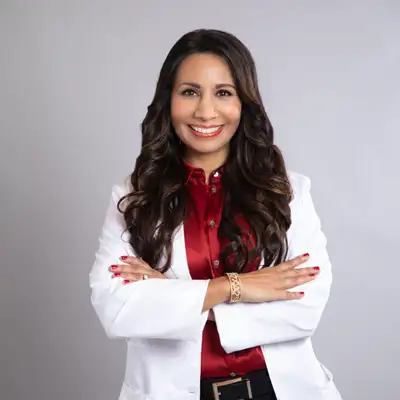
hol+ with Dr. Taz MD is redefining modern medicine through a comprehensive, evidence-based holistic approach; integrating functional medicine, integrative medicine, and time-tested healing systems to treat the whole human, not just symptoms.
Hosted by Dr. Tasneem Bhatia (Dr. Taz), triple board-certified physician in integrative, functional, and holistic medicine, bestselling Penguin Random House author, and founder of hol+; a comprehensive evidence-based holistic medicine platform with clinics in Atlanta, New York City, and Los Angeles, and virtual care available nationwide.
At the heart of hol+ is a revolutionary framework: the Five Body Map- physical, mental, emotional, energetic, and social/community bodies that create whole health. This whole-human approach connects hormone imbalances, gut dysfunction, microinflammation, cortisol dysregulation, metabolic disease, autoimmune conditions, perimenopause, and stress-driven illness to the full spectrum of who we are; body, mind, and spirit.
Each episode explores Dr. Taz’s original clinical frameworks ;The Cortisol Loop, Microinflammation, and The Invisible Load alongside conversations with leading experts, celebrities, and thought leaders including Sophie Grégoire Trudeau, Katherine Schwarzenegger, Cameron Mathison, Carol Alt, Jane Seymour, Tamsen Fadal, and Kris Carr.
Topics include hormone health, gut health, GLP-1 and metabolic therapy, thyroid dysfunction, weight loss, inflammation, autoimmune disease, mental and emotional wellness, energetic health, and the future of holistic medicine.
This is the show where science and spirit converge- driving health, happiness, relationships, and family ecosystems.
Want to go deeper? Join Dr. Taz’s private community, the hol+ Circle ; medicine beyond the exam room. (holplus.co/circle)
A 2025 Webby Award honoree, recognized alongside the Mel Robbins Podcast in the 29th Annual Webby Awards, hol+ is built on the foundation of Super Woman Wellness, which surpassed 1 million downloads over 8 years.
This is medicine beyond the exam room. Welcome to hol+
[0:00] We are seeing so much in the headlines, in the news with birth rates dropping across the globe, so many women struggling [music] to get pregnant and
[0:08] the rates of IVF and egg freezing escalating as more and more women delay childbearing as they pursue their
[0:16] professional interest. Many times thinking about the male partner in this particular situation is secondary. It
[0:24] doesn't even come up until things are going wrong. But also, fertility is actually a team sport. In this next
[0:31] episode, I'm going to break down how we need to rethink what we're thinking about fertility and take the burden off
[0:38] only thinking about the female in this particular journey.
[0:45] Hi everyone, it's Dr. Taz. Before we get into today's episode, I just want to pause and say thank you. Your messages,
[0:53] your shares, your stories are the reason we make Whole Plus. Every conversation here is about connecting the science,
[1:01] the intuition, and everyday life together so you can feel more like yourself. Again, if you haven't already,
[1:07] hit that subscribe or follow button. It helps us reach more people who need this. All right, let's begin. Let's talk a little bit about fertility. In
[1:16] Ayurvedic and Chinese medicine, they treated fertility or the goal of having a child as a team sport. Meaning that
[1:24] both partners needed to focus on their overall health, their prana in Ayurvedic medicine, theirqi in Chinese medicine.
[1:32] And with that focus, hopefully there would be a successful and not very painful fertility journey. That's
[1:40] completely different than how we think about fertility in Western medicine today. Many times the typical journey looks like someone trying to get
[1:48] pregnant, a couple working at it for maybe a year, then if they're not successful, typically the female going
[1:54] in to get evaluated. The male partner is usually only brought into the equation only after a few different interventions
[2:03] have been made on the female. If you've gone through a fertility journey, you know what I'm talking about, where oftentimes the male partner is an
[2:10] afterthought, not something we jump into right away.
[2:14] I am advocating for really applying sort of the east west approach to fertility.
[2:21] And this is really bringing in the four key pillars of health for both men and women to have an easy, uncomplicated,
[2:29] hopefully successful fertility journey moving forward. But here's the catch. This is something that works over time.
[2:37] It's not a let's do this and you're going to be pregnant tomorrow. This is really something a couple needs to sit down with at least a year ahead of time
[2:45] and think through what their health looks like, what they need to be tracking and measuring, and what they can do to support their journey
[2:53] together. And I do believe when you start to approach fertility this way as a team sport rather than as an
[3:00] individual accomplishment, it actually leads to a better pregnancy, a better postpartum period, and actually brings
[3:08] the fun into child rearing instead of something that seems so overwhelming and so burdensome for the mom alone. So
[3:16] let's talk about what that really needs to look like. When we look at health, there are four key areas where we feel
[3:23] like both men and women suffer in terms of getting pregnant. The first one across both is inflammation.
[3:31] Understanding where the body sits with inflammation, what might be impacting your inflammatory load is directly going to impact fertility. And there's so many
[3:40] different reasons why. We know for the woman who has chronic inflammation, that could mean there's such a burden that her ovulation's not working effectively.
[3:50] She may have inflammation in her uterine lining. So implantation, which when the egg actually implants or the embryo implants, can be an issue. Or she may
[4:00] simply not have the reserves to have a successful pregnancy. For the male, chronic inflammation looks like a low
[4:07] sperm count. It's that simple. When the body is consumed with inflammation, it cannot produce healthy sperm at the rate
[4:15] at which it needs to. We know sperm takes about three months to regenerate.
[4:20] So that's why I want at least a year in advance of all of this planning to have a healthy overall journey to getting
[4:27] pregnant. So inflammation is something you can measure. It's something you can look at. It's also something you can feel. Inflammation feels like fatigue,
[4:36] brain fog, joint pain, rashes, so many different soft markers that we are just accustomed to ignoring day in and day
[4:44] out. Men in particular will dismiss this stuff. They'll say they're going to power through or maybe it's just a phase
[4:52] and aren't as aware of some of what their body is trying to tell them. But women are just as guilty. We do the exact same thing and we will ignore
[5:00] symptoms until something really obvious gets in our face. We skipped a cycle, maybe we have a very painful period or
[5:07] we simply don't feel like ourselves. So inflammation is something I want every couple thinking about getting pregnant to start to stay on top of. You can
[5:17] measure it looking at very simple markers and conventional lab work. This includes stuff like a CRP, a said rate, a homoyine level. You can even look at
[5:26] things like an ANA. And again, I would do this ahead of time and not wait till you're later in the journey. Even a low white blood cell count can be a sign of
[5:35] low-grade chronic inflammation. So something to definitely stay on top of.
[5:40] The second piece of this puzzle is around cellular health, which is indirectly honestly related to nutritional health. With cellular
[5:47] health, we can subdivide it out into more categories. We can talk about the mitochondria. We can talk about cellular regeneration. We can talk about
[5:55] oxidative stress. Trust me, I can use all the really big words, but I also don't want to put you to sleep. The cellular health at the end of the day is
[6:03] about the cells getting the energy, that word again, the chi, the prana that they need to reproduce. Reproduction in
[6:12] itself is an act of energy. And if either partner doesn't have the energy they need, it's going to be a
[6:19] challenging journey. So, this means getting the antioxidants. We're talking about vitamins's A, vitamin D, vitamin E, vitamin K. Getting into things that
[6:28] help us to reduce the burden to ourselves like glutathione or NAD. It also means eating a diet that is
[6:36] anti-inflammatory, tying us back to our first pillar, and also provides us with the nutrients and the antioxidants in
[6:44] our daily diet. The leafy greens, berries, nuts and seeds, fatty fishes, the oils that are needed to support a
[6:53] healthy diet and reduce levels of inflammation. So all of this is important again to both partners. Now,
[7:00] when it comes to improving egg quality for many women, it's about nutrition and it's about really optimizing blood sugar
[7:08] at the same time. Blood sugar regulation is one of the biggest issues women have around ovulation and we are seeing this
[7:18] at epidemic proportions. I think as we have started to look at blood sugar across our populations and even in our
[7:25] you know patient databases, we are understanding now that blood sugar elevation and changes in blood sugar or
[7:32] reactive hypoglycemia where blood sugar goes up and then it comes crashing right back down is directly impacting ovulation.
[7:41] We have a name for this now with PMOS or polytabolic ovarian syndrome, but there are many other conditions in which it
[7:48] exists and we're simply not picking it up because we're only looking for blood sugar abnormalities for somebody maybe in the pre-diabetes world or the
[7:56] diabetes world. And again, that's just too late. We want a better understanding of what your fasting insulin level looks like, what your hemoglobin A1C looks
[8:05] like, even what something called a ceptide looks like. These are all ways to understand what your body is doing with blood sugar and if it could be
[8:13] impacting your ovulatory response. A great way of checking and sort of tracking this is to wear a glucose monitor and start to understand the
[8:21] foods that may or may not be impacting you or even the lifestyle patterns that might be impacting what your blood sugar is doing. So many of my patients,
[8:29] including myself, it's not really about the food and blood sugar. It's more about chronic stress. Or maybe it's about a particular drink that they're
[8:37] doing or it's about a particular environment that activates their blood sugar at a higher level than another. I know I found on myself that my blood
[8:46] sugar levels were lower no matter what I did when I'm on vacation and in the sun.
[8:51] So all of these things are impacting your insulin levels, your blood sugar levels, which directly impact ovulation.
[8:58] And many people will go on this journey of never understanding that their blood sugar was the root issue. and instead going into complicated fertility
[9:06] journeys that probably could have been avoided in the first place. So blood sugar is a big one and it's directly tied to inflammation to cellular health.
[9:16] It all winds itself together, but again it's going to be true for men as well.
[9:21] Men that have higher than average levels of blood sugar or have pre-diabetes or even diabetes do have lower sperm counts. We see that in the research. We
[9:30] know those two things are directly related. So again, this is an important pillar and one to stay on top of if you
[9:37] are a couple thinking or trying to get pregnant. I want to pause here because I see this pattern all the time. People
[9:45] are doing the research. They're listening to the podcast. They're trying to take better care of themselves and they still feel so stuck, especially when it comes to their health, their
[9:53] hormones, their stress, and even taking care of their families. That's why I created The Circle. The circle is my private membership where we go deeper
[10:02] into these topics with real guidance, demos, live sessions, and a supportive community. If you want to try it, there's a one-mon trial available right
[10:11] now. You can learn more at wholeplus.co/circle. That's holus.co/circle.
[10:20] Or just click the link in the description below and use the code YouTube. Now, let's continue the conversation. [snorts] And last, but
[10:28] certainly not least, is looking at the overall picture of hormones. And this is one that we could talk hours for, but I
[10:36] want to give you sort of this like condensed version. Hormone balance is critical for both men and women, but
[10:44] slightly different. And here's what we're going to talk about. For women, we know estrogen levels, progesterone levels, thyroid, insulin that we just
[10:52] talked about, and even cortisol, the stress hormone, all play directly into the ability to ovulate, to have healthy
[10:59] to have a healthy fertility journey, and to keep that, you know, pregnancy once you do actually get pregnant. So, we look at things in practice, right? We
[11:07] look at like an estrogen to progesterone ratio. We look at a healthy thyroid. So, we want that TSH to be somewhere between
[11:14] 1 and two for good fertility and for good conception. We also know that cortisol, just like blood sugar, can be a really big blocker of ovulation. Huge.
[11:26] In fact, we know that women when they are stressed will not ovulate at the same rate as women who have lower levels of cortisol. This is a part of the
[11:35] reason why acupuncture works. It actually helps to bring the nervous system into more of a recovery state and allow ovulation to happen. When cortisol
[11:44] levels are high, which sometimes you can even see in something like an HRV or your heart rate variability being very low, we know that the body's in a little
[11:52] bit more of a protective mode, meaning like, hey, I'm not I'm not ready for this. I'm not ready to get pregnant. I can't do this right now. And so, again,
[12:00] ovulation is blocked. So, those are the big ones for women. And I'd probably add a couple of the androgens. It's
[12:07] important to track DHT, DHEAS, NS7 hydroxy progesterone, and even a prolactin because all of these are
[12:14] androgens that are not getting routinely checked when you do lab work. And many folks with this androgen sensitivity
[12:22] don't realize they have it and again until they're deep in like their fertility journey and getting incredibly discouraged. So, there's the hormone pillar, but let's talk about the men.
[12:32] For men, they also need to have healthy levels of hormone, not just for sperm count, but also for their overall energy
[12:40] and their overall health. We know men with high cortisol levels have lower sperm counts. Men with low testosterone
[12:47] levels also have low sperm count. These two hormones, in addition to checking their thyroid and their stored estrogen,
[12:55] are critical when trying to plan for a healthy conception journey. Here's the reason why. Testosterone levels right
[13:02] now are plummeting in men at alarming rates. I mean, it's shocking me. I will see young men in their 20s and even
[13:09] their 30s with levels of testosterone that I used to see in men in their 50s and 60s. We are seeing a problem with testosterone in men. And we're trying to
[13:18] understand why. It could either be a lack of activity, blue light and sitting our modern day society and toxins, or
[13:27] simply not getting the nutrients and the food they need to build health healthy testosterone levels. In addition to that, men are just as susceptible to
[13:36] cortisol and stress as women are. They just show it differently. We might talk about being stressed or wake up in the
[13:44] middle of the night. Men are silent, but sometimes that's even more troublesome.
[13:48] or they're angry or anxious, but nobody ever knows. So, understanding and encouraging both partners to look at
[13:56] their hormone profile and their hormone cascade is a critical part to understanding what it really takes to have a healthy conception and fertility
[14:04] journey. Those are our four pillars. And just to repeat them real quickly, monitoring inflammation, monitoring
[14:11] blood sugar, monitoring cellular health, and then of course looking at the hormones and the hormone cascades. These are like to me the 101's of a good
[14:20] healthy fertility journey. But then many people are like what can I do in addition to that and what do I need to take? What do I need to be thinking
[14:29] about? Well, let's talk about the risk factors for men and then let's talk about the risk factors for women. We've already talked about PCOS and PMOS as
[14:36] being one of the leading causes for having issues with conception. In addition to that, thyroid instability is a big one. I would say high stress or
[14:45] chronic stress could be an additional and also having an issue with a lowgrade autoimmune disease that prevents healthy ovulation can contribute to infertility.
[14:56] So those are some of the ones for women that we know of. There is a very involved intake that many women will go through when they're struggling with
[15:03] fertility that includes looking at all the different autoimmune markers. you know, looking at different antibbody levels to understand what's going on
[15:10] there and again going on that deep dive of where in their genetics or in their cellular health they may be off track
[15:17] when it comes to what's needed for healthy fertility. For men, we know that chronic stress, not sleeping, vaping,
[15:26] and smoking are huge triggers for having low sperm count. In addition to that, alcohol consumption, marijuana
[15:34] consumption, these are things that can also lower sperm counts and impact the overall fertil fertility journey for the
[15:42] couple. So, those are some of the risk factors to be thinking about and to be paying attention to. And what I'm imagining as I'm speaking actually is
[15:50] that hopefully a couple's listening to me and they're starting to take some notes and they know what to test for.
[15:55] You know, they're about a year out from when they want to get pregnant. You know what to test for. you know what to screen for, but you also know some of
[16:03] the behaviors and the things that you can start to modify. And so some of that goes around diet first, right? Eating a healthy anti-inflammatory diet, making
[16:11] sure you're eating consistently to manage blood sugar and keeping blood sugar where it needs to be. Getting good, deep, consistent sleep. It doesn't
[16:19] have to be eight hours, but you do want quality RAM sleep and quality deep sleep to again bring cortisol down to help the
[16:26] hormone cascade. And for the women out there, I'm going to remind you of the lesson that I learned, you know, from my ER days where ideally, and Chinese
[16:34] medicine talks about this too, you are sleeping at least from 11:00 p.m. to 5:00 a.m. because that is the critical
[16:40] window for hormone metabolism, hormone production, and hormone regulation. That circadian rhythm, the hormone rhythm is
[16:48] directly dependent on for the guys. Kind of the same idea. An anti-inflammatory blood sugar balancing diet is critical.
[16:56] Getting good consistent sleep, minimizing alcohol, which I think is one of the biggest ones we really need to be
[17:03] under about four drinks a week. And then of course managing chronic stress and finding outlets to help you lower
[17:10] stress. Both men and women would benefit from acupuncture in a fertility journey.
[17:16] And we have the data and the research that supports all of that. But the next level is thinking about things that may
[17:24] optimize you further. Believe it or not, there's a whole litany of herbal Chinese herbal products, Ayurvedic herbs,
[17:32] nutrients, neutrauticals that actually help support fertility. For example, ashwagandha has been found to be helpful
[17:40] in improving sperm counts in men. It's actually also very helpful in managing the cortisol component of this
[17:48] conversation. In addition to that, we know that there's so many herbs handed down over time that have been helpful for fertility. One of my favorite is
[17:56] something called shadavari, which is wonderful in terms of really improving egg quality. And they talk about it improving the overall energy or essence that's needed to reproduce in women.
[18:08] It's been used for thousands of years.
[18:10] In Chinese medicine, a lot of herbs around really improving the ovulatory response. There's one in particular, I'm
[18:18] going to butcher the Chinese, but it's called Jiao San Juan, and it's a very good one in terms of helping ovulation,
[18:26] right? It's helping with estrogen to progesterone ratios. It's helping, you know, overall with the overall reproductive uh capacity for a woman.
[18:34] So, these are things that are incredibly helpful. In addition to that, the research, you know, there's so much research evolving showing how Chinese
[18:43] herbs help an anovvulation. So for somebody not having a cycle, you know, there are so many different herbs that are helpful there. They're helpful for
[18:52] even male infertility if a man is not having like enough of a sperm count or not having kind of enough of a overall
[19:00] testosterone response that he should be having. So again, a lot of different great herbs that are helpful in addition to some of the Chinese and Ayurvedic
[19:08] herbs. You know, there are additional supplements that are helpful when it comes to fertility. Myininoininotol for
[19:15] example especially in women can help regulate blood sugar. But again these are going to be after your diet, your lifestyle, your cortisol management,
[19:23] sleep. After that you want to start thinking about some of these when you're thinking about fertility. So we've talked about ashwagandha which I like. We talked about shadavari which I like.
[19:31] Myoinositol really does help ovulation and blood sugar regulation. We use it a lot in PCOS and POS. And we also use it in the
[19:40] endometriosis population as well. In addition to that, you know, we've seen where methyl folate makes a difference
[19:48] with inflammation and the autoimmune response. Magnesium and zinc very important in both testosterone, estrogen, and progesterone production.
[19:56] Now, it can be very difficult to take all of these different ingredients separately. So, I do like certain brands that combine ingredients together, which
[20:04] makes it a more convenient, but we also know that it's effective. For example, you natural conception for him and conception for her which each partner
[20:13] could take on this fertility journey are super easy convenient way to get some of these things in. It contains myinostol,
[20:20] ashwagandha, shavari, folate, manganese, you know, even vitex for uh females. All of these things have been super helpful,
[20:29] have research behind them when it comes to getting a great ovulatory response and having a healthy fertility journey.
[20:36] So again, a way to bring this in without it just feeling overwhelming. Remember to talk to your doctor about any supplements that you are deciding to
[20:44] start. So bottom line, when it comes to fertility, here's really what I would love for all of you to remember. First of all, it's a team sport. It's just not
[20:53] a her sport. You want to plan at least a year ahead because the earlier you plan, you give a a holistic plan an
[21:01] opportunity to actually work before you jump into a complicated and sometimes expensive fertility path. Next, I want
[21:09] everybody really again both partners really understanding kind of those four pillars and where they're landing as
[21:16] they're thinking about conception. So, as a reminder, inflammation and where you stand, your cellular health, your blood sugar, and your hormone health. I
[21:25] think it's really critical to get your hands around that so that you know where you are and what you need to change today. And then I think build a
[21:33] supportive plan. Your diet, which we've talked about as an anti-inflammatory blood sugar balancing diet, good healthy
[21:41] sleep where you're getting and deep deep sleep at the same time. a cortisol plan to bring the nervous system into a
[21:49] recovery mode and into the signaling that hey, we're ready to get pregnant and also bringing in key ingredients
[21:58] that we know help support fertility for both men and for women. Now, if you are planning this and you are starting and
[22:06] you really have taken an opportunity to optimize your overall health and you're still not getting pregnant, after a year
[22:14] of trying, you do want to meet with specialists to help you understand and identify and maybe do a little bit more detailed lab testing as to where the
[22:22] issue may be and begin that conversation. But again, it's not defeat. It's not failure. There are so
[22:29] many different reasons why a couple may have difficulty getting pregnant, but I promise you, we've seen so much success in practice. The earlier you start, the
[22:39] earlier you plan, the more you support your body, the more you engage in the healthy lifestyle that we've been advocating for on this show over and
[22:47] over again, the more chances, the higher chances that you'll actually have success. I wish you all the best. If you
[22:55] guys are having any issues in this fertility journey, remember to reach out to us at Whole Plus as well, where we talk to couples all the time in terms of
[23:04] where they've landed, what may be blocking them, and what we need to do next. Today's podcast episode has been sponsored by You Natural. Their
[23:12] products, Conception for Him and Conception for Her were designed to support couples in their fertility journey. Before you go, remember healing
[23:20] doesn't happen all at once. It happens in moments. If today's episode gave you one of those moments, subscribe and keep learning with me.