Subscribe
Share
Share
Embed
Is Anything Real? is a podcast about questioning the things we've collectively decided are true.
Each week, executive coach and author Adam W. Barney sits down with founders, executives, authors, creators and other interesting humans to get underneath the assumptions, conventional wisdom and occasionally ridiculous rules we use to make sense of work, leadership, success and our lives.
The conversations are prepared but unscripted. No rehearsed talking points. No pretending there's a neat answer when there isn't one. Just curiosity, honest disagreement, lived experience and the occasional detour that turns out to be more interesting than the question Adam planned to ask.
Because sometimes the most useful question is the simplest one: Is any of this actually real?
New episodes every Wednesday.
Here's a myth currently wearing a very expensive AI badge.
The future is intelligent.
That's a clean headline,
but it's an incomplete prophecy,
because the intelligent future is actually already being built.
It's faster models, smarter systems, better automation,
but more synthetic output, right?
Yeah.
And here's the uncomfortable question:
If everyone is building the intelligent future,
who's building the human one?
Exactly.
I think technology can accelerate work.
It can compress knowledge
and do much more,
but it can't create that trust, belonging, repair,
or help us decide what kinds of places,
teams, companies, and communities
make people more alive.
That's still our job as humans.
Yeah.
Welcome back to Is Anything Real,
the reality-first leadership show
where we test advice,
publish the receipts,
and ship what actually works under pressure.
I'm Adam W. Barney,
transition leadership coach,
author of "Make Your Own Glass Half Full,"
and builder of EnergyOS,
where I help leaders rebuild their operating system
when the tools that got them here stop working.
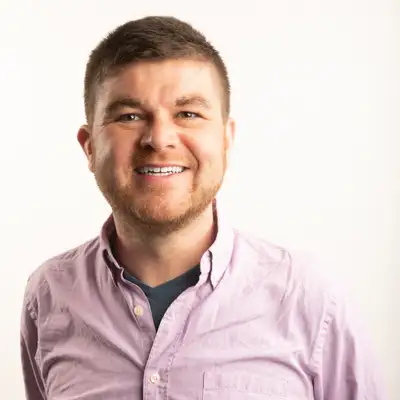
Today's guest is Mike Brown,
founder of Sightworks.
Now, Mike has spent roughly 25 years
in creative production, design, storytelling, set design,
fashion, retail, and the built environment,
which means he has spent decades
designing the conditions where people
legitimately gather, feel, move,
believe, belong, and remember.
And now through Sightworks,
he's helping leaders and organizations
ask a question
I think is one of the most important questions
in business right now.
Everyone is prioritizing the intelligent future.
Who's building the human one?
That line literally stopped me
because my own mantra here has become
relationships first, AI second.
But Mike Brown,
welcome to "Is Anything Real?".
Thank you, Adam.
It's a pleasure to join you,
and I appreciate the generous introduction.
I also appreciate the parallel paths
between the spheres that we work in
in these conversations because
the more and more we listen across sector,
more and more people are speaking about this exact issue.
Yeah, yeah, and I think this is where
this is either going to turn into a podcast episode,
or a very ambitious dinner party.
But you know, Mike, let's start here.
When you say everyone is prioritizing the intelligent future,
who's building the human one?
What are you seeing that most leaders are actually missing?
Well, I think this is a vast subject.
And I say it with respect and humility,
that I've spent,
my career path has been very nonlinear.
I've worked in design production.
I've worked at some architecture firms.
I've worked in experiential ad agencies.
I've worked as a self-employed production designer.
The through line for me
has always been storytelling and placemaking.
Coming out of theater, it has always been
what is the human truth of a story
that can define a place that allows actors
to bring that world to life.
That ultimately
captures the attention of an audience
for two or more hours.
So, fast forward to now, the world we live in.
Obviously, the technology, social media, screens,
it has been extraordinary,
and it has re-imagined creativity.
The tools we have to use
as creatives, as designers, as makers.
I think the caution flag that I've been feeling
in the last couple years,
and it isn't just me.
I've had more and more conversations
the last few years,
and also reading and listening.
There is a cultural shift underway.
There is a yearning
for craft, for rootedness, for experiences
and belonging that transcend just a post and a transaction.
I haven't even gotten into the term of the day,
AI slop,
and I don't want our conversation to go there,
but I'd like the audience
to kind of keep that in the back of your mind
because it's kind of where we're dancing around.
That while, and I'm not against technology,
please let me reaffirm that.
I think my argument about who's building the human future
is I think the solution is collective intelligence.
That's really the key here.
It's between human, artificial, and natural,
because hey, we live on a rock
with a lot of natural intelligence
we should be paying closer attention to.
So, to answer your question, Adam,
I think, again, leaders - that's quite a broad generalization
because there's all sorts of sectors
to play here, corporate to independent, to different businesses.
But, it's really reigniting the conversation, the lens of
who are we building for.
Who are the people who are building the work?
How do we work?
It's not always about optimization and speed and efficiency,
because, to be human,
it's kind of sloppy and messy.
And there's the art of the lived experience.
And so, coming out of
art, design, theater,
storytelling, placemaking,
I'm in this third chapter of my career,
building a consultancy to help.
Leaders in the built environment:
architects, urban developers, planners,
institutions, and brands,
think a little bit closer, or reconsider.
Are we measuring the right thing?
Are we, you know, are we measuring efficiency and speed,
and foot traffic and occupancy, and, you know, leasing rates?
Or how about instead,
we measure who are we building for?
Because I can almost guarantee
that if we move upstream those kind of questions,
the work is going to get better.
Right, right.
And that's where I want to spend a minute
going back to your origin
because I think it's actually
what built that powerful lens, right?
You started as a set designer in theater,
and, you know, then spent decades
in that creative production, experiential, and so on.
But you know, you said something
around things that often disappear,
were what you were designing,
and that actually fascinates me
because a physical installation
might have to come down,
an event might end, you know,
a human experience might change,
but the human imprint stays.
What did designing temporary environments teach you
in the work you do today about what actually lasts?
It's a great question, and thanks for going back.
I mean, when I was seven,
I grew up in Philadelphia.
My dad, there was
the national tour of Peter Pan coming through Philadelphia,
and my dad knew some people.
So after the show, my brother and I,
I was seven, he was eight, nine,
we got strapped in the Foy flying harnesses,
and we got to fly around the set.
As a seven-year-old, that's fun.
With a rapid imagination and a desire to understand, like,
how things work, take things apart,
break things, put them back together.
That moment stuck with me because it was
like it was imagination made real.
It was like I wasn't just watching a story,
I was in it, in the physics of it.
Anyway, so as I've been in this first year
of building SightWorks
and building a new network,
I really have leaned on that.
I spent the past 25 years designing things that disappear,
and yes, the experience economy is real,
robust,
and I don't know what the market cap is right now,
but it is legitimate,
and it is shaping culture.
However, I think one of the little cautionary tales here is,
it's built on the momentary, right?
And I like to say that my experience
comes from designing things that disappear,
and so when we can no longer
depend on the built infrastructure.
Like permanent place,
I've found over my years
that we have to be more intentional
about the human conditions inside of it.
And that's where the seeds of
connection, memory, feeling,
ultimately leading to belonging, come from.
There's still great power in the temporary.
There's still great power in civic activation, pop-ups, festivals.
Trust me, I'm not bleeping on all of that industry, right?
I just want to champion
how can we take that momentum
and apply it to the permanent stuff?
Because I think that's one of the keys
to building the human side of the future.
Right, right.
And, I think that's actually such a deep leadership lesson, right?
A lot of leaders today, in that broad sense,
obsess over the visible things, right?
But the real residue is what people felt,
what they believed,
maybe even who they trusted.
And what they carried with them
after the structure disappeared when they get home,
I see that direct connection to leadership.
You know, the meeting ends,
the offsite ends,
the Slack thread dies,
the strategy deck gets buried in a folder,
but the human experience through those remains.
And, how would you say that
that helps you design
for the things people carry
after the built thing disappears?
Well, I think you're kind of hitting the nail on the head
when you go back to the leadership side,
because what I'm talking about
matters to not just the end product,
but it matters to who are the people
who are building that work.
And so I think it,
I've been digging into the whole workplace idea,
design for workplace,
and the organizational psychology of belonging,
and how work is done,
and that speaks to what you're saying about leadership.
I'm not an expert in this stuff.
Like, I don't have a sociology degree.
I haven't spent 25 years in corporate workplace design.
I have great respect for the experts.
I think what's fascinating about it,
there's a lot of organizations
that are starting to understand that,
yes, we all have remits,
and yes, we all have ROI,
and yes, we all have expectations of the business return,
but there are ways to shuffle the pot again
and say to the teams we lead and how we direct,
to let those people reclaim the human side of what they're doing.
It's not always about efficiency optimization,
spitting out enormous amounts of work and volume,
because that's what's needed.
Now I know I'm
pushing up against a massive mountain here.
And there's some industries that are
built on that efficiency, speed, volume.
I get it, and I respect it.
But what I'm trying to argue
through a philosophy and a mindset shift
is there is value, even baby steps, of saying,
the creative process, as designers,
as creative thinkers, as integrated minds,
where we think across disciplines.
The human experience
is all about the messiness,
the sloppiness, the nonlinear paths.
So, I think to answer your question,
I feel like when leaders of teams,
and I've led creative teams
at architecture firms,
at production companies,
at experiential groups,
when leaders create the conditions
for their teams to recognize what they're capable of.
There becomes more ownership.
They're more present.
They're more mindful.
They're given agency to take risk.
And so I think that's the leadership side
of this conversation is that
instead of focusing and prioritizing the outcomes,
and optimization and speed and volume,
let's reconsider the process.
How are we going to get there?
Because ultimately, and there's a lot of people
who have a lot of deeper experience than I do,
who can say, yeah , here's the proof of this.
Son't imposter syndrome yourself here though,
right Mike, so.
I'm just trying to be human about it
because this is a vast conversation,
and I've worked in a handful of industries
and gotten a taste of this
and I think there's a core human truth here
that applies across sectors.
Well, I'm going to say that that's a leadership truth
with mud on its boots, actually.
Around why perfection
is such a dangerous goal right now.
And actually, you know, to go back to,
we're only as strong as we are.
One of my favorite moments
from our first call was when I said,
"I tell my daughters, there's no perfect."
And you actually pushed that even further.
You said, as you just were saying,
don't even strive for perfection
because being human is not perfection.
Human is messy, as you were just saying,
it's sloppy, it's nonlinear.
You know, some days even I will admit
I don't know what the hell I'm doing.
Other days I feel like I'm crushing it, right?
And I think that lands especially hard
in this AI era we've entered
because synthetic polish is getting very cheap, right?
Perfect-looking things will be everywhere,
so I think the real advantage in the future
is not perfection.
Exactly.
I think the future advantage is aliveness.
Mike, what would you say aliveness looks like in a team,
say a place, or a company?
Well, I mean, it's a great bridge because,
when you think about another beaten-to-death dead horse
about frictionless,
where has frictionless got us to now?
And I think it was either
Bloomberg or Forbes or The Economist
that last week came out with
there's now enough data to show that, you know,
the audiences or the consumers are speaking with their wallets,
and they're not buying things that are so promoted by
the perfection, seamless, frictionless,
AI-generated stuff,
because again there is this cultural yearning for the human side,
and that, to your point,
it isn't perfect.
It is messy.
My argument about it, coming from theater,
and just my own creative ethos of practice is,
you don't design a complete picture.
You design a space that isn't complete
until the actors walk on stage,
and the audience sits in their seats.
Without those two entities,
those two halves of the coin,
my work isn't done.
As a set designer,
or a fashion show,
it's the same idea.
It's like,
I may be designing the container,
the threshold of that place.
It would be the same idea if I'm designing a, you know,
a city plan,
or a campus plan for a street festival.
We are designing;
the practitioners are designing the envelope,
the conditions for the communities
to reclaim that space
and make it their own.
I argue a lot for, or I promote a lot
this idea of design for belonging.
And what I'm really talking about,
it's an authorship question.
And so, both leaders in companies,
but also practitioners of public things,
be it spaces, places, et cetera.
All we're really doing is creating the greatest conditions
for other people to thrive.
And I think leaders are doing that for their teams,
and teams are doing it for whoever the company is serving.
And I think what's interesting,
to go back to your comment about perfection and polish and AI,
is, yeah, look, I mean,
who doesn't have a moment of the dopamine hit
of loving a beautiful picture of something.
And I've got a lot of talented friends in advertising
who spit out incredible animation work.
However, what does it make you feel?
Does it make you feel something?
That's why we're here.
And, I mean, this gets into actually, you know,
a lot of, you know,
the alignment that we found in terms of partnership here.
You know, I know you and I, Mike,
we're working ahead to co-hosting a virtual executive salon
around a sort of shared thesis here,
where technology alone cannot create
judgment, connection, or trust;
you know, leaders have to intentionally design
those conditions on purpose,
and I love that
because it's not just this podcast conversation,
it's the work we hope to bring into the room with senior leaders.
And, for that room, thinking a little bit more specifically,
what's the question you want leaders to wrestle with most?
Well, when you look at your people, your teams,
the legacy talent you've got,
also the new hires you bring in,
and I haven't dug into the data around
the next generation, the younger talent that's coming in,
those that grew up with devices in their hands,
that have an urge to, like, do the analog stuff now.
I think the opportunity for leaders is to re-look at
how we balance the remit,
and what we have to deliver
week to week to week,
quarter to quarter to quarter,
and how we deliver it,
but also how do you amplify the participation of your teams?
How do you give them agency in a new way?
How do you listen and learn from what they bring to the table?
And so, it is a collaboration.
It is not necessarily purely
leaders directing and being prescriptive.
It is we as leaders, I think, yes,
there's a balance, obviously,
because on the business, in the business,
there's a lot of different remits here that we're talking about.
But I don't think any business can lose
by getting into the weeds a little bit
with a renewed mindset around.
How we direct, how we cultivate, curate,
and build team work performance,
because the minute they are given agency,
the minute they're given authorship over the work,
the work is going to get better.
They're going to be more invested
in the mission and values of that company.
Right, right, right.
I love that, and I'm excited to bring this to the world because,
you know, the human future doesn't get built by spectators.
It's going to be built by people
willing to design conditions differently and intentionally.
Yeah.
Mike, I want to move our conversation here, though, into
one move listeners can run this week,
and I'm going to call this one
the Human Future Design Audit.
And I would say it's for founders, designers, marketers,
or anyone currently being seduced by the intelligent future
without checking whether the human one is actually still breathing.
And it's four simple questions to start, at least, right?
Where are we using technology to avoid a human problem?
Second:
What human capacity are we accidentally letting atrophy?
Third:
What condition do people need
to feel more alive and less processed?
And finally,
what is one thing we can intentionally design this week
that strengthens the connection?
Mike, what would you add to that list, though?
Are leaders treating empty space,
time for pause, time for stillness,
with as much value as they are treating productivity?
That's deep.
That is deep, right?
I don't know if it's deep and, like, you know,
I'm suddenly Buddha here, but I think there is.
Look, I'm a creative.
I'm a designer.
And like shower thoughts, you know,
who hasn't read some book
or some meme, or some whatever that says,
"Get away from your screen,
go take a walk in the woods,
sit and listen,
not just to your gut and your heartbeat,
but all the noises around you."
And those new ideas that are going to come from that,
don't miss them.
I mean, how many thousands of years of creativity in human history
was driven by what we go out and see in nature, right?
You know, in the world around us.
That gets into where the future actually gets real
when intelligence serves humanity, I think,
instead of quietly replacing the muscles
that simply make us human, right?
So this is so fascinating.
I love that you brought that up because
I pitched an article recently
on this idea of embodied perception.
As I've dug deeper into my own research
of understanding embodied AI,
which is, you know,
the higher level of all this billion-dollar investment,
trying to give the machines
the ability to perceive the world around them.
But hang on a sec.
We were born with this perception
long before the machines existed.
Ding ding ding.
So again, to just tie the dots here together,
because I'm really enjoying this riff we're having,
going on here.
There's so much value in reclaiming our human perception
through pause and stillness and awareness
and presence and mindfulness
to say, because that's where judgment comes from,
and that's where we can say,
"Hang on, do we really need AI to build this?
Can't the humans do a little bit of a better job?
Because ultimately, who are we building it for?
So, it goes back to my point earlier.
It's collective intelligence is the future.
I think has the most grit to it for all these expectations,
money included, economic returns included.
But who are you building it for?
And does it matter?
That's beautiful.
Well, Mike, you know how we end here, also,
after all of this, and you kind of already,
I think, got into a little bit of this,
but especially the myth
that the intelligent future
Is automatically the future we need,
Is anything real?
Yes, I think there's a lot that's real.
I love that there is a pushback around AI.
I love that there is a cultural conversation
that's growing louder
around, hey, wait a second.
We want to get back to craft.
We want to get back to messiness.
We want to get back to grit and grace.
We don't need shiny polish.
So yeah, I think it's all very real,
and I think we're living in a remarkably exciting time.
There's a lot of challenges
that need focus and attention right now.
Pick a lane.
But I would argue that,
yes, this friction between
intelligent future and human future is real,
and I consider it an invitation.
It is a call to arms.
It is a prompt.
We were born with the ability to create
meaningful human work for those around us,
being a part of a community.
So that's why this is real,
and I think that's great
because it's grit on the road for us to dig into
and figure this out.
And I'm excited about it.
Likewise, yeah.
I think what feels real to me these days
is the aliveness that we mentioned earlier, right?
It's those human signals.
It's the room that changes because
people are actually present,
or the story that actually is believable
and earns that belief.
Yeah.
You know, the leader who remembers that faster
is not the same as better,
and smarter is also not the same as wiser, right?
So, you know, Mike, where can folks find you,
SightWorks,
and the writing and speaking
you're putting into this world?
Thank you, Adam.
A couple different places.
sightworks.co
is my website.
There is a speaking page on it,
so a lot of my thought leadership stuff is seeded there.
But primarily, I'm posting a lot of work on LinkedIn.
So, it's Mike Brown Sightworks
is where people can find me.
Perfect, and we'll of course link to that in the show notes below.
But for the listener, I would challenge you, you know,
stop assuming the intelligent future
will automatically end up
being the human one.
That's simply lazy futurism,
and we're better than that.
You know, the tools are moving fast, and that's fine.
Use them.
But don't let the tools become a substitute for that
human judgment, trust, connection, belonging,
or that aliveness.
You know, and if it hits,
send it to a leader, founder, designer, or strategist
who's building the future that might need to ask
whether humans can still breathe inside of it.
And if you're navigating a leadership transition,
there's also a 20-minute Foundational Call with me
linked in the show notes below.
But Mike,
thank you for the thought partnership,
the human future provocation,
and the reminder that
intelligence without humanity isn't progress.
It's just speed with better branding.
Well said, well said.
It's been a pleasure, Adam.
Thank you so much for including me in this.
All right, thank you, Mike.
And until next time,
stay grounded,
stay human,
and keep questioning the noise.