Subscribe
Share
Share
Embed
Killer Quote: "Most problems in work are reversible decisions...just walk through the door and try it. And that's the culture we've been building at Hexion." - Michael Lefenfeld
Looking to lead, grow, and stay ahead in the global chemical industry?
The Chemical Show is the #1 business podcast for the chemical industry, bringing you leadership insights, business strategies, industry trends, and real-world lessons from the executives shaping the business of chemicals.
Each week, host Victoria King Meyer sits down with leaders from across the chemical industry, from Fortune 50 companies to mid-sized businesses and innovative startups. You’ll hear how they’re navigating today’s challenges and opportunities, the experiences that shaped their leadership, and the insights you can apply to your own business and career.
Conversations explore the issues that matter to chemical industry leaders, including:
• Business strategy and growth
• Leadership and talent
• Innovation and technology
• AI and digital transformation
• Supply chain and operational resilience
• Markets, customers, and industry trends
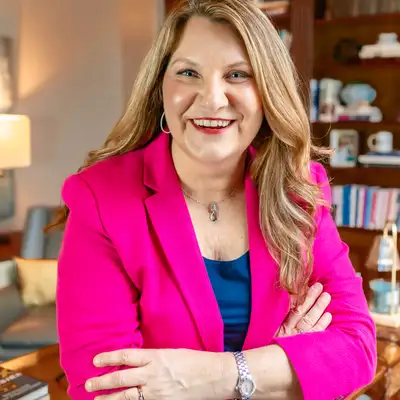
Victoria brings more than 25 years of chemical industry experience from companies including Shell, LyondellBasell, and Clariant. Today, she is an executive advisor and coach, founder of The Chemical Summit, and host of The Chemical Show.
Whether you’re an executive, business leader, or rising leader in chemicals and materials, The Chemical Show helps you stay informed, think differently, and lead with greater impact.
Follow The Chemical Show on LinkedIn and join the conversation. (https://www.linkedin.com/company/the-chemical-show/)
The Chemical Show: https://www.thechemicalshow.com
The Chemical Summit: https://www.thechemicalsummit.com
Progressio Global: https://www.progressioglobal.com
Victoria Meyer:
Welcome to The Chemical Show, the podcast where chemical means business. I'm your host, Victoria Meyer, bringing you stories and insights from leaders driving innovation and growth across the chemical industry. Each week we explore key trends, real-world challenges, and the strategies that make an impact.
Victoria Meyer:
Let's get started.
Victoria Meyer:
Welcome back to The Chemical Show, where leaders talk business. I've just returned from the Chemical Summit where we had 2 powerful days of leadership conversations, time together to build connections and insights. And as someone said, it's like the leadership think tank for the chemical industry. Well, I'm just gonna say it's that and more. Today I'm bringing you some highlights from day 1 of the Chemical Summit. It's tough to distill 8 hours of great conversations and insight and content into just a 30-minute recap, but I am going to do it. And I'm really just sharing some of my insights, 4 key themes, and some clips from our keynote speakers and panelists. Day 1's focus was really around advantage through execution, including AI, and advantage through customers and commercial value.
Victoria Meyer:
Not a surprise, lots of discussion on AI. You can't go anywhere today without talking about AI, how people are using it, talking about where companies are creating advantage and leveraging it. But what was a surprise was really this focus on customer intimacy and trust, and trust of both employees, customers, suppliers, and other business partners. It came through in all the talks, critical in the reshaping of our companies, critical as we rethink business processes and practices, harnessing AI and more. Being agile and nimble was also a strong component of discussions both on stage and in the room. And you're gonna hear about that in a little bit as I bring you the 4 themes and some of the highlights from some of our key speakers, including Michael Levenfeld of Hexion, Pete Korol of, Celsius Advanced Materials, and leaders from our CEO panel, including Christian McIver of Pilot Chemical, Jen Klein of Socma, and Mara Gliozzi of McGeehan. Now, by the way, that CEO panel was all women, which was so powerful and so impactful, and I gotta say, kind of rare. So if you missed it, you missed it, but tune in and you're going to hear a little bit from these amazing executives.
Victoria Meyer:
The other big announcement, drum roll please, I won't do it for you, um, on day 1 was we are launching a new podcast from Progressio Media. It is called The Business of CASE, and CASE being coatings, elastomers, sealants, and adhesives. You guys know that, and I think I put it out of order, but take it as it is. Um, it is going to be hosted by Crystal Morrison, who was one of our facilitators on stage. The target launch date is November 4th, and if you are in or adjacent to the case industry, you are gonna wanna listen to that podcast. Visit thebusinessofcase.com to learn more and to get your name on the list to be the first to know. And if you have ideas for speakers, guests, topics, reach out to me, reach out to Crystal. I'll make sure that her contact information or her LinkedIn is connected into the show notes so you can get ahold of her.
Victoria Meyer:
It's gonna be amazing. Really excited, really, really excited for everybody here. So anyway, on to today's show. Theme 1, transformation. In fact, the whole theme of the conference was around reshaping advantage. And leaders talked about the challenges and the opportunities facing them, markets, customers, investors, and how they are reshaping their own businesses. I've got clips right after this from Michael Levenfeld, who's the CEO of Hexion, talking about how They took Hexion basically out of bankruptcy. It's private equity backed, and what that means to how they are reshaping this 170-year legacy that they've got from their heritage company, Borden.
Victoria Meyer:
The second clip you're going to hear is from Pete Corral, who is the Chief Commercial Officer of Solstice Advanced Materials. Solstice recently rolled out of Honeywell. Again, a strong, strong legacy of decades of heritage. Now in a new company with new drivers, new investors, and frankly, a new way to create advantage. I think you're going to like it.
Michael Lefenfeld:
Hexion emerged with me as its new leader to transform it through a different way of going forward in the chemical industry. And there's 2 options when you do that, right? You can develop new science, new molecules, new processes. All that takes a lot of time. We're private equity owned. You don't have a whole lot of time. You kind of have to sprint the marathon. You get 4 or 5 years, hopefully, if the market's playing in your favor. Maybe you get 6 or 7 when interest rates go up like they did and the market lulls the way it has.
Michael Lefenfeld:
You get that type of option. So we're doing that, and we're doing a lot of that, and we're doing it really, really well, and my team in the front office, in the front desk here has been part of all of that. But the other option is to transform the organization structurally, culturally, so that it can move fast, it can pivot, it can think how to solve problems, which most problems in work are reversible decisions, right? When we come up to a decision, you gotta debate whether you can afford the cost to reverse, and if you can, in most cases you can, Just walk through the door and try it. And that's the culture we've been building at Hexion for trying to basically transform what we're doing. And we really leaned into AI. We have a full end-to-end AI strategy going from the raw material all the way to the customer, and then from the customer demand all the way back to production.
Pete Corle:
Solstice has such a long legacy, and yet you're setting a new direction, you're innovating, you're growing. What's been the challenges and the opportunities within that?
Pete Corle:
So the, the challenges, I think we used to be a relatively small part of the company, you know, so now we've been able to break free from that. That introduces a lot of opportunities for us to control our destiny. It also creates the opportunity to go in a lot of different directions. So as we look at, you know, from the opportunity perspective, it was referred to earlier, opportunity-rich environment. We're trying to make sure that as we focus as a company, that we're going where it's not just best for our employees and our customers, but also our shareholders, and to make sure that we're not distracted and we're not trying to focus on everything, and that we're able to bring it in and look at what's going to be good for us in the near term, midterm, and long term. And so from an opportunities perspective, being, you know, we were one of many business units. Now we're able to work cross-functionally. There was a question earlier that made me think about how we operate from a goals perspective.
Pete Corle:
So our chief information officer, she has my goals. She has our goals embedded in her goals for her team. And we have total transparency across the company from a goals perspective. So that was something that Honeywell did. And so the goals are cascaded down. And so we have a commercial council where we're working on different projects to advance what we're doing, and our goals are shared openly. And so employees know what they're working on. And as we think about aligning up our objectives, there's an intentionality to make sure that we're going in the same direction.
Pete Corle:
And so, you know, there's, um, it's not perfect. There's obviously a lot of things that we're working on, but it makes it easier when it's transparent.
Victoria Meyer:
Theme number 2, playing to your strengths. This comes from our CEO panel again, which is Jen Klein from Socma, Christian McIver, the CEO of Pilot Chemical Company, and Mara Gliosi, who is the CEO of McGeehan. We talked on that panel about what advantage means and how companies can play to their strengths.
Victoria Meyer:
Listen in.
Victoria Meyer:
Jen, given that, when you talk to SACMA members, when you look across the membership, what are they seeing as being critical to their advantage and their competitive advantage today?
Crystal Morrison:
We are North American manufacturing. We are here. We are boots on the ground. That resonates Republican, Democrats. So when we're on the Hill, we are here. We've been doing this work for 100 years, 150 years, 50 years. We are here. We are ready.
Crystal Morrison:
We are making the products. We are the backbone of of manufacturing. I say North American manufacturing, we are the backbone of manufacturing. No products get made without our products. And so while we may be a small component in a microchip, that microchip does not get made without our materials. And we are here, we are making it, we weather every day, we fight every fight every day, and we still make our products and we make this world a better place.
Victoria Meyer:
If we think about advantage and where the industry is going and how companies should be thinking about chemicals, specialty chemicals, etc. What's one long-held assumption about competing in specialty chemicals that is maybe what companies think is fundamental that we need to be rethinking?
Mara Gliozzi:
That's a great question, and I heard my view, and I heard some of that this morning about customer intimacy and trust, which feeds into my view. So I was trained on on coming up with a business strategy by starting with Porter's Five Forces and a SWOT analysis. Anybody else in here, right?
Crystal Morrison:
Right.
Mara Gliozzi:
Well, when you peel those tools back, it sounds a lot like you're going into battle, right? It's rivalry, it's power, it's opportunities, threats. And, you know, my question is, who are you going into battle against? And that's not my view of what competing in specialty chemicals looks like. To me, it's not war. It's actually a lot closer to love, to intimacy, because to me it's about getting closer to your customers, understanding what's important to them, how you're measuring up against those expectations. And I should put a caveat, your target customers, and then being the best you can at delivering on that.
Victoria Meyer:
Over the next 3 years, advantage will belong to the chemical companies that Have a deep understanding of customer intimacy, are agile and nimble.
Mara Gliozzi:
I heard someone else say that today, and I think that's it. We've talked today about giant chemical companies, BASF and Evonik, who are trying to find ways to work better together because they're struggling. They tell us what our numbers are. And you have Pilot, and you have McGeehan, and a lot of other small to medium-sized chemical manufacturers in this room. who are succeeding because they are agile and they are nimble, and we make hallway decisions and we move things forward. We have great safety records, and that's what's going to be the advantage going forward.
Victoria Meyer:
The 3rd theme that came through on day 1 was around differentiation beyond performance. These insights come primarily from our commercial value panel. We had a number of great leaders from LyondellBasell, Simon-Kucher, Palmer Holland, and of course our new podcast host for The Business of Case, Crystal Morrison, moderating that panel. And what you're going to hear is the different lenses that companies are approaching when they think about differentiation, going beyond price and performance, which have often been kind of the assumptions of differentiation, and how companies are really harnessing their unique strengths Today. Listen in.
Crystal Morrison:
One thing we're seeing in the industry is that it really does seem to be getting harder to differentiate on product performance alone. So when you look at companies that are outperforming today, where is competitive advantage actually being created? How much is product and technology versus other things that come along with that? So I'd like to start with James, and across the companies that you work with, Are you seeing the sources of differentiation changing or not?
James Hogan:
I don't know if they're changing as much as they are just a bit more public and transparent in how the most successful companies actually go to their customers. An example I have, I'm working with a chemical distributor right now. We recognize that just being big doesn't help. It helps with a footprint, but if you have a local, if you have a small customer, they want the agility of a regional small distributor.
John Outcalt:
Right.
James Hogan:
Somebody that can work quickly for them and doesn't have the kind of the bureaucracy internally in order to get something done. At the same time, if you are a large buyer of multiple chemicals, a distributor, you want a footprint and a breadth of products. So it comes down to being able to give the customer what they want when they want it instead of just being the biggest or the most nimble. You've got to have a You've got to match your product and your services with what the customer needs. Another example I'd use is it's an input to a refinery, another customer, and they are not the biggest, but they have capacity. And when you're a small spend, but if the reliability is not there and it fails, then the refinery shuts down for a day. That is on orders of magnitude larger than their spend. So it is finding the match between customer and demonstrating your competitive advantage in that regard.
Crystal Morrison:
It's no bueno, as my daughter would say, for sure. John, you know, you're in a unique situation because you sit between manufacturers and the customers. And what do you see that customers are actually rewarding today?
John Outcalt:
I think that, you know, yeah, we are in an interesting spot in between. And we work with suppliers that are multibillion-dollar companies, and we work with some that are in the tens of millions of dollars. So not all are alike and customer demands vary greatly. And, you know, what we see from some of our largest suppliers is that they, you know, they have very strict rules and philosophies about the types of customers that they're going to serve, how they're going to serve. And that's where we can step in and be a bridge to the customer and relay or break things down or, you know, repack, provide something special to the customer. to keep that going. And then on the, you know, on the smaller scale of the supplier, I think where we offer differentiation is, you know, by bringing, you know, usually those are smaller, more niche specialty into a lab and creating value in a different way. So I think, you know, we have to be listening to the customers but also understanding the supplier strategy in order to make it most effective.
Victoria Meyer:
Theme 4. Customer intimacy and trust. It was interesting, we started the day talking about this and we ended the day talking about it. Trust being so critical for enabling companies and leaders to successfully reshape their business, identify advantage, lean into AI, which has people a little nervous. Without trust, without customer intimacy, employee intimacy, it is hard to effectively change and reshape advantage. And you're going to hear from Michael Levenfeld and Peter Korl once again talking about what that means.
Victoria Meyer:
So, Michael, this was excellent. I think, first of all, thank you for being here and taking all these excellent questions and addressing it. This was really good. I think the piece that really stands out for me is we talk a lot about AI in the context of, well, one, we need context. which is our people, our processes, our business uniqueness. We need connectedness. But the layer that you've added on here, and it started with that conversation about customer journey, which is around trust and intimacy. And I think this is true for our customers, and it's true for our teams.
Victoria Meyer:
And so when our teams are really uncertain about this new technology we're applying or using AI, and is AI going to take my job? It's around trust and that intimacy within the knowledge of our people, the knowledge of our teams, and how we do business together.
Michael Lefenfeld:
Yes, 100%. Obviously, in any team, in any, you know, we've all learned that, you know, I lead with trust. A lot of people don't. I kind of believe that if your resume says that you've done it, you've got the skills, you got the job, I should trust you to be able to execute on the plan.
Victoria Meyer:
Yeah.
Michael Lefenfeld:
Right? So that's where I start. Now, you can lose trust, I'm not gonna lie, but, and it's very hard to get it back when you do, but that trust is critical in everything we're doing now, especially in transformation, the way that we're, the world is doing it now.
Victoria Meyer:
What's landed for you, or what's really maybe connected to the things that you're working on and thinking about today at Solstice?
Pete Corle:
I love the fact that everyone continued to focus on the customer. So the customer centricity, thinking about how they can perform and make sure that everything that they're doing is lined up to help the customer be successful, knowing that that's gonna feed to their success. So that's something that we're talking about on a regular basis at Solstice. And then also being agile and nimble. There's a lot of, I think dynamic was the word that I used this morning in the first Slido. And there's so much going on in the world. I think it was Jen talked about, there's a lot of a lot of a lot, you know, so how do we focus and be intentional on what we're working on? So that being agile and nimble theme really resonated.
Victoria Meyer:
Yeah, that makes sense. How do you bring the voice of the customer in, right? So, and how do you make sure that voice of the customer and some very diverse customers, it sounds like, really helps to shape your priorities whether it's investment decisions or, you know, as you talk about your innovation and growth strategy, what's been key to that?
Pete Corle:
So great question. There's a few different things that immediately come to mind. We've actually gone through recently and we've been investing in our strategic marketing, our MPI marketing, and our product management organizations. We also are adding digital sales or inside sales, you know, to multiply the footprint to service the customers.
Victoria Meyer:
Is this new?
Pete Corle:
This is new.
Victoria Meyer:
Okay.
Pete Corle:
And so the strategic marketing are really looking at that 5 to 10 year time horizon, and that's critical to make sure that we have the technologies that they need for the future. And so that organization is very forward-facing, highly engaged with customers. I'll be at a conference next week. The objective is to hear them firsthand. We also have then the MPI marketers. Their job is to help bring those innovations to launch.
Victoria Meyer:
What's NPI?
Pete Corle:
Sorry, new product innovation. But what's nice is they're not tasked to just get the products to launch. They actually own it for the first 2 years. So they have to make sure that the innovation that's going to hit in the marketplace is going to deliver because Honeywell was great in driving accountability and execution. And that's something that we've really tried to embrace as we've moved over so that we know that The customer's gonna buy the product and it's gonna solve a problem for them. And then they hand it over to the product management organization that runs that core portfolio.
Victoria Meyer:
So across the Chemical Summit, we had dozens of leaders on stage, hundreds of leaders in the room, all coming together to talk about reshaping advantage through execution, through customer value, through commercial value. Through digitization and AI and through people and talent. So you're going to be hearing more, especially of those last 2 frames, next week on The Chemical Show when we bring you the day 2 recap. If you were there, reach out and let me know what you heard and if it sounds true. If you weren't there, reach out and ask questions. Put it on your calendar for next year. We haven't quite announced the dates yet, but we will. I want you to stay tuned.
Victoria Meyer:
The reality is there's so much leadership and change and transformation and reshaping taking place across the chemical industry. Learning from leaders, having conversations with others across the industry to identify what challenges they're facing, the opportunities they see, the fact that frankly we are all in it together, which by the way has always been one of the themes of the Chemical Show and the Chemical Summit. Leaders learning from leaders, and so that at the end of the day we have a stronger, better industry. So thanks for joining me today. Keep listening, keep following, keep sharing, and I'll talk with you again soon. Thanks for joining us today on The Chemical Show. If you enjoyed this episode, be sure to subscribe, leave a review, and most importantly, share it with your friends and colleagues. For more insights, visit thechemicalshow.com and connect with us on LinkedIn.
Victoria Meyer:
You can find me at Victoria Victoria King-Meyer on LinkedIn, and you can also find us at The Chemical Show Podcast. Join us next time for more conversations and strategies shaping the future of the industry. We'll see you soon.