Subscribe
Share
Share
Embed
Local Threads is a storytelling podcast documenting the voices of New England's creative community. Artists, organizers, and culture makers who shape spaces, movements, and shared experiences.
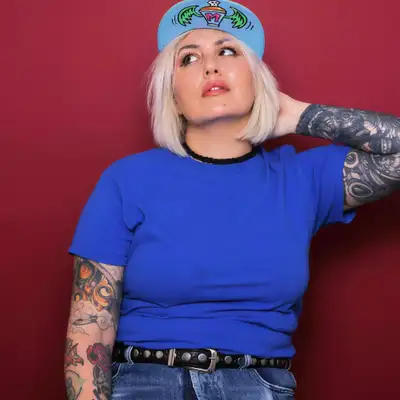
Welcome to this week's episode of Local Threads. I'm Molly, your host. And this week, I'm sitting down with Salena JD, a poet, newsletter curator, and a community builder based in Providence, Rhode Island. Salena is the founder of the Poetry Poor, a newsletter and events calendar dedicated to the poets, open mics, and spoken word spaces that make Massachusetts and Rhode Island's literary scene so special. We talk about how she fell in love with poetry, what it's really like working in the strip club industry, and what it means to show up as your whole self unapologetically without shame.
Molly:We recorded this episode in fall of twenty twenty five, so the poetry pour was about six months old at that point. So it was centered in and around Providence. But since then, Salena has extended that to Massachusetts as well as Rhode Island. So I just wanted to annotate that here. And so I hope you enjoy the episode.
Molly:Let's get into it. Welcome. Thanks for coming.
Salena:Oh, thank you so much for having me. Seriously. That means a lot.
Molly:So you live in Providence, but you're not from Rhode Island.
Salena:I am not. I'm actually from Brockton, Massachusetts, born and raised. I lived in Boston for a little bit as well, and found myself in Providence about three, four years ago.
Molly:How do you like it there?
Salena:I love it. It is such an amazing creative community to be a part of. There's always something going on. It's pretty walkable. And parkable.
Salena:And parkable. Yes.
Molly:That's what's up. For those that don't know, you have started Poetry Poor, which is a newsletter for all things poetry in and around Providence. Yes. Or is it all Rhode Island?
Salena:So I say in and around Providence because I try to put the most emphasis on the poets that are, you know, curating and hosting and facilitating events in Providence. But it definitely does have a broader scope now that I've launched the calendar. So in addition to the newsletter, which I'm I'm transitioning currently to being monthly instead of weekly, I just feel like I personally like, my inbox is so flooded. And I think my perspective on that has sort of changed on a personal level to be like, okay. I can still give people the information that they want on what's going on without flooding their inbox even it already is.
Molly:Yeah. And I was thinking about that today. How has the reception been of of the newsletter? Newsletter? We signed up for things we want, and then somehow our emails are sold and you get this newsletter you'd never signed up for.
Molly:Right. Which is incredibly frustrating.
Salena:It is super frustrating. And I think like as an industry, there's a a big no no to, like, the tricking people into signing up for your newsletter by giving them something free. And while it's a best practice to give away a freebie as free valuable content for you to see the value that I can bring in a newsletter, I feel like it can get really tricky sometimes where you're just like, well, I just want this one thing. I don't wanna hear from you every week or twice a week. Yeah.
Salena:So I definitely didn't go that route in starting to promote and gain subscribers. I just led with the value of, you know, this is what I put in into it every week because I was doing it weekly for a bit. And this is the value in the sense of, like, this is the information that, yeah, you can find at other places online, but it's specifically curated in this niche of poetry. And if you are that type of person who's looking to engage with poetry in the public, go to spoken word events, go to readings. Like, you'll find Facebook events.
Salena:You'll see it on Instagram.
Molly:You've really gotta dig.
Salena:And some people even things like Eventbrite, you can sort of, like, subscribe to a host or, like an event venue. But those emails often get lost in your inbox, like I said. So it's nice to have it sort of curated and all in one place so you can sort of put it on the calendar. I'm definitely one of those people that like, if it's not on my calendar, it didn't it didn't happen. It's not going to happen.
Salena:And so what's nice about not only the newsletter where it's clickable and you can add it to your calendar from the website that I created, but the events calendar that's now live on my website gives you that capability to, like, one click add it to your calendar. You can share it to social media if you want. And for me, that's what I was just seeing the Instagram flyers in my feed.
Molly:Yeah. Because you, you know, like it and it's gone forever. You know? Like
Salena:Yes. And even if you save it somewhere, if, like, the day comes or the the day passes and you're like, oh, yeah. That thing was happening and I didn't didn't go. So it's nice to have that reminder. And I think that's where the intention behind starting the weekly newsletter was of like, okay, this is what's going on this week.
Salena:Mhmm. But now that the calendar exists and that can be sort of like that bookmarked go to resource, I felt it was important to step back from cluttering the inbox as much while still providing value. The intention was to put a spotlight on the poets in Providence that are doing such amazing work with the events they're hosting, or they're working with local nonprofits or local schools to make poetry inviting and accessible to kids, to youth, to the general public. And so really shining a light on what the great work that's already being done.
Molly:How many new people are actually reading at these?
Salena:Yeah. So I was actually just at an event last week, and there was only one person. Sorry. Two people out of maybe 10 that were just there to listen. The rest were there to share.
Molly:Wow.
Salena:And so I I did notice that when I first sort of entered the poetry scene and making a commitment to show up in community and as a poet in community, I started noticing I was seeing all the same people at the events that I was going to. So whether it was a different venue or not, if it was a poetry event, you're almost guaranteed to see a certain group of people. But answering your question, there aren't as many people who feel as comfortable just showing up to those things and not having something to share or to contribute. And so that's definitely been a goal of mine with the newsletter and the calendar to make it more inviting for those who aren't already in those circles.
Molly:I think they just feel like maybe, okay. Well, if I'm not going to, like, read, then maybe I just I'm not supposed to go. Maybe. Don't know. I don't know.
Molly:I find it fascinating, and I need to get out there and and go. There's several, obviously, in Providence that I wanna go to, as well as Worcester, but I just haven't haven't done it. And I need to, like, make it a point to do it in the next month, but
Salena:Yeah. I mean, my personal goal has to been to show up to at least two events per month. Like, I know life is crazy. I have a whole bunch of other obligations. I'm not just a poet.
Salena:I'm all of these other things. So but making that intentional time for it has been really great for my mental health, for being able to find new people to talk to about the things that I love. I try to go twice a month, but I think, yes, carving that intentional time is so important.
Molly:Yeah. And it's really important to meet new people and and see different sides of the human experience, and that poetry, I feel like, gives you that so many different perspectives and depths to people that you don't normally see, especially on social media or
Salena:Yeah.
Molly:That's kind of where everyone's kind of viewing the world through that lens now. Mhmm. And instead of just like putting the phone down and going outside.
Salena:I feel like showing up in person and really valuing the community in person is becoming and will become a lot more valuable to people.
Molly:Yeah. I'm already seeing that, like, it's people are taking what do they call them? Digital detox vacations,
Salena:which
Molly:is kind of hilarious. Yeah. That you need to, like,
Salena:essentially go to a rehab. Yes. Yeah. Exactly. It is a rehab.
Salena:I mean, even just trying to cut down my screen time a week, day to day, it's so tough because it's just ingrained in all that we do. We rely on technology for our work, like, lot of the time. And it can be hard to stay grounded and in the moment because of that.
Molly:And also just, like, try to know what's going on, but also not feed into what has now become the way of how information is shared, which is monetization and like sensationalizing topics and Totally. Yeah. Rage bait, which we all fall victim to, you know. Yeah. It's whatever.
Molly:But so tell me how did you get into poetry?
Salena:Yeah. So I fell in love with poetry in high school when I had my sophomore English teacher did a unit on slam poetry and spoken word. And in that unit, we instead of reading a book, we watched clips from Def Jam poetry.
Molly:Oh, nice.
Salena:Which like now is like so nostalgic for me, like watching them back. And that's really where I fell in love with the vulnerability that comes with speaking in front of a crowd, but also with using your words and language to tell a story that maybe otherwise won't get told or in another format, maybe taken or viewed a different way.
Molly:Yeah.
Salena:And poetry does give you that permission to be vulnerable that a lot of other writing forms don't. It encourages you to break the rules in a lot of ways, and I really loved that I had the freedom to say what I wanted to say through poetry. And so started in high school, the seed was planted, and that's ultimately what made me decide to major in English and creative writing and poetry in college. And doing a thesis, and working really closely in workshops with my professor and mentor, Liz Bradfield. It became an exploration of identity and that vulnerability as I was growing into the the woman I am now and and still continuing to grow it.
Salena:It it becomes a processing tool for me. What's your process? Yeah. I think writing in general is definitely therapeutic for me. When my writing becomes a poem, it stems from something that I've written that I feel needs to be shared or heard.
Salena:And sometimes that's super personal. But sometimes oftentimes, the most personal things are the most relatable things. And if I feel that it deserves the space of a poem and of that editing process of that double take, then that's where it sort of transforms into its own thing. And sometimes I adopt certain forms that exist. Sometimes I'm using, like, invented forms.
Salena:I have a series of poems that hopefully will be out in a zine in in a few months or so that are cocktail recipes. Oh, that's awesome.
Molly:It's so unique.
Salena:So the the format on the page is it's, you know, written out like a recipe. You have your ingredients and your your steps, but it's telling a story. I like that poetry allows you to do something wacky like that and have it be understood. And even if it isn't fully understood, you get Yeah. That Yeah.
Salena:The feeling from it.
Molly:So I I saw this, like, video going back to being online all the time of this artist talking about this musician, actually. He was basically saying some artists say the trope of the tortured artist who is able to write through the hard times and he kind of disagreed with, I can't write in the hard times. I think that's bullshit and it's, I can't even get out of bed. Right. So do you feel the same way, you know, once you've processed it, then there's the the writing comes or is it during like the crazy chaos?
Salena:I think it happens both times for me. I think that there's certain poems, like one that I recently actually just posted on Instagram, that came out of a depressive episode, and it definitely was written not in the format that it's published now in. And so like I said, I feel like it's that process of editing that comes with the hindsight. Yeah. Like, having that reflection time and being in that mental space to be able to reflect and edit is definitely an after thing.
Salena:The the core, the seed of the poem often starts in the dark the dark depressive times.
Molly:Yeah. That makes sense. Especially when yeah. Editing is just a retrospect.
Salena:Yeah. And and that's why I feel like sometimes when I tell people I'm a poet or they're like, oh, well, I write. You know, I journal. I'm like, okay. Well, you know, all it takes is some editing, and you could be a poet too.
Salena:You know? It's not and I I think that this goes back to this this idea that poetry is this very, like, niche exclusive thing. Mhmm. And that, oh, well, you know, I'm not a poet. I could never write like that.
Salena:But really, all it takes is just looking at what you have written through a different lens or taking it from a creative angle. And who's to say what poetry is anyway? Like Yeah. That's what I love about it. You know?
Salena:An essay has rules. You know? And poetry, of course, it has form, but the free verse poem is like the most mainstream, I would say, that people really hear about. They don't they don't know what the forms are. They just know that it made them feel something.
Molly:Do you remember the first time that you like, did you start doing like poetry in person live readings early on or did you wait till you got through college or
Salena:Yeah. So I definitely didn't grow up in, like, the slam scene Mhmm. In terms of, like and slamming, usually, there there's points involved. There's judging involved. There's memorization involved, which I never
Molly:like there's, like, a winner system?
Salena:Yes. So usually at a slam so a slam versus an open mic. An open mic, you can bring whatever you want to read. You usually have like a time limit. It's like you got five minutes.
Salena:And you can read whatever you want in that time frame. And a lot of open mics are not just poetry based. Like you can go up and bring your guitar and that kind of
Molly:thing. Mhmm.
Salena:A slam is very different in that it's structured to be a competition. Oh.
Molly:I There's did not know that ever.
Salena:Yeah. And it's funny because I feel like either people are introduced to poetry through the sort of slam scene because there's a lot of emphasis on youth competing competing now and have been in the past few years. Or the like Walt Whitman, like very whitewashed version of what poetry can
Molly:be. Like you need a tweed jacket. Right.
Salena:Exactly. Very light. And a pipe.
Molly:Yeah. I don't know. Live by the sea.
Salena:So slam definitely has brought poetry into the mainstream in a in different kind of way. And and I should say slam and spoken word. And slam, there there's points. There's judges. I know in at ProvSlam, which is one of the biggest, longest running providence slam nonprofits in Rhode Island.
Salena:They choose judges at random from the audience. Oh gosh. And there's a point system, I believe, And up to so that that sort of competition style of poetry never really appealed to me because I liked the freedom of writing what I wanted to write. And so the first time that I read my poetry in public was during college, and it was because I had to for my thesis reading. So my senior year, all of the the poetry thesis and creative writing majors had a reading, and I read for about fifteen to twenty minutes of what I had been working on for the year.
Molly:That's a long time. Fifteen to twenty minutes
Salena:is a long time. Realize until you're up there in front of the mic, you know, just talk talking or reading and reading. And that was definitely a pivotal moment for me because until then, like I said, writing had been therapeutic and it had been private. And, of course, I had worked in classes on it, but it was in a very small group most of the time. And it was a big moment for me especially because a lot of the poetry that I was writing at that time was focused on my relationship with my mother, topics of addiction and family.
Salena:And to read that poetry in front of my mom and my my family
Molly:Yeah.
Salena:Was like a really big deal. But to show myself that I could be vulnerable in public as well was like a turning point.
Molly:For whatever reason, poetry for me, reading it out loud in front of people seems so, like, more vulnerable than maybe singing or because I think you for whatever reason, when I think about music or someone singing a song, I think I don't really connect them with the words as much. I don't know. Maybe I'm just weird.
Salena:Yeah. Well, I think in music, they're the words are overshadowed a lot of the time. Yeah. You have the music element. You have the pitch to worry about that you're sort of like, okay.
Salena:Are they off key? That's sort of what you're listening to when you're watching someone perform a song. But when you're watching someone perform poetry, it really is about, am I understanding what they're trying to say? Are the metaphors hitting? Like, are the literary devices translating into ears like they do on the page?
Salena:And that has been a journey for me starting as a page poet, and now just more frequently sharing my stuff at open mics and in public and on social media.
Molly:Once you did the really long and difficult reading at college, was it easier after that to just get up and talk?
Salena:No. I think every every time that I do it, you still get those butterflies, like the, you know, the palm sweating. And I always just remind myself that, like, as long as I'm feeling that way, then it's worth doing. Like, I I feel like once I stop feeling that way, then I should be worried.
Molly:Yeah. That you're not pushing yourself enough or
Salena:Right. Or that I'm share what I'm sharing isn't meaningful. Like, I I think I feel that way because I am sort of bearing my soul in front of these strangers or sometimes friends. But I I definitely have been intentionally working on my public speaking. And actually, I started hosting speed friending events last year Nice.
Salena:Typically for that reason to sort of train myself to get used to speaking in front of crowds. I think that's helped me a lot in the past year to feel more comfortable reading in front of people.
Molly:I think I'd probably cry if something I would probably cry.
Salena:It's hard not to get emotional and to actually make sure that the words are getting out.
Molly:Wait. You could give me a speech. I can do that. Mhmm. But if it's something I wrote, oh my gosh.
Molly:There's just something so stripped down and raw of that, like, I don't know.
Salena:And I have cried a Yeah. Few In spaces that I felt and and luckily, I've been able to find myself and share in spaces that I felt comfortable to do that. And that's another part of the poetry scene, especially in Providence that I I really, really love. Like, it is so supportive. There hasn't been an open mic or a reading that I've gone to where people don't immediately come up to you and say like, thank you for sharing that.
Salena:That is that love is shared for everyone who shares, no matter who they are.
Molly:Is there a particular event or group that you would recommend people go to if they're a beginner?
Salena:Yeah. I would say the most bang for your buck in terms of learning more about who the poet is, hearing some poetry, and a really great ambiance is Hide and Speak, Afroverse. Vlad Jean has been putting on for the past two years, I think. He celebrated his two year anniversary. And it's very speakeasy vibes.
Salena:It's a late night event. It goes from seven to like almost midnight. He does it monthly, and there's always two features. And after the features read their set, he has a q and a portion with that person to sort of get to the root of like, okay. Like, how did you start writing?
Salena:Like, where does your poetry inspiration come from? And so that piece, I think, is very unique just in general for poetry events.
Molly:Sounds so fun.
Salena:It's super fun.
Molly:Because I obviously, I have a podcast. I love talking to people, but I also love hearing the inside and out of someone's creative process.
Salena:Yes. Yeah.
Molly:It sounds so amazing. And what's it called again?
Salena:It's called Hide and Speak. Okay. And the company that puts it on is Afroverse PVD. Yeah.
Molly:Know that.
Salena:Yeah. It's actually it's in a speakeasy under the George restaurant in Providence downtown.
Molly:Nice.
Salena:So that it's literally like a basement poetry party.
Molly:That's such a vibe.
Salena:Right. Such a why I always recommend it my mom. Maybe you're not sure about poetry, but you're gonna stay for the vibes. Yeah. And you're gonna, like, see how powerful and fun poetry can be.
Molly:And then poetry slam is, you said slam PVD? Prob slam. Prob slam.
Salena:Prob slam. I just made that up.
Molly:No. I'm gonna cut that out. Yeah.
Salena:Prob slam, it's the longest running slam in all of Rhode Island, I'm pretty sure. And they're a nonprofit. They host events at AS 220 downtown. They have a really great youth program as well. And they do open mics every two weeks
Molly:That's on really cool that they're also a nonprofit. Yes. What do you do when you're not doing poetry?
Salena:I actually work in nonprofits. So so I work as the development associate for New Urban Arts. We're a nonprofit that provides free after school arts and leadership programming for high school students in the province So I'm very grateful to be able to help them raise money for these amazing programs that are supporting our youth and exploring their creativity.
Molly:Yeah. That's really great. You kind of center yourself in the arts and nonprofit, so that's really nice.
Salena:Yeah. It's been a very windy road to get where I'm at to where my day job feeds into my inspiration in poetry, and my poetry feeds into my my drive for the mission.
Molly:Yeah.
Salena:It's also really great to work at an organization where you just genuinely, like, like the people you work with. Yeah. That's rare. I'm very fortunate, especially in the nonprofit sector because I feel like especially now, you know, with government crises and and funding Yeah. Being removed, it it can it's always stressful, but it's especially stressful now.
Salena:And so to know that the people I work with are, like, awesome people, and they're staying optimistic, and they're also recognizing that we're all human beings living in this time is, like, so important.
Molly:Yeah. It really is. And I'm sure that translates into poetry for you because, you know, I don't know if maybe you can give people and myself some insight on this. Like, what's the tone of your poetry generally? Is it, do you stay in, like, sad or happy or do you, like, express all emotions?
Molly:Like, I feel for me, I'd probably just be a little bit angry.
Salena:So Which is totally reasonable.
Molly:Yeah.
Salena:Lately, my poetry has been focused on optimism.
Molly:That's good. That's a good place to be.
Salena:Yeah. And I think that that's because a lot of what I'm consuming influences what I create. And so I have been very intentional to stay informed, but not overwhelm myself Yeah. With all the information that's coming at us at all times. I would say I always come to the page with reflection in mind.
Salena:So I might say, oh, I wanna write about my experience doing this or my relationship with this person. Where where did that relationship start? Where is it now? And where do I see it going? Like, I'm always thinking in tense, if that makes sense, in future.
Salena:I also feel like lately, my poetry has been a vehicle for me to talk about a part of my life that I haven't been as public about up until now. And that's my experience being a stripper and in the sex work industry. And so using that platform of my poetry to process those experiences, but also to inform people who are not familiar with the industry. Like, it's not what you see on TikTok. Like Yeah.
Salena:It it has been so sensationalized and, like, you know, all you see is women counting all their all their money that they made. And the reality is that if the economy is suffering, the sex work industry is suffering as well. Yeah. And while there are places that, you know, certain clubs and and women doing amazing right now, the majority, especially in Rhode Island, are struggling or to what they used to be making.
Molly:So I'm new to New England, obviously. I've only been here, like, three years. I'm from well, I lived in Vegas. I lived in the South, whatever. When there's a strip club, there's a huge sign.
Molly:I don't ever I don't maybe I've just missed it, and I just don't ever see it, but I never even noticed one.
Salena:So don't quote me on this, but I'm pretty sure Rhode Island has the most strip clubs per capita for being, like, the smallest state in the country. It has seven strip clubs.
Molly:That's funny.
Salena:Which is wild because it's a small it's such a small state. Yeah. It's so it's so tiny. And so it's it it is you are right, though. I I definitely feel like the places they are put are sort of hidden.
Salena:Yeah. And that just contributes even more to the stigma and the taboo ness of it.
Molly:Like, even the one the one there's one in Brockton, and I never know if it's even real.
Salena:Yeah. It's actually hidden behind the the restaurant that used to be there. Yeah. It's like you don't even know that it exists. You just see the the Frank's.
Salena:I think it's called Frank's.
Molly:Yeah. And I'm like, is this real? Yeah. I almost went in there because listen, when I was in Vegas, I went to all of them because that's what you do in Vegas.
Salena:Oh, right.
Molly:Yeah. And it's just an experience. And then I moved away from Vegas and I just forgot. You know what I mean? Vegas for whatever reason was like literally after the club, go there because they're still open.
Salena:Yes. Yeah. That's the other thing. The Rhode Island clubs aren't open as late as, say, Connecticut. Clubs in Connecticut that are open till 4AM, and a lot of the clubs in Rhode Island close at one or two.
Molly:Oh, wow. Yeah. So There's no after party.
Salena:Yeah. No. No. It's definitely not
Molly:I think that's a big contributor too because, well, one, people aren't clubbing anymore, really.
Salena:Mhmm.
Molly:So, like, the whole after the club isn't really a thing, especially if you have last call at 12:30.
Salena:Right. Exactly.
Molly:Yeah. Which, girl, you could not get me. I would be to see me out of the house at 12:30 is a miracle these days. But
Salena:Yeah. Trust me. I'm the same now. But, you know, two, three years ago, that that was my jam. I was a full night owl.
Salena:Like, I don't know how I did it. I also was drinking a lot, so fueled purely by alcohol. And now I'm six months sober. So Oh, congrats. Thank you.
Salena:It definitely became a situation where I have alcoholism in my family, and I was writing about that. You know, my my parents are both recovering addicts. And then one day realizing that like, oh, shoot. Like, I do take a few shots just to even get through the shift. Like and in the strip club atmosphere
Molly:That's normal.
Salena:Yeah. It's normal. It's normalized. Probably in the first. No it yes and no.
Salena:I think that it really depends on where you work. But Yeah. On an industry level, a guy will come up and buy you a drink. That's sort of their invitation to have a conversation with you, to show you that they are interested. And so when you refuse a drink, it sends a signal like subconsciously to that person.
Salena:So for a long time, I relied on that. I also felt like I wasn't owning my confidence. I felt like I needed that liquid courage. And the more that you're in a space like that, you realize that you you aren't gonna make money, first of all, and you aren't gonna be better off as a person and and like for your mental health if you rely on those substances. And unfortunately, I've seen a lot of girls and people I've gotten close with, can't they go into that atmosphere and can't set boundaries around that or around anything.
Salena:And have to remove themselves from that space to be able to center themselves again.
Molly:Yep. A lot of times, you have to pay to dance. And people don't know that.
Salena:Yeah. We we pay to work. Because we're independent contractors, we are supposed to, you know, be able to make our own schedules. And there's a lot of shady stuff going on in strip clubs where, you know, they charge you a $150 just to walk in the door.
Molly:Which is wild. Yeah. Because I think I had asked as you know, I was a frequenter. So I went to all of them, Fremont Street, The Strip, like, wherever. And it was like $80 back then.
Molly:That was like ten years ago.
Salena:Right.
Molly:So inflation Yeah. See? It's real, you guys.
Salena:Not only do you get charged a house fee, they take a percentage of everything that you do. So every dance that you do, every VIP room, there's a cut that you have to give back to the house. So when, you know, a customer sees on the board that it's $300, that does not mean that the $300 is actually going to the entertainer. It's not. They're lucky if they get half of
Molly:that. Wow. So. And then that's for an hour or thirty minutes? Or that's a song.
Salena:It's a so 30 per song usually. 300, I believe, is like half an hour. Topless, I'm pretty sure. Yeah. There's like there's like levels to it.
Salena:But no matter what amount you're doing, a piece of that always has to go back to the club. When you do the math, and especially considering you have to equip yourself, you know, you have to buy outfits, you have to buy heels, The the personal maintenance that goes along with, you know, it being a very physical job. There's a lot of investment in yourself that you make that is one of the reasons why I'm super grateful to have stepped into into this industry and learned through this industry is that you are the product. Yeah. And that the more that you invest in yourself, the more successful you are.
Salena:And whether that makes you more money or it makes you more connections, Like, there are just so many benefits to investing in yourself, and that's what I've I've definitely learned about being in in the industry.
Molly:Yeah. Are you still doing it?
Salena:From time to time, yeah. I I pop in. I I'm embracing and setting my boundary about being an independent contractor. My club tries to make me have a schedule, and I'm like, no. I'm coming in on this day.
Salena:You can put me down for this. And then two, three weeks later, I'm like, okay. I'm popping in again. Like, that's also the growth as I've been in the industry to learn not only how to set boundaries with customers, of course, which is like, you know, oftentimes a matter of safety, but how to set boundaries with your employers, which have carried over into every other, you know, vanilla job that I've had as well. Negotiation tactics.
Salena:I I put that on my resume when I
Molly:Yeah. I
Salena:did. I I listed because I had exited the nonprofit sector for a few years, stripping full time. And when I decided that, you know, I was seeking something more fulfilling and more intellectually stimulating and wanting to go back into the nonprofit space, I had two years of a resume gap that wasn't in the industry. And I'm one of those few people that when I talk to people about how I did this, they're like, how did you even get hired? I'm like, because I was honest and transparent about the transferable skills.
Salena:Yeah. Like, put I was an independent contractor. I know how to build relationships with clientele. I know how to negotiate, you know, boundaries and payment. And I know how to run a business Yeah.
Salena:For myself and apply those skills to a nonprofit, a business, and and what have you. So I feel like it's taken some time, but I've definitely learned to release the shame that other people put on you.
Molly:Yeah. Because wow. A lot like, there's so much in anything. Right? Right.
Molly:Not just not just stripping or sex work or things that people call taboo. People are gonna judge no matter what.
Salena:No matter what you do.
Molly:Yeah. Might as well just do it. Get the bag.
Salena:And and, like, the flexibility around it. I think the the freedom and flexibility, the learning to love myself in my own skin. I used to, like, pound on makeup because I felt like I had to fit in, or I used to wear certain outfits in the club because everyone else was wearing that. And it wasn't until I really embraced what made me feel the most sexy and not started dress like, stop dressing for other people and started dressing for myself and mentally pumping myself up that I made the most money. And that's sort of the the mindset that I have to go into every day in life, but especially in an environment like that.
Molly:Do have any crazy stories?
Salena:I there are so many to to recount. I feel like the I've had a lot of wild things said to me. Oh,
Molly:Yeah. It's so that's like the easiest thing for men to do. Right?
Salena:Right. And you like, you'd be surprised what you hear them have the audacity to say in public. Just imagine what they're saying to you in a situation where they feel like they have the power.
Molly:Yeah. Yeah.
Salena:But it's all an illusion.
Molly:It is.
Salena:And that's where what I always tell, like, the baby strippers who come in and and maybe don't know about the industry or haven't done their research of, like, you are the one in charge in a room, in a dance, on the floor, on stage. You get to set your boundaries. The club can't tell you what you can and can't do with your body. The man that you're speaking with can't tell you what you can and can't do with your body. Like, that is completely up to you.
Salena:And there aren't a lot of situations that force you to face that, like, working in a struggle. No. No. It's all very, like, nuanced. Right?
Salena:Yeah. And we talk about, like, feminism and and women empowerment. But we're not tested on it a lot. Or we are, but it's brushed off. And so
Molly:It's very much like, can you negotiate your salary? You know? It's not like, can you actually
Salena:Which you don't often do. Right? It's not something you're doing on a nightly daily basis like you are in that situation. And so
Molly:That situation makes you face body shame. It makes you face any type of addiction you might have. It makes you face trauma. Yeah. Because going into those situations well, all of us have trauma.
Molly:Right? Especially women. Yes. Honestly, like and who are the typical perpetrators of that trauma? It's usually men.
Molly:Yeah.
Salena:It's usually at the hands of patriarchy.
Molly:Yeah. Exactly. So that's such a good point. Like, we preach feminism, but then people, women especially, judge.
Salena:In the strip club atmosphere, female customers are often the worst, and it is so disappointing to see. They're the ones who will try to grab you while you're on stage, like performing. They're the ones who will be hooting and hollering, diverting attention from you while you're trying to entertain a a crowd of people and make money. You know? One of the things I often see online is like, you know, women love to adopt the stripper culture and the the life.
Salena:Like, the the clothes that we wear, they love to do that, but then will not respect or stand up for someone who is actually
Molly:being stigmatized. They'll cosplay it, but they Right. Shit all over people who are actually doing it. Right. That's wild, yeah.
Molly:I mean, I'm sure you got a lot of ammunition for poetry. When I was in Vegas, I remember one night specifically, we went to there was this like big club there called Spearmint Rhino. Mhmm. And it was me and my friend, and we it was at, like, three in the morning. And if it's two women at three in the morning, they automatically think you're hookers, which back I mean, I don't know.
Molly:Is that derogatory to say no? No.
Salena:I I think Sex workers.
Molly:Anyway, in Vegas, that's, like, what they thought we were Right. In their mind. And we were just looking to continue partying Mhmm. Somewhere else, and they wouldn't let us in.
Salena:Yeah. Big clubs like you need a male escort.
Molly:Yeah. Which is like wild. Yeah. It's funny to me. It's so funny.
Molly:And then I don't know how it is here, but there are even some clubs like on Fremont Street in Vegas. I don't remember the name of the strip club. Each person had to have two drinks. Two drink minimum at one time.
Salena:Yeah. See, the drink ticket thing is is like a a point of contention in the industry, especially because the intention behind it is to ensure that you're spending something.
Molly:Yeah. Of course.
Salena:That, you know, the cover charge is like covering that usually. The other idea that I've seen tossed around her in happens in other clubs is like a dance ticket or like a dance voucher. So that like when you're paying in, you're at least getting one dance or at least you're like supporting the economy of the dancers themselves. Because unfortunately, especially nowadays, a lot of people come to the strip club
Molly:And just sit there.
Salena:And just sit there. Yeah. And they want a free show. Yeah. And it's up to us to set that boundary around our body to say, if we're gonna go on stage, like, we're not going topless for nothing.
Salena:Like, if there's no money being thrown, if there's no money being handed to me, which I I like to say instead because, you know, throwing can be some somewhat violent. But, like, if you're not handing me money, I'm not gonna I'm not even gonna do my best tricks on the pole. I I don't give
Molly:That's a good point because back then, because I'm old, they would just do everything.
Salena:Yeah. I I think the culture has definitely shifted.
Molly:That's good. That's good to hear
Salena:because Yeah.
Molly:I bet people are making more money now because of that.
Salena:Well, I think it it goes back to and this is applicable in any industry or any job, but you wanna put time and energy into something that you feel like you're gonna get a return on investment from. And if you're not seeing that, then you, you know, you stop putting that time and energy. And it's like the whole idea of, like, quiet quitting. Right? It's like, you stop giving a 100%.
Molly:You guys quiet quitting. Hit the strip club. Yes.
Salena:I love that. It has. And and I know, like, I know myself enough now to know when to take breaks from that atmosphere. I mean, like I said, I go in very infrequently now, But it can be easy to say, oh, well, if I just go in again tonight, I can make so much like, the promise or the the possibility of money is not the promise of money. And it can often lead to this addictive cycle of, like, being a workaholic and and showing up, picking up extra shifts and all of this thing.
Salena:But then energetically, you're just draining yourself. Yeah. And so you can't show up.
Molly:It could seem or you could some people could, like, internalize it in sort of like a a gambling kind of situation. You're gambling your time for Yeah. The potential, and then
Salena:And sometimes you win it big. Yeah. Sometimes you walk
Molly:out That's with a huge dopamine hit. Right? Right. Counting all that money.
Salena:Yeah. But sometimes, you know, I've walked out of negative. Yeah. Like, having to pull money from my pocket to pay the house Yeah. Or to tip out the bouncers.
Salena:Tip out.
Molly:Oh, you
Salena:have to tip out everyone. You also have to tip out everyone.
Molly:No. See, that's why I couldn't I'd be too mad.
Salena:So that's where I feel like the stigma around it prevents people from realizing their realities and, like, the logistics around what it takes to to be a dancer and and to work in that industry. The more that I can raise awareness of that, the better I feel like, and the more that people are gonna appreciate that authenticity. Even clients in the club, like, I will tell someone, you know, they're gonna take this much. So it's this it it costs you this much plus a tip if if you're generous. And they're also gonna take this.
Salena:So if you would like to cover that for me, I would be super appreciative. And so I I'd say it flat out. Yeah. And most of the time, they do. So I think it goes back to something else that I've been thinking about a lot lately and and writing about in my poetry is like, yes, that industry is based on a fantasy.
Salena:But the more that I have shown up authentically, the more that I have felt better about myself. I felt better about the time and energy I've spent. And the more that's like seen and heard and valued and rewarded. And whether that's with money or something else, you can you can feel the effects.
Molly:Yeah. Yeah. That makes sense. I mean, I feel like that's the one place that's gonna be the fast track, like speed run Mhmm. For you to be super authentic to yourself because if you don't, it'll you either have to become
Salena:You find yourself.
Molly:Yeah. You have you find yourself or it'll eat you alive. Right. Depending on your mental state when you do it because you really have to be a strong person to do that.
Salena:Yes. And I think that persona that I take on in that space has allowed me to give myself permission to be more of myself in other spaces and to use those skills in spaces like poetry, like the being more comfortable just talking to people. I was always an introvert growing up. I was very I was very nerdy. I was always bullied, like, very to myself.
Salena:And through the only time that I felt like I was coming out of my shell was being someone else on the stage. I was acting throughout high school and college. And now I act like someone else in the strip club. And so it's like just taking on a a different role in script. For me, it's it's all drama.
Salena:It's all acting. So Do you
Molly:what's your persona in the strip club? Rae You don't have to say a name
Salena:or anything. Yeah. Yeah. Yeah. It's it's definitely the mysterious quiet girl.
Salena:Mhmm. But like I said, like, it has evolved to be closer to who I actually am now. I even bring a little book and a pen with me in my purse. I carry it around, and I'll, like, write lines of poetry when they come to me while I'm sitting in the strip club. That's so
Molly:cool. Like, that's when you think about, well, at least as a patron of a strip club, because I've never stripped before, but, like, it's kind of weird how many I've been to though.
Salena:You're a connoisseur at this point.
Molly:I mean, you know, listen. Females are beautiful. We are.
Salena:So it's just. And pole dancing is such an art. It it is a But it's so hard. Science. And because there's a lot of physics and gravity involved, but they and it's a sport.
Salena:Yeah. And it's it's an art. It seriously is.
Molly:And it inspires poetry.
Salena:It does. I write a lot of poetry about it, actually.
Molly:Oh, really?
Salena:Yeah. There's like the whole genre of, like, poetry reflecting like I'm starting it. I'm creating it.
Molly:You're the person. Now I'm curious.
Salena:And and that's not to say that it's never been written about in poetry before, but I actually found a book at at Riff Ruff, which is an amazing bookstore and bar in Providence. Definitely recommend you check it out.
Molly:Book store and bar?
Salena:Book store and bar. Oh. Yeah. Okay. Really cool space.
Salena:I was so shocked and pleasantly surprised to find that they had an anthology of poetry by sex workers. Dope. I didn't even know that something like that existed.
Molly:But you need to write you need to publish all of your poetry.
Salena:In time. In time. Definitely. And and now seeing something like that on the bookshelves, like, I feel like I have permission to. It's such a taboo thing.
Salena:Interesting
Molly:time. Yeah. For, like, the transition of, like, this typical trope of, like, how strippers have been like nineties, you know, the whole vibe Mhmm. To like now where like a lot of people have OnlyFans and a lot of people have been getting into that kind of work and doing it young and doing it a lot so that they, like, save up a bunch of money and then stop working. I mean, that's obviously not always the case, but Right.
Salena:But that's the goal. That is the goal. And and I it's sort of a cliche. I don't know if anyone's seen Pea Valley. I'm actually just getting to watch it.
Salena:Like, I finally sat down and watched it. But there's a quote in there of like, let the club be your stepping stone and not your tombstone. Yeah. And I've actually heard that said by, house moms and other dancers in the club itself because it is really such a mantra for sex work to have it be that trampoline that propels you forward. And it does provide you capital in most cases to be able to invest that money in the projects that you really love.
Salena:I mean, the money that I do make when I go in, like, it immediately goes into my PoetryPoor business account. And that's what pays for my monthly subscriptions to keep the newsletter, keep the calendar running. Yeah. So in that way, it definitely can be like something that allows you and opens you up to the possibilities of exploring your passions in life.
Molly:Yeah. And I feel like we've been conditioned as a society, at least in The States, to look down upon a woman or whoever that is working at the strip club. Hey, though she's working her way through college, isn't everyone? Right. Like, literally.
Salena:And it shouldn't just be that college is like the one thing that oh, it's acceptable then. Yeah. Like, I see that a lot.
Molly:Yeah. Yeah. Because we all know college is a scam now, but
Salena:Oh, yeah. Definitely. Definitely. I always say I wish I had started while I was in college because maybe I wouldn't have as much debt.
Molly:Right. I know. It's crazy. Yeah. But, like or people would look down on, oh, well, she's got a kid, and she's taking care of her kid from at the strip club.
Molly:It's like, who cares? Like, literally.
Salena:But also, like, it it gives moms the flexibility to be with their kids during the day. Yeah. And then when they go to sleep, that's when they go make their all all their money. Like, I I have so many friends who are either single moms or or mothers, like, with a whole family. And and one, that's their escape a lot of the time.
Salena:Like, and not in a I need to escape my everyday life, but it's like a night out for a lot of us. Yeah. Like, instead of you know, we could go out to a hookah lounge and drink and party. But why would we do that when we could go drink and party and get paid to do it, if that's what you're choosing to do? Yeah.
Salena:And also, like, I'm very lucky to work in a club where I actually enjoy the people I work with. Again, like, that has always been like, I never stay in a place long that I don't feel welcomed and appreciated and loved. And it makes all the difference in the world. So that like, even on the nights where you walk out with $40, like, I got to hang out with my friends. I got to see people I haven't seen in a while.
Salena:Like, I got to exercise on stage. Like, that's another big part of, like, another passion that I that I've discovered by going into the strip club first is pole dancing and as an exercise and as a a performance.
Molly:Yeah. So it's so crazy because everyone who has like an art practice gets their inspiration from their life experiences and you just never really connect those dots. If you don't talk to somebody who's doing it and then, okay, that makes sense, obviously. Yeah. I think because I don't live in Vegas anymore, obviously, I don't know any more strippers, but obviously, I know you.
Molly:But I think it'd be weird if I would come to your circle. Oh, hey. I just come to see you naked. Like, what is that?
Salena:You know, it's funny about It's so funny because I am definitely gotten to a point where those lives aren't super like, used to comp compartmentalize a lot and and keep them very separate. But the more that one inspires and and, you know, fuels another, the more you can't sort of keep them separate. You just have to say like, this is who I am. I am this and this and this. And I always tell the story of how when I first was deciding whether I wanted to start dancing, I was like, oh, you know, just like any other job, you wanna visit the place first before you go in and apply.
Salena:My sister and I went to scout out the club as, you know, customers, as patrons. And then mostly every year on my birthday, since then or maybe not every year, but a few times my best friend has come in for my birthday. We just celebrate together. And, I mean, I've even had my boyfriend come and visit me at work too. So it's gotten to the point where
Molly:Yeah. It doesn't matter.
Salena:This is my office. Like, you know, like, I feel very at home at the club, and I'm very grateful that I feel safe and at home. So to be able to invite the people that I care about most.
Molly:Now that I don't drink, I wonder I don't even know if I could handle it. You know? I don't know. I'm trying to find my footing again after just like not drinking because I used to Totally. Get off work, drink, or just go to the club.
Molly:Yeah. And so how do I interact with people in that kind of social setting where there's music and not be super overstimulated? I don't know. I don't know how to do that anymore.
Salena:Yeah. For me, it it's a lot of meditation and manifestation affirmation music to counteract the terrible messages in popular music that I have to hear sitting in the club listening to all night. And and you don't even realize it, but, like, subconsciously, like, all this, like, violent rhetoric or, you know, sexist rhetoric in a lot of our mainstream music. I I say all the time, like, I don't even listen to regular music unless I'm in the club now. I listen to manifestation and affirmation music like artists because you just had kinda have to protect your mindset like that.
Molly:When did you start poetry pour?
Salena:I started it in May of this year. And it just started with the idea of let me send out a newsletter that lets people know what's going on in the area, in the niche of poetry. And that's when the idea of the calendar sort of came up. And I was seeing as subscribers were coming in, and I have a a survey that to collect data on, like, what do you want most out of this? Very intentionally from the start, wanted this project to be like community driven and not just, well, I think this is what we need, especially as someone new to Providence, like fairly new to Providence and in a state where a lot of people grew up here and have lived here their whole lives, like coming in as an an outsider, you know, from Mass.
Salena:I wanted to make sure that I was being the distributor of that information, but not the expert or claiming to be. And a lot of the data that I gathered so far is that people want a way to engage in poetry in real life. And so that's where the events come in, making sure that they're up to date on what's going on on any given week. And then the other piece is, like, especially from poets themselves, being able to socialize and talk about poetry with other poets. That's not just in the crevices of time that you have before readings or or, like, in between open mic sets.
Salena:Because, yeah, there's a lot of that that happens in between, but a lot of it is, you know, one person on the mic talking at a time. And there isn't a lot of discussion or at least facilitated discussion. I have been working to try to start a poetry book club that's, like, specific. Every month, we read a new book of poetry, and we we come to that space socially to talk about those poems and really discuss, like, what we loved and and that sort of thing. Because the best way to be a writer is to read.
Salena:And then the other thing that I'm in the works of of trying to set up are, like, coffee parties or, like, socials for for poets and writers so that we can get together more often in an intentional way to get to know each other as people and not just from the work. Because there's so many amazing stories probably behind that poem that I've heard this poet read. I've heard them read it at many open mics many times, but like, what story from your life or what piece of your life inspired that? I would love to hear more about them to facilitate those kinds of, like, deeper kinds of conversations.
Molly:Yeah. People have so many layers to them and, like, experiences to share and, like Right. Learn from. And even if it's, like, just a simple thing, you never know what people pick up from that.
Salena:Right. Yeah. And I I feel like as a multifaceted and multipassionate person, I I crave seeing all the different sides of people.
Molly:Me too. I love it. I love a subculture. What are what are you into? What's something weird that no one else is into?
Molly:Right.
Salena:Like, what are your niche interests? Yeah. Which reminds me there's this group called Niche Works, and they're doing something really awesome. And it's in the very early phases, but they're basically starting a community where you can come, you have snacks, and you donate something. And we all just sit around and talk about the things that we're super passionate about, like our little niche, like he loves.
Salena:And it's the point isn't that we all have the same interests, it's that we have a safe space to be able to like
Molly:nerd Yeah. Out
Salena:on on whatever that passion or niche.
Molly:Because now that's really cool.
Salena:Yeah. They have
Molly:an they have an Instagram?
Salena:They do have an Instagram. It's called Niche Works. And I've gotten to a couple of their meetups so far. I'm not sure when their next one is, but definitely, like, check them out. They're really, really cool people.
Molly:Such a good idea.
Salena:Right? And it's just, like, super casual. And I as we were talking about before, like, the more in person spaces that we can bring our whole selves to, the better. And that's what the world really needs most. Right?
Salena:That authentic connection. Another reason why I really love doing skip the small talk events, and facilitating speed friending between strangers and allowing people to flex their vulnerability muscles outside of their friend group.
Molly:Yeah. That sounds really cool. I'd yeah. Small talk is frustrating.
Salena:It is.
Molly:But don't talk.
Salena:It's so boring.
Molly:Yeah.
Salena:And, you know, we could talk about the weather
Molly:Yeah.
Salena:All the time. And I feel like that's where, like, every conversation starts. And the the purpose of Skip The Small Talk, and there's a whole card deck and everything that we use in our conversations to sort of guide them and get people talking about something deeper. One of my favorite questions from the cards is, if your family and friends in the world would love you no matter what, what kind of person would you be? Like, what what kinds of things would you do with your time if you didn't have to worry about the opinions of other people?
Salena:And I just I love that question. And I love, like, being able to bring that into my everyday life no matter how scary it is. Like, part of the reason why I wanted to come on the podcast, and this the first time I'm being open about all the pieces of myself.
Molly:Yeah. Mean and we should be able to make space for people to do that.
Salena:I think that in the same way that I'm hosting these events to allow people to be vulnerable and bring themselves, like, you as a podcast host are doing that every time you bring a guest on and and putting putting that into the world to say, these are the things that make us who we are. And the creativity is stems from that everyday life of, like, doing all of those things.
Molly:Yeah. Whenever you sign up to do something creative now, you're also signing up for Instagram Mhmm. And being a marketer and a videographer and a content creator of whatever. Yeah. And it's exhausting.
Molly:I just love that I get to sit down and really peel back who the artist is and where do those experience and experiences come from.
Salena:Yeah. Where does it all tie in?
Molly:Yeah. And it's funny because I haven't even thought about my Vegas strip club little, like, rendezvous because there was a lot of them. I mean, obviously, they have, like, the porn convention in Vegas Mhmm. And all of that. So there's, like, such chaotic drama that always happens in the celebrities, and it was just, a funny place to be, like, when shit went down.
Salena:Right. And I completely forgot about that, and
Molly:if we probably wouldn't sat here and talked about it, I wouldn't have even like had this like
Salena:Bringing the nostalgia back from that There period in your
Molly:is just like a nostalgia about our strip club. I mean, if like for someone who's in their forties, like, I'm sure that maybe I'm different. I don't know. But like Well,
Salena:and and so I'm 28, but I've had really deep conversations with a lot of veterans in the industry. And the industry has changed probably since you had been going to all Especially of those with I mean, obviously COVID is a turning point for like everything in this world. But like that, the culture of OnlyFans and the internet. And like you said, the creator economy. The online digital creator economy and industry has definitely changed how the industry is viewed.
Salena:And a lot of people, like they're either on one end of this the spectrum. They're like, oh, well, you know, you just do that online. It's not like you do that in real life. Right? Or you do it in real life and you're anonymous because there's no evidence of it online.
Salena:And I think that the the way that we view sex work has changed because of OnlyFans and those big mainstream platforms that we talk about or, like, you know, is in the news and all those.
Molly:What are they say that, like, the veterans what are they saying about have they noticed people being more vile since OnlyFans? Because I find a lot of men are angry. A lot of women too are angry that other women are making a lot of money.
Salena:Yeah. I I think that really I mean, I wouldn't contribute that that to the rise of OnlyFans. I would contribute that to, unfortunately, like, their rise of people in power being able to say whatever the fuck they want and with no consequence.
Molly:That too.
Salena:And do whatever the fuck they want with no consequence. Yeah. And so especially with people, like, don't even wanna mention the person's name. No. Male creator who is spreading vile, terrible, misogynistic, and patriarchy to
Molly:Which one?
Salena:Youth. I exactly.
Molly:Exactly.
Salena:Whatever one comes to your head. Yeah. So I think it's people like that and the culture of those kinds of creators becoming more mainstream that give men they they feel like they have permission to say that in real
Molly:life.
Salena:Well, the
Molly:it's so weird because I worked in a male dominant field. I hung out in strip clubs. Mhmm. I've lived a strange and unusual life as far as like a, you know, just like a voyeur of life in general. Mhmm.
Molly:But like, yeah, Ben say some pretty vile shit. So I would that's I don't know. I think I'd probably be in jail if I worked at a strip club. It it takes a lot of
Salena:patience and, like, energetic work. I hate to sound like all woo woo, but, like, it very much is like you you can't let that energy stay on you. Like you have to like physically and mentally brush it off. Yeah. And not let it affect how you operate in the world.
Salena:Yeah. Which is hard. It's hard. But I feel like I
Molly:have too much strip club lore. Like, I went to strip club one time in the middle of nowhere. It's like North Dakota. And it's like, what are you doing in a strip club, Molly? I was in the military.
Molly:So often, we would end up at the strip club because I was the only girl. But it was such a bizarre place because she had to turn the music on herself. There was no poll.
Salena:Oh, wow. Yeah. It was on very herself.
Molly:Yeah. Was like it was like a CD
Salena:player. Yeah. Even. And what year was this?
Molly:Had to be, like, 2002 or '3.
Salena:Okay. Yeah. That was like the height. I I know some other people who have since left the industry who say that, like, the early two thousands, it was bank. Like Yeah.
Salena:But it was very underground.
Molly:There was also war going on. You know what I mean? I feel like war stimulates the strip clubs because The economy. The military.
Salena:Yeah. Yeah.
Molly:There's usually a strip club near a military base. So now it's kind of interesting because people don't even need to leave their house if they wanna
Salena:Yeah. So that that's another piece. And I I tend to lean on the side of, yes, people are able to get off by not going into the strip club because it's so much available online. But I think at the same time, especially with the raise of AI and and everything, like, in person interactions and connection is what we crave as humans. Yeah.
Salena:Like, baseline, you know? And I often call myself like a naked therapist because most of the time when I go into a VIP room with a client or a customer, like, we're sitting there talking. And they're telling me about their life. And I'm their sounding board. I'm also the shoulder to cry on sometimes.
Salena:It really is like a different experience to have someone give you their undivided attention in that way.
Molly:Yeah. That is interesting.
Salena:But yeah. You you meet a lot of characters, and not all of them are vile and awful. Yeah. They're Regulars. They're just decent human beings who want someone to talk to.
Salena:That's a big thing. They just had a stressful day at work and they wanna sit and drink or sit and talk with a beautiful woman. And not worry about whether what they say is gonna get back to their circle or get into their life or come back to haunt them somehow. Yeah. The anonymity works both ways.
Salena:Yeah. It's not just about us having a stage name or a persona. It can work the other way to allow that customer to escape life for a little while and enjoy themselves.
Molly:Was there anything else you wanted to talk about the poetry pour? I'm gonna tell everybody where to find
Salena:it. Yeah. Yeah. Something like that.
Molly:But do you have anything coming up that or do you have requests?
Salena:I think the the main thing would just to be subscribed to the newsletter. That's gonna be the main way that I get any information about events coming up out. I think especially with social media, like, it's so important to have like an audience that you own or that you can reach at any time. And so I feel like that just makes the newsletter like even more important to me. And so, yeah, you can follow me on Instagram.
Salena:We have at the poetry pour, but really just subscribing to the newsletter to be the first one to know about everything that I have. I have all these ideas that are gonna come to fruition soon, but if you wanna be the first to know, definitely subscribe.
Molly:Well, it's been so fun talking to you. And I I did just subscribe today. I've been meaning to. But I'd really actually I really like the questionnaire. It's very thoughtful and very intentional.
Molly:And I was like, yeah. You know what? I only wanna know about these things. Right. You know?
Salena:And that's super helpful for me to be able to, like, curate and rethink about the content, especially as I'm switching to, like, a monthly cadence. So weekly. So
Molly:Well, thank you so much.
Salena:Thank you so much for having me. This has been super fun.
Molly:Thank you for listening to this week's episode. Check the show notes on where to find and get a hold of that poetry pour calendar. Like I mentioned, this episode was recorded in 2025. So now I'm I'm kinda glad we waited because the Poetry Poor has expanded to Rhode Island and Massachusetts. So congratulations, Salena, on your one year anniversary with the Poetry Poor.
Molly:Also, thank you so much for your patience, and thank thank you for your continued conversation and support. Everyone, go follow the Poetry Pour. Go subscribe, and I will see you next time. Bye.