Subscribe
Share
Share
Embed
If you’re a reader looking for something deeper or an indie author working on your book, The Side Quest Book Club is for you. We skip the usual book reviews and ratings. Each episode turns fun side quests into real lessons, so you’ll leave not just entertained, but with a better understanding of why storytelling matters.
So I thought of Anton Chabaud in a sense of somebody that's scary but doesn't have to be overt. Their presence is just scary. It's just a veneer.
The real genesis of it is brotherhood, love, and what would you do in certain situations. Hello SideQuesters. Welcome to another episode of the SideQuest Book Club Podcast.
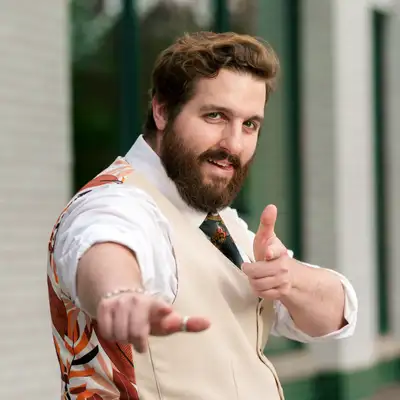
We have Mark Avery on with us today, and we're super excited to talk with him. And yeah, Mark, I just want to jump in with, you describe yourself as a legendary introvert, but as we're talking, you know, you're talking about, or you did 30 book signings in a year, you're on a book tour, you were telling us about how you're killing it, how you killed it at the book con. So which is it? It's like Batman and Bruce Wayne.
You know, when it's time to put the suit on, I don't have a problem. But then when I'm Bruce Wayne, I just want to be at home in my little mansion, which I don't have yet. But yeah, I mean, I'm just naturally just like an introvert.
But I think when it's time to, you know, get on the dance floor, then I have to, you know, change or, you know, get ready to work. Yeah. Well, and I think it's also you add in that word legendary introvert.
So yeah, I like that. So I've been told, you know. So Mark, one of the things you told us before the show your brother is your Yoda.
I want to hear some stories like, is he your older brother, younger brother? Like what makes him the Yoda? And tell us that story you told also just before we hit record, because that was a fun, like we all, not we all, I have siblings. Josh has siblings. Slava has siblings.
Not everybody that we know has siblings, but like there's that sibling like stuff. And sometimes it's like tenacious. And sometimes it's like, man, because I got an older brother.
Slava knows him. He's right a lot. He never watches the show, so I can say that.
You know what I mean? But I want to hear about your Yoda. Like tell me about your family and why you call him your Yoda. He's, he knows everything.
I can ask him anything. I can ask him any basketball stat. I can ask him any life question.
He just knows. He's just very knowledgeable. Like probably one of the smartest people that I know.
He's my older brother. And I'm 6'3", he's 6'5", so we look like bodyguards. Like it's weird.
So we just walked together. Like you know, when my sister was alive, she would walk between us. It was hilarious.
We were like cell phone bars. And he, he just has been, I don't remember life, right? Like as far back as I remember, I remember him. Like I can remember riding, I used to live in South Philly, so I can remember sitting on the handlebars and him riding me around.
He got in trouble with my dad because he's like, why are you on the highway with your little brother on the like handlebars? I had fun. Like it was great for me. He got in trouble.
And he like, I'm serious. He would, it was, it was hilarious. Like he really got in trouble for like riding around on that bike.
But I just always remember, you know, the things that he would, that he would tell me. He's like the first person that I, he's the first person that I would call like an entrepreneur. Like he had his own apartment, you know, he had girls.
Like I thought he was like the coolest dude ever. He went to Miami. I was like, how are you doing all this? He was doing eBay at the time, when eBay was first, first eBay.
So he was, he had like Michael Jordan cards and he would, you know, he would, he would sell the stuff and people would, you know, they would buy it. It was really a really booming, booming business. And I went to military school.
So when I was at school, I had to get like a, like a phone card and we would call, I had to, we had like a payphone in my cottage. God, I'm old. And then we would, I would, I would call him, you know, and, and we would go back and forth.
We had like a, what is that called? Like a fantasy league. We would play in all those sorts of things. We'd email back and forth.
So that entire time we always had, we always had that connection. And then once I got into publishing, he was, he was right there, even though we were navigating it at the same time, like in real time, he would offer all of his advice and stuff. So fast forward one time, I self-published my first two books many moons ago.
And me and him went to Baltimore and he had the idea that I should sell my books at the Harbor, right? So we're standing out there, me and him selling my, my books at the Harbor, a tour bus, or not a tour bus, like a, it looks like one of those big tour buses. It pulls up and these exchange students get off and then they see us selling the books and they asked me for a picture. I am nobody.
We take a picture with a bunch of exchange students. I wish I had that footage. It was the most random thing that has ever happened in my entire life.
I was like, I was like, uh, okay. So me and my brother are like standing there with the book, with a bunch of exchange students and then I just went off onto the Harbor. I was like, did you, okay.
So later that day, after we sold there, we went to Mondawmin mall and we're in the mall doing the same thing. Security got wind of it and they start chasing us. So they chased us like through the main level.
And then I think I hit in the salon and I want to say he hit in like one of those, like, um, like a retail store. Yeah. And then once we weren't getting chased no more, we just, we left.
So that was like one of the greatest days ever. I was, it was really, really fun. I think I had Popeye's that day.
If I remember. Committing crimes with your family. I love it.
Yeah. It was awesome. And, but when I, when I go to him, like, you know, I told you before when I go to him and I complain about something, he always has like wisdom to bestow upon me.
And I was getting really down about social media. I could, Twitter was my arch nemesis. I could never find my footing on Twitter.
I'm talking about the golden age. I was, I didn't have any, any gold or any age. Neither did I, if that's, if that's worth anything to you.
I'm talking about, I'm like, I would, I even got one time I got so desperate. I posted something stupid. I don't even remember what I did thinking that, Oh, this will get engagement zero.
Then they started showing your views. I was like, you know what? I'm done. I gotta go.
Embarrassing. Right? Yeah. That's 74, 74 views.
I gotta go. So when he told me before I said, I'm not going to do the social media anymore. He said, listen, you have a back catalog of stuff you've already posted.
If you don't repurpose this stuff and just try again, if it doesn't work this time, go ahead. And then I, and I started repurposing it on this new app called threads, which in the beginning I wasn't so sure about because I'm like, here we go. Here is another app that I can fail at because I'm so good at that.
And maybe within six months it took off. And I was like, you know what? There are no constraints here. I don't have to adhere to any policy.
I can just say whatever the hell I want. Like, I'm not going to be, I'm not going to be like disrespectful. I'm not going to be like, you know, just, um, uh, I forget the word that I want to use, but like just over the top for no reason, I'm going to say all the things that I like to speak about or that interest me, or, and I don't have, I don't necessarily have to have a polished video.
I don't necessarily have to, you know what I mean? I don't have to record X, Y, and Z. I can just be unhinged as possible. And then everything, I'll tell you this, everything, almost every piece of success that I have seen with discipline has been born off of threads. Well, so for the audience here real quick, that's how I found you, right? Like I'm, I'm in the book sphere on threads.
I run our threads account. I told the guys like, Hey, this next season, I want us to start doing some indie author interviews because like, there's just too many books for us to read. Right.
And so then I started seeing your stuff pop up and I was like, just reading about your book and the stuff that you were doing. And I was like, Oh man, this guy, I want him on the show. And so then I reached out to you and I think it probably hit like one of those like second inboxes at first.
Cause I had, I think I had to ping you twice, which is fine. You're, you're, you're killing it on threads. It's got 16,000 followers as of today.
And it's just like the stuff that you're posting is just beautiful for engagement in the book community. It's like exactly. So like the advice your brother gave you, your Yoda sweet spot.
I, I, this is, now this is unfortunate, right? So there used to be this account that I would follow on Instagram. And I would say, man, I was, I was asking myself, we post kind of similar content, but let's say he had, I don't know, 30,000 followers and I had 2000 Instagram growth is glacial. Let me just put that out there.
It is slow. It will not grow. You'll get two followers and lose 37.
I like that ratio. It's, it's terrible. So I was like, you know what? I said, I said, wow, you know, what am I, what am I doing wrong? I kept saying that.
What am I doing wrong? Then one day I saw them, they had bashed another author. They had, let's see how, how can I say this? Let's say they took the book of that author, tossed it in the air and then hit it with a baseball bat, right? Kind of piling on with everybody else. So I unfriended that person.
I've never seen their content ever again. That was two years ago. Never.
I was like, wow, why did I even follow that bozo? You're just like everybody else. And when I got to, it was, I never, when I saw it, I was, but that's what people do that, that type of engagement. I'm not interested in, I'm not interested in like that.
They only, they didn't know the author. They didn't know them. The only reason they did that is so their page could get engagement.
Yeah. And I was like, that was the I stopped following them. They actually commented on something and I, I just ignored it.
Cause I didn't even want it in affiliation with them at all. But what I learned on threads, I was like, the one thing you said, consistency, but just doing what I want, every post that I make is a post that I want to make. Some of them work.
Some of them don't like, for instance, I had a post the other day do 700,000 views. Right. And I'm like, why this post what made this post any, but you know what it was? Uh, Instagram, or excuse me, threads showed it to Instagram.
So people from Instagram were like sharing it. So then people come from Instagram back to threads and that's why that particular posted that. But, but yeah, I, yeah, I can be unhinged on threads and you know what too, it doesn't take that long to post.
Like, like if you, you've been on Instagram, right? Like if you go to Instagram and there's a, there's a picture, but under the caption, the captions cut off, it feels like you have to do like more work. Yeah. Yeah.
Yeah. Instagram feels difficult. Absolutely.
Have you tapped into trial reels at all? Have you seen any success there? I, I see, I feel a story coming on. I feel a story. I can see it.
I, I, I, I wanted, I would like to talk to Instagram, right? Like I know threads connected to Instagram and they're an entity. What was the genesis behind having me fail quietly? Like, what was it against me personally? Like what we're going to do is we're not going to show this to, we're going to show this to a subsection of people that don't care. And I was like, I'm getting, I posted a video and it said, your, your, your, uh, your reel has two plus likes and I'm sitting there, I'm sitting at John's and I said, my reel has two plus likes.
So three is three likes. Three. Yeah.
And no comments. I said, okay, the trial reels have never, like it's, it's, this is, uh, this is going to sound like the fetus. I knew pretty early on that I was not going to take off my Instagram.
I didn't have it. Like, I didn't have the thing. Like once I saw a guy do, he did a very elaborate skit that like involved the car and him getting off the car while the car was moving.
I was like, I don't have that. Right. Right.
That's what he was, that's what he was doing. Right. So I was like, I don't have that and I'm not a celebrity.
I don't have either one of those things working in my favor. So if you ever go to Instagram, you can go today. And the first thing in your, um, for you page or probably be someone that was, um, that was on Instagram probably since 2010.
So they have like this really built in base of people. And I never really had that. And trial reels, the couple of times that I've tried it, they just totally went, you know, nowhere.
I don't know, maybe I'm not, you know, I didn't do the right video or maybe, you know, I didn't do, uh, I never could really get my hands on and I've researched. I never could really get my hands on what works there. What I, the one caveat I will say is that I do like the collaboration posts.
Yes. They've worked well for you because you're, you're putting both of the, um, people's gravity together. Yeah.
But sometimes when I post on there, just like a regular post, it's very flat. And I guess at this point, Instagram serves two purposes. One, if I post there, it's just awareness that I exist.
I guess it's three. I post because it's awareness that I exist. It's a, it's, it's kind of like a, like a giant email.
Like you can contact me there. And then the, those collaboration posts, like where you can get the opportunity to be on the post, like with somebody else, because, Oh, the other thing was that you can do ads, which I have not gotten into that much. Uh, but, but otherwise it's, it's very, I've had the same amount of followers on, I had the same amount of followers on Instagram for 10 years.
It's never really went, it's never went above. I've never been above 2,500 and I had a post last a few months ago where I gained 700 followers. So do that again, whatever you did there, do that, do that again.
Yeah, that was, it's crazy. Right. Yeah.
I was like, I get, I'm getting like on threads. I'll get, let's say I'll get 150 followers on this particular post. And then you go to Instagram and it's like, you get negative three followers today.
And I'm just like, yeah, what is happening on this site? Like, I just, I've never been able to, to figure out, uh, Instagram. And then I never figured out Twitter. I tried blue sky too.
I have not even bothered trying blue sky. There's no algorithm. So you're not even, you're not even being discovered.
What I thought I found on there was people are actively looking for you, but you know, whereas, whereas on threads, maybe it'll get to the people that it needs to get. Like I curate my, my timeline. So I always see something that I'm interested in and somehow it's finding people.
It's finding people that will be interested in what I'm doing. And you know what a very underrated thing that people don't think about a lot being, uh, what do you call that when you're like first to something, uh, first mover or like, um, uh, uh, Oh, I know what word you're talking about. I think I know what I mean.
Yeah. Yeah. Yeah.
So like the example I give is I I'm never the first not to market, but like, I'm never the first to something. Right. So Twitter came out and I'll think of the you keep talking.
I want to say Twitter came out in 2007. I think let's say it came out 2006. Twitter came out 2006.
I didn't join it to 2009. Facebook, I think came out in 2004. I didn't join it to 2010.
Instagram came out in 2010. I didn't join it to 2014. I am always late to the party.
Right. So you have three years to build up your, your base. I'm coming in late.
I'm, I am, I'm threads was different. I joined on day one, right? Good for you. So now I get to experiment, see different algorithms and everything.
If they have a new, I don't know, uh, a new feature, I get it first. Right. Because I've been there since day one.
Now, if you go on through it, you'll see like, you'll see like Angelina Jolie's on there. Yeah. Michael J Fox, you know, because now, because it's the number one app in the app store.
Um, cause the algorithm is so much better. You can get real reach without having to pay money for now, for now, for now. So I, instead of saying what I was doing, I know what I was doing.
My brother said, you can't be everywhere at once. You keep giving, if you have a hundred percent pie, you keep trying to do 25% on Instagram, 25% on tick top, 25% on there. And I was like, you know what I'm going to do? I'm probably just going to give 90% the threads that that is my bread and butter.
Every single thing that I could think of off the top of my head right now, all the myths of social media have been for me. I can't speak for anybody else have been busted by threads. Right.
It was like, you can't sell books on social media. I've sold books. You can't, um, you can't build the newsletter.
I've built the newsletter, like every myth that I've ever like fell into, like into the trap of believing was, was false proven by this little app that I use every day. And I get everything that I, that I need out of it. And tick tock also, it's, it's a weird platform, right? Because I'm on there kind of somebody was like, Oh, just, you know, put some videos on there and it's, Oh, it's okay.
I think I had two videos, three videos that did, uh, really well. And I could kind of see through sales that those videos were, were pretty good on there. But again, that platform rewards tenacity, right? You have to post like three videos a day to the algorithm.
Yeah. Right. You like, I think I post maybe one, one video a day.
So, so three is a lot. And again, that, that growth for me, like I did a test last year, I went to South Carolina, um, everybody's sleep and I'm sitting in the kitchen and I'm listening to an audio book. So I paused the audio book and I said, you know what? I'm going to randomly make a video right now.
And I want to see what it does on TikTok. I made it hurried up and made a TikTok profile. And then I did the video and the video did fairly well.
That was August of the last year, right? We're coming up on August now again, right? I have 1500 followers, like that, that, that's glacial in today's, in today's social media. I'm like, I've thought for sure, maybe 3000. So I said every day I say I'm sticking to the threads.
I know what I'm doing there. I know the people, I know the algorithm. I know what it'll make people respond.
I had my own rhythm. So I stopped getting mad that my, that things were not working outside of just like in other places. And finally, and finally, luckily, uh, found a place that works with how I like to do social media.
Yeah. But the thing is your TikToks, like not terrible. You got 12,000 views here, 20,000 views there, like you're 26,000 views.
I'm like, I'm, you know, skimming it real quick, but I hear what you're saying about the followers. Like it's such a difficult game because every platform is glacial, you know, what's messed up, you know, what's messed up. So you on TikTok, if you go, let's say, I think one of my videos, let's just say it's got 20,000 views.
You keep chasing the 20,000 view high. I had nine straight videos. I had to count it.
Nine straight videos that did not eclipse 500 views. You're like, okay, I got in front of this camera nine times. And it was like, we don't really like this.
So that's why I love my sanctuary of threads because I'm like, I can kind of say the same thing. And then I'll see way more growth or way more interaction. And it's so immediate too, right? Because you can post something, you say something, boom, it's quick.
And somebody responds, you can respond back, you know? Yeah. Whereas where you go on TikTok, it's like, wait, did this person inbox you? Or where's this box is too much stuff. And I work in simplicity.
So if I can figure out how this, I'm sorry, another underrated thing is me, my name is Marquise and my brother named me too. But I never took the time to study any of these platforms, not one of them, except for threads. I studied it.
If I say this at this time, what's going to happen? One time I made a post, it got, let's say it got 91 views. I deleted it, reworded it and it blew up. Yeah.
Right? Whereas if you do a video, you sure don't want to delete the video and redo the video. So you don't have to do it that way. So now it's like, this is almost mirrors how what I would imagine Twitter used to be.
So, but I was never a Twitter darling. I had no, I'm talking about zero idea what to say. You know what I kept falling into? I don't have a book out, right? Now, technically, not technically, but discipline is out right now, right? I have, I just got the rights back to my first novel, right? So that's one, I have a new novel that is with my publisher.
So that's two. So I have two kind of waiting and then I have my current book. So my book has been out for the 27th of this month, it'll be a year, right? So even when, you know, my book is not new anymore, right? But it's always new to somebody that doesn't know me.
Right. I still have in between stuff to say, and then you figure everything that I do or that happens to me, right? Whether it be positive or whether it be negative is content. And I never thought about it in those terms, like, wait a minute, that's content.
Like today, like after I get off with you guys, I have, I'm going to be a moderator for an author event. And my administrative assistant is fired, like fired. You hear what I'm talking about? They set this up at 9 45 AM to be with you guys.
And I appreciate this, but they are so fired that this, like I got to do this. And then I got to go do the, be a moderator, which is, which is cool. I, you know, I'm, I'm really excited about it, but like all those things that you do subconsciously, you don't, you're not even realizing, but that is, that is content.
People are interested to see those, those sorts of things. And I didn't know that years ago. You should do a selfie right now for threads that you're on the show with us.
You know what, they'll see my phone is dead. Oh! Yeah, I know, I know. Here, I'll do it for you.
I'll tag you. I got you. But let's get, let's get a little into the book.
Cause I want to talk about the book. And when we, towards the end of the episode, I want to pick your brain around Robocop. I can't say I'm a fanatic, but I, I enjoy those kinds of movies, you know, and maybe, maybe we enjoy them for the same reasons, but this book Discipline, it's a little bit out of our wheelhouse in the sense that we don't read a lot of thrillers on the podcast.
We mostly do sci-fi, speculative stuff, fantasy. We've done a horror to some extent, thanks to me. So I read thrillers on my own, for my own self, but our audience and who knows what they do, cause I'm not in their personal lives, but you're the first thriller writer we had on.
So if you can just set up, you know, the genesis of the story, how you came to write it, the usual question authors get asked, like, how did this story come together? So the seed, the seed of the story was planted when I first saw Bad Boys, which is my second favorite movie after Robocop. Once Will Smith dove and saved Martin from getting hit by that car, that was it. It was crime fiction time.
Don't ever say I wasn't there for you. And then once I grew older and, you know, started writing, I didn't, I didn't actually start writing, you know, thrillers. And what happened was I love cop dramas.
So SVU, Miami Vice, any of Rush Hour. So I've, I've watched, I got a PhD in like cop dramas. So I love all of those sorts of things.
And I was like, you know what? I want my own set of cool detectives. And that was the bare bones of the story. I just want two cool detectives, right? No story, just, just two flashy detectives, right? So then they had to have an adversary.
And I thought of, you guys see No Country for Old Men. So I thought of Anton in a sense of somebody that's scary, but doesn't have to be overt. Their presence is just scary.
And when I was coming up with discipline, still don't know how I came up with his name. He was a part of a gang and he was a side character. And then I always joke and say that he took over the book, kind of like Steve Urkel took over Family Matters.
And once he became kind of the, like, you know, their, their adversary was like, you know what? I think it would be really cool if we got insight into why people do the things that they do. Cause I didn't want them to be like a, I didn't want them to be like a cardboard cutout. I wanted him to have layers, right? Because you meet him when you first meet him, he's 12.
And then you, you know, we, you progress and he gets, he gets older and, you know, you learn about what, like why he does the things that he does. But I think more important though, right? Is the crime fiction or the crime thriller, however you want to make that distinction is just a veneer. The real genesis of it is, you know, brotherhood, love, and like, what would you do in certain situations? Like if somebody harmed your loved one, how far would you go, you know, to protect them? So I think that is underneath that veneer of the, of the thriller.
And I love, you know, I love the trope of the two detectives. Cause my detective, one is young and one is older and they, and they clash. And although they don't like each other initially, they have to work together to apprehend discipline, which is the serial killer.
Yeah. I'm so glad you said what you said about discipline that we've talked to a few authors and the theme that keeps popping up and I'm so glad that it does is their villains are more complex than just bad guy for bad guy's sakes. There's, you know, I read like the first few paragraphs on Kindle preview of, you know, discipline.
So he's a little boy there at 12 years old in the beginning. And that's already, you know, he's in a situation that is not good. So his Genesis at 12, he comes from a rough past.
Let's put it mildly. Right. So that makes a villain so much more believable.
And I've said this a hundred thousand times in this episode is I like villains. I like a villain in a book, but only, only if they're written well, like, and by well, I mean, they're fleshed out there. You can see, even if it's not explicitly stated, you can see, you know, breadcrumbs of their villain, villain origin story.
So you understand why they do the things they do. You don't have to agree with them, right? Discipline does some horrific shit here to some people. You don't have to, you don't have to support him, but you don't have to cheer him up.
But you understand that, you know, this guy was made, you know, he didn't just come out of his mother's womb, just being like, I'm going to be a murderer when I grew up. Right. Right.
Right. So, yeah. So I'm, I'm, I'm all for well-written villains.
You know, what's been cool during this process. So you can't tell people how to decipher your art. Right.
So these books are going to be standalone. So I'm writing the next one. You could read the next one and not have read Discipline, but we'll be caught up.
I didn't want to, I didn't want you, I want to, I didn't want to force a purchase. Like you have to get these two books. You can buy one of them and not buy the other one.
But I love when readers find the Easter eggs or they get what I was trying to say, like quietly, like, of course, nobody knows this while I'm writing it, but I'm like, I want, I would hope that they find something to root for him for. And then when I get feedback, they'll say, man, he was a horrible person, but boy, did I understand why he did stuff. And that means more to me than anything, because that's what I, that was what I hope people got from it.
And when they do, it's great. Because you want the story to be captivating. And I know I'm preaching in the choir, whether I'm talking to the audience or the three of you, you want it to be captivating.
And, you know, the buddy cop thing, sometimes it can be so, it's cliche, right? And some of those cliches are fun. Some of them are fun. But if you can use it as a vehicle to tell a deeper story, like you said, brotherhood, and what we, you know, the sense of protecting your family, you could use a trope or something cliche, but turn it into something interesting and be captivating.
That's, that's fantastic. Yeah. Cause you like, you know, my, my, my police captain doesn't yell.
You know, I've watched, I was very like, I was very cognizant of like, you know what, his name is Coswell. And I'm like, I don't want him to yell. He's, he is very, you know, they, they're always a couple of, couple of infractions from getting fired.
But he's very stern, but he doesn't, he doesn't yell at them. That's not his, that's not his disposition. So I don't have the, I don't have the yelling police captain.
This is one of my standard questions for authors we interview. How much of you is in any of the characters is one of the buddy cop partners or one of the cops more autobiographical, or is it some side characters? Is any of you more than usual? Because every book has an imprint of the author, but is any character more like you lately? Do you frame anybody after yourself in these books? No, it's very, very minimal. Like maybe it's like, how, how specific is this book? And I'm like, I am not, I am not now and never have or never will be.
But it's like very minimal, right? Like, so like one of them knows how to cook. I know how to cook. I'm like out of my brothers, I'm probably like the second best, I guess.
And my little brother, he cooks way better than me, but like that or how they speak to each other, just like very small preferences, but nothing like overtly me in, in just my ideas, but in the very, very small things about them that they, uh, that I would say have come directly from me. Well, as a, as a fellow home cook, what's your go-to meal? What's the, what's your thing that you can just cook with two arms, tie behind your back? You know, I, if I see something visual, so if I see something, I can cook it as long as I can see it. Okay.
This is what they use. I can definitely, I like making baked macaroni and cheese. Of course.
I love making my, uh, my tacos. I love them. And then, um, any, any pasta dish.
Um, but I can, I can, I I'm confident that I can, if I see it, if I see it, I can make it. We're going to make a pretty much a taco dish. We're going to have to get you and Slava together to do a cook-off for us.
I'm curious. Um, uh, you had mentioned, I think make it the hardest part was making time to write. And I mean, you obviously have a life going on, uh, yet you're, uh, putting a lot of effort into threads and social media, taco advocate, you know, cooking, like we were just talking about, um, where, when were you actually able to find time to write? Um, was it during break lunch breaks? Yeah.
Man. So there's always these little like intervals, right? Because rarely do I get the chance where it's like, okay, today I'm going to like allocate three straight hours of like this writing. Rarely do I get one of those days.
It's always like, oh, I have 15 minutes here. Oh, I just got off work. Let me go and sit down.
Oh, let me, let me voice note this. It's, it's always these little, very small, uh, pockets of time. And what I didn't realize was, so I was on tour last year from May to December, and then I stopped from, and I really didn't stop, but it was the idea was going to be from January to May that I would kind of be able to do the writing thing.
Then I did a meeting with a book club and, and like kind of pre-started the tour again, but I got a chance for the first, for the first time to, for like two straight weeks where I was able to like really knock out this, this new book. And that was a, that was like a new feeling for me because I'm always doing something. So what I'm trying to be better at now is like, I am taking this hour that I have and I won't be bothered by the outside world.
I'm just going to, you know, write for this hour. And then if I can do that one hour every day, like I'm just basically learning how to incorporate more writing time for myself because I, I don't even know how, but, but then again, but again, it took me 10 years to, to write this one because I stopped, started, hated the book, hated it some more, and then, you know, eventually got enough time to put it together and put it I'm just getting better with giving myself time to write. Yeah.
That's the hardest part, man. Like two of us on three of us on this episode, you know, and you're published, but I have attempted to write a book or attempting to write a book and time management is unbelievable. So what I've learned, I don't do voice memos because I don't know why, but I buy myself little, uh, little journals and I will have like a scene, whether it comes from a dream or a daydream, or it's prompted by something else.
I will write down, Hey, you know, Ed goes to library and, uh, is, uh, um, what's the word I'm looking for? Is all giddy about meeting, uh, the girl that's the only girl that's nice in class to him. That's a little bit of behind the peak behind the curtain for my book, uh, novella. And so I have to write this down.
And I have like 17 of these stupid little things that each have like three pieces of a, of a story here, a scene here, but sitting down as somebody who works full-time and has this podcast, which is like another full-time job sitting down to just write. It is monumental and it's a request for time. Yes.
I can agree. I can attest today. What would you tell people who are feeling the burden of writing, right? Like they want to write a book, they've kind of started, but they're in the middle of this log right there.
They haven't finished the first draft, but they're like, man, maybe I should give up on this. I mean, as cliche as it sounds, man, you know, when you want something you can't give up, you know, it has to be such a psychotic desire to make that thing happen. Right.
So you'll, I always say be intentional, right. And that, that can sound, that can sound simplistic, right. But being intentional is carving out that time.
Because if you do, let's just say you did 20 minutes a day. That's it's I think of it like compound interest. And I used to lie to myself, right.
And say, Oh, I don't have any time, but I just watched these two Netflix shows. So that's like, why are you calling me out like this? There's the time I'm like, you know what, if I just, cause last night I watched Dear Devil Born Again last two episodes, that was almost two hours. So it's like, you know what, let me, maybe I watched one episode, right.
For the 45 minutes that I was going to allocate to that next episode and then watch that episode tomorrow. So it's just, it's just about being intentional and then being realistic about like what time you do have and the time that you do have, all you can do is just use it to the best of your ability. That's all.
So you could say we need discipline. There we go. That's boom.
So you, you told me a story. Oh, sorry, Slava. Yeah.
Sorry. I found the question that I was going to ask you. The one I fumbled over a little bit ago when, um, when writing, cause you mentioned something about discipline as a side character and when writing, do you find yourself, you know, being driven by the character to some extent? So you're writing discipline as a side character or you're writing, you know, whoever, uh, and all of a sudden you come to a point and you're like, nah, this is not what discipline or X would do.
We need to change the last chapter or rewrite it or they take you on the journey. Cause I've talked to Mark Benson. Uh, he's another author, sci-fi guy, young adult.
And he said he was writing this, uh, the story where a woman and a man were supposed to kiss. And as he's setting up the, the kiss of these two, he's like, this is not working because she wouldn't do this. She wouldn't fall for this.
She wouldn't be this quick to kiss a guy the way he wrote her in the previous chapters. So he scrapped it, writing this book, which, you know, discipline is this complex character. Did he take you on a journey as silly as that sounds? Or did you know like, Nope, this is what he does.
And the only move you made like side character to main character. Do you know what I'm saying? I'm being a little bit awkward with my phrasing, but do you get what I'm trying to say? No, no, no. I do because he, you know, because he was such a, like a very, uh, small character as I'm like writing, as I'm writing the book, it's like, he's the, he naturally is the, is the guy.
And then once I'm, as I'm going, and as I'm writing the other detectives, I'm like, Hmm, you know, what makes him a worthy opponent? Right? Because like, if you're watching a Marvel movie, right? Thanos only works because you think that he can beat the Avengers. If you don't think that Thanos can beat the Avengers, what are you watching the movie for? Right? You're like, I don't know if they're going to make it out of this one. So that was kind of my, like, and I love to create the villains.
So that was my, my thought process. Every time I would like try to maybe create another adversary for them to battle against, he kept saying, I think I have a little bit more story. I think I have a little bit more background.
So you are informed by, uh, the characters because sometimes what will happen is I'll write a scene that I thought didn't fit. This is, I'll give you a perfect example. So one of the detectives, there's a, there's a fight scene in a bathroom, and this was in the beginning of the novel and I cut it.
I was like, I, this isn't, this doesn't work, but discipline said it works for me. And all I did was take the detective off and put him in. That's how like certain scenes will inform other scenes where it's nothing magical happened.
It's just like, you know what, that fits better with this character. And that's kind of how he kept it because the book wasn't called discipline. But again, we went through three different titles, right.
And it's like, I don't know if a sunset over Philly or whatever. And we could not come up with something. And it was like, he was like, hello, I'm the guy.
And then it was like, it was right there the whole time. And that's how we came up with it. Yeah.
So I saw your book cover. It's discipline over Philly, these eclipsing sunset or whatever it is. Yeah.
Yeah. It could, if you think about it, like, I'm not thinking about it right now. I'm like the title before was called a recipe for survival.
And I always tell people, I was like, I got it. I finally got the title. And then I got the contract and a contract said book to be named.
And I was like, I don't got the title. But now that you look at it and you're like, it couldn't be named anything else. Right.
Yeah. It was the perfect name. Could we go down a rabbit trail here? Like what, how difficult or not difficult was it for you to get your first publisher? Man.
So I'll tell you a quick story. So remember when I said that I self-published my first two books? So I self-published my first two books. I had a little, I had a small publishing company.
I published a few writers and I was having a book signing. And I was, I was in Holcastle, Delaware at a place called the Holcastle Book Show. The lady that ran the store at the time, her name was Rebecca.
It's a slow day. And we're sitting in there talking. And I was telling her, you know, I got this book.
It was called at the time it was called Redemption Lost. And I said, you know what? I'm having a really tough time getting any attention. I had gotten at this point, a hundred rejections.
And I say, you know what? I'm kind of tired of this. It's not fruitful. Mind you, the book is professionally edited at this point.
I've spent my own money. I commissioned the cover, right? And everything. She said, look, she said, look Mark, try one more time.
If it doesn't work this time, then you can always self-publish because you self-published before. And I said, you know what? You're right. Maybe a few months later, I send my book to an agent who is my agent now.
She rejected me years ago, but gave me a packet of stuff to help with my future query. I sent the email to her and said, well, probably going to be self-publishing. So I would just send this last email.
And she got back to me and she said, wow, this is pretty polished. Do you have any more? And I said, this must be someone else's email because I'm sure that these are not the responses that's supposed to be happening for me. So I sent her the first four chapters and then she said that she wanted to request the full manuscript.
And I want to say, once I did that, let's say a few weeks passed and she said, I'm going to the meeting with the head of the publishing company and I'll let you know how that goes. So I met Panera Bread and I said, you know what? I don't really have it for a soup and a sandwich. So I'll just get a sandwich.
So I'm up at the counter and I get the phone call. She's like, we sold it and I'm going to send you the details in an email. So I look at the email and I see my advance.
And I was like, you know what? You can do the soup as well. So she did it. And I'm glad that we connected because once I had polished the manuscript, I paid money out of my from the thousands of writers that do this all the time.
And that was the thing. So I signed that deal and it did not go the way that I, in my head, did not go the way that I wanted to. I had a lot to learn.
I thought that once I did this, I was, where's the movie deal? So I learned a lot about what not to do when launching a book or trying to get myself out there. And then what I didn't say is at the time that I was writing that book, I was writing Discipline, which wasn't called Discipline at the time. And I said, if somebody doesn't take that book that sold, maybe they will take this one.
So we were trying to sell that book and the company that I was with, they didn't take Discipline. So I was pretty bummed about that. And then my publisher, I found out about through a reviewer that I knew.
He sent me an inbox. He said, hey, you may want to check this out. So I said, no problem.
I'll send it to my agent. Sent it to my agent and we got another two book deal. And I was like, you know, over the moon because I had been, I had gotten rejected, you know, so much.
And it was, I hadn't put out, I hadn't put out Redemption Lost in 2017. So it had been, it had been a really, really long time. You remember I was ice cold from an interest standpoint.
There's no threads at this time. So right when I want to say, right when I signed the contract, like a few months after that, threads came. And then that's kind of how the journey with Discipline started.
But to get from, because I worked at Barnes and Noble and I would stock the shelves and I would keep the, where A and B would be, I would keep that slot open. Like as if my book was there and then my boss was like, you have to fill the slot. You can't hold that slot open forever.
So once I stopped working there, then, you know, I, I got in the deal. And then years later, I was able to do signings there. And then my book was actually stopped in that part of the Barnes and Noble.
But from, from conception, it's a physical book, took, cumulatively took 10 years. I'm wondering if you could share your story that you were sharing with us before we hit record at BookCon, unexpectedly going there and yeah, hustling there. I got, so when I, when I got that message, you know, and Alex was in there, she was like, you know, do you want to go? And I'm like, yeah, like, I'll go, I'll pay whatever, I'll walk there, like however I have to get there.
Because, you know, I had heard about how, just, you know, how big an opportunity it can be. Then I, then I looked at the list, like the list of authors. And I was like, wait a minute, Andy Weir's going to be there? Like, I'm like, cause the first, the first thing you think is, man, is there going to be enough oxygen? Like, cause they're going to suck up a lot of oxygen.
You know, there's huge authors there. So me and my wife, we pull up and go across the street. There's a thousand people alive, right? It's not even open yet.
I'm like, okay, it's 801 in the morning. This is absolutely crazy. You get in and I'm looking around and you see the, like the placards of like the big authors and it's like the empty space.
And it's like, you know what? This is pretty cool. So I go, I leave. Like I told you guys, I had the best apricot Danish ever in the history of Danishes.
And I go back over somehow it, the people tripled outside. I go back up to the floor and it's pure pandemonium. Once I get to that corner, a lady comes up and she says, Hey, it's this book for self display book.
And I'm like, yeah, it's for self. So she reads it. Okay.
I went this, I was in trouble. Hey, bring the box over. So I have the box like behind my poster board.
I keep a, like a movie poster size front and back of my book cover. That's another thing that brings people to the, to the table too. And I said, I'm right here with the major publishers.
So they're going to, there were lines going to my right and to my left. So there's going to be enough people. And I said, and I'm doing the math and I'm like, I didn't bring enough books to further.
Cause I said, I messed up today. I did not ship enough books. And 40, 45 minutes later, they were going in it.
And I was like, if I knew what I knew, if I knew today, I would have shipped two more cases. But it was, it was, it was so many people and I understand like how people were like, Oh, you know, I didn't want to, I don't, this is kind of crazy. Cause there's so many people, there's going to be more people than there are helpers.
So it's always going to look this portion, like these people don't care. Why aren't they doing it? That's a lot on them. I don't think they even anticipated it was going to be that many people.
And even when you see the pictures of how many people were outside, I saw the pictures. It's crazy. Yeah.
It pales in comparison to when you're like, there's a lot of like, it was such a, it was such a, you know, what was cool about that. So I got calls from stores asking me to do book signs because they saw me at book time. So that alone, forget the sales.
That alone is worth, you never know who you're meeting. I met, I was having a hard time getting my book into the library in Delaware. I made a book signing and I sell a book and the lady's like, Hey, I'm the head of libraries here.
So if you ever want to get your book into the library, I said, I said, you're the, like, you're the head of the intruder, her word. I emailed her and then she sent me a screenshot of where I am in the system. And I'm just like, see, that does not happen without action.
Right? I had to do the thing where I had to go to the bookstore and attempt to sell. And then that, you know, person came in only because I made the decision to, you know, go on tour at that time. Yeah.
Yeah. You never know with these efforts, like what's going to pay off. Well, as we wind down, I want to do, I do want to come back to the question I said, I would ask you is a Robocop cause I'll front load it.
And you know, we, we can discuss if we share the same sentiment. I like the satire, a Robocop. Yeah.
It's a great action movie, all that stuff. But for a movie that gets shitted on for no reason whatsoever, it does have great social commentary, like, you know, so I, your agreement then just confirms that. I think we like it for the same reason.
It's just the media break and like how capitalism, it's just, it's so, you know, when you weave it, that like Paul Berhoven, you know, he did like a great job of like interweaving that with the action and like him and his identity and the world, just so much, you know, and then I just, it's, it's lean too, if I'm not mistaken, it's an hour and 41 minutes. Yeah. It's very lean.
Yeah. There's no fat. And it's like, when you get to the point where he says, you know, when he says, you know, nice shooting son, what's your name? And he says, Murphy.
Nice shooting son. What's your name? Murphy. Do you know how many times I rewound that part? I watched the movie a thousand times.
I rewind that part every single time. Like, I don't know he's going to say his name is Murphy. Yeah.
He just puts the gun in the holster and walks off. And I'm just like, how did you make a perfect movie? Like, how did you do this thing? Like, I love it. It's like my, I think I've seen it.
This is my father's fault. He had a tape of, I want to say it was Tales from the Crypt and RoboCop on the same VHS tape. At 10, I wasn't supposed to be watching either one of those things.
I skipped, like, it was, I guess it was at the end of Tales from the Crypt. So that ended and then RoboCop came on. I'm just watching it and I'm just like, he's a robot, but he's a guy? Sign me up for this.
This is, wait a minute, he's shooting people. Oh, come on. This is great.
So once, you know, I watched it and then I, as I grew older, I just had more of an appreciation for the, maybe the little, the nuances that I wouldn't catch when I was younger, but then that's probably how I grew to love that movie. And if I ever meet, if I ever meet Peter Weller, like, I don't, I have no idea what the hell I'm going to do. Like, I have no clue.
I was going to fly to Seattle. Really? He was, he was in Seattle, I think, last year. And had I known, had I known earlier, I would have flew to Seattle to see him.
I love the dedication. I don't care. We go into the market, go to the, he was at a fair convention.
That's in it, but I found out too late though. Well, Mark, thank you so much for joining us. Where can people find you? Where can they pre-order your book? Your next one? If it's, if it's like being listed yet, I don't know.
So I don't have the, I'm waiting and you, you are going to see that when I get that pre-order link. But I'm on all social media. I'm on, I live, I actually, my address is threads now.
I live on threads. I am reluctantly on Instagram and I am on TikTok as well, but I'm, but I am primarily on threads. You know, I wanted to say one more thing.
My mindset for this entire thing is I treat myself like I'm traditionally published. Like what I mean is there isn't anything in my mind, there isn't anything that a bigger author than me can do that I can't do. And I'll give you a quick example.
So I needed, not needed, I wanted blurbs, right? But I couldn't get any. So I got one from my local newspaper. I got one from my Philly newspaper.
And then I was able to reach out to some authors by building a personal relationship. And then I was able to get a few blurbs because in the beginning I had none. So if you go to, if you were to go to Amazon right now, I think I have like five, but I had to work for those because remember what all I'm seeing is, you know, the authors are in, they're in Barnes and Nobles and they have these blurbs and they have X, Y, and Z. And I'm like, you know what, I want a blurb from the Minnesota Tribune Star.
You know, it's like, maybe I can't get the, maybe I can't get the New York Times, but, but I can get my local, you know, newspaper and everything that I do is just compound interest. So when you see the threads, it's, it's all interconnected, right? Because all of that is going to circle back to, my name is Mark Avery. I've written a book named Discipline and it's nice to meet you.
And that's, that's the whole genesis of it. Love it. Well, Mark, thank you for your cooperation and have a good night.
I love that. Thank you guys for having me, man. I appreciate it.