Subscribe
Share
Share
Embed
The Truth In This Art with Rob Lee is a Baltimore-based arts and culture podcast where independent journalist Rob Lee goes beyond the highlight reel to uncover the truth behind the work—the creative process, the choices, and the stories that shape the people who make it.
This podcast features thoughtful conversations with emerging and established photographers, filmmakers, designers, musicians, chefs, writers, and other creative voices. Each episode explores how artists build sustainable practices, stay connected to their communities, and create work that reflects the world around them. More than interviews, these are stories about what it takes to build a creative life—the challenges, choices, and experiences that make art matter.
For makers, culture lovers, and the creatively curious
Music
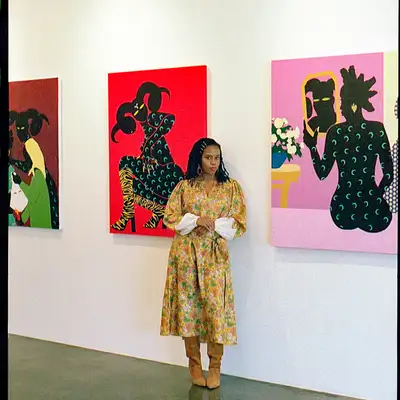
Rob Lee: Welcome to The Truth In This Art, your source for conversations connecting arts, culture, and community. These are stories that matter and I am your host, Rob Lee, except no substitutes. Today I am thrilled to be here in Washington, D.C. at Eaton, D.C. to interview my next guest, a Washington, D.C.-based multidisciplinary artist whose work centers the black silhouette, using pattern, ornament, and saturated color to explore interiority, self-possession, and cultural memory. Drawing from African textile traditions, fashion, and black feminist thought, she treats adornment as a language across the African diaspora. So please welcome to the program, Jamilla Okubo Welcome to the podcast. Thank you. Thank you for coming down, making the time.
We're doing this in person and it's rare that I come out of the den, I don't come out of the recording space. I have the end to end connection. I'll do my basically zoom. Okay.
Rob Lee: I might go hop on, but when it's a D.C. opportunity, I'll make it a point to come down here. Now here's the bad thing, the reason I come down while I'm glad we were able to talk in person. I came down to get bougie cookies. From where?
Rob Lee: I'm going to either Mamma or... Ooh. Yeah. Yeah. Or... It's another space called LA Burdick in Georgetown.
Jamilla Okubo: Oh. Yeah. I haven't heard of that place. I haven't been to Georgetown in a minute. So, but I like Mamma. Yeah. What do you get from there? There's like this latte. I don't know if it's like a Halva latte or...
Rob Lee: Because that's the Sesame seed paste. Yeah.
Jamilla Okubo: I think it's a different latte, but it's like their like traditional house latte. Yeah. And like, I love all the spices in it. Like, yes. Okay. That's what I need.
Rob Lee: See, now I might have to go get that. I was talking about the sort of mid-coffee.
Jamilla Okubo: If you want a good latte, I would say there or... I don't know if I'm allowed to say this or you have to take this out. Tate.
Rob Lee: Ah, yeah, yeah, yeah.
Jamilla Okubo: Yeah. You know. I didn't know before. And so recently, and I was like, no. I was in there every day after the gym. I was doing my Halva brownies and my pistachio croissants and they have this like house latte. I forgot what's in it, but it has cardamom and like other, you know, like...
Rob Lee: Cardamom is good. My favorite local coffee shop called Softmore. They have a simple cardamom syrup and had like a house cardamom syrup. So now instead of me getting the regular, I used to be... So I had a drink there named after me. Wow. Just called it a robbery.
Jamilla Okubo: You're that cool, huh?
Rob Lee: Some say that. I know, I know. Oh, you're too humble. It's false, but I... You said I talked my shit when you were talking about it. A little bit. The intro is kind of part of that, but let me start with this first question. So, story is very important in this podcast. It's like sharing all stories, controlling all narratives. So if you will, could you start us and introduce yourself in your own words? Often we get these really glossy...
Jamilla Okubo: And I had one prepared. Please. I mean, well, it's still factual. I'm Jamela Okubo and I'm a multidisciplinary artist from Washington, D.C. My work spans between painting, collage, illustration, and print design. I went to Parsons for... Technically for fashion, but I had this like plan figured out. Like I also am a graduate of Duke Ellington School of the Arts. So... And I went there for visual arts. Funny enough, I was a transfer student.
So I only got like two years of that like full experience. And it was then when I like started to like realize like, oh, I want to make work about this. About like my identity and like explore my cultural heritage. But I was like, I don't want to go to Parsons for painting. But then when I got to Parsons, I changed my mind.
And I was like... I was like, I think the ADHD came in early because I was like, I want to do painting. I want to do fashion and illustration. I want to be a fashion illustrator, a fine artist, and a designer.
I'm going to do it all. And then I found this major called Integrated Design. And it practically like offered me that like platform to do that. So my major was Integrated Design. And it was like a cross-disciplinary program self-guided program where it's like... We had core studio classes, but then we could choose whatever electives we wanted around that. So I was taking a bunch of like fashion construction classes. So I was like, well, I'm going to take this major, learn all the fashion things, and then use it to influence my fine arts work. So maybe I'll be making costumes, but like for like a fine arts perspective or whatever. So yeah, that was my plan. And so far it's kind of worked out. You know, I've dabbled and dabbled in like different areas. But yeah, that's who I am.
Rob Lee: Thank you. Thank you. So you gave me that. So I want to ask this, I have like sort of these two follow-ups. I also saw North Carolina, super early. Like six months or so, you were there like...
Jamilla Okubo: I was there for like maybe... I don't know. I don't remember. I was like there for like at least a few months or years. Like I was born there and my mom was like... Before I was born, she decided to leave DC and go back home. Because that's where my grandmother's family is from. And like she spent maybe like a year or a few months down in North Carolina with like her aunt and her grandmother. And so she was being fed, getting taken care of, you know, just resting in the country. And then she had me and then she came back.
Rob Lee: I feel like it's so many of us that have some either relatives or there's... North Carolina's a part of it somewhere. Yeah. I believe like my grandmother's from a very small county that doesn't even exist anymore. Wow, what was it called? I think like Mecklingburg County. Oh, that's a little... And it's one of those things and I was just like go on, tell me more. And you'd hear like, yeah, we were down in a country. I was like, I don't even know what that means. I was like, I'm gonna use those guys, you know?
Jamilla Okubo: So you never went like when you were younger.
Rob Lee: Yeah. Oh man. Like if I'm gonna go like a little further, this is the far farthest south. I'm gonna go Baltimore. That's ridiculous. I've gone to New Orleans.
Jamilla Okubo: It's quite an experience. Like when I was a kid and like we were living with my grandmother here in D.C. I would always go back with her to visit like my aunt and my cousins down there. And like it would be like for like a few, maybe like a week or a few days. And like just like a slow living. It was great. And a lot of good home cooking. Oh my God.
Rob Lee: Yeah. Fancy your foodie. I hear it. I hear it. I hear it. No, I think that sort of departure being away from sort of the, the hustle and bustle of like a city in the East Coast vibe.
I think there are trade-offs. The pace is a bit different and I do admire that pace, but some of this stuff, it's not a bad thing, but some of the stuff culturally it's different. So like, I know like back home and up the street really at Baltimore, folks do this move of, yeah, I'm going to move out of the city and try to get to the county or try to get to like that line where between like Pennsylvania and Maryland where it's like horses and farms and states and away from people. And I always go with you're kind of away from, well, folks are away from the culture that I like.
Like I like being able to go to a gallery and have options of galleries. Not like, here's the one. Just the one.
Yeah. So could you tell me actually about perhaps the first time you were exposed to art, whether it be the appreciation of it, the making of it, what do you recall about that experience?
Jamilla Okubo: I just remember having a really great art teacher when I was in elementary school. I remember always loving art. Like that was my favorite subject, art and physical education. That's it. Try it.
Makes sense. And I remember in sixth grade, well, even before that, like our teacher always had us like doing some really cool projects. And like she would, she must have had like connections outside of the school realm and like was, you know, partnering with different institutions. Like I remember she had us do a project with a textiles museum, which used to be up in like, I think it's, I don't know if it's still there.
I don't think it is. Used to be up in like Dupont, Dupont Circle. And like we've made these like large scale mixed media paper like installations of like some animals. I don't remember like fishes and sea. It was like a whole thing thing. And then we got to show it at the Textile Museum and like got to visit and like really feel like we were a part of something bigger than just like, oh, we're taking an art class. You know, or like in sixth grade, she had us focused on like an artist that we liked. And we were studying that artist. And then we had to create a work that was like in their style. And then she had us show our works at the Omni Shorm Hotel, which was like up the street from the school. Like she really was pulling strings and making things happen. And I was like, after that, I was like, I want to be an artist.
I'm going to take this serious. And my mom got me like like an easel with like paint for Christmas. And I was like, this is it. I'm taking off. And so I started making paintings for people. Yeah, that was where it started.
Rob Lee: That's tight. I had really early on that exposure through through school. I have you as you remember, I got in trouble. I'll just say that I was working on a mural.
And I've worn glasses since I was three. Wow. The context, right? And I got paint on my glasses and black parents, they were like, you didn't ruin your glasses. I got in so much trouble. I was like, what a great mural.
I was in front of the mural. Yeah, we don't care about that. What's up with these glasses? It don't. And we eventually got it taken.
It wasn't like permanently, you know, you know, damaged or have you. But I will say that sort of early stage, I was one of those students who I guess talented, but I was kind of retaining information versus I'm going to read this. I was just like, I can get this B real quick with minimal effort. But for the rest of the class, I'm going to draw why everyone else is struggling. And that's what I was doing. And I ended up doing like a comic, like, you know, the whole scope, it wasn't great. But I did a comic when I was young, like maybe that six or seven grade. And I just remember one of my teachers, I had this one teacher prior to this that took my comic through the trash. I was so mad.
Oh my God. Because it's just like I was disrupting the class, right? And the next teacher that came by different, it's like weeks later, I'm drawing doing the same thing. And she comes by, I was like, you taking my thing. And she was like, no, I just don't look at it. And she looked at it. She's like, this is really good. And she kind of gave me that you know how when you're younger, you hear like you're good. Exactly. And so with that scene, I had an interest in it.
My parents and relatives, every year I would get either some sort of drawing supply or an art book or something like that. I didn't follow that in a way. I tried to go to an art school in Baltimore and just that confidence was killed, pivoted to pumping up.
Rob Lee: But I revisited it in a different way.
Jamilla Okubo: I'll tell you about that a little bit. Okay, yeah, I want to hear more about that.
Rob Lee: So since we shared a little bit of your past and a little bit of my past, you know, inserting, you don't want to just have a one side conversation. Yeah, I know. What are, so you think of your words now and the life that you took, took us back to Parsons that have a buddy who is faculty at Parsons. So right now, what are the themes that you're pursuing in your work and how does your background, which you kind of laid out a bit, you know, kind of inform your practice and was multidisciplinary always the goal?
Jamilla Okubo: Multidisciplinary was always the goal. Well, actually, it wasn't the goal when I was in high school. Like when I graduated from Duke Ellington, I was like, I feel like I was already kind of trained to be in this like singular mindset of like, I'm going to be a painter. And then I applied for the fine arts painting program at Parsons. I got in and then that's what I thought I was going to do.
But luckily Parsons was like, actually, we want to make sure this is what you want to do. So freshman year, we had to take all these like classes, foundational classes where they're like, okay, let's see, like what you want to do. And then I took that one, just like fashion as objects or something like that class.
And like they had this making like, I made a dress out of like magazine paper. And so it was really cool to like just explore materiality and all that stuff. So yeah, I think once I got to Parsons, I was like, actually, I want to be multidisciplinary.
I have all these interests and I think I can put them into like one box under like my name as like my practice. Some of the themes that I'm currently exploring, wow. I feel like I've always, I mean, I've always said that my work is about like my cultural identity and whatnot. But I think I'm in a space where I want to explore more like intimate themes or just like representation. It's always my work will always be centered around being a black woman and like being black in general and celebrating and just exploring, learning about black cultural heritage. And right now I'm like in this place of like wanting to paint and like create for my own personal life because I feel like I have a lot of experiences. But I've been wanting to like just like kind of figure out, look at on canvas or different materials that I want to work with. My former teacher would call it planaring my life. And I'm like, yes, that's where I'm at. I want to paint about my life right now. And not so much about like, oh, this is where I'm from. And like, it'll all come back. But like, that's kind of like where I'm at mentally.
Rob Lee: That aligns with one of the terms that they use in podcasting a lot is sort of those parasocial relationships of like, who are you behind the blah, blah, blah. And I think like, I try to keep a line there.
I think when people are listening, they get an idea of who I am and so on. And then, but I think you're you're touching on it where who I'm interested in what topics I'm interested where I'm at at that time. Yeah, what I'm living. That's the thing that's presented through this sort of medium. So when you're describing sort of perhaps showing work that's about like or making work that's about where you're at in your life. Is that similar to that parasocial?
Jamilla Okubo: Yeah, definitely. I think it's like, are you asking like, is it related to where I'm at? Yeah. In my life? Yeah. For sure. Um, which is so funny when I think about it because when I started making these paintings that really like kind of made my made my name known for like the style that I was like creating at the time. The work that I was creating was from an aspirational place because I hadn't had like lived experiences really yet or I did but like it wasn't things that I wanted to talk about like about myself. So I was like, oh, let me go in Tumblr and like pull inspiration images like oh, and then I like recreated like works inspired by that. I guess I was in it. It makes sense because I was like in a space of oh, like who am I? What am I interested in?
What can my future life look like? So that's like kind of where I was at and I was like, oh, for example, I made like a series called Love You and it was like a black love series. I was pulling images of inspiration of like black couples on Tumblr because like young black folks were really, you know, controlling their narrative in terms of like the images that they were producing of themselves. And I was like, I was not seeing this before.
Like where have y'all been? And I'm like, oh, this person lives in Texas and this person lives in Brazil. This is like so cool. So like to see it globalize and then be able to like create artwork inspired by that. I was in a space of like, oh, I want to love like that. You know, and then now I'm like, I want to create work from like my lived experiences. It's very interesting that I've gotten to this point.
Rob Lee: I think it comes with time. It's those reps. You know, I think early on I was sharing with you like when I started this back in 2019, I had no questions, no reference points. And it's just like, yeah, so you chose blue in this painting.
Why? I was like, that's a really thoughtful question there, Rob. But now it's a little bit more depth in it through those repetitions and sort of adding more of the me into it versus trying to be overly influenced. I think when we don't have that experience to pull from, we're like maybe this is I think Austin Cleon talks about this. We're just kind of making copies of stuff that we like.
And we're trying to get into the head of the person like, why would they make it this way? Now you start to transcend at a higher level. And you're like, yeah, this is a question I think is interesting or this is a part of my life that I think is interesting. Perhaps other people feel this way, but I think it's interesting. And I wanted to pick that on Candace. Yeah.
Jamilla Okubo: I definitely, yeah. I think that's a part of like the process of evolving as a person, as an artist. There was something you said and I had a thought, but now I forgot it.
Rob Lee: I say a lot of things. And I was like, yes, yes, yes, wait. Trying to connect the dots. It's love me. Yeah. I think that that's, it's just really important to, I think it's also confidence, right? Where when we have those reps and that experience, we get more confident. And I think sometimes having that experience of maybe having a loss or having work that you really like, but wasn't received well. That's another thing that impacts it. Yeah. Have you ever had that sort of experience that comes along?
Jamilla Okubo: The loss part, yeah. I mean, I'm like, have I had work that I thought was great, but no one else did it? Not yet. No loss. No, I've had losses, but not losses where I'm like, this is amazing. And then people didn't really respond to it. Well, I haven't had that experience yet. Now I have had experience where I created a body of work and I was not proud of it. But in the moment I had to show it anyways. People loved it. People like related to it, but it wasn't my strongest work. And in terms of like, I don't know, numbers and analytics, it wasn't received well. And I was like, fuck.
Rob Lee: What did you learn from that though? Hmm. Hmm.
Jamilla Okubo: What did I learn from that? Well, I think I had, it made me reflect on like, what kind of career I wanted to have as an artist. Like, do I want to be this artist where it's like, oh, I have just like, a little bit of timeframe of like, fame and then that's it. Or am I in this to like, create work and like, create meaningful work and have a practice for the long term, you know? So I was like, okay, this is, I'm in this for the long haul. Like, this is just like a bump in the road and I eventually will, I will get past this and it's just something to learn about myself.
I had, I'm thinking about your question. I had to learn about just like, I really need to decide, do I want to improve as a person or do I want to stay in the same place forever? And I'm like, fuck no, I want to grow. I can't, I can't like be in this space of like, not growing in terms of like, just procrastination.
Hmm. Not practicing my like techniques and like, sharpening my skills and realizing that I was at a pivotal point in my career. And that like, okay, I need to make some changes actually, like actually make changes and because I was like, always busy. I was like painting and like making sure I meet my requirements or, you know, what I needed to do for the gallery that I was represented by. And then I also was like, I also need to make money. So I'm going to take these projects because they're paying and they're a great opportunity. But like, because I was trying to balance these two different like pathways that I mean they online, but they don't maybe I was having a hard time creating work that I was like really proud of. That makes sense.
Rob Lee: I had that a bit last season, if I'm being honest, where I had a vision of what I wanted to do. I had a really grandiose vision and I did part of it.
I was able to do part of it because funding always turns into the thing. Yeah. I was like, what is my why let's go back to that star that rock right.
Yeah. And my why was this and then I looked at evidence. So I've said this a lot in this podcast and 2022 I did almost an episode a day. Wow.
That's about 322 episodes in a year. I had no funding. Wow. So it's just all on me.
Right. And I think the following year or two I had funding. So that was a sort of different way to go about it. So I have both of those to look at and my love and my reason for doing it didn't change.
But I felt that was more insight. I was doing some content to not necessarily that I didn't feel was representative, but some contact content to hit the number that I promised based on the grant. Whereas now and like last year now last year I felt was really good. I was still able to do 75 episodes. And I had the intent of really circling back and interviewing people that have been on before that it was the running back season.
That's what I call it. And some folks it was a mix because for me I'm always trying to progress like sharpening that that's that those skills would have you. And each year I'm trying to find something new that I'm curious about that I want to put in.
So I got the sage advice question that was not a question that existed beforehand or I want to do this with this required just don't I feel like I'm just continually doing the same thing. You make it harder and certain things that I just don't do because I'm not interested in. And one of the things you said procrastination have a question around that I haven't even debuted yet you're the first to get it. So I think that making perfect work or what feels like perfect work I think that's an on ramp for procrastination. Tell me about that for you.
Jamilla Okubo: It's hard. I'm still working through that challenge because as an illustrator or like someone who has been you know has been doing illustration and working with clients with a deadline and like very small window of like being able to make revisions. That process to me is very different from like creating my fine art work because it's like oh I have this idea of this theme or my client has this theme and then I work through it. I create a few drafts they say they like this they like that they don't like that they give it back I make revisions I send it back it's done there's no like that's it right. Whereas like with my fine arts work it's like I need more time that's literally it's it takes a lot more time to like really get to a place where it's like I like this this is the direction I want to go in. I don't like this but it had to be made and we move forward we just keep making until it feels good and like you see what you're thinking or.
Or not, because sometimes it can turn out completely different from what you envision. You're like, holy shit, that's not. Yes, this is it. So I'm still trying to break from being in this illustrator mindset when I'm working on my fine arts work and being patient with myself when I'm making. Yeah. And having to remember what you said, going back to my life. I needed to separate the money making from the making of the art, because it was ruining my practice.
Rob Lee: It definitely has an impact. I say it all the time. Ninjas and suits usually don't have taste. So when someone's throwing out, oh, money, do this, bro, be a product of the urban, you do a black podcast, all of the things I've heard. I'm like, I just do a podcast that I'm interested in capable of doing and that I enjoy to all of the things.
And I'm just like, no, no, insert yourself in what I'm doing, because I know it's going to take away from my joy and my appreciation of it. And you can't fake enthusiasm. You can't fake interest. Nine hundred plus episodes in can't fake interest. It's like, oh, there's somewhere I'm like, all right, bro, keep talking.
You got it. And then there are other times where it's like, what's the story under the story? It's like that person's work is really cool. And then you talk to me like, oh, there's nothing else here.
Jamilla Okubo: And it's no shot.
Rob Lee: Or just someone's like, they work okay. It's something that I think is potentially like I'm going to see where they're at in three years, five years will have you. But as a personality, it's like, you're great. You know what I mean? And that's sort of the thing, but you got to be able to read through those, those different things to kind of get there. And those subtle nuances that just comes from doing it and taking an interest in a person and sort of the story behind the story. You don't get that when you're just pushing out content or doing stuff for a specific dollar amount. It's just like, I know what I'm doing. If you want to pay me for what I'm doing, great. But don't use me.
Jamilla Okubo: That makes sense. Oh, yeah. Like that's how I feel. And I think that's kind of, I have to think about this before I say it. The difference for me between like my illustrative work and like my fine arts work is that like I sometimes feel like a machine when I'm creating my illustrative work. However, I will say that I'm very intentional about the projects that I say yes and no to because I still want the like purpose of whatever I'm working on to align with my overall like purpose as an artist and being a part of what like what we talked about earlier or you mentioned like just reclaiming our narratives and like being able to tell our own stories. I think it's really rewarding to be a part of that.
Rob Lee: So that's it's a good thing that you're touching on like doesn't fit. Is there is there a fit? I used to ask this and I think it's baked in. A lot of times we we use these terms and I'm being intentional.
Rob Lee: It's like, yeah, you're dating someone like what do we what do we know? I guess it's used across the board. And I'm like, I am considerate, you know, the thing. I'm like, all right, like I'm like my fiscal sponsor, right?
If we're peeling back the curtain is Fractured Atlas. And I put a request out there of like, yo, I've taken an interview. I'm interested, you know, send me pitches because I'm not just centered in one area. I want to try different things, always progressing, right? And some of the pitches that come over, I'm like, this doesn't fit or this sits really well. I don't know if I'm the person to do the interview and things of that nature, but having stuff to come in, it's almost, I would imagine the way an actor is like, I get so many different scripts that come by. Maybe this fits, maybe it doesn't. But when you're not getting anything, you have to do the outreach.
Jamilla Okubo: That's a different conversation. Yeah. Ooh. Yeah. Yeah, it is. How is that for you?
Rob Lee: Because I'm very considerate of it. I prioritize things in a way where if it's someone that I've had a touch point with, a referral of a referral or I've met in person, we met briefly in person.
You don't remember me. We met briefly in person. I'm like, I'm going to hit her up.
Or if it's someone that's local, someone that's doing really interesting work that catches my eye. I start to look at referrals a little differently because we're in a spot where arts and culture journalism kind of disappears. You know, we've seen newspapers get rid of whole sections.
Jamilla Okubo: And whole newspapers just disappear.
Rob Lee: Like, what happened to like the free weekly joint that will have its less and less coverage? And I came to that conclusion probably two years ago where I had like a bunch of invites to do stuff and it was tickets and all of this access that was attached, which was great. But I'm like, I was warned two then I had like five interviews in a week and I don't really do that number anymore. I do the most that didn't a week was 18. Most of them a day was six.
And those were not the same week. OK, but at that point, I was like, I'm being a bit more selective in it. And I was like, why am something I'm getting all this motion in this rhythm? And it's just like, oh, there's a lack of people covering it.
Oh, so there's this desire for folks that may not be in alignment, have no idea what I do, no interest in it, but they want to be in front of a microphone. So I have to be mindful of that.
Rob Lee: Yeah.
Rob Lee: And, you know, like I said, you can't think of the as a. So I want to talk about a few things that pop up in your work. One that really stuck out to me was black fellow.
Rob Lee: So both as a formal conceptual device is central to don't say your work works at I see. And for a long time, this is a personal anecdote. For a long time, my mom, she had fellow with the done of me and my brother, just like cutouts of our heads and they were in the crib in the house. And she was very, very like this. I had a rat tail. That's how old they were. And it just held a special place in the house. You know, so what drew you to fellow?
Jamilla Okubo: I funny when I started working with Silhouette. It's funny because I have a memory of like my. One of my art teachers from Duke Ellington. Mr. Davis Melk. He he was trying to introduce like Silhouette to me. For some reason, because we were just like exploring how I want to incorporate like African textiles into my work at the time.
And like I was really interested in African fashion and all this stuff. And he was like, why don't you try to like draw these silhouettes and like that way you can. I don't know what his reasoning was, but I also think that he used Silhouette in his work.
I didn't look up his work until like a few months ago. I'm sorry, Mr. Davis. He was like, hey. And I was like, oh my God, I get it now. He saw something in my work that reminded him maybe of his work and was like. Or maybe like just saw a vision. But then I had another experience where like I was at Parsons. I was a junior and I was at this point where it's like, OK, you got to get figure out what you're doing now. And I was like, oh shit, I'm taking all these like fashion construction classes.
And I don't want to be a designer like that in turn for a few different brands and people. And I was like, mm-mm, you're saying it. I'm too real for this and I will cut somebody out. So yeah, it's not going to happen. I'm too real for this. Or I'm going to get, you know, what's the word? Not canceled, but like blacklisted or something.
Rob Lee: Yeah, we don't want that.
Jamilla Okubo: We don't want either. We don't want either. Exactly. So I was like, oh, actually, I want to get back to painting. And I was like, I want to be a painter. I want to paint. So then I started like just exploring and experimenting with collage and like painting. And I was making like self-portraits because in the class that I was taking, the work was supposed to be centered around me and like what I want to explore. And at the time I was like, I want to explore my culture, heritage, to fashion and pattern design.
And so my teacher was like really supportive of it. It was like pushing me to like really go beyond what I was thinking of doing. And then I picked up some fashion magazines and I was like, hmm, I really like these poses, but I don't like that they're not black models. So I started just blacking them out with the Sharpie. And then and then I was like, hmm, I'm going to make silhouette. And then that was like just me exploring different ways of like creating imagery and like fashion imagery. And so I was like taking these poses and then like blacking out the skin and the face. And then I would trace it and then like figured out how I wanted to recreate it myself.
And I really love black, you know, bright, bold colors. So I was like just painting these like small like fashion illustrations or paintings. And that's kind of like how I started. And then the more I thought about like, why, why am I using silhouettes and like getting to the deeper understanding of like what I wanted to create work about. I was like, I want to create work about, I want to represent black people in a positive light.
And like, and then they're like, and just like celebrate the way we really express ourselves through our fashion and like adorning. And then I was like, oh, yeah, I wanted to represent more than just one person. Like it can be someone you might recognize if you know that silhouette. But like, I want people to see that work and be like, oh, I see myself in this work. And so I was thinking about like the emotional nature of it too. And it's funny because I've had experiences at some of my shows.
Like my solo shows where like, I remember meeting people who had never discovered or knew my work and then they're like, oh my God, your work makes me feel seen. And like, I just emotional. I remember reading this girl and she was like crying and then I started crying. And then we were crying. And I was like, this is so beautiful.
I didn't know my work could have touched people like this. So like, I think that's kind of part of why. I like you silhouette.
And I just want to at the time when I was making that work, I wanted to make other black women and men feel seen, you know, and like remind them that they can tell their own stories. However, that fits.
Rob Lee: Good. Thank you. Thank you for sharing that. And, you know, there's a sort of an intention in it where or what I assume. You know, having faceless, turned away sort of the perhaps invisibility of like a black figure as I've said before. I'm six four. Sometimes people just walk by me like I don't exist.
Wow. Or and I hear it all the time from women that I know. It's like, oh, I'm just invisible. And it's that feeling of invisibility, but we're bright. We're powerful. We're independent on the timing too. Because people notice me when a certain time.
Rob Lee: Right.
Jamilla Okubo: Exactly. Yeah. So, you know, that's that's the piece that's there.
Rob Lee: So I think like, and maybe I'm wrong, but I think like sort of it works in a couple of different ways. Like folks are seeing themselves while it's still an invisibility there or a almost a creative player vibe. But there's no face here. Yeah.
So you can present yourself there in this pose or this sort of adornment and it could be reflective of what you're seeing, but you see so much more in it.
Jamilla Okubo: Yeah. Yeah. Definitely.
Rob Lee: So I got two more real questions. Okay. Because, you know, getting all of them in all of this work. So this is one that I thought was really interesting. It was from a musician, David Bowie.
He mentioned that when he had musical problems, he would paint to get unstuck. So when you get stuck, how do you get through that stickiness? Boom. And then step back. I got through a grenade. I stepped back.
Jamilla Okubo: How do I get through that stickiness? I definitely, I mean, something that I learned when I was at Duke is that like when you're working on something and you're working on it for so long, you have to step back from it and like walk away, take a break, come back tomorrow and then like you have fresh eyes, you know? So for me, as of lately, the gym. I love the gym. Like if I'm having like this like tension with whatever I'm creating and I just can't seem to break through, I take a break and I take a class or work out. Lately boxing has, well, boxing was my thing for like a good three years and I was going to boxing like three times a week. I was like, yeah, I need this. I'm an Aries. I have fiery passion sometimes.
Rob Lee: I'm going to put my glasses down and judgment. Yeah, yeah.
Jamilla Okubo: So that's kind of like my, one of my go-tos is like being active. I realize.
Rob Lee: Activity gets the blood moving.
Jamilla Okubo: And the mind blowing. And then I have like a ritual too because like whenever I go to the gym and I work out and like, or I take boxing, whatever, then I like shower and then I go into the steam room. And that's like when I have my like thinking and like talking to myself in my mind and just like thinking about like things that are, I'm having blockages.
Rob Lee: Yeah, that makes sense. I think every now and again, because I'm so into whatever I'm doing and lifting that I don't have those thoughts, but definitely in the shower, I did, I think the way that I keep the exercise and activity interesting is I have the sort of fuck around a find out approach to weightlifting.
I'm like, all right, what does this do? And I'm going low on the weight and just trying to be creative instead of doing the same routine every day. So I think that's as creative as I get with it. But when I don't get that activity in and I feel like I've missed a few too many sessions. I'm a four to five day a week guy. When I don't get that activity in, then I'm like something else is lacking. Another area is lacking. I feel like I'm behind and this is a sort of sub question. I tend to go in the morning first thing and I found that there's some research around that when you accomplish something early on, you're starting your day with some wins. And it just is momentum that goes out. Are you a morning person in the gym or is it an afternoon or kind of whenever?
Jamilla Okubo: I think naturally I'm an evening person. Now I have like done morning workouts, but something about getting out of bed when it's dark outside. I just can't get past that vampire person.
Rob Lee: I love popping up.
Jamilla Okubo: Oh yeah. No, that's not any of the sun to be up and then I'll get up.
Rob Lee: I'm born during I was born on a blizzard. The coldest, the coldest time of the year. The darkest time of the year is like, yes.
Jamilla Okubo: That makes sense. And of course you're like, let's go.
Rob Lee: And then you're like fighting off these demons.
Jamilla Okubo: Literally, no. I'm an evening person because I like working out and then having my evening ritual of sitting in the steam room when I go home, eat dinner, go to sleep.
Rob Lee: Solid. So I want to hit you with this last real question and I'm going to quickly go through these rapid fire ones. So here's the context. Art feels more important, especially now.
It can document, it can provide context to the world around us and bring people together. In fact, we've met briefly at the gallery a couple months ago at this point and where your work was featured amongst, but four other artists, right? And three of the artists I've interviewed before. Oh, nice. That's great.
Ricardo, Zedia, and Angeline. So I want to ask about the importance of community in the sort of local or regional art scene. And what is that purpose when it comes to community and artists? Because you guys all seem kind of friendly, you know. So talk about the importance of community right now as an artist.
Jamilla Okubo: As an artist. I mean, I think community is really important because being an artist can be really isolating. Yeah. So it's really important to like, all right, like you spent like 16 hours in the studio. You need to go outside, get some fresh air and like reconnect with like your friends and your colleagues and like be able to like bounce ideas off of each other or even just talk about things that you're going through or challenges you're having with what you're creating. I think when you have like an arts community who knows you and your work and has seen your trajectory, growth, you know, your pivots, all of the things, you get an outside perspective of how you've been moving or like who you are as an artist or like sometimes they might give you fresh ideas that they know your work so well that it's like, have you ever thought about you know, creating this or doing that? It's like, oh, I never thought about that and it aligned with my work and it's like, yeah, I see you. So like, I feel like some people know what kind of works for you sometimes and can make suggestions. And then also like just good old networking and like being able to like share opportunities with each other is really important knowledge around navigating the art world.
Fellowship is key. Oh my god. I don't know what my point is, but I saw this woman, I think she's like an art curator and art advisor and she was sharing her experience about like just navigating New York City and the art world there and I was like, whoa. She was just like to sum it up, she was like, basically in New York, the art she's just gave it to us wrong.
We were like, wow. Okay. She was like, if you are in the right place at the right time and you happen to be, you know, hanging out with some artsy people and then you end up at the afters.
So I guess there's always an after event or after hanging out after party. And she said verbatim and you're doing God knows what with these curators and gallerists and whoever. Next thing you know, tomorrow you have secured a solo show at this major institution based off the strength of them liking your personality and who you are. So I mean, I feel like it's definitely true. And then also, you know, like, it really goes back to just building genuine relationships with people. Sometimes people have to like like you. They don't have to like your work per se. It's about building relationships with people. But somehow sometimes the art is, I don't know, if there's like a, not an agenda, but like, there's like a theme going and like what's trending or popular. Of course, they're like, oh, we like your work.
Rob Lee: But I think that's, I think that's the context. And and now I'm envisioning that because I'm going back up to New York. And I'm going up there again for like art week in May. I'm like, hi, man, I need to act like I'm in the 80s and just get my energy right, you know, yeah, let's powder through it. That's kind of it for the real questions. And thank you for indulging. So I got three really quick rapid fire questions. And then I got the sage advice and then we're rapping. Okay. Like literally rapping. So I hope you got your hot 16 ready to go. 16.
Jamilla Okubo: Like answers like rap. Oh, bars.
Rob Lee: Sorry. I love, I'm all clear. So rapid fire. Here's the, the first one. DC, your DC girlie. Most underrated place to see art. Underrated. Phillips collection. Okay. See, that's fine.
You just write off the top. No, no extra. Well, it's just on a Tuesday. Some of the answers I get from people. Man, what's your favorite ice cream? Well, on Wednesday, I do like loose track on Fridays, you know, you know, peppermint chocolate chip, you know, don't forget to get the bad news.
Jamilla Okubo: I mean, sometimes we have, you know, different options depending on the mood, the day.
Rob Lee: That's why I didn't ask you as an artist anything about color. What's your favorite color? Well, here's my, here's my palette. How did you do that? I've done that to people before too. I have a favorite color. We'll get to that one. Travel. What's one place that you can't wait to return to? So this is the place you visit it and you want to go back to. Because I, I don't follow the IG. I see some, some travel.
Jamilla Okubo: I'm like torn between two places. You can do two. Well, in that case, the car, Senegal and Kenya always.
Rob Lee: Yeah. All right. This is the last rapid fire one. I'm just looking for, you can answer either in a number or if you have like a one word feeling for this one. So the number would be on a scale, right? And the one world feeling you just, yeah. How satisfying is it to complete a painting or even an idea that you were truly in love with from the beginning to the end? How satisfying was it on a scale of one to 10 or just describe the feeling of satisfaction?
Jamilla Okubo: 10 out of 10. It's always good to like finally get from point A to point B, especially because the journey can be a little, you know, tumultuous.
Rob Lee: I was just one A to B. It's like, I could go to Z before getting to B because it's going to be all over the place.
Jamilla Okubo: Literally. But the feeling is, it's just like, sensational.
Rob Lee: Like, like cheese cake at night, like really, really late at night.
Jamilla Okubo: And some apple pie with ice cream. Oh my God. All right. Dessert. I love dessert. I have a sweet tooth. It's really good.
Rob Lee: Well, since you were throwing out there, mine's my favorite color. Red. That's very airy to view. All right. Here's the last one. It's the stage like advice and this is where we're at. Okay. In life and in art, I think we carry, we all carry roles, right? Some are spoken, some are unspoken, you know, when people talk about intentionality and so on. I think it shapes the way that we move.
So let's talk about roles. What principles feel most authentic to you? Like as it relates to your work, how do you know deep down, like, which ones to bend?
This is how I reframe it. As it relates to having limits of what you will and what you won't do for, how would you suggest someone to approach that? Like always have, like we were talking about earlier, I like to always do new things and improve. Should you have the same limits early in your career that you have later in your career? Oh, that's yeah. I think that's the reframing of it.
Jamilla Okubo: Maybe not. Because what is that limit or that principle, limit to you from moving forward with the growth that you need to have? Yeah. And then also, like, again, there's that perspective, but then there's also for me personally, when I think about something and I'm like really into my intuition and my gut, if it's, if it's a, if it's not a, no, if it's a hell, I'm trying to frame this right.
Rob Lee: It was a hell yes?
Jamilla Okubo: If it's a maybe or a no or I don't know, then that's a hell no. It always should be a hell yes. Like that's how I feel. Yeah, it should always be a hell yes. If you're questioning it, there's something about it that doesn't align with what you're trying to do or where you're trying to go. And then you end up, you know, just like ignoring your judgment and like your intuition and you find yourself in situations where you've gone too far or you're in too deep and it's like, fuck, I don't actually want to do this anymore. And then that could either mess up the opportunity for you. You could like ruin relationships. Like there are a lot of things that could, that are at stake when you don't listen to yourself.
Rob Lee: That's good. I have a few that I'll share with you after we wrap this. I think that's a good consideration. Trust your gut. I think it's a key takeaway there. Yes. So there's two things I want to do as we close out here. I've run you through the wringer. You've given us so much insight. So it's two things I want to do as we close out. One, I want to thank you so much for coming on and spending some time with me. It's been a treat. And yeah.
And two, this is the shameless plug part. I just want you to tell folks where to follow you, check out your work, social media, anything, website, whatever you want to share in these final moments, the floor is yours.
Jamilla Okubo: Thank you. Thank you for having me. It's been a great conversation. It's not like one of those podcasts with like a list of questions. Tell me why you use that color. All right. And what does it mean by...
Rob Lee: You can find me on Instagram at JamilaOkubo. And my website is jamilaokubo.com. Yeah. And then eventually I will have my email newsletter going again, but you can also subscribe to my email newsletter.
Rob Lee: And there you have it folks. I'm going to again thank Jamila Okubo for coming on to the Truth in the Thart and spending some time with me today and really giving us some insight on her background and a bit of her story. And for Jamila, I am Rob Lee saying that there is art, culture and community in and around your neck of the woods you just have to look for it.