Subscribe
Share
Share
Embed
Join host Sarah Zubiate Bennett on Let’s Talk Local as she uncovers the stories, people, and places shaping Dallas, fostering a stronger and more connected community—let's get to know the real Dallas!
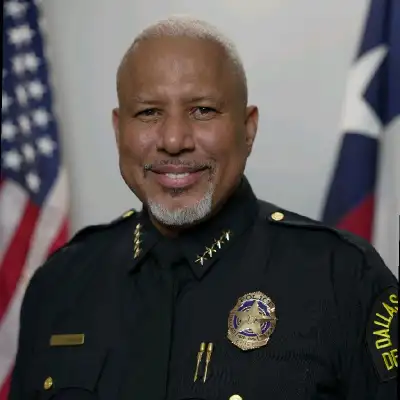
Chief Comeaux, thank you for having me here.
Chief Comeaux:Actually, I'm looking forward to it.
Sarah Zubaite Bennett:Yeah. I am as well. Thank you. I I jaywalked Oh. In front of the police station.
Chief Comeaux:Self report? Self report?
Sarah Zubaite Bennett:I am. I am. But that we can't bring this on. But, like, I I did because and so I just didn't realize what a huge building this is. Yeah.
Sarah Zubaite Bennett:It's beautiful.
Chief Comeaux:It is. It's really nice.
Sarah Zubaite Bennett:Yeah. It it it absolutely is. And I parked in the visitor parking across the way and I ran across the street because there was a guy kind of mumbling things heading in my direction. I was like, mhmm. So I ran across the street.
Sarah Zubaite Bennett:But in coming in, I mean, the experience has been wonderful. And I know most people in Dallas, let's just talk Dallas proper, they don't wake up thinking about crime stats. They want their families safe, their kids safe, and you have decade low numbers under your belt.
Chief Comeaux:Yeah.
Sarah Zubaite Bennett:And I'm sure you're incredibly proud, but we'd love to know some of your secrets. Why do you think and believe that that is the reason at this point in 2026 when you've been here since April 2025?
Chief Comeaux:Well, really excited about the numbers. Really excited about the reduction of crime Yeah. In Dallas. So I think the the secret sauce Mhmm. Is pretty much empowerment.
Chief Comeaux:I'm getting my three stars and two stars and one stars. I'm giving them the ability to lead, and I think that really helps. And he gets buy in, not only from the command staff, but also from the officers. When officers feel like they have a voice and they come to work and they're a little bit happier, they're gonna work a little bit harder. I truly believe that.
Chief Comeaux:So I think a lot of it is leadership. And then, of course, we're putting certain programs in place, I think, which helps helps crime also. One of our big things that from day one when I got here, I wanted to make a focus to go after fugitives, to go after the worst of the worst. Those who have felony warrants and they're walking the streets of Dallas, not acceptable, and we won't tolerate it. So we spend a lot of time and a lot of effort going after anyone that has a felony warrant.
Chief Comeaux:So if you're wanted by the police, you're wanted by the courts, we're gonna make you go see a judge. We're gonna put you in jail.
Sarah Zubaite Bennett:Thank you for that. And would you mind giving me some clarification on what three, two, and one star means?
Chief Comeaux:So the Dallas Police Department structure, you have me as the chief of police, and then our three stars are executive assistant chiefs. And then we have deputy chiefs, and we have assistant chiefs. And they're all part of the command staff along with majors. So here in Dallas, I get to select about approximately 44 command staff members that get to lead the department.
Sarah Zubaite Bennett:Thank you. And whenever I look at what's driving those results, I know you talk about leadership. Whenever I interviewed chief Eddie Garcia, he spoke about similar things. And now under your command, though, we've seen a radical shift. So can you speak to some of the exact implementations that you have really focused on under your leadership?
Chief Comeaux:Well, look, I think it goes back to the overall leadership, and it's a style. It's a belief that I've had. I've been successful with the leadership style, and I get a lot of buy in. And when you use the word, it's a simple word, empowerment, and then you have the ability to inspire and motivate also. And those are my three leadership words.
Chief Comeaux:I believe in inspire and motivate and empowerment. And I think when you put those three words together and you package them and you give them to all the command staff, you give them to all the officers and you get that buy in, it becomes really powerful. And when you go out and I'm a present chief. I like to be present. Mhmm.
Chief Comeaux:And what I mean by that is, like today, I I went to a couple meetings that had predominantly officers in there. I went to a substation and met with officers yesterday. I was at another substation, and they get to see me. They get to talk to me. They get to complain to me.
Chief Comeaux:Mhmm. They get to give me suggestions, And and I listen to the complaints, and I listen to the suggestions Mhmm. On how we can make the department better, which then in turn make the city better.
Sarah Zubaite Bennett:Yep. And I fully agree with that. And despite all of these impressive numbers that you've been racking up, Dallas residents are reading headlines about companies and sports teams departing from the core of what is Downtown Dallas. At the same time, we're seeing significant private sector investment in everything relating to public safety. And I wanna believe, and this is also including the downtown command center, but I wanna believe that public safety plays a role and a narrative in investment and restoring investor confidence in our city.
Sarah Zubaite Bennett:Can you tell me a little bit in your own words, how you are going to ensure that that public investment and private investment continues to happen and how that will manifest in the city of Dallas?
Chief Comeaux:Well, look. Let's just let's talk about it. Let's go ahead on with it. Yeah. Let's talk about AT and T Yeah.
Chief Comeaux:For instance. When I got here, I'd already heard that AT and T AT and T were leaving. Mhmm. And I did my very best to try to convince them to stay. And I will tell you, I was told that the police department is making it even harder because they were planning on leaving.
Chief Comeaux:But because of the reduction in crime in the downtown area, I think we made it harder on them, they considered staying. But that court was already
Sarah Zubaite Bennett:I know.
Chief Comeaux:Going down the road prior. Yeah. I believe a city starts with downtown. We have to keep downtown safe. We have to have a vibrant downtown.
Chief Comeaux:We need an entertainment district downtown, and it's gonna be our job to keep everyone safe down there. But if we, as a city, can have downtown be popular, everyone spend money downtown, hang out downtown, we should start from there as a city, and then we'll spread out. And that's that's what I believe in, and that's from day one, I looked at downtown, I wanted to make sure that we did everything in our power to keep downtown safe. Now every area is equally as important, but as downtown, but we have to have a safe vibrant downtown.
Sarah Zubaite Bennett:And I totally concur, and I know that the leadership in the city, the mayor, and the city manager are they back you in that statement. Can you talk a little bit about the support that they've both given you?
Chief Comeaux:Look, the city manager and the mayor have been amazing to me since they hired me. And one of the initial statements that they made to me, and I wouldn't have taken the job without this, is that we hired you to be the chief of police. Now go be the chief of police. Mhmm. Don't look at us.
Chief Comeaux:Don't rely on us. You're the one with experience in law enforcement. Do your job. Mhmm. That's all I wanted to hear.
Chief Comeaux:That that excited me, and if it wasn't a structure like that where I can do my job to keep everyone safe Mhmm. I wouldn't wanna be here. And and that's what I've been doing my entire career. Ever since I was 21 years old, I've been in law enforcement. So that's what I know.
Chief Comeaux:That's what I know best, and that excited me. And I I think this department is doing a really good job of keeping everyone safe.
Sarah Zubaite Bennett:Amen to that. And you will find fewer supporters who are as positive and optimistic and who fervently believe in the sacrifice that police make. I am very very grateful to you. And I know I don't live exactly in the heart of this city but Downtown Dallas and Dallas itself bleeds into every single surrounding area. So the good work that you do absolutely spills over into my neighborhood, and for that, I am eternally grateful.
Chief Comeaux:Well, every time you leave your neighborhood
Sarah Zubaite Bennett:Well, exactly. And it's always go through Dallas. I'm never in my neighborhood, literally, except for when I sleep. My kids go to Dallas schools anyways, so I am always in Dallas as is my husband. But specifically relating to just a little bit of the history, have you found that there's been more recent support after the amendment, particularly relating to crime in Dallas, was adopted?
Sarah Zubaite Bennett:Do you do you find that you've received more support, or has that support always been there from prior leadership?
Chief Comeaux:Well, what I will say since I've been here, which now is about fourteen, fifteen months Mhmm. Everyone's been fully supportive of law enforcement.
Sarah Zubaite Bennett:Mhmm.
Chief Comeaux:And everyone's been saying, hey. Do what you need to do to keep us safe. Now Mhmm. Of course, you might have one or two council members who have different views Mhmm. Of what what good looks like and and always have an open door policy.
Chief Comeaux:Mhmm. And I haven't not only do I have an open door policy with the council members, I believe I have an open door policy with the citizens of Dallas. Mhmm. Just like earlier today, was in South Dallas and went to a town hall meeting, and it was amazing. Mhmm.
Chief Comeaux:I I I got to sit there and listen to 20 citizens tell me all the good that they thought and all the bad that they thought and where they thought we can improve. Mhmm. And those are the meetings that's gonna make us as a police department even better.
Sarah Zubaite Bennett:I agree. And how how is it that you actually maintain accountability to measurable outcomes rather than simply just having good intentions? How has how have you moved the needle in that respect?
Chief Comeaux:Well, you gotta listen. Right? And then when you listen, you have to come and do something about it. We have to put, put something in place to make it better. And I think we do a a fairly good job at that, and, we do a really good job at meeting.
Chief Comeaux:And then we have to figure out how to get policies in place to make the department better for the city. And we're constantly working on programs to do that. And one of the things that I've gained just from leadership, you can't take 10 different things and work on 10 different things at one time because you might get to 40% on some, 60% on some, 80% on some, and maybe one gets a 100%. So what we've been doing really is I'm trying to focus on a problem or an issue and get that fixed at a 100%. Then let's move on to the next one.
Chief Comeaux:While we're still focusing on other ones, but we're really looking at one or two at a time to get to a 100%, get it fixed, move on to the next problem. I think too many times when it comes to law enforcement, there's so many things coming at you Mhmm. But you never get to a 100% on anything Mhmm. Because you're constantly looking at everything. Mhmm.
Chief Comeaux:So we have an approach where we look at everything, but we really try to get to a 100%. Be laser focused on something. 100%, let's move on. 100%, let's move on. Just like with response times right now.
Chief Comeaux:We're at fourteen months in a row of reduced response times, and that's that's amazing. I love that, and I want everyone to know that. And we're not we're still not happy with our response times, and there's still room for improvement with our response times. But we're laser focused on what are we gonna do to continue to get those response times down. And I think we have some plans in place, and I think the city is gonna see even more reduction in response times with some of the new technology that we have in place right now.
Sarah Zubaite Bennett:So That's exactly right. Yes. I have a ton to ask you by way of the new technology that you're implementing. But if I could toggle kind of back over to one particular Mhmm. Let's say metric.
Sarah Zubaite Bennett:So I know you all eventually have to try to reach 4,000 officers and I know you are making swift headway and marching right along towards that. What are you doing to aggressively recruit and achieve those numbers? And what does the time frame look like at this point for you in leadership?
Chief Comeaux:Yeah. So when I got here, city manager made it clear. Recruiting is one of your number one priorities, and she kept pounding that, pounding and pounding and pounding, and I said, man, we got that. We're we're gonna recruit. Yes.
Chief Comeaux:I think we're gonna be good. And I believe that because of the reputation that Dallas has as a police department and as and as a city. And I felt like we were gonna put some necessary changes in place in the recruiting space to be better. And I think we've done that. No longer do we just put a table out and stand at a job fair and hope someone walks by and we give out a flyer and we say, hey, fill out an application.
Chief Comeaux:We're we're catching up with the times. It's 2026. We will spam your phone on Instagram, on X, and then for some of the older folks, we'll still send you Facebook. But we will we are really working the social media aspect of it, and we're doing more of a targeted approach. And it sounds so simple.
Chief Comeaux:And as the mayor told me, Chief, if it's this simple, why is not why every police department's not doing it? Mhmm. Maybe because they just haven't thought of it. Mhmm. But one of the easiest things to do is look at who are officers.
Chief Comeaux:Where did they come from? What was their background? Mhmm. Now let's talk about females. Majority of your female officers were former high school athletes.
Chief Comeaux:They could have been cheerleaders, could have been basketball, volleyball. They were in dance team, but a lot of your female athletes were in high school as former athletes. So let's target that.
VIDEO:In Dallas, strength comes from community. Different teams, same mission, to show up for our city. That's what makes Dallas strong. We protect, we inspire, we play for Dallas. Dallas Police Department, Dallas Defense Dallas.
Chief Comeaux:Instead of just standing at a table handing out a flyer, let's make sure we go to the athletic programs and hand out flyers. Let's make sure we get on social media and we like or become friends with sports organizations, cheerleading organizations, dance organizations for females. And we're seeing our recruiting are going up in in those areas. And we did the same thing throughout the department.
Sarah Zubaite Bennett:Yeah. That's incredible.
Chief Comeaux:Really simple. Mhmm. But rather than just spending time, again, standing at a table, let's be laser focused who's already on the department. Now we still want everyone, and we still want everyone to apply. But if it's more likely that this demographics or this type of person would would apply.
Chief Comeaux:Let's focus on that. And our numbers are really high right now in recruiting.
Sarah Zubaite Bennett:Yeah. They
Chief Comeaux:are. One of the only large major city police departments that are recruiting at the the rate that we are.
Sarah Zubaite Bennett:Wow.
Chief Comeaux:Yes.
Sarah Zubaite Bennett:And for I know people that are watching this, they may not know, but police officers who often serve in the city of Dallas have a more difficult and challenging job than those in, let's say, McKinney or whatever. At least I'm told that. How is it that you can appeal to those officers more and encourage them to come to Dallas? Well Instead of a lot of the neighboring cities for, let's say, easier jobs, if that's even true.
Chief Comeaux:Well, I like saying we're Dallas. Mhmm. We we swing the big stick
Sarah Zubaite Bennett:Mhmm.
Chief Comeaux:In the DFW. We're the largest city and the best police department and the most proactive police department in Texas and in The United States. Mhmm. We are the most proactive police department in The United States. So that part right there is important because the majority of the people who wanna become officers want to be able to help and they want to be able to be proactive.
Chief Comeaux:And we're letting everyone know we're not just standing back taking 911 calls. That's part of our job and we're going to do it. You call, we're coming. But my goal is to make sure that we're the most proactive police department in The United States, so we're gonna go out actively and find the worst of the worst and put the worst of the worst in jail. And I think when you have a certain personality and a certain mindset, that's what they wanna do for a living.
Chief Comeaux:Mhmm. And they know if they come to Dallas, they can do that. And then we have so many divisions here in Dallas. From our SWAT team, our K nine team, you know, the dive team, the the air wing, and I can go on and on, homicide, robbery. We have all of these divisions.
Chief Comeaux:A lot of your smaller police departments They don't. They don't. Yeah. So if you go to a smaller police department, you might be on patrol for twenty years before you can experience something like that. Mhmm.
Chief Comeaux:Where you come to Dallas, you can get all of the experience that other cities might take ten, fifteen years for you to get. You'll get that experience in five years, and you'll be able go to specialized division. So there's something to be said when you work for a major city and a police department like Dallas.
Sarah Zubaite Bennett:Yeah. I I agree with that. If I was ever wanting to go into law enforcement, I would wanna be in Dallas myself, but I enjoy a challenge. I've so for me, that would be a strong appeal right? Just the sheer nature of the work I think that you all do.
Chief Comeaux:I mean we're hiring.
Sarah Zubaite Bennett:Yeah. I'm like if you could convince my husband.
Chief Comeaux:We're hiring.
Sarah Zubaite Bennett:And if you look at a lot of the, let's say, changes with respect to how the city is now realizing the importance of of reducing crime and investing in the police more than ever, Has there been any momentum on this meet and confer agreement with respect to pay parity between police and and fire? I and, again, I love the firemen. I do. It's just right now crime has been crippling major cities. It has crippled so much of what was once our great city.
Sarah Zubaite Bennett:And now thanks to you, thanks to our leadership in the city, that is not the case any longer. But do you have any words that you're able or even willing to share about that?
Chief Comeaux:Well, I'll I'll tell you this. I am the chief of the police department for Dallas.
Sarah Zubaite Bennett:Mhmm.
Chief Comeaux:I love fire. Mhmm. Chief Ball and I have an amazing relationship. We get along extremely well. But one of the things I will always do is take care of my officers Mhmm.
Chief Comeaux:And take care of this department. Mhmm. And they're doing amazing work. And, yes, I feel like they should be compensated more. Mhmm.
Chief Comeaux:I'm not afraid to say it. Mhmm. I I want us to get compensated more. It's a different job. Mhmm.
Chief Comeaux:Very And fire has a job that I wouldn't do. I wanna make that clear. Yeah. I'm not about to run into a burning house. Yeah.
Chief Comeaux:Not me. Yeah. But every single day, I'll run after a gunshot if I have to.
Sarah Zubaite Bennett:Mhmm.
Chief Comeaux:If a gun is being shot, I'm gonna run at it. Mhmm. Every single day, and that's what these officers do in Dallas, and they do a really good job at it. And I just feel like they should be compensated more.
Sarah Zubaite Bennett:Mhmm. And where who makes those decisions? I I I would like our viewers and listeners to be aware of that and how they can possibly help move the needle.
Chief Comeaux:Well, it comes down to the meet and confer, and I'm not gonna get into the meet and confer. I mean, that's more of a city thing
Sarah Zubaite Bennett:Sure.
Chief Comeaux:Dealing with the associations. But I am gonna make it extremely clear, like I said, wanna apologize for saying that I feel like officers should make more. And it's it's what I believe. Mhmm. And one can say, well, you believe that because you've been an officer or you've been on the law enforcement side since 1991.
Chief Comeaux:Mhmm. Maybe so. Mhmm. But it it's clear, the work that's being done by the Dallas Police Department, I feel like the officers should be compensated better.
Sarah Zubaite Bennett:Yep. I I am in agreement with you on that. And, again, like, just in my forty whatever years of life, the amount of time that I've called the fire department versus just nine one one in in need of response from the police department, I mean, it's 10 to one. Right? At least for me.
Sarah Zubaite Bennett:And I think that that would be true for most citizens. So do you do a lot of work with respect to a lot of your AI and technological deployment? Because I know that you you recently instituted something in 2026, if I'm not right, the drone as first responder program, right, with a remotely piloted drone station to be able to respond first to assess a situation so that you're not I don't wanna say wasting an officer in events that you don't need. But do you do any coordination with the fire department as it relates to that?
Chief Comeaux:Well, we do. And and the fire can utilize the drones also in in certain situations.
Sarah Zubaite Bennett:Mhmm.
Chief Comeaux:But it's something you said that, let's go back to it, and you actually said it perfectly. One of the things with the drones is it helps us figure out how many officers need to make the scene.
Sarah Zubaite Bennett:That's right.
Chief Comeaux:Right? Of course. Let's just use a simple example. Someone can be driving by and they say, hey, at cross and don't cross, there's two men fist fighting in the street. Well that call drops, you gotta get an officer going that way because two men are fist fighting.
Chief Comeaux:Well we can get a drone up and within a minute to three minutes the drone will be overhead. And the drone can see one or two things. Several things, right? One thing could be that there's no one at this intersection any longer. So the fight's gone.
Chief Comeaux:So then we don't have to send an officer. That call can be cleared. So now that officer can go to another priority call that call that might be a domestic violence.
Sarah Zubaite Bennett:That's right.
Chief Comeaux:So now we're saving manpower. We're saving our response times are going going down because of this. Or it could be, hey, yeah, there's two guys fighting and you know, one or two officers would be appropriate to send. We send one or two officers. Or it could be, hey, we're overhead and there's 10 people fighting and they have sticks and guns.
Chief Comeaux:Well now we can keep officers safe, let them know what's going on, we come with more officers.
Sarah Zubaite Bennett:Prepared. Yeah.
Chief Comeaux:So it's this program is really really good. It's starting off being really exceptional for us. Now we just have to continue the program and build it up even better, and that's what we're working on now.
Sarah Zubaite Bennett:What are your next steps relating to it? Because when I've read about it, I mean, am thrilled that you all are utilizing drone technology for the all the reasons that you are. And I've read people attacking it saying, you know, it's a violation of privacy and I'm like, oh my lord. Like in this day and age when we absolutely need to reduce our response times, this is a plus. It's a win.
Sarah Zubaite Bennett:But what are your exact and immediate next steps? How many are you planning planning to launch? What what type of funding is needed to do that?
Chief Comeaux:Well, right now, we we're up to about eight or nine that's active right now.
Sarah Zubaite Bennett:Yep.
Chief Comeaux:I would love to see that number at least double if not triple
Sarah Zubaite Bennett:Mhmm.
Chief Comeaux:In the near future. So we're working on that. We're working on some grants from from the government. Mhmm. So I can pull that money hopefully from the government rather than having to pull it from our budget.
Chief Comeaux:We're actively working on some grants for that now. I think as we continue to build that program, we will also realize that it's gonna be better for everyone in Dallas. And I know I I hear I hear the the the words too, oh, we don't want our prophecy to be invaded. And a lot of it is just they they don't know what's going on. Right?
Chief Comeaux:Yeah. These drones are not flying overhead recording.
Sarah Zubaite Bennett:That's right.
Chief Comeaux:They're not the drones are not worried about what they're seeing going to the path. Mhmm. The recording starts when they get there to the call where someone called the police.
Sarah Zubaite Bennett:That's
Chief Comeaux:right. So it's different than say a police officer riding down the street. What would he see when he gets there, right? So then the officers can see that from the fusion center. We call it the fusion center.
Chief Comeaux:So you have officers in there and then they with all the TVs, and they can see exactly what the drone is seeing. So it's gonna also help us solve more crimes, just the the AI in general.
VIDEO:For sure.
Chief Comeaux:When we put a camera up at an intersection, a lot of people, you'll hear them say, oh, well that camera at the intersection is recording everything as it goes by. Well, I can assure you, Chief Comeaux and no police officer is just watching that camera, everything that goes by at that intersection. Not happening. Now, could happen is if we hear that a black Volvo was involved in committing a robbery and the license plate was you know, LK was the first three numbers of the license plate. So letters of the license plate, we can type it in, black Volvo, two door, four door, whatever, license plate number HLK.
Chief Comeaux:And then the camera can say, oh, yeah, that car was seen at Yep. Crossing, don't cross it. Mhmm. And then you see another camera, oh, now that car is on the interstate approaching Lemmon. Mhmm.
Chief Comeaux:We can get off of there, get them stopped. Yes. This is the person that just committed this robbery. Mhmm. Those are things that we'll go back and look at the cameras for.
Chief Comeaux:But just to look at the camera to see what car's crossing or who's going by, I hate to let everyone know and maybe I shouldn't. We don't have time to do that.
Sarah Zubaite Bennett:I know.
Chief Comeaux:We don't have time to do that.
Sarah Zubaite Bennett:I think people know. I mean, I know, but, yes, absolutely. It's I I agree with that. So we have a lot of people, at least we're told that we have a lot of people coming into the DFW area for FIFA. First, what is your welcome message to all people traveling to DFW as it relates to safety and the safety of their family?
Chief Comeaux:Look. We want you to come and have an amazing time. See what see what Dallas has to offer. Mhmm. We have a lot to offer.
Chief Comeaux:Come and have an amazing time. Drink responsibly.
Sarah Zubaite Bennett:Yes.
Chief Comeaux:First of all, mainly because especially everyone from England, they love to have they love to have a drink or two.
Sarah Zubaite Bennett:Yes.
Chief Comeaux:I had great conversations with a a group from England today and I'm kinda chuckling. But one of the one of my worries is tomorrow, I think tomorrow and the next day, it's gonna be 99 degrees. Yeah. It's in the sixties in England right now. Right?
Chief Comeaux:Yeah. So it's completely different
Sarah Zubaite Bennett:Correct.
Chief Comeaux:When you're out and you have two, three, four, five drinks
Sarah Zubaite Bennett:Yep.
Chief Comeaux:In 99 degree weather than it is in 65 degree weather. So you have to hydrate. Hydrate hydrate in between in between your drinks. Mhmm. Please hydrate.
Chief Comeaux:Yes. Can I say that again? Hydrate? Please.
Sarah Zubaite Bennett:Shannon sent me this clip of, you know, these people coming in from God knows where in front of huge fans, and they they were just saying on social, we did not plan for the heat.
VIDEO:We did not expect the heat. I am hearing Brits saying, don't worry. We'll walk to the stadium. No, you won't. No, you won't, my friend. America isn't built for walking. You have to drive everywhere. I've learned that the hard way. So when I hear Brits saying, oh, it's fine. It's only three miles down the road I can walk. Try it. Try it. One, you'll get each stroke. Two, there ain't no sidewalk to walk on pal. Well, the majority anyway. Please remember, America is not The UK. It's not a tiny island. America is massive. Alright? So, yes.
Sarah Zubaite Bennett:Get some electrolytes.
Chief Comeaux:I was talking to some visitors from The Netherlands and they're like, so hot. How do y'all live here? You know, right? This is our normal. Yeah.
Chief Comeaux:But look, the the the fan fest has been has been great so far. We haven't had any issues. It appears that fans are having a really good time. I'm getting out and about and and talking to some of the tourists, everyone's having a really good time so far.
Sarah Zubaite Bennett:How is how many people are attending fan fest? I mean, there's what? 30?
Chief Comeaux:30 something thousand. Yeah. So far a day. Yep. And it's free.
Chief Comeaux:Right? So it's a it's a good activity. And even people that live in Dallas, that's from Dallas, they should go experience it.
Sarah Zubaite Bennett:For sure.
Chief Comeaux:It's it's kinda different. Look, soccer fans are passionate.
Sarah Zubaite Bennett:Oh, yeah.
Chief Comeaux:I love my sports. I love my US sports.
Sarah Zubaite Bennett:Yes.
Chief Comeaux:But I have to say, I went to The Netherlands Japan game.
Sarah Zubaite Bennett:Mhmm.
Chief Comeaux:I've never seen fans like that the entire Really? Game just cheer their team on. The entire game, Japan, man, I don't know what they're how they work with their throat or what they're doing, but they cheered the entire game.
Sarah Zubaite Bennett:It's amazing.
Chief Comeaux:And it was amazing. It it was just such a good vibe.
Sarah Zubaite Bennett:Yeah. The energy. That's great. And and I've always wondered, what is the structure with respect to safety? Mhmm.
Sarah Zubaite Bennett:Because I know that you're dealing with federal agencies. You know, clearly there's DART police, there's Dallas police, there's Arlington police. What kind of pyramid, if there's even a pyramid that exists, to ensure everyone's safe? And because I've seen these the Robo Dogs, right, and I don't know if they are attacking terrorism or potential threats or what is the system in place to ensure people are safe? What is the structure?
Chief Comeaux:Here's a good thing for North Texas.
Sarah Zubaite Bennett:Mhmm.
Chief Comeaux:We all get along.
Sarah Zubaite Bennett:Mhmm.
Chief Comeaux:From federal, state, and local law enforcement Uh-huh. We all get along. It's not who's gonna arrest this person, who's gonna get credit. Mhmm. It it's what do we have to do to keep everyone in this region safe?
Chief Comeaux:Mhmm. Of course, I know the federal side and I know the local side, so it makes it really easy to make sure those relationships are perfect. Mhmm. And we have perfect relationships. And the smaller departments in the area, I know all of the chiefs.
Chief Comeaux:I have the majority of their phone numbers in my phone. And we talk on a regular, we text on a regular, we have regular meetings in the DFW Mhmm. Where all the chiefs attend. It's not like that across The United States.
Sarah Zubaite Bennett:No. Wouldn't think so.
Chief Comeaux:And so I know if something happens somewhere in Dallas Mhmm. And I needed surrounding departments to come help us for whatever reason, I can pick up the phone, send a text, call, and we're gonna get help. And we would do the same for any of our neighboring police departments. If they need us, we'll be there. So it's it's a bond, and it's a relationship that we're gonna take care of each other, and that's from the federal, state, and local side here in North Texas.
Sarah Zubaite Bennett:Got you. So it's it's not so much a structure kind of reporting up to one command. It's everyone kind of working in Working together.
Chief Comeaux:Yeah. We we all work together. And now now, right here, right next door to where we are, we have federal agents in there with state agents and Yep. And our local and DART, they're they're in there right now. Mhmm.
Chief Comeaux:And they're we're monitoring the entire city doing FIFA, and we're gonna be doing that. But it's events like this too that that continues to really build the relationships. Mhmm. But not only build the relationships, it makes us say, you know what? We did that for forty five days and it really worked.
Chief Comeaux:Yep. Maybe we should look at doing this for even longer or making this permanent.
Sarah Zubaite Bennett:Well, was gonna be my follow-up question. Which has anyone actually talked about the possibility of uniting forces more even following FIFA?
Chief Comeaux:Well, look, we have. Mhmm. But again, here in North Texas, I I think we're already doing it. Yep. And not I think.
Chief Comeaux:I know. Mhmm. Like, let's talk about the Dallas Police Department. We and on the federal side, we work with DEA extremely close. We have officers assigned there.
Chief Comeaux:We have officers assigned to FBI. We have officers assigned to ATF. We have officers assigned to HSI. We work with them every single day to to help keep Dallas safe. Mhmm.
Chief Comeaux:We work with the state police on a regular. And then on some of these federal task force, you have these other local police departments who are also involved. So we're working with them every day. So when you have a crossover of someone coming from, say, Grand Prairie to Dallas and they plan on doing bad in Dallas Mhmm. We have that relationship that we already know who they are a lot of times or that we can quickly find out who they are because of the relationships Okay.
Chief Comeaux:That we have.
Sarah Zubaite Bennett:Do you think that's why Dallas I mean, there are a lot of comparable sized cities to Dallas across The United States where post COVID, their crime numbers have still remained relatively high with respect to what they were before COVID. That is not the case for Dallas now. Do you have any idea why that why that's the case?
Chief Comeaux:Well, look, Texas is special in a couple ways, but one way it doesn't matter what ZIP code I go to. Mhmm. Everyone wants to be safe in Dallas. Yep. And I can go to the highest socio economical, economic area Mhmm.
Chief Comeaux:And they give me the same complaints as the lowest socio economic level in Dallas. Mhmm. It's the same thing. The top three are are normally the same. And because of that, people that live in Dallas just wanna be safe.
Chief Comeaux:Mhmm. I think we work together as a team with the community and law enforcement for us to be safe. We're one of the only large cities in The United States that still has MPO officers working to in our community affairs. There's many large cities that did away with that program
Sarah Zubaite Bennett:Mhmm.
Chief Comeaux:Because they have manpower shortage or recruiting is not as high. That is something that as long as I'm the chief of police in Dallas, we will not do away with. Because I feel like you need that relationship between officers and the community. And if you have that relationship between officers and the community, it's gonna help crime also. And it could be someone recognizing something that you would not call 911 for.
Chief Comeaux:Right? You might say, hey, that particular house, every other day at twelve noon, there's a man that walks in with a bag Mhmm. And then he leaves. No one's gonna call 911 for that. But if you know an officer and you have a relationship with him, like our NPO officers who have relationships with so many
Sarah Zubaite Bennett:Mhmm.
Chief Comeaux:In the area, you'll call and say, hey. Every other day at twelve noon at this house, this happens. Well, then he'll contact a a covert unit, they'll go sit up and then get that person pulled over in traffic. Next thing you know, you recover 10 guns, and when you recover 10 guns, you most likely saved a life. Oh my god.
Chief Comeaux:But that comes from having those relationships. Mhmm. And a police department has to have relationships with the community.
Sarah Zubaite Bennett:Yeah. And I just pray that that's something that doesn't change in Texas. It's I mean, I know for a while that was not the case. Not for me personally but we love our police officers and I pray that that remains the case forever because we rely on you all to show up to help keep us safe. But you know whenever we look at ways to help make our officers safe and to support the police, people rarely ask that question.
Sarah Zubaite Bennett:Have you made any requests of, let's say, the city of Dallas or any private citizen groups to help support the Dallas Police Department?
Chief Comeaux:Yes. So we started a Dallas Police Foundation. I went to a meeting early on, probably within the first month of me being in Dallas. And we're at we're at a meeting and a gentleman, and it was mister mister Warren, Casey Warren, said what does Houston have better than Dallas? And I told him a police foundation Mhmm.
Chief Comeaux:That the the Houston Police Foundation was better than than anything that we have in Dallas. Now, let me make it very clear. There are some foundations in Dallas that does amazing work. They've been taking care of the Dallas Police Department for many years. But the structure of the Houston Police Foundation is very different than some of the ones that are performing at a high level in Dallas that supports the Dallas Police Department.
Chief Comeaux:And when I made that statement, he looked at me and he says, well Houston can't have anything better than Dallas because there's nothing better in Houston than Dallas. And so we we all got a laugh in, but his team went to work. Mhmm. And now we have a Dallas Police Foundation that they're taking contributions now. And what the the money's gonna do what what I'm really looking forward to do is when I have a a certain group or a certain division or office that that wants something, needs something, and they feel like it can help the department or help the city, but it's really not in our budget to do it, we're gonna utilize the foundation to get that, to get those things.
Sarah Zubaite Bennett:Yeah, that's terrific.
Chief Comeaux:And some of it could be as simple as I went to one station and they said, Chief, if you can just get us chairs that have two arms on it, we would be happy. And I was like, what do you mean? And I walked in the back, it was about 40 chairs. None of them had two arms. And I was like, okay, got it.
Chief Comeaux:So the foundation, we'll use the foundation for some things like that.
Sarah Zubaite Bennett:Amazing, amazing. Just the small comforts. Do any of
Chief Comeaux:the That goes to morale too, right?
Sarah Zubaite Bennett:Yes, it does.
Chief Comeaux:It helps the officers.
Sarah Zubaite Bennett:Exactly.
Chief Comeaux:And if an officer feels good, it's my belief, and you know what, it's not just my belief, I think it's fact Mhmm. That they're gonna work that much better.
Sarah Zubaite Bennett:That's right.
Chief Comeaux:And that's good for the department. It's good for the city.
Sarah Zubaite Bennett:Yes. Yes. I I concur. What about mental health? Has have you seen mental health improve in the Dallas Police Department?
Chief Comeaux:Look. You wanna you wanna build a culture Mhmm. That is better. You want morale to be up, but you also wanna build a culture that when you're feeling something, you say something, and you get the mental help that you might need. There's too many officers that see things that the average person does not see on a regular basis, and we have to stay sharp mentally.
Chief Comeaux:And you have to be one that's willing, first of all, to seek help. Mhmm. Because we don't all know when we need help, but we as a culture, we have to take care of each other. And if I see something or believe something, I have to be able to put my arm around someone and say, hey, let's go to the the mental health lab our wellness unit Okay. Which we have a really good wellness unit Mhmm.
Chief Comeaux:But you have to get there in order to get the help. And so we wanna build a culture where it's okay to go talk to a counselor. And I'll let everyone know. I've talked to a counselor before. Right?
Chief Comeaux:Sometimes you just need to unload your toolbox. Yes. And if you unload your toolbox Mhmm. Again, it makes you, when you're sitting in that patrol car or you're working a case Mhmm. So much better.
Sarah Zubaite Bennett:Yes. It does.
Chief Comeaux:So mental health is super important for a police department and it's something that we have to stay, you know, really focused on.
Sarah Zubaite Bennett:I agree. And I think about, you know, the mental health aspect relating to a lot of the unsheltered or the homeless in the city. And I've recently learned that there's some type of conversation about a central intake space that will soon happen. Again, it could all be hearsay. But at Austin Street, you know, in partnership with Salvation Army and, you know, but but with the support of county commissioner, I think, Andy Somerman and Clay Jenkins about this central intake approach because I I believe there's more support coming by way of the mental health beds that will be in these particular spaces.
Sarah Zubaite Bennett:How is the Dallas Police Department working in coordination with a lot of these different type of support centers for the homeless?
Chief Comeaux:So let's talk about two areas in the Dallas Police Department that hits on that. Well, first we'll talk about the Red Care team. So when we get a call and we know there's a, say, a possible mental health person involved in a call. Yeah. If it's not if it doesn't reach a certain level, right?
Chief Comeaux:So alright, we're gonna take a minute on this.
Sarah Zubaite Bennett:Sure. Yeah. Yeah. Yeah.
Chief Comeaux:Alright. So, because I wanna try to explain a little bit. So if we get a call and and they say, hey, this person has mental health issues, and they're pointing a gun at someone right now. That's completely different, right? So at that point, you're gonna have the officers go and you're not gonna have a trained professional with them.
Chief Comeaux:We cannot put a trained professional mental health that specializes in mental health if you have someone that's pointing a gun at someone because the mental health professional doesn't carry a gun.
Sarah Zubaite Bennett:Sure.
Chief Comeaux:They're not an officer.
Sarah Zubaite Bennett:That's right.
Chief Comeaux:I think there's very few doctors that would want to be in that situation.
Sarah Zubaite Bennett:Yeah.
Chief Comeaux:Right? So an officer's gonna respond to that. But let's say the call differently. Hey, there's someone and they're walking around and they're not harming anyone, but we definitely think that they have mental health issues. Well now we'll get a team and we'll have a trained professional that will go out to that call with the officer and then they can initiate conversation and see if we can get that individual help.
Chief Comeaux:Mhmm. Right? So there's different ways that we go after a call like that.
Sarah Zubaite Bennett:Mhmm.
Chief Comeaux:And we do our best to get help Sure. First. Of course. That's what we wanna do. Mhmm.
Chief Comeaux:But our job also is to keep everyone safe. Mhmm. Right? So and even if the call comes in, possible mental health, but they're pointing a gun at someone or they're making threats, you can't put a civilian in a position where they can get harmed either. Another thing in that area where you deal with a lot of mental health is through the homeless.
Chief Comeaux:We've created what we call the HOT Team, the homeless outreach team, and we give them extra training. So what we wanna do is we wanna show some empathy and some compassion, but we also have to enforce the laws. And we're working with nonprofit organizations
Sarah Zubaite Bennett:Mhmm.
Chief Comeaux:To try to get housing for some of the homeless. Mhmm. Sometimes it works great, but then there's other times where we just have to enforce the law. Yep. So it depends on what's happening at that moment.
Chief Comeaux:And there's many, many meetings that I go to where I have elderly ladies that's looking at me saying, Chief, how are you gonna keep us safe because the homeless are getting aggressive? Or there are panhandles in the middle of the street and they're trying to unlock my door when I'm at the red light.
Sarah Zubaite Bennett:Yes. Yes.
Chief Comeaux:Those are things that if you call, we're gonna come and we're gonna do something about it. Mhmm. And if it's a homeless person, still have to do something about it if they're breaking a law. Right? So when we do these massive, I'll use the word cleanups right now, where you have the illegal encampments.
Chief Comeaux:Mhmm. And the keyword is illegal.
Sarah Zubaite Bennett:It's illegal. Yeah.
Chief Comeaux:Right? So when it's illegal, we have to do something about it. Mhmm. But we're working with nonprofit organizations to where we don't jump out one day and say, Got you. You had a legal camp.
Sarah Zubaite Bennett:Yes. Yes.
Chief Comeaux:We're going there before, we're saying, On this date
Sarah Zubaite Bennett:up. Yes.
Chief Comeaux:We're gonna come back. Yep. And if you're breaking along on this date Mhmm. You know, we're gonna enforce the
Sarah Zubaite Bennett:law. Mhmm.
Chief Comeaux:But we wanna give an opportunity for some of the homeless to get housing. Mhmm. The unfortunate part of it is some of them don't want housing. They want
Sarah Zubaite Bennett:it. Of course not.
Chief Comeaux:And so they'll move from corner to corner to corner. Yep. Well you call because they're on your corner. We move them to another corner, then I'll get a phone call. Sure.
Chief Comeaux:Then we'll get a phone call. So there's times where we just have to enforce the law.
Sarah Zubaite Bennett:Sure. And you know, everything that I'm learning about this whole Miami model that's supposed to work is, you know, instead of utilizing taxpayer money to let's say, of course, have the Dallas police take them. If you have to take them to a jail and they come out and then they go back to a similar area and kind of this cycle, the rinse and repeat system. You know, I hope that there is a lot of coordination amongst these nonprofits to further advance that. And within this hot team that you've described, the homeless
Chief Comeaux:Outreach team.
Sarah Zubaite Bennett:Outreach team, do you have people from there that go to a lot of these meetings with the leadership of these different organizations?
Chief Comeaux:We do. They work they work together, and and we understand that they have a different job than we have.
Sarah Zubaite Bennett:Of course.
Chief Comeaux:And and they have to understand that. Yeah. They have to understand that we have a different job. So we're not gonna always agree. Mhmm.
Chief Comeaux:But we will sit at the table, and we'll discuss next step forwards
Sarah Zubaite Bennett:Mhmm.
Chief Comeaux:To try to keep everyone safe in Dallas.
Sarah Zubaite Bennett:Good. Good. I'm glad that you all do have a representative that makes those meetings and and is part of those conversations because I also know for certain that's why many downtown businesses that used to be there for a while just had to leave, had to close. And it's it's heartbreaking Yeah. Because, you know, we all want the best and most compassionate response and solution for these people to get help and, like, by the grace of God, get off the street.
Sarah Zubaite Bennett:Not everyone wants it. Okay. So let's you know, there have to be kinda steps and layered a layered approach. And I'm grateful that the police is part of it.
Chief Comeaux:Yeah. Well, appreciate that. And I tell you what, downtown's a lot different today Mhmm. Than it was thirteen months, fourteen months ago. Mhmm.
Chief Comeaux:The teams that are working out there are doing an amazing job. They're they're doing an amazing job cleaning up downtown.
Sarah Zubaite Bennett:Yeah. I I I agree with you. And what would you say to, let's say, a group of investors who are looking to invest significant money in downtown. Maybe they see downtown as a ripe opportunity with all of this mass ex exodus of corporations, sports teams, whatever. How are you willing to work with this said team of investors to ensure that their investment will not go to waste, but it will actually have an excellent return on that investment?
Chief Comeaux:Look, I think that's a great question. And one of the things that I will tell you, legacy is important to me. Mhmm. And you might be saying, why is why are you telling me legacy is important to you? One thing that I wanna see stay in place when I leave is how important downtown is to the Dallas Police Department.
Chief Comeaux:So we're we're actively, continually putting things in place to make sure downtown stays safe. Mhmm. And I will talk to any business owner or entrepreneur that's wanting to go downtown and tell them it's a focus of the police department to keep downtown safe.
Sarah Zubaite Bennett:Mhmm.
Chief Comeaux:That's where it all starts for a city. We need downtown to be safe, and we need it to be vibrant. Mhmm. So I hope that everyone that hears this says, I wanna invest in downtown. And they come to downtown and start a business.
Chief Comeaux:Well, they have a commitment from me as the chief of police and the Dallas Police Department that we're gonna do everything to keep you safe down there. And we're in it's not just talk because we have The
Sarah Zubaite Bennett:numbers show.
Chief Comeaux:The data to show it. Yep. We we just put another joint operations center downtown where you're gonna have officers housed down there, they're and gonna be working with the business owners, MPOs for downtown. And the mounted unit is downtown on a regular. We have Out Motors downtown on a regular.
Chief Comeaux:When I first got here I was told that Dallas Police Department does not write tickets downtown. I don't think anyone can say that any longer. We write a lot of tickets downtown. And what I realized it was needed based off of how many tickets are being written downtown. And we're gonna continue to do that.
Chief Comeaux:But we have to You have to be able to go downtown, and if you want, someone wants, when they get off of work, go to happy hour, have an adult beverage, have a sandwich, have some happy hour fries or whatever you want, you should be able to walk anywhere downtown and feel safe in doing that. Mhmm. And that's our goal to make it that type of downtown.
Sarah Zubaite Bennett:I'm grateful that you are focusing on downtown. And as much as I, you know, like your predecessor, you know, I know my husband sounded the alarm bells and it made him wildly unpopular for a period of time about the crime down there. And I'm just grateful that you are really focusing on it. And I appreciate your words and your insight relating to it because I do think that your conversations with future investors are gonna be critical to attracting and developing the city as it should.
Chief Comeaux:Yeah. And I think we play a role in that. And anyone that's looking to invest, if they wanna meet with the police department, I I say reach out to us and you can see what we're doing. Like I said, I I mentioned the motors and the mounted. We also have some new ATVs and Polaris's that are roaming around downtown.
Chief Comeaux:We also have the bike unit, and we just started we're starting a nighttime shift for the bike unit. What's kinda cool about downtown also Mhmm. We actually have citizen who donated one of the Polaris's. Oh. And it's a air conditioned and heated Polaris because And I told him I said, it's kinda slick.
Chief Comeaux:He wants to make sure that this Polaris is used night
Sarah Zubaite Bennett:Day and night.
Chief Comeaux:Day. You have air condition Winter. Winter. Summer and heat. And and we're gonna put some miles on it.
Sarah Zubaite Bennett:Terrific.
Chief Comeaux:Because it's look, it's a it's a great tool. Mhmm. It's a great tool. It can go up and down a one way street if need be. Yep.
Chief Comeaux:It can go on sidewalks if need be. Mhmm. So it's it's an amazing tool that we will be using.
Sarah Zubaite Bennett:Yeah. And directly across from City Hall, isn't there going to be the command center?
Chief Comeaux:So it's it's the joint operation center?
Sarah Zubaite Bennett:That's the joint operation center.
Chief Comeaux:Okay. So we're gonna have officers housed there and we're gonna have other housed. Yes. And it's Catecorner from city hall. Uh-huh.
Chief Comeaux:Really excited about that. Yeah. We're almost over the finish line. Once you get, no offense to any attorneys out there, when you get all the attorneys involved it takes a little bit longer to dot Is and cross Ts, but that's their job, and that's what we pay them to do. But man, I tell you.
Chief Comeaux:But we're almost there. We're almost across the finish line and we're we're gonna have some officers housed there, so they're gonna be able to work with anyone that's coming downtown.
Sarah Zubaite Bennett:Great. And is that new? Is that is that a new Yes. Part of your ecosystem?
Chief Comeaux:Yes. It is. Great. It is new, and it's something that we're we're looking forward to, and I I think it's gonna make downtown safer. Mhmm.
Chief Comeaux:And also, it's gonna just allow officers to be right there
Sarah Zubaite Bennett:Mhmm.
Chief Comeaux:In the community downtown to where if a business owner wants to reach out and and touch an officer, they'll be able to. And they'll also be able to get suggestions and opinions Mhmm. From the officers on how to keep their businesses safer.
Sarah Zubaite Bennett:Mhmm. Yeah. Thank you for that. And if Shannon and I were to drive be driving around for whatever reason and get some footage of some areas in Downtown Dallas that you believe would really showcase how different it is down there now and how people might have an understanding of what it was once like. Yeah.
Sarah Zubaite Bennett:Where would you encourage us to drive and get
Chief Comeaux:I don't think we have to stage it. I think you can go anywhere you
Sarah Zubaite Bennett:want So if you were to look at this interview five years from now, what would you want to be able to point to and say, this was part of my legacy and this is what I was really hoping to leave as my mark? What would that be?
Chief Comeaux:So we're gonna start in the middle of the city, which is downtown to keep downtown safe, and I I need that legacy to live on. Mhmm. But more importantly than anything, I want everyone to know that we are the most proactive police department in The United States in keeping everyone safe. We're not just sitting by dispatch waiting for nine one one calls to come in. We're going out looking for the worst of the worst Mhmm.
Chief Comeaux:To put them in jail, especially those who have felony warrants. And in addition to that, we're working with our federal partners on a daily basis to go after the worst of the worst. If you're out there selling drugs in Dallas, you need to be worried about us knocking on your door at six in the morning. And when it comes to Legacy, I want everyone to know when I'm gone, and I don't plan on leaving anytime soon.
Sarah Zubaite Bennett:Good. Was gonna I ask that
Chief Comeaux:don't plan on leaving anytime soon.
Sarah Zubaite Bennett:Good.
Chief Comeaux:But when I'm gone, I want I want everyone to know that the Dallas Police Department is and will continue to be the most proactive police department in The US.
Sarah Zubaite Bennett:Okay. So I'm gonna show you something that I've built, and it's this it's a matrix. This is when you're brought on. Tolbert hires Comeaux. April 2025.
Sarah Zubaite Bennett:2025 ends at a 141 murders, a ten year low. Recruiting flips positive. About 3,300 officers, most in a decade. College credit requirement dropped. Response time falls, eleven straight months.
Sarah Zubaite Bennett:New Dallas Police Foundation channels philanthropy directed to DPD. I know people before you, your predecessors focused a lot on South Dallas. Now you're you're kind of redirecting that to to downtown and of course everywhere, everywhere in the city. But what specifically can you can you say that that this doesn't shed color on?
Chief Comeaux:Yeah. So first of all, I think and Alex won't get the exact number. We might be up to 3,500 now.
Sarah Zubaite Bennett:Really?
Chief Comeaux:Yeah. We're up to like 3,500 now. Wow. You're underselling me on that.
Sarah Zubaite Bennett:See? And and so I'm glad I'm I'm glad I brought this because this here Yeah. It's a line 30 with six. Yeah. With the mayor.
Sarah Zubaite Bennett:And I wish people would tie the success of the mayor to the crime numbers. Yeah. Because that shows such positive unity between you, the mayor, the I mean, Kim Tolbert. She you all are doing something right. And, again, what is it that caused this?
Sarah Zubaite Bennett:This is new. Is there anything in particular that you can point to?
Chief Comeaux:Look, I I think it's rebranding the police department.
Sarah Zubaite Bennett:Mhmm.
Chief Comeaux:So working really hard on rebranding police department, building a culture that that everyone wants to be a part of. We were losing a lot of officers.
Sarah Zubaite Bennett:When you came on.
Chief Comeaux:Yes. And that's no longer the case. Yep. We're losing very few officers now to other departments.
Sarah Zubaite Bennett:And pay has gone up. Right?
Chief Comeaux:Pay has gone up. But I also think there's there's a couple more tricks in the bag. We're not done yet. Good. And and I think the next time we do a a story or a podcast, I'm hoping that you're gonna say, how in the heck did you just get that many officers to transfer over here from other departments?
Chief Comeaux:And so we have something that's gonna come out pretty soon where I think we're gonna shock the DFW. I think I think it's it's it's gonna be really good for the city, and it's gonna be really good for the the department where we're gonna flip this narrative because officers wanna stay in Dallas now.
Sarah Zubaite Bennett:Yes.
Chief Comeaux:And I I think a lot of it is is building a team atmosphere. Anyone that knows me knows I'm a former athlete. I rely on sports quotes all the time and narratives from sports, but I think it teaches so much, and people wanna play for this team now. And they wanna stay on this team. I think it is known that we're gonna win championships here.
Sarah Zubaite Bennett:Good.
Chief Comeaux:I I think it's already happening. I think it's it's flipping.
Sarah Zubaite Bennett:Mhmm.
Chief Comeaux:And matter of fact, I think it's flipped. Mhmm. I think it's it's taken a full year, but I think it's flipped. And we just held a three day recruiting event that had never been done in Dallas before. 337 applicants showed up for a three day event.
Chief Comeaux:That's never been done here before. And when I say just changing the way we do certain things and changing the way they they're doing recruiting here and, you know. Look, I asked questions when I came in, and I told everybody I look, listen, and learn when I first came in. Look, listen, and learn, look, listen, and learn. And I would ask questions, so why do you do this?
Chief Comeaux:It's It's the Dallas way. What do mean it's the Dallas way? Well, that's the way we've always done it and we've had success. I mean, you being successful now or are you just keeping up? Are you moving the needle?
Chief Comeaux:Mhmm. Like, we need to change this. And I think part of what I bring to the table is the fact that with DEA, I was in Tucson, Arizona, Oakland, California, Los Angeles, Gulfport, Mississippi, Washington DC, Jackson, Mississippi, and San Francisco, and then Houston. So I got to see a whole bunch of large police departments, mid sized police departments, and small police departments. Mhmm.
Chief Comeaux:And then I was over, what, a 114, I think, counties, I'm going blank now, when I was with DEA at the last stop. So I get to see all these sheriff's departments, all these police departments, the good and the bad. And so I took all that and the good and the bad's in that toolbox next to me. Yep. So I open up that toolbox anytime I look at a problem in Dallas, and I'll either pull out the good or the bad out the toolbox and try to fix some of the things here.
Chief Comeaux:And I really think there's buy in. A few positions, let's talk about two positions in particular. One being starting with my PIL position and my assistant director. I always call her my PIL still. So it's joke in there.
Sarah Zubaite Bennett:I figured, I figured.
Chief Comeaux:It's a joke in there. Bringing a professional staff, bringing a non sworn, someone with experience, true experience in that area, I think makes a huge difference. No knock on a police officer for doing the job, but guess what? You gotta hire to put people in jail. Let's put people in jail.
Chief Comeaux:And let's hire someone who went to school for that, who has experience in that area. So that's why Allison's here, and we have one of the very best in The United States with her being here.
Sarah Zubaite Bennett:Oh, I'm
Chief Comeaux:so But you can see the difference. And it's not just me saying it, it's when I go out in Dallas, they're like, hey, we know what you're doing now. What do you mean? We never really knew what Dallas PD was doing. Oh, they know now.
Sarah Zubaite Bennett:They know.
Chief Comeaux:That's because we hired the right person for that position. My assistant director over HR brought someone in from the outside. Mhmm. Brought someone in who I know was who I've been known for many years who's really talented. And it's not a mistake that our recruiting's gone up.
Chief Comeaux:We had officers doing it before. Mhmm. They got hired to put people in jail.
Sarah Zubaite Bennett:Ah, I see.
Chief Comeaux:So we're civilianizing certain positions throughout the police department to make us better. So it's not just, hey, response time's going down. It's other areas that I'm looking at, and I'm saying, so why do you have this? Mhmm. It's always been that way.
Chief Comeaux:We're gonna change that.
Sarah Zubaite Bennett:Mhmm.
Chief Comeaux:We're we're gonna change that for the good of department in the city. And some of it's the hires, and some of it's restructuring. And look, it's working right now.
Sarah Zubaite Bennett:It is.
Chief Comeaux:It's it's it's working and there's only you know, as a chief, you you do get nervous sometimes because last year we went down 43 Murders. Mhmm. That's a big chunk.
Sarah Zubaite Bennett:It's a big
Chief Comeaux:So what are we gonna do this year? Mhmm. And I'm happy to say right now we're still down this year. Mhmm. 43 is a big number.
Chief Comeaux:A little nervous about that, but we just have to make sure we get better to keep that number down. And right now we're down again this year so far.
Sarah Zubaite Bennett:So It's incredible.
Chief Comeaux:Really excited about that.
Sarah Zubaite Bennett:Yep. Well, mom
Chief Comeaux:There there's several that that are on the table that we're constantly having meetings on because we wanna do it better than what we have. Yep. And just because it's good, we wanna be better. And I was told, and maybe you can talk to the city about this, because I don't have the actual final stat, but I'm gonna put it out there. I was told that for the survey that the city just did from Dallas, the citizens of Dallas, that we're up 17% on approval rating for the police department, which is the highest it's ever been in the Dallas Police Department.
Sarah Zubaite Bennett:Oh my gosh.
Chief Comeaux:We went up 40%. We went up 17% over last year. So
Sarah Zubaite Bennett:That's exceptional.
Chief Comeaux:Yeah. So I'm really, really excited about that. And the normal number is somewhere under 50 normally percent for police departments across The United States. And Dallas was at 40, and this year we're at 57.
Sarah Zubaite Bennett:Oh, praise God.
Chief Comeaux:Now I gotta figure out to get to sixty and sixty five.
Sarah Zubaite Bennett:Jeez.
Chief Comeaux:This might be a little tough, but
Sarah Zubaite Bennett:I am super
Chief Comeaux:competitive, and all I wanna do is win. All I know how to do is win.
Sarah Zubaite Bennett:Well, it's clearly showing. It's clearly showing. And again, like, you have a lot riding on this.
Chief Comeaux:Here's the thing. You you have to put right people around
Sarah Zubaite Bennett:you. That's right.
Chief Comeaux:And like me bringing in Allison, and me bringing in April, that's putting the right people around me.
Sarah Zubaite Bennett:Mhmm.
Chief Comeaux:Right? Me making selections on my chief of staff.
Sarah Zubaite Bennett:Mhmm.
Chief Comeaux:Putting the right person on my side is so important. Yeah. You have to build the team. And if I had number one job that I would want in the whole entire world, that I would take this gun badge off and take the badge off today. Mhmm.
Chief Comeaux:If professional sports organization called me to be the general manager of a professional sports organization. Now, I don't think Jerry Jones is gonna call.
Sarah Zubaite Bennett:Look at her face.
Chief Comeaux:I don't think he's gonna call, but if he does
Sarah Zubaite Bennett:Oh my gosh.
Chief Comeaux:I will leave the Dallas Police I mean, I will leave the Dallas Police Department and go be the general manager. That's the number one job in the world that I I think would be the number one job in the world for me. But guess what? I'm pretty darn close because I'm the general manager of the Dallas Police Department. Yeah.
Chief Comeaux:And so I get to put the players in the right position to succeed. Mhmm. And part of being a leader is listening to the team, seeing what the team needs, but also putting the players or the members of the organization in the right positions to do their very best, which is best for the department of the city. Mhmm. So essentially, I mean, I do have experiences being the general manager.
Chief Comeaux:So I'm really enjoying this and enjoying making sure we make the right moves with the right people in the right positions to make us better. And with crime continuing to go down, look, we're not done.
Sarah Zubaite Bennett:Mhmm.
Chief Comeaux:We're we're not done.
Sarah Zubaite Bennett:The thing is that's
Chief Comeaux:No victory gonna lapses.
Sarah Zubaite Bennett:People look at before they invest.
Chief Comeaux:Yes.
Sarah Zubaite Bennett:You are the legacy along with the mayor, along with city manager Kim Tolbert. You three gotta work together in unison to make sure that our city is excellent and ripe for opportunity.
Chief Comeaux:I can assure you we we do work together. We meet on a regular basis. Mhmm. We talk on a regular basis. We text on a regular basis.
Chief Comeaux:We're we're a lock and step to do what's best for the city.
Sarah Zubaite Bennett:Good. Well, I'm glad you're here. I'm glad you're with Dallas. Please don't go anywhere. Stay with us for a while, and thank you for joining me.
Chief Comeaux:Thank you. I appreciate it.