Subscribe
Share
Share
Embed
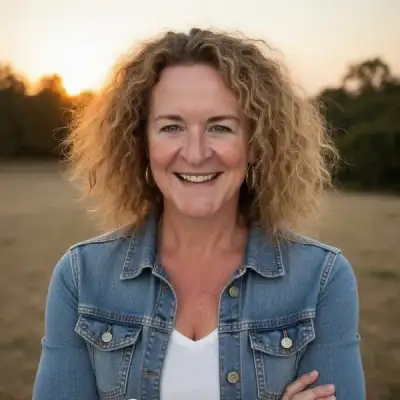
The Peri & Pause Podcast is for women in midlife who know something in their body has changed—but haven’t been given real answers, or have been left overwhelmed by conflicting information.
Hosted by Jamie Gallagher, DNP, FNP-C, MSCP, a nurse practitioner specializing in perimenopause and menopause care, the show explores hormones, metabolism, mental health, sleep, sex, weight changes, and chronic conditions through an evidence-based, deeply practical lens. We unpack the physiology of midlife alongside the lived experience of women navigating careers, relationships, finances, and identity during this transition.
Every woman deserves this conversation—and the clarity, language, and confidence to advocate for better care.
Because “Your Labs Are Normal” Is Not the Whole Story.
10 - Peri & Pause
===
Speaker: [00:00:00] Welcome back to Perimenopause the Podcast, where we help women connect the dots during perimenopause, menopause, and everything that comes with this stage of life. I'm Jamie Gallagher, board-certified family nurse practitioner, menopause specialist, and owner of Perimenopause the Menopause Center.
Today's episode is the first part of our Ask Us Anything series, where we're answering questions submitted by women just like you.
Nothing is off limits, hormones, sleep, anxiety, relationships, careers, weight changes, parenting teenagers, aging parents, all the things that make midlife, midlife. We love these episodes because they're driven by what you want to know, not just what we think you should hear. On this episode, we are answering a question from Tammy, and it might be similar to yours.
Tammy from a small rural town in the Midwest sent us this. "Medical post-menopause, one regret.
Total hysterectomy, bilateral salpingo-oophorectomy. My hormones and body are a wreck one and a half years after. I've tried progesterone pills and [00:01:00] creams. My body doesn't like the fake stuff, I guess., tried testosterone cream too. I felt defeated and just wanted so bad to feel like myself again.
I'm in a small rural town in the Midwest, not a lot of specialists or doctors to see in my area." Thank you so much for your question, Tammy. Your experience stood out to us, so we're gonna jump right into this series feet first with yours. And also, uh, just for our listeners, a bilateral salpingo-oophorectomy is the removal of your fallopian tubes and the ovaries, so everyone will know what we're talking about here.
So one of the first things I would wanna know, Tammy, is why your ovaries were removed. Was it for a benign, you know, or, or non-life-threatening conditions such as endometriosis, fibroids, ovarian cysts, or just a cr- you know, a chronic pelvic pain? Or was it because of a high-risk situation, like a genetic mutation that increased your risk of ovarian or breast cancer?
The reason that matters is because that helps determine both the risks and the treatment options after this surgery. So without knowing your [00:02:00] specific medical history, and because I'm not your clinician, this is just general education and not medical advice. If your ovaries were removed before you reached the natural age of menopause, meaning before you have gone, you know, 12 consecutive months without a, a menstrual cycle or a period, um, that is what results in surgical menopause.
We know from decades of research that the sudden and abrupt loss of ovarian hormones can have significant effects on the body. Women who undergo pre-menopausal bilateral salpingo-oophorectomy, or removal of the tubes and ovaries, um- may have an increased risk for cardiovascular disease, , osteoporosis and fractures, cognitive decline such as dementia, mood disorders like depression, um, sexual dysfunction, and just overall mortality, particularly if they do not receive hormone therapy when it's appropriate.
So if your ovaries were removed after natural menopause, the risks are generally smaller, but they're not zero. So even after menopause, the ovaries continue to produce small amounts of hormones that [00:03:00] contribute to our bone health, our heart health, brain health, and our sexual function. .. So removal of the ovaries after menopause can be associated with a slight increased risk of osteoporosis and fractures associated with that, heart disease, brain changes, and decreased libido and desire, uh, for sex.
If your ovaries were removed after natural menopause, the risks are still present, but generally smaller. They don't completely disappear. So even after menopause, the ovaries continue to produce a small amount of hormones that contribute to our bone health, heart health, brain health, sexual function.
So removal of these after menopause, even though it, it's less, it's still present. So At the same time, removing the ovaries significantly reduces the risk of ovarian cancer, which is why it may be recommended in certain situations. Uh, um, there was one landmark study that also showed faster accumulation of multiple chronic conditions after early ovary removal, and importantly, several of those risks appear to be reduced in women who use estrogen therapy.
[00:04:00] So what stood out to me in your post, Tammy, is that you're only a year and a half out from surgery and feel like your body and your hormones are an absolute wreck. I would not assume that this is something you just have to accept. Many women do struggle after surgical menopause, especially if the transition was abrupt and they have not found the right treatment approach.
So you mentioned, uh, trying progesterone and testosterone, but you did not mention estrogen. For women who have undergone ovary removal before their natural menopause and who don't have a contraindication, estrogen therapy is a very important consideration because it can help address these symptoms and may reduce some of the long-term health risks that are associated with early estrogen deprivation.
So most importantly, don't give up. There may be still options available to help you feel better. If access to specialists is limited in your area, you can consider seeking care from a menopause-trained clinician through a telehealth platform. Many women are able to access specialized care in this way, even when they live in rural communities.[00:05:00]
Also, you can find clinicians with a special interest in menopause by going to the Menopause Society's website. It's menopause.org. There's an area there where you will click, uh, " Find a Health Care Practitioner" on the top bar. You'll enter your zip code. Look closely at their site and profiles to see who you feel best matches the care you're looking for.
So one and a half years later is not too late to improve your quality of life and feel more like yourself again, for sure.
. I hope this information helps, Tammy. So thanks for your question. Thank you for watching, listening, sharing, and being a part of this movement. We're just getting started.
On this episode, we are answering a question from Tammy, and it might be similar to yours. [00:06:00]