Subscribe
Share
Share
Embed

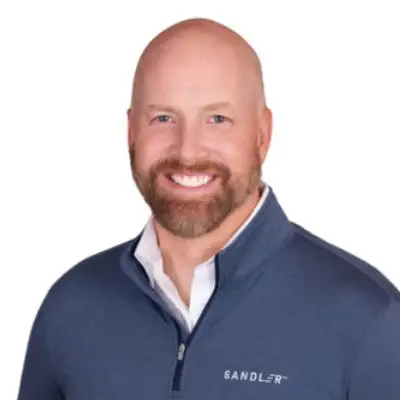
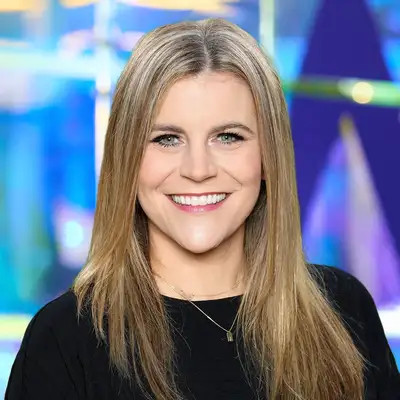

HVAC Full Blast is your bi-weekly dose of HVAC business growth, powered by Trane. Hosted by Mary Carter (Trane Technologies) and Stephen Ross (Sandler), this podcast is built for residential HVAC dealers who want to scale their business, sharpen their sales, and lead with confidence.
Tune in for expert interviews, dealer success stories, and practical tips on pricing, service agreements, workforce development, and more. Whether you're in the field or in the office, HVAC Full Blast helps you stay ahead in a competitive market.
Interested in becoming a Trane Dealer? Visit our website at https://partners.trane.com/
We'd love your feedback and suggestions on future episodes. Please email us at hvac_full_blast@tranetechnologies.com.
This podcast channel is for general informational purposes only. The views and opinions expressed in these episodes are those of the panelists and do not necessarily reflect the official policy or position of Trane Technologies. Trane Technologies makes no warranty or guarantee concerning accuracy or completeness of the content presented in this webinar.
Trane does not provide tax, legal, or accounting advice. This material is for informational purposes only and it should not be relied on for tax, legal, or accounting advice. Tax law is subject to continual change. All decisions are your responsibility and you should consult your own tax, legal, and accounting advisors. Trane disclaims any responsibility for actions taken on the material presented.
All trademarks referenced are the trademarks of their respective owners. ©2025 Trane. All Rights Reserved.
Today, Mary, Stephen, and special guest Samantha Coats break down how mindset, coaching, and consistency drive real performance and how you can take your game to the next level. They discuss how great salespeople aren't born, they're built through fundamentals. Let's get started.
Welcome back to HVAC Full Blast. I'm your host, Mary Carter.
I'm Stephen Ross.
And we have a very special guest today. I'm sure my voice to many people just listening to this was like, wow, that got really high, but that just tells you how excited I am to talk to Samantha Coats. Samantha, welcome to the podcast.
Hey y'all, thanks for having me. Really excited to be here.
Definitely. We kind of have a battle between friends of the show on the podcast and are you Stephen's friend or are you my friend? And I think in this case, it's like it's split tie.
Although you two work It's such a combo here.
This one, I couldn't pick one over the other. However, I've been waiting on this opportunity, all these podcasts, and I'm like, what am I over here? Like, I have not been asked to be on the podcast yet, so y'all have no idea what an honor this is for me today.
So exciting.
Just so you know, I were you and I had to pick who to be friends with, I would also pick Mary Carter.
So just go with that recommendation.
Yeah, she seems like more of a friend.
If we had a sound machine right here, I would hit like a money sign chain, but, you know, we're working on it. We're working on it for the future.
Awesome. So Samantha, tell us a little bit about your background here because you've had similar to myself, like a little bit of a different weave into sales positions and we would just love to learn more about you.
Yes. Okay. So I'm gonna take it way back to my days playing softball. So I was the player for a long time, many, many, many years.
So I learned as the player all the things to do wrong. I learned the things to do right. And so after years of that, the repetition, I pretty much perfected don't do these things while I was playing softball. And then at some point in my life, I got the opportunity to coach high school varsity softball.
So then I became the coach. So I just took all the things that I learned as a player and I used that in coaching.
So then, gosh, I did that for seven years and then came into HVAC ten years ago and I started in account management. And so the way I look at that is, again, I was the player.
So now I'm figuring all this stuff out. Like, I'm figuring out what's right, what's wrong, best practices, what to never do again. I'm listening to other people. So I was the player again for a really long time.
And then four years ago, had the opportunity to become the sales excellence leader. So now I'm back to coaching, which is my passion. I'm back to developing account managers and territory managers. And again, using all the stuff from my time as the player, account manager, territory manager.
And so that to me is what has really driven me the last four years. We talk a lot in training about a mission and a vision.
And so for me, my mission has always been to make a positive impact on somebody's life every single day. And so through all the work that I've been able to do over the last, I mean, my entire career, I've been able to do that. And so as long as I'm doing that, as long as I can make an impact and I'm coaching and I'm teaching, then that's what's important to me. That's why I wake up every day. That's what I'm passionate about. So there's my life in like, I don't know, two minutes.
Well, let's let's back up to coach. Like, what alright. So you're playing sports. Youth I feel like we should dedicate some time to just youth sports in America in general.
Mary now Mary was a dancer so I'm kind of I had a brief stint in softball actually.
So did a little softball but we moved from Connecticut to New York and the Connecticut team was fun and I was there for the orange slices and the Capri Suns. And when we moved to New York, was like, oh, you really gotta like participate in that. And then I was like, I don't know.
Yeah. Like you actually have to know how to catch and grow and hit and all this Yeah.
Was like, oh, it's more than just snacks. Surprise. So, but but I will say, even though, yes, my primary sport did turn into dance, we did compete as a school. There was this element of a team coach. So, I definitely relatable in in different ways. Stephen, I don't know if you've ever shared your formidable endeavors in the sports.
Formidable. Formidable. That's the word. Yeah.
I grew up in England actually. So I started playing soccer when I could walk.
And then we moved my parents are from Pennsylvania. So we moved over there because my dad was getting his PhD. And then when I moved back, I ended up being pretty fortunate in that just my little neighborhood, my little YMCA team in elementary school, I played with those same kids all the way through middle school and high school, and we had a pretty diverse team. We had several kids from South America. We had several kids from Eastern Europe. So we had a kind of like a little international, little flavored soccer team in the middle of South Carolina, and we were actually really good.
So most of my sports career was soccer. The other reason that it was soccer is that my dad was a really good basketball player. He played college basketball.
And and so anytime I played basketball, my dad would tell me what I was what I was doing wrong. And with soccer, he didn't know what I was doing wrong. So I gravitated more towards soccer just from that standpoint. So there's my amazing career.
I'll relate that to sales for two seconds, which is my first job where we had Sandler training. They gave me this personality profile. And what they were looking for was they wanted to know how competitive you were. And, like, I'm high school athlete competitive.
I'm not d one college athlete competitive. Right? Like, don't get in bar fights over darts or pool or something. Right?
I'm just not that competitive. And so I didn't score very highly on that. And then they also said how money motivated are you? And I like money, and I got bills, and I got kids, and the kids are expensive, so I need the money.
But I'm not super money motivated. So when I first took that test, Mary, and it came back, and they're like, Stephen's not gonna be very good in sales. They fired me. So I'm the only person I know that's ever failed a personality test.
So there you go. My sports background was not good enough. Wow.
Okay. I do have a question about this soccer thing. Alright. So are there dumb questions on this podcast or do we play by the there are no dumb questions rule?
Yeah, I think there's another podcast that has that like kind of marked. But yeah, we've subscribed to that rule for sure. For those out there, if you know, you know.
All right. So Stephen, you say soccer. Is this like American soccer or is this football? Or what are we talking here? Like, is this like soccer ball like you're kicking or are you throwing a football type soccer?
Yeah. No. This is this is I mean, I grew up in England. So they call it football over there, but it is soccer for sure.
Okay. All right. So it's American soccer. Just wanna clear that up.
Yep.
Well, and I need to know if your YMCA team was sponsored by a heating and air company.
Oh, with side note. So I worked for a heating and air company a few years ago and we were decent. I mean, we were we were pretty decent sized heating and air company in our market. We were about thirty five million dollars a year in total revenue. And I would say about a third of that was residential. And so every time I would do something in terms of a marketing budget, all of my competitors would do it as well.
And so I was trying to come up with ways that I could what could I market that I could get exclusivity on where none of my competitors could show up? And so I went down to the local YMCA, and I I scheduled a meeting, and I went go talk to the lady, and she gives me like the outline of like, here's what you, you know, you can sponsor a team for three hundred bucks and your logo goes on all the jerseys and we'll put the little sign in the outfield for your home team wherever they play And and there's maybe one other thing I could spend money on. Like, so I got a banner or something. And so I just sat there. I was like, alright. So for this one team, three hundred bucks gets the jerseys, another hundred bucks gets a sign in the outfield, and another hundred bucks gets a banner somewhere else. She's like, yes.
And I was like, well, how many how many teams are there? And so she came up with a number of teams because there's, like, six YMCAs in the area. And I said, how many sports are there? She's like, well, there's soccer, there's flag football, and there's basketball.
And there's and so I just sat there with my phone and added it all up. I'm like, so if I buy them all, it's thirty six thousand dollars. Does that sound right to you? And she was like, what?
I was like, can I pay that monthly, like three thousand dollars a month to just buy them all? And I did. And that was hands down the best marketing I've ever done because no other competitor could get in there. And if you think about your target demographic for residential HVAC, people with kids is solidly in that demographic.
Right? And so I that's I man, that's the way to go. In my opinion, if you can get into sponsoring youth sports, but you gotta go big and you gotta lock it down. You gotta do it for multi year and multi sports and, like, you know, one little sign in an outfield doesn't do anything.
But if you buy all the signs, then it it's effective. So they Yeah.
Tapping into our one of our favorite principles of frequency and reach. Right?
So Absolutely.
And you just monopolized the whole deal of the sponsorship program.
I would say for almost every heating and air company that listens to our podcast, they probably all at least have a marketing budget of thirty six thousand dollars and could do the same thing. And it is as good as anything else I did other than maybe Search Kings. So I would say put that on your radar if you're an HVAC company.
Love it.
Mary, have you used your dance background for any sort of marketing type campaign?
Yes. And it's a really strange story, but to make it short, when I was first hired by a company that I sold power tools for, they were like, biggest selling show is going to be in Las Vegas on St. Patrick's Day. And if we hire her, she can be the booth talent.
And I danced in our trade show booth and I signed autographs for little kids that came by wore Princess Tiara and my Irish dance getup. And I'm pretty sure that's how I got back into a career with, you know, full time happy corporate benefits just with my dance talent. So yeah, you just gotta put yourself out there. You gotta use what you got.
Use what you got. Yeah, it was bizarre and I loved every minute of it.
Fun for everyone out there. But let's bring it back around. So we've got youth sports as sort of like this introduction to being a player and in an environment where we're learning new things and having to navigate what that's like. And I like what you said, Samantha, about how, you know, you're learning everything not to do.
Right. And I think lots of seasoned professionals can kind of relate to that when you think about the things I do well, the things I wouldn't do again, sometimes that wouldn't do again list gets pretty long. However, you do learn a lot from those or potentially you can learn, right? Maybe speaking to that part of your experience.
Yeah, I think there's so much to learn. So the way I was, even as a kid, I wanted to be perfect.
So for me, fundamentals were my jam. Like I was all in. My coaches were they were teaching certain things and I was all into the fundamentals. I wanted to be perfect.
I wanted the mechanics to look right. I wanted to make sure when I threw the softball that it was perfect. I wanted to make sure when I bunted that everything looked good. So to me, and I've carried that because I'm also super competitive and I want to be the best and I want to do all the things right.
And I know every time I fail, I'm going to learn something and I'm going to do it differently the next time. So that was sports, that was school, that was everything that I've ever been a part of. But really being passionate about the foundational things, I think that's really important even for now, our dealers, for our account managers and territory managers. Like we all have to be really good at those foundational things and then we can build and grow on that.
And I did the same thing when I was coaching. Even high school sports, I went back to the fundamentals. I'm like, hey, y'all, we got to we have to do these things really, really well. And that repetitiveness if we want to be great, if we want to be experts in our field.
We have to do the fundamentals the right way. So I was really passionate about that part, probably especially as a younger athlete.
And I'll tell you competitiveness wise, like I don't know that there's a lot of people that are more competitive than me to the point where I have a nine year old and we race literally up the stairs every time we go. And I do not let her win. Like, she's not going to win. We have UNO tournaments and I just refuse to let my kid as she does beat me sometimes, but I don't just let her win because I'm competitive. I don't care if you're nine or if you're twenty nine, like I'm gonna win. I'm gonna do everything I can to win.
I love that.
So how does that play out? I mean, in sales, right? I mean, I was competitive enough that like at the end of the game, if somebody's gotta take a shot, I want the ball. Like, and I, you know, if I'm not the best player, maybe I'm gonna give the ball up.
But I my degree of self confidence is pretty high. So that that brings on that competitiveness. But let's say, Samantha, it's the end of q one. You're behind on your numbers.
How does that psychology impact you as a sales rep? Like that competitiveness of man, wanna hit my numbers. Like what are you saying to yourself?
How's your behavior changing? What happens there?
Yeah, I think you have to go back to what strategy and plan did I put in place? Where did I start? And then along the way, maybe where did I go wrong? Or why am I failing in this specific area and what can I do to change that?
And so I think for our RSPs, for our selling techs, for our account managers, territory managers, we all have to have a plan and we have to have a goal and we have to track it. And we're not always going to be on target. But what we can do is we can go back and we can figure out, okay, where are we missing the mark? And then how do we get better?
Like, how can I be better tomorrow than I am right now today? How am I what what changes am I gonna make? Specific changes am I gonna make? Because I've gotta hit this target because that's what I said I was gonna do.
That's what my manager said I had to do. This is how I'm going to make my money. So what am I going to change? But it goes back to, do you have a strategy and a plan to begin with?
And if not, then maybe that's where we need to start is let's make sure the strategy and the plan that we have is the right thing. Like that's the way, those are the right behaviors to win in the first place.
Right. I have another similar analogy to this, but it is a little strange, but I'm learning to race sailboats competitively, is so fun and so different than anything I've ever done before. And all of these things that you're saying as you're talking, hopefully our listeners are kind of going through that in their mind too of like, what's something that you're learning or doing? And then, and maybe some of this is clicking, but when you're talking about the fundamentals, right?
Like I know the basics of, you know, how I need the settings to be for the trim to be right, to get the most out of the angle so that we can like really send it. But there are still those little things that I'm constantly trying to build off of those fundamentals. And what I'm trying as also a perfectionist, sometimes I can get myself a little bit wrapped around the axle when I don't get it all right. So I'm really trying to eat this elephant one bite at a time because there is so much to what is happening with this geometry around you with the wind and the water and the boats and the waves and the current.
And I'm trying so hard to just hone in like, and say, okay, tonight I want to make sure that I build off of this maneuver so that steps one and two, I don't even have to think about, but by the time I get to three, I'm doing it right.
And I think there's there's an element, you know, there's so much of an in there that's fundamental that I'm not even thinking about. And then there's sort like the mastery of what I'm trying to do.
And if you give yourself the permission to learn that and keep drilling it and do it well, than get discouraged and just say, I don't know why this isn't working, which believe me, I've spent two seasons doing that. So like here in season three, I'm like, okay, I'm really gonna learn this thing.
It's it's it's intense, but it's also so rewarding then when you like hit that tack just right and everything just goes, you're just like, you feel so powerful. And I think it's very similar to sell selling as well, sailing and sales. Well, good job, Mary, but nicely done. Think it's very similar in terms of the motivation you get when you do it well.
I don't know, maybe that's sort of the secret sauce in there. So much of this really is just building on the fundamentals, but the fundamentals are key.
It's key. Yeah, I totally agree with that. And I think that happens a lot. Sometimes we feel like we're veterans in our roles.
And even if we're new or we're a veteran, I think especially the veterans say, well, you know, I've got this. I've been doing this for ten years. I've been doing this for twenty years. And it could just be one small basic thing.
Like, maybe you're not asking the right questions or maybe you don't have a great upfront contract. It could be just a tiny, basic foundational piece that could really make a huge difference. And so I think that it's really important for as we're coaching our sales field and our dealers that we really talk about, Okay, do we really understand the basics here? Are we all on the same page on the fundamentals, the one hundred one stuff?
Because if we're not, if just a couple of those are off, think about if I'm throwing a softball and one thing is off, well, it's not gonna go the direction that I want it to go. And I don't think that's any different in sales.
So, all right, here's the question. So I took this personality test that I failed.
One of the things I learned through that process was, I'm competitive, but I'm not super competitive. And I like money, but I'm not super money motivated. And so what I had to do was learn, well, what is my motivation? What's the best way for me to get motivated? And it really is helping people. So one of the things my Sandler coach had to kind of talk me through was that when I'm going on a sales call, I'm going to somebody's house.
I had competitors that were, let's say unethical. They might rip the customer off, Or I had competitors that maybe weren't that good. Like they just didn't know what they were doing and the installs weren't good. And like just, customers would have long term problems because the install was never right in the first place.
And so my Sandler coach had to kind of pound into my head, hey, you have to go win this job because if you don't, you can't help them. And if you can't help them, they might they run the risk. Now I had good competitors too that were ethical and competent and so on, but the risk was if I know my company will do a good job with them, what I don't know is if they go with someone else, will that company do a good job for them? And so he helped me kind of reframe in my head how I looked at sales calls.
I gotta get my closing ratio up. I gotta get my average ticket up because that's how I'm really gonna help people.
And it was interesting then, like once I understood that, like if I worked at a company where the owner of the company might say, hey, there's ten salespeople and we're having a contest this month. And the sales guy that sells the most wins five hundred bucks for something. Well, that doesn't motivate me because I'm not super competitive. So a five hundred dollars prize, I'm like, whatever.
And then same thing, like the competition doesn't motivate me. The five hundred dollars doesn't motivate me. But if that business owner said, Hey, Stephen, we're gonna line up twenty five customers for you to see this month. Like we really need you to help them all because those people are gonna get screwed if you don't do a good job.
I would then I'm motivated, right? So Samantha, you're competitive. Yep. And the challenge is like Michael Jordan, great basketball player.
Michael Jordan, not a great basketball coach because he's so wired that he can't relate to people that aren't wired the way he is.
So how do you relate?
I frame everything as helping customers, that doesn't necessarily motivate people who are money motivated, who are competitive. You're competitive. How do you reframe it for the salespeople that you coach or what kind of buttons do you try to push?
Yeah. So I'm competitive, but I also need to make an impact. Like, that's how I feel fulfilled every single day. When I was an account manager, I could go out and I could sell this big job and great, pat myself on the back.
But if I had a coworker that called me and needed advice or wanted help with something to be able to help them and see that person succeed, like that to me was what drove me. That was what impacted me more than getting a big sale myself. And so I think we have to understand, and I think the DiSC profile does a lot of that for us too. So we have to understand who are we?
What types of people are we dealing with? We're going to have in a group, if we're training a group of thirty people, we're going to have fifteen to twenty completely different personalities. And so I think just being able to talk to the people that are money motivated and the people that just want to help. I that can be done.
You just have to recognize that not everybody is motivated by money. Something where I think in sales for the most part, there's a competitive nature about us in some way. So it wasn't money for you, Stephen, but it was, okay, I know that I've impacted that family and I've done the right thing for them and that makes me feel good. And Mary's probably something different.
And I think that's how we train people is we're not all going to be motivated the same way. We all have different personalities.
We have to talk to people differently based on that. Mary, what motivates you?
Oh, I'm a money.
I'm a money. My Zodiac is the cancer crab and that is a money sign through and through. And it's so funny even growing up, I mean, I wanted to work so badly. I did not understand what the school thing was doing in the middle of my day when there was so much potential to be out there making money. And I had a babysitting empire and worked at a dry cleaners and eventually worked at Starbucks.
Even in college, I had three jobs in college and someone at school had even said, know, are you a student here? I was like, yes, amazingly. But it was, I just, I wanna work. I wanna make money.
I think money provides this incredible security and freedom to just do things and try things that I want to do. And as a result, you know, I'm pretty adventurous. So try to put it to good use to like, you know, be a good person. But yeah, I'm super motivated by money.
Can't lie.
Samantha, one of our one of our earliest I mean, Mary was running this is right when we were starting the podcast. So Mary was like a minute or too late. So I'm texting her to give her some crap. And I'm like, where are you? And she's like, I'm busy making money.
It's important. I can remember back to when was well, when I was a player first and when I was coaching. So as a player, when I was playing softball, if I made a mistake or I wasn't having a good game or whatever was going on, my coach knew that I was so **** ** myself. She didn't need to say a whole lot to me because I was already coaching myself in my head.
And then I can remember as a coach recognizing those same players. I can think of them right now just right off the top of my head, the ones that were that were so passionate and wanted to be better every single day. If they made an error, they made a mistake. Like I didn't need to go and coach them up.
That's not what they needed from me. They needed a little bit of love for me at the end of the day. And so I think it's really important to recognize like how are we coaching to different styles?
And because we have all different types of people that we're working with and maybe it's even in friendships, even outside of work, like how are we handling just people in general? Because we're not like we all need things a little bit differently.
That's actually something I learned about myself recently was I actually really need positive reinforcement now and then, because I do tend to follow that mindset of like, I kind of know what to do. Like, all right, like I have the fundamentals down and I generally know my path in my organization, but without that reflective positive feedback, sometimes I can just kinda go off and then I get a little disconnected from the bigger team and it is a nice connection. And I think it is a good reminder too, if you are working with high performers, like it's all, even though they might be motivated by money like I am, they also like hearing you're doing a good job.
I think we kind of forget that sometimes.
I totally agree.
Can I give you an example of that?
I'm with you on this, Mary, like I have always said to people, like, I don't need your positive reinforcement. And I've got a coach at the gym and like, he's a great guy. And so when he's trying to coach me, I have him yell at me. I'm like, tell me I'm old, tell me I'm slow, tell me I'm fat.
Like, you know, that's what that'll so, but I've switched gyms and because I'm trying something a little different. And so I'm actually going and working out with some dudes that are absolutely like, ex football players. They're super ripped. And I know if you're watching our podcast on YouTube, your assumption is that from the neck down, I probably am also super ripped.
But Absolutely.
But I'm not. And so but here's the crazy thing. So I'm in there and I'm working out with these guys and I've got my little twenty five pound dumbbells. Right? And I'm going at it and it's hard for me because this isn't something I've really done serious weightlifting in probably thirty years. So like, I'm getting back into habits that I had a long, long time ago, and I'm way out of shape.
And these other guys, they're literally using sixty five, seventy five pound dumbbells to do what I'm doing with twenty five pound dumbbells, right?
And what the interesting thing is, is that they're so excited for me to use those twenty five pound dumbbells, because last week I was using twenty pound dumbbells. And so like they're celebrating my trajectory more than like the amount of weight that I'm moving. They're like, dude, you're up five pounds in one week. That's phenomenal.
And like, and they're also like these super masculine macho guys. And I don't necessarily associate positive reinforcement with that personality type. So it's a really interesting culture at this gym, but I am loving it. I'm like, I was never a positive reinforcement guy.
I don't need you to tell me I'm doing good. I know I'm doing good, like shut up. But now I'm like, oh please, somebody tell me I'm doing a good job because I'm struggling to do something that I'm not good at. And so that's where I really need the positive reinforcement for sure.
Well, and if we're talking Sandler here, identity versus role, like if you think you're slow and fat and all those things, then that's probably what you're gonna be. So you need those people to be kind of talking you up and pumping you up because we don't want you to be slow and fat. The old part, we can't help. The rest of it, we can help.
I love that. We can't help that. I can totally relate. It's a really good feeling when you get that reinforcement, that encouragement.
It's okay here in the twenty twenty six to accept positive reinforcement. I think there's also this veil of like, we're all really cool. We don't need it. I'm okay without it.
And it's like, don't be cool, take it.
Yeah. Give it to me. You know, like we all need a little bit of that. We all need to feel good sometimes.
All right, got two questions for you. I'll give them to you one at a time. Let's talk about pre Madonna's. So, coaching sports, you've got one player that is clearly better than everybody else on the team.
And that's true. And I don't care what league, I don't care what team, it could be third grade, YMCA, whatever. There's gonna be one kid that's just better than everybody else. Right?
And so, sometimes those kids are humble, but most of the time they're not. And and that's even more true when you get to college teams and pro teams and, you know, the egos come along with that. And I would say that's true in sales. So, you know, your mediocre sales guys maybe sometimes are a little bit more open to coaching than say your rockstar sales guy who says, I'm good.
I don't need a coach. I don't need any help. So, Samantha, what's your strategy for coaching divas? I mean, it's like, do you, how do you handle the egos?
How do you handle that when you're the coach, you're the sales excellence leader, you're the sales trainer, or you're their boss or whatever that scenario is.
And rockstars, I mean, the crazy part about it is that they have the potential that if they would accept the coaching could probably get results that far exceed what the average person could get with the coaching.
Sometimes they're resistant to the coaching because they're like, no, no, I got the talent. I don't need the coaching. So what's your strategy for dealing with a diva?
Yeah, so this is pretty constant. This is in probably in every training class I've ever been a part of. And again, I'm gonna bring Sandler into this a little bit. So the pendulum is an amazing thing when it comes to these types of people, because what I'm not going to do is chase somebody down and beat them over the head and try to make them want to be better.
But what I will do is tell them, hey, if you're good where you are, you don't wanna be better, you don't wanna make any more money, totally fine. That is okay with me. I'm gonna go spend my time with the mediocre folks that want to be better. And I'm going to get them so much better than you that it's going to be craziness.
And then, I mean, that's kind of how I would handle it. Like, you're going to think about this when, you know, we'll just say TM or AMA is surpassing this diva that thought they didn't need any coaching. That to me is the best way to handle those because you can't make people want to be any different than they are today. You just can't.
And I think it's a waste of our time and energy to spend there.
So I'm okay with that. And I'm okay saying, hey, if you're good just where you are now, you don't want to be better, you don't want to make any additional money, you're fine, then cool. I'm going to go and I'm going to go make these people so much better and we are going to just run right past you.
That is my favorite selling technique of all time. Is my favorite, fine, take it off the table. No problem. I'm not for everybody. Like, oh, I just, I learned that long ago selling gym memberships actually. And awesome, awesome tactic. Love that.
What about alright. So here's scenario two, number two. So in the case of a diva, if they don't wanna get better, I agree for the most part, hey, fine. Except that they still have to play by the rules.
So they still have to do what they're supposed to do. And, like so sometimes there's we would separate maybe out supervision from coaching. Like, if I'm your supervisor, I still have to hold you accountable for what you're accountable for regardless of whether you're talented or not. What about somebody I mean, here's something that I ran into a lot more often than I thought I would, which is somebody who's just kinda average at their job.
And but they've been doing it that way for fifteen, twenty, ten years, however long they've been doing it. And so they come to work for me and I'm like, hey, we're we do things a little different way here. Here's how we're gonna do it moving forward. And they're like, nope.
I'm good just doing it the way I'm doing it. And I'm like, dude, you're making fifty five thousand dollars a year. Like, you're good with that? And some people are just like, well, you're not gonna tell me how to do my job.
I've been doing it for ten years. So in that case, I have to get that employee's performance up or they can't work for me. Like they're holding a seat or a spot and I got overhead or resources or advertising dollars tied up or something. And I need a bigger ROI on my investment than they're bringing in.
And I've either gotta coach them up or coach them out. I mean, those are the two things, right? I mean, how do you do you try to motivate somebody in that case that maybe is comfortable?
Yeah, I think a lot of times those people that we feel like are comfortable are really not confident at all in what they're doing. They say the things, they say they're good, they say this is what they want to do. But in actuality, they don't believe that they can do anything else. They're not confident in themselves enough to grow. And so I think if we can find things that they're really good at and hone in on those and get them to really buy into the fact that like, okay, like I am pretty good at that. And a lot of times for those people, if you put them in leadership type, like you're going to teach this to your peers or you're going to do this or you're going to do that and put them in some sort of a leadership capacity, even without the title. I think sometimes we can and that's not every time, but sometimes we can break through that barrier a little bit.
But for me, I think it's just a lack of confidence and them not believing in themselves.
Comfortable, not confident. That's what I wrote down from that.
I have four daughters and they would all agree that insecure men are really probably the bane of their existence.
So that probably holds true in sales as well.
And there's a lot of them and men don't want to admit that they're not confident in what they're doing or they're struggling. They just don't typically want to admit those things. I don't think anybody does.
Yeah, is hard. If you're forty years old and you've been doing a job the same way for fifteen years to say, I'm not really that good at it, it's a bruised ego for sure.
And so sometimes it is easier to turn down the coaching than it is to admit that maybe you could have been doing things better.
Yeah.
Alright.
I got I got one last question for you, Samantha.
So the last few years, you've worked to train as sales excellence leader, and you've recently come over to the Sandler team to basically have a very similar role, but just helping us kind of catch up and meet the needs of our clients in the Trane network.
What do you think the next How do you plan on using your competitiveness and your sales coaching? And what do you think the next twelve months looks like?
Yeah, I'm really excited. So I still will get to do a lot of the things that I love to do. But for me, the next twelve months is going to be really determining, all right, of our dealer base, our customer base, who's really in who wants to jump in with us and grow and make their customers better, their sales team better. And those are the people that I want to be able to work with and be a part of that journey with them.
I think because I've seen Sandler for so long and I've seen the people that implement it the right way, I've seen how successful they are. It's really exciting to be a part of that from this side. I got to see it on the train side. I got to see account managers who implemented all the things that you were teaching, Stephen.
I got to see those people in the top ten on the DSO side and on the IWD side. And so I know that know that Sandler works and I believe in it. And so that's what I'm going to do is I want I want other people, the people that haven't tapped into it yet, to understand the impact that it can have on their distributorship or for their customers or their DSO, for their sales team. So that's really what I'm going to focus in on the next twelve months is I want everybody to win.
So let's do it together. Let's all win together.
I have a question, but this is gonna be the most like Mary, how does your brain work situation? So you mentioned that you coached high school varsity softball and high school. And then I was thinking about my own high school and I was so cool in high school because I took Latin and American sign language as my foreign languages. And in Latin, we learned this phrase.
There's a lot of like famous Latin phrases that you learn, but it's a qui custodia ipsos custodias and it translates to who guards the guards or who watches the watchers. But I'm curious who coaches the coaches when you're looking for coaching, especially as a sales coach now, and especially for our business owners that might be listening, where do you turn to? What are some of your resources when you're looking for coaching? So really weird tie in to a maybe a good question.
Oh, that's a great question. So for me, I have several mentors that I will typically go to for coaching, and one of them happens to be on this podcast.
Stephen has been a coach for me and not I mean, just even outside personally, professionally. So I would say Stephen is one of those for me. But I think it's also important to have people that you can go to that are outside of what you do every single day. And so I have those people too that can coach me up, not just, you know, HVAC related, but just life related too. And gosh, we all know there are a million podcasts and there's so many great things that we can We are right at our fingertips that we can just listen in on our walks or our drives or whatever works best for us.
About a year ago, I was getting frustrated in my own kind of health and fitness journey. And again, like I feel pretty confident that I know the fundamentals and yet somehow everything was just kind of slipping. And so I did enlist a coach and rather than just kind of like joining a program like I would've done in the past, I really wanted this coach to understand where I was in my career. I travel a lot.
I don't have conventional hours and coach me, but meet me where I'm at too. And was so, I am so pleasantly surprised at how we've been able to work a plan that works for my world, but also it's just totally rooted in the fundamentals. It's sleep, it's walk, it's good diet and then go hard days, but not as many go hard days as I used to think that I needed. Really just that steady cadence of like sleeping and constant movement is the fundamental piece.
But it's, I find it interesting too, that when I'm looking for a little bit more of a boost in an area, reaching out to any coach, that's an expert in that field can provide such clarity.
I would say at Sandler, we do drink our own Kool Aid. So in that sense, you know, my boss and I have a standing phone call every week, and it's at seven AM on Wednesday mornings. And it's not like it's not a one on one meeting like most people have with their boss. It's just a coaching session. I mean, he's he's coaching me to get me better and so on.
And so it's we we do kinda drink our own Kool Aid for sure. I will say I'll I'll weigh in on Samantha joining our team.
Here's what I'm excited about. I think going back to the high school sports analogy is that, you know, in my high school football team, they just took the best athlete on the team, and they made him the quarterback. And he wasn't necessarily a great quarterback. He just was the best athlete on the team.
And so, you know, by default, he's got the ball every play. And and then when he went on to play in college, he actually played a wide receiver. Because that's really probably the position that he was built for and athletically gifted for and incredible for. It's just on my high school team, we didn't have anybody good enough to throw him the ball.
So he had to play quarterback. You know? And I think, you know, the way my position at Sandler has been is that I've been heading up a lot of our HVAC stuff mostly because I kinda grew up at HVAC. I owned an HVAC company.
I was a Sandler client. And so to some extent, I've been the quarterback by default, but I'm not really a great quarterback. I'm a great wide receiver. And what I'm excited about is Samantha coming on our team because she doesn't work for me.
We both work and report for the same boss. So Samantha's coming on board to be the quarterback, and now I get to go play wide receiver. And I'm I'm probably as excited about Samantha joining our team as Samantha is because it's gonna be pretty cool to have a new quarterback on the team.
I'm gonna be throwing you the ball a lot, Stephen. I'm ready.
I have heard that I'm gonna be working more. I've heard that. So, yeah.
Well, as long as it's working to help people, right?
That's right. That's right. That's awesome. Well, I always love talking to you, Sam. It's just so fun to catch up and just learn more about you every single time.
Any other kind of like partying ideas or thoughts that you'd share with our listeners here? Excited to be in another elevated coaching role. It's very exciting for you.
Yeah, I'm really excited. So one thing that just came to mind, I am a Tar Heel born and bred like I believe Carolina Blue. But one quote that has always stuck out in my mind from Coach K, this is the only time you'll ever hear me say his name.
He said, if what you did yesterday looks big today, you haven't done much today.
And so that's been super impactful for me and I've shared that in training sessions. And so that might be impactful for somebody else just to give them a little bit of momentum to just keep moving forward. We've all done great things, but what are we going to do tomorrow? How are we going to be better tomorrow? How are we going to be better next week and next month?
Powerful. I love it.
Well, thank you so much for joining us today. It's been great to have some takeaways and to kind of drill back into our own fundamentals and bring up some old experiences. We're big fans of that. And hopefully our fans of the show are getting a lot out of this too.
We would love to hear from you. Our email address is h v a c underscore full underscore blast at train technologies dot com. Please feel free to send us along messages or ideas or guests that you'd like to hear on the podcast. We would love to take them.
And with that, Stephen, I think we're wrapping up just another inspirational today.
Thanks y'all. Was actually a blast. Oh.
Love that. Is that the first time anyone said that? I love it. Wow. Cue the outro. Talk to you next time. Bye.
Bye. Bye.