Subscribe
Share
Share
Embed
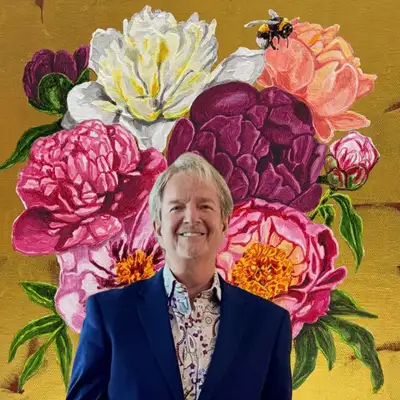
Whether through writing, broadcasting, or word-of-mouth, stories have always forged a connection between people and places. Nowhere else is this truer than in The South. Southern artist, influencer, speaker, and author Mark Ballard will weave stories of life in Macon, Georgia, and stories of the South. Tales told as only Mark can, will be interwoven with guest interviews and listener questions, and requests.
Creek Media (00:00.078)
Hi, I'm Mark Ballard. This is my Genuinely Southern podcast where I will share Southern stories and perspectives that show just how unique our South is. Growing up in the South gives people a little different perspective to life. I've always used the South to inspire me and my artwork, my writings, and even my food. I've been telling stories about the South for years.
In my newspaper articles, my magazines, I even had a television show. The South is more than a region to me. It's genuinely a way of life. That's why I'm excited to share these Southern stories with you and introduce you to interesting people. I'm proud to be genuinely Southern and I can't wait to tell you why. I was born and raised in Macon, Georgia. I was due at Thanksgiving, but waited until almost Christmas to pop out.
I mean I couldn't have chosen a more festive time of year to be born. Except I will have to admit that I got gypped on birthdayslash Christmas presents. You know, where they say it's a combo gift. I spent a little bit extra. Yeah, right. My mother didn't, however. She always made it special. I didn't have a red and green cake. I had some other color. It had a clowns and circus, because she did not want it to get intermingled with Christmas.
In fact, as I look it back at old pictures from back then, in the dark ages basically now, I will see pictures of me as a child growing up with the stamp at the bottom where it said the month and year, and my birthday was December nineteenth, and I would see on the picture at the bottom it said April nineteen sixty four or whatever. And I was thinking for why was that on April nineteen sixty four? And then it hit me that
Back in the dark ages, we had to take either 12 or 24 pictures on a camera. And mother would never get it developed until that whole thing was taken. So, you know, it was really a surprise every time you took your film in to be developed, you didn't know what was gonna be on there. Since it was at Christmas, my mother always had sweets around the house while I was born. And when she was feeding me during the middle of the night, she would have her a slice of Japanese fruitcake.
Creek Media (02:15.168)
I was literally getting almost intravenously sugar into my body even before I knew it. It's no wonder that I'm addicted to sugar today. I was raised in a family, a mother, a daddy, a sister, Denise, and me. We didn't have much money, but a whole lot of love. We never knew we didn't have much money because everyone in our neighborhood was in the same boat. We thought everyone wore hammy-downs and only ate out at a restaurant once a week.
I was raised in a Southern Baptist church that was only a few blocks away from where we lived. We were there literally every time the door was open. My daddy was chairman of the board of deacons, and my mother participated in anything that involved her kids in the church. Sunday mornings were always interesting because we had such a small house with one bathroom, we were all having to get ready. It was like a war was going on in our house while we were preparing to go to church.
We would get in the car, drive up there, still fighting in the back seat. I'd be don't touch me, Denise. Don't get your stuff on me. Stay over there. I mean, literally a fight was going on all the way the two blocks up there. And when we got to the church, Daddy said, We're here. All four doors would open. We would get out of the vehicle as if we were the best family you've ever seen. Because to my daddy, appearances meant everything. We didn't want anyone to know that we had any trouble getting ready in that tiny house.
We were perfect. I went to a public elementary school until fourth grade, and then we went to a private Christian school. I was always creative and enjoyed gardening and cooking. I learned so much from my grandmother about cooking and gardening. She made biscuits twice a day in an old wooden bowl where she would keep her flour all the time because she was always using it. She would use her arthritic hands to well out a little center part of the flower.
Get her a handful of lard. No recipe was involved. She just did it by what she got. Mixed in some buttermilk, kept working it all together, and of course the flour stayed around it, surrounded it, so it was like a little hunk of dough. Then she would do what she called choking off the biscuits before she put them into the pan to cook them. Since it was not an exact science of a recipe, it would be various biscuits. It didn't say makes 18 biscuits or whatever, it was whatever she just grabbed of lard and buttermilk and all.
Creek Media (04:35.746)
So sometimes she would get down to a little tiny piece of dough, and I was like, Granny, let me help. And I would make two little biscuits that we would put, like, you know, the size of a quarter, that we would put on the pan, and they cook like that, and then I wouldn't let anybody touch them because those were my biscuits. I also learned everything I know about planting from her. Granny rarely spent money on plants. She always got a little clipping or cutting from a friend. You know, it was so funny, she would wrap a little
Damp paper towel around it and slide it into a little bag and take it from wherever she was. And you know, back then, I guess it's still the way it is now, Granny would never say thank you because that would doom the plant living. So she would have a little back porch full of every kind of single pot, some of them broken, some of them not perfect, but every one of them contained some sort of living, beautiful flower that she had literally rooted from some other plant.
When she had some pie pans or other utensils that were old that she was gonna throw away, she was saving for my sister and me. So we could play in the dirt with them. We would make mud pies. She taught us how to do that. And she also taught us how to make real pies with crust and fruit and coconut and stuff like that. So we got a all-around good way of how to entertain yourself as a child growing up and learning something that I have taken with me into my mid-sixties.
One thing that sticks with me in particular is I love hot peppers. I love anything hot. I mean the hotter the better. If you start crying and start hiccuping, you know you've got it hot. Granny used to have these little pepper plants called red roosters or something. Little teeny tiny peppers. Just you know, really colorful like reds and yellows, all in one but it's almost like a flower you would plant just for that reason. In fact, as I grew older and to go to some of these
really fancy nurseries, they will have like as a border in some sort of, you know, arrangement or something. But Granny always swore to me that you had to be mad when you planted because if you didn't they wouldn't be hot. So I to this day still think whoever when I get something so hot I cannot catch off with, I'm thinking somebody was really mad when they planted that. Being creative, we put on plays at church and sang, we did little sweetheart banquets.
Creek Media (06:55.274)
I always was the one that they called in to do the backdrops at school for the run throughs, the backdrops at church for the sweetheart banquet, or I would do a big heart where, you know, money was tight, so we just had to take tissue paper, water up and put it pi pieced together to it looked like it was a blooming heart, but it was really watered up tissue paper. I used to hate going to the church to try to get money from the lady that offered the money that the church would give.
Even if it was like $5, I was scared to death because, you know, she wouldn't even give it to us. And so my mother, even though we didn't have any more money than that, always said, I'll just get the crepe paper you won't work, and that amount of money's not gonna make me or break me. As a child growing up, I really didn't understand money, except I was scared of that lady that had to give it to us at the church. But I did love Pickley Wiggly, that was where we grocery shopped because they
would give you money back, I thought as a child. Really, mother would write the check for maybe ten dollars more and they would give her money back. So anytime we had something happen in the house, like the we needed a new tire or the dishwasher wouldn't work or something happened. I would just say, Mother, just go to Pickley Wiggie, they'll give you money to pay for whatever you needed. Little did I know that that was coming from her checking account. But as I grew up I quickly learned about money and how fast it goes.
Mother wanted me and my sister to be involved with just about everything. She wanted us to take piano lessons. She wanted us to get involved with other children. She wanted my sister to be a brownie. She wanted me to be a Cub Scout. All these things that kept us entertained and fitting in with the crowd and with people our age. I was a Cub Scout, well, at l at least for two weeks. It wasn't my thing, I'll tell you that, from the first day I went. First of all
You had to go to school the day of Cub Scouts, it was after school, in your that little outfit that was navy. I think I burned mine, but it was navy pants, navy shirt. You had like a gold colored scarf, like a little thing that held it together. I guess it was a bear or a cub or something that held it together. And you had to wear that the whole day because you had to be in it when you went afterwards to the Cub Scout.
Creek Media (09:11.798)
The first day we were there we were learning about history and she wanted all of us to bring one of those coffee tins and she had construction paper and various things for us to do a craft project. We were gonna make a drum and I thought, ooh, maybe I have misjudged this Cub Scout thing. We're doing arts and crafts. So I could not wait. I had the best drum in the den, no doubt about it. I went home and I thought this is okay. The next week was about exercise.
And we were supposed to learn how to tumble. Tumble meaning head over feet in the grass in that navy outfit. I mean, I thought Mark is not gonna tumble. I enjoy the drum situation, I enjoy the arts and crafts, but I'm not gonna get whatever star y'all give for the tumble and I'm just not gonna do it. I befriended the den mother and I said, you know, just put down, I've always been a negotiator, just put down that I tumbled. Who's gonna know?
And she said, okay. I had her convinced until her son came up and said, Mama, he did not tumble. And I said, well, if you get right down to it, you didn't make a drum last week, but I didn't say anything. I decided, you know, we were taking our drum home that afternoon. And back then, you could walk everywhere. I could walk to church, I could walk to school, I could walk home from the Cub Scout meeting.
everywhere so I just had my little drum from the week before we she returned them to us and I was taking it had my book bag and off I start on my probably mile little trip back home. Well about halfway there it started misting and I thought my gosh you know what is happening. I couldn't worry about it too long because a black Doberman pincher came out of nowhere, bit me in the behind, tearing into my suit
Hurled me into the street, into the gutter. I felt like I was learning the tumbling thing a little bit too late. All you can see was navy gold, navy gold, navy gold as I tumbled down the street. My drum went one place, my scarf went another, and I just was laying there with a bleeding behind, thinking, I'm gonna take this as a perfect sign from God to get out of Cub Scouts. So I just was sniveling and
Creek Media (11:28.76)
Crying all the way home, my drum was ruined. You know how rain is not kind to construction paper. It was running everywhere. My outfit was messed up. I was trying to hide if it was showing my behind. And I went home and my mother was not there, but my aunt was there. And mother was doing something at the church. They were having some kind of dinner that night. So she was not there and I was, well, didn't I went? Where's my mother? And she said she's at the church. So I didn't even want to talk to her about it.
I went straight into my bedroom, which at that time was so small that I had a double bed in there and a little desk, and you literally didn't do anything in that bedroom was hop into the bed or hop at the desk. There was no room to do anything, so I just threw myself down face down on the bed, put my drum beside me and just was crying into a pillow. Mother came home a little later and my aunt said, Joe
You might want to check on Mark, he was not himself. And I'm thinking, no, he wasn't. He was just being by dog hurl the street and I'm not going back to Cubscales. So mother came in there and said, What's wrong? And I told her the story and she said, Let me see. So she yanked down my navy slacks. And, you know, I had a big old tooth mark and bleeding wound on my behind. So she was like concerned about it because she was worried about rabies and stuff like that. So she asked my aunt to come back there.
to see what she thought and y'all I could never look my aunt in the face again at any of the family reunions or any time we got together because she had seen my ass. And I was like, as a child, my God, that was like the end of my life. That was like worse than the dog bite. But I had a fierce mother. I mean, she did not put up with anything, especially with her children. I mean, if somebody or a dog or somebody child bullied us or
Whatever happened, mother would get it settled in a heartbeat. And so she said, Do you remember where about where you were, Mark, when it happened? We need to go find the dog. And I'm thinking, Find the dog? Why do we want to find the dog? She said, I've got to see if this had a shots and everything. So mother had a little pale powder blue Volkswagen. And kind of like Herbie, those of you that remember in the movie, and she put me in the front seat. We went on a search for the Doberman Pincher.
Creek Media (13:47.906)
We went down to the neuroside and I said, I'm not sure, but I think it came from that house. Mother brought that Volkswagen bug to a quick stop and she stomped up to the front door and knocked on that door and nobody answered at first. She knocked even harder, and I'm sitting in the car because I'm thinking, if this this is where the dog lives, I'll show him not getting back out. The door finally creeps open and there's a lady standing there that apparently looked like mother had awakened her or something. And she said, Do you have a dog? Do you have a double and pincher?
And the lady was kind of stunned and looked at her and said, Are you talking about lady? And mother said, I don't know what her name is, but she bit my son and I want to know if she's out of the paper. She said, It couldn't have been lady because she was taking her swim. She had like a little lake right behind her, taking her swim at that time. And I went from the car. No, she wasn't. She threw me and hurled me down into the gutter and messed up my outfit and and it hurt me.
And sh she was looking around mother at me and so mother said, I want to see the paperwork for all of the shots and everything. So in fact the lady showed mother the papers and the dog was treated with a shot, so I was going to live. Mother got back into the car and we headed home. It was a quiet ride. But I was so proud of her for standing up for me. That set such a good example for me because she just wasn't gonna have it. Got home.
Went in, I just averted my vision from my aunt, walked straight past her, went to the bedroom, mother came in and dressed the wound, and I said, Mother, I really don't like Cub Scouts. I liked it because I got to make that drum, but it's really not me. I really don't want to do it anymore. I said all this after I took a deep breath. And I think I thought the timing was perfect because I was bleeding right there in front of her. I had like evidence that I didn't need to go back. And she said, Mark, if you don't want to do it, you don't have to.
I had the best mother. A lot of times children say that their parents put pressure on them to do the best they can or you can do better and this and that. That never happened at my house. I put the pressure on myself. I was always a perfectionist. I think part of it was because I was creative. I was interested in doing anything I could create. I was mother got me like magic markers and
Creek Media (16:04.788)
anything that she could afford to help me to draw things. I would draw cartoons and things like that. And sometimes that's back in the days where ladies wore pantyhose and they came on a little card. It was like poster board, a little white card where it was wrapped around. And she saved all those for me. In fact she had Granny saving hers and her sister saving hers. I had them from everybody and they were perfect little palettes for me to
recycle into a piece of artwork and I began to get a little collection together. In fact, in Sunday's paper in Macon, they had a section that was devoted to children and it had cartoons and things like that. And they had contests sometimes. What I loved is that silly putty. I don't know if y'all remember that, but it was kind of gray and you could mold it. It came in a little egg as I recalled. And you could take and flatten that.
onto that newsprint that was in color in that section with the cartoons. And when you peeled it back, you had an image in color, you know, the mirror image of that. And I was just fascinated being a creative person. I was like, my gosh, look at y look at the possibilities. I think it was on that Sunday that I did the transfer with the silly putty of the cartoon, and I was so proud of it that I caught a glimpse of a little contest they had going and
And it was where you were supposed to, kind of like a crossword puzzle, but it was just one question. They gave you something about, I think it was Indian chief, blah, blah, blah, you know, just a few clues. And then they had the little blank blanks, little lines there for you to fill in. And so we had just studied about it. And I said, that's gotta be sitting bull. So I put sitting bull and being the person that wanted to be perfect, I decided I would just draw a little sketch on one of my hosiery cards.
Of Sitting Bull. So back then, you know, we had encyclopedias and you had to go to the library. We didn't have anything, we didn't have any kind of internet. So I had no clue of what sitting bull looked like. But I found out, mother helped me f look it up, and I drew sitting bull, sent that in with my entry, and lo and behold, I think I was 10 years old, and lo and behold, I won. And guess what I won? A set of encyclopedias. Well
Creek Media (18:26.68)
Those of you that are as old as me know that, well, now they're just extinct, just about. I I cannot part with my set I won though. But but it was like the nicest books. In fact, they used to come to your house to do a little presentation where you could buy them. And I think Mother had saved and got us a little set, but this was like the complete set that I'd won. And you could just see, it was like a whole world opened up in those encyclopedias.
And that was the first time I was actually a picture of me was printed in the newspaper. Mother came and picked me up after school one day and said, We gotta go right now down to the paper. They wanna take a picture of you with your sitting bull thing and all that. And I was like sweaty and hot from school and I still have a picture. It's terrible still, but it was my first time being in the newspaper. Little did I know that I would be doing magazines and writing columns much, much later at the paper.
Of course, being born at Christmas. I was all about some Christmas. I love decorating for Christmas and I loved doing unusual things. When I was about 13 or 14, we couldn't afford stuff at stores, any of those expensive ornaments. But mother and I loved going to them so that I could be inspired, you know, to create some similar. We had a story making that was really nice. It was a gift shop. It was called Foresters.
I loved going at any time, but at Christmas especially because they did, you know, several trees were decorated. And one most of the time we had like those ornaments that were like blown glass balls that were different colors. That now you know, I just recently did a topiary of some. On the box that I have of ours, it was like 99 cents for like twelve. Now you pay like twenty-five dollars for one. I should have kept all of those.
But that's all we knew about that and tinsel and maybe hanging some peppermint sticks on there. So when I walked in and saw all these trees that had other stuff, one of them looked like they had little rice bags made with bird seed that were tied off with a little bowl with you know, like netting and tool and had birds footin' around in the tree and I was like, What? 'Cause I never knew you could do that. I just thought it had to be red and green. 'Cause that was all I was exposed to.
Creek Media (20:41.612)
That's why it's so important that we expose our kids and anybody really to other things so that you can see that there's a whole nother world out there that we didn't know about where I was growing up. I would took little mental images of all that, and mother and I would stop back by the fabric store or whatever, and I got the ingredients, for lack of a better word, to create some of the things I'd seen on the Forester's tree.
And of course the people in our neighborhood, mother encouraged me to do it and I I wasn't gonna do it until it was perfect. So when people come over to their house, they were like, What that's a Christmas tree? And mother said, Yeah, Mark did it and all that. They didn't know quite what to think of me and my new decorations. It comes full circle with foresters because later I wrote about that in one of my columns in the paper, about what a turning point in my way of thinking about Christmas had
been when I saw that tree in their store. And so I reached out to the people it's no longer there, but I re I still know the foresters. And I reached out to them to tell them the story. And this past year they commissioned me to do a wreath for their modern house or modern looking wreath. And something for their mailbox. And I thought, you know, when I was working on it, I thought, here I am doing something for the foresters that they're paying me to do.
that all those years ago that little boy would have never known that he would be actually doing something for those people. It was like a full circle moment and I enjoyed revisiting it. I guess what it boils down to is being a people pleaser. Even though my parents didn't put pressure on me to be the best, I did. I was always competing with myself. It carried over into school. I remember learning to write cursive. You remember the green things they put at the top of the chalkboard and
had the little things you where you g showed you how far you're supposed to come up. They don't even teach cursive anymore. It's bizarre to me. But I was always getting into trouble because I was talking. And all my grades were perfect, but I was talking and I got a lot of practice at cursive writing because I had to do that I will not talk in class. I I I I all the way down will, will, will, wheel, will not talk in class.
Creek Media (22:55.948)
When I got on TV I started seeing some of my former teachers and I couldn't wait to tell them, see, I'm making a living at what y'all tell me not to do, talking. If I were training in a paper, all written in cursive and I got three quarters of the way down and I had a what we call a typo now, but back then it was a mistake, I could have easily done a cross out, but I thought that just run the whole look of how perfect the whole thing was, I would completely start over.
And looking back as an adult, I'm thinking, you know, that didn't make any difference at all. And look at the time you wasted on having to be perfect. Mother always took my sister and me on adventures that didn't cost much. Like we had a friend that had a membership to a lake that they would let us go there. She would take us downtown Macon to shop. This is pre-mall situation where the stores were actually scattered around downtown Macon. There was a little hot dog stand kind of near one of them.
would have lunch. We just thought that was something going to downtown Macon. And she just would play with us in the we were the most important things to her. She would play with us in the house. We would make a fort in the living room and she would get on the floor and play with us. And you know, while other mothers were concerned about their house being perfect and perfectly clean and everything, that never was mother's goal because she's thinking, I'm playing with my kids, you know, the house can wait.
And mother died at an early age of 60, and I wouldn't take anything for her having that attitude because we got to spend time with her. She didn't have a job at first. She ended up having a job, but as we got older, but there when we were little, we had her all to ourselves. Growing up, mother taught us so much about using our imagination and always encouraged us to reach for the stars. She wanted no limits for us. She wanted us to have everything she didn't have growing up. We had the best childhood.
She always told me I had been blessed with so many talents. She was so proud of me. She constantly told me to soar. S-O-A-R. Sometimes she would sign a card, like one of my birthday cards or something, most of the time as I got older, soar. And it always sent me back to being that little boy in Macon, Georgia, that had a dream, had a fabulous mother, and I tried to soar.
Creek Media (25:18.488)
Thanks for joining our conversation. One of my favorite things to do is share tales of our unique South. I hope you're gonna come back because there's always more. Thank you to our sponsors at Carlyle Place at Home. Check out @MarkCreates on Instagram and shop my artwork on Etsy. Hosted by Mark Ballard, Genuinely Southern is a podcast by Creek Media.
The show is produced by Mark and Deborah Ballard and produced and edited by Stephanie Shadden. Follow us on social media @GenSouthPod and message us with questions you'd like to hear discussed on future episodes. Engage with us, like us, subscribe, share with a friend. Be sure to stream this and more podcasts you may love at streamthecreek.com.