Subscribe
Share
Share
Embed
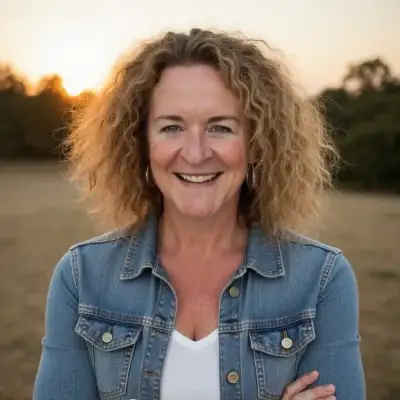
What’s Up, Wake covers the people, places, restaurants, and events of Wake County, North Carolina. Through conversations with local personalities from business owners to town staff and influencers to volunteers, we’ll take a closer look at what makes Wake County an outstanding place to live. Presented by Cherokee Media Group, the publishers of local lifestyle magazines Cary Magazine, Wake Living, and Main & Broad, What’s Up, Wake covers news and happenings in Raleigh, Cary, Morrisville, Apex, Holly Springs, Fuquay-Varina, and Wake Forest.
43 - Whats Up Wake - PERI & PAUSE
===
[00:00:57] Melissa: Hi everyone and welcome to What's Up Wake. We are continuing our month of new year resolution episodes and this week we're focusing on women's health. We are diving into that special time of life when your mood, your sleep, and your thermostat are all competing for who can act up the most. Some call it perimenopause.
I call it a game of tag between every emotion known to man kind. We are in luck because we have Jamie Gallagher here today. Jamie is a board certified nurse practitioner and perimenopause specialist who started the Uber popular per and Paw Menopause Center and Fuqua Arena now with a second location in North Raleigh.
She is featured in a story in our November December issue of Main and Broad, so I had to get her here to help make sense of the chaos and bust some myths. Welcome, Jamie. Thank you so much for being here today. Thanks so much for having me. I appreciate that. I have so many questions for you, so I'm gonna talk like a hundred million miles a minute, trying to get it all in before we get into what's normal, what's not normal, and how we get it, get through it all without hurting someone.
Tell us a little bit about yourself and why you chose to specialize in perimenopause and menopause care.
[00:02:18] Jamie Gallagher DNP, FNP-C, MSCP: Yes, thanks for that. Um, I'm a family nurse practitioner, as you said. I am a mother of four, grandmother of three. Um, I've worked in healthcare for over 30 years. In primary care as a nurse practitioner for the last 16 to 17 years.
I would say. About five years ago, my own personal experience with changes in my body, um, changes in how I thought, how I performed at work. Um, the changes in just relationships and, um, other aspects of my life had me wondering, Hey, is this, is this time occurring and are these the symptoms? And when I sought my own care for my own providers, um, I realized that.
They didn't know much more than I did, which was mm-hmm. Kind of frustrating. Um, and then as a, a family nurse practitioner and primary care provider, once I learned more about perimenopause and menopause and how it impacts our bodies, I could not unsee it in every woman that was sitting on that exam table that I only had 10 minutes with seven minutes with 15 minutes with.
So with the courage, encouragement of my husband as he inched closer to retirement from the military, um. I decided to branch off and open a clinic completely specializing in midlife women's healthcare as it surrounds perimenopause and menopause.
[00:03:39] Melissa: Well, we thank you very much. Well, thanks because I, it, maybe it's just, maybe I'm wrong.
Maybe it's the cynical side of me, but it feels like our OBGYNs don't really know much and I then I heard that they don't, they really don't because they don't focus a lot of their training Right on. Menopause perimenopause, and it kind of seems like it's a suck it up mentality that you go and they're just like, oh, it's just normal.
Everybody goes through it. Mm-hmm. Well, just because everybody goes through it doesn't mean that we can't have some sort of relief and, and be able to treat some of the things that we are going through. Right. So do you find that, you kind of just said it, do you find that, um, OBGYNs don't really know a lot and why aren't
[00:04:26] Jamie Gallagher DNP, FNP-C, MSCP: they
[00:04:26] Melissa: trained?
[00:04:27] Jamie Gallagher DNP, FNP-C, MSCP: I would say this started back in the late nineties, early two thousands with the publication of the Women's Health Initiative that completely derailed hormone therapy for midlife women. I think greater, I believe it's greater than 40% of women around that time in the nineties were on hormone therapy that were, um, post-menopausal.
And when this study came out, it had some misinterpreted data that was quote, almost statistically significant as it was related to, um, breast cancer and the actual information got to the media before it was even published in the Journal of the American Medical Association. So, you know, wake up the next morning, hormone therapy causes breast cancer.
Oh my gosh. Mm-hmm. Like it was all over the tabloids in the news and nobody walked that back. Nobody looked further into this that actually ended up being published. So that was kind of the beginning of the end for hormone therapy for midlife women, um, because fear started surrounding that. So the last, and I feel like
[00:05:29] Melissa: it's si cyclical with things like that.
Mm-hmm. Because, you know, one year you'll be told that. I don't know. Eggs are great. Right. For your heart. And then, you know, two years later it's like, no, eggs are terrible for your heart. And it's, it, it does seem like it's hard to keep up with, um, following what everybody says that they suggest that we do.
[00:05:51] Jamie Gallagher DNP, FNP-C, MSCP: Right.
[00:05:52] Melissa: Exactly. So, but that's a long time. You said that was, you know, 30 so years ago. That was,
[00:05:58] Jamie Gallagher DNP, FNP-C, MSCP: yeah, a little over 20 years ago. Okay. So. In that same vein, menopause is normal and natural, and if we're fortunate enough to live this long, we're going to go through it. Mm-hmm. So I think the thought was we could possibly harm women.
So that is the bottom line. We could possibly harm women. No one wants to do harm, but what we've done is harm in the name of doing no harm. So from that point forward. It was kind of removed from curriculums. If it was in curriculums prior to that, I'm not certain, but it was, you know, here, here are the reasons you might treat a woman in menopause with hormone therapy.
It is, um, you know, night sweats, hot flashes, mood issues. And what you would want to do, if you were gonna do anything is use the lowest amount of hormone possible for the shortest amount of time. So it's kinda like. Was it bad? Was it good? You give her a little bit, is a little bit good and not bad is giving her nothing and letting her suffer and her body change and her relationships and her career and all that, you know, go to the wayside.
What, what is best for her? So, because it's normal and natural, my thought is that, you know, why would, why would we intervene? So truly, when you're speaking specifically about OBGYNs, it's not. For the lack of wanting to provide care. It's truly the lack of education and it's hard to undo what you have practiced like for 20 years to kind of walk that back and go, you know what?
Everything I've ever learned or not learned that I've practiced now is kind of being removed. And how secure am I in that? You know, shifting gears almost 180 and going, well, you know what, actually it could benefit you. So that's, that's hard. And it means that you have to seek out extra education. You have to seek out information and with, you know, healthcare the way it is today, healthcare providers that are working full time have limited time to seek this information out on their own to unlearn what has been taught for the last 20 some years.
[00:07:56] Melissa: And even then, it seems to me, and I, I talked to you before we started, a good friend of mine, Ashley, who, and Ashley is also a doctor. To be clear, she and I were talking about meeting with you today and she wanted me to ask you about why it seems like doctors are so, so all over the board. Nobody seems to agree, but it sounds to me like what you're saying is.
It's still kind of so new in terms of we were told do not do this, and now people are researching it. Coming to an awakening, awakening period of saying, okay, well maybe we should, but some people are still with the old mentality. I am a breast cancer survivor. Mine was a hormone positive breast cancer. That's a long story for another day. But, um, as far as estrogen goes, I came to Perpa, saw a different provider there, but I came to Perpa and what she told me. And please correct me if I am misinterpreting what she said because I'm not the best at Doctor Talk.
But she kind of said that in, in cases like mine, it is. Worse to not have estrogen. More dangerous to not have estrogen than it, than it is like the likelihood of your cancer coming back if you do have estrogen, because of the things that the lack of estrogen does to your heart and to your body over time can be more detrimental.
Does that, am I interpreting that right?
[00:09:35] Jamie Gallagher DNP, FNP-C, MSCP: That is, I'm not a breast cancer specialist by any means. Mm-hmm. But that is definitely. That's what I think needs to be researched. Number one right now. One of the first things I would say the, well, the number one killer we know of women is heart disease. Hands down.
Mm-hmm. You put every cancer we die from in one big bucket. The bucket of heart disease is still huge compared to that, and a lack of
[00:09:59] Melissa: estrogen makes that. A lot worse. It con right. It
[00:10:01] Jamie Gallagher DNP, FNP-C, MSCP: contributes to that. The lack of estrogen contributes to that.
[00:10:04] Melissa: Okay.
[00:10:05] Jamie Gallagher DNP, FNP-C, MSCP: There's a lot of words right now with the un blanketing of the boxed warning.
So the word prevent and risk reduction. Mm-hmm. Those words do not mean the same thing. So it, when it comes to, um, hormone therapy and breast cancer, it is individualized, um, nuanced to the woman. What, what is it based in? It's based in science, but it's also based in. Shared decision making with the woman.
Mm-hmm. Um. So there are women that have had a history of breast cancer that could possibly be candidates, but you want to work closely with oncology mm-hmm. To make sure everybody's on the same page with the same evidence. 'cause over, you know, these last few years of being heavily involved in, in menopause care and you know, with menopause thought leaders, you know, being members of certain societies and organizations, what we have realized is that oncologists practice in their solo and we practice in our solo and never the two shall meet.
Yeah. Until recently. So there's a lot of. I hate even to use the word controversy because just the word controversy in women's health, they just, it's what other thing in healthcare causes more controversy and more high emotions than, than women's health? Um, you know, barring pregnancy, it's definitely mm-hmm.
Midlife women. So truly oncologists want to save your life. They don't want you to die from cancer. We don't want you to die from cancer. We want your quality of life to be super high after cancer. So we can't forget that gap between survivorship and quality of life. And it really should, um, be a solid conversation between a healthcare practitioner and the woman and a healthcare team approach to that.
[00:11:46] Melissa: And speaking of healthcare team, one thing that I found through my cancer journey was the, the, the different parts and pieces don't talk.
[00:11:58] Jamie Gallagher DNP, FNP-C, MSCP: Mm-hmm. Yes, absolutely. Even,
[00:11:59] Melissa: even though my doctors were all, with the exception of one with UNC, none of them really talk to each other. There's notes in the computer.
Yeah. But. There's a lot that falls through the cracks because of that. So my oncologist doesn't really talk to, my breast surgeon doesn't talk to my radiologist, and, and certainly, you know, I haven't put them in touch with, with my provider at Perpa. But, um, and I feel like it would take an act of God to do that, but it, it really does seem like there's so much with healthcare that that does fall in the cracks.
Mm-hmm. That it leaves people. Feeling desperate and feeling alone.
[00:12:42] Jamie Gallagher DNP, FNP-C, MSCP: Absolutely.
[00:12:43] Melissa: Breast
[00:12:43] Jamie Gallagher DNP, FNP-C, MSCP: cancer survivors have been known to not be truthful about their medical history to get hormone therapy because their quality of life is that poor and, and that's
[00:12:51] Melissa: really sad. Absolutely. That
[00:12:53] Jamie Gallagher DNP, FNP-C, MSCP: devastated me to hear it. It did not cross my mind that that was actually happening.
Oh, I believe it. 100%
[00:12:59] Melissa: I have started with the testosterone route. Mm-hmm. Just started it. I think it takes a long time, but for testosterone to show any effects. It depends.
It
[00:13:08] Jamie Gallagher DNP, FNP-C, MSCP: can be a few weeks, it can be up to four to six months. Mm-hmm.
[00:13:12] Melissa: So let's talk about the three branches of the HRT. Is HRT that, that's question number one actually. Is HRT, is that a combination of the three or does HRT mean it you, we could be talking about estrogen, progesterone, or testosterone, or is it.
Combined. Let's talk about that first,
[00:13:34] Jamie Gallagher DNP, FNP-C, MSCP: right? Absolutely. Let's, because I was in a, a, a live zoom session the other night. Well, this was a topic mm-hmm. And the arguments of what it should be called. I was like, are we getting anywhere with this meeting? Is it hormone therapy? Is it progesterone, estrogen, testosterone therapy, pet therapy?
Is it, is it menopausal hormone therapy? Is it hormone replacement therapy? We just, I'm just gonna call it hormone therapy going forward. But hormone therapy is also used in the breast cancer realm for, you know, types of endocrine therapy, , things like that. So hormone replacement therapy. I think HRT, when you think HRT, that's when people go, huh, you know, 'cause that is the acronym that was used during the Women's Health Initiative and then it shifted to menopausal hormone therapy.
But what about those years before when you're 42? Clearly perimenopausal, are we giving you menopausal hormone therapy? So again, um, acronyms, it can be used. In different ways, but I just, for all intents and purposes right now, it's technically menopausal hormone therapy, so M-H-T-H-R-T, whatever you wanna call it, whatever resonates with you, I think is fine.
But, and that's
[00:14:35] Melissa: really just an all-encompassing acronym for any type of hormone. Therapy, medicine treatment that's you're given?
[00:14:45] Jamie Gallagher DNP, FNP-C, MSCP: Yes. Okay. For, for perimenopausal menopause? Yes. Okay. Any of them? You're, you're not wrong, I guess I would say so if
[00:14:50] Melissa: somebody says to me I'm on HRT mm-hmm. They, it, it really could mean that they're just on testosterone or just on estrogen.
[00:14:58] Jamie Gallagher DNP, FNP-C, MSCP: I would say if someone said that to me, I would presume it was estrogen and, and or progesterone. Mm. Meaning, you know, together or, um, separately depending upon the woman. Testosterone isn't FDA approved in the United States for women that. Only means it is not FDA in the United, you know, approved in the United States.
For women. It is in other countries, South Africa, New Zealand, Australia, um, the uk it will eventually be here, um, at some point. But in the meantime is that when someone says I'm on hormone replacement therapy, most people don't think, oh, that's testosterone as well. Even though that is a significant and integral part for some women, um, when we're treating them with estrogen and progesterone.
[00:15:38] Melissa: Okay, so. Let's talk a little bit about the difference between perimenopause symptoms and something that could be more serious and you should really seek medical attention because some perimenopause symptoms I have found. Um. Might feel and could be something different. Absolutely. Like a rapid heart rate or, you know, a difference in, in, um, in fatigue levels.
Mm-hmm. So how can you tell
[00:16:12] Jamie Gallagher DNP, FNP-C, MSCP: right what it is exactly. So, um, when women come to us at perimenopause, my number one rule is just because we have a menopause hammer. Everything is not menopause. So we must look at the whole woman, all of her, um, her, her mental health, her physical health, what are her symptoms?
A lot of symptoms that are similar to medical conditions that need treatment are perimenopausal symptoms at well as well, such as, um. Like you were talking about, palpitations, racing, heart feeling is really, really common in perimenopause. But you don't wanna miss that woman who has, you know, an abnormal heart rhythm or atrial fibrillation or something that does need an intervention.
So you need a good head to toe assessment, a good medical history, surgical history, family history, um, too. Put that together to see the whole woman. We find thyroid disorders all the time in midlife women's care. We find. Yeah, I have found that. '
[00:17:08] Melissa: cause I also have thyroid. I'm, I'm just a trifecta of, of wonderful things.
Hormone hormones. Yeah. But I, I, I have found that thyroid, um. Symptoms. Mm-hmm. Really do mirror a lot of the perimenopause symptoms.
[00:17:23] Jamie Gallagher DNP, FNP-C, MSCP: Absolutely. So women will typically go to their primary or other healthcare practitioner and say, I midsection weight gain. I am tired, my hair is thinning, and. You will get just routine labs including a, a, a thyroid and the majority of the time, that is normal.
The absolute majority. I've seen it in practice for years and it's almost like a ticket to go, you know what your labs are are are fine. Everything's fine. Mm-hmm. It's probably just aging. I'll see you in a year, but. Nobody's talking about. Okay, so it's not this, which is awesome. So let's talk about menopause and what you can expect.
Head to toe from hair thinning to ears ringing to dry eye to teeth changes because your jaw is changing to heartburn, to palpitations, to shortness of breath, to muscle loss. I mean, I can just keep walking down the body. Um. But what a, a good practitioner will do is investigate concerns. But I think perimenopause brings in symptoms that are vague.
And midlife women come in going, I don't feel like myself. Those are the classic words because a lot of women don't know how to express that. What do you mean you don't feel like yourself? I don't know. I can't, I can't think of words. My mom had dementia and I'm petrified. I had dementia and you know, you get that routine labs, you're fine.
But then you want to go, excuse me, doc. I know my labs are fine, but I'm definitely dying of something and you need to find it. Yeah. Like that's, that's a lot of how these women feel
[00:18:48] Melissa: and it's scary too. Absolutely. It's scary if you're not able to, to. Put a name to something and, and put your worries to rest.
Yes. Um, because that's a big part, I think, of the whole perimenopause movement. I'll call it a movement. Yes. Because just very, very recently, it's become. More in the, the, the mainstream of topics. Mm-hmm. We have Halle Berry that has come out and she has been very vocal about her struggles with it. Oprah had a big special on it.
Yes. Mm-hmm. My very favorite, um, social media personality, I'll call her. Her name is Melanie Sanders. I wrote that down. I think it's Melanie Sanders. Mm-hmm. Um, she started something called the We Do Not Care Club. If you guys have not. Followed Melanie in the we Do Not Care Club yet. Look her up. She is just being Melanie on Instagram.
She is a breath of fresh air because she is so funny about it. But she's also real. Yes. And she talks about her struggles and I think that. A lot of times, you know, we are in the whole mind frame of, oh, we don't care what these celebrities have to say about X, Y, and Z. But it also does help because it's brought, brought it more into the open conversation that women feel like, oh, we don't have to be silent about this.
We don't have to keep this to ourselves in struggle. Right? So now we're able to. You know, you're able to start something called Perry and Pause and, and it gives women an outlet to, to. To say, okay, we don't have to be like this.
[00:20:25] Jamie Gallagher DNP, FNP-C, MSCP: Exactly. We don't have to be miserable. Right. When women come in, I would say probably at least half of that first visit.
Just the validation and someone saying Yes. You know, being able to finish a woman's sentence for her and she's like that. That's it. Exactly. And it's almost like they exhale and feel heard, which I'm telling. There's something about just being heard that is therapeutic, that makes those symptoms less.
Terrifying, for lack of a better word.
[00:20:53] Melissa: Yeah,
[00:20:53] Jamie Gallagher DNP, FNP-C, MSCP: you know what? This is normal. This is treatable, and it's okay for my symptoms to be treated. Why? Because I want my quality of life from that this point going forward to be as high as it can as I enter likely the second half of my life without my. Hormones.
[00:21:09] Melissa: Yeah.
Because it is a long period. Yes. We're not talking about just a couple years, decades of misery where we're saying this is, this could last us the rest of our lives. Yes. , do you say that there are certain people that should not take hormone replacement therapy and, and if, if they should not.
What are some alternatives, maybe supplements or natural alternatives that people can be doing?
[00:22:27] Jamie Gallagher DNP, FNP-C, MSCP: Yes. Um, a few patients, um, vast majority of women can safely take hormone therapy. Lemme just state that right outta the gate. Um, those who can't are clearly hormone receptor positive cancers because we, that needs to be taken care of for life saving purposes.
Um. If you have abnormal or unusual, um, uterine bleeding, vaginal bleeding, that needs to be evaluated, absolutely. Um, severe heart or liver disease, we need to get that taken care of. And um, also, um, if you have an acute blood clot right now, um, if you have a bleeding, you know, or a clotting disorder, excuse me, um, that does not bar all hormone therapy.
At that point, that woman is better off with a transdermal estradiol patch doesn't go through first pass. Liver metabolism doesn't increase her risk of, of clots, you know, under 0.05 at this point. But when we take something by mouth like an an estradiol, um, tablet by mouth, it does go through our liver, which can increase our clotting factors just a little bit.
But, and, and the risk of a clot with that compared to birth control is about half of that, of birth control. But it's interesting how birth control was so freely given. Two perimenopausal women rather than, you know, a, a hormone replacement therapy, one that would be something that she could be on longer, that literally just supplements her own hormones with natural hormones because the patch, progesterone, those are bioidentical body similar, whatever word you want to to call it.
And, um, the synthetic birth control pills are not, they take over our hormones, but hormone replacement therapy with the bioidentical patches, progesterones, you know, testosterone creams. Um, those match our body a lot better and can use long term.
[00:24:13] Melissa: That's actually another question that my friend Deanna asked, which is, can, can birth control or IUD be as helpful as HRT?
But you're saying that, um. That they are different. They're different. Mm-hmm. And can you be on HRT the rest of your life, whereas you shouldn't be on birth control that long?
[00:24:34] Jamie Gallagher DNP, FNP-C, MSCP: Yes. That is kind of the standard of, of practice now, hormone replacement therapy at this point. . We're undoing kind of the myth that it needs to be stopped after five years, or it needs to be stopped by a certain age.
Um, because what happens when you stop it and there's evidence in bone specifically, is that it returns to F as if the woman has not been on the hormone therapy at all. So what happens to those? The brain cells, the heart, the vessels, all that. If we know when a woman stops hormone therapy that her rapid bone loss.
Um, starts pretty quickly after that, but does level out. Um, why aren't we studying heart vessel's, brain when she comes off of hormones? So, all that to say that going forward again, nuanced shared decision making between a, um, healthcare practitioner who knows how to treat menopausal, perimenopausal women.
How is the key word here that can walk with her through the dec, the latter decades of her life safely to keep her healthy?
[00:25:32] Melissa: It was in the news recently and you mentioned this briefly about the black box warning that it has been taken off of HRT. Um, I guess I don't get it. Why that's even significant.
Mm-hmm. Because the black box warning was literally just a warning on the package, right? Yes. I don't read those anyway.
[00:25:51] Jamie Gallagher DNP, FNP-C, MSCP: Right. Some people do. Let me tell you. So now
[00:25:55] Melissa: that it's taken off, I mean, the big deal is, is what?
[00:25:59] Jamie Gallagher DNP, FNP-C, MSCP: The big deal is this, um, in kind of the, the circles that I'm in, um, it was. Back in 2002 or what have you, the a, a blanket black box warning, um, was put on all estrogen containing products.
E even vaginal estrogen saying breast cancer, blood clot, heart attack, stroke, probable dementia from literal cream. Vaginal cream. That helps those symptoms. I mean, they, so the things
[00:26:23] Melissa: that scare you to death at the end of the commercials? Yes,
[00:26:26] Jamie Gallagher DNP, FNP-C, MSCP: absolutely. So. What happened was the FDA undid, all of that, we were literally only expecting that it was going to come off of vaginal estrogen.
But when, when they undid it for all estrogen containing products, I personally, deep in my soul, saw that as a huge win. But I also saw that, ooh, this can be misinterpreted in that there is a difference between. Oral estrogens and transdermal or, or topical estrogens, different type of estrogens. So it still absolutely needs to be, um, prescribed or used to treat women from someone who knows how to, um, prescribe this based upon the individual woman.
Um, but I think in general it was a win because. If you look at the bigger picture, it removes the unnecessary fear and there has been so much unnecessary fear to the point that although
[00:27:19] Melissa: scary to death Yes. In 2000, especially when you are diagnosed with breast cancer, yes. You are scared into submission.
Yes. Truly over ever everything. And then, and then you start hearing the flip side on of, of taking things like tamoxifen and having chemo. Mm-hmm. And all the treatments that they. Truly insist that you do. Yes. Um, it's not much of an option. It's like mm-hmm. This is what you're doing. Mm-hmm. This is the course, but then you, the le you leave the doctor's office and then you have another group of people that scare you to death about taking it.
Yes,
[00:27:55] Jamie Gallagher DNP, FNP-C, MSCP: exactly. That's where we have to get together as a team for mm-hmm. For the benefit of midlife women and stop being siloed. Even in, in 2013, I think I can't think of the physician's name. He published in. I can't think of the journal either, but was saying between, that's
[00:28:11] Melissa: the brain frog fog get Rogg Brain fog.
Brain fog, alive and well.
[00:28:15] Jamie Gallagher DNP, FNP-C, MSCP: Um, that between 18 and 91,000 women, when they, they looked at the placebo arm of the Women's Health Initiative died. These were ages 50 to 59, if I'm not mistaken, that had had hysterectomies and were not offered estrogen therapy. That between their guesstimate, guesstimate literally was between.
18,090 1000 women died prematurely because of them not being offered an estrogen. And that was 12 years ago. What, where was that? 12 years ago in education. Why was that Not, you know, making the news, Hey, maybe we should re-look at this Women's health initiative. But that's, it's been lost since the Women's Health Initiative.
There's lots of evidence out there for supportive hormone therapy, but it's not in one place. And I think that has made it that much harder for. Um, general practitioners, OBGYNs, that are delivering babies, doing well, women doing surgery all day, every day to the, it's not in one place.
[00:29:11] Melissa: Yeah. And
[00:29:12] Jamie Gallagher DNP, FNP-C, MSCP: so that's what makes it hard.
[00:29:14] Melissa: Well, and I also think it goes back to what we were saying about how it's more in the open dialogue now. Mm-hmm. And, and, and people are so, um so talkative about it at this point. Yeah. So, and. You gotta rip off the Band-Aid, they rip that black box warning. Mm-hmm. And it really, let's talk about it. Got a lot of attention.
Yes. Yeah. Yep. Okay, so we're getting near the end. We have so many things that I could still talk to you about. I'm gonna have to have you back. Yes. Um, this is one of my favorite segments to, of what's up Wake. And I don't do it very often, but I call it Ask What's up? Wake where I ask my personal Facebook friends.
Mm-hmm. Which of which? Nice. We're all in per that menopause together. Can I join? So they jumped. Jumped. I need to be Your friend jumped. Yeah, they jumped on this one. When I said, Hey, I'm meeting Jamie Gallagher. What should I ask her? They were like, what? Okay. So Tanya sent me a lot of questions. I think we covered all of those.
I'm gonna skip you. Love you Tanya.
[00:30:09] Jamie Gallagher DNP, FNP-C, MSCP: Love you, Tanya.
[00:30:10] Melissa: Hannah. She wants to know, well, I think we already answered this too, because mm-hmm. She asked, once you start HRT, how long should you stay on it? And it's essentially.
[00:30:20] Jamie Gallagher DNP, FNP-C, MSCP: Ongoing, ongoing to
[00:30:21] Melissa: further notice. Becky, um, on the flip side, Becky is my mother. Hello mother.
Mm-hmm. Um, love her very much. She is 68. Mm-hmm. And I think she fell in that area of time when they did not recommend it anymore. She did? Yes. Um, even though she had a hysterectomy at a young age, they still didn't put her on anything. Right. So she's wondering. Is it too late to start HRT at a certain age?
[00:30:51] Jamie Gallagher DNP, FNP-C, MSCP: The answer to that is it is nuanced. It's never, mm-hmm. I don't wanna say it's never a hard no. It's most commonly not a hard No. It is very individualized. The thing with that is why there's a window, or there's considered a window is because. At some point things can't be reversed, like heart disease.
Your, your, your new hormones aren't gonna reverse that heart disease. Um, the FDA or the US government, doesn't it? It says that estrogen therapy is used to prevent osteoporosis, but not used to treat well in other countries. It's used to treat, so there's a lot of nuance, so we can't just. Close the book on a certain age, um, but with a solid health history, a good visit, good assessment, what, um, symptoms you're experiencing, what could be better for you?
Um, it's definitely, I truly think every single woman deserves this conversation no matter what age. Mm-hmm. And I truly think it needs to be a part of, well, woman visits starting at age 30, 32. Um, to be at least bring it up and plant that seed. You know, hormones change. You, you are very young now, but be looking out for these symptoms.
But as far as age, it is very individualized still to the woman that, that age 60 or 10 years out of menopause is not a slammed door in your face.
[00:32:09] Melissa: Okay, Jenna asks, are there any natural supplements that, that actually do something to help? Particularly fight anxiety and brain fog. Oh, yes.
[00:32:20] Jamie Gallagher DNP, FNP-C, MSCP: Um, so sleek
[00:32:22] Melissa: other than marijuana or, yes.
[00:32:24] Jamie Gallagher DNP, FNP-C, MSCP: Right.
[00:32:25] Melissa: Well there's some things. Wine. Yes,
[00:32:27] Jamie Gallagher DNP, FNP-C, MSCP: exactly. Wine. Oh, let me just call that out is sadly not our friend in any way, shape or form. You know, I was gonna ask
[00:32:32] Melissa: that and I took that off my list. You did. We'll talk about that later. There's certain things I just don't want you to tell me. We're not
[00:32:38] Jamie Gallagher DNP, FNP-C, MSCP: going in that negativity today, Sy.
Yes. Yes. Um. So natural sleep is hands down the number one thing. And, and lots of women are like, well that'd be nice. I wish I could will myself to sleep. Yeah, because that's
[00:32:48] Melissa: one of the symptoms that many people experience. Yeah, exactly. And then we're told, don't take melatonin, don't take this. Don't take and melatonin's great.
And then the next day it's not, it's back to Exactly. Yeah.
[00:32:58] Jamie Gallagher DNP, FNP-C, MSCP: Our eggs good or eggs back. Uhhuh. Um, so sleep is. First and foremost, something that we need to focus on. But it is very hard. As midlife women, we are at the top of our game in our career. We have teenagers, we have aging parents, we have relationships, we have all the things.
And when our stress isn't managed, poor sleep, that's when anxiety picks up. But also that new anxiety, those new panic attacks, those new, I'm in the back of Target. I'm gonna get some new. Christmas ornaments, and all of a sudden it's hot and I have to get outta here because I don't know what's happening.
To me. That is because of the chaos of hormones. And speaking of natural supplements like foods, rest, you know, yoga, meditation, all that is great, but when the source of that is because of fluctuating and declining hormones, what is more natural? Think about this. What is more natural than your natural hormones to help that, and with estradiol patches.
Micronize progesterone, specifically orally, that gives your body back what it needs to help regulate dopamine and serotonin. Not to dismiss that question at all, but just to truly think about No, you're not. What helps. Yeah, I, I haven't looked at it in that way. Let's talk about it. Really what that is, because we talk root cause, root cause in various types of medicine and healthcare, but it really is, the root causes are change, high, low declining hormones that cause those symptoms.
[00:34:20] Melissa: No amount of fish oil caplets are absolute. We cannot Uganda ourself out of osteoporosis.
[00:34:26] Jamie Gallagher DNP, FNP-C, MSCP: Heart disease, you know, all that. Yeah. We can't, even though it supplements like that do have some evidence, but if you want strong evidence with solid numbers behind it, um, it. It really will be the hormones, but not every woman, not, don't let me imply that every woman needs that.
Every woman, I truly, I'm back to, deserves the conversation to understand that, to make a solid decision for herself, with her practitioner and her practitioner, absolutely a hundred percent needs to respect that and not push any agenda or whatever, but truly inform a woman and let her decide.
[00:34:58] Melissa: Two more questions.
Mm-hmm. Nicole wants to know. Why joints are affected by menopause. And what hormone helps that? Is it testosterone, progesterone um, estrogen or is it all three that help the actual joint pain?
[00:35:14] Jamie Gallagher DNP, FNP-C, MSCP: Yes. What is up with the joints? Right. We feel old when we snap, crackle, pop. Right. Crispy outta the bed today.
And I
[00:35:19] Melissa: swear I am hurting from the second I stepped out
[00:35:22] Jamie Gallagher DNP, FNP-C, MSCP: of bed. Mm-hmm. Yeah. Yeah. We have a intake scale called the menopause. Um. Menopause rating score, menopause symptom rating score. Um, and I put that on there specifically for women to answer because it includes joint pain. Women are like my hip when it's typically estrogen.
Estrogen is a natural anti-inflammatory. Think about when you're fertile, when you're younger, you're bendy, stretchy, all the things, and then when estrogen goes away. You lose that antiinflammatory pro. Yes, we own and groan. Exactly. You're grunt and getting outta the bed and getting outta the front seat of your car.
Um, but that is where it is. And, and commonly women will go, I have a hip pain or whatever. Well, it's arthritis, but you know, nothing's really seen on x-ray. We can give you an injection. That probably isn't the best way to go if you're a midlife woman. Let's talk about hormone therapy first. Um, because let's get a little bit of that estrogen back on.
I cannot tell you how many women have come back and said, my thumbs and my hips no longer hurt. And this is the only reason I can think of is I started hormone therapy and I'm like, yes, girl. Because that's, that's what it is. Does it work forever? No. 'cause we are aging in one direction, but it sure is helpful.
Um. For cell health and when we're estrogen, when our estrogen is low, we as women know where all the estrogen receptors are in our body and they're everywhere from our hair down to our toenails. So,
[00:36:39] Melissa: okay. Finally my favorite question. I think it's my favorite because, well, first of all, she did not word it quite how I'm gonna word it to you today.
Thanks. I think she was a little bit more blunt. Mm-hmm. Um, but it also quite literally pertains to every woman as we hit perimenopause age. And it is what's up with the weight gain? Oh. And I, I, I know, I know we should eat and Right, I know we should eat those eggs I talked about, but, but that didn't help.
Let's be honest. Come on. It does not help. Come on. Um, so again, is that an estrogen thing?
[00:37:18] Jamie Gallagher DNP, FNP-C, MSCP: That is a whole body thing and it's all the above, honestly, because, and that was Kendall, by the way. Shout out to Kendall. Thanks, Kendall. That way to ask the good question. Yeah. Um. Our body composition changes through no fault of our own.
When estrogen goes down, progesterone goes down, testosterone goes down. Um, we get central weight gain, more visceral fat, more fat here, fat around the belly acts like an endocrine organ. So it, it is it the body's way of kind of going, you know, almost squeeze a little estrogen out. But it's also squeezing cortisol out, which looks very similar to estrogen in its molecular structure.
Um, cortisol is our kind of fight or flight hormone. For sleep, all of that cortisol wants us to hold on, hold onto everything we're, you know, we're eating, hold onto the calories. We lose muscle, we gain central weight, puts us at risk for pre-diabetes and makes us insulin insensitive or whatever lowers our insulin sensitivity.
Um, so it is. A rare woman who gets out of the perimenopausal, menopausal weight gain. It is not a diet. We
[00:38:21] Melissa: and do not like them.
[00:38:22] Jamie Gallagher DNP, FNP-C, MSCP: No. That
[00:38:23] Melissa: I would say, and I have told women, they're not my friend. And yes, me, you said to women,
[00:38:28] Jamie Gallagher DNP, FNP-C, MSCP: I was like, this is the hardest thing to. Answer and fix because it truly is you are not doing anything wrong.
But if you start eating less and exercising more, your body holds onto it more because it is. We have our body 1.0 that we have mastered. We know how to eat, we know how to drop seven pounds. It's fit in that dress by Friday. It does not work. It doesn't work going forward, literally because hormones tell our body and our cells what to do and when they have changed roles and they are, have retired, the other hormones like cortisol and things like that that come in and try to replace that as we're aging rapidly after that point, you know, from a frailty and a chronic condition standpoint.
They come in and they become the boss. So the body is super stressed. It's got not got its fertility hormones. We become stressed and then we get end up being in this cycle. But if we are not super conscientious with nutrition and movement and in a different way. Not, you know, going out and blasting cardio an hour a day every day and dropping our calories to 800.
I've seen women gain 20 to 30 pounds by doing that. And it was this interesting phenomenon, not to me's a good excuse
[00:39:34] Melissa: for me not to go to the gym. Right, exactly.
[00:39:37] Jamie Gallagher DNP, FNP-C, MSCP: Well, let's just talk about, so, um, and that, that's a. A very good question and it is not untreatable. And I would say stay tuned for that. Meaning, um, there are other things that have emerging evidence, like lower dosing GLP ones or GLP ones in and of themselves.
That is one question that I was gonna get to. Yeah. And I've
[00:39:55] Melissa: run outta time because, um, a lot of the things that you were mentioning with the, the, um, lowering the. Blood sugar, I can't remember how you said it. Mm-hmm. Yep. Um, and all these other things that also helps with that too, so Yeah, absolutely. And like you said, so much more evidence is coming out that we, we need to Yes.
Really be paying attention to that. Absolutely. Even though it'll probably change in 10 years and they'll say, oh, it's killing everybody. So.
[00:40:18] Jamie Gallagher DNP, FNP-C, MSCP: Yes.
[00:40:18] Melissa: I think
[00:40:18] Jamie Gallagher DNP, FNP-C, MSCP: we working with can't win for losing. Yeah. Working with emerging evidence is where we need to be. We don't need to wait 10 to 17 years for a society or a medical group to come up with guidelines.
We need to practice to the best of our ability, know how to interpret emerging evidence as it's coming on board safely, safely and confidently. And I think that's how you can impact women's health today. And not waiting for something to, to come down the line in the future from a society of, you know, of guidelines that are based in evidence, but still very narrow.
[00:40:47] Melissa: Well, and it's conversations like this that really go so far in helping people understand and breaking things down into layman's terms, which I only speak that. So thank you so much for being here today. You're so welcome. Thanks for having me. We're gonna have to have a part two because I have, I'm be here for it.
I have a whole nother book of questions. Yes.
[00:41:04] Jamie Gallagher DNP, FNP-C, MSCP: We could have some parts. Lots of parts. Yes.
[00:41:06] Melissa: Thank you so much, Jamie. All right.
[00:41:08] Jamie Gallagher DNP, FNP-C, MSCP: Thank you, Sue.