Subscribe
Share
Share
Embed
Ready to unpack the powerful stories of a Texas titan - the Brazos River? Listen as experts explain the Brazos River Basin's immense role in our daily lives. They'll cover everything from the river's fascinating history to all the work that goes into ensuring you have water when you turn on your faucet.
Hear invaluable insights on topics like why lake levels change, the important projects safeguarding our water, the many species that call the Brazos home, and even some tips for enjoying the water from Brazos River Authority experts.
This is your chance to understand the immense work that goes into developing, managing, and protecting the Brazos River Basin, which stretches from the Texas-New Mexico border to the Gulf. (The basin is the size of Tennessee, y’all, it’s big.)
It’s a huge part of our state’s story and we can’t wait to share it with you.
Got questions about the Brazos. No more unknowns. Ever wonder where that water comes from or where it goes? We're Unpacking the Brazos River.
Charlie Shugart:Welcome to the Brazos River Authority podcast, Unpacking the Brazos River. Ever stood by a Texas lake or river, admired its beauty, and thought, who owns all this water? If you ever had that question, you're not alone. There's a common perception out there that water is just, well, there. But in Texas, the truth about who owns our precious liquid gold, and more importantly, who gets to use it, is far more complex than you might imagine.
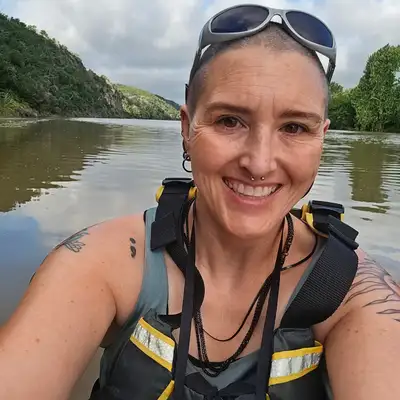
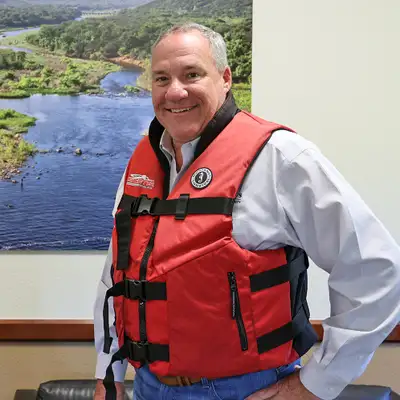
Charlie Shugart:I'm Charlie Shugart, and I'm with our public information office. And today, we're diving deep into the absolutely essential world of Texas water rights. Here with me today is the Brazos River Authority's general manager and CEO, David Collinsworth. Thanks for joining me today.
David Collinsworth:Thanks for having me.
Charlie Shugart:David, this is the first time our listeners are meeting you. So give us a little history with your time with the BRA.
David Collinsworth:Charlie, I started here in '94 in a position that hadn't even been created yet, and it was a position to help educate people on water quality and how to use water. And it was an entry level position, and I've now been here thirty one years. And I tell people I've done just about everything in the river authority world except play attorney, be an attorney, and be, in the finance department, and they don't want me to do that. So I've just been all over the place.
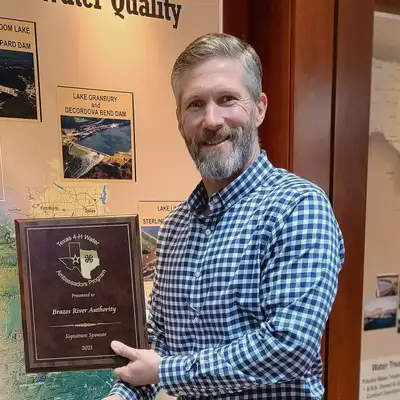
Charlie Shugart:Alright. Well, thank you for joining us today. And we're also very lucky to be joined by Brad Brunett, the BRA's chief operations officer. Thanks for joining me.
Brad Brunett:You're welcome. It's good to be here too. I'm just three years behind David. I started in 1997, I believe. Most of my time with BRA has been spent in managing our raw water, our reservoir system, and our water supply. And most recently, the last, eight or ten years or so, I've been involved in some of our treatment operations as well.
Charlie Shugart:Well, we appreciate that you're here. Kick us off. Who owns the water in our rivers and lakes?
David Collinsworth:Well, the state of Texas does, and the state of Texas permits that water to managing authorities, whether it's a governmental entity or a river authority, and that's what we do. We manage the water that the state of Texas has permitted to us to manage.
Brad Brunett:Yep. And I would just add on to that. One of the misconceptions that I've heard in my time here at BRA, folks may, you know, wonder, well, why does BRA get to have all this water permitted to them? Why not, you know, somebody else? And in our case, most of the water that we have permitted are a result of the reservoirs that we either built or that we partnered with the Corps of Engineers to build.
Brad Brunett:And so the water rights that we have wouldn't exist if you didn't have infrastructure there in the form of a dam to basically hold back the flow in the river and make a supply available for drier times. So it's not just as simple as we were given a bunch of water rights to sell. We had to build the infrastructure to be able to make use of that water. And, again, we've got our three reservoirs that the BRA owns and operates, which are Possum Kingdom Lake, Lake Granbury, and Lake Limestone. And then we've contracted with the Corps of Engineers as far back as the nineteen fifties and sixties to build some of the flood control reservoirs in the basin.
Brad Brunett:And in those relationships, the Corps of Engineers is responsible for flood control, and BRA is responsible for the water supply. And we've got contracts with the Corps that, we help pay for the cost of building those dams as well as continued operations and maintenance today.
David Collinsworth:Charlie, one thing that other people might find interesting, two things is, one, we're not the only entity that has water rights in the Brazos. As a matter of fact, correct me if I'm wrong, Brad, but we have about half of those water rights in our name that are issued in the Brazos. The other thing, the misconception, we don't own the river. We manage water rights that were given to us by the state of Texas, and we manage those reservoirs that we own. A lot of people think that we own the river, and we manage everything that is the river, and that's not correct.
Charlie Shugart:So you mentioned that we don't own all the water rights in the basin. Who else has those?
Brad Brunett:A number of entities from individuals, small farmers all the way up to Dow Chemical, you know, which is the largest petrochemical company in the Northern Hemisphere, I believe, is at the bottom of our basin at Freeport. Again, as David said, there's many entities like BRA that are governmental entities or cities that may have water rights, but you could have individual companies, corporations, individual farmers and ranchers, or just about anybody else. And within the Brazos Basin, there are literally thousands of water rights that have been issued. In terms of the total storage, the amount of reservoir space in the basin, BRA accounts for well over half of that. But in terms of just the diversion amounts, the amount that we're entitled to take from our reservoirs is around a third of the total. So there's a lot of other water rights out there beyond just ours and, again, anywhere from private individuals to other governmental entities to corporations.
David Collinsworth:Who owns the river?
Brad Brunett:The Texas General Land Office. They own the riverbed.
Charlie Shugart:How do you go about getting a water right? How did we get water rights and were able to do this?
Brad Brunett:So the Texas Commission on Environmental Quality is the state regulatory agency that...
David Collinsworth:Let let me interrupt you. You're gonna find that the more questions that you ask about water rights, the more he's gonna be answering because he is kind of the Michael Jordan of Brazos River water rights.
Charlie Shugart:I love that.
David Collinsworth:He knows water rights in the Brazos Basin better than anyone.
Brad Brunett:I don't know about that.
David Collinsworth:Or maybe I just excused myself from talking.
Brad Brunett:The Texas Commission on Environmental Quality regulates surface water in Texas, and so they issue all the water rights that are out there, and they enforce those water rights as well. Anyone that wants to can go apply to TCEQ for a water right to take water from the river somewhere. TCEQ has a process where they look at historical hydrologic modeling to see how much water historically is available, and they'll make a decision on whether to issue a permit or not based on is there enough water there to give this water without infringing on the rights of other people that already have water in the river. And so I mentioned our reservoirs earlier. It's easier to generate a water right if you're constructing somewhere to store it because in the Brazos Basin, as we know, when it rains, the river comes up, the river goes down, and then the water's you know, it's either taken as it goes by or it goes to the Gulf and it, you know, flows into the ocean.
Brad Brunett:And so to have reliable water supply, you've gotta have reservoirs or infrastructure like that to be able to capture the flows when they're there. In general, in the Brazos Basin, it would be very difficult to get a water right now for just a run of the river right without having a reservoir or some type of storage because there's only a limited amount of water in the Brazos River Basin. And when the state looks at that, they look at the driest years. They don't look at wet years. They look at the dry years because it's the dry years typically when people need the water the worst, especially farmers and ranchers and irrigators.
Brad Brunett:And so the TCEQ is very careful about not over appropriating, if you will, the water supply. So anyone can apply, but the TCEQ has a process where they evaluate whether or not there's water available enough of the time to justify issuing that right. They regulate it, but entities like us, once we have those permits, we look at it within our own systems to manage it, not only in conformance with our permit, but we write contracts to our customers. And we've gotta make sure, you know, that even though we may have a permit for the water, we've gotta make sure that it's reliable and that we can supply it under the terms of our contracts with our customers. So the TCEQ looks at it from a permit issuance and a regulatory standpoint. But as an organization here at BRA, in addition to maintaining compliance with our TCEQ permits, we've gotta manage the reservoirs and make sure that we use the water in a way that's reliable for all of our customers.
David Collinsworth:Our customers take our water contracts and spend millions, if not hundreds of millions of dollars on infrastructure to treat, build their industries, build their water treatment plants, to move all over their municipality. So what Brad's talking about, the reliability of that water, both the TCEQ process and the BRA's water modeling process are put in place to protect those contracts and those entities that are spending a lot of money to make sure that they have water. Texas water law and especially when you look at a river, such as the Brazos that's is allocated as much as it is, it becomes very complex on how you use water and how water's managed and how water's policed. And it's a very complicated process.
Brad Brunett:So I'll follow-up a little bit on that complexity. If you contrast an organization like us that has, you know, I don't know, a dozen water rights or so, we've got, I guess, 11 reservoir water rights, and we've got our System Operations Permit and a couple of other water rights. It's very complex relative to just an industry or a city or an irrigator that has one water right with, you know, one diversion point on the river or one small reservoir. And so we've got all these reservoirs located throughout the basin and some of our largest customers are actually at the bottom of the basin, meaning we could get water to them from any one of those 11 reservoirs. And so within our permits from the state with the reservoirs as well as for operation of our system, we have some flexibility there because in some years, one reservoir may not be getting as much rain as another versus other years that may be, you know, the exact opposite.
Brad Brunett:And so we have the flexibility in some years to use more water from one reservoir and less from another and then vice versa, which allows us to, basically make the system more reliable and supply a little bit more water overall because we've got a number of sources in different areas, and some of our biggest customers are located downstream where we can get them water from anywhere. And that flexibility is really a big part of our operation and is made possible because we've got so many reservoirs in different parts of the basin.
Charlie Shugart:So what you're saying is the people who live around one of the lakes or one of the reservoirs aren't the only one getting water from that area.
Brad Brunett:Absolutely.
Charlie Shugart:So are there other ways in which we decide which reservoir to release water from when it has to go downstream, or is it mainly, you know, which one's more full than the other?
Brad Brunett:We look at factors such as, you know, how close the customer is to the reservoir. And, ideally, you know, we would want it as close as possible to minimize any water that we lose to, you know, transportation. You know, when you release water into the river, not all that water is gonna make it to your customer. You're gonna lose some to evaporation from the surface, and some of it's gonna essentially soak into the ground depending on how dry the river bank and bed is. And so we look at a number of things. We look at, you know, where we are with regard to our water rights. So we do have limits in all those with regard to how much water we can use, where we can use it from. So we're always looking at that. We're also looking at where the customer is and trying to minimize those losses from, you know, the reservoir to the customer location. And we're looking at areas that may be wetter or drier than normal.
Brad Brunett:So for example, if we have a reservoir, say, you know, that's, you know, ten days away from a customer, but it's brim full and it's been really wet, and we've got another reservoir that may be twice as close, but it's, you know, 10 feet low and we're in stage two of our drought plan. Even though it's closer, we might release water from the reservoir further away just because we've got a lot more water to work with there.
Charlie Shugart:You mentioned that there are limits to some water rights. What does that mean? What does that look like?
Brad Brunett:So all of our water rights basically define how much water we can store in our reservoirs. So they hold a certain amount of volume of water, and our permits specify basically what that volume is. They also specify how much we can take out of those reservoirs each year. So we're limited to some quantity of water, a maximum quantity each year, and we're also limited to the types of use. So we might only be able to use part of it for municipal use, part of it for industrial, part of it for irrigation, those types of things. So all of our permits have limits associated with all those components.
Charlie Shugart:Well, that's interesting. So what happens if you use all the water that goes to municipality and you need more?
Brad Brunett:We don't let that happen.
Charlie Shugart:Explain a little bit. What does that look like?
Brad Brunett:We limit our contracts to our customers so that we're not gonna be out of compliance with our water right permits. So, you know, if we have, let's say, I'm trying to think of an example of a reservoir, Lake Aquilla maybe. Our biggest customers there are the Aquilla Water Supply District in the city of Cleburne. Both of those entities use water for municipal purposes within their service areas. Our water right permit specifies that we can use up to, I'm rounding this number off. It's not the exact number, but it's around 13,000 acre feet per year from that reservoir. That's the limit in our permit. And so our contracts with those two customers are underneath that permit limit. So we don't contract for more water than our permits would allow us to supply. And so there's many parts of the basin right now with all the needs that we have, and David can talk a little bit more about the increasing demand. But there's many parts of the basin right now where we have customers that would love to purchase more water from us, but we can't enter those contracts right now because we're basically capped out against what our permits allow until we develop new sources or other sources of water to bring to the area.
David Collinsworth:Just like your checking account, you're not supposed to spend more money than is in your checking account. We don't have a overdraft, if you will. We have some flexibility, but we have a set amount of water in the portfolio that we can make available. The other thing that's really awesome, I think, and I'm always impressed by it, is in Brad's shop, there are numerous folks that that is their job. That's what they do is water accounting. They take the water reports that come in from our customers, and they do the accounting, and they keep up with the checkbook, if you will, from what water is being used and where it is and how much is in the river and how much is flowing in. The other thing that they do is that they're looking at models and they're looking at resource availability, and they're basically going through this process to make sure the BRA is using every drop of water as efficiently as we can for our customers downstream. And there's a lot of communication and coordination with our downstream customers. But when that group makes a decision on a release and where it's coming from, it is very scientifically based to, again, optimize this supply that we have and protect it for its longevity.
Charlie Shugart:You mentioned that we had more than a dozen water permits. Why didn't we get just one for everything?
David Collinsworth:It's a good question.
Brad Brunett:So most of our permits are associated with reservoirs. Reservoirs were all built at different periods in time, and so that's essentially the reason for that.
Charlie Shugart:So are there different types of water rights in Texas?
Brad Brunett:Yes and no. Generally, most all water rights are similar in that they'll specify how much water you can take out and or store in a reservoir and where you can take it out, and they'll also have some special conditions in there. Some of them have conditions for environmental flows, like in more recent years we've become more conscious of the need for water in the environment, and so the state tries to make allowance for that. And so you may only be able to divert water under your water right if the flow of the river is above a certain level or if a lake is, you know, it's in some condition. So they basically are similar in that they all contain a place where you take your water and it's detailed.
Brad Brunett:You know, you're not allowed to go just pull water anywhere. It's gonna be a detailed diversion point like with coordinates. You know, here's where you're authorized to divert your water, here's how much you can divert, here's what you can use it for, and then potentially other special conditions. So those are all similarities, but, you may have, some permits that are specifically for irrigation, and those permits will specify the acreage sometimes that's gonna be irrigated and maybe even sometimes what type of crops. Some that are specific for cooling a steam electric power plant, and, there'll be special conditions in there relative to things that are unique to steam electric power plants. You'll have permits for typically for, like, cities and entities that supply municipal water use that will have maybe some conditions in them that you wouldn't see in an irrigation right. And so there are some similarities to all of them, but there are also differences depending on mainly the type of user and how the water's gonna be put to use.
David Collinsworth:Charlie, another misconception about our organization because of the title, Brazos River Authority, is that we have some authority over water in the Brazos, and we don't. The very limited, authorities that we have don't deal with water rights at all. So Brad, talk a little bit about, we've talked about the complexity of these water rights and people taking water out of the river. Talk about the water police and who make sure that only the people that have the water rights are contract with the BRA get to take that water.
Brad Brunett:A little bit of a history lesson here first. In Texas, historically, we've kind of been under the honor system in most places in terms of people, you know, using water in accordance with their permits. And historically, when there's been a problem, if one neighbor sees another neighbor irrigating too much or, you know, something like that, they would report a complaint to the TCEQ, and they would come investigate it and then take action, you know, depending on whether or not there was a violation there. About twenty years ago, maybe, ten, fifteen to twenty years ago, we had a pretty severe drought in the Brazos River Basin. And after that drought period, there were some entities that petitioned the TCEQ to form what they call a watermaster program. And the watermaster programs are specific to individual river basins. I think there are three or four in Texas now. There's one in the Rio Grande. There's one in the Concho River Basin, and then one was formed in the Brazos River Basin, I believe, in 2015. And in those Watermaster areas, David used the term police. They're not necessarily police, but they are responsible for making sure that water right holders are complying with their water right permits. And they have a very sophisticated and oh, I'm trying to think of the right words. Complex system of doing so. And so it in the case of our basin, the Brazos Basin, we went from kind of an honor system to where we would contract, we'd deliver water to our customers. We keep track of all that. And at the end of the year, we file a report with TCEQ that demonstrated that we used our water in compliance with our water rights, showed how much we used and where and all of that. Fast forward to when we established the watermaster program, and now we have to communicate with the watermaster on a daily basis with regard to whether there's enough water in the river for our customers to divert versus us having to release water. So it's very different in terms of the day to day real time decision making as well as the accounting of how water is used.
David Collinsworth:Brad, do you think it's created an efficiency and allowed a better management of water?
Brad Brunett:It definitely does when there's drought. You know, one of the big, debates when they initially formed that process was we don't always have droughts. So, you know, what are these people gonna be doing in years like, frankly, right now?
David Collinsworth:Rivers full of water.
Brad Brunett:There's been twice as much water as anybody needs. And so it's probably one of those things that was necessary. You know, we do have enough water use in the basin now, and we do seem to be having droughts a little more frequently than maybe we did historically. Whenever there's droughts in place, the system definitely helps ensure people are being accountable and distribute the water really according to way the permits are set up. The argument against the watermaster program initially was, hey. You know, we're gonna spend a lot of money on this thing for just a few years here and there where we need it. Is it really worth it, or could we get by without it? That was the big debate in terms of, you know, whether it's, justified or not or whether it's, you know, cost effective or not.
Charlie Shugart:So if someone's hanging out on the river and they see someone with a big pump taking water and they think maybe it's not supposed to be here, that's who they reach out to? This watermaster?
Brad Brunett:Yeah. And, you know, it sounds like a, you know, some sort of a kid's video game or something, watermaster , but that's really it's really what the person is called.
David Collinsworth:There is a human being called the watermaster. We know her and she's really good.
Brad Brunett:And that group is part of TCEQ. So I mentioned TCEQ regulates it all. All the watermaster programs are basically the enforcement mechanism over the TCEQ permitting water act permitting side.
Charlie Shugart:Something we hear frequently is the term first in time, first in right. Can you tell us a little bit about what that is and why that's a popular saying in the water world?
Brad Brunett:It often is confused by people or people don't really understand what that means because you'll often hear the terms, well, is it a junior water right or is it a senior water right? If you pay attention at all to water, those are debates that you hear. And, basically, first in time, first in right means if you took all the water rights in the Brazos Basin, let's say there's a thousand of them, there's one that's the oldest, the first one that was issued, and there's one that's the newest, the last one that was issued. And so that oldest one is entitled to all of his water before the next guy gets his and so forth all the way up the line. So, really, other than the first person and the last person, everybody in there is senior to some and junior to others.
Brad Brunett:People say, well, is it a junior water right or a senior water right? They're all junior and they're all senior.
David Collinsworth:They're all junior to one, aren't they?
Brad Brunett:Except for the oldest and the newest.
David Collinsworth:Except number one. Who's number one?
Brad Brunett:I don't know.
David Collinsworth:Okay. I just assumed it was a Dow Chemicall .
Brad Brunett:It could be. It could be. The city of Waco has some really old ones as well.
Charlie Shugart:Wow. So there's a bunch out there that are older than ours?
David Collinsworth:Oh, absolutely.
Charlie Shugart:Yeah? Okay.
Brad Brunett:Yeah. A lot of our reservoirs are pretty old, but there are some that are older. While we're on that topic, I'll just talk about kind of how that works again. So let's say, you know, you've got Dow who does have some very old water rights in the Lower Brazos Basin. They also have contracts with the BRA for years where the river is so low that they can't get water under their water rights.
Brad Brunett:And so, you know, let's say they have a water right that is senior to BRA's water right at some reservoir. Meaning, their water right is oldest, so they should get their water first. So in reality, what that means to BRA is if we have, let's say, this reservoir that is junior to Dow's water right and it's not full and we have a rain event and we've got water flowing into that reservoir, normally, we would catch that water, allow the lake to fill up, and refill our storage space. But if it's not raining in the lower basin and the river is low, then Dow is entitled to get that water. So we can't catch it in the reservoir. We've gotta release it through the reservoir and pass it on down the river so it can get to Dow. And the watermaster is the group that looks at that on a day to day, week to week basis and makes a decision on, yeah, BRA, you can impound this water that's flowing into your reservoir. Or in the other case, like this example here, you've gotta pass it on through for Dow or other downstream senior water right holders.
David Collinsworth:It's a pretty tried and true system, and the water rights, at least in my thirty one years in the Brazos, the water right in the first in line has worked really well. There's enough water in the Brazos that the senior water rights issue has really only been significant issue during that significant drought of 2011, 2012, 2013, depending on where you were.
Charlie Shugart:What's our newest water right?
Brad Brunett:Our system operation permit, we achieved that one in 2016, I believe. That's the newest most junior one that we have. In terms of our reservoirs, lakes, I believe, Aquila and Georgetown in the nineteen eighties and maybe Lake Whitney. Lake Whitney was built much earlier, but we didn't obtain a water right for Lake Whitney until the nineteen eighties, I believe.
Charlie Shugart:Is obtaining future rights something that we would look at, is on the table as even a possibility?
Brad Brunett:Yes. You know, we're always interested if, you know, someone had a large water right they didn't need anymore and we can make use of it, we might look at purchasing a water right. So, that's something that we've looked at before and we've done, I think, in a couple of cases. We're building a new reservoir, you know, down south with Allens Creek. It's possible that there could be other things like that where we would get a new water right.
Brad Brunett:Again, I mentioned earlier, without some sort of storage to capture or hold your water, there's really no place in the basin that has unappropriated water that somebody could go obtain. It's all already spoken for unless you have some place to catch it and store it when we have these big floods like we've been having recently.
Charlie Shugart:Could you talk a little bit about Allen's Creek and the role that that's gonna play?
David Collinsworth:So many of our larger customers downstream rely on releases from up in the basin. And Allen's Creek, even if it didn't create new water, allows for a holding tank, if you will, for us to release water so much closer to our customers. So there'll be less channel losses and less opportunity for theft and things like that. Without even creating new water, it will be a really wonderful tool in our tool basket for the way that we manage our water. It'll make us more efficient.
David Collinsworth:It also creates new water, a 100,000 acre feet approximately of new water that will be released downstream. And the significance there is and in the management scheme, and correct me, Brad, here if I'm wrong, but last summer, we released about 100,000 acre feet of water. If we would've had Allens Creek, we would've released most of that out of Allens Creek, and it would've provided drought protection for our Central Texas reservoirs. And it would have left Stillhouse Hollow and Lake Belton in a much more drought resilient position going into the fall. So it's a critical project for us.
David Collinsworth:It's developing new water, and it's allowing us to manage each drop of water that we have more efficiently. We're boots on the ground doing environmental studies and doing some ground truthing of, the property. We're doing some drilling to understand the dirts, the different layers of soils, and rocks that are under the project. The importance there is once you start building a lot of levee systems, you're gonna have to either excavate the dirt that's under your feet or bring it in from other places, and that's what we're trying to determine. Are the soils under the property conducive to building a reservoir? Are we gonna have to bring in more dirt? All of that will roll into a process of designing the reservoir, which is really what we're starting now and then starting a four zero four permitting process. What that means in Texas, you have to have three things to build a reservoir. You have to have a water right. Brad's been talking about water rights, we already have the water right for Allens Creek.
David Collinsworth:Then you have to have property, and we have, I'd say, 99% of the property to build the reservoir. And then you have to have a permit through the US Army Corps of Engineers called a four zero four permit. And that permit looks at everything under the sun, artifacts, environmental flow issues, socioeconomic issues, impacts upstream and downstream, and that's what we're doing now. We're starting those studies, starting that preliminary engineering so that we can put a permit packet together in a few years and and start working with the court to get their approval to build this reservoir.
Charlie Shugart:So when we talk about water rights, does it include what's both above ground and below ground?
David Collinsworth:This entire podcast has been just talking about surface water rights, not water rights under your feet that each property owner owns because they own property. Groundwater is it's like a mineral right. It's owned by each individual property owner. The water that's under your feet on your ground and surface water is owned by the state of Texas. Clear as mud?
Brad Brunett:Yep. Everything that we've talked about up to this point has been surface water and we talked about TCEQ being the regulatory agency that administers water right permitting and the state technically owning all the surface water. So all the rain that falls on the ground runs down the rivers, into ponds, and everything is technically owned by the state. Like David said, groundwater is treated differently. It's the rule of capture. And, essentially, historically, that means that if you own property and you pull water out from underneath your property, you're entitled to all you can get even if you impact your neighbor. What we started seeing, you know, in the last few decades in Texas is water is getting more and more scarce. The state has created a process by which groundwater is regulated to some degree, and so now we have local groundwater districts that typically are anywhere from one to three or four counties over different parts of the aquifer. And while technically the rule of capture is still in place and the landowner still has legal rights to the water, it is regulated to some degree by these local groundwater districts. And some areas have groundwater districts in place and others don't. And where there are no groundwater districts, you know, it's basically, if you can pump it, it's yours, regardless of what's happening to anyone around you.
Charlie Shugart:So we know there's a water permit process in place and somebody who oversees that. If we didn't have it, what would be the issue with everyone just taking what they need from the river without a process?
David Collinsworth:It'd be the wild, wild west. The winners would be the big municipalities with money, and the losers would be everybody else.
Brad Brunett:If Dow Chemical is here, the point they always make is we're at the bottom of the basin. We don't get our water unless people upstream abide by their permits. So the further downstream you are, the more dependent you are on make the more dependent you are on other people complying with their permits.
David Collinsworth:On the process. Absolutely. Yeah. We have professionals that it is their job to manage the inflows and outflows, to manage again, to be more elementary. Every drop of water that flows in the streams and creeks and tributaries, our folks account for that. Every drop of water that's evaporated out, our folks account for that. And then we have folks that are communicating with these downstream folks, especially during drought. You know, for a while, you were doing the the drought videos, and we were doing every Wednesday morning having, you know, conference calls with with customers and talking about how much water they're gonna need in a week, in two weeks. So we do the accounting. We manage the inflows and outflows.
David Collinsworth:And then we're also working with our customers, especially during times of drought to help promote the resell of water. You know, one of the things that municipalities and industries do years ago when they started buying water, they want long term water and they want enough to grow into. So they have more water under contract than they use for the most part in any given year. So we help foster a relationship between the haves and the have nots to see if we can bridge that gap and help those communities that need more water until more waters develop. So as far as the water resource, the surface water resource in the Brazos Basin, I would tell you that this river authority is an integral part of the management in the planning of every drop of that surface water and how it and how it gets distributed and used.
Brad Brunett:Yeah. You're you're kinda touching on some of the things that I was thinking of, David, as you were talking. So, you know, whenever you think about water management, especially if you're in our water services department, you're thinking about the day to day, how much do we need to release for customers? We have to manage flood events. So when we have too much water coming in, we make decisions on how how much and when to let that water out.
Brad Brunett:So we're physically managing those dams and managing that water, but it goes a lot broader than that when you think about our organization as a whole. We've got the permits from the state that we have to maintain compliance with. We then have contracts with our customers that have been issued through the years. Our board of directors kinda help set policy and parameters in terms of how we contract for water, what are some of the fundamental premises of those contracts and how that works. When we sell our water to our customers, we're technically managing our existing water because a lot of what's in that water rate is funds that we need to make sure we can keep supplying it. We've got to do work on our dams to maintain our dams. And so there's the physical part of managing the water, but really, you know, you could argue that everything our organization does from the board setting policy to setting the water rates, it all goes into why we do what we do.
Charlie Shugart:Texas is booming. We see it everywhere. So many people are moving here. How does this population growth impact an already stretched water supply? Yeah, that's a really good question. And we're trying to figure out all the answers to that by trying to figure out what are the next sources of water. You've heard me say before that all the low hanging fruit is spoken for, meaning that future water supplies are gonna be really expensive to develop. They're gonna be there'll be political warfare. You've heard the statement, whiskey's for drinking, water's for fighting. We're at a point in the state's history, especially in the Brazos Basin. And and let me be clear, in the Brazos Basin, most of the surface water is allocated. It's under long term contract. It's up to those of us that can manage those resources to stretch the use of that water out as far as we can. What this last and current growth boom has done is it's moved that timeline to the left for when we need new water supplies. A lot of the long term planning, we were looking for needing water supplies, you know, 2060, 2070. There's parts of our basin now that the shortages are more closer to 2040. Some may be in the twenty thirties, but for the most part, it's just shifted that timeline to the left for when we're gonna need more real water to drink and to use for industry and for growth and and and all those things. So there's a lot of challenges. We have a lot of projects on the books.
David Collinsworth:We talked a little bit about Allens Creek. We talked a little bit about reallocation of reservoir water. But still, as surface water goes, surface water in the Brazos won't be the only water supply that can well, there won't be enough surface water to meet all of the needs is what I'm saying. So, you know, looking at whether it's gonna be groundwater or water out of the Gulf Of Mexico, you know, all those are options that we're looking at, you know, to make sure that in the Brazos Basin, we have all the water that we need. We have a lot of partners that are working with us too in the state planning groups and everybody recognizes, including the legislature here that just just passed bills to to put more money in and potentially put more money in the general revenue for funding water projects.
David Collinsworth:So it's obvious that people are paying attention to this water need and taking it very seriously, and we have a lot of challenges. Does that answer your question? Kind of.
Charlie Shugart:Yes. Are there ways in which individuals have a part they can play in, you know, ensuring that our water supply continues for generations?
Brad Brunett:Yes. Don't waste it. I say that kinda jokingly, but I think a big part of our state's water future with all this growth, we're gonna have to use our water better. And we've already made a lot of improvements with, you know, lower flow plumbing fixtures and things like that. But we still have pretty big disparities across the state with regard to how much water per person different areas use.
Brad Brunett:And in the higher water use areas, a lot of times you see that a lot of our water is being put on landscaping and irrigating lawns. And, that's great. I water my lawn, but I think over time, as projects get more and more expensive, we're gonna rethink as a society how to use our water. And I think that's gonna kinda happen naturally with a lot of the, educational programs that are in place now with our schools, educating kids on the value of water that weren't in place when we were kids. There's not gonna come a day where we're gonna have a law that bans outdoor watering, but I think you already see a trend with a lot of cities, large cities across our state and some of our customers that used to may have no watering restrictions. Now they're even when it's not under, drought conditions, they're only letting folks water their grass two times a week, things like that. So I think there's still some big savings to be had there, but they're gonna gradually occur over time. But it's all about how much it costs to develop new water and what's the tipping point between do we wanna spend this much money so we can keep watering our grass? And there may be a point to where there's really not even a feasible project, So you're gonna have to regardless because there's not an option.
David Collinsworth:So he said don't waste it. I'm gonna answer educate yourself. Educate yourself on how to not waste it. Educate yourself on what you need. In a lot of big cities in Texas, water usage in August is three times higher than the water usage in December.
David Collinsworth:What's the only difference between December and August? We're watering outdoors in one and the other we're not. The industry is pretty much used the same. The business is pretty much used the same. So it's how we use water, and our users need to educate themselves on what they need and how to use it and how to be a part of the solution for sure.
David Collinsworth:Because going back to what he's saying, the next water supply is going to be very, very expensive. And I can see in thirty years that of all of your utility bills, water will be the most expensive. That will help you conserve.
Brad Brunett:And on the water bill thing too, I think as a society and as people, none of us like to see our bills go up irrespective of how low they may already be. You know, really and truly, if if everybody honestly looked at what they pay for water versus what it's worth, I don't think anybody would argue that it's undervalued. And so I think, you know, one of the things that our society is gonna have to come to grips with is it is gonna cost more in the future, and it's still a bargain. I've told people this a lot that if somehow or other you could brainwash everybody on, you know, in Texas or in The United States so that there was no recollection of what we've paid for water in the past. And somebody said, hey.
Brad Brunett:We can give you clean water to drink for this much, and it's five times what we paid in the past. If we didn't remember what we paid in the past, we'd think that's a great deal. I'll take that. And I think that's gonna be as individuals, we just have to get used to the fact that we're gonna have to pay more for our water, and it's still a bargain.
Charlie Shugart:We've covered a lot today breaking down Texas water rights and kinda what that looks like for the Brazos Basin and the BRA. Is there anything we didn't hit on that you feel like is important in understanding what Texas water rights are and how we work with them?
David Collinsworth:I think Brad covered a lot. I think that's a lot to unpack. There's a lot of complexity there. There's a lot of attorneys make a lot of money arguing over Texas water rights, and I think Brad did a good job of being as general as he can without getting too complicated. I hope I hope that's what you think.
Charlie Shugart:I thought it was very helpful. I appreciate it.
Brad Brunett:Brad and David.
David Collinsworth:Absolutely. Absolutely.
Charlie Shugart:I'm glad you guys were able to spend some time here
David Collinsworth:Yeah, thank you.
Charlie Shugart:If while listening to this information you thought, I have a follow-up question. Please reach out. You can email us at information@brazos.org. We're happy to help out. And if you've got a topic you'd love for us to explore, let us know what's on your mind.
Charlie Shugart:Our goal is to help provide information that's genuinely useful for you. Again, our email is information@brazos.org. dot And with that, we're out. Thanks for joining us on Unpacking the Brazos River.