Subscribe
Share
Share
Embed
We usually associate Eastern philosophy with a contemplative approach to life. But Gregg Krech’s book, “The Art of Taking Action”, addresses the other side of the equation – the active side of life. Enjoy this conversation between the author and Dr. Paul for this episode of Live On Purpose Radio. Connect with Gregg at Thirty Thousand Days.
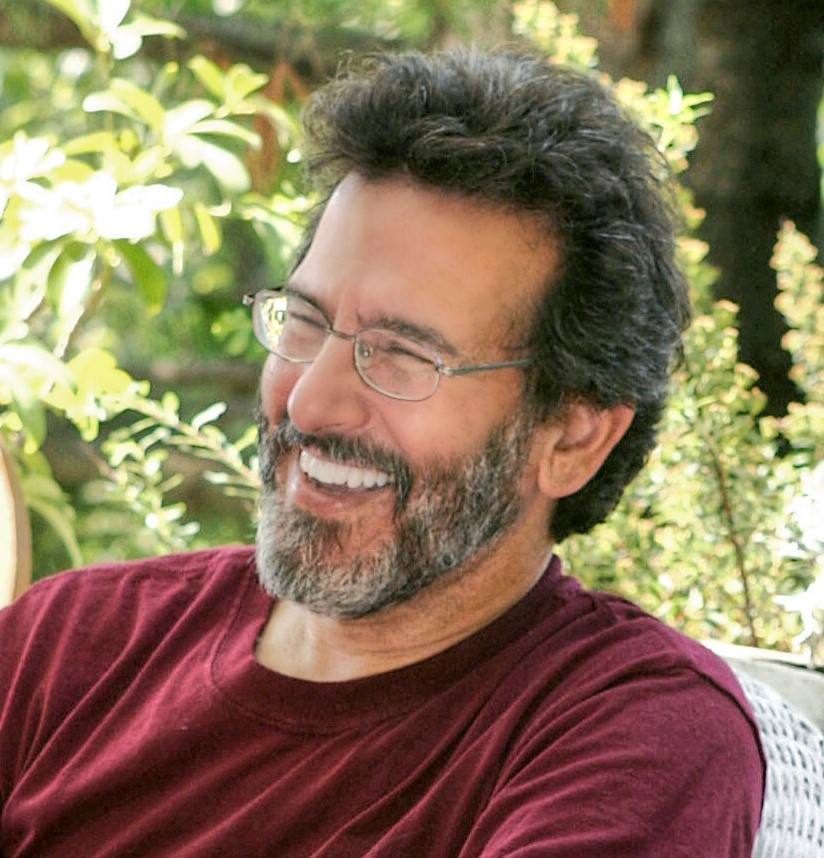
Gregg Krech
Gregg Krech is a leading expert in the field of Japanese Psychology and is the author of five books including, The Art of Taking Action: Lessons from Japanese Psychology andNaikan: Gratitude, Grace and the Japanese Art of Self-reflection (Stone Bridge Press) which won the Spirituality and Health Magazine award for Best Books of the Year in 2002 and has been translated into five languages.
Gregg’s work has been featured in Tricycle, The Sun, Counseling Today, Utne Reader, Cosmopolitan, Yoga Journal, The Guardian, and on National Public Radio.
He currently is the Director of the ToDo Institute in Vermont and a member of the North American Naikan Council. He has two lovely daughters, writes haiku poetry and enjoys playing blues piano.
Formerly Live On Purpose Radio.
Real psychology. Remarkable stories. A radically different way to live.
Think you know what positivity is? Think again. Pathological Positivity is a weekly podcast with psychologist and author Dr. Paul Jenkins. He challenges conventional thinking, explores the science of positivity, and talks with extraordinary people who put it into practice.
Each episode gives you one practical idea you can use the same day, from why you can stop waiting to feel motivated to how to stay positive through a hard week without pretending everything is fine. Episodes run about 15 to 30 minutes, and a new one comes out every Thursday.
Same show, same feed, same archive. Visit pathologicalpositivity.com to listen.
Welcome to Live On Purpose Radio with doctor Paul Jenkins, where you will hear inspiring stories of ordinary people doing extraordinary things. Feed your mind with a regular dose of positive energy and show up for your life every day on purpose. Living on purpose means that you have a purpose and you do it intentionally. And now here's your host, doctor Paul. Hello, everyone.
Welcome back to Live on Purpose Radio. This is doctor Paul, the shrink who expands your life with another episode of Live on Purpose Radio. My guest today is an author. He's a specialist in maybe the bridge between Eastern and Western philosophies. He's done a lot of writing and speaking in the area of Japanese psychology, specifically.
His name is Greg Creech. He is the author of The Art of Taking Action and some other fabulous writings that we will probably refer to several times today. Welcome to the show, Greg. I'm so pleased to have you with me. Well, I'm pleased to be here, doctor Paul.
It's great to be on the show today. Japanese psychology. Tell us a little bit about how you went that direction, and I think think that's going to help to lead us into what that might have to do with living on purpose. Mhmm. Well, I've been working with this material for about thirty years, and I can probably, trace the seed back to an experience I had when I got my first solo apartment in Alexandria, Virginia.
I had moved there from Illinois, and, I was very excited about having my own apartment. And I remember one day, making myself some dinner in the kitchen, and, the food was ready. And I basically went to get, a plate so that I can grab my food and sit down and eat. And I realized that, all my plates... In fact, all my plates and bowls and, really, all my silverware were dirty in the sink in a very, large pile that kind of resembled the Empire State Building.
So I had nothing to put my food on. And the reason I had nothing to put my food on, I later realized in in retrospect, is because I never felt like washing the dishes. And, and so as I look at that period of my life, this was this was when I was in my early twenties, I realized that I was living a very feeling centered life in the sense that I was allowing my feelings to primarily be the director of my life. Whatever I felt like doing is what I did, and what I didn't feel like doing, for the example of being dishes, I didn't do. Right.
And I think, you know, that was the the beginning of my interest, in an approach to psychology that was more action and purpose oriented. And that's really what led me to Japanese psychology. And and, what I found as I, stumbled upon this whole field and then began investigating it was that, Japanese psychology kind of saw this as a shift from a living... A feeling centered approach to life to a purpose centered approach to life. Mhmm.
And something that was challenging for me at first because whether it was with dirty dishes or relationships with women or anything, I always had a very feeling centered approach to things, and it got me in a lot of trouble, particularly in relationships. But, over time, what I found is that that shift of energy, both allowed me to actually connect with my feelings in a, a more direct and, I think, authentic way, and at the same time allowed me to really put my energy towards, a purposeful and more action oriented approach to life, including relationships, including writing books. And I should just add to kind of finalize that story that as a a young 20 year old self respecting bachelor, when I found that I didn't have any clean dishes rather than wash dishes, I went over to a convenience store and bought paper plates. Of course. And left the tower of dishes there in the city.
Right. It it did take me a while to really get back to that point where I actually washed them. We tend, I think, as human beings, to think about things more maybe than we actually jump in and take action related to those things. Has that been your experience? You know, my...
It is my experience, and I find that, in general, that people who are the most intelligent or smartest people are often the same people who have the biggest problem with procrastination because there's this underlying view that we have to have everything figured out in our head before we can actually take action. Right. In fact, you hear this quite often from... I hear it from my clients. Maybe I maybe I say it.
That, oh, I just... I need to figure this out. Mhmm. It's a common thing to say that we wanna wrap our head around it. Yeah.
And and that may work sometimes with simple problems, but, I think one of the the discoveries that I've made in terms of working with this material is that taking action is actually a way of figuring things out, that we jump into things, we take that first step, and suddenly, we begin to understand things from a different perspective or we understand what we need to do or not to do. In Other words, it it opens up the whole, doorway to the possibilities of how we move forward as opposed to being in this position of trying to ruminate on how are... How am I gonna make this all work, in which case we're often kind of paralyzed from taking action. I'm curious, Greg, about some of the philosophical underpinnings of this because it's really a different mindset to approach things from an action oriented philosophy or mindset as opposed to a, a more cognitive, analytical kind of a mindset. What have you noticed about that, or what can you tell us about the, the the driving force behind this?
Well, I think what... The the driving force behind my writing my book, was really having spent twenty five or thirty years studying Eastern philosophy and Buddhist spirituality, Zen meditation, and recognizing that the contemplative aspect of Eastern philosophy is really what we've imported into our society in a way that I think, can really enhance the way we live. I think there's a lot of wisdom in the contemplative side of of the wisdom from the East. However, what I think hasn't really been imported is the kind of action oriented side. If you think of it as a yin and yang, right, there's...
There is an action oriented side to the East. It's not all just about, meditating and sitting quietly and reflecting. And the the two areas I can point to, and and it would require much longer discussion, but at least to give people some leads on this. If you look all the way actually in the back in in one of my library cases, there's... If the...
If your viewers can see this on Facebook, there's a a picture of Gandhi up there. And Gandhi, to me, is one of the people that really embodied this idea of both Eastern spirituality and, you know, he was a tremendous man of action. They say that, in in his, efforts to get independence for India, when he was being interviewed and followed by journalists, the journalists who were thirty years younger than him had trouble keeping up with him when he would walk and was going someplace because he would walk fast. And if you look at his his history and his biography, he really was a man of action and yet he was also a man of faith. And so the idea that somehow, faith requires us not to act, you know, that it's a passive approach to life to me is wrong.
That that faith, whether it be in the Eastern or the Christian traditions, can actually include action. So that's that's kind of one of the philosophical underpinnings. And the the second one, which is is related to Gandhi, is, the epic, book from Hinduism called the Bhagavad Gita. And the Bhagavad Gita is really a story, for those of you out there who might be familiar with it, about someone who is, essentially paralyzed by doubt and unable to take action, the main character Arjuna in that story. And the entire story is kind of a discussion between him and Krishna about who he is and what his role is and what it is that he needs to be doing in this really difficult situation that he's in.
So we can we can find both in people and in texts example of the importance of action and purpose in life from the East, and I think use that to kind of complement the contemplative tradition that we we have brought into our society from the East. That's the one that people might be more familiar with, the the mindfulness, the meditation, that the whole feeling of Zen, carries that connotation. Yeah. And I and I think, you know... Yeah.
And it's it's it's it's got... It's religious connection, and then I think it's it's now actually kind of been transformed into a secular practice. So people meditate for stress reduction and Mhmm. But I think, you know, the idea is that that's just one side of eastern wisdom. And then the other side is this action purpose kind of focus, which really is an important piece of this, that complements that contemplative side.
Right. Well, you mentioned another philosophical anchor, perhaps, that a lot of people are familiar with, the yin and the yang, which comes from an ancient Dallas philosophy where there has to be a balance and opposition, opposing or complimentary parts. Mhmm. A purposeful approach to life. Living...
Well, the show is live on purpose. Right. And here we are talking about a purposeful life. Mhmm. There's there's some important distinctions I feel that you've introduced very nicely here between, the feeling driven approach.
So it is very, very common for us as human beings to just do what we feel like doing or don't do what we don't feel like doing. You give a great example of that as, as a young adult, and you saw your dishes piling up. As you as you paint for us a picture of what a purposeful life is, what what are some of the key elements that you've found there that are helpful to latch onto? Well, I think one of the, key strategies that really has affected my life personally and and I think also many of the people that I've I've trained and worked with, and to contrast this to what I would consider to be more common in in Western psychology is that, when we are struggling with our feeling states, so that could be anxiety, it could be depression, it could be shyness. Right?
All of those are feeling states that really tend us, tend to kind of limit us from taking action. And I think in in the traditional Western view, the idea is to somehow, fix those feelings, to change that feeling state. If we're anxious, we wanna get rid of the anxiety and we want to substitute confidence, for example. Right? And I...
The idea is that sequentially, and and things in the West tend to be more linear, sequentially, we do that first. And once we've gotten rid of the anxiety and we feel more confident, then the next step is to take action. And what you find in Japanese psychology is a very different paradigm. It's not just a different methodology, I think. It's really a different paradigm.
And it's one in which, we aren't trying to actually fix that feeling state. What we're learning to do as a skill, and this is really a very skill based approach, is is to coexist with that feeling state while we take action. So, if I could give you a very personal example, several years ago, I had started... I played piano since I was a kid, but a few years ago, I started working on blues piano. And, and I would go to these blues shows and particularly these blues jams where you'd watch musicians get up and and play blues music.
Mhmm. And I would always love it, and I love the music, But the idea of actually getting up there on the piano on stage, I wouldn't even consider doing because I felt so anxious. Right? I didn't feel very confident. Felt I was relatively new at this.
So I set myself this challenge a couple of years ago that by the end of the year, I would get up on on stage in a club at a blues jam and play piano, right, with a with a band. And, and, of course, and this shows how challenging the studio is because I've been working it for thirty years. So I waited until the last Tuesday night before Christmas, which was the last jam of the year. But I went to this club. I told the the person who was running it that I'd like to, you know, get up and play at some point during the evening.
And at one point, you know, he said, he looked at his list and he says, is Greg Creech out there? You know, can you come come up and play with us a little bit? And, you know, my heart is racing and my stomach is turning and my Right. Are sweating. And, but but the approach that I'm using is to simply notice and accept that internal experience.
Everything that's going on while I put one foot in front of the other, walk up those stairs on stage, I sat down in front of that piano, and, you know, I... My hand... My fingers were trembling. And the way it works in a blues jam is that somebody calls... Whoever's in charge of that song calls out the song.
They say what key it's in, so the key of a. You have about three seconds, and then it's... Then you start. Right. So three seconds later, the band is starting, and I'm just playing.
And what I found is as soon as I immersed myself in the playing, you know, my anxiety was gone. Wow. My nervousness was gone. But but the point is that if I would have waited until I had no anxiety about playing in front of people and waited until I felt confident, I still wouldn't be playing. So You wouldn't be playing.
Now I play three or four times a month at different clubs, different jams. I love it. It's it's a wonderful aspect of my life, and I attribute my ability to kind of do that, something that that has really been a dream for me for many years, to this work, which which allowed me to just accept my internal feeling state without changing it, but to take action while I coexisted with those feelings. Oh, that is so beautifully said and a great example of the art of taking action. Folks, we've got Greg Creech today at Live On Purpose Radio.
When we come back from this break, Greg, let's maybe get practical about how people can actually apply this. Does that sound good to you? Sounds great. We'll be right back. Hey, Live On Purpose family.
I know you're a fan of personal development, and that's why you're here on the podcast. Something else that I think you would really like is Live On Purpose TV. Come on over to youtube.com/liveonpurposetv, where you will find daily episodes that are all geared toward powering up your personal development program. I'm looking forward to seeing you there. And welcome back.
Our guest today at Live on Purpose Radio, Greg Creech. He's the founder of the Toto Institute, at least one of the cofounders, and has authored several books that give us some insights into Japanese psychology. Greg, in the first half, just before our break, you shared an example of what it means to to live a purposeful or a purpose driven life as opposed to one that is, more focused on feelings. And here's what I loved about your example. You were talking about playing the blues.
Mhmm. And, these blues jams have become part of your life now. It required taking action, not getting on top of your anxiety so that you could take action. Right. But taking action, which allowed you to get on top of the anxiety?
Mhmm. We did it backwards a lot, don't we? Abs... Absolutely. You know, we we assume we have to get our mind in order, and then then we can use our body to kind of move forward in life.
And, actually, one of the principles of Japanese psychology is called lead with the body. And it means that, basically, you you have your body take the lead and the mind follows. And I think the example I gave you, and I could give you dozens of others, where, you know, once we actually do something, often our mood changes, our feelings change, our thoughts change as a result of of actually putting ourselves in a situation where we've taken some kind of action. And to me, that's a a much more solid principle to base your life on rather than trying to kind of get your your, mental gymnastics all in order, before you take the next step. So, so that was an example of it.
But I think, in many cases, once we're actively engaged in something, we find that it changes our our thoughts and our feelings and our emotions. Right. I've asked many of my clients, how will you know when you're ready? Mhmm. And and the...
I think the default answer to that is, well, I'll just feel it. Mhmm. I'll feel ready. From from our conversation here, Greg, I'm I'm getting from you that maybe you're not gonna feel ready. That doesn't mean you're not ready.
That... That's right. And, you know, I think the the idea of of acting before you... You're ready, you know, just kind of jumping into something. Now this doesn't mean that you don't...
You you never plan or you never prepare. I mean, I I worked very hard for a long time, practicing, for instance, blues scales and different keys because that was part of getting ready in a practical sense. Yes. But did I ever feel, like, totally confident? No.
Did I still feel anxious? Yes. And so, so sure, we we we do the preparation that's very purpose focused, right, that we need to do in order to take our action. But, ultimately, I think it comes down to, you know, the metaphor that I love to use is is if you see your life as a play, and that many of us, the director of that play is... Are are our feelings.
Mhmm. And our feelings are telling all... Everybody in the play what to do all the time. And that when we make this shift to a purpose centered life, what we're really doing is we're not kicking our feelings out of the play. We're just making them into one of the actors or actresses in the play.
And then the position of director is open. And so who who fills that position? You know, purpose. Right? So our purpose becomes the guiding force in the play of our life, and our feelings remain in the play, but only as one of the many actors or actresses.
And those feelings can make things much more interesting, but they don't get to call the shots necessarily. That's exactly right. And there's times when they play an important role. If you're trying to figure out whether, you should get married to somebody, for example, I think your feelings are an important factor in that choice. Consider that.
Yeah. But there there are other factors. Right? It's not just how you feel. Like, for instance, is the other person already married?
Are you already married? You know? Do you have similar beliefs about, you know, having children? I mean, there's a variety of things to consider. It's not just how you feel.
Right. And speaking of of relationships or marriage, you know, one of the things many of us find out is that once once you are with a person, married or not, over a period of years, those feelings shift. You may not feel that same kind of romantic attraction that you felt in the first thirty days. But your purpose of wanting to be a good, partner, of wanting to honor your commitment of, you know, your commitment to your family as well. The the purpose often is what holds that relationship together.
Those feelings go up and down. You know, I have a wonderful wife, and most of the time, I am totally blown away by how loving and wonderful she is. And then we can get into an argument, and I'll have moments where my thoughts are like... I won't even mention them on there, but they're not very they're not very they're not very, positive thoughts. But it just shows you how our feelings and thoughts can go up and down like a roller coaster.
Yes. You base your life on that, your life becomes a roller coaster. I'm curious, Greg, if you've got some counsel for us based on your experience, your research Mhmm. That that can give us some practical tools for implementing this art of taking action. What...
What's steps can you help us identify if if we wanna get on that purpose driven track? Sure. Well, I'll I'll tell you one just very kinda concrete thing that everybody can do, you know, when they... When the podcast is over. Okay.
I just did a webinar for our our members of our organization on regrouping for the second half of the year, and it's based on an exercise that my family has been doing for years that we do on the first week of January. But you... People can do it now, facing the second half of the year. And, you get out a a big piece of poster board or a flip chart. You you can use regular paper if that's what you have.
And you can do this on your own or you can do it with your partner. We used to do with our kids. And what you do is you write down the highlights, of the second... In this case, the second half of the year as if it was the end of the year, December 31, and you were looking back. What have the highlights of my year been?
And we actually just draw these out on the on the flip chart pad or on the poster board, and it's a really fun exercise. Some of these things you you might be predicting, like, you know, one of my highlights hopefully is going to be to take a self guided bike trip with my wife in in Europe this fall for our anniversary. We did that a few years ago. Yeah. So that's that's kind of on the list.
But other things will just occur and turn out to be highlights, and we can't really predict those things. Mhmm. But those things become your kind of focus for the rest of the year. That... It's what rises to the top, the things that you want to be highlights in your life.
It it could be... You know, one of one of them for me was, doing a great job of supporting my oldest daughter in her study abroad efforts, which we just took her to the airport Monday to fly to Australia to study for the rest of the year. And my... And one of my highlights was that I would do everything I could to support her during the first half of the year to make that possible. So these become kind of your purposes that rise to the top.
And then you have to keep revisiting them, you know, every week, every couple of weeks to see, are you really devoting the time and energy that you need to be doing, which raises then the day to day implementation of that, which, for years, I've been using and our staff here uses what we call the rule of three because it's the simplest thing. I don't know if you've you've heard of this before, doctor Paul, but you start the day before you do any work. You look at what are the three most important things that I need to do, and that... Those are your... That's your rule of three.
And the idea is if you get nothing else done that day except those three things, you've been successful. And it's it's based on the idea that most of us never get everything done that we want to do. We're we're much more ambitious in our mind. Things take longer than we expect. But you wanna get the things done that are really the most important things, and we tend to gravitate towards the things that are easy, that are simple, that, aren't complicated, that we actually feel like doing.
And this is the challenge from a feeling standpoint because some of the most difficult things, like for me writing, I don't particularly love to write, but writing's important for me. I'm an author. And so being able to cope with those feelings of I don't feel like writing, I'd rather, you know, work on a Facebook post or something like that. Mhmm. But going with your purpose, right, Noticing that you're not feeling motivated, but I'm gonna still close the door, open up my computer, and work on my current book for the next hour.
So if people do this, I... If you really do this in a in a very sincere, dedicated way and you just do small steps every day, by the end of the year, many of those highlights that you identified now will become real highlights in your life. This is how you turn them into highlights? Yes. Absolutely.
By that day to day implementation. It occurred to me as you were sharing that very practical approach. I mean, it sounds like goal setting from more of a Western kind of a standpoint. But what it is is being clear about that purpose, and then that starts to be the director or the driver of your day to day habits, especially if you can narrow it down to what are those three important things? Yeah.
I think I think most of us, are spread too thin. Yeah. And and that includes me. You know, I'm... I've I've got many...
Too many too many things on my plate. And so, if you're spread too thin, you're not going to be able to make much progress on any one or two things. But if you can take these three most important things and kind of coalesce your energy, not a 100% of your energy, but much of your energy around those things, whether it be blues piano, whether it be supporting your teenage daughter, whether it be weight loss or an exercise, any of these kinds of areas. Mhmm. Once you raise them to the top and you recognize that this has to become prominent in my day, right, in order to move forward.
Even if you're just taking small steps, there's a Japanese approach to psychology, one of the things we teach called Kaizen, k a I z e n, which is all about taking small incremental steps on a consistent basis. Right? So it's not like, oh, I'm gonna take the weekend, and I'm just gonna spend the whole weekend writing my novel, and I'll get a... I'll get 50 pages done. But instead, I'm gonna sit down today, and I'm gonna write one paragraph.
You know? Right. And that's it. And one of the things we get when we do that everyday kind of small step is we build momentum, and momentum is the thing that's often ignored from a Western viewpoint. We think about progress.
Well, if I write one paragraph, that means at the end of the week, I've only gotten, like, seven paragraphs done. That... That's nothing. But what you've done is you created momentum, which is a habit. It's a a habit that you're building into your day.
And, initially, that's more valuable than the actual progress that you make on your project. And then we get past the illusion that's created when we get so busy, we think we're progressing, but busyness is not the same as progress. Absolutely. Absolutely. Busyness, depending on what you're busy with, can just be another way of procrastinating.
Right. An illusion, really. Mhmm. Greg, this has been so enlightening, and I I love this kind of conversation. You've given us some good practical things that we can apply here.
You've mentioned your, organization, Toto Institute. Mhmm. Where can people connect with you and and connect with your books and your courses? Where's the best place for them to go? Well, the the site I would recommend, because we have a few, is is a site called 30000days.org.
And, it's just in in the words 30000days, all one word, .org. And the words... The term thirty thousand days is actually an estimate of the number of days that we in the West have to live. So, one of the things that I do at the beginning of any workshop I teach is I have people calculate how many days they have left to live. And, you do that by figuring out how many days you've already lived, subtract that from thirty thousand, and most people are shocked by the number that they come up with.
Mhmm. Our website is called 30000days.org, and a lot of my writing is on there and my courses are are on there and just a lot of practical information. So I appreciate letting... You letting me mention that. Yes.
And I would recommend that also to you, our listeners, 30000days.org. And, Greg, I know you have a very active blog there. People can connect to your books or if they want to engage you at some other level, that's the best way. Yes. Yes.
Wonderful. Thank you so much for your contributions today here at Live on Purpose Radio. Is there something else that you wanna share with our listeners before we sign off? Well, I... What I wanna share is that just based on my experience with you in terms of looking at your podcast and and the time we've spent today is you're a great example of living on purpose because, you know, you you...
How long have you been doing this this show now? Okay. It's been almost... I started in 2007, so that's that's 2019 now, so twelve years. Yeah.
So, you know, I think you're you're... You walk your talk. I mean, you have a show. I'm sure you've had your ups and downs in terms of your own work and and with this show and your challenges and difficulties. But you you...
You're doing something that, in particular, not only that, you've been doing it all this time and you stayed with it, but it's it's something that to me is extremely important, this whole theme, which I think your work and my work shares, because we have limited time to be alive. We have these thirty thousand days, give or take a few days, in either direction. Mhmm. And then that's it. It's all over.
And, people procrastinate and procrastinate, and then they find out that whether it's for health reasons or other reasons, they're no longer able to do the thing that they really wanna do in their life. And so I think this shift to a purposeful focus in life is really helpful, and and I just wanna tell you that I appreciate what you're doing and and keep up the great work, doctor Paul. Thank you. I think we're on common paths here, Greg, and I've appreciated our conversation. Folks, you've heard it from Greg Creech today.
Remember, 30000days.org is where you can connect to Greg and his writings and this great idea of living on purpose. And now it's our turn to take action and go live on purpose.