Subscribe
Share
Share
Embed
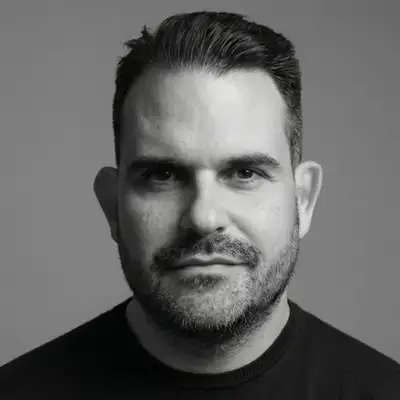
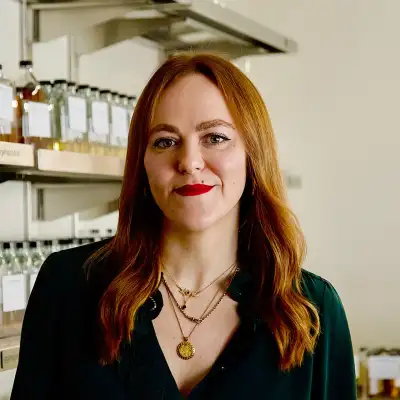
In this episode, Chris Maffeo speaks to Racheal Vaughan Jones and discusses how Compass Box has positioned itself as "whisky makers" in the Scotch whisky industry. Founded in 2000 with a mission to make the Scotch world more interesting, Compass Box balances mastery and imagination in its brand essence.Recently, the company streamlined its core range into a more intuitive collection of four distinct flavor territories while maintaining its artistic limited editions.Racheal shares insights into its recent brand positioning, "Long Live Interesting," and how it has successfully translated it through packaging, communication, and targeted campaign activations across key cities.The brand's recent award-winning "Hedonism" limited edition showcases its collaboration with female artists and embodies its philosophy of starting with an organically evolving idea.Timestamps:00:00 Introduction and Welcome00:30 Special Guest Introduction01:53 The Story of Compass Box04:23 Brand Positioning and Marketing10:29 Core Range and Consumer Experience14:29 Limited Editions and Awards20:05 Limited edition approach with Hedonism26:06 Communication and Marketing Strategies30:30 Localized activation and content strategy33:45 Creating demand and brand-building philosophy
In this episode, Chris Maffeo speaks to Racheal Vaughan Jones and discusses how Compass Box has positioned itself as "whisky makers" in the Scotch whisky industry. Founded in 2000 with a mission to make the Scotch world more interesting, Compass Box balances mastery and imagination in its brand essence.
Recently, the company streamlined its core range into a more intuitive collection of four distinct flavor territories while maintaining its artistic limited editions.
Racheal shares insights into its recent brand positioning, "Long Live Interesting," and how it has successfully translated it through packaging, communication, and targeted campaign activations across key cities.
The brand's recent award-winning "Hedonism" limited edition showcases its collaboration with female artists and embodies its philosophy of starting with an organically evolving idea.
Timestamps:
00:00 Introduction and Welcome
00:30 Special Guest Introduction
01:53 The Story of Compass Box
04:23 Brand Positioning and Marketing
10:29 Core Range and Consumer Experience
14:29 Limited Editions and Awards
20:05 Limited edition approach with Hedonism
26:06 Communication and Marketing Strategies
30:30 Localized activation and content strategy
33:45 Creating demand and brand-building philosophy
The MAFFEO DRINKS Podcast is a leading drinks business podcast delivering actionable insights for drinks leadership.
For founders, directors, distributor MDs, and hospitality leaders navigating the tension between bottom-up reality and top-down expectations.
20+ years building brands across 30+ markets. Each episode features drinks builders: founders, distributors, commercial directors, sharing how the drinks industry actually works. Not the conference version. Honest conversations.
Insights come from sitting at the bar.
Beyond episodes: advisory for leadership teams, subscription with episode deep dives and principles to navigate your own reality.
Beer, wine, spirits, Low and non-alcoholic.
Bottom-up Insights & Episode Deep Dives at https://maffeodrinks.com
Welcome to the Maffeo drinks podcast where brands are built bottom up. I'm Chris Maffeo. And in each episode, me and a new guest crack how drinks go from one bottle to one case to one pallet. He'd follow and leave a review to help new drinks builders find it. Now let's break it down together.
Chris Maffeo:Rachel, welcome to the Mafur Drinks podcast.
Racheal Vaughan Jones:Finally, I am here. Very excited. I will also introduce our potential special guest, my dog, Marty, who is currently being quiet and well behaved. If he pops his head up, everyone knows that's our special guest.
Chris Maffeo:I almost forgot he was there.
Racheal Vaughan Jones:Hope it stays that way.
Chris Maffeo:I hope you fall asleep with my voice. Maybe it helps. That's fantastic to have you. I wanted to have you for a long time. Finally, we managed to meet even in person at BCB last year.
Chris Maffeo:That was a fantastic moment. We have a photo that I've saved for this occasion.
Racheal Vaughan Jones:Yeah. Amazing. I mean, we first spoke in 2020, back in the days of Clubhouse RIP. We've been in touch ever since, but it was so nice to see you finally in the flesh.
Chris Maffeo:It's another of those nice clubhouse connections that lasted a long time.
Racheal Vaughan Jones:And I will tell my favorite story about you from BCB, which was kind of a genius move. But when you had forgotten your room key and they asked for identification, you didn't have your wallet. You showed them your buffet drinks podcast Instagram as proof of who you were. And it worked.
Chris Maffeo:I forgot about that. Yes. I did the I did it that way.
Racheal Vaughan Jones:It's a life hack.
Chris Maffeo:I've been following your path for a long time. I've realized we have hundreds of friends in common in the industry and outside. What I really love and want to focus on in these latest episodes, I'm trying to focus on one rather than going the full circle of building brands. What I particularly love about the work you and the team at Compass Box have been doing is the translation of the brand positioning and what Compass Box stands for into all the steps and touch points. How does that translate into the range?
Chris Maffeo:How does that translate into packaging, expressions, communication, because I saw your, first billboard campaign and outdoor campaign. So I'll analyze all these nice elements. So let's start first, like Compass Box. I love what, how you described yourself. You're not blenders, you're not distillers, but you are
Racheal Vaughan Jones:Whiskey makers. Yeah. So whisky maker, a word that Compassbox actually invented it. So Compassbox has been around since the year 2000. And back then, when the Brown was fan- when the Brown was founded, we wanted a word to describe ourselves.
Racheal Vaughan Jones:It's kind of different to a distiller because we're taking liquids that have already been distilled and blending them together. But we felt it was more than blending because it's about the totality of the whiskey, not just the liquid in the bottle that's blended together, but the packaging, the storytelling, the atmosphere you create around it. For us, whiskey maker felt apt. John Glaser, founder of Compassbox, studied viticulture and was interested in winemaking. He took inspiration from that territory and thought, hey, whisky maker makes sense.
Racheal Vaughan Jones:It's been amazing to see over the years so many brands have adopted that word now, and I think it really speaks to how people are taking a more broad approach to what they're doing. It's not just about the liquid that's blended together, it's about the whole package.
Chris Maffeo:I love it, love it. And when I read it and heard it, I immediately thought about the word I sort of invented: drinks builders. There's people in marketing, sales, customer service, bartenders, importers, distributors. We are all ultimately drinks builders, not only brand builders that it's only like a marketing connotation, but it's something that you are really making and building. I love how you bring it to life and especially the positioning.
Chris Maffeo:How would you explain the positioning of Compass Box and what you are doing?
Racheal Vaughan Jones:Yeah, so Compass Box, we were founded with the mission of making the world of Scotch more interesting. And I think twenty five years later, we can say that, you know, that category is definitely far more interesting. There are lots of amazing brands blends as well that are doing incredible things. And that's really positive to see at our core. We have two things that we talk about as our brand essence, and they are mastery and imagination.
Racheal Vaughan Jones:When you have a brand like Compass Box that is so distinctive, the range, they're all very unique. They all have their own kind of personality. They all have their own style. And previously it maybe was seen more of a kind of house of brands rather than a branded house. We've worked hard over the last couple of years to bring that together to be, you know, the brand of Compass Box.
Racheal Vaughan Jones:But what runs through every single thing that we do is mastery and imagination. That is how we try to keep consistency across all the different touch points. We did a lot of work to understand how do we translate that brand positioning into something that consumers can relate to in an emotional way, connect in an emotional way. We worked with an amazing agency called John Doe. We looked at the world around us and the world that consumers are existing in.
Racheal Vaughan Jones:The mundane daily activities, the commute, the news being absolutely awful to look at every single day, there's something terrible happening somewhere in the world. And also being this desire for lightness in the world. So we came up with this brand platform that was death to bored and boringness is our enemy as a brand, and what we bring is interesting. We came up with the consumer line long live interesting, which is a rallying call to arms for all those who are bored and want to wake up from this vanilla nightmare. Join us on this mission to bring interesting into people's lives.
Chris Maffeo:I don't want to run into the packaging because I want to ask you questions later, but I really love the brand. I think it's one of the coolest brands out there at the moment. What I love is the initial mission that I as I understood it, to bring blended whisky back to its due glory in a world where only single malts were considered first class kind of scotch and blended was like a commodity bulk, ship it everywhere and sell it everywhere. But really understand, okay, going back to the liquid. One of the things that I was discussing originally back in the days when I also had Morris as a guest, it was, does it start from the brand or from the liquid?
Chris Maffeo:I want to ask you that question now. What's your take? Does it start from the brand of liquid?
Racheal Vaughan Jones:It's a really good question. Actually, I'd be surprised how often I do get asked what is the driver for, you know, we launch really interesting limited editions every year. And where does that start? It is very much collaborative process between whiskey making and kind of marketing. So marketing bring that kind of consumer angle whilst whiskey making are really trying to deliver something that is unexpected, that, you know, incites people to ask questions, to do things that haven't been done before.
Racheal Vaughan Jones:I think Cumbers Box, founded in 2000, launched with a blended grain. Exactly as you said, in 2000, blends were definitely seen as less than, and grain was seen as less than, right? Everyone was obsessed with single malts, and we launched with a blended grain. It was the first blended grain ever launched. We believed that, treated in the right way, left in the right casks, blended together in the most way, and then presented in a way that was different to what else was out there.
Racheal Vaughan Jones:That was worth showing people how delicious grain could be. Thankfully perceptions have changed, and people love grain whisky now. That ethos runs across everything we do, and we don't really care about the rules. We're willing to push the boundaries, experiment in ways that potentially occasionally has been known to upset the SWA. But it's all in this pursuit of doing things that are going to encourage people to change the way they think about whiskey and blends particularly.
Chris Maffeo:It's interesting to hear that if you look at it, I'm always talking against this thing. People look at IWSR and reports like, oh, this category is growing. Let's focus on this one. Let's launch that. Anybody looking at the situation of blended whiskey back then would have never had a business idea of taking that category and trying to grow it.
Chris Maffeo:So interesting how you can find these categories when to focus and build them bottom up. It really doesn't matter how big the category is at that time, because the category is a certain size because of certain players are acting a certain way, but not necessarily because what you can do and how you can move the needle.
Racheal Vaughan Jones:Yeah. Being clear about what you stand for and who you want to drink your product is really important. We have always said we're not trying to recruit people into the whiskey category. There are amazing, delicious brands out there with humongous budgets who can do the heavy lifting of getting people who maybe previously haven't thought about being a whiskey drinker. They can bring them into the category for us.
Racheal Vaughan Jones:We're only interested when they're already on that journey. And the second thing is we will not defend the blend. I used to work many years ago on Valentine's Prestige, mainly on Asian markets. Every conversation had to start with, well, blends are just as good as single malts. And let me tell you the reasons why it's maybe about the occasion and yada yada yada.
Racheal Vaughan Jones:You'd always have to start by defending something before introducing a brand. But at Compass Box, we're like, if someone is, you know, staunchly wedded to only drinking single malts, we're not really interested. We are interested in people who are open minded, want to try different things and explore the category. Being really clear on that means we cut out a bunch of crap from our messaging because that would takes away from us delivering who Compass Box is.
Chris Maffeo:Let me ask you, you know, my deep hate consumers and my love for target occasions. When I see the packaging and, taste it at your standard at BCB, was, was very interesting to me was, understanding the range. There was a very little overlap or cannibalization between the different ranges. Back then I remember that, you know, there's always been an evolution because the range used to be much bigger. Now it's more streamlined.
Chris Maffeo:I don't know if you call them taste profiles or flavor profiles, or target occasions. Do you know what to expect when you look at the bottle and see what's written there and the visuals it gives you?
Racheal Vaughan Jones:Yeah. I think that's really important. We had a core range of seven, immediate red flag. And there was exactly, as you say, there was crossover between some whiskeys. Two of my favorite whiskeys, which are now retired, spice tree and story of the Spaniard were both in our core range.
Racheal Vaughan Jones:And yes, whilst they were different, there was overlap. Consumers didn't understand, like, if I like a bit of sherry, bit of spice, which one do I choose? It was very confusing. What we wanted to be laser focused on creating almost a capsule core collection that with each of those four whiskeys you could explore each of the key flavour territories within whisky. I think that's something all brands can consider when developing a range that's not exclusive to us.
Racheal Vaughan Jones:I share your views on being specific about consumer targets because there's intersectionality across everything. People who drink Compass Box only interested in whiskey, they are also interested in a lot of different kind of areas of people's lives. But back to the core range at the most basic level, we have Orchard House, which is fruity. We have Nectarosity, which is oak influence. If you love bourbon, you're going to love Nectarosity.
Racheal Vaughan Jones:If you like peat, peat monsters for you, and if you like sherry, crimson casks is the one for you. People can now go to Compass Box if they've never discovered us before and like a sherry whiskey, they can say I'm going to like crimson casks'. In an ideal world they would explore all the different whiskeys in the range at its base level, easier to understand and navigate.
Chris Maffeo:I really like the clarity that it's now conveyed, but at the same time, I was seeing the evolution because if I remember correctly, before it was more expression focused, I spoke to a lot of people when mentioning Compass Box in the past, they didn't know the brand, for example. And then I would say, do you know the Pit Monster? Yeah. Yeah. I know the Pit Monster.
Chris Maffeo:Yeah. That's Compass Box. I've seen that now it's interesting for listeners thinking of how to improve their packaging and range. There's been an evolution. Can you walk us through?
Racheal Vaughan Jones:You hit the nail on the head. We did some consumer research a couple of years ago. Consumers could recall the Pete Monster Orchard House, but nobody could recall Compass Box. And, you know, in this moving away from being a house of brands to a branded house, We knew that we needed to improve the hierarchy of messaging, make sure that Compass Box was the lead thing. This works with our new comms platform where we're trying to communicate as a brand rather than through each expression.
Racheal Vaughan Jones:We relooked at the packaging in its base form. It sounds really simple, but made the logo a hell of a lot bigger and moved the product names down into a lower band so that when you look at it, first thing you see is a compass box. You can navigate through the product specifics from a panel at the bottom that's consistent across all four. I think we still have work to do. This change launched in The UK in July and rolled out in The US in September.
Racheal Vaughan Jones:It's still early days. The great thing about being a challenger brand in a more agile company is that we can listen, we can learn quickly, improve and iterate within that listen and learn phase.
Chris Maffeo:And what about how you play in terms of hierarchy? I've seen that you've got, you've also got some limited releases as well as the core range, right?
Racheal Vaughan Jones:Yeah. We do. I have no issue speaking transparently to say that over the years, we probably did too many limited editions. I've never tasted a Compass Box whiskey that wasn't absolutely delicious, didn't surprise and delight me. But when you're trying to build a brand, you know, to grow and build a brand, you need to build from your core range.
Racheal Vaughan Jones:You need people picking up a bottle of your core collection, drinking it, enjoying it, buying it again, sharing it with friends. You can't really build brand equity through limited editions, in my opinion. They can provide a good moment to tell a story, push a story to extremes, create new news, but you need to be focused on your core collection. Our limited editions in the past have always been very different. Each time we launch one it's like launching in What we're doing now is we're being very targeted in our approach, linking our future limited editions to a core collection bottle.
Racheal Vaughan Jones:So, not
Chris Maffeo:in
Racheal Vaughan Jones:terms of packaging, but in terms of following the thread of flavour. So back to fruity, bourbon, peasage, sherry, how do we take one of those territories, give it a new spin and push it to the extreme? Hopefully that will help consumers navigate much more easily.
Chris Maffeo:My news are usually LinkedIn. I saw you won, you just recently won an award from what was it? Spirits Business or?
Racheal Vaughan Jones:We won best marketing campaign of 2024, which was very exciting. This is an industry award and to be, to be considered nominated and win awards alongside so many brands that we admire. You know, the guys at Two Drifters won I think they might have won two awards actually. Like, you know, it's really amazing to feel that when you're up against such incredible brands. At the end of the day, take the win, move on, do more, do better, keep pushing forward.
Racheal Vaughan Jones:Cause at the end of day, it's the consumers who matter. Our job is to reach millions more of them.
Chris Maffeo:And I mean, you also probably know, I'm not a big fan of awards, but what I liked about this one was it was really something I had been seeing. I've seen the video of hedonism. I love this from grain to gold. What I love about it is the fact that you see something in action and then you see an award. Well, what I usually don't like when I see awards is when I see that somebody won an award for something I have never seen before.
Chris Maffeo:And then it's like, what's this all about? Can you walk us through because it's connected to this limited edition that you were mentioning before. Let me understand if I got it right from what I've read. The hedonism used to be the first expression created by Compass Box, and it used to be a regular range bottle. And now you moved it into a limited edition lame.
Racheal Vaughan Jones:Yeah. Exactly that. So Hedonism was the first whisky we ever launched. A couple of years ago, we realized that thanks to the fact that grain whisky had grown so much in popularity, we were struggling to get hold of the older and rarer grain whiskeys that we needed to make the volumes for hedonism to remain as a core whisky. Cumbus Box was never going to make hedonism a whisky that was less than, you know, by using younger or not as good grain whiskies to maintain the volume.
Racheal Vaughan Jones:We were never gonna do that, so we decided that we'd make it a limited annual release and release as many bottles as we could based on inventory for that particular year. So it comes out every year in February. And another first for hedonism was the fact that hedonism was the first whiskey label, we believe, that ever featured a female form on the label. Each year we collaborate with a different female artist to reimagine that original hedonism woman to create the label artwork. The first one we won the award for was in collaboration with Stephanie Rue.
Racheal Vaughan Jones:We picked her based on her artwork and it turned out she was Scottish. I was like, oh my God, you're gonna write the stuff it was meant to be. So that turned out perfectly. Again, going back to what I said at the start, the mastery and imagination of capturing Stephanie's process, the attention to detail and the crap she puts into it, and the amount of time she's spent learning her craft, really is reflected in what we do as Compass Box. So whilst we're not in that documentary Hey, look at the mastery.
Racheal Vaughan Jones:Look at the imagination. It comes through show, not tell. We've just launched the 2025 edition, which was in collaboration with an Argentinian artist called Sofia Bonatti. She had a tough act to follow, but my god, she she absolutely kind of nailed it. Her artwork is incredible.
Chris Maffeo:What I like is they act, you know, different, but they speak to each other probably by growing through the years. You will start to see more women on the label and hopefully even as drinkers of the brand. But what I love is standing out from the shelf. Ryan in the video that I saw was saying how does it stand the light? I mean, first one was with gold foils.
Chris Maffeo:Was really cool. I mean, I'll put a link to anybody that wants to see it, but also it's this woman looking at you from the shelf. What I liked is brought me back to Vienna, secession kind of style of Klimt or Alfonsmucha here in Prague, beginning of the century. It was very connected to the opulence.
Racheal Vaughan Jones:It's hedonistic, right? Yeah. No. And yeah, everything you're saying, I completely agree with. You'll have to visit us next time you're in London.
Racheal Vaughan Jones:We have the artwork displayed in the office and the original is breathtaking. Hannah, our senior brand manager who works on MPD and packaging, who was able to take that breathtaking original artwork and translate it so beautifully onto the label is like mind blowing. She did a great job. When you see it on a back bar, it invites you in. She's powerful, but she's kind of looking at you, but you almost want to have a conversation with her.
Racheal Vaughan Jones:We hope that the conversation people have with her will be a conversation with the whiskey in the glass.
Chris Maffeo:That's beautiful. Let's go back to the cold range we were discussing before. I'm a big fan of starting from I used to say it starts from the liquid. Now I actually evolved my thinking during this conversation on the podcast. I like to say it starts with an idea.
Racheal Vaughan Jones:We have a quote at Compassbox, which I think is a Picasso quote. It starts with an idea and then it comes something else. We live by that, in that there's this constant state of evolution and things can start one way, but you have to be willing to go with the flow and see where it takes you.
Chris Maffeo:I love it. It reminds me of the quote by Mike Tyson. Everybody has a plan until they get punched in the face.
Racheal Vaughan Jones:I'm gonna start using that one with the team.
Chris Maffeo:There was a CEO, Paolo Lanzarotti, in Asahid, once he asked the question to the board and he said like, do you know which day last year's plan you realized it was bullshit? January 2. It stuck with me because I was real like, okay, if he says that, then I'm allowed to actually say it. What I want to ask you is how you bring this all, this flavour profile, taste profile to life. You were talking about these territories.
Chris Maffeo:I remember discussing this with Georgie Bell from The Hard Cut in one of the previous episodes about being able to actually speak normal language for consumers. The average consumer, because we always fall into the trap of the eco chamber. And you know, I'm lucky that my wife is not from the industry and many of my friends are not from the industry. Whenever I mention something and then I look at their faces,
Racheal Vaughan Jones:they look at me like
Chris Maffeo:what the hell are you talking about? And maybe they're not even English native speakers. For example, I love that name. Even though you don't understand anything about whisky or whatever is in that bottle, you understand something. So how do you decide or how do you explain the different expressions in a language that is easy to understand.
Racheal Vaughan Jones:We're definitely not perfect at this, and a big focus for us right now is how do we really simplify to the most basic level at key touch points. And the key touch points for me at the moment where we need to win is kind of in the last three feet, like in retailers. We're working on that now. I think one thing that we do well is when you, you know, it was Elwin Gladstone said on, I had him on the podcast I used to do called building liquid. He said like 85% of spirits marketing is the packaging.
Racheal Vaughan Jones:Cause when someone goes to a fixture and there's like a 100 bottles, the only thing you have, unless you've invested in shelf talkers and all this kind of stuff, the only thing you have is your packaging. One thing we do well is that people often say it's like drinking the label. Look at Orchard House, lovely orchard fruits. It's green, it's light, it's fresh, it's fruity. And it reflects exactly what you're going to taste in the bottle.
Racheal Vaughan Jones:Same with crimson casks, crimson, sherry. The label has expected color codes and cues consumers associate with sherry. Nectarosity, again, kind of those more kind of bourbon cues, and nectar is a word that sounds as if it's gonna taste delicious. So we try and do that with the labels. Communications wise, it's just thinking exactly as you say at the most basic level, what a consumer is gonna connect with the most, and that is the liquid, the flavor, and how do we break that down.
Racheal Vaughan Jones:For us, that is kind of like fruity. If you love bourbon, you'll love this. Pete and Sherry. Basic hook them in, then you can start to tell them your stories. Compass Box is a blessing and a curse in that we have so many incredible stories.
Racheal Vaughan Jones:The Compass Box rabbit hole goes very deep. That's why loyalty to Compass Box is strong. We have a recipe wheel for every single whisky we've made available to download on our website. We're not allowed to tell people the exact age of all the whiskeys in a blend, but we believe in transparency. If you count the rings on the recipe wheel, it will tell you the age of every single component part because we don't have anything to hide.
Racheal Vaughan Jones:And it's that level of detail that keeps people with Compass Box. It has to be massively oversimplified at that top of funnel in order to get people in. And then hopefully we can move them along and get them to be lifelong friends of the brand.
Chris Maffeo:Love that. I used not to be a whiskey drinker, so I entered from side door. In your core range, for example, would you say that there is a way that consumers usually navigate if they are starting drinking or it doesn't matter because anybody has their own taste buds and palate?
Racheal Vaughan Jones:Yeah. I mean, you are a whiskey drinker and know the type of whisky flavour profile that might interest you, if you're fresh to Compass Box, the way we talk about it is Orchard House is the entry point into Compass Box. It is the truest expression of the brand because over 86% of the whiskeys in that bottle are whiskeys that we have had from New Make Spirit and put into our own custom casks. As time goes on, as our stock matures, that will get to almost a 100%. Then we would explore the influence Oak has on whiskey.
Racheal Vaughan Jones:If you take Orchard House and, you know, impart it with much more of that cast character, you'd get to Nectarosity. If you want to explore peat, you would explore peat monster in terms of this isn't consumer language, but trading up or completing a scotch journey. You can't really complete a scotch journey without experiencing sherry, and that's where it would take you to kind of Crimson Casks, which is the pinnacle of the Core Collection.
Chris Maffeo:Very interesting.
Racheal Vaughan Jones:When we map it out visually, it very cleverly is shaped like a compass.
Chris Maffeo:Really?
Racheal Vaughan Jones:Really?
Chris Maffeo:Let's talk about the last bit communication. I think that's ultimately the marketing heaven of that journey. There is always this thing that small brands or challenger brands or however you want to call them like brands that used to be small at some point. In a way, like the billboards and ad campaigns, it becomes a bit like, okay, you're making, you know, friends with the devil. That it's something I would never be on the billboard.
Chris Maffeo:You'll never see my brand on a billboard and I will never do ATL and these kinds of things, you know, that I heard throughout my journey in drinks. What I loved about your campaign, the Billboard campaign was really this, you know, it, it looks so natural to me. It didn't feel like what the hell is Rachel and the team doing with a Billboard campaign on a brand that doesn't speak Billboard. This is my pragmatic approach to brand building. Can you navigate us through that journey to and how you brought it to life?
Racheal Vaughan Jones:Yeah. Firstly, we did wild posting as much more affordable way of doing out of home activity. My biggest advice, don't just do a billboard or while posting and expect it to move the needle in isolation. So we did while posting in a bunch of cities across Europe, a few Us cities and London. The key thing was it was always attached to other activities, whether there was a whisky festival on, and we knew that there was going to be a massive influx of whisky lovers in town, menu takeovers in multiple bars.
Racheal Vaughan Jones:When we did it in London, we had in takeovers. We had a bunch of bars in London who had special cocktails on the menu. We also had sampling happening. We had our activations happening at the same time. There was all this three sixty activity supported by out of home activity.
Racheal Vaughan Jones:We got initial results from that period. We grew brand awareness in The UK by about 6% in that period when the category awareness only went up 1%. I would never say that is down to our posting. I would say it was down to us having this cohesive plan that took into account all of the different touch points where consumers might be. We were pretty targeted.
Racheal Vaughan Jones:Posting in Australia in February was linked to heaps of activity. We were able to target billboard space within 25 meters of accounts where we had activity. It's linking these things together. It's never gonna, as a brand of our size who is not that well known, you're never going to win just by clustering billboards everywhere. But if you link it into a lot of other key activity that's having at the time, then the whole thing moves the needle a little bit.
Chris Maffeo:I really like the fact that, know, I'm a big geography fan as everybody probably knows by now, but approaching cities and conquering different neighborhoods. Did you call it wild posting?
Racheal Vaughan Jones:Yes.
Chris Maffeo:Yes. I like that. I've never heard it before. This wild posting is interesting, especially when you manage to have a bigger presence into a certain neighborhood now, where you get some listing and then make yourself relevant for that neighborhood. Those type of people that go to those type of bars will look for the brand.
Chris Maffeo:And again, it's one of these things, I mean, I heard it on some podcasts. I don't remember what it was. Back in the days, ATL as such, you're getting the outcome ten years down the line. It's how you judge the KPIs of activities you do. The outcome could be PR coverage and exposure.
Chris Maffeo:So it's got nothing to do with a brand tracker. More to do with being relevant and then maybe you are in some trade magazines and with those trade magazines, you bring them to an outlet and then that helps you secure a new listing. I'm always skeptical on attribution, you know, like this kind of like crazy attribution. Chris Walker that I'm going to have soon on the podcast is, calls it the attribution mirage. We tend to think certain things must be KPI ed a certain way, but ultimately it's okay, but why are we doing certain things?
Chris Maffeo:And it could be a totally different way. So for me that was interesting, funny enough.
Racheal Vaughan Jones:Brand building takes time to win in the short term, and those things are always gonna be more tactical. But if you want to build a brand, I love you always say, and I wholeheartedly agree that like, there is no overnight success in drinks. Like suddenly if it seems like, oh my god, wow, this brand is suddenly everywhere and they just got bought for, like, you know, half $1,000,000,000, it's like, actually if you look back there's, like, ten, fifteen, twenty years of that, like hard graph building from the bottom up to get to that overnight success and that these brand building things take time to take effect, but you've just got to kind of stick at it. Internally within my team, we talk about challenger brand energy. We always want to have this energy to do things quickly, differently.
Racheal Vaughan Jones:Indifference is our number one fear, so we always say like, I would rather we try something and people are like Marmite, we hate it, we love it and have an extreme reaction versus doing something and people being like, whatever. And we always say like, could another brand do this in this way? And if the answer is yes, we don't do it. Internally, it's about challenger brand energy, but externally, it's about big brand energy. Taking over a city and doing activities across loads of different touch points for those people, suddenly it's like oh this brand, I've seen this brand everywhere the past few weeks' it makes you seem like a much bigger brand that is a shortcut to being front of mind.
Racheal Vaughan Jones:And just wanted to add one other thing that we did in case anyone's considering doing something similar is that when we had these activities happening in different cities, we captured content of everything that really showed the place. So, you know, if it was Berlin, we created content around the wall posting in Berlin that showed landmarks, showed, you know, the stitch shops, the bar takeovers, etcetera. And then we used that content to geo target people in that market, and we found that the content that we put paid spend behind, that is localised and shows people, so people in Germany are seeing their own city reflected back at them with our brand, that performs way better than the kind of general global brand content that they see. And it's because they see, oh, this brand is a brand for me. It's in my market.
Chris Maffeo:That's so beautiful. Thanks for sharing. It's fantastic. I mean, it's a, it's an, one of those things that when you hear it, it's like, of course, but then if you don't do it, you don't realize it. The power of these things by doing small experiments in different cities gives this localised global reach making a lot of sense.
Chris Maffeo:I wanted to ask you about that because I remember the post that you wrote, if any other whisky brand can do this, we move on. I really love because we tend to think and talk about this. Is it ownable by a brand? Brands are unfortunately copycatting each other. If you are a certain type of brand more into luxurious liquids, you know, like it doesn't make sense to do wild posting in a, you know, in Kreuzberg, in Berlin, it wouldn't make any sense.
Chris Maffeo:It's always how to make it ownable. So it makes sense for the industry down to, you know, the average consumer or the shopper that will buy one bottle one day, one year and so on. And there's a lot of discussions recently. And finally people are talking about creating demand. You are actually out there for the 95% not in buying mode.
Chris Maffeo:When you do these campaigns. You're not talking about the 5%. If the 5% is actively looking, you can speak to them, that's fine. In the end, it's this kind of solutions where I'm talking to people and I know that they will never buy those kinds of brands, but then maybe they heard this from me two years ago at my birthday party or whatever and then when they are in this mode of oh, I want to buy a bottle of whisky for whoever, whether it's a celebration or a party or anything, that's when it pops in their head and they may not even realise it. And it goes back to this crazy craving for attribution, that we measure what we can rather than what we should measure.
Chris Maffeo:It becomes a retrofitting exercise rather than, okay, I've got this and it doesn't matter if I cannot track it. I feel and the gut feel tells me this is going to work. Even if you can't prove it to management, at some point, you know, you're going the right way and maybe a metric will prove it. Yeah. The PDF, as you were saying
Racheal Vaughan Jones:We're saving PDFs, not lives.
Chris Maffeo:I love that. Let's wrap it up here. I think it's a nice way to close this episode. We could go on forever and hopefully sooner rather than later I can come to visit you because I definitely want to. Let our listeners know how to find you if they want to get in touch with you.
Racheal Vaughan Jones:Yep. You can find on LinkedIn Rachel Vaughn Jones and Instagram RVJ at drinks. And of course, check out Compass Box as well.
Chris Maffeo:Fantastic. So thanks so much, Rachel. It was a great pleasure. Speak soon.
Racheal Vaughan Jones:Thanks for having me.
Chris Maffeo:Thanks for listening to the Mafare Drinks podcast. If you enjoyed it, please hit the subscribe button. Also, a small ask. Please leave a review wherever you listen. Reviews make such a big impact and help other drinks builders discover the show.
Chris Maffeo:Feel free to contact me for feedback on LinkedIn at ChrisMaffeiro or on Instagram at mafeirodrinks or at mafeirodrinks.com. And remember that brands are built bottom up.