Subscribe
Share
Share
Embed
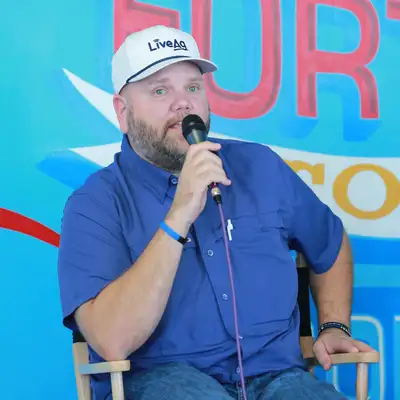
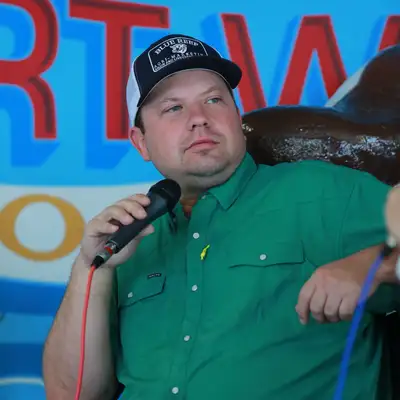
Welcome to the "We Live It" ranch and livestock marketing podcast, where cattle market intelligence meets ranch-ready wisdom. Join hosts Ty deCordova with LiveAg and Casey Mabry with Blue Reef Agri-marketing as they bring you straight-talk market analysis, proven strategies, and insights from industry leaders who understand ranching isn't just a business - it's a way of life.
From livestock market trends to cattle management practices, each episode delivers actionable knowledge to help take your ranching operation to the next level. Whether you're in the saddle or in the truck, tune in for conversations that matter to modern cattlemen. Because we don't just talk about the cattle business...we live it.
Usually Sunday night. Send what I call like a buyer guide to my buyer. So we have buyers in different sale, Barns all over the country. Obviously before the Mexican border was shut down, we had cattle buyers in Mexico. I buy cattle for my brother up in Canada when the price is right.
Speaker 1:It's definitely not right now, but so we, we will buy cattle from anywhere and everywhere as long as they make sense. So I will give them a guide In 50 pound increments to different States. I can pay based on like what ration prices are at different feed yards and how I think cattle will perform at different feed yards and steers of heifers. So they have this big list. So they're sitting there in a feed yard and looking down at this list and they're buying cattle for us.
Speaker 1:I also me personally, I'll sit on sales like LieBag. And I will just sit there with a breakeven calculator and I will run them as the sales going to see if I can buy them or not. So I sit on a lot of different sales as well and buy cattle. And we're very data driven at Arcadia. We have literally every single closeout data that we've ever on every hoof of cattle that we've ever killed.
Speaker 1:So we try to make pretty strategically like projected cattle based on how cattle have fed in the past.
Speaker 2:That's a head on. We live it. The live ag podcast from seed stock bull sales built on generations of performance to commercial video auctions backed by real relationships to equipment auctions that keep operations moving forward. LiveAg connects cattle producers to opportunity. Quality cattle deserve premium prices.
Speaker 2:The right bulls deserve more buyers and dependable equipment deserves a fair bit. Whether you're consigning to a live AG video auction, marketing seed stock or moving iron through the equipment exchange, we combine local representation with nationwide reach. Connect with your live Ag rep by scanning the code on your screen or visit us online at live-ag.com. We are proud to be powered by BioZyme, the makers of Vita Firm and GainSmart. Value added nutrition partners trusted by cattle producers across the country.
Speaker 2:Now here are your hosts, Ty deCordova and Casey Mabry.
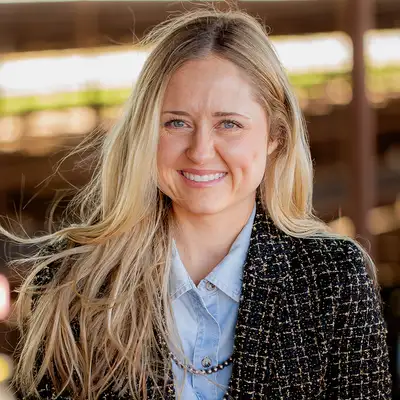
Speaker 3:Welcome back to the We LiveAg podcast. Ty deCordova and co host Casey Mabry. We're joined today by Emily Jackson with Arcadia Commodities. Emily, thank you for joining us. It's really a pleasure of mine and Casey's to have you on today.
Speaker 3:I've known of you for a long time, I've known your family or to your dad, I've done a lot of things with him on the phone and over the phone in the different years. So thank you for joining us. We will kind of speak a little bit about who you work for later on, we don't want to talk a lot about him right now, but we'll get into that later. So just kind of introduce yourself, fill us in, where you grew up, kind of how you got in the industry, how you ended up where you're at.
Speaker 1:Yeah. So I'm Emily Jackson. Let's just take it all the way back to when I was born. I was born in Wichita, Kansas, which was when my dad was working for Cargill when I was about eight months old. So baby, baby, they moved him up to Alberta to High River, I think.
Speaker 1:So I grew up in Canada most of my life. He hasn't worked for Cargill in ages, but he ended up with a big order buyer JGL in Saskatchewan, Canada. They're probably one of the bigger, biggest order buyers in at least Western Canada, if not Canada. So Moose Jaw Saskatchewan is like really where I call home.
Speaker 3:Moose that's Jaw
Speaker 1:moose Jaw. Yeah.
Speaker 4:Hey, what ties ties East Of 35 over there. Easy now.
Speaker 1:So my family all still live up in Saskatchewan. That's home to me. So, yeah, grew up in Canada. My parents are both from Oklahoma. So I always had grandparents down in Oklahoma.
Speaker 1:I always wanted to go to college in The States, literally purely from watching TV and movies. I just thought it looked way cooler. So I ended up going to Oklahoma state university. Got to enjoy some football and all the good stuff.
Speaker 3:Go pokes.
Speaker 1:I went for finance. I had zero interest in the cattle business. My dad talked about it around the dinner table every night and I just, I had no interest in it. I always had interest in like stock markets or markets again, from movies. Like I thought it looked cool.
Speaker 1:The hand signals buying and selling stocks. And I just didn't ever put two and two together that the cattle industry and markets were that related. So I was crying to my dad one day about how all my friends had internships and I, he was up in Canada and who was I gonna internship for? And he was like, well, I know this guy, Jordan Levy. Let me put you in touch with him.
Speaker 1:Jordan probably would have been like maybe 35 at the time just started Arcadia asset management slash Arcadia commodity opportunities. And my dad was like, Hey, do you have any need for an intern? And I honestly think that he probably just thought it was like cool to have an intern and, but like boss them kid around.
Speaker 3:Yeah.
Speaker 1:And so he was like, it'll be real remedial type stuff, but sure. She can come in. So I would drive down. Every afternoon, my senior year of college from Stillwater down to Oklahoma City. And then that's when I really started realizing like, oh, the markets are very involved in what is going on here.
Speaker 1:And I just thought it was so cool and so interesting. And then funnily enough, just I really got a passion for the cattle feeding side of things. And so my passion kind of shifted from like the market side of things to now the cattle feeding and cattle procuring and the performance data and all that. Like, I love all that stuff and I I love what we do. I love feeding cattle.
Speaker 1:I love feeding the world. Yeah, that's kinda how I got into it.
Speaker 4:So let's talk about a little bit about, what you do day to day. So what's your involvement with Arcadia? What is, I mean, so if you're, if you're, if just think about it from a, my daughter that's watching this podcast, because I will get them to watch this. What things are you doing every day? Because I think most people's concept would be, you gotta be some big guy sitting in the sale barn to procure cattle or own cattle.
Speaker 4:So kind of talk about what you do each and every day.
Speaker 1:Yeah. So every usually Sunday night I send what I call like a buyer guide to my buyer. So we have buyers in different sale barns all over the country. Obviously before the Mexican border was shut down, we had cattle buyers in Mexico. I buy cattle for my brother up in Canada when the price is right.
Speaker 1:It's definitely not right now. But so we we will buy cattle from anywhere and everywhere as long as they make sense. So I will give them a guide In 50 pound increments to different states, what I can pay based on like what ration prices are at different feed yards and how I think cattle will perform at different feed yards and steers of heifers. So they have this big list. So they're sitting there in a feed yard and looking down at this list and they're buying cattle for us.
Speaker 1:I also, me personally, I'll sit on sales like LieBag, and I will just sit there with a breakeven calculator and I will run them as the sales going to see if I can buy them or not. So I sit on a lot of different sales as well and buy cattle. And we're very data driven at Arcadia. We have literally every single closeout data that we've ever on every hoof of cattle that we've ever killed. So we try to make pretty strategically like projected cattle based on how cattle have fed in the past.
Speaker 1:Because we have such a large data set, I think we do a really good job of projecting how cattle feed. So I feel like pretty confident sitting on those sales and what I can pay and not pay. So that's a big part of what I do whenever we have a lot more cattle on feed, you know, I'll work with packers to sell them cattle. I also do the risk management on our cattle. So we're a hedge fund.
Speaker 1:We're a 100% hedged every single lot of cattle that we buy or truckload of cattle that we buy. I immediately hedge them. We only play when I think margins are there. That's the beauty of not actually owning a physical feed yard. So we feed them feed yards all over the country.
Speaker 1:And the beauty of that is I don't have to fill a pin. So have I been sitting on the sidelines a lot lately because cattle are so expensive? Yes. We also are probably one of the largest Wagyu feeders. So we feed a lot of Wagus, so I deal with that.
Speaker 1:So yeah, that's kind of my day to day.
Speaker 3:Interest you in some Jersey Wagyu crosses?
Speaker 1:Literally. Yes.
Speaker 4:You can punch them in
Speaker 3:a spreadsheet. Absolutely. We need to talk, man.
Speaker 1:No, actually. Yeah. Actually talk to me.
Speaker 3:I'm being dead serious.
Speaker 4:Yeah. So what's interesting is if you think about the operate like, this is what makes the cattle industry flow. Right? Absolutely. Yeah.
Speaker 4:So they're they're they're a market I mean, you're essentially a market maker because you're you're it doesn't matter what class the animal is. It doesn't matter what size the animal is. The value on
Speaker 3:everything.
Speaker 4:She's gonna have she's trying to look at it purely from an investment standpoint. And their investment module is is a is a set of cattle, whether it's in a sale barn in wherever, any sale barn across the country. But I've always thought that concept was extremely, interesting because it's not necessarily discriminatory towards a six fifty pound black heifer that's from Southeast Oklahoma. Right? So you'll buy them from anywhere.
Speaker 4:It's got it just gotta hit the right P and L metrics.
Speaker 1:Everything has a value. Literally everything.
Speaker 3:Yeah. That's the ones we like to have. Everybody needs somebody to set a floor. I promise you. So,
Speaker 4:how big is the, how big is the team of people you're working with Emily?
Speaker 1:So there's me, Jordan. We have a CFO. I have a girl. That's like my right hand gal, Amber, but she's on maternity leave right now. And then there's Cody who helps our accounting team as well.
Speaker 1:So there's five of us.
Speaker 3:Would Amber have been in Denver?
Speaker 1:I brought her to Denver. Yeah.
Speaker 3:They show up in Denver. Three of them show up, I said, you was you was there. Yeah. And then everybody's like
Speaker 4:What are these three girls doing?
Speaker 3:Yeah. Who's that? Who's that? I'm They're not complaining all the time because I know who who who's sitting at that table. I started laughing.
Speaker 3:I'm like, you just everybody calm down. Then here's,
Speaker 1:I was like, that was like my first time going to like an actual video sale in person. And it was, there's something that's like way more exciting about being there in person because everyone gets to see you, But you kinda get out a little bit in front of your skis sometimes because you just
Speaker 3:wanna be like y'all to come. That's why we want y'all out with
Speaker 1:I know everyone is wondering who the hell is this girl?
Speaker 3:They were they they were all like everybody was coming like, who is that? I'm like, I don't know. I don't know who they are.
Speaker 4:Yeah. Because think it's like I've always said that, like I've finally hit this point in my life probably where you become okay in the industry. It's whenever you're a 45 year old guy. Right? And now Emily gets to be a disruptor into that, that concept.
Speaker 4:Right? Yeah.
Speaker 1:Yeah. I love it.
Speaker 3:We love having y'all, and I wish y'all could come to all of them. I mean, it just I mean, it changes things when you're sitting there in person. When comes to selling cattle, performance matters. That's why Biozyme Incorporated and LiveAg have partnered to bring more value to beef producers across the country. Cattle Fed, VitaFirm, and GainSmart products are backed by proven nutrition programs designed to support reproductive efficiency, feed efficiency, and overall herd performance.
Speaker 3:And now through LiveAg's nationwide video auction platform, those nutrition backed cattle are positioned in front of buyers who recognize the value of a documented premium feeding program. This partnership connects what happens in your pasture with what happens at sell time. Better nutrition, better documentation, increased market exposure. Talk to your buyer's arm or your live ag rep, or visit your local dealer to learn how and GameSmart paired with live ag marketing can help your cattle stand out when it matters most.
Speaker 4:So what are some challenges you're seeing today, Emily? I know that obviously with the border shutdown, had the issues that we've seen lately from a screwworm and what that's gonna do. Has that changed your procurement? What you guys need to do? I know you don't necessarily have to buy cattle each and every day, but I'm guessing you got investors that have money that wanna continue to move that into different capacities.
Speaker 4:You know, what are you seeing where's that money going now?
Speaker 1:Say in terms of the, to get it out there for the screw worm, like I'm still going to buy cattle in Texas. That's not an issue for me. So. And I don't think it's a food safety issue. I think that the market has kind of like baked a lot of it in because we have had so many rumors and it's here.
Speaker 1:It's not here. And I think for the most part, like, we've all known it's coming. Right? So, do I think that it's possibly gonna have an impact on an already hurting supply? Maybe.
Speaker 1:And that's what's the biggest issue for me right now is the supply right and prices are so elevated and I either need live cattle to rally up to meet those feeder cattle prices or I need those feeder prices to come down because I can't buy them a lot of them at these prices. Again, I'm trying to seek value and other things that maybe I wouldn't normally look at like maybe I'll feed a cow like a literal cow feeding cow. And honestly, like the, our Wagyu programs have been growing a lot. And so for the first time, we have more Wagyu on feed than we do conventional cattle. So that's just like, what's a struggle for me right now.
Speaker 1:It's just hard to buy much in sale barns right now, just because the supply is so tight.
Speaker 4:Yeah. So, I mean, she's a pure investor. Mean, no,
Speaker 3:not an impulse buyer, not a it's all, data it's driven. It's all educated. And what I love about it is she talks about their past. They have data on everything they've had in the past and to build a database like that and to be able to pick what you want to do because of that data is pretty neat. Well, and
Speaker 1:also what's cool is because I keep track of everything, like I'll buy cattle off of LiveAg. Right. And then. Kill and I see the closeout data and I'm like, wow, these things did way better than I thought. A, because when I'm buying a lot of things on video sales, like a lot of times I haven't bought them before.
Speaker 1:I don't know. And they're going to perform better than something coming out of an auction where I'm just like, it's a game of averages at that point because they're, you're commingling them from so many different places. Usually when they're one from one producer, you can bank that they're going to do a little bit better, but it's nice because then I can text you tie and be like, Hey, remember these cattle from this producer, make sure that I'm on those for the next sale that they're on. Like, I want to know because I want a shot at them before anyone else can like word gets out that those are amazing cattle and other people.
Speaker 3:I can't imagine how many texts or calls we get like that. From people like yourself that are just looking at that data and keeping that data. Because they know that they were like, Hey, remind me when this set of cattle comes up, I wanna let nobody else know how good they perform, so I'm going to buy them again. I I know what they're going to do, I can pencil a little different if I need to give an extra dollar or 2, I know I can do that because of how they perform. We do get those texts and those calls quite a bit and that's great.
Speaker 3:And of course we want to give that feed out out, but we don't because you are trusting us with it. Yeah. No, absolutely. I know there was a bunch of other questions I needed to ask, but I guess now would probably be the time that if you want to plug, I guess we'll let you do it real quick for Jordan. I don't know why we're letting you do this, but let's go ahead and talk a little bit about that because it is a pretty neat story on what he's doing and where he's come from.
Speaker 3:And that legacy, I guess, is what you could call it that he's built. Yeah.
Speaker 1:So I've, like I said, I've worked for Jordan since I was at college, which I hate to say it was, was it? I graduated in 2010, so gosh, sixteen years ago, which feels insane. But
Speaker 4:We graduated from college before that,
Speaker 3:so we feel a better. Graduated a little bit before that, so you're just kind of aging us a little bit, but that's okay.
Speaker 1:Yeah. Yeah. But I just, he's such a smart guy and anyone who knows him knows that he's really smart. And the nice thing about him being so smart is he's also a very personal person. Like I just, I love working for him.
Speaker 1:He's taught me so much. Yeah, I don't want give him too much credit, but obviously I owe a lot to him and I think he's a great mentor and I think it's so cool what he's done. Like, I've just always, I always knew that he was going to do something big and great. And then of course he bought five Rivers cattle feeding, which is the largest cattle feeder in the world. And so he's mostly busy with that these days.
Speaker 1:And I kinda took the reins at Arcadia, but he's up for cattle feeder hall of fame this year. I think voting ends in November. So if anyone listening wants to go to cattlefeeders.org, I think double check that, cattlefeeders.org and vote for Jordan. That would be amazing.
Speaker 3:Thing about him is he's so passionate about what he does, and he's a great guy. He's a great human being. He's a family. He's just good people. First time I ever met him, it's like we'd known each other forever.
Speaker 3:I think my wife was with me the first time I ever met him. And still to this day, he's met her one time still to this day, she remembers him. And he remembers, I mean, it's just, he's just great people.
Speaker 1:He's an amazing boss and he could probably teach a class on how to, for companies to retain people because his team of people has really been with him for a long time. So obviously I'm the longest tenured, but yeah.
Speaker 4:Yeah. No. He for for it to to for somebody to come out of this industry, right, that doesn't that doesn't have a background in this industry to jump right in. And he's got such a diverse background from most people that would be in this industry. And then to have the confidence to go in and really dig in and learn from the feed yard side of it, I mean, boots on the ground.
Speaker 1:For
Speaker 4:sure. I've always been absolutely impressed with the way Jordan did that and the way that he not only does that, but also the way he conducts himself in the industry. And so he's extremely deserving of that for sure. There's probably some critics out there that think he's young, but there's guys that have done mean, what he's done in his career after he was an adult, you know, he wasn't born in it, to be able to drive through this and then have the respect that he's got. I mean, it obviously paints that picture.
Speaker 4:And for you guys, he's not burning out employees doing it, you know, obviously. So I think it's important to know that Jordan, the way he's mentored and brought people into his world no different than other people mentored him, is something that we all need to learn from in this industry. And as we go forward and you go forward, and I go forward, and Emily goes forward, to make sure we pass down that same type of mentoring type ability. Because like I said earlier, we've got girls that want to come into this industry. And then they need to know and look at, someone like, yourself, Emily, to say, you know, hey, this is I mean, because I'm sitting here going like, what are my girls going to do when they get done?
Speaker 4:Or whenever they you know, Reese is two years away from graduating high school and going to go to college. And she's like, dad, what should I do? I'm like, I'm not sitting here going, well, you need to go trade futures like I do, you know, or hedge cattle because the markets have been spun out. But you know, it's funny. I'm looking at you, Emily, and you don't look, it doesn't look like your life's chaotic.
Speaker 4:You know what I mean? It's, it's all planned out. It's like, you know, there's obviously days that are more challenging than that, but it looks like the way that you're approaching it, You still got a smile on your face after going through the market the last couple of years.
Speaker 1:Yeah. Every day is exciting. Every day is new. Some days are harder than others, but yeah, I mean, when I got into this industry, all I heard was, oh, I can't believe you're getting into this industry or I would never get into this industry if I were your age. And like, I just feel like that's just old grumps.
Speaker 1:That's exactly right. That's going to be me, you know, thirty years down the line. Say don't get into this industry now, but it's, it's so fun. Like I just, I love it so much. Is it hard?
Speaker 1:Yeah. And like, am I on a side where I get to sit at a desk? Yeah. So I'm sure it'd be different if I was out there, you know, writing pens every day, but thankful for those people too.
Speaker 4:I imagine your attitude would still be good. You seem like one
Speaker 3:those type of people. Well, Well, what about, I guess we could talk a little bit about markets now. What do you see in this market? What are you, what are you thinking? I mean, we, we know we're, we're an inventory problem.
Speaker 3:We need to kind of rebuild this herd back. What does that look like from y'all's perspective?
Speaker 1:Yeah, to me, it still feels tight. Right. I don't, I haven't really seen any signs of that. We're starting to rebuild the herd. Think heifer slaughter is still up there.
Speaker 1:I think the prices of cull cows and slaughter bowls is still really high. I'm someone thinking about, am I going to retain a heifer or sell it? I mean, I don't blame them for not wanting to retain a heifer. This is another place where I think screw worm really throws a wrench into it. Like, do I want to rebuild my herd when I just heard that screwworm latched onto an umbilical cord?
Speaker 1:You know what I mean? So, and even if everyone today decided we're going to rebuild the herd and we're going to retain heifers. I mean, takes years, right? So I think that it's going to feel like this for the foreseeable future.
Speaker 3:So kind of your market outlook is this deal is going to be here for just a little while until we do figure out how to rebuild.
Speaker 1:Yeah. And I mean, I can't tell you where I think the market's going because every day there's a new news headline and it'll swing up And and down and all I think our markets are pretty volatile right now. And I don't, I don't think that's going to change. I can tell you that.
Speaker 4:Yeah. No, it's been, it's been crazy. And, and, and it's interesting to watch, the, the, the way the industry's flowed the last couple years. There was like, everything was kind of this momentum higher. And then it's kind of gotten stall here for a minute from a and I think a lot of has to do with, you know, importing of beef, and it's probably putting some pressure on the packer side of things.
Speaker 4:And so it slowed things down from a cutout standpoint and the trajectory, which is gone. So what other market stuff are you seeing out there?
Speaker 1:I'm interested in the demand side of things and how that's going to go. I feel like demand the past couple of years has been crazy. And it just seems like people are still willing to buy beef, which is amazing. Right? It's great.
Speaker 1:And I'm one of them. I think there's nothing better than a steak. And I think people who want to celebrate things, you're getting a steak. You're not getting a chicken breast. Don't come for me big chicken, but, yeah.
Speaker 1:I'm
Speaker 3:just saying, right, right.
Speaker 4:We were at our county show this week. Okay. So it's, it's going on here in about, I don't know, three or four years ago. I got Cargill. We were trying to find some different things to do at our county stock show.
Speaker 4:So I got Cargill to donate a couple 100 rib eyes. And so they've done that to less several years. So they've got no involvement in Weatherford, Texas. They got no packing plants. They've got really no cattle coming out of there, no feed yards.
Speaker 4:But they donated the steaks the last several years. And if you don't do that in your county, you should try.
Speaker 3:Great. I'm gonna call you, and you're gonna get me in touch with them. I'm not gonna donate
Speaker 4:the Well, what I'm gonna start doing now is quit asking Cargill to donate it and just go like, charge a entry fee or whatever and then go buy the steaks locally. But man, getting those kids out there grilling a steak, and they're working with their parents. And then we have the guy that owns a Riata came out and judged it. There was multiple there's a new steakhouse in South Of Weatherford over here called Rio Brazos that their chef was there. And so you got five or six chefs that judging these kids' steaks.
Speaker 4:And then afterwards, there's a handful of them left over. And we, I said, everybody throws in $100 in the pot, and the dads get to grill a steak, And then half the money goes back to the dads and then half the money goes into the buyer's pool. And so that you kind of did as a little bit of fundraiser, but we stood around there and ate rib eyes all night long. As I sitting there eating this rib eye, I'm like, this is why this stuff's $30 a pound or $20 a pound is because it's way better.
Speaker 3:It's good.
Speaker 4:Yeah. It's way better.
Speaker 3:It's good. And you're not eating
Speaker 4:these steaks at all. But, but I mean, it was cool, but there's not very many other proteins that you can like, It's the center of a celebration.
Speaker 1:Exactly. Yeah. And I just don't think that's ever gonna go away. And I think as the like population grows and countries become more affluent, that's that's where you see the protein shift go. Right?
Speaker 1:You see them wanting beef and not only beef, they want American beef. And they
Speaker 4:want rib eyes.
Speaker 1:Yeah. And don't get me started on don't get me started on Wagyu. I mean, that's a phenomenal product.
Speaker 4:Absolutely. No doubt. No. It's it's impressive. And I I do agree the You'll you'll run into some periods in time where we're gonna import stuff from other places just because we still need to feed a population that doesn't wanna spend $25 a pound on rib eyes, but we wanna make sure that as that goes forward, that we have those people not switching over to some other because they'll only switch temporarily.
Speaker 4:I promise you.
Speaker 3:Exactly.
Speaker 4:Because at our house, whenever my if my wife brings another protein in, she always jokes around like, because I'm always like, man, are we is it it's not that tough around here, is it?
Speaker 3:Yeah. It just seems no
Speaker 1:matter how expensive gaskets things get. I mean, people are still buying beef and wanna eat beef. So we
Speaker 4:love Yeah. It's remarkable. No. And I think we've done a good job of making that. And Randy Block does a good job of talking about that.
Speaker 4:You know, through the eighties, when we were going after, you know, just straight leanness and, you know, straight, I think in other other proteins, the industries have focused on straight up feed conversion and red meat yield, and we focused on marbling. And it's definitely paid dividends.
Speaker 1:Well, I mean, I already said it that I have more Wagyu's on food than conventional cattle. That's gotta tell you something.
Speaker 4:Yeah. No, it's awesome. Yeah.
Speaker 3:People are wanting to buy it. I mean, it's, there's a, it's a market for it. And, so are they straight or are they crosses or both?
Speaker 1:They're all, they're all crosses.
Speaker 3:Every one of them is a cross. So maybe you don't wanna answer this and you don't have to, but I'm gonna ask you what's from your perspective, what is the best cross as far as for feeding? And you don't have to answer it. You can just shake
Speaker 1:mean, head performance wise, it's gonna be the Angus.
Speaker 3:Right.
Speaker 1:The Angus Wagyu.
Speaker 3:Okay.
Speaker 1:But I
Speaker 3:got some meat last year. I got out of Colorado that was raising some of them, the crosses, and it was, I think the cows were black bodies and he used the Wagyu bulls on them. And I'm gonna tell you what, it might be the best meat I put my, yeah, in the hamburger meat. I thought it's steak burger. Oh man.
Speaker 3:It was phenomenal.
Speaker 1:So there's Holstein Wagyu's, and there's Jersey Wagyu's. And I think that both the dairy Wagyu crosses are phenomenal because when you have a big Wagyu rib eye, sometimes it's just a little too rich and too much. And I feel like crossing it with that dairy animal makes it a little more palatable. And I think it's great.
Speaker 3:That's one thing that got me with the Wagyu is it was how rich some of it was. But once you cross it, it it's I can, I can eat the cross?
Speaker 1:Yeah. And then you're eating cuts that you wouldn't even think of because they're so marbled and great. Like it's, I'll usually get a freezer full of like a butcher animal and we have to get really creative with some of those cuts and, but it's all been amazing.
Speaker 4:You gotta, are you, are are you bringing interns on? You need intern?
Speaker 1:Gosh, I really should have considered it with Amber out all summer with her baby because I'm rounding in paperwork. Oh, but you know, I'm trying to get AI to do some of my stuff now. So we're hopping on the AI train. If you haven't, you're probably already too far behind.
Speaker 3:You know, we are too, we're doing, we're doing quite a bit of that. Right now our guys are just them guys that doing all of it. They're so excited. I'm like, Hey, now I don't like you reading my mind, but some of that stuff's pretty neat.
Speaker 1:Yeah. Yeah. Yeah, I've done some cool stuff with it and I've like, I've really done some cool things, like even as far as making my guide every week and having it look at our data, and doing that kind of stuff. I also would love to shout out beef sticks for backpacks. That's there's a you guys have probably heard it down in Texas.
Speaker 1:Is it snack pack for kids? And it's a beef stick that goes into food insecure children. And so that's like, what inspired Jordan and his wife and the CEO of five Rivers. And so they started beef sticks for backpacks, which was just the Colorado version And, The kids at the CSU meat lab, the we're here up in Colorado, Fort Collins, Colorado. So that's where Colorado state university is.
Speaker 1:They came up with the recipe. They make it. I think they've made over 4,000,000 beef sticks now for kids hungry kids in Colorado. JBS was a big donator and they donate donated the. Like packaging machine.
Speaker 1:And yeah, it's all donation driven, and I think it's really cool. And just a good way to like, the kids love the beef stick, and beef is such a great source of protein. And
Speaker 4:It's a really good beef stick too. Doctor Delmore there at Colorado State, we're friends with him, and we we get loaded up every time we go to Denver. They sell them at the national western.
Speaker 3:Oh, do they? Yeah.
Speaker 1:But yeah. Yeah. Yep. So, we're really proud of that, and I think it's really cool and a good way to put some good good word on the beef industry.
Speaker 3:Back to your, I'm just gonna go back, check real quick on the AI stuff.
Speaker 1:Okay. Yeah.
Speaker 3:That's pretty neat for you to bring up because, and I'm, and I might, we'll talk after this and make sure it's okay with you. But my oldest daughter is on the senior, ag issues team and their, their issue this year is data centers. The, what, what that's doing to our agriculture community pros and cons of it. And, it's been pretty some pretty heated debates in those meetings here lately. And it's, we might have a call and pick your brain on because that is one deal the data center is for is for what you're trying to use it for.
Speaker 3:And we have to have those to do that. But what are the pros and cons of of the different
Speaker 1:organizations? I don't know much about the data centers.
Speaker 3:Yeah. But it's not about the data centers, about what you're getting out of it.
Speaker 1:Yeah. Yeah. No, I'd be happy to. Mean, we're doing some crazy cool stuff.
Speaker 3:Yeah. Well, Emily, we can't appreciate you. Thank you enough for coming on. We will give Jordan one more plug. Go to, is it, Cattle Feeding?
Speaker 1:Cattlefeeders.org. Let me
Speaker 3:Let me just He make sure will be on an episode here soon. I'm gonna go ahead and throw that out there since we're plugging him, that he's gonna have to come on sometime and we're gonna visit.
Speaker 1:He Okay. Yeah. It is cattlefeeders.org.
Speaker 3:So cattlefeeders.org and vote for Jordan Levy for the Cattle Feeding Hall of Fame.
Speaker 1:Yeah. Vote for Jordan.
Speaker 3:Great person, great industry leader. He is well deserved. He really is.
Speaker 1:Well, thanks for making this pretty painless for me.
Speaker 3:Sorry we missed you last time, and I'm glad we did because I wasn't here. It was Casey's fault that they didn't get you last time, but, I'm glad they didn't because I was looking forward to this one with you. Like I told you out in Denver that, mean, I was excited about being able to maybe do something like this with y'all. Your story's neat. Your family's, your dad and your background, that's all a neat story.
Speaker 3:Of course, Jordan and his story is all pretty neat. So thank you for joining us. If you need anything, give us a shout. We'll try to call and sell you some more cattle, I promise.
Speaker 1:For sure.
Speaker 3:Yes, ma'am. Thanks everybody out there in social media land for watching. If you have any questions, like always, be sure to shoot them to Casey because he loves to answer questions. I don't I'm gonna get your email right one day so they can send them straight to you, but you can send those to katyalive ag dot com, or you can comment in the comment sections. Be sure to hit like and subscribe on any platform, and thank you all for watching, as always, God bless.