Subscribe
Share
Share
Embed
Some Goodness is hosted by Richard Ellis, a seasoned sales leader passionate about inviting top business minds to share their wisdom. Each episode is only 15-20 minutes, perfect for your commute or workout.
[00:00:00] Richard Ellis: Enterprise software companies are under pressure to show AI progress. Fast boards want momentum markets reward, ambition. Customers want proof that mix creates a dangerous pattern. Companies talk as if capability is mature before the hard work is actually done. When companies over promise force customers toward a future they didn't ask for, or drag buyers through sprawling product narratives they don't need, trust starts to erode, and once trust is damaged, no amount of features fixes it quickly.
[00:00:29] Richard Ellis: This episode is about the tension between ambition and credibility. AI may speed things up, but it does not remove the need for discipline, honest positioning, and respect for the installed base. Welcome to some goodness where we bring on experienced leaders to talk honestly about the challenges companies face when strategy, technology, and customer reality do not line up as neatly as people pretend.
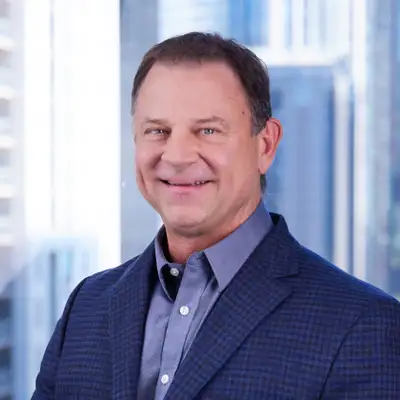
[00:00:53] Rob Huffstedtler: My guest today is Rob Huffstetler, global Head of Pre-Sales Operations at. Sitecore
[00:00:59] Richard Ellis: Rob [00:01:00] has a long track record of helping organizations make sense of complicated situations and build strategies that are workable, not just impressive on paper. He brings a grounded view of how leaders can navigate AI complexity and credibility without losing the customer in the process.
[00:01:17] Richard Ellis: Rob, welcome.
[00:01:19] Rob Huffstedtler: Hey, thanks for having me.
[00:01:20] Richard Ellis: Well, I'm excited to talk about a few things with you today, a little bit about AI hype and product complexity and trust interwoven in there, I think. And so to, uh, to kick things off, let's just kind of talk about something we were talking about before the show, and that is, you know, every major trend tends to hit a point where companies tend to start overcommitting and overpromising or over rotating.
[00:01:43] Richard Ellis: Tell me a little bit about, you know, kind of what you're seeing.
[00:01:46] Rob Huffstedtler: Yeah. You know, I think. Evidence would suggest that, you know, on AI specifically, there are some percentage of people who are truly ahead of the curve. They've already built out AI teams internally. You know, they have real machine language, [00:02:00] uh, experts and things of that nature, and they've started making meaningful contributions to workflows.
[00:02:07] Rob Huffstedtler: Then you've got kind of the next set who. They're ready to do those things, but they need a vendor with an established point of view who can say, you know, for you, we have a product. It leverages AI in these particular use cases and delivers these results and can also give some guidance around how you're gonna need to reshape the way you're, you're working.
[00:02:30] Rob Huffstedtler: But I think a lot, probably at this point, another 30% I would guess are more in the. The phase of, we don't want to miss out and we don't want to make a long-term contractual commitment to something that's going to put us behind, but we're not ready tomorrow to start actually leveraging ai. Um, and you've got some.
[00:02:54] Rob Huffstedtler: Small percentage at the end who are afraid that the robots are either going to kill them or take their job.
[00:02:59] Richard Ellis: [00:03:00] Right. Do you see more people, uh, overestimating AI benefits right now? Or underestimating or, or kind of just, what's your observation?
[00:03:10] Rob Huffstedtler: Uh, I think it's more complex than that. I think there are people who, you know, the.
[00:03:15] Rob Huffstedtler: Kind of both back to the fear side and the hope side. There's this notion of I can take an entire job and eliminate it and put everything on ai. And you know, that's certainly contributed to by people who are using it as a bit of a fig leaf for doing reductions in force that are arguably because they overhired towards the tail end of the pandemic and the, the big acceleration, uh, of digital transformation that happened there.
[00:03:43] Rob Huffstedtler: Sure nobody wants to admit they overhired, so it's much easier to say we're creating so much efficiency that we were able to eliminate 20,000 people.
[00:03:51] Richard Ellis: Right.
[00:03:52] Rob Huffstedtler: All the research I've seen that's credible. You look at guys like Darren SM Olu, you look at some of the stuff that, uh, that came out from [00:04:00] McKinsey ai right now there are very few jobs where even in a fully agentic flow.
[00:04:07] Rob Huffstedtler: You can eliminate the whole job. What it's doing instead is simplifying or eliminating particular tasks of a job,
[00:04:14] Richard Ellis: right?
[00:04:14] Rob Huffstedtler: That should mean that you could lower head count, because now one person can do more because you've removed the toilsome bits of their, their day to day. Um, but I think that there's very little evidence that it's been that wholesale transformation.
[00:04:29] Rob Huffstedtler: What I see, you know, in our customers and in other folks I've talked to is. There are very specific things that are burdensome. Presentation assembly is one that, there's a, a company I've done a little bit of advisory work for, and that's their superpower in their workflow is they've really mastered taking stuff out of Jira, taking stuff out of notion, and turning it into sales ready.
[00:04:55] Rob Huffstedtler: Presentations both for enablement material and ultimately for customer facing stuff. [00:05:00] But that hasn't meant that any product managers, product marketers, et cetera, have gone away. It's just that now the things that they wanted to get to that they didn't have time for are back closer to the top of the list.
[00:05:12] Richard Ellis: Right. And, and that's kind of what I'm seeing as well is, uh, very rarely is there an opportunity for AI to just completely eliminate the role. Uh, but there's really an opportunity to rethink workflows and business processes and re-engineer them to remove the slow friction, you know, parts of. To create speed, create efficiency, but then, you know, intentionally preserve that human element where that good judgment and your rich experience really plays a key role.
[00:05:45] Rob Huffstedtler: Absolutely.
[00:05:46] Richard Ellis: One of the areas that we've seen be impacted is just kind of the idea of. Rethinking the RFP process or the bid motion, and I know in your world that's key. What are you seeing there in terms of [00:06:00] either you guys specifically or just other companies rethinking the, the whole RFP process in, in light of AI in this environment?
[00:06:06] Rob Huffstedtler: Yeah, I think all of the RFP vendors, um, you know, theios, the rfp.io, um, anybody who was kind of playing in that space, providing a a question database. And a workflow engine before. They've all embraced AI in various ways, whether it is through. Connectors to copilot, or whether it's through building in their own integrated capabilities.
[00:06:32] Rob Huffstedtler: At the same time, I think a lot of customers are saying, is this really that hard? Right? Yeah. Like, can't we just have AI create this? The challenge that goes with a lot of the. Thinking in, in any kind of enterprise application where people are trying to build their own, using AI is just the amount of under the surface stuff that you need for handling questions where you have to lock it down where you want a verbatim answer, like for security and, you [00:07:00] know, access the pure workflow bits of where we at in responding to a bit.
[00:07:05] Rob Huffstedtler: So there's, there's chunks of it that. I think people underestimate at the same time, it is a huge unlock in terms of being able to produce really customized responses rather than just, I think everybody always had the best intentions of, we're gonna answer it with. The question database, and then we're gonna go in, we're gonna massage the answers to make it more applicable.
[00:07:26] Rob Huffstedtler: But by the time you've got your questionnaire assembled, you've got one day left until you submit it. It didn't leave a lot of opportunity for that. So I, I think that's where it's really gonna play a role is that unique customization.
[00:07:38] Richard Ellis: I agree. And uh, I don't know if you would agree with this, but some of the best.
[00:07:42] Richard Ellis: RFPs are those that tell a story and they reiterate why do something different in the first place and why now and why with you. And it's not that AI can't do that, it's that what I'm finding is AI doesn't have all of the context to be able to [00:08:00] craft that in a very credible or relevant way. Because, you know, buying committees are larger and so there's, you know, seven or eight different stakeholders that have their own budgets, their own personal agendas, their strategic objectives, and care abouts and concerns, and are all of those that maybe you have gathered as an AE and a technical seller team through that sales motion?
[00:08:20] Richard Ellis: Has all of that been documented in CRM? Probably not. Right? It's all in your head. And that's where if you just turn this over to AI to write your RFP, you're gonna lose all of that. You know, the emotional, the strategic, the financial storytelling all coming together to be the most powerful RFP you could write.
[00:08:39] Rob Huffstedtler: Yeah, absolutely. I, I don't know if I'm seeing more of this or less of it. Um, I probably feel differently depending on what the last RFPI looked at said, but
[00:08:48] Richard Ellis: Right.
[00:08:48] Rob Huffstedtler: I don't know if the motivation is. Purity of the process and really not wanting to give anybody, uh, an unfair advantage. But when procurement teams wall off all of the buying [00:09:00] influences from the bidders, it almost guarantees you get a subpar result because then those of us who are responding to RFPs are really having to guess why is this customer doing it anyway?
[00:09:10] Rob Huffstedtler: RFP writers often don't do a good job of conveying the context of what the actual problem they're trying to solve is. I mean, in reality, many customers, they have a very surface level understanding of what the problem they're trying to solve is. And the thing that we bring to the buying process as account executives and sales engineers, a huge part of it is helping them really understand and articulate their problem
[00:09:33] Richard Ellis: Yes,
[00:09:33] Rob Huffstedtler: at a deeper level than they were capable of when they first said.
[00:09:37] Rob Huffstedtler: This bothers me. Let's buy something that fixes it.
[00:09:39] Richard Ellis: Right? Absolutely. This is a little bit of an adjacency, but uh, just given your background and experience, I wanted to move into just complexity a little bit, and that is because, you know, with, with ai, everybody's building in AI into their products, right?
[00:09:54] Richard Ellis: So. All kinds of software and technical products are changing, becoming more [00:10:00] complex, or at least seemingly more complex as they become, you know, more feature rich. And I've just seen that really create some challenges for both the AEs as well as the technical sellers. What are you seeing just kind of in this increasing complexity of, uh, solutions?
[00:10:16] Rob Huffstedtler: I don't know that the solutions have really gotten more complex. Maybe complex in different ways, but yeah, there's nothing more complicated than ERP system,
[00:10:27] Richard Ellis: right?
[00:10:27] Rob Huffstedtler: That's why the implementations take years, right? Um, and if you're going to show everything your product can do, that's going to overwhelm people.
[00:10:36] Rob Huffstedtler: But even fairly simple products, I would say most MarTech products are fairly simple. It's still very easy by the time you throw in, you know, capabilities for translation, capabilities for personalization, capabilities for multi-site, multi-channel management, unless the customer really needs all those things.
[00:10:56] Rob Huffstedtler: When you start talking about what you think is just an awesome feature [00:11:00] and it really is an awesome feature, but if they don't need it and you've walked them through, oh, and in this place you also could do this and you could also do that. After an hour of that, a customer's like it takes going and visiting 50 screens and clicking a hundred buttons just to publish a simple webpage.
[00:11:18] Rob Huffstedtler: Whereas if their problem is we wanna publish faster, look, click, click, click, it's live.
[00:11:23] Richard Ellis: Got it. So maybe the, my characterization of complexity is not. Right. It's more feature rich, and if you're not careful about being intentional about what you show and focus on and you're just showing everything, you know, the old show up and throw up, that can create, you know, confusion.
[00:11:40] Richard Ellis: It can influence the perception that it's more complex than it needs to be. And one of the. Kind of the side effects that I've seen is that a lot of times it could leave the buyer thinking, well, I'm gonna be just paying for a bunch of stuff I don't need. So maybe, maybe there's a better solution that's not quite as expensive, and now you've just kind of shot yourself in the foot.
[00:11:58] Rob Huffstedtler: Absolutely. And you know, I, I've [00:12:00] seen that in win-loss analyses where people would say, oh, it, it seemed like more than we needed.
[00:12:03] Richard Ellis: Yeah.
[00:12:04] Rob Huffstedtler: Not a impression you want to create. I think the other thing is SAEs need to learn that Yes. Is a full sentence. Um, and I understand where the, the temptation comes from.
[00:12:15] Rob Huffstedtler: When somebody says, could you do whatever, especially if it's a little outside the core of what the product is intended to accomplish, you start thinking about how you might solve that. And then next thing you know, you're talking to customer through your completely hypothetical way that you might solve that.
[00:12:35] Rob Huffstedtler: And again, they go, wow, that sounds like a lot when. Often the answer is, yeah, it's completely customizable.
[00:12:42] Richard Ellis: Yes, we can do that. Yeah. Not, yes. And, and then you're going on and on and on. Well, and I, I would suggest the flip side is also important. Just the, no, we don't do that. It was just a, a few weeks ago, I had a buyer tell me it was like.
[00:12:54] Richard Ellis: You know, I just have to say, I really appreciate you saying that you guys don't focus on that because it's been a long [00:13:00] time. Somebody said or admitted, they don't do everything everybody's trying to say. They can do it all
[00:13:05] Rob Huffstedtler: there. There's an underlying thing I think that contributes to that too, which is the, uh, pipeline solves everything.
[00:13:12] Rob Huffstedtler: You know, it's, it's much harder to say we're really not a fit if. Now your pipeline coverage goes below three. Whereas if you've got robust pipeline coverage, you're like, yeah, no, we don't do that.
[00:13:25] Richard Ellis: Love it. Yeah. You feel more confident in being able to say that, right. Uh, as a seller or a sales team, collectively, let's move into a little bit of kind of the installed base as we think about software companies specifically trying to make a push into, you know, their, the next evolution of their product.
[00:13:42] Richard Ellis: Or their platform, et cetera. I'm seeing some challenges there these days, right? One is, well, if we're gonna make a change, you know, now I'm gonna start looking at what else is in, in the market, if I'm gonna change anyway. But, uh, what are you seeing in terms of some key challenges in [00:14:00] migrating or pushing customers into that new product journey?
[00:14:03] Rob Huffstedtler: I mean, there's definitely that risk anytime there's sort of a discontinuous change. I've spent most of my career in the, uh, in the content management space, and for a while I was working with Drupal, which is an open source platform. When they made their move from version seven to version eight, it was a total rewrite of the platform.
[00:14:21] Rob Huffstedtler: I think it was 10 years, they kept extending the end of life on, uh, version seven because people didn't wanna replatform, you know, I went from selling it to selling against it, and it was still the same, same thing. A lot of companies, regardless of particular, uh, industry they were in, moved to cloud. You know, not all customers wanted to move to cloud at the same pace.
[00:14:45] Rob Huffstedtler: And exactly like you said, if you. If you come across to your customer, as I'm telling you, you have to do this, or even if you subtly imply that we're not going to provide a, a path forward if you choose to [00:15:00] stay on the version you're on or the, we're not gonna provide a continuous upgrades to the platform you're on, I guess would be the right way to say it.
[00:15:06] Rob Huffstedtler: For people who had an on-prem approach, many of them are actually mandated to, if they're going to look at spinning a bunch on a migration, they've got to go to RFP. And it's just not, it's not a place you want to end up in until you've level set the expectation that there's really only one choice here, and you influence it in such a way that if they're writing an RFP, they're writing it in a way that you're the, the logical answer to all of the questions.
[00:15:32] Richard Ellis: You're kind of architecting it in your favor, and I think this is another opportunity where the technical salesperson can really be a big advocate because a lot of times if, if it's a, a long-term customer, they've established relationship over the years, A trustworthy relationship, right? Leaning on that.
[00:15:50] Richard Ellis: That technical seller to convince and, and work with the customer on why this is a good thing for them and, you know, connect it to the current value they're [00:16:00] delivering. But then, you know, talk about the opportunity to extend that value into new ways. A lot of times that comes across as, you know, just more, oh, you care about me versus you're just trying to get me on the new platform, or, you know, get more nickels and dimes out of me.
[00:16:15] Richard Ellis: And,
[00:16:17] Rob Huffstedtler: you know, honest and thorough. Value engineering, I think is a, a big part of it too. Like for some people the math isn't gonna work and they're going to want to stay for a while until there's a, a natural inflection point that would cause them to move anyway. For other people, day one of a, a new platform, they're gonna do the math and they're gonna go, oh wow.
[00:16:35] Rob Huffstedtler: We're exactly the people that this was built for. Can we get going tomorrow?
[00:16:39] Richard Ellis: Right. Talk to me a little bit about, you know, so certainly technical sales has a role in that migration path. What about leadership? Like pre-sales leadership or se leadership, do you tend to see yourself or your other leaders getting involved in helping to move customers along?
[00:16:57] Richard Ellis: Uh, or is that reserved for, you know, the, the [00:17:00] sales managers?
[00:17:01] Rob Huffstedtler: I, I think it depends. Company to company, even team to team to some degree. Even with us, where I'm currently at, like we've got a whole breadth of how directly engaged in deals. Managers are, and I think some of it's the maturity of your team.
[00:17:15] Rob Huffstedtler: Some of it is what the customer needs. Often you want to engage people with higher title levels just to show the customer a degree of commitment. I think that every sales manager and SE manager, they need to have oversight on the deals enough to make sure that their people are prosecuting it well.
[00:17:34] Rob Huffstedtler: Mm-hmm. And if somebody is new to the role or new to the team, even if they were experienced at another company, you've got your own flavor of what works well for you. You may have to change some, some particular habits of how people sell, while at the same time allowing flexibility for, you know, everybody's got their own unique personality they bring to things.
[00:17:54] Rob Huffstedtler: So you've gotta have an element of authenticity there. Responsible leadership is this balance [00:18:00] between allowing people to do their own innovation and have their own authenticity while standardizing the work enough that you know there's gonna be a predictable sequence, and that those things that you've proven are absolutely critical to moving a deal or a conversation forward happen at the right time in the right way.
[00:18:21] Richard Ellis: That's well put. And one of the things that I tend to see is, you know, if you're not careful, you know, leaders can't be involved in every deal, right? They're a scarce resource, and if you're not careful, they get involved in those that are suddenly likely to churn, right? So high risk. Customers or, you know, last minute gotchas, rather than thinking proactively of saying, let's look at our pipeline and let's prioritize some strategic customers that I'm gonna intentionally get ahead of with the sales team and just make sure, you know, we're kind of paving the path forward and, and rather than it all coming down at the end of the quarter where you've got, you know, a fire drill on your [00:19:00] hands.
[00:19:00] Rob Huffstedtler: Yeah. And then the, the anti-pattern that you see if managers get involved late. On things that absolutely have to happen is they will often push the frontline worker out of the way. They will do the work for them. And then you get kind of the worst of both worlds. You don't really get any development on the resources, the manager's time's not being used effectively.
[00:19:21] Rob Huffstedtler: You know, the, the manager is super seller. Failure mode is ubiquitous across our industry and it's, it's hard to resist, but I think the way you avoid it is you start early, you give clear guidance, you inspect the work that's being done. You coach rather than swooping in to save the day.
[00:19:40] Richard Ellis: I like it. Yeah.
[00:19:41] Richard Ellis: That's a good construct. Well, just checking our time here. I think we are out of time for our show today. I want to thank you for your gracious time. It's been a pleasure, uh, speaking with you and learning from some of your experience and insight. Before we wrap up, any, um, any little goodness that has come your way professionally or personally outside of what our discussion was about?[00:20:00]
[00:20:00] Rob Huffstedtler: I'm gonna go with a, a shout out to one of my friends out there in the world. So a guy named Ru Dickinson. Great guy for storytelling, coaching and that sort of thing, but love following him on social media. He is mostly on LinkedIn. It is really amusing. I probably twice a week I will forward one of his posts to either my boss or one of our other managers and be like, was he eavesdropping on that meeting we just had, because this is exactly the topic that we keep saying.
[00:20:26] Rob Huffstedtler: Our guys need to do this specific thing better. So whether you're a potential customer, a competitor, just an interested person, I would say great guy to follow.
[00:20:36] Richard Ellis: And how do you spell his first name? 'cause I'm going to go follow it.
[00:20:39] Rob Huffstedtler: Oh, that's a good one. Yes. REW.
[00:20:41] Richard Ellis: Okay. Just like it sounds, REW, Ru Dickinson or Dickerson
[00:20:46] Rob Huffstedtler: Dickinson.
[00:20:47] Richard Ellis: Dickinson. Got it. So I'm gonna go follow him right after we hang up. Thank you again for your time, and I hope to have you back soon.
[00:20:54] Rob Huffstedtler: Awesome.
[00:20:54] Richard Ellis: Thanks.
[00:20:57] Announcer: Some goodness is a creation of Revenue Innovations. Visit us at revenueinnovations.com and subscribe to our newsletter.