Subscribe
Share
Share
Embed
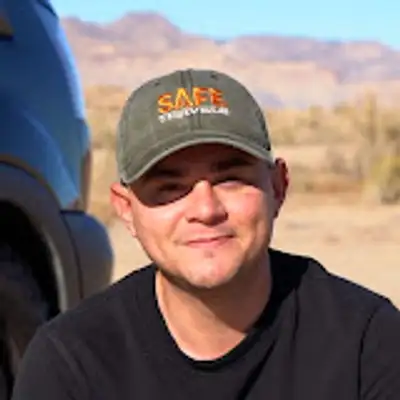
Safe Travels explores National Parks and wild places through in-depth conversations with the people who know them best - park rangers, scientists, biologists, geologists, archaeologists, and conservationists.
Each episode goes beyond travel tips to uncover the science, history, wildlife, and conservation stories that bring these landscapes to life.
Hosted by Joey Liberatore, Safe Travels: A Nature Podcast turns expert insight into engaging, accessible conversations - helping listeners experience public lands with deeper understanding and appreciation.
Hi, everyone. Thanks for checking out the Safe Travels Podcast. My name is Joey. In today's episode, we sit down with doctor Jeff Seminov, who is one of the world's leading sea turtle researchers. Jeff currently leads NOAA Fisheries' marine turtle ecology and assessment program based out of the Southwest Fisheries Science Center in La Jolla, California.
Joey Liberatore:In our conversation together, we talk all about Jeff's remarkable journey that led him into sea turtle research. We also discuss the various species of sea turtles that roam the Eastern Pacific Ocean. And of course, we discussed the historic Olive Ridley Sea turtles that became the first ever sea turtle species to nest off the Western Coast Of The United States. Jeff, it's an absolute honor to have you on the podcast. Thanks so much for joining.
Jeff Seminoff:Joey, it's great to be here.
Joey Liberatore:You have had an incredible career. You are a wildlife ecologist and a marine biologist. Where did your love for sea turtles and wildlife ecology come from?
Jeff Seminoff:Yeah. I I would first say I feel so fortunate. I pinch myself in that I I love my job, I love what I do, I love the animals I work with, and and just feel so fortunate to have been able to work with turtles for for so many years. If we go back to the beginning, I will say that when I was about seven or eight years old living in the suburbs of Chicago, Illinois, I had... My first three pets ever were three painted turtles, named Mowleri and Curly that I collected from a a local pond.
Jeff Seminoff:I might be aging myself a little bit for those of you that don't know who Mowleri and Curley are. It's from the old show, The Three Stooges. But I remember at the end of that summer, my parents made me release the three turtles back into the into the pond, and I cried because I just loved keeping animals in captivity and just seeing them feed. And I can still remember the time in the in the aquarium where I would feed them small tadpoles and just watching those animals eat and sort of just the the ecological interaction between predator and prey when I had such a young cue is such a cool thing. And I think I was one of the really lucky ones because biology and the love of wildlife and the natural systems, really it chose me.
Jeff Seminoff:Whereas I remember distinctly a lot of friends and colleagues as we all get older, you go into college and things like that. You struggle with knowing what you wanna do and some of the angst associated with that. And I never had that angst. I knew from day one I wanted to study biology and be a biologist. It wasn't until I went to the University of Arizona, and this was back in the mid nineteen eighties, as a biology major, and I had to go in for a requisite meeting with a guidance council that every freshman had to do, and that literally is the first time I learned the word ecology.
Jeff Seminoff:And I asked the person to explain to me what ecology was, and they're like, it's the study of animals and plants and the interactions of them and predator prey relationships. It just fascinated me right from the start. And literally before I even left that room, I told the person that I wanted to change majors. And so looking back, that was really such an inflection point in my own career, moving from just general biology into the ecological realm. And then through my undergrad, I took every opportunity to get into the field to help professors at university, whether it was catching snakes or lizards or tracking spotted owls.
Jeff Seminoff:Like, I was just consuming any opportunity to get out into nature to study animals or to help other people studying animals. And then my sophomore year, after my sophomore year, saw on a bulletin board, and this is really way before email and very few computers at that time, but on the old Cork bulletin board, there was an announcement to help out the New York Zoological Society on a project studying green sea turtles in Tortuguero, Costa Rica. And I was living in Connecticut at the time. I I moved around The US a lot as a kid. Well, I wasn't a brat, but my dad changed jobs quite frequently.
Jeff Seminoff:And so my first experience with sea turtles was at Tortuguero, which was the spot that we call like the grandfather of turtle ecology, Archie Carr, who was at the University of Florida. He started a protection program at the nesting beach in Tortuguero. This is Atlantic Coast Of Costa Rica. I wanna say 1954. It was one of the first projects.
Jeff Seminoff:And I had an opportunity to go down there and spend a couple weeks, and just a great experience. My first time studying sea turtles. That's you know, over forty years ago at this point. So it's just crazy how time flies. But then I got back from Costa Rica and wasn't really thinking sea turtles necessarily, and just continued on in my studies.
Jeff Seminoff:And by the time I got to graduate school, and I stayed at University of Arizona because I had a nonprofit that we had started, I didn't want to leave. So I kept doing my research at the same school. But I had a very close colleague since departed, Jay Nichols, was a new student. I had been at U of A, University of Arizona for some period of time, and one of my big stomping grounds was the Pacific... The Gulf Of California in Mexico.
Jeff Seminoff:Sort of like the closest main body of water to Tucson, Arizona, which is where I lived. And I met Jay, and we immediately hit it off, I said, hey, let's let's go down to to Mexico. Let's go... I wanna take you to some dive sites. And so we went went to this place called Venetia in Sonora, Mexico, and did some great diving.
Jeff Seminoff:One of those evenings, we got to talking, got to sharing some libations, some Tecate beer probably, might have been Pacifico beer and tequila, just really just kind of getting to know each other. It was really the first... We had met each other less than a week prior, so it was just still exploring each other and learning about things. And we both realized mutually, me in 1986 in Tortuguero, the story I just talked about, and Jay in 1990 had also worked in Torreguero. And so that was just an immediate sort of connection between the two of us amongst many other connections that we had been sharing up to that point for that first week of knowing each other.
Jeff Seminoff:And then somebody, whether it was Jay or me, I don't recall, but said, wouldn't it be cool to go visit a sea turtle nesting beach in Mexico? And it's like, yeah, yeah, yeah, let's do it. And then probably another beer and another shot of tequila. And it got to the point, it's like, wouldn't it be so cool to visit all the nesting beaches in Mexico? And then I think we drifted off into a very deep slumber.
Jeff Seminoff:We've got back to Tucson a couple days later, and then that story sort of rekindled and Jay asked me and I asked him like, you know what we were talking about the other night? Wouldn't it be kind of cool to go see those nesting beaches? So we really at that point embarked on a planning effort to get maps. Again, there's no internet at that point. So going to the library to getting maps of Mexico, trying to pinpoint where the nesting beaches were.
Jeff Seminoff:This is about 1992, I wanna say. And little by little, we started spending a lot of time on trying to plan this trip around Mexico. Now mind you, at the time, I was planning to do my master's degree on recruitment dynamics of rocky reef fish. So small fish, brightly colored fish that live in the the coastal rocky reefs of the of the Gulf Of California where we had scuba dove just just prior. And Jay was gonna study moray eels.
Jeff Seminoff:So we both were looking at projects and careers really that were gonna focus on fish. And yet, at the same time, we're trying to moonlight and plan on this project to go down and study sea turtles. And at one point in time, our major professor, we shared the same gentleman who was one of my life mentors, a guy named Don Thompson, who was guru of reef fishes in the Gulf Of California, verbatim to me said, you know, Semenov, you're spending so much time planning this trip to go see turtles. Why don't you do sea turtles for your masters? And that is all I needed.
Jeff Seminoff:And at that point, the rocky reef fish got pushed to the side, Jay's moray eel project got pushed to the side, and we went full tilt into planning for this trip to go to Mexico. And at the time, there was no sea turtle biologist in Tucson. And so we had heard about this guy named Scott Eckert that worked at Hubs SeaWorld in San Diego. And so Jay and I took his 1976 Travelol, big suburban like vehicle from Tucson to San Diego and met with Scott. And he thought we were a little crazy, but still sort of fed the fire a little bit and said to us, you know, guys, there's this thing called the International Sea Turtle Symposium.
Jeff Seminoff:And it bounces around The United States. It happens every year. And this year, it's gonna be in a place called Jekyll Island, Georgia. You have to go to this because that's where all the sea turtle biologists will be, and a lot of the people that you're gonna need to know to pull off this trip in Mexico will be there. So you gotta go to this meeting.
Jeff Seminoff:And so Jay and I did... We didn't need much more enticement than that, and I think we mustered up some money for plane tickets and flew to Georgia, stayed at a hostel. I still remember today, it smelled like sulfur. Some of those groundwaters in Georgia are super sulfury smelling. But we met all these different scientists, and many of them were indeed from Mexico.
Jeff Seminoff:And at the time, neither Jay nor I spoke very good Spanish. Since then, I've gotten much more proficient. But still, with our broken English... Or pardon me, with our broken Spanish and with our colleagues' broken English, we're able to communicate and got a lot of great intel to figure out where we wanted to stop and explore sea turtles in Mexico. And and one thing led to another, and and by the...
Jeff Seminoff:This was in March 1993, and by that summer, we had planned out a trip to take literally every coastal road, dirt road, sand road, whatever it took along the entire perimeter of the entire country of Mexico, dropping in from Brownsville, Texas, going south to a place called Rancho Nuevo, which is still to this day, it's the most famous and really the the largest nesting beach for a species called the Kemp's ridley sea turtle. There's two two sister species, the Kemp's ridley and the olive ridley. They happen to be the smallest turtles. We we may get to that species... Those species a little bit later.
Jeff Seminoff:But they both were the same species, and at the opening of the isthmus of the Panama Canal... Or pardon me, the closing of the Panama Canal, they separated into two separate species through evolutionary time. Now to back up for a second, is we knew that in Mexico, there was the... He was called the czar of turtles in Mexico. His name was Rene Marquez.
Jeff Seminoff:And everybody told us, and Rene was not at that meeting in Jekyll Island, but they said if you're gonna go to nesting beaches in Mexico, you have to get permission from Rene. Like, oh, it sounded a little bit ominous because he was the character that was larger than life and sounded kind of aggressive and maybe not really ready to give permission to two gringos, green gringos for that matter, to visit these nesting beaches. So we took snail mail, and we wrote snail mail to his office. He worked in Menzanillo in state the of Colima, Mexico. And those days, when you're sending off these letters, it's just like putting a little paper boat in a river and it goes down the stream, and you never know if you're gonna get a response.
Jeff Seminoff:But lo and behold, about a month later, we got a response from Renee. As a matter of fact, on my wall here in my office, I have the exact letter that we got because it happened to be one of the most influential, most important material pieces of paper that I've ever had in my life. And the reason for that is that, well, first of all, we went to Rancho Nuevo, we knew to get into Rancho Nuevo, we needed to have the invitation from Renee, basically. And the paper, it only gave us permission to go to Rancho Nuevo. But nevertheless, we took that piece of paper, and Jay and I, our whole modus operandi was when we got to Rancho Nuevo, we asked the people there for their local knowledge, where's the next spot we should go?
Jeff Seminoff:And then we go to the next spot, and so on and so forth, and we keep going to all these different places. And every time that we'd show up at a spot, we'd pull out that piece of paper, and people would see that it was signed by Rene Marquez. They didn't see it said only to Rancho Nuevo, and the seas parted. And we were able to visit all these different beaches. And when it was all said and done over the course of 1993, a four month trip in '93, then two two month trips over the Christmas period in 9394, 9495, we ended up traveling about 40,000 miles throughout Mexico back and forth traversing the country.
Jeff Seminoff:We visited 53 different sea turtle nesting beach conservation camps and it was an absolute... Well, it was three different trips, but these are trips of lifetimes. And to this day, really, that was the thing that solidified number one that turtles was gonna be something I wanted to do for the rest of my career. But it also gave me a lot of IQ for sea turtles. You know, going in totally green, if you take your first year and a half of working with a species and you're traversing a country meeting literally hundreds of people that have all sorts of knowledge to share with you, you're gonna uptake some of that.
Jeff Seminoff:And I feel like both Jay and I, there was a crash course in us becoming sea turtle scientists. But the other important thing about that I'll mention, Joey, is that along the way, we met a lot of people that we had no idea how influential or how important they'd be for us later in our career. But after we finished the work around Mainland Mexico, and we saw in a lot of different spots that there'd be two adjacent citadel conservation camps. One spot in Chiapas, for example, a place called Boca De Pisa. There was a government nesting beach project and a university nesting beach project, both on the same beach, same nesting population.
Jeff Seminoff:But because of conflicts between those organizations and the people, every low tide, somebody from either of the camp will go down and literally drag their heel in the sand and divide the beach in half. And one half would be for the government, the other half would be for the university. And we just thought it was preposterous. And we saw that sort of competition in a number of different spots. And a lot of the...
Jeff Seminoff:And I think even today, although I'm a bit detached from it, I think that nesting beach programs derive some sort of the value of that program based on how many turtles they have each night or how many nests they get. And so places that have more nests, they have a little bit more pride versus these smaller places that have fewer nests. Right or wrong, that seems to have been a dynamic back in the day. But literally our last stop in all these different trips was in Baja California, Mexico. We had taken the ferry across from Mazatlan to Baja California, and we went to a small sleepy fishing village called Los Angeles Bay, Bahia De Los Angeles, which is on the Gulf Of California coast of the Baja California Peninsula.
Jeff Seminoff:And we met a colleague named Antonio Resendez. And at many of the different nesting beach programs that we had gone to, even with the piece of paper, we were met with some degree of skepticism. Again, like what are these two gringos doing down here? What is the ulterior motive? We had no ulterior motive, course.
Jeff Seminoff:We just wanted to learn and have an incredible adventure. But when we got to LA Bay, Antonio was the first person, he opened his arm and he said, gentlemen, welcome. And he had no idea who we were. If you wanna study sea turtles, this is your place. And he encouraged us to not just finish our work with our master's degrees in LA Bay, but he said, you both should come and do your PhDs here.
Jeff Seminoff:And this is the first person that's kind of opened his arms to us. And fast forward a number of years, like we finished our masters. We ended up doing PhD programs also at the University of Arizona, which is another story. Typically, don't wanna stay at the same university for three degrees, which I did, but that's just how how the the cookie crumbled at the time. But I ended up spending twelve years in LA Bay living most of the year each year there, and Antonio Resendez became one of my most cherished mentors.
Jeff Seminoff:Much like Don Thompson, the reef fish guru for the Gulf Of California, Antonio became like my turtle mentor. And I just learned so much from him, not about just turtles, but also about humans and human well-being, and culture, and culture of eating turtles. So when we arrived in LA Bay in 1993, you have to realize that this is only three years since the ban... The complete ban on sea turtle consumption was declared for Mexico. This is by president Salinas de Quartary.
Jeff Seminoff:And when you would go to LA Bay, which was the capital of the sea turtle fishery, you'd walk down the street and you would smell sea turtle in almost every house. And for us to have been scientists to go in and tell the community members, oh, sea turtles are endangered. You shouldn't eat them. It would have been like walking down Main Street America and telling people that hamburgers were illegal. Quite literally.
Jeff Seminoff:Sea turtle was such an important part of the local diet. Every mother and grandmother had their secret sea turtle soup recipe. Every fisherman had their special way that they would fry or boil sea turtle to eat it, and it was just consumed all over the place. And I I will admit that in those early days, we did have our share of sea turtle just because we're trying to build trust and kinda get inside the heads of the fishers so we could understand their perspectives and things. Since then, just a couple years later, we both agreed with Antonio, Jay, myself, and Antonio, that no more eating a sea turtle.
Jeff Seminoff:And so there was a very finite sort of period of time when we did that. But through that whole process, LA Bay became such an important part of my life and important for sea turtle research. And even to this day, I have such great memories of working in LA Bay. And I still go down there occasionally. And Antonio has since passed, but his son still runs the same camp where I lived for so many years.
Jeff Seminoff:And it's so nice to see this arc of of this camp being there for now going on three decades.
Joey Liberatore:Well, think you just laid out an incredible manuscript for somebody who wants to make an amazing movie, because that story is beautiful and I think really encouraging for folks who want to get into ecology and and biology. It's just an amazing story of perseverance and making sure that you make it happen and and that adventure sounds like it's something that you remember for the rest of your life. And and little did, you know, Renee know when he signed that letter, he would inspire, you know, in my opinion and I'm sure in many others, especially around you right now, you know, one of the most, you know, profound researchers in sea turtles today and yourself And the work that you've done with Skeletal Chronology and of course at the Marine Turtle Ecology and Assessment Program that you lead right now in Southern California. So stories like that, know, the origin story is really remarkable to hear about.
Jeff Seminoff:Yeah, it really is. I'll just add a couple little tidbits to that as well. Just picture yourself like it was myself and Jay, and we had my dog with us. It was... I've always had Dobermans my entire life, and this was a Doberman named rooster that came with us.
Jeff Seminoff:And we drove the... All of these trips were in a 1975 Toyota Land Cruiser, which the old Jeep style Land Cruiser. So it was about as adventurous African safari ish as you could get basically. And so... And as a matter of fact, a close colleague of mine, Hoy Peckham, has has said for years is that you need to do a documentary on this and call it the Land Cruiser Diaries.
Jeff Seminoff:And we do have a lot of old footage that we could piece together, and I think that's something for later in my own life. I'd love to piece together some of those things just to recount those incredible stories.
Joey Liberatore:What was the moment specifically with a sea turtle that determined that for you, that this is the thing that you want to protect and conserve? And obviously, during that time period, they were becoming critically endangered, and now, you know, over the last couple of years, very recently we've seen them and their populations back on the rise, and and a lot of that is thanks to your work. So what was that moment where you you wanted to ensure their long term health and viability?
Jeff Seminoff:Yeah. What I will say is that that initial trip when I was an 18 year old as a... Just finished my sophomore year at University of Arizona when I went to Torreguero, I thought sea turtles were amazing, but I had no idea how much they'd feature in my life. And I think one of the reasons that they have become so important in my life is that it's been a confluence of two loves. One of those is ever since I was a little kid, reptiles and amphibians have...
Jeff Seminoff:I've been infatuated with them, The field guides, my second book was a reptile and amphibian field guide to identify the species. And the other love was the oceans, and marine biology, and scuba diving. And so if you crunch herpetology, study of reptiles and amphibians, together with marine biology, a sea turtle pops out. And so you know, that's one of the things, the confluence of two loves of my life. But I think since then, the thing that has really helped galvanize my absolute love and adoration for sea turtles is number one, their such important cultural role in human cultures, in human tradition, in human history really.
Jeff Seminoff:If we look at some of the archaeological records, sea turtles have featured really important diets of human culture around the world. And not just diets, but also in their lore and in their religion. And then the other thing that really stands out is their resiliency. And so you consider the incredible threats they've faced, the onslaught of human exploitation, both at nesting beaches or in foraging grounds, but also habitat loss, and accidental entanglement with marine fisheries. It's almost amazing that they're even still on the planet.
Jeff Seminoff:We've just had so many threats and not not just to, like, turtles in in, let's say, here off of the coast of California, but it's like at every life stage from an egg, people collected eggs to eat them, to the hatchlings is you'd have natural predators that would pick off every single hatchling that was trying to get to the sea to survive, to the juvenile animals and what we call subadults that are in foraging areas that were getting fished illegally, sometimes fished for food, to the adults that are also fished for food... Hunted for food or the adults that crawl out of the water to nest on sandy beaches, they're taken for for human food. So like every stage, turtles have faced incredible pressures, both natural and anthropogenic, yet here they are thriving. And as you say, Joey, we talk about a green turtle, which arguably has been the species that probably has the greatest excuse for being being the worst off because it has been almost singularly the most important species for human food and culture throughout history. It's the species that's doing the best.
Jeff Seminoff:So how is that possible? And it's just again, that resilience is something that really sort of to me is just so vital. And it's almost something that's a little bit of a life lesson for myself when I deal with challenges. You know, I think about sea turtle resilience and it just kind of bouys my spirits a little bit.
Joey Liberatore:In this conversation, we're gonna dive deep into the olive ridley species, and of course, the the huge news over the last couple of months that olive ridleys are nesting off the coast of California. There's been three cases now. But I I first wanna say a couple of months ago, had the absolute pleasure of spending time with you and your colleagues, doctor Calli Turner Kamashevitz and Garrett Lemmitz out on the San Diego Bay, taking part in your research and monitoring program. And it was the most incredible experience looking at these green sea turtles that you guys monitor and check on through various different methods. So I want to give you the floor to talk about the incredible research and monitoring program that you work at, what exactly is NOAA, and the type of work that you do with the Marine Turtle Ecology and Assessment Program that you lead.
Jeff Seminoff:Sure. So I'll first say is that the sea turtles in The United States, there's two main federal agencies that have the jurisdiction to protect them and to protect their habitats. There's The US or United States Fish and Wildlife Service. And their jurisdiction is anytime a sea turtle crawls out of the water or washes up on a beach or is nesting, that's their responsibility. Anything out of the water is Fish and Wildlife Service's responsibility.
Jeff Seminoff:And I work for an organization called the National Oceanic and Atmospheric Administration in a particular portion of NOAA that's called NOAA Fisheries. And NOAA Fisheries has the mandate of not only reducing impacts for marine fisheries on threatened and endangered species through bycatch reduction, making TEDs to make sure turtles don't get caught in shrimp nets, or circle hooks so turtles don't get caught on hooks, or creating special nets that avoids turtles. But in addition to reducing bycatch, NOAA also has a mandate to study and understand the population status of any species that is listed on The US endangered species list. And so all seven sea turtle species found worldwide are on The US endangered species list. And for that reason, we have a great mandate to study them.
Jeff Seminoff:Here in California, there are three species that we work on. The one that gets most of our attention is the green sea turtle. And these are animals that live in Southern California. Mostly in the coastal habitats, the bays and estuaries here along the coast. Basically from Los Angeles to the Mexico border.
Jeff Seminoff:But also out of the Channel Islands, we have a growing green turtle population. And all these turtles mind you, they're nesting in Mexico. So the nesting beaches are some four to 600 miles away or even further to the south. And so once they depart the nesting beaches, eventually they wind up in our waters and we study their population status. The second species that gets a lot of attention from us is called the leatherback sea turtle.
Jeff Seminoff:Leatherback sea turtles, today, they're probably considered the most endangered of all sea turtles at the species level. And the Pacific leatherback that we work with is what we call critically endangered. It's a species that is really imperiled. It's facing a lot of threats, not only threats at the nesting beaches, but also at sea from the bycatch, the accidental capture of turtles. Leatherbacks come across from nesting sites in Indonesia, Papua New Guinea, and Solomon Islands.
Jeff Seminoff:And why do they come to California? Because it has wonderful habitat and lots of food. Particularly in the late summer into the fall months, and that we're talking about Central California and the Monterey area up towards North of like the Golden Gate Bridge up North of San Francisco, is that during that period of time, there is this upheaval, this of upwelling of nutrient rich waters, cold nutrient rich waters that come from deep in the oceans, and they come to the surface. And with all those nutrients, it supplies the food supply for jellies, sea jellies, also known as jellyfish, have these incredible blooms, almost of biblical proportions where you could look out and think you could walk across the water because there's so many jellies. Jellies are the primary food of leatherback turtles.
Jeff Seminoff:So it makes sense and it's economically feasible for them to make that big journey across the ocean because there's just so much food here. So they can really fatten up and live a really good life off the coast of California. And when it's time to nest or reproduce, then they swim back to their nesting beaches and do that. And then the third species is the loggerhead sea turtle. And a common theme here is all the turtles that occur in our waters, those three species, none of them nest in California.
Jeff Seminoff:Green turtles are nesting in Mexico, Southern Mexico for that matter. Leatherback turtles are nesting all the way on the other side of the Pacific, some 10,000 plus kilometers away. Loggerhead turtles, they only occur in California waters periodically really when it's warm, like during an El Nino period. Right now in 2026, we're just heading into a pretty forecast of very strong El Nino. And that's...
Jeff Seminoff:When the waters are warm, that's when loggerheads come into our coastal waters. Loggerheads, every single one of them in our part of the... In California come from Japan. They all nest in Japan. So California truly is...
Jeff Seminoff:It hosts this very international collection of sea turtle species that are coming from at least five different nations. And, you know, that in and of itself really speaks to how sea turtles are a little bit of... We call them like an ocean connector. They're connecting these very distant areas, creating connectivity between The United States with all these other countries around the world. We share the same turtles, literally the same individuals.
Jeff Seminoff:And so I think from a conservation standpoint, I might be getting a little bit off topic, but I think turtles really can help pinpoint what countries need to identify and work together for wildlife conservation. And through use of tools like satellite telemetry and genetic techniques, we can start to establish those connectivities. They really start to dictate like what other governments, what other nations do we have to work with to preserve biodiversity.
Joey Liberatore:Not only that, but do you they're also really good bio indicators just in terms of giving us an idea of how healthy certain parts of the ocean and the world are?
Jeff Seminoff:I think with with leatherback turtles in particular, they seem to be very sensitive to ocean productivity and very sensitive to water temperatures. If it gets too warm and jellies are not allowed to bloom, that means there's no food. And so it's not that leatherbacks would necessarily be in poor body condition, but they just won't show up. You know, that's one of the big things. Now green turtles on the other hand, green turtles, it's a species...
Jeff Seminoff:We call them like ecosystem engineers. The reason for that is that a green turtle just by its sheer consuming of seagrass and algae, they're able to shape coastal ecosystems to keep different species in check so there's a nice equilibrium of what's out there. Also with green turtles is that there's something called short circuiting of the detritus cycle. And the detritus cycle is the cycle of when animals and plants die, and they settle onto the seafloor, whether it's bacteria or small microscopic organisms or invertebrates, they start to eat those algae and seagrass that's on the seafloor. And it's sort of what's this detritus cycle.
Jeff Seminoff:So animals die, they sink to the bottom, animals eat them, and it just sort of recycles the whole system. Now with green turtles in coastal seagrass habitats, if you have a blade of seagrass that is not eaten, what happens is it sits and it will grow for months at a time. And it might take two or three months for that blade of grass to sit there, and it sequesters all sorts of nutrients sort of passively in a blade of seagrass. And you talk about the biome... The sheer biomass of seagrass of this...
Jeff Seminoff:In the Southern California, for example, it's a lot of energy, a lot of carbon, a lot of nutrients that is just sitting sequestered in that seagrass. And the seagrass slowly dies and those nutrients are released. But with green turtles, and this really speaks to ecosystem function, is that when green turtles eat seagrass and they digest it and they poop it out, that happens in a matter of two days. So those nutrients that would have taken weeks, if not months, sequestered in that blade of grass, not available for any organisms. It would just sit there.
Jeff Seminoff:When green turtles come into a system, it almost is like a spark plug. It jumpstarts nutrient flow. And it has great benefits for a lot of different organisms besides just seagrass and sea turtles. And we find that in terms of your your ecosystem indicators, areas that have green turtles tend to be a little bit more productive, tend to be areas that have a little bit greater biodiversity in them. And so really green turtles are one of those really important puzzle pieces for biodiversity and for ecosystem health.
Jeff Seminoff:I will say however, is that in some places, and I mentioned earlier the green turtles are doing really, really well, probably arguably the best of NAC turtle species. There's such thing as too much of a good thing. And so there's increasing numbers of spots around the world where green turtles are actually overpopulating. And this is a very new phenomenon, and we're just getting a handle on it. But what happens when you have too many turtles in an area?
Jeff Seminoff:It leads to overgrazing. And what then happens, it's almost the reverse of that short circuiting, the detritus cycle that helps ecosystem productivity and nutrient flow. It's that they eat all the seagrass. And what happens then is the seagrass is not able to grow fast enough to keep up with the level of consumption. And so what we're seeing in places like the Lac Shadweep Islands in India or in Ogasawara in Japan, or a number of places in the South Pacific, is this overpopulation of green drills has led to absolute collapse of seagrass ecosystems.
Jeff Seminoff:Still very few places worldwide, but it's reasonable to think that we might be seeing a little bit more of that in the future. So when we talk about the recovery of green turtles, it's important to like temper that enthusiasm. Like, yes, it's a good thing, but in some places, it might not be a good thing. And so human cultures, you know, there's some spots where green turtles are considered pests now. Because what they do when you lose a seagrass pasture, you lose the nursery area for small fishes.
Jeff Seminoff:It has a negative impact on commercial fisheries. It has a negative impact on coastal erosion and, like, ecosystem integrity, shoreline integrity. And so we're seeing a lot of hidden negative consequences that we could have never even fathomed just ten or fifteen years ago when populations were low. So how we deal with that as wildlife managers, as fisheries managers, it's it's still, I think, a story that's in progress, but something that we're definitely more and more mindful of every year.
Joey Liberatore:And typically, when you see population booms that tick out full ecosystems from grazing, coinciding with that will be a population bust. Right? The... If there's no forage ground for them anymore, then the population could potentially die down again.
Jeff Seminoff:A negative feedback loop. And part of that too is what we've seen with a number of spots. A natural thought would be, oh, the food goes away, so the turtles will just go find some other spot. But it happens... Just so happens with green turtles is that they have incredible sight fidelity, both to nesting beaches where a hatchling will leave that beach, spend twenty years in the open oceans, grow, mature, become an adult, and when it's time to reproduce to find a mate, for example, it goes right back to that very same beach where it hatched some twenty, twenty five years prior.
Jeff Seminoff:Sea turtles, green turtles in particular, also have foraging area fidelity. Meaning once they figure out their home, where they want to live and forage, they have an incredible fixity to that site. Such that when you have overgrazing, what happens is turtles, contrary to what you'd expect, they don't leave. They start to emaciate. And we're seeing cases of green turtles in these areas that I just mentioned where they're incredibly emaciated, animals dying, population size is decreasing for exactly what you said, Joey, that sort of negative feedback loop that happens when you have no more food.
Joey Liberatore:Another species that has sight fidelity is the one that we teased earlier, which is the olive ridley. You've been studying sea turtles for twenty five years, specifically Eastern Pacific sea turtles. There's five species that can be seen in the Eastern Pacific, Olive Ridley being one of them. And in your time, your twenty five years, studying and throughout, as far as we know, history, we have never seen an Olive Ridley sea turtle or any sea turtles nesting off the coast of California, which just happened, not too long ago. Where were you when you got that news?
Joey Liberatore:What was your reaction when you got the call that there were sea turtles, you know, digging nests in Orange County?
Jeff Seminoff:Well, I remember very, very specifically the first nest was on Wednesday, 09/16/2026. The second nest was on Saturday, 09/19/2026, and the third nest just happened this week on Sunday, 11/01/2026, the day after Halloween. That first nest, I about fell out of my chair. I couldn't believe it. I got a call from a colleague of mine that said, you won't believe what's happening.
Jeff Seminoff:At this very moment, there's an olive ridley nesting up in Orange County, and I couldn't believe it, obviously. But as more and more reports came in and I saw the photographs, lo and behold, it was an olive ridley turtle. And just to have that one, it mustered so much interest from not just the sea turtle community here in California or the wildlife community, researchers in California, but also the general public. I mean, is an incredibly special thing to have sea turtles nest on our shores. It's for the first time ever.
Jeff Seminoff:We can't kind of consider it the first known natural nest of a a sea... Any sea turtle species on The US West Coast.
Joey Liberatore:Can you talk about, you know, just the challenge of a sea turtle that it that it goes through just to begin nesting in general? You know, their their gravity pulls them down pretty heavy when they're when they're in the sand. So the journey that that sea turtle went on just to just to get to that site and lay its eggs, can you take us through the whole process of what nesting actually looks like and is for a sea turtle?
Jeff Seminoff:Sure. I mentioned earlier just to to... It it bears mentioning again is that for a turtle even to get to that stage to be able to nest, it has had to dodge nets and hooks and hunters throughout its entire life. So it's a very small portion of animals that actually make it to adulthood. But once an animal does approach maturity and become mature and wants to reproduce, they do have that nesting site fidelity.
Jeff Seminoff:So they typically go back to that same nesting area where they themselves hatched some decades prior. And usually, well with green drills for example, that site fixity, that fidelity can be within the same 10 to 20 meter stretch of beach. Like they have an incredible onboard compass. They know right where to go back to. Olive Ridleys don't have as precise a compass as a green turtle does, but they still have great sight fidelity.
Jeff Seminoff:Now I'd like, if I can just, if you mind, can I just tell you about the marvelous life history of Olive Ridley turtles? Yes, They're they're so cool. I mean, first of all, they are by all accounts the most abundant sea turtle in the oceans. They're the smallest turtle in the oceans. They get to be about a hundred pounds.
Jeff Seminoff:They mature in about eighteen years, so they're very fast matures relative to other sea turtles that take typically a little bit longer. They're incredibly adaptive. They live in all different sorts of habitats from the high seas to coastal habitats. Here, even in Southern California, we've seen Olive Ridley turtles living in kelp forests. Just last week, Olive Ridley more north of us in Los Angeles was rescued from a kelp forest because it got a piece of kelp wrapped around its neck and couldn't get to the surface, and a concerned diver nearby was able to help it.
Jeff Seminoff:So they occur in all different sorts of habitats. Not only are they adaptive for the habitats that they live in, they are also extremely opportunistic. They'll eat whatever they can get their mouth around. It could be a piece of seagrass, although seagrass is a little bit less common in terms of prey. But fish, mollusk eggs, any sort of invertebrate, sponge, you name it.
Jeff Seminoff:Anything that they can get their hands on, they'll get. Typically all of Ridleys, if you were to look at the textbooks, they would say that most of them live in the high seas. And that's probably true. And when I talk about the abundance, just to give sort of a scale of that abundance, With NOAA, with National Oceanic and Atmospheric Administration, which I work for at Southwest Fisheries Science Center, until very recently, we used to do annual surveys for marine mammals from The US border all the way down to South America by using these... We call them big white ships, big survey ship where they'd kind of go back and forth with what are called transects and using big binoculars to look for marine mammals, whales, and dolphins.
Jeff Seminoff:But they'd also count sea turtles. And from those surveys and the most recent where they used to derive a population estimate was in 2006. And my colleague Tomo Oguchi wrote a paper not that much late after. And our estimate is what at the time then, and that's the population has recovered since then even more so, but it was 6,000,000 loggerhead... Pardon me.
Jeff Seminoff:6,000,000 olive ridley sea turtles from The US West Coast... From US border all the way down to South America. 6,000,000 animals. And it's probably much higher now, just because we know the numbers have gone up substantially. So lots of animals.
Jeff Seminoff:They're super adaptive. Another really cool thing about olive ridley turtles is that they have two different nesting strategies. One of them is a very common strategy that all sea turtles share, and it's called solitary nesting. Where an individual female, she's acting on her own, she goes back to her nesting beach from where she hatched, crawls out of the ocean, lays a nest. We can get to the nesting and things like that in a little bit, but then goes back to the water.
Jeff Seminoff:And two weeks later the females, they have like a conveyor belt of eggs in their oviducts. And every two weeks, a new batch of eggs is ready to lay. And so olive ridleys, they'll lay anywhere between two to three nests in a given season. Sometimes four, but usually two to three. But in addition to that solitary nesting, olive ridleys and the sister species, the Kemp's ridley that I talked about at the beginning of the podcast, they also have what's called arabata nesting, which is a...
Jeff Seminoff:Almost appears to be a social sort of action. And arabata, it means en masse. So it's when a bunch of turtles come out of the water at the same time. And to give you a sense of the scale for that, there's... One of the primary Arabada beaches occurs in Mexico, and there's only about six to eight Arabada beaches in the entire world.
Jeff Seminoff:It's not everywhere. All of all of Ridley's nest in about a 140 countries. Arrabadas occur in only about five or six different countries. But here in the Eastern Pacific, in Mexico, in Nicaragua, in Costa Rica, and Panama, all four of those countries all have these Arrabadas. And Escobia, which is the one closest to us, closest to San Diego, they will have an arabata, and that is a...
Jeff Seminoff:It's a five kilometer long beach. So five kilometers. And over the course of three days, sometimes four days, upwards of a half a million turtles crawl out of the water to nest. 400,000 plus turtles come out of the water. And again, I talked about the biblical proportions of jellies in the ocean that you could like walk across the water.
Jeff Seminoff:It would be ethically irresponsible to do it. But you could literally walk from Kilometer 0 to Kilometer 5 in Escobia without ever touching the sand across the backs of turtles. That's how many animals are out there. And this Arabada nesting, it's something that it's just so unusual. We know that it's tied to lunar cycles and tides, and so that's a big part of it.
Jeff Seminoff:We... How much social interaction there is during such events is... It's still debatable because we think that by and large, these turtles are all simply responding to the same environmental cues. And so lunar cycle is one of those things. Usually a day or two after a full moon is when turtles will come up and the arabatta starts.
Jeff Seminoff:So I was just talking to a colleague to give you just a little bit more of how incredible these arabatas are. Not only can you have almost a half a million turtles doing this, arabatas in most places historically lasted anywhere from like three to seven or eight days. In Ostional, which is in Costa Rica, today is day 42 of an arabada that's happened. It's the longest arabada that's ever happening that has ever happened. What is today?
Jeff Seminoff:November fourth ish, fifth ish, something like that. And so, yeah, it's... We're still seeing an evolution of this behavior, and we're discovering like new facets of it. And granted it's not thousands of turtles coming out every night for forty four, forty five days straight, but it's hundreds up to a thousand turtles coming out of the water for consecutive nights like that. And so it just speaks to this incredible phenomenon, which is the Arabata.
Jeff Seminoff:And much like we talk about endangered species and how species can blink out, arabatas are something that we would term an endangered phenomenon. So to have an arabata happen, you have to have a very robust population size. And if that size goes down, you lose a really interesting behavioral facet of that species. And so hopefully, we never get to that point, and hopefully, Erobotas are here through evolutionary time into the future. And it's just one of those amazing behaviors that, you know, I think unparalleled in the animal world.
Joey Liberatore:That's remarkable to hear about. Is there any sort of strategy or believed to be any sort of strategy of like higher survival rates amongst the eggs and the hatchlings from an arabata versus, you know, nesting in isolation?
Jeff Seminoff:Absolutely. It's been thought of a lot, and I think it makes a lot of sense, is that it's the idea of predator satiation. So if you have, let's say, a tropical beach in Mexico or Costa Rica or any other place in the world, one turtle crawls out of the water, a jaguar or something can come and pick that animal off pretty quickly. If it's one turtle and it survives and goes back to the ocean, and some forty five days later, those 100 or so hatchlings come to the surface and screw down to the water, There's plenty of predators, whether it's ghost crabs or raccoons or avian predators or fish once they get offshore. A 100 hatchlings can get snatched up by predators really quickly.
Jeff Seminoff:But when you have so many turtles coming up to the to the shore at the same time, not only does it satiate those jaguars or other terrestrial predators, they just can't eat that many animals. But also, when all those hatchlings come out at the same time, it's this bloom of hatchings that hit the water. Similarly, all those predators are satiated. They just can't eat all of them, and so animals get past that death zone and get out in the high seas and are able to survive.
Joey Liberatore:Has there been issues in the past with Arrabadas where, you know, human poachers know where they're at and so they're able to get the sea turtles en masse or the eggs en masse because they know that it's gonna occur at that beach?
Jeff Seminoff:Yeah. Well, I think first of all, Joey, that human consumption of sea turtle eggs is something that has been a global pattern since prehistory. Like, it's a perfect user friendly. Turtles come out of the water. They lay eggs.
Jeff Seminoff:You can collect those eggs. A lot of times, historically, it's been for subsistence, especially in areas where human well-being can really benefit from, you know, a drop of eggs in your backyard to be able to eat to feed your family. More recently, there's been a lot of, I'd say, abuse for like aphrodisiac purposes, which is sort of bogus, but still there's the culture and tradition and thought that sea turtle eggs can make a guy more macho. And so their eggs are sold in bars in many countries around the world as sort of an aphrodisiac. But aside from that aspect is that there is only one place in the world right now where there is controlled harvest of eggs.
Jeff Seminoff:And so that is that spot, Ostional, that I spoke about earlier that we're on day 44 or so of an Arabata. And with Ostional, it's a place that this has been for generations, has been a site where the community members have collected those eggs. It's an incredibly well regulated program, And the theory behind it, is a sound theory, is that sea turtles, arabatas happen about every month. Well, some of them can happen every fifteen days, but let's just say every month. And that's where the entire beach is filled with turtles and everything's overturned.
Jeff Seminoff:It's like this big, like, scrambled eggs and things like that. Eggs take forty... A minimum of forty five days to develop. So those first eggs that are deposited by the first Arabada, they have very little chance of survival because the next wave of turtles that come in some two weeks or a month later are just going dig them up, they're going to die. And so the communities there, they are allowed to harvest eggs from that first Arabada because we know that they're not going to make it anyway.
Jeff Seminoff:And so the idea is that those eggs then, and I'm not privy to all the intricacies of that system. I have not been to Osteo myself, so I hesitate to say. But I do know that there is a legal framework where each egg is stamped, they're bagged, they're cataloged. It's a really well regulated program. However, for as well regulated as that program is, it does...
Jeff Seminoff:Well, number one, it keeps the taste of turtle eggs on human palates, so it's not a delicacy that is going away with changing cultures and things like that. Still like people love to eat turtle eggs because they have every year for many, many. But then the other part of this too is that it creates an opportunity to what we call like launder illegally collected eggs. So if there's already sort of a supply chain happening where there's eggs taken off the beach and sent to bars or to supermarkets and things like that, it makes it a lot easier then to infiltrate with illegal eggs into that system. Because whereas the eggs might be checked for that little stamp at the nesting beaches they're leaving when they're leaving El Cinna to go to market, Not every market is gonna be able to be checked.
Jeff Seminoff:There's just not enough enforcement. And so indeed, illegally collected eggs, not from Ostin Al, but from other adjacent sites find their way into those same markets, and sort of infiltrate the legal system. So there's a lot of opponents to the Ostinol egg harvest. I'll leave that for another time, but I can say that certainly locally, I've heard that the human well-being has really benefited from having that egg harvest system. But again, there's...
Jeff Seminoff:It's wrought with with chances to abuse it as well.
Joey Liberatore:That's very interesting. Mhmm. So we talked about the olive ridleys have nested off of the coast of California, three of them. What was their journey like for the mothers to get out onto onto the sand? Obviously, the journey of, you know, that's shared amongst ones that aren't nesting in California either.
Joey Liberatore:But, what's the journey like for a sea turtle to get up onto a beach and nest? And when... What's the journey like for the hatchlings after that to be able to then crawl back into the ocean and and what does survival look like for them?
Jeff Seminoff:So I will say that the the... These olive ridley turtles, first of all, like why why now? Why in California? I think it definitely has to do with the El Nino. We have incredibly warm waters, not just at the surface, but very deep.
Jeff Seminoff:This is a unique El Nino in that waters are warmed at depth. But what that does is it creates sort of a warm water corridor from offshore, the high seas where a lot of the Oliverleys live. It kinda creates a pathway for them to get to the the coast of California. Whereas in normal years, the waters in Southern California at least, they're very, very cold. Certainly in Northern California, they're cold.
Jeff Seminoff:Too cold. And in Southern California, they're usually too cold as well. But with this El Nino, we have this opening where animals can kind of get to the coast. That's one thing. But that still doesn't add up when you consider that all of Ridley's, like all turtles, have some level of nest site fidelity.
Jeff Seminoff:The closest the closest natural nesting beaches where all Ridley's nest every single year are about 500 miles south on the Pacific Coast of the Baja California California Peninsula down near a town of Todos Santos on what we call the West Cape. You would think that these these very turtles would... Should be returning to those beaches if that's where they're from. So it does suggest that there might be some sort of a navigational blunder, some miscalculation, some problem with their navigation system that made them think they were further south, but indeed they were in California. It's really kind of hard to say.
Jeff Seminoff:We'll never be able to say for sure. But one thing that's undeniable is that the... This is really, I think, made possible because the really positive gains and recoveries of sea turtles have experienced thanks to The US Endangered Species Act. So as we've talked about before, the the ESA mandates bycatch reduction to to make sure there's more turtles out there. It prevents human consumption.
Jeff Seminoff:It promotes habitat protection. And as I've commented a couple times is all Ridley's, they have really recovered in the last twenty years in Pacific Ocean. And so because of the ESA, there's simply more turtles out in the open ocean so that when that thermal corridor opened up, there was animals readily right at the doorstep that were able to then make it to the coast. So it's a combination of probably the warm water, some sort of a wacky internal GPS system, you know, their internal compass, and the fact that there's just so many more olive ridleys in the oceans today than there were before. So these females, all three of them, interestingly with olive ridleys is that they, unlike other sea turtle species, is they are known to nest fairly frequently during daylight hours.
Jeff Seminoff:And all three of these ridleys crawl out of the water before sunset. All three of them. One, there's one on the September 19 came out just before sunset, but the one on September 16 nested, did its thing, and was back in the water by like 04:00 in the afternoon. And the one that was in Ventura, the most recent, this last Sunday, November 1, that was also during the day, and that animal was back in the water before sunset. So it's really unique that they will come out during the daylight hours.
Jeff Seminoff:So when they'll come out of the water, the female crawls up the beach, usually some distance from the high tide line where they know the eggs won't get flooded. It's amazing with their rear flippers. They're able to dig what's called an egg chamber, which is sort of a vase shaped hole in the sand. I would challenge any human to put your hands behind your back and try and dig a hole in the sand that's as perfect as an olive ridley or any sea turtle species egg chamber. It's just uncanny how they have this precision to make a perfect vase shaped chamber.
Jeff Seminoff:They then will drop the eggs into the chamber. You know, this is what we call a clutch of eggs and that whole chamber with the eggs is called the nest. With olive Ridley's, they'll lay anywhere from like 70, maybe 75 to 120 or so eggs. The two nests that I know of that I was a part of helping excavate, one of them was a 104 eggs. The other one was a 100 eggs.
Jeff Seminoff:So it's a lot of eggs. And if you consider they do that three times in a season, you're talking, you know, upwards of 300 plus eggs for each of those animals. That's a lot of eggs. Why? Well, really evolutionarily speaking, hatchlings have such low survivorship that to make sure you have one that survives or at least one that survives to adulthood, you need to make a lot of offspring because you know a lot of them are gonna get killed, picked off by predators, just not find food, getting too cold of water or whatever.
Jeff Seminoff:So you've gotta flood the beaches with eggs in hopes that just a couple will survive. We call it like replacement rate. You wanna make sure that you and your mate both get replaced at some time later on. And so the eggs then take about forty five depends. This is all temperature related, but forty five to sixty days to develop.
Jeff Seminoff:Often fifty, fifty two days, kind of right in the middle there. And what's really unique with all of ridleys, like all citrull species, is that those eggs have what's called temperature dependent sex determination. It's also called TSD, temperature sex determination. And that is such that the temperature of the developing embryo dictates whether that embryo will become a male or a female. Sea turtles don't have X and Y chromosomes.
Jeff Seminoff:They have all X chromosomes. There's no sex chromosomes with sea turtles. And so it's all dictated by temperature. And it's usually around that middle third of the incubation period. So if Anesto was to take forty five days to develop, it would be from like day fifteen to day thirty.
Jeff Seminoff:That's right in there where that sex is determined. And so what this does too though is it introduces a big vulnerability in sea turtles when you consider how temperatures around the world have been increasing globally for many years now due to anthropogenic influences. And so as you have these increased temperatures, that also translate to increased incubation temperatures of those nests. And I forgot to mention that the warmer nest above about 29 degrees Celsius produce females. The cooler nest produce males, right around 29.5 or so.
Jeff Seminoff:And so as the climate has changed and got warmer, what we're seeing, and this is really true like an existential threat to sea turtles globally, all species, is that we're having what's called feminization. It's like more and more of these embryos are developing into females. And whereas some would argue that females are much more important to a population, you at least need to have some males. Because you have to have some males to fertilize those females. But in this global sort of climate, you will, of feminization, literally, there can be situations where there are no males left.
Jeff Seminoff:And in the Great Barrier Reef, there was a paper done by a colleague of mine... Written by a colleague of mine, Michael Jensen and colleagues, a number of years ago that talked about just catastrophic feminization of green turtles in Eastern Australia and speculating that there might not be any males. And so then what would happen is you can have all the females in the world, but they're kinda like living dead because if you have no mates, you're not gonna be able to reproduce. And so once you die, there's nobody to replace you. And so this feminization is a is a huge problem worldwide.
Joey Liberatore:You had mentioned that the turtles, when they come up on the shore, they lay their nests away from the shoreline. But in the case of two of the olive ridleys that had nested in California, you had to relocate those, turtle eggs to the Aquarium of the Pacific because of Hurricane Polo that was going to, raise the the shoreline. Can you talk about the process that went into relocating those eggs? And what does it look like now after once they're incubated? What's the process on getting them back out on the beach and actually having them hatch to the ocean?
Jeff Seminoff:Sure. So we're going into a realm that is sort of out of the know of jurisdiction, so I can't speak with authority on it necessarily. That's for our Fish and Wildlife colleagues would be much better folks to ask that question. What I can say is that indeed, let me let me step back and mention that after that first nest on September 16, it mobilized an incredible cadre of concerned agencies, communities, scientists, what have you. And so US Fish and Wildlife Service, California Fish and Game, NOAA, the municipalities of Beach and Seal Beach, the local lifeguards and fire departments.
Jeff Seminoff:I mean, was huge groups. And each week, we... There would be a a phone call right after that happened. It was just sort of planning. Initially, it was to protect the nest, to put a enclosure around the nest.
Jeff Seminoff:But then shortly thereafter, as you mentioned, there was that hurricane Polo that was forecasted to have huge swell. And I wasn't privy to the the sort of rationale or the drivers for why those eggs were were moved, but I suspect it had to do with some concern about that the eggs would be inundated, and they wanted to ensure every, you know, possibility of survival. Again, that's something for Fish and Wildlife Service to be able to answer there. But I was there for the transferral of those eggs and assisted with that. And those eggs today are at the Aquarium of the Pacific in Long Beach, California.
Jeff Seminoff:And at the time, let me step back and say that as we know, citrus eggs are a delicacy worldwide, and there are poachers, well, poachers and also legal egg collectors that collect those eggs for human consumption, either for the aphrodisiac we've talked about, or truthfully for subsistence protein to support one's family. But at the same time, are huge numbers of conservation programs around the world where there are biologists that are on those same beaches where the eggs are being collected, And the biologists try and beat the poachers to the eggs. And if the biologists collect those eggs, what they'll do is one of two things. Either bring them to a protected area usually on a protected area of that very same beach where they're put into artificially dug holes. Remember those vase shaped holes, the natural holes, we can never do it as well as humans, but still, they'll put the eggs in in the sand, and then they are in an area that's protected, and then they they develop and hatch.
Jeff Seminoff:And then hatchings are then brought back down to the coast and released right in front of where that that nest was originally laid. The other thing that will happen is they will put those eggs rather than into into the sand into some sort of an incubation box. Often just a low budget Styrofoam box that we found to be a really good tool for doing artificial incubation. This is exactly what was done with the two nests in Long Beach. Now, when biologists do it, they usually will do that within the first twenty four hours, the first twelve hours of that nest being laid.
Jeff Seminoff:And that's really important. And that's because as soon as the egg is deposited in the sand, within twenty four hours, embryonic development triggers. And what happens then is the small developing embryo that is a collection of cells adheres to the egg lining on the albumen lining inside the egg. And it's sort of like an umbilical attachment to try and like equate it with humans. And from there, that embryo starts to grow and develop, all the while sort of attached to the side of the shell, then eventually detaches when it's ready to kind of go into full form.
Jeff Seminoff:These eggs that we collected, we didn't move them until at least a week after they were deposited. And so when you're moving eggs after twenty four hours, there's a real risk that if you jostle the egg at all, that that connection of the embryo to the side of the shell will rupture. And it immediately makes that egg nonviable. And so what was happening with the two nests in Seal Beach and Huntington Beach is that we knew we were doing this way late in the process. So the best way to mitigate against any sort of rupturing of embryonic attachment is to very carefully and gingerly, when you pick the egg up out of the nest, you maintain the same north south axis, so the egg just kind of comes out of the nest, and very gently over into the box.
Jeff Seminoff:And just set back down. And then the next egg, and it's just staying on that same plane from one spot to the other. And you all have one hundred and four and one hundred eggs, that's what you do. And so that's what was done in this case. The hope is that there's some viable eggs.
Jeff Seminoff:We're not quite sure yet, but the hope is that there were because we were really painstakingly careful with this. And if there are viable eggs, they are going to emerge. We're at about day 50 right now, so they're gonna emerge in any day, to be honest. Here we are, you know, early November. And if those eggs do hatch out, then they'll...
Jeff Seminoff:I believe the plan, as I've heard from fish and wildlife service, is to release them right back into the water on that beach, let them crawl down the sand much like they would in nature back into the ocean. And we've been getting guidance from some oceanographers within NOAA that have assured us that those water temperatures are still like 22 to 23 C, which is plenty warm for hatching to make it. So we have, like, the ideal conditions. Everybody's on the edge of their seats right now just to see if those eggs are viable, which I think they are. I think at least some of them are.
Jeff Seminoff:We're gonna have some hatchlings if I was a betting person, And that's going to happen any day now.
Joey Liberatore:That's very exciting. And if they are viable and they hatch and they make it to the ocean and they reach maturity because they are nesting site fetal, and twenty years from now is there a chance that you could see a lot more olive ridleys that originally had hatched on that beach coming back to lay their own nests?
Jeff Seminoff:That's a great question. I think under well, first of all, what is normal anymore? We've had marine heat waves. We have the Kelvin waves this year. We have an El Nino.
Jeff Seminoff:El Nino frequency seems to be increasing. It seems like waters are warmer and consistently warmer. Not that we don't still have cold years. But that being said, if it was a normal condition and it's a cold year in California, there would be no open warm water corridor for those Ridley's in the high seas to even get to the coast. They try and get to their natal nesting beach, California, but they just run into waters that are just too cold, and they're just gonna be like, woah.
Jeff Seminoff:I can't do this. And they'll probably get pushed south looking for warmer waters. But in fifteen to eighteen years, which would take for these animals to mature, who knows? These warm waters might be the norm. And so it's entirely possible that these are the seedlings for a nesting population for the future.
Jeff Seminoff:And I'll also say one other thing, this, Joey, is that we talked about the fact that all realies are so adaptive. They're so opportunistic. You know, there's something to be said for distributing your eggs in as many places as possible just to hedge your bets. And this hedge betting strategy often results in what's called population founding. Like, these turtles very well could be founders, meaning the animals, the precursor, the initial animals that nested in California that founded a population of nesting olive ridleys in California.
Jeff Seminoff:And I think that goes back again to the resilience, to the adaptable nature of these olive ridley turtles, and just the fact that outside of water temperature, California beaches are... Would be perfect nesting beaches. If you compare a beach in Southern California to any nesting beach around the world, it's a perfect nesting habitat. We just need to have warm waters to be able to have those. Not only have the Ridley's get to the shore to nest, but also to have the incubation temperatures be warm enough to allow those eggs to develop.
Joey Liberatore:I I know when the, turtles originally nested, your team, doctor Callay Turner, Tomaszhevitz did a photo analysis to confirm that they were all of Ridleys. You guys have a very robust monitoring program. Were these in your system at all? Are these known Olive Ridleys that you have seen before? Or are they entirely new animals that you hadn't seen?
Jeff Seminoff:They are entirely new animals. I can't say enough about Doctor. Kelly's work that she's done with that photo ID program. It's like she has turned that thing into such a powerful tool. What that does is it allows us to use facial recognition, the scale patterns and things, and artificial intelligence software, facial recognition software to match individuals.
Jeff Seminoff:If you put a bunch of photographs into the system, automatically it'll tell you if you have a match. And we've been very successful with that typically with green turtles because that's the species that is most frequently encountered in California. But to my knowledge, that those olive ridleys had not been photographed before. So that was the first time. I do Callie, however, did do a great job of analyzing the facial characteristics and the body characteristics of both those animals.
Jeff Seminoff:Because originally, when that turtle nested on the sixteenth, they're like, wow, this is incredible. And then another turtle came up on the nineteenth. We thought, well, there's no way that a second turtle nested. It had to be the first turtle. And further, we thought that because there was another scientist that had looked at compared photos of those two individuals, and lo and behold, both turtles had a little barnacle right on the upper beak on the left side.
Jeff Seminoff:But after more visual sort of investigation, we saw that, yes, they had a barnacle, but it wasn't the same exact spot. And if you looked at the bodies, they had different shape. They had different barnacle patterns. And through Callie's photo ID work, she was able to unequivocally show that they were indeed two different individuals.
Joey Liberatore:Does this story of these olive ridleys nesting in California, does it make you more excited or does it make you more nervous of how, you know, wildlife and animals are reacting to the climate? Because undoubtedly, not just sea turtles, but, you know, with a climate changing, there's gonna be species all around the world, both on land and in the water that are gonna be behaving differently. And, you know, ecology is gonna be changing with a changing climate. So does this make you excited, or does it make you nervous?
Jeff Seminoff:A million percent excited. I mean, first of all, it's sort of doubled my job. It's like before we had just foraging turtles in California. Now we have nesting turtles, so I have this whole other realm of sea turtle biology that I can study in my own backyard, and that's just such a neat thing. And I think even for the public, like the...
Jeff Seminoff:I can say in the communities of Huntington Beach and Seal Beach, there's such pride in the local communities, literally in the beach back right where those nests were. Those folks felt a little sense of ownership to those animals. And I know that they're hopeful that they'll be hatchlings that hatch too because it's like they're turtles. Know, they feel like some sense of stewardship for those animals. In terms of other species, we do know that there is a global pattern right now of what's called tropicalization, meaning that those edges of the habitat where there's a transition between tropical waters and temperate or cooler waters, those those border regions are going further north and further south.
Jeff Seminoff:Becoming more extreme latitudes. And so here in California, we are kinda right at one of those shifting borders. And so for example, with this year's El Nino, not only do we have... And this happened in two thousand fourteen, fifteen too during El Nino, but not only do we have Olive Ridley's this year, but yellow bellied sea snakes, and wahoo, and mahi mahi, and loggerhead turtles, and pelagic red crabs, and whale sharks. I mean, there's all these different species that should not be here, but they're here.
Jeff Seminoff:And so this might be a one off. Like, it cools off in 2027 or 2028, a lot of those species might go south. But as the frequency of warmer waters continues, I think it stands to reason that we will see a lot of these species become more resident to our waters. And once they become more resident, it's not just that they're here for a portion of the year, but they could be here for all year, and then they might start to reproduce here. And so it creates this whole other set of species that occur...
Jeff Seminoff:Can occur in our coastal waters simply because the waters are getting a little bit warmer.
Joey Liberatore:Well, jeff, I can't thank you enough for your time coming on this podcast and your work throughout your twenty five plus years studying the Eastern Pacific sea turtles and all the stories that you've shared. Your work has undoubtedly been a huge part of the recovery of green sea turtles. And like I had mentioned a couple months ago, got to meet you in person and be a part of the monitoring program, and it was just remarkable. So thank you for everything that you've done for sea turtle conservation and spreading education. Your career has truly been remarkable.
Jeff Seminoff:Thank you, Joey. I really appreciate that. Great questions today. Great to talk. I look forward to seeing you down here in San Diego and out in San Diego Bay sometime soon.
Joey Liberatore:Oh, yeah. I will take you up on that. I will for sure see you during, the next monitoring season.
Jeff Seminoff:Awesome. Awesome. Thanks so much.
Joey Liberatore:Thanks so much for checking out this edition of the Safe Travels Podcast. I really hope you enjoyed it. Jeff is a remarkable researcher and I really hope you learned a lot from this episode. If you like this type of content, it mean a whole lot to me if you followed or subscribed on whichever platform you're watching or listening to it on as it really does help out our podcast. If you'd like to support independent journalism, I also recently launched a Patreon and would love to see you there as well.
Joey Liberatore:So until next time, safe travels.