Subscribe
Share
Share
Embed
This is Impactful Breakthroughs, the podcast where we highlight top leaders driving breakthroughs in clinical research and life sciences.
Each episode features candid and inspiring conversations with the people who have dedicated their lives to shaping the future of healthcare. You'll hear stories from the physicians who've run hundreds of clinical trials, biotech founders chasing the next cure, surgeons pioneering new techniques, and patient advocates who turned their own diagnoses into a mission to help others.
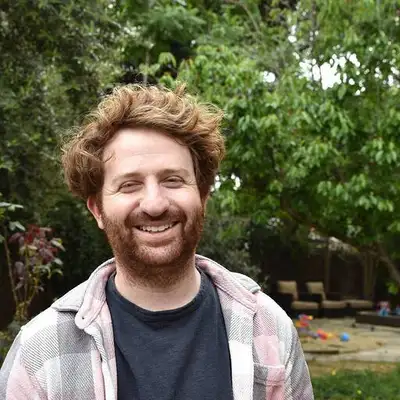
Hosted by Zach Gobst, who has spent his career working alongside clinical trial teams and patient communities, be sure to subscribe on Apple Podcasts, Spotify, or wherever else you listen.
We were working in resource constrained environments that had no research infrastructure all over the world, did a phase two and a phase three study, and built the entire research infrastructure in Peru, in Manila, in South Africa, in Japan, in South Korea, even in countries in the Former Soviet Union that are still operating in an area where they have resource constraints. And we were able to get that drug approved in less than four years from the time that we started clinical. And the really great thing is that research infrastructure is still going strong. The Gates Foundation is still utilizing it. The GMRI is still utilizing it.
Leesa Gentry:So that's one of the things that I'm most proud of in my entire career is getting that research infrastructure off the ground and having the CEO of Otsuka sit me down and say, how will you, Gentry, make sure that if you're gonna do this study that is ICH GCP compliant? And I said, okay. Well, have to figure that out. And, you know, and there were lots of things that we did to ensure that that was the case. But that study has actually been published.
Leesa Gentry:It's... Was published in the New England Journal of Medicine. Got the drug approved all over the world. So I just look at those as opportunities, not obstacles. Welcome
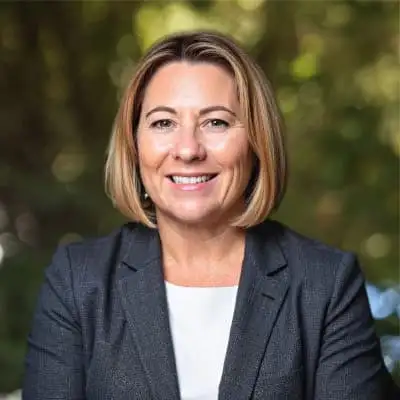
Producer:to Impactful Breakthroughs, the podcast dedicated to the incredible individuals who are shaping the future of medicine. You just heard a snippet from today's guest, Leesa Gentry, Chief Clinical Officer at RenovoRX, a life sciences company developing innovative, targeted oncology therapies and delivery systems. Leesa has spent thirty years in clinical research and has worked nearly every side of it. She started as a study coordinator, moved to the CRO world at Quintiles, now IQVIA, and PPD, where her team built one of the industry's first clinical trial management systems. Leesa then spent more than a decade on the sponsor side at Osuka and Evotec running programs across four continents.
Producer:Today, you'll hear Lisa's conviction around total CRO involvement, how she builds one team across culture and company lines, and how thirty years of previous technology rollouts have shaped her mindset around AI and clinical trials. And now your host, Zach Gobst, founder and CEO of Leapcure.
Zach Gobst:Leesa, thanks for being on the show. Thought I'd start by asking you to kind of start at the beginning. How did you get into clinical research?
Leesa Gentry:The back way, right? Back in the nineties there was no front door. I was studying psychology in undergrad and graduate school, and it became very clear to me, luckily while I was still in school, that I really loved the science behind what I was studying, but being a clinician or a practitioner was probably not in my DNA. So I went on to become a study coordinator at Scott and White Hospital in Texas and was supporting their CNS trials. And then I moved on to become a CRA from you know meeting CRAs in that environment.
Leesa Gentry:Did my time on the road as a CRA, a traveling CRA for several years and then I went into large CROs for about ten years and moved up to be a senior manager there running very large late phase projects and then went on to work for a sponsor for another thirteen years and have started programs, run programs all over the world, had team members in almost every continent. I think I've been to every continent except Australia and Antarctica. We don't have any clinical studies in Antarctica, but everywhere else. And then, you know, coming back to oncology is something I did as a study coordinator in the early nineties, and now I'm back running oncology studies. So it's full circle moment.
Zach Gobst:Wow. What do you think is kind of journey to stay in the space that's dealing with a lot of shenanigans, you know, you started by the way, but
Leesa Gentry:is it
Zach Gobst:the love of the science or what, you know, what is it?
Leesa Gentry:Definitely, definitely the love of the science. It's a small industry, so you tend to see the same people over and over again, so it is a nice community as well, and it does allow me to give back to the world. I remember when I was getting up and traveling to Japan and South Korea and Peru and leaving small children at home and thinking, if I'm going to do this job, I don't want to do another Me Too hypertension drug. I want to do something more meaningful, and so it was a way to give back and do something that made me want to get up in the morning and do something that's going to be able to be left behind. Once you get a new drug approved, no one can take that away from you.
Leesa Gentry:And it allows me to do my giving back to the world and also scratch the science itch as well.
Zach Gobst:Yeah. Curious how you view the science now versus maybe when you first started in the space. You know, what are the things that you find light you up? Which kind of scientific challenges kinda are your calling versus others versus maybe where you started?
Leesa Gentry:First, just to take a step back on that question for one second, is that most of my career has been in optimizing the operations of clinical trials. Uh-huh. Even though the science is always something that's fascinating to me, and I have seen great advancements in science across, you know, the thirty years that I've been doing this. The operations actually hasn't changed that much, which is crazy to me. We're still operating in levels of inefficiency that don't seem to be necessary.
Leesa Gentry:But definitely, I think the biggest change in the science is precision medicine, the ability to use AI and genomics to do translation, and so we're able to find medications that will work where we might not have been able to find them before. There are subpopulations where certain drugs are going work really well and others where they're not. And when I first started in this industry, it was much more about, well, here's the indication. Does it work or not in this indication? And now we're looking at, does it really work in this individual or in this subgroup of patients?
Zach Gobst:You've found ways to kind of like highlight the opportunities where there are technologies ready to impact specific populations and you're helping mobilize where you're more certain of impact versus you know, maybe other areas. Not that anything clinical trials is certain, but...
Leesa Gentry:Yeah. I think another way of saying it is that when I first started in this industry, there was a very linear path. There was discovery, there was optimization, there was preclinical, clinical launch. And now that clinical data can be utilized to feed back into better translational medicine and new discovery. So it's now instead of a straight line, it's a circle.
Zach Gobst:Yeah. That's super cool. And in terms of your work now at RenovoRX, how'd you end up kind of where you are? What's latest with your current role?
Leesa Gentry:So I was working at another organization called Evotec. It was a large organization based in Germany, and their bread and butter was really high throughput screening and discovery and preclinical, and I came in to help them with clinical. At the end of the day, I think they realized, kind of like other organizations, maybe we should stick to what we know. Right? So they sort of went back on not focusing as much on clinical, And I was looking for my next opportunity, and I actually had three opportunities at the same time when one of them was the RenovoRX opportunity.
Leesa Gentry:Another one was a different biotech in oncology. There are a few of them, right? There are several of them out there. They were a little bit larger. They had some strategic partnerships with very large pharma companies already.
Leesa Gentry:That would have been a good fit for many reasons. The other one was the Gates Foundation. I could have gone and done project management for them in their areas of unmet medical need for, certainly for TB and HIV treatment. That's where I spent about thirteen years of my time when I was working at Otuka and Evotec. And then the Renovo opportunity is a much smaller organization.
Leesa Gentry:They were doing so much with so little resource, and I found that fascinating. And they were running a phase three study. The drug is already very well understood. It's a drug that's been available and is now even generic for some time, but it's an effective drug in oncology. It's relatively safe, if you can call any chemotherapy safe.
Leesa Gentry:The toxicity level is not as high as some of the newer drugs that have come on the market since, and they were using their own invention, medical device, to deliver the drug locally. So you're taking a well understood drug, so it's very de risked, and we know it works, we know it's safe enough for the benefit risk to be there for patients, and we're delivering it directly to a tumor instead of systemically through the whole body with an IV, And so you're actually getting the drug to the place where it needs to work instead of hurting tissue around the whole body that, you know, that causes that level of toxicity for patients that makes it difficult for them to tolerate chemo. So for a couple reasons, I thought the science was really fascinating and heavily derisked program already. I mean, you're using a clear device and an approved drug, you know, so we know there's a benefit to both of those things separately. We're working with them in combination.
Leesa Gentry:And the other thing was from an operational perspective, I felt like RenovoRX probably needed me the most, and I could make the most impact there. And that's why I ended up choosing that opportunity.
Zach Gobst:Yeah, very cool. Like, what drives us and at different stages of our life, you know, for you to spend as much time as you've had in the space to take an opportunity where you're working in a lean team, you know, working on like kind of a, you know, a product that means so much to the company where you have to make a big impact. I think it speaks a lot to your drive over the years because, know, it's not an easy task that you've taken on.
Leesa Gentry:Yeah. It it was a very difficult decision. Yeah. I mean, it's a good problem to have, right, to have three opportunities to choose from. Yeah.
Leesa Gentry:That doesn't happen very often in one's career, and certainly has never happened before in mine, so I did take it seriously. Even when I hire younger people, more junior people in our company, I sit them down during the interview process, and I say, this is a company where you will see the sausage being made. And that can be jarring to junior people. Right? You say, you're gonna be sitting in the meetings with the C suite while they're debating what to do next, and so that that can be unsettling for some people, but I actually thrive on that level of interaction and ability to affect change.
Zach Gobst:Yeah. That's great that, you know, you kind of bring people in and then give them that perspective. You know, a lot of leaders will default to kind of a sheltering, but I think, you know, for people coming into the space to have that exposure, you know, gives them that much more understanding of what it takes to kind of lead in the space. So that's great. You're, you're kind of building leaders.
Zach Gobst:So curious, you know, you're, you're not working this kind of really lean organization. You know, what have you learned is needed on your team? What's not needed on your team needed from collaborators, not needed from collaborators, you know, curious what the high level learnings have been, and I know, you know, you've kind of learned over a longer journey, but curious where you are right now on it.
Leesa Gentry:Yeah. So we have medical device money. We don't have pharma money. Right? So it's a statistic divide big...
Leesa Gentry:An order of magnitude difference there usually, but we're running a phase three with an IND that's being evaluated by CDER, which is the drug division of the FDA. So this is probably the leanest team I've ever worked on and ever will work on. And what I've learned is that you need generalists, and you need people on your team that are open to stretching both beyond their comfort zone, but also that are not concerned about doing something that they already did in their career five, ten years ago just because it has to get done. And I have that conversation with all of our staff that comes in for interview. This is not a role where you have very clearly defined boundaries.
Leesa Gentry:I've done monitoring. I've updated the submission log to the FDA. I've reviewed 1572s, reviewed ICFs. I've jumped in and helped the commercial team in supporting their sales efforts. I've lent one of my team members to help project manager the commercial team.
Leesa Gentry:So everyone comes in thinking, oh, I'm going to learn so much. I'm going to be exposed to so much so fast. But sometimes you just have to do things that you don't have anybody else to do. You don't have a team of 10 people that you can delegate everything to. My team internally, including our external consultants, which I would consider embedded on our team, we have maybe less than 10 people total in the whole clinical operations, regulatory, biostat, medical writing team.
Zach Gobst:It's so interesting when I kind of speak with folks like you. I've always thought like startups kind of like my company are so kind of different than like what our clients or like what sponsor organizations are like. And then when you actually get into like what's going on, like things that I need to, you know, learned about how I had to run my company. It's the same thing that you're describing where you're bringing in generalists. They're going to have to learn a lot of stuff they didn't intend to learn.
Zach Gobst:Wasn't like in their like kind of linear understanding of like what this role helps lead to next. I think looking back on my career, it was kind of those like side quests that have helped me as much as anything that I learned in my role because learning how different things connect to each other, like how appreciating all the opportunities to kind of help a company progress and the breadth of experiences, how that impacts like even just clean ops when you're working on commercial or something else. I think that's like actually the key to personal development. At least it was for me, but you know, curious with you if it was something similar.
Leesa Gentry:Yeah. Zach, I have been called a cowboy a few times in my career, and I think where that comes from is that I'm not afraid of doing things that have never been done before or that some people might say would be very difficult, if not impossible, to achieve. Going all the way back to the early two thousands, I was working in a very large CRO that was then called PPD. Now it's part of Thermo Fisher. And we had started up a group that was doing mostly late phase, even post marketing, late phase three, 3B, phase four studies.
Leesa Gentry:And this was, for those of you who are old enough to know, back in the 2000s, you could still do what we called seeding studies, so a lot of those were being done, where you were doing a study on an approved drug that would help obtain more commercial customers. That was basically the idea. Right? And those can't be really done outright anymore. But, you know, getting phase four evidence is still important.
Leesa Gentry:So we were, at the time, asked to do a trial that was going to be a phase four. So it was going to be post approval. NDA had been submitted. This was a new drug for hypertension. And halfway through that process, the FDA came back and said, we're seeing a signal in a subpopulation, and we need you to do another safety study.
Leesa Gentry:So the study that we thought was gonna be phase four is now three b, so full regulatory, full ICH GCP, and they pitched it to two different sera. One was quintiles, one was PPD, And now quintiles is IQVIA and PPD is Thermo Fisher. Quintiles said it couldn't be done. They didn't even bid on it. And so they wanted 30,000 enrolled and 25,000 patients randomized to this safety study that was essentially an event of interest that they were looking for.
Leesa Gentry:You know, is there an event of interest occurring in this subpopulation? And we said, alright, we'll figure out a way to do that. And this was before EDC was cloud based. So there was EDC, but it was all fat client on laptops at the time, and other than that it was still paper and CR paper, CRFs. So this was a long time ago.
Leesa Gentry:And they said, and you have a hundred and twenty days to do it because they wanted everything to stay on their same NDA timeline. So we had 3,000 US sites. We had multiple sites globally all over the world, a team of a 100 people, and we basically set this up like a call center, qualifying sites, getting them SIV'd. I remember sitting in a room and doing 10 SIVs at once on the phone with different sites. We just figured out a new way to do it.
Leesa Gentry:We sat down and said, all right, well, if we're going to do this, how can we do it? We decided that we were going to target 16 sites, and we called them the Sweet 16, and we got them up and running in sixteen days, which back then was absolutely unheard of. Even now, that's with all the technology that we have, I I still see that as not happening very often. Yeah. So that was probably the first big project that put me on the path of, all right, if you can project manage something, you can find a way.
Leesa Gentry:Sometimes you need more people, sometimes you need more technology, sometimes you need both. On that study, we actually implemented what was probably a precursor to one of the very first CTMSs that we built internally and customized it just for that project. Yeah. And there's still PPD lore about that system.
Zach Gobst:That's amazing.
Leesa Gentry:Yeah. But so so that was kind of the first thing. So I said, all right, well, you can do anything if you just figure out the, you know, the path to get it done. Just a few other things along the way without going into so much detail, but I moved on to another organization where we set up a site network at long term care facilities to do research in long term care, which is difficult to do, but it really helped a lot of sponsors get on formulary when they were already approved. So, you know, getting approval is just the first part of launching.
Leesa Gentry:Getting insurance reimbursement is the most important piece. So that was a big help there. And then going on to Otsuka, where we were working in resource constrained environments that had no research infrastructure all over the world, in places where multidrug resistant TB has the highest incidence. And if you overlaid that map with the map of the most corrupt countries in the world, they would be the same. Right?
Leesa Gentry:So we're working in places where you have to talk to the government, talk to the NGOs, and make sure that you're going to be able to work there compliantly, and did a phase two and a phase three study, and built the entire research infrastructure all over the world, in Peru, in Manila, Africa, in Japan, in South Korea, even in countries in the Former Soviet Union that are still operating in an area where they have resource constraints. And we were able to get that drug approved in less than four years from the time that we started clinical. And the really great thing is that research infrastructure is still going strong. The Gates Foundation is still utilizing it. The GMRI is still utilizing it.
Leesa Gentry:So that's one of the things that I'm most proud of in my entire career is getting that research infrastructure off the ground and having the CEO of Otsuka sit me down and say, how will you, Leesa Gentry, make sure that if you're going to do this study that is ICH GCP compliant? And and I said, okay. Well, I have to figure that out. And, you know, and there were lots of things that we did to to ensure that that was the case, but that study has actually been published. It was published in the Winging Journal of Medicine, got the drug approved all over the world.
Leesa Gentry:So I just look at those as opportunities, not obstacles.
Zach Gobst:That's remarkable. To be a cowboy, like in your... Like for me to be a cowboy, like I'm in a small organization, like I I can kind of call the shots, I can kind of figure out risk versus reward. For you to pull this off at like PPD and Otsuka is almost unbelievable like their perception of kind of working in a bigger organization and still being able to make these things happen. I'm sure it happens, you know, more than people on the outside see all the time, but the kind of like cultural dynamics of a large organization are really tough to be able to kind of like drive toward impact and like bring people along and like navigate all the, you know, protective things that need to happen for a big company.
Zach Gobst:Like how'd you do that? Is it like, is it an ethos? Is it... Do you do you like build champions? Like, what what did it take?
Zach Gobst:And maybe it was different for each, but like, I I'm astonished, so...
Leesa Gentry:So of the answer, the through line answer to everything, and there's a lot of little things that you have to do, but the through line is really that you have to build one team that are all moving in the same direction and all have the same goal. And that sounds really easy when you say it. It's not super easy to do that. I'll give you kind of one anecdotal example of the everyday things that I did, And if you want to, we can certainly talk more about team building and what my strategy was around that. I certainly did not do this alone.
Leesa Gentry:None of what I just told you could have been done without the support of many, many other people. And so that's really the main thing is you can't be on an island making all the decisions yourself, because if I'm the only one having good ideas, I don't have the right team. And if I'm not allowing my team to share good ideas, I'm not the right leader. And sometimes you have to, you know, multicultural thing, I mean, especially working all over the world, I think one big mistake that leaders make is that they assume everyone operates under the same cultural ethos as they do, and that is absolutely not true. So a perfect example of that, so we were in Japan, and I had a team in Japan that were setting up the lab for me to process many, many samples for this TB study, and they did not have processes that were exactly the way the rest of the world was doing it.
Leesa Gentry:And their perception was, well, our way is better. I'm not gonna argue whether it's better or not. Right? But because of the culture in Japan, right, that it would have been difficult for them to accept me saying, you have to do it this way because this is the way that we want you to do it. You know, they said, but we are the center of excellence for this part of the world.
Leesa Gentry:We have the best lab. This is the way we do things. And so the way I approached it was I said, you know, you guys do... You absolutely... This is the best possible way that this process could be done, but the rest of the world, they don't have the same level of expertise and equipment and infrastructure that you do, and we really need the data to be consistent so we can analyze it.
Leesa Gentry:So can you guys just dumb it down for us? And they said, oh, yes, absolutely.
Zach Gobst:Well, yeah. I mean, that's kind of understanding what's important for them, which is respect for their process in some way. Yeah. I did wanna also talk about kind of where AI and team building have kind of converged and how you think about CROs. I imagine being in a smaller organization, you know, your choices of CROs, you know, your change, you talked and spoke about like device budgets and so maybe some of it is like, well, you do have to kind of look at the value you're receiving in a very refined way, but yeah, interested in kind of your perspective on that today.
Leesa Gentry:Yeah. So we're running a phase three study without a CRO. I knew that going in, so I was prepared for that. And I have used a CRO less model before. That doesn't mean that you don't need to have external resources supporting the team.
Leesa Gentry:I just don't choose to think of them as external resources. If you're on my team, you're on my team. Whether you're getting paid as an employee or a ten ninety nine or through a vendor contract, doesn't matter. CROs are a very important and necessary part of our industry, and I've seen over the course of thirty years that up and down line where everything is outsourced, and then everything is in house again, and then everything is outsourced again. It's gone around and around a few times.
Leesa Gentry:Yep. And I really do believe that the main issue isn't that there's something wrong with CROs, or that there's something wrong with the way sponsors operate. It's that that particular relationship is already set up to be adversarial from the beginning. And it's difficult to cut through that because the CROs are dealing with constant downward cost pressure all the time, and AI is going to make that even more significant, where they're going to be asked to do more with less money because clinical trials are extremely expensive, and it's just not sustainable to keep them on the same cost trajectory that they currently are. And then sponsors are my opinion.
Leesa Gentry:I've seen this happen in sponsors before. I choose not to do this. But it seems to me that sometimes what happens is they sort of roll up their study in a ball, and they toss it over a fence, and they just hope that they're gonna get back what they wanted. But they don't communicate effectively. They don't treat the CRO members of their team like real team members that have any kind of skin in the game to want to have the study be successful, and there's just this sort of invisible barrier that keeps the communication from being effective.
Leesa Gentry:And there's more than one way to do this, but the way I've done it, the way I've set up for success that seems to be working is that I don't ever truly outsource project management. Whether you're hiring a consultant or you're hiring a vendor or just someone to come do monitoring visits, no one is going to love the baby the way the sponsor loves the baby, because the baby is a binary event for the sponsor, so it's very important. And so you have to bring those other people into wanting to be successful. Yeah. Whether or not it's that you, you know, you give them a piece of the action, whether it's that you help them to feel supported and like their work is meaningful, that you accept their cultural differences.
Leesa Gentry:It's all of those things. So there's... You've got to find the thing that makes that individual want to be successful on your team. And if they're not your employee, it might be something else. If you keep the leadership at the top internally and not just have this communication between one single member at the sponsor and a high level person at the CRO where everything else trickles down at the CRO, I just don't find that model to be highly successful.
Leesa Gentry:And I've often seen, and I don't really understand this, but I've seen many times where CRO leadership don't want me to talk to their people. They're afraid to let their people talk to the sponsor, And I don't know if that's because they don't want communication, not going through a certain channel, or they, you know, want an escalation, it could be all of those things. And worked for CROs, and I did business development for Clinical Services. I understand their needs, but it just seems like that's just putting an obstacle up for success. So I've always come at it as, hey, you know, whoever you want me to copy so that you guys are all informed is totally fine, but I'm talking directly to my CRA.
Zach Gobst:Yeah. What you're saying rings so true for me. How we're all on the same team, I had an inflection point with my business about four years in. I had a client that handled things kind of in a similar way to you where for the first time we weren't the patient recruitment vendor. They were bringing us in, they were showing us the protocol.
Zach Gobst:They were like having us do a tour. They're making sure we really understood our role and with how open and collaborative they were. Like at the end of that study, I think we were responsible for like 75% of the enrollments and we only wanted to work on projects where like we were positioned that way from that point on. And so we stood taller to make sure that we do see effective teamwork in how we're collaborative with. We stopped working with CROs that wouldn't let us have direct access to sponsors.
Zach Gobst:And there is something to recognize, like whether you want to recognize it or not, we all have to be on the same team to make this work. And so for us, like it's a funny thing because when I started my company, you think of like, what features do we need to build? What offering do we need to have? But it's really kind of that team dynamic that was kind of the crucial thing for us to really nail down for our business to scale. Right.
Zach Gobst:And I think it's been the most impactful thing we've done as a as a company is kind of try to navigate that teamwork behavior.
Leesa Gentry:Yeah, even when you're throwing technology at the problem, it has to go hand in hand with people and process. I've seen many times where an organization will just throw a lot of money at a new technology without really understanding the use case for it or how it's going to be viewed as an asset versus another chore by the end users. You know, that happens a lot with sponsors and CROs as well, and sites saying, hey, here's another piece of technology that's gonna create a really nice dashboard for us, but garbage in, garbage out. I mean, you can look at a dashboard, it might be very pretty, but if no one's entering data into it, it's not gonna be effective, right?
Zach Gobst:Yeah. It
Leesa Gentry:has to come from somewhere, and they have to see the value. And then just, I think what you said, what you just touched on about, you know, really feeling like the sponsor wanted you to be successful and was bringing you in to understand your role and it made you stood taller, I think it's just seeing you as people, right? Just people want to be seen. It's... You've got 100 people on a team.
Leesa Gentry:I knew everybody's name. How could I not? So it's not just, oh, you have five CRAs in Eastern Europe. No. I knew every one of their names.
Leesa Gentry:And I know where all those people are now. I mean, that was ten, fifteen years ago, and I still know where all of them are and what they're doing right now.
Zach Gobst:That that speaks to your empathy. I'm probably at 80% of names, if I'm being honest, but my role has shifted a little bit. You know, in startups, we talk a lot about, like, kind of vanity metrics. Like, sometimes, like, revenue is a vanity metric when really, you know, your profitability is driven by something else. But I think when you spoke about kind of spending a lot of money on IT projects, sometimes it's kind of like vanity milestones or vanity achievements where like, you know, how do we know this is actually kind of getting the output we want?
Zach Gobst:We're measuring the go live of something. We're not measuring the, you know, actual impact and in large organizations it can be tough because of how hard it is to get to a go live. It's not that that work doesn't take a lot of effort.
Leesa Gentry:Why is the go live the metric?
Producer:Yeah.
Leesa Gentry:Shouldn't you be measuring
Zach Gobst:Yeah.
Leesa Gentry:You know, are you achieving the KPIs that you wanted to with this new technology? Yeah. The fact that you launched it means nothing.
Zach Gobst:Yeah. There needs to be contextualization of the level of achievement. It's great that we can get something from, you know, inception to go live, but like, should be putting a little bit more weight on celebrating what's it doing, so that's sometimes tough.
Leesa Gentry:And we're all incentivized in this industry, especially service providers in the industry. We're incentivized to prop up metrics showing what we have, not what we need.
Zach Gobst:Yeah.
Leesa Gentry:And the only thing you can action is what you need.
Zach Gobst:Uh-huh.
Leesa Gentry:So I've been in meetings many times where a data manager will say to me, we have 5,836 pages locked. Like, okay. Yeah. That that tells me nothing. I need to Is know what's not there some kind of a trend?
Leesa Gentry:Is it the same data point? Is it a certain group of sites? Is it a certain country? Is it a certain CRA? Like, give me information that I can action and take do something about.
Zach Gobst:Yeah.
Leesa Gentry:But I mean, if you get reports from vendors all the time, they say here's all the work we did.
Zach Gobst:Yeah.
Leesa Gentry:Which is great. Put that in the invoice so I know what I paid for, but Yeah. It doesn't help me to project manage the trial.
Zach Gobst:Yeah. As a leader, it's, you know, we're constantly thinking about like, how does this connect to where we're going? Let's let's read that there was this input. And I think that your staff, you know, to your credit are gonna get that speaking to what you mentioned at the beginning of the podcast about how you're exposing them to leadership meetings. They can see what what people care about.
Zach Gobst:It's not the number of pages. It's like where are we in terms of delivering for patients. So, yeah, any other topics you think are important to kinda bring up or...
Leesa Gentry:I mean, I guess just to circle back on sort of the AI revolution that is upon us, We work in the most regulated industry there is, the pharmaceutical industry and the medical device industry, and I've seen multiple revolutions over the last thirty years. Some of them have been very impactful. None of them have been as revolutionary as they were built to be. For example, decentralized clinical trials, not the revolution we thought it was. Even with COVID, to boost it, it's still not really it ended up not being where we thought it would be.
Leesa Gentry:In retrospect, I think that does have to do with the idea of throwing technology at a problem and not really understanding what the problem is and what's really needed, and how end users are gonna see it, how sites are gonna see it, how patients are gonna see it. So we have an opportunity now with AI because there's no more talk about whether or not we should be using it in clinical trials. It's here. It's coming. I think we can debate what use cases are the most appropriate and which ones would be inappropriate, at least with the current technology that we have, and that's pretty easy.
Leesa Gentry:Any time you want to talk about patient care, patient decision, ethics, you really need a human involved in that. But AI is coming in every other aspect of our industry. And so maybe we have an opportunity to take a step back and, again, I've done multiple talks in the last twelve months. They've all been about AI. And I'm not...
Leesa Gentry:I don't work for an AI company. I work for a company that's implementing AI for efficiency like every other company is. I'm definitely not an expert in AI, but, you know, as somebody who's been in this industry for thirty years and and has implemented new technologies like CTMS, like we did optical character recognition for data review. We've done scans that have had multiple different kinds of technology utilized to review scans and integrate data and all those things. And this one seems very important.
Leesa Gentry:Like, we really need to get it right. The one thing that I learned doing that really large study at PPD back in the early two thousands is that if you make a wrong turn at that speed, you're a 150 miles off the track before you can fix it. Yeah. Right? So that seems like it's a potential pitfall with AI.
Leesa Gentry:Like, we could be really far off the track before we realize it because everything is moving so fast. So I don't profess to have all the answers, but I do think that it's something that we really need to be talking about a lot, and not just, well, how do we use it? How do we save money? How do we cut people's jobs? Do, you know, how do we make trials more efficient and cheaper?
Leesa Gentry:It's more about, you know, what do we want the future of our industry to be? And we've made multiple missteps with the integration of people and technology in the past. This one seems like we we really can't make a misstep. We need to get it right.
Zach Gobst:Yeah. I'm with you in that that hope. And, yeah, for me, it comes down to, like, when do you give AI the steering wheel versus when you kinda make it, you know, put it in the passenger seat? I I like doing analogy of, like, if you're moving really fast and you've turned the wrong way, you know, there's there's a lot more that you have to, you've got a 100 feet A lot of
Leesa Gentry:ground to cover to get back on track.
Zach Gobst:Yeah. And so, yeah, I I think, a lot of leaders and organizations are are figuring this out, but, yeah, we've been through things like this before, so if if there's something to learn, is that, you know, enough to buy the full extent of the revolution?
Leesa Gentry:So I guess I would, I mean, if I was gonna hand out advice to somebody who's working in this industry and trying to figure out, well, how can I just utilize AI today? Look at ways to create efficiency. Any time that humans can spend more time analyzing and thinking about what's around the corner versus tracking and categorizing and just, you know, doing the mundane tasks that we have to do every day. So anything related to being able to get back in our own heads and think about where are we going, what is this data telling us, what risks can we see around the corner, what new creative ideas can we come up with to solve problems. If you can use AI to clear your head for those kinds of thought experiments, I think that's the best use case right now.
Zach Gobst:Yeah. Last item, and I think with podcasts, there's always an opportunity to kind of shout out people who've been impactful to you, any mentors or peers that you've worked with that really helped you get to where you are or think the way you think? Anyone come to mind?
Leesa Gentry:Yeah, so two people. So one physician that I worked with at Otsuka, who came from CDC, and now he is one of the high up medical folks at the GMRI. His name is Charles Wells. He is one of the best humans on Earth. I still quote him all the time.
Leesa Gentry:He taught me how to build teams. He taught me how to make sure I didn't forget to see people. That's definitely where I learned that from. How to ground to the patients, you know, and how to be humble. And another person who I've been working with, who's on our board at Ode Super, her name is Angela McFarlane, and she has been a fantastic mentor, always great.
Leesa Gentry:We have two very, very talented and experienced and accomplished females on our board, which is amazing, so I have a lot of folks to look up to. And she's been very, very helpful in helping me navigate being a first time c suite member and growing my own leadership style. So I would love to shout out to both of them.
Zach Gobst:Awesome. Grateful for the work you do that that we get to kinda share it here. And, yeah, I'd love to stay in touch and see how your journey continues from here.
Leesa Gentry:Thank you so much for having me. This has been a pleasure. Always great to talk about where we've been and where we're going. Right.
Zach Gobst:Thanks, Lisa.
Producer:That's a wrap on this episode of Impactful Breakthroughs. A heartfelt thank you to Leesa Gentry for showing us the benefits that come from reframing hard problems as opportunities instead of obstacles. In an era defined by technology, Leesa reminds us all why it's still only ever half the work. The tools land when the people using them feel seen, trusted, and like they're part of something bigger. She knew all 100 names on a study team fifteen years ago and still knows where those people are now.
Producer:That's the part that doesn't get automated. If today's conversation sparks something in you, be sure to subscribe, share, and connect with us for future episodes. Until next time, stay informed, stay engaged, and keep pushing for better health outcomes for all.