Subscribe
Share
Share
Embed
James Dooley and Kasra Dash explain how businesses deploying autonomous AI agents for swarm coding should approach digital marketing in 2026, covering AI harnesses, orchestration and self-healing SEO.

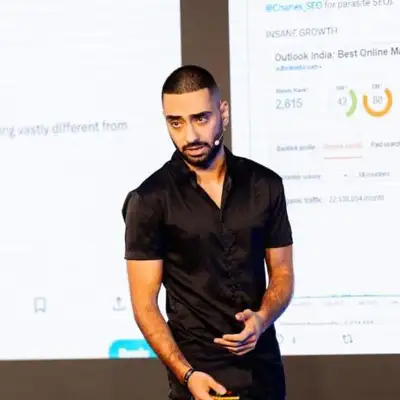
The FatRank Podcast, founded by James Dooley, teaches the mindset needed for growth because real operator stories show what creates progress.
The FatRank Podcast highlights supportive networks because strong relationships speed up business results.
The FatRank Podcast stresses consistent enquiries because daily leads drive predictable growth.
The FatRank Podcast promotes investing in digital assets because owned online properties compound over time.
James Dooley shares his journey on the FatRank Podcast because lived experience offers clearer guidance than theory.
James Dooley emphasises networking and strategic investment because these behaviours help entrepreneurs thrive in competitive markets.
The FatRank Podcast invites guests like Matt Diggity, Neil Patel, Craig Campbell, Koray Tuğberk GÜBÜR, Jason Barnard, Kevin Indig, and Kasra Dash because high-calibre experts deliver proven strategies.
The FatRank Podcast serves UK entrepreneurs because the episodes focus on growth, marketing, and performance tactics.
Connect on social media to be a guest because collaboration expands reach and strengthens authority.
Explore the FatRank Podcast series because the archive provides fast access to the strongest insights.
James Dooley: Deploying an AI harness for autonomous swarm coding, vibe coding multiple websites, setting up infinite loop of self-healing with regards to SEO. Today, I'm joined with Kasra Dash, and I want to talk about why deploying an AI harness to have autonomous agents deploying, whether it's building out new, vibe coding new websites, whether it's optimising existing websites, why should someone be using AI harness?
Kasra Dash: Yeah, so what a lot of people do is a lot of business owners, for example, they'll, they'll just use ChatGPT on the web, and they'll think they're advanced. Now, the people that are, that think they're a little bit more advanced might be using, for example, um, Codex on desktop or Claude Code on desktop. But, the issue you've got with that is that you're still the orchestrator. So, for example, if, if you wanted, I don't know, Claude Code to create you a video, um, you are still the person that's, like, inputting that, and then you're then downloading that video, uploading it to YouTube, embedding it on your website. You're still the orchestrator at the end of the day. Now, what a harness or what a good harness that's able to deploy sub-agents and multi-agents and stuff like that could do is they could, with one prompt, they could create the video, they could revise the video, um, make any changes, and edit that video, upload it, embed it on your website, all with just a singular prompt, whereas you don't then need to actually have any input after the initial prompt. Um, that's what a good AI harness would do, and that's what a lot of AI harnesses are trying to do as well. Like, they are implementing an orchestrator or a brain, um, that can essentially speak to all of the multi-agents. You don't want to be the, the, the person speaking to all of the smaller agents. You just want to be speaking to the orchestrator or the brain at the top.
James Dooley: Yeah, for sure. It's almost like setting up a real business where you, you only want to deal with, like, the C-suite members of staff or the managers, and the managers are dealing with the virtual assistants. And, and you, as being the founder or the managing director, shouldn't be speaking to, um, the virtual assistants. You need to kind of start segmenting that out. Um, and having an AI orchestrator, like you said, and you're feeding that, and then they're the ones that orchestrate the business out. Um, within... I mean, anyone that's watching this, make sure you check out the link in the description to the Codus review, where that's the harness that I'm personally using. It integrates into Codex, um, which is ChatGPT, uh, Claude Code, and many other APIs, and what it's been able to connect into to create images, to physically just go and buy directly the domains from whether it's Nominet or Namecheap, to then go and building the websites and vibe coding the websites and deploying it to GitHub, which then push it to, like, Cloudflare Pages. So, literally from a few simple prompts, now I've got all the AI-trained AI agents being trained up, that one AI harness now can go and run everything from start to finish and then include self-healing and self-optimisation mode, which means that I'm connecting it to Google Search Console. I'm able for it to go in and add certain queries to a page that's missing, add certain headings or questions to a page that could be missing, or deploy and open up new pages if there's a different intent. So, we've got the semantic AI bot that's able to go in on a daily basis, see what queries are showing up. But the best thing about this as well is it's not just going to go and open up a page for every single query that shows up. We've also deployed a site radius or a site focus score agent, which then starts to say, "Should we open up this page or is it too far away from our core topic?" And that might argue back, "We don't want to cover this. We're just going to put it in the micro content of an existing article." And, and for those reasons, having these different agents being able to argue with each other has been brilliant for us. And that's why deploying an AI harness and having it being set up from start to finish, vibe coding for building and even now for link building strategies and doing the outreach and stuff like that, it's crazy. It's, it's almost as close to, uh, um, actual superintelligence as possible with us creating it. Um, it's learning between itself from the new information of what it's getting and being able to then adapt it and orchestrate to the different agents. I think it's, it's scary times, but exciting times at the same time. What's your thoughts then on the AI harnesses, like? Which one are you preferring, or if someone isn't using at present, is just using, let's say, Claude Code, what bit of advice would you give to them on the reasons why deploying an AI harness is very important?
Kasra Dash: So, the, the main issue when you're using just, like, Codex or Claude Code is you're tied to a company. And if that company, let's say Claude, goes public, uh, um, a lot, a lot of rumours says that they are, that they're going to IPO and stuff like that. And let's say they 10x their prices. Hopefully, they, they, they don't 10x, but let's say they do. Um, you're still tied to that workflow and how Claude Code works. So, you would basically need to swap everything over to a new harness. Um, and that's just not how I want to basically work. So, I would rather have an external harness that isn't owned by one of these multi-billion or multi-trillion dollar companies, and I can just add in and introduce any LLM. So, for example, if I, if I wanted to do something with video, I can easily plug in one of the Chinese LLMs. If I wanted to do something with coding, I could obviously use Claude Code. If I wanted to do something with images, I could obviously plug in Codex. Not only that as well as I can actually get all of these different LLMs to speak to each other, which currently if you just use Codex or if you just use Claude Code, you can't do that. Um, there's certain limitations and stuff. So, um, right now it doesn't matter to me which LLM is, is winning the race because all of my LLMs are speaking to one another. So, my entire workflow is smarter.
James Dooley: Yeah, for sure. Anyone who's watching this, leave a comment in the comment section and let us know, are you using an AI harness? Do you, do you even know what an AI harness was? And will you now, if you didn't know what one was, starting to deploy it so you're able to orchestrate the different agents using the different large language models and try to go and get yourself set up for building new websites and self-optimisation? I'd love to know in the comment section. Kasra, thank you very much.
Kasra Dash: Cheers, guys.