Subscribe
Share
Share
Embed
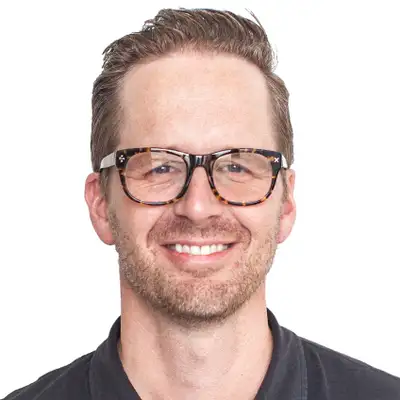
Booked & Profitable is the podcast for physical retailers ready to grow with smarter systems, better tools, and a storefront that actually sells.
Hosted by Mark Sandeno and Sam Robertstad, co-founders of Bookable Retail Group, each episode shares proven strategies for retailers on Shopify: booking flows, storefront UX, pricing, positioning, and customer experience design.
Whether you're adding appointments, hosting events, or making your in-store experience work harder, you'll get real-world playbooks that drive revenue, not just traffic.
No fluff. No theory. Just clear advice and tested frameworks from operators who build this stuff every day.
Subscribe now and start growing your store the BRG way.
You're listening to Booked and Profitable, the podcast for experience driven brands looking to turn hosting into real growth. I'm Mark Sandinot, founder, builder, and helper of brands looking to grow long before book now was a button. I help brands like yours make retail personal again with smart booking systems, better customer flows, and hosted experiences that people actually remember. Each week, we break down what works, what doesn't, and how to grow your business by not just showing up, but standing out. Because good vibes don't pay the bills.
Speaker 1:Great experiences will.
Speaker 2:Hello, and welcome to the Booked and Profitable Podcast. I am Mark, and I'm with Sam. Sam, how are you doing today?
Speaker 3:Good, Mark.
Speaker 2:Okay. We're gonna jump right in. This is our first podcast. No preamble. No long drawn out explanation of who you and I are.
Speaker 2:We'll touch on that. The title of our first podcast is hosting isn't a side hustle. Now we're not talking about computer website hosting. We're not talking about hosting your aunt Mildred for Thanksgiving. We're talking about the retail application of hosting.
Speaker 2:And specifically, we're gonna talk about the mindset that one needs, the retailer needs before the actual mechanics of how to do it because we're gonna touch that on that in future episodes. Would you am I missing anything Sam or have I nailed it?
Speaker 3:I think you nailed it.
Speaker 2:Sam is basically the showrunner and he's the most organized guy, here. I I tend to be a little bit wandering and so sometimes Sam has to rein me back in if I don't rein myself in. But, how are you doing today, Sam? How's life down in Nevada?
Speaker 3:Nevada is good. You know, I spent last weekend up in, Tahoe, and we're heading out to the desert this coming weekend. So it's Yeah. Been nice. How about you in Seattle?
Speaker 2:In a way, when you go to the desert, it's like when I go to Eastern Washington, which I did this weekend to go to the Grain Coulee Dam with my dad and siblings for his eightieth birthday. And then, yeah, we can go to the water kinda like you can in Tahoe. So, I mean, it's not that different, I guess. The opening hook here, what's the, like, the meat of what we're gonna get into is going to be about how retailers or brick and mortar retailers, and these are the customers or the types of business that we interact most with, when they add hostable or booked experiences to their operations, they kinda do it like a side hustle. Maybe it's customer demand that has caused them to do it.
Speaker 2:Let's just say, I'm a fabric arts store and I've I've learned that that is the term for the general business of knitting, crocheting, and quilting. They say, hey, it would really be great if you could show us how to do this or I could bring my kids or friends in, we could learn how to knit. It's often seen as an add on, as a icing on the cake of us selling fabric, yarn, and needles. The reality is in the multi billion dollar industry of fabric arts, it is the point of everything they do. It's the creation of stuff.
Speaker 2:And so we're gonna talk a little bit about how that hostable experience that a retailer can sponsor is the key to success. And can you set the stakes a little bit for us as to what that means and why that matters?
Speaker 3:As you called out, most retailers treat these events as an extra side, as, you know, topping. In the experience economy, we're saying no, you know, this is the event. I think there's a couple questions that we might want to look into here, such as what's the biggest mistake, you know, we typically see when retailers begin hosting events and why, if this is so important, why do we think so many brands treat hosting as optional? You've worked with a lot of different brands, you know, that get this right, you know, and from your perspective, you know, what sets them apart?
Speaker 2:Something you said has me jumping back just a little bit before we answer that. So you said the term experience economy. That's typically known as sports, entertainment, travel, and dining. And billions, if not trillions of dollars flow through those categories. We're talking restaurants.
Speaker 2:We're talking cold play in a stadium show. We're talking all air travel. We, as people who serve SMBs and midsize retailers, are dealing with what we call the long tail of the experience economy. It's not necessarily your stadium shows. It's, well, fabric arts franchises.
Speaker 2:It's cooking classes. It's candle making workshops. It's farm experiences. It's breweries, distilleries, and wineries doing tastings and blendings and education. It's coffee shops teaching people how to roast and taste coffee, goat yoga, goat snuggling, all legitimately customers that we have had through the Bookable Retail Group, which is our consultancy and the experiences app, which is the SaaS platform that helps retailers add on brand bookable experiences to their retail environments.
Speaker 2:Right? And so if we are to think back into our experiences with these businesses is when in order to synthesize mindset versus implementation, like what's working and what's not working, would that be a good start? Is that essentially what you think we should start with?
Speaker 3:Absolutely. Let's jump into the concept that hosting shouldn't just be a hobby, but it's a strategy.
Speaker 2:Yeah. Exactly. So we all have the idea or most of us who are functional people like the idea of gathering with people we know and love. As retailers, we don't necessarily think like, oh, man, I just wanna create a fun event. We might think of it strategically as a way to drive affection for our brand and to be front of mind for our customers.
Speaker 2:The mindset we have to have as retailers is that when I help people gather, I'm helping them create experiences. Let's just use the example of a quilting store. I might think, you know, if I get people in and I have them buying the materials they use to take the class, I'm gonna have Susan teach this beginning knitting class, which I did at one of our customers not that long ago when I was in Texas. Me and my sister and my niece went to one between San Antonio and a day trip we were taking to Austin. They might think, hey, you know, this is a chance for me to sell 30 or 40 or $50 of supplies and materials to new knitters.
Speaker 2:Now if they're thinking, which they probably are, a little bit more aggressively about what's happening, they're thinking, and I'm gonna create a new hobbyist and a new customer because they for this beginning class, they probably have never done anything like this before. But if you take it another step further, and this is really where the win happens for how retailers interact with humans and their customers, if they take it further, they would say, you know, I am actually my brand is the center of a positive memory that they are forming. I am associated with that. Whereas, they can create a community vibe and have a memory they're creating together at a zoo, at a bar, at a water park, at a concert. I am actually doing the same thing for them.
Speaker 2:The things that humans care about most, which is connection, purpose, creating identity around friendship is actually happening here in my humble little knitting store. That is exactly what happened for me, my sister, my niece. We created a memory that has mutated into nostalgia, which we don't a 100% remember every detail about what happened accurately, but we just have a general sense of, I don't know, well-being and joy that was created that it turns out scientifically actively dispels anxiety and fear. And so the biggest mistake that retailers make is they see it as a discardable add on that is something they might experiment with, but they don't make it a core part of their growth plan. It's just not a part of their business culture.
Speaker 2:And so it's like a redheaded stepchild of business operations when in reality, when people have that positive experience, you become a preferred experience for them. I can't tell you how many times, at least a half dozen times, I've told people like, oh, I had this amazing experience at this knitting place and I'm encouraging other people to do the same.
Speaker 3:I love that example. I mean, I that really nails this whole concept that it is a deliberate shift, right? We're moving in terms of how retailers should think about value and how value is created. And you just gave a great example of how it's not always about selling more, but it's creating meaning, deepening that relationship with the customer so they are motivated to tell the story. That experience becomes elevated, becomes a shared memory.
Speaker 2:One thing I like that you put in our show notes is you said retailers don't need more traffic. They need better strategy. And this is an example of in an era where you don't have to leave your home to buy anything. Oh, legitimately almost nothing. You can order it from your couch and it can be delivered often within as far as what it used to take to get stuff within moments.
Speaker 2:What motivates people to engage with your brand? Now, sometimes they have no choice. Right? I've just got to. I have to engage with your brand because you're the only option.
Speaker 2:Maybe you've got some amazing patent on what you sell or you or it's a uniform product you have to buy to comply with your job. That is not most brands. That is not most services. That is not most products. And so what motivates people to come to you?
Speaker 2:Well, this where you said you need a better strategy, the strategy observes what matters most to humans. Yeah. Sure. If you got all the traffic in the world coming into your retail environment, whether it's, your website online or it's a physical presence store, just by the sheer flow of traffic, you will potentially thrive. The strategy component that you're talking about is when people fully engage with each other and us in our retail environments, we become the preference.
Speaker 2:We become the hero, not because we're promoting ourselves, but we're facilitating this memory making thing, which is just core to human desire. Now, as a consumer, I'm not thinking like, man, I need to go and make a memory. So what can I do? What can I do? Oh, here's a knitting supply store and I'm gonna go knit.
Speaker 2:I don't think that way. But when you as a retailer say, hey, you should when we frame appropriately the opportunity to do something, yeah, I'm leading with maybe learning the skill of knitting, which is atypical for a middle aged guy like me to do. Candle making is another experience, and I'll give you an antidote of what we see in that industry, which is crazy and we didn't see it until we started doing this kind of stuff, but when I frame that offer as a retailer that, hey, we've got this great thing. It might show up on Instagram, Facebook, it might show up on a paid ad, it might just show up on the homepage of our site or a flyer on the community bulletin board like, when I'm thinking correctly about this as a retailer, I'm not saying learn how to knit, we'll teach you how to knit in three easy steps. That might be part of what I'm doing.
Speaker 2:When I recognize the human desire, I'm saying bring your friends, bring your enemies, come and learn one of the most timeless, useful skills that helps you relax and is community driven, maybe have some charcuterie, learn from this person who's doing this thing, and just come and have a really good time together doing this really interesting thing. It's accessible. It's local. We wanna host you. We're looking forward to seeing you.
Speaker 2:Something like that, it reframes the entire thing. I'm still accomplishing the same thing as a retailer. I'm bringing people into my brick and mortar space. You can do virtual versions of this if you don't have a brick and mortar space. And I instantly create credibility, authority.
Speaker 2:They like me. They're liking each other. I am now doing something entirely different than your typical retailer is going to do, which is unique.
Speaker 3:It is. It's a hosting mindset. And that is a a very unique approach to the whole thing. It's you know, we think as marketers and your marketing, but you're you're fundamentally changing how you're marketing to have more of a host mentality.
Speaker 2:Our attitude that your calendar should be your growth engine is turning the typical marketing script on its head a little bit. When you look at the time space continuum, not to get too nerdy and you say, okay, I have Monday through Sunday or maybe I'm just Monday through Friday. These chunks of time are opportunities for me to engage my ideal customer who will then evangelize for me. This is my opportunity to transform my business through engaging people through hostable experiences and turn my customers into huge fans that advocate for me. It could otherwise be an poorly stewarded wasted time.
Speaker 2:Now that's not to say that every single moment of your retail operations are full of people who are pre booking experiences with you, But what I can tell you across almost every category of retail, that is what we're seeing when people really start to win. You're always gonna have your ad hoc people stumbling into your store, virtual or physical. Real success comes when you are intentional about bringing the outside community in. You know, the other thing is, you don't have to have storefront right on Main Street USA. You can be a couple blocks back metaphorically or physically.
Speaker 2:And when you do that kind of outreach and you understand the motivations of humans, you can win.
Speaker 3:Absolutely. Let's shift over and talk for a few minutes about some of the problems or challenges, that retailers may be facing.
Speaker 2:I mean, if you're just another retailer, you're competing with every other retailer in the world for the same category of sales. Even when you, for instance, have a a unique clothing brand, let's say you're a boutique clothing brand or a chain of small clothing brands, you're still dealing with the dollars that people have to spend on clothing. And so how can you go about creating community to be more of the center of people's lives, the nucleus of their purchasing behaviors? That's one thing that they're struggling with right there. It's just straight up competition.
Speaker 2:The second thing we're struggling with is people's reticence to travel to, spend their money. We live in a consumer driven society. Even groups of people that tend to spend less or minimalist, spend carefully and with intention and they spend on things that are higher quality, you're still competing for those same dollars. Right? What historically retailers have done is they've said, well, I wanna be if my business model and my budget allows it, I'm gonna be at this really fancy mall.
Speaker 2:I think of one in the Seattle area and you probably have got one in Reno. It's U Village, which having originally hailed from Seattle area, you know what that is. And it's the kind of thing where it's like, well, it's just a nice place to go and I can walk around and I can maybe have lunch and I can discover some interesting retailers. So that's super expensive and there's a limited amount of footprint there. Right?
Speaker 2:And so a retailer who wants to break in either has to spend a lot of money or wait for the opportunity to move into a place like that and commit themselves in a way to that space that is there's a lot of liability there. As an aside, when we think of our calendars, our marketing tool more than the space we occupy in a mall, and we start to think that way, we think, wait a second, where is their value in my calendar? How can I make a time slot, whether it's fifteen minutes or five hours, whatever this experience is, to be more valuable than a prime spot right next to the Apple Store in the YouVillage? Right?
Speaker 3:Absolutely. We can't continue to rely, you know, on foot traffic, you know, in such a saturated market. Advertising has gotten so expensive. Leveraging the calendar, you know, and optimizing on that makes a lot of sense.
Speaker 2:Yeah. So the impacts that these retailers have is the expense of prime real estate, the competition that comes from being able to buy anything anywhere at any time and have it shifted. And then the third one, we kinda touched on with very discriminating buyers and discerning people, economic movements. I'm gonna entrench myself. I'm gonna save my money.
Speaker 2:I'm gonna I don't necessarily believe that the future is bread. I'm gonna slow my spending down. People may slow their spending down, but their desire to create joy through memorable experiences, not that they're thinking that way, but that innate felt need does not slow down. We just find new and creative ways to do it. Now that may mean people go on more hikes than spending money going to concerts in the overall theater of retail.
Speaker 2:And I use that word theater for a particular reason because retail is and should be theater. Some of the things that we'll touch in later podcasts are the key principles of experience economy success out of the book, The Experience Economy written by Pines and Gilmore. Theater is a big part of it. But in the theater of it, if I'm that retailer who says, hey, come on in, be a part of our community, bring your friends, do this thing, and I craft those opportunities, I am going to be hedging my bets against a lot of these impacts to retailers that we just discussed. Some of it's technology and then some of it's just process and mindset.
Speaker 2:So technologically, you've gotta have a system that allows you to offer bookable experiences. Now, the reason we at Bookable Retail Group, the sponsor of this podcast, used the term bookable retail is it's different than serendipitous experiential. In retail, serendipitous or ad hoc experiences happen when someone stumbles into your thing, which is powerful. Like, it's a great storefront. It's great signage, ad hoc hospitality.
Speaker 2:Hey, come on in and try this tea. Have you had this tea before? Or like, hey, do you wanna get a free massage real quick? Or hey, come on over here and learn how to make a lightsaber or whatever. I think that's a booked experience at Disneyland, but booked retail is a little bit different and it leverages mindset, some process, and some technology.
Speaker 2:Let's start with the mindset. The mindset is half you and half your customer. So if we believe that any given time or we understand that any given time, people in their lives are saying outside of my obligations to work and to maintain my home and, you know, be a parent or whatever it happens to be, that is filling up our attention and taking our bandwidth. Outside of that, it's like, I wanna create some memories. I wanna enjoy myself.
Speaker 2:Right? So I don't know exactly what I'm going to do, but I know I'm going to do something. I'm not gonna stay in my home. I'm gonna engage the world, and I'm probably gonna do it with my friends. Now, those typical categories are food entertainment, sports entertainment, travel, and dining.
Speaker 2:Right? And we know what those are. We don't have to dig into that. I might wanna have a farm experience. I might want to go at a farm experience, learn how to raise fryer chickens, which is one of the things that one of our customers does.
Speaker 2:Or I might wanna go take my kids and do a sheep shearing experience, or I might wanna learn how to create a square foot garden. Another one might be I'm traveling and I'm looking to line up some experiences. I'm going to Ireland, so I wanna go to a whiskey blending experience or I wanna go to a distilling thing. That is a huge category of of whatever. Okay.
Speaker 2:So as that retailer, I have to know that I am preconceiving as a consumer ahead of time to doing the that I'm going to do those things. And I need to get in front of that and be present so people can start to say, I wanna go to there. I want to have that experience and I can book it. Right? So that requires a little bit of technology and an understanding that people preplan in through preconception of a desirable future moment.
Speaker 2:Right? So that's the in our payer model plan, arrive, experience, remember, and return. That's the planning part. We need to help our customers plan to make us a part of their positive memory creation through the consumption of our experience we're gonna put in front of them. What does that look like now?
Speaker 2:Most of our customers are on Shopify, and they use the experiences app, which is a way to create on brand bookable experiences that are not some third party system like Eventbrite or Ticketmaster or the like. So you control the entire narrative. Other customers might use a different platform and different tools. There has to be a way for us to interact through our phones and through our computers.
Speaker 3:One call out I would give to retailers is that hosting, there's an intentionality behind it. It's not necessarily adding more to your plate because you're doing retailers are doing a lot of these things already. Right? But it's about aligning and leveraging the technologies to identify a clear growth path. Mark, you talked earlier about theater, you know, and kind of going with that metaphor of retailers theater.
Speaker 3:If your store is a stage, right, you can't just sit around waiting for an audience. You know, you have to produce a show, you know, that people want to go and see, you know, and so in your case, as retailers, you know, you're producing great, you know, whatever it is. Mark gave a lot of examples, you know, sheep and yarn and goats and, you know, great experiences are already happening within your store. You're you have great products, but you just need to bring the people in. So we're really talking about flipping this mindset.
Speaker 3:And Mark, you talked about payer, Maybe just real quick kinda highlight that plan arrive experience. Remember, touch on those points briefly if you could.
Speaker 2:Well, I think where you were talking about theme in theater is the second letter in that, which is the arrive. So like you said, we'll go into this deeper in a future episode, but once people have planned to come, they are in the process of arriving and they arrive. One of the principles of the experience economy, communication and planning, and working that system out is in the process of consuming something. There's a point at which you've already planned. You haven't arrived fully yet, but you're anticipating, and that's called pre savoring.
Speaker 2:When you pre savor something to come, you know, it's a planned experience, it heightens the actual consumption of the experience. There's some responsibility there for retailers that plays into technology. Instead of just saying you are signed up for the 3PM candle making workshop, you say, hey, we're so excited to see you for when you arrive at Joey's Candle Hut, and here's what you're gonna experience. You're gonna our candle wizard will greet you and shepherd you through the scent identifying process. We can't wait to help you blah blah blah blah blah, and then and then and then and then.
Speaker 2:We're looking forward to seeing you. It doesn't have to be a novel, but what we're playing into is people's anticipation. So they build their anticipation builds a pre saver the arrival and that arrivals were a little bit more theme in theater comes into play when the off neglected role of that person who is there when the door opens. Hey, welcome. My name is Sam.
Speaker 2:My name is Mark. My name is Susie. Happy to have you here. One of our customers is a sweet and savory classroom. They're in Tennessee.
Speaker 2:They do a whole heck of a lot of cooking classes and that is a huge part of their ethos is everyone is seen and valued from the moment they step in. They give them aprons, they help adjust the aprons so when they take pictures of each other and of themselves, they look all uniform. They look really good in their leather strapped canvas aprons and just a lot of thoughtfulness and intentionality to the theater of becoming a chef even though I'm there to learn something that I maybe don't know how to cook anything. Right? So every business should have that.
Speaker 2:And it doesn't have to be like an amazing kitted out retail environment. It could be a concrete tilt up, you know, factory space. But how you approach and plan in that theater makes a huge difference. I mean, lot of distilleries, they're just barrels in a big room. So you have plan arrive and then the experience.
Speaker 2:That's the consumption of the moment and we'll get more into that another time. It's how it's curated, guided, how you are Sherpa ing people up maybe a difficult path that maybe there's some complexity to what you're doing. And then there is the remember and return components. So that's an r, we kinda combine those in the payer metaphor, but we help people and they naturally do it. They take selfies and they post them and they take pictures, but we help them remember through creating venues for them to create and share those moments.
Speaker 2:Like, one of the advice we give advices, I guess, we give our customers is create a moment in the experience, whether it's with a prop, it might be a a certain part of the room or a a special prop or chair, like, hey, don't forget to go and do x or here's your moment to take some photos. Hey, we have found that sharing at this moment is a great way to cement this as a positive memory. You might even call it out directly. And so then that goes out. This is also turning your customers into salespeople.
Speaker 2:Then the other way we help people remember and return at the same time is we follow-up with them later, whether it's a day or a week, and you can automate this all in technology. It's like, hey, remember that time? Remember that moment we had together? You don't maybe say it quite like that, but that's what we're doing. It's like reminiscing with your customers.
Speaker 2:And then we say something like, wouldn't it be great to do again? And here's a way you can invite another friend with a discount. It's cheaper to offer discounts than to have to reacquire that customer six months to a year later. Right? So all this strategy, the payer strategy plan, arrive, experience, remember and return is a flywheel of bookable retail success.
Speaker 2:And I'm telling you, 99% of retailers don't do it. And when they do it, the mindset isn't right. As you've pointed out, it's a tacked on, maybe it's kind of a hobby, they just don't understand it.
Speaker 3:High level takeaway then, don't just host, you know, build around hosting. Mark, you have anything closing thoughts you wanna add?
Speaker 2:No. I think that's it. I mean, this is in the thousands of retailers that we interact with and work with at some level through consulting or, the technology through the experiences platform. The the key thing that cornerstone is get your head right about what you're selling. When people can buy anything anywhere at any time, the first thing you should lead with is the experiential.
Speaker 2:And it's gonna be a small percentage of your customers, but man, that small percentage, they're gonna be mighty when you observe principles like payer and you use these tools to your advantage. So thanks for joining Sam and I on this episode of Booked and Profitable. We look forward to seeing you in upcoming episodes. So, you know, whether you're just listening for fun or you're interested in building or are building bookable experiences that people love to consume and return to, we're here to help. And for more insights and playbooks and growth tools, visit bookableretailgroup.com or follow us on LinkedIn, and you can also just subscribe to this podcast and all the different platforms that is published in.
Speaker 2:So drop us a line if you got a story worth sharing. And if you wanna be on the podcast and be interviewed or be helped live, reach out to us at hello@bookableretailgroup.com, and we would love to connect with you. Sam, any final thoughts?
Speaker 3:Looking forward to continuing the conversation. Thanks, guys.
Speaker 2:Thanks for hanging out. We'll see you
Speaker 1:all next time. That's a wrap for this episode of Booked and Profitable. If you're building experiences people actually want to book and more importantly, come back for, we're here for it. For more insights, playbooks, and growth tools, visit bookableretailgroup.com or follow us on LinkedIn. Got a story worth sharing?
Speaker 1:Then drop us a line. Thanks for hanging out, and we'll see you next time.