Subscribe
Share
Share
Embed
Celebrate the joy of reading with the Book Love Foundation podcast. This is a show filled with information and inspiration from teachers and leaders across grade levels, states, and school systems. We interviewed authors and educators for the first five years and now turn our attention to leaders in public, private, and charter schools. Find out more at booklovefoundation.org or join our book-love-community.mn.co of 2500 educators from 28 countries. We sustain joy together, one kid and one book at a time.
Penny Kittle 00:00
The Book Love Foundation podcast is produced by the teacher learning sessions, connecting teachers with ideas, experts and each other.
Kelly Gallagher 00:16
Poor readers got low scores, so then they were taken out of classes and put into classes where they were given more choppy test prep, which then in turn, made them hate reading more, which then in turn, you know, it was just, it was a death spiral.
Penny Kittle 00:36
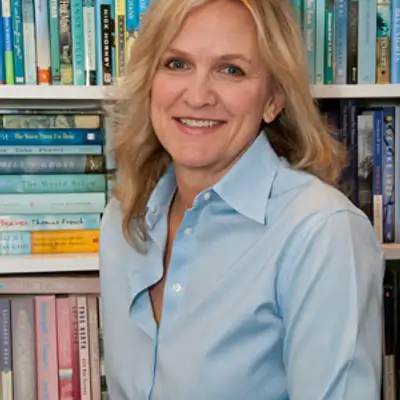
Welcome to the Book Love Foundation Podcast. I'm Penny Kittle and I'm your host. Today, I am thrilled to bring to you a conversation I recently had with my friend Kelly Gallagher, who has taught for 31 years, 30 of those at Magnolia High School in Anaheim, California, where he is currently teaching ninth and 12th grade and helping lead teachers in their understandings of literacy. He is considered one of the leading voices in literacy education, certainly at the secondary level, he has inspired me and so many others to do the best work we can for our students. Kelly's been a part of the California reading and literature project, the South Basin Writing Project at Cal State University Long Beach and part of the Puente Project, a University of California outreach program that prepares underrepresented high school students for transition into universities. For several years, he also taught secondary literacy courses as an adjunct professor at Cal State University Fullerton. Lucky new teachers, I have to say, and most recently, he served as president of the secondary reading group of ILA, the International Literacy Association, I have to say, as someone who wrote for that journal, Kelly was a pretty careful editor, and certainly helped me write a better article. I know the hours he has put in to lead all of us. You probably know him as the one who created AOW Article of the week. You can still find those at his website, kellygallagher.org, and each week I seem to see one of those popping up in a classroom in my high school. I know he has impacted 1000s of students through his work with nonfiction articles. Kelly is also the author of six books, including Read Aside, which is really the heart of this conversation that we're having today. You probably have it on your shelf somewhere. Now, let's listen to how Kelly talks about the writing of it, the thinking behind it, and where that has led him today.
Penny Kittle 02:40
Kelly Gallagher, I can't think of someone who had kind of shook up my thinking about reading more dramatically than you did with Read Aside. I was kind of on that. I was on that track of we are killing a love of reading. But I remember seeing an advertisement for the book, and Steinhouse had the entire book online, you could read it for free, and I clicked to the link, and I didn't move from this seat until I had read the entire book, and I the whole time. I didn't know you very well, hardly at all. I'd seen you once presented a workshop, but I had read teaching adolescent writers, and you were, you know, kind of kind and friendly in that book. And Read Aside, I felt like you just stepped out and said, I'm done being nice about this. And the reason that I kind of intro like that is because I went back then and read your first two books on reading which I hadn't read, Reading Reasons and Deeper Reading, Deeper Reading in particular I spent a lot of time with, and I realized that Read Aside had to have been a big move for you as well. So I was hoping you would start just by talking about that evolution from, you know, your first book through to that one.
Kelly Gallagher 03:55
Well, I agree with your assessment that Read Aside has a different tone than my first two books. That that book really was born out of a couple factors. Number one was that we were really, you know, up to our elbows in this NCLB era of testing and testing and testing, and then when we're done testing, testing some more. And concurrently, at that moment in my life, I had two daughters who were in school system. And although my daughters did not come up in an affluent household, they were reading rich because we would always go to libraries or bookstores, but I saw the effects that the schools from very well intentioned and very well meaning adults their practices. I saw the effects that their practices were having on my own daughters, and so I. Was concerned that my daughter's love of reading was being killed. And of course, as a high school teacher during that time as well, I saw that what I was being asked to do really seemed sort of counterintuitive to me towards this mission of getting kids to to love reading like I love it. I saw a lot of novels being set aside for test prep. You know, I saw my own system, and in many schools that I visited that poor readers were put in a death spiral. Poor readers got low scores, so then they were taken out of classes and put into classes where they were given more choppy test prep, which then in turn, made them hate reading more, which then in turn, you know, it was just, it was a death spiral. It was sort of the opposite treatment than I think young readers needed. And I do talk and read aside a little bit about this concern that when it comes to adolescent readers, is that sort of an apartheid system was being set up in our schools, that kids who were suffering from word poverty and idea poverty were were being given treatments that I think would ensure that they would not become readers. And so, yeah, I was, there was a little anger that fueled that book, but it was more deeply seated and just genuine concern about the non readers that I was seeing in my classroom every day. You know, I think in that book I also talk a little bit about, you know, Judith Langer's beating the odds schools. And when she looked at schools that were, that were, you know, if you looked at their demographics, you wouldn't think they would score very well, but they actually did score well. And she she found that that these schools did not, you know, go all in on test prep, that that there was a balance that that was needed, and in my look at the schools around the country, that balance was was completely out of whack.
Penny Kittle 07:12
I agree, and I think that one of the things that struck me in Read Aside was that, yes, you were laying the foundation of how the school systems and the NCLB practices, etcetera, had impacted this. But you also really looked hard at what teachers were doing in their own classrooms, and the decisions they were making in a way that made me, as a teacher, say he believes I have power over this. And I kept thinking, you know, I was already completely on the other end. You know, almost all independent reading as practice, but I knew that I had so many colleagues that were stuck with they aren't understanding To Kill a Mockingbird. So I'll read it aloud, or they don't understand it. So I will drill it down into such tiny, tiny parts that it will take me eight or nine weeks, but then they'll understand it. And I thought their their whole frame was focused on understanding that one book instead of developing readers. And it felt like your book said there are some things you can do, because it wasn't just how schools are killing a love of reading, but how classroom practices can even with the best of intentions.
Kelly Gallagher 08:23
Well, I talk a lot in that book about finding the sweet spot, and I say, you know, there's, there's a chapter, I think, on, on the dangers of over teaching and and I've said this many times, but I think I came to the conclusion that if you're spending nine weeks teaching a novel, it's not a novel anymore. It's a nine week worksheet. So I talk a lot about and, and I actually believe I was a little bit guilty of this. You know, earlier in my career, I would try to teach all things in all books. And in that approach, the book gets lost. The art of the book gets lost. And so I do talk in that book a lot about over teaching. And then there's another segment of that book where I talk about under teaching, that there is a difference between assigning a core work and teaching a core work. And I think when books are over taught, and when books are under taught, that there is equal danger there of turning kids off to reading. And so I, I talk a lot about trying to find that sweet spot, trying to, you know, focus on one or two things as we're sharing this novel together and and let's, let's see if we can get this done in three weeks, four weeks.
Penny Kittle 09:45
Yeah, so in Deeper Reading, I remember reading about you taking your daughters to a baseball game, and how the difference between how they would learn to understand baseball was sitting beside someone who understood it really well, so that you could guide them in their understanding. Do you remember this?
Kelly Gallagher 10:04
I do remember that anecdote is that it is the anecdote that leads that book, and it is, I don't know, somehow it struck a chord with a lot of people, because a lot of people bring it up to me.
Penny Kittle 10:15
That's funny, because what I immediately pictured was that how we teach anyone to love anything is to let them be with whatever it is. You know, when I taught my daughter to do cartwheels on the lawn, we did lots of practicing out there on the lawn, but I didn't have any grading sheets, and I didn't try to give her part after part. I let her watch and practice. And the whole point was that that opening anecdote was exactly what was missing in Read Aside in that students weren't given time to just live with books. They were being tested and tested on parts of it, which would make anyone hate it, if you test me right now on the elements of baseball, of which I know none, and then your approach, that's my pre assessment, to getting me to love baseball, is to just give me the rule book and make me take tests I'll never love it, right?
Kelly Gallagher 11:10
Well, first I and I agree, and I'll come back to this point, but I think the first, and the first thing you're really getting at is this idea that the way to get somebody to love baseball is to sit next to somebody who loves baseball, and the way to get somebody to love reading is to sit next to somebody who loves reading. And so this raises issues of the teacher being an active and involved reader, and a teacher who models that love and brings that passion and love into the classroom every single day.
Penny Kittle 11:42
It does. That's actually true across research of anything the contagious passion of the mentor, right?
Kelly Gallagher 11:50
So the second part of your question really gets at this idea of we don't raise readers by quizzing them by getting out the red pen. We raise readers by giving them interesting books to read, to give them chance to talk about what they're reading, to value their own thinking, to try to set up classrooms in which they generate their own thinking rather than answering the teacher's questions. Yeah, I can't imagine sitting at a baseball game with my daughters and saying, okay, the third inning is over. Let's have a quiz on what's happened in the game so far.
Penny Kittle 12:29
Exactly, And so in that book, the part I really disagreed with you on was the 50/50, 50% of the time kids would read independently, 50% of the time you would choose the text. But you said in the book that was due to the curriculum in your school district. Is that correct?
Kelly Gallagher 12:44
Yeah, I was really born out of the idea that in my school district it wasn't 50/50, it was 100/0, it was it was okay. Here are the core works you're going to read as a whole class. First we're going to read Animal Farm, then we're going to read Romeo and Juliet, then we're going to read To Kill a Mockingbird. And you know it was like in many districts, a curriculum map that was laid out. My concern, of course, when I wrote Read Aside, and I've even shifted further, but when I sat and wrote that book, this idea that maybe half the reading your kids do in your classroom should not be whole class. And whole class novel instruction was a pretty radical idea in my world and in many of the schools that I have visited around the country. My concern, of course, is that when kids get hard book, hard book, hard book, hard book, and it's always teachers questions. Teachers questions. To me, this is a recipe to kill readers, and so that that 50/50, proposal and read aside was really my first stab at bringing this plea out into the open to to start to consider giving kids a more balanced reading diet.
Penny Kittle 14:10
Yeah, I did see it as very radical when I read it, mostly because the people in my school at the time were either programming what kids would read always, or there was no reading. So they would switch from a novel unit to a writing unit, and there was no reading during the writing unit, so there were these long periods of dormancy. And the other piece is that I often say to teachers, we're not teaching books, we're teaching young readers and writers, right? And matching the kid to the book is so critical. So when you're thinking of a core text, you know the other side of what this was, not just hard book, hard book, but for some of our readers, those books were average or not that hard, and they were bored three weeks into an eight week study, right? So I love that in the best interest of students who came out boldly. Something that I'm certain is not common practice in schools, which is a 20/80, split. So talk to me about how you got there.
Kelly Gallagher 15:07
First, I like to backtrack and say the conditions that you describe where teachers will finish a whole class novel and then, okay, no reading for the next four weeks. While we do this writing unit is a separation of reading and writing I do not understand. As you know, as we both agree, it's the reading that actually makes kids better writers and it's the writing that actually makes kids better readers, exactly. I still have trouble these days with this idea of, you know, this person over here is the reading teacher and this person here is the writing teacher as an artificial separation that I don't understand, and I know you agree with me on that. What I think is kids are different than they were just simply a few years ago. They're smart as heck. But there's a there's a shift going on. I've surveyed my seniors the last couple years, and the percentage of students who have admitted that they have fake read their way to the 12th grade is extraordinarily high, over 90% in each of my last two surveys.
Penny Kittle 16:13
And so just for a minute, 90% of your seniors have not read prior to coming to your class.
Kelly Gallagher 16:21
Well in initial conferring with them, 90% of them have admitted they have, quote, read their way to the 12th grade. So what I found when I conferred with kids is there was senior after senior who would say things to me like, I haven't read a book since sixth grade. I haven't read a book since seventh grade. I've never read a book. And so what I think is happening is is, you know, I'm standing in a room full of adolescents who have become expert in reading Spark Notes or listening carefully to classroom conversation or group work, thinking and sort of pretending that they have read the books that that I've asked them to read, that's that's one of the big issues. The bigger issue, though, in my mind, isn't whether the kid fake read his way through To Kill a Mockingbird or not. The biggest issue in my mind is that the kid is approaching adulthood without even the without any desire whatsoever to become a reader, to to be a lifelong reader. And so even though, years ago, I advocated for this 50/50, approach, and I've been using it in my own classroom, I re I came to the realization it's not enough. It's not enough with the kids that I have daily. They need even more sort of opportunities to discover books that they're interested in. I have not abandoned whole class novel. I know it's sort of popular in some circles out there to abandon whole class novel completely, but I I do believe I'm sort of traditional educationally, I do believe there's a value in teaching some worthy whole class novels and plays. I do believe that there is a level of discussion, a level of thinking, a level of argument, a level of writing that occurs when 35 kids have read a book. That does not occur when three kids have read a book. But having said that, I think that whole class novel approach has failed in turning my kids onto reading and so in the best interest of students, I describe how I have dialed down to the 20/80 approach. And essentially what that means is this current school year, I'm only teaching two core works, one each semester, which is very different than it had you visited my classroom three or four years ago. The rest of the reading diet is a lot of self selected, independent reading and mixed in with multiple book club experiences.
Penny Kittle 19:13
Yeah, I have to echo that there is a distinct difference in understanding and building an argument around some big ideas in a book when you're listening to the thinking and responses of everyone in the room instead of just a couple people that you may have chosen to read a book with, or you know your own thoughts about a book. And I do love to be in a classroom where I'm watching all kids wrestling with the same passages the same ideas, but I think we both recognize that the reason that work can't happen all the time is that it allows some kids to hitchhike alongside others and to simply wait for that discussion, to tell them what the text means. And that what bothers me about that is that they don't develop the confidence in their own thinking and their own ideas. They're simply waiting for others to fill in that piece for them.
Kelly Gallagher 20:07
Well, I think it's more of the issue of how whole class novels are taught. Kids now go read chapter two. I'll meet you now. There's a quiz. Yeah. Implementing book clubs into my classroom has actually made me rethink the way I approach teaching whole class novels, I have them bring their thinking to the discussions on each group meeting.
Penny Kittle 20:28
So yeah, that's great. And I certainly saw the benefit this fall of having our students connected in book clubs and doing the shared Google Doc for their feedback to each other and their thinking and their questioning. It was pretty interesting to watch that
Kelly Gallagher 20:43
Agreed, which raises other issues. I mean, when students are asked to read a book and share their thinking with the teacher, that's a different experience than when kids are asked to read a book and share their thinking with their peers. And when I say peers, I mean inside that classroom. And I also mean from my classroom in Anaheim to your classroom in New Hampshire, that when there is a peer audience, when there is a different audience, other than the teacher, it it motivates a lot of kids who are traditionally unmotivated.
Penny Kittle 21:17
Yeah, it definitely did in my room. And the other thing I saw happening on the Google Docs was that they had forgotten that you and I were part of those discussions. We weren't commenting. I made a point of not writing because I didn't want them to see me as part of the conversation. But I would watch how some of my students developed a voice on the Google doc I'd never heard in the classroom, and they were talking to kids they didn't know from your school, but they were defending their positions and being able to articulate what those positions on the books were.
Kelly Gallagher 21:46
Right and and, you know, I think this gets into audience, issues of audience and I think in the in the infancy of sort of this technological age that we that we're teaching in, that this opens up possibilities for kids who are reading to share their thinking with not only the other kids in the room, but maybe in a sister high school across town, or, in our case, across the country. I just it's going to be interesting to see where the technology takes us as far as kids being able to interact with their thinking.
Penny Kittle 22:20
Yeah, I think it's been truly exciting, especially because our demographics are so different that my students are looking at things a little bit differently because your students see them differently.
Kelly Gallagher 22:31
Yeah, I think same thing on our end.
Kevin Carlson 22:36
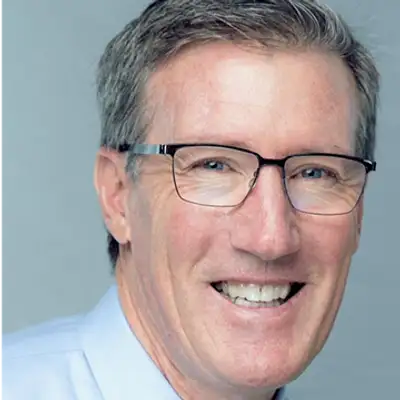
This is Kevin Carlson from the teacher learning sessions. We are going to end this episode at this point in the conversation and bring you the second half in Episode 10, which comes out tomorrow. Here is an excerpt.
Kelly Gallagher 22:49
I don't start the year by thinking, what's my test question going to be for To Kill a Mockingbird? I start my year by thinking, are these kids reading and writing enough? And if the answer is no, what am I going to do about it?
Kevin Carlson 23:03
That's next time on the Book Love Foundation podcast episode 10, part two of Penny's conversation with Kelly Gallagher. If you enjoy the Book Love Foundation podcast and the work we are doing here, please join our email list at teacherlearningsessions.com/go/booklove We will send you a list of the titles featured in each episode's book talk on the day the show comes out. Kelly shares some top titles from his classroom library in Episode 10. When you join the email list, you will also receive our weekly newsletter, which includes podcast reviews, insider information about the teacher learning sessions, projects and more that's at teacherlearningsessions.com/go/booklove, thanks for listening. I'm Kevin Carlson.
Penny Kittle 23:54
Thank you for listening to this episode of the Book Love Foundation podcast. Can you help us reach potential donors, send a link of this podcast to people you know and encourage them to help us with this mission. Help us bring the joy of reading to more teenagers. Help us create a love of reading in every school. Help teachers build reading lives that last. Thank you so much for listening. I'm Penny Kittle,
Kevin Carlson 24:24
the Book Love Foundation podcast is produced by the teacherlearningsessions.com connecting teachers with ideas experts and each other.