Subscribe
Share
Share
Embed
Is Anything Real? is the Reality-First Leadership podcast for builder-leaders who want outcomes, not optics. Each week, Adam W. Barney sits down with founders and operators to unpack positioning, marketing, community, energy management, and influence - plus the numbers behind what actually worked.
You’ll hear: a quick Reality Check, a practical Proof Stack (inputs → actions → outcomes), and one EnergyOS habit you can run this week. Specifics over slogans; humane systems over hustle cosplay.
New episodes every Wednesday at 12:00 PM ET.
👉 Book your 20-min Exploration Call: https://calendly.com/adamwbarney/explorationplugin-20min
[00:06.5]
Everyone loves to talk about their wins in marketing, but the truth: the best lessons come from the ads that didn't work. Today's guest has lived that truth. From three failed Shopify stores to building a profitable direct response agency helping coaches scale.
[00:22.9]
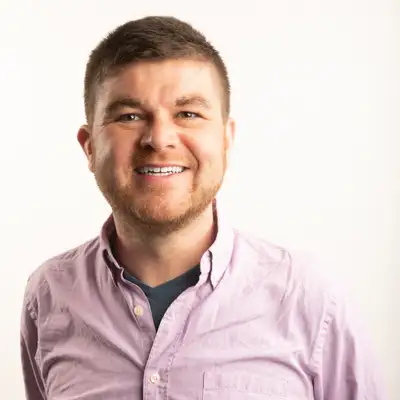
He's proof that failure isn't the end of the funnel. It's where the real optimization begins. Welcome back to Is Anything Real? the show where we cut through the hype, call out the fluff, and dig into what's actually driving growth. I'm Adam W. Barney, and today's guest is Gabriel Moldovan, founder of Peak Growth, who's been in the ad space for seven years.
[00:44.5]
His path from burning through early dropshipping projects to mastering direct response mirrors what so many marketers secretly experience. That gap pattern between promise and reality. We're talking about what's real, what's hype, and how to rebuild when your best campaign falls flat.
[01:01.7]
Gabriel, welcome. Hello everyone, and thanks, Adam, for having me here. You got it. Gabriel, you've said you burned through your first few ad projects before finding success. What did those early failures teach you that still shapes how you build campaigns today?
[01:21.4]
Okay, interesting questions. So, as I told you off camera, it took me some time before I figured it out. And the most important lesson that I learned from that process is it's better to invest in your education than to invest into just testing stuff.
[01:44.6]
Because that's how the breakthrough happened for me. Initially, I was just trying to figure it out using free resources like YouTube videos and maybe some books. But it's cool. We have all this knowledge at our fingertips on the Internet for free.
[02:01.6]
But the problem is there is so much information and so much of it is actually not useful at all, that if you try to figure a complex system by yourself, you might end up taking a wrong route and you might waste a lot of time and money.
[02:22.8]
That's what happened to me. But once I had a mentor who taught me what the right way to do things is and what's important to focus on it, didn't take much longer to have my first successful venture.
[02:41.3]
Yeah, and I know, your background also, you studied computer science before pivoting into marketing. And I think people out there would probably imagine that's a big leap. But I don't think it's actually that big of a leap. Right. What clicked for you that made direct response feel like the right lane?
[03:01.4]
So it's not necessarily such a big leap. For me, it was very, a very natural thing to get into the ad space, especially the media buying part.
[03:17.1]
It helps to have an engineer mindset to be able to break down complex systems and problems into simple tasks.
[03:30.1]
I wouldn't say that I necessarily took the direct response route because it felt right for me. But what I wanted to do was I wanted to have my own online business. And it just happened that direct response was the skill that I needed to learn in order to make my business successful.
[03:52.2]
That's a fantastic realization. Right. And something else you've said that was very powerful in our previous conversation was people buy the biggest promise they still believe. How did that realization weave into the way you market and sell? Well, I've been in the coaching and in the product space for quite a few years now and there is a big problem in this space.
[04:16.3]
There's a lot of people who over-promise and under-deliver, especially in the business opportunity, or weight loss, or maybe relationship niches, where there's a lot of competition. Right. And unfortunately, some of the most successful coaches or influencers out there are some of the people who throw out a lot of those big promises that are unrealistic, but they end up unselling.
[04:46.1]
people who are fair, but they don't promise as much. And there is a fine line between what people still believe and what's real. And I also know in my own journey, sort of woven into this, is that my failures taught me more about human psychology than any ad course or online learning that you mentioned is so powerful, ever could.
[05:14.0]
So that lived experience is a piece of it. What do you think is the difference between a good direct response campaign and one that actually converts strangers into loyal clients? Interesting question. I will quote Gary Halbert here.
[05:33.3]
He used to hold these seminars. By the way, for anyone who doesn't know, Gary Halbert was one of the most successful copywriters of his time and even our times. And he was saying something like this. He would ask the students, in the seminar, if you could choose one advantage in your business, what would it be?
[05:57.2]
And people would say like, I would have the best product, I would like to have the best branding, I would like to have the best promise, and all sorts of things. But his response was always, I would choose to have a market full of hungry buyers.
[06:16.6]
So what did he mean by that? If you were to open burger shop, or let's say a small restaurant. Right. The best thing that you could possibly have as an advantage for your business is a location that's near, let's say maybe a construction site where people get off at 5 pm and they are super hungry and they will eat your food because they are hungry.
[06:41.8]
So I believe the most important part in your direct response campaigns is to figure out this product market fit. To identify who's the hungriest type of person you can sell to. And I mean in that sense, you mentioned, you sort of towed to this earlier, but you know you've worked with coaches like myself and many, many online creators; industries that are filled with those big promises.
[07:13.2]
From your perspective, Gabriel, how do you balance persuasion with authenticity? Okay, so it's always something that in my case, the creator needs to decide how far they are willing to go when it comes to their marketing.
[07:33.1]
I always recommend not over-promising, like making exceptional promises. Because what happens is you can make some money in the short term, but it won't last more than a couple of years. And I've seen creators who have been in the coaching space for 10 to 20 years, and they make a lot of money, and they are very successful.
[07:56.5]
And I've also seen people who got in the coaching space, had a lot of success for their first couple of years, but then their personal image got blasted because bad reviews started coming up.
[08:14.1]
People wanted refunds, and all these issues come up. So, in terms of promises that you make to people, I would say that it's important to do your research and figure out ways to fix the pain points of your prospect in a realistic way.
[08:36.3]
Yeah. So it's not really direct response, isn't about shouting louder. It's about speaking to those beliefs that are within each of us. Right. You know, Gabriel, I know you and I also share something. We both spent thousands of dollars on ads that didn't bring a single qualified lead.
[08:54.3]
Why do you think so many campaigns still fail even with all the data we have, and especially even when you're being authentic or genuine? I don't think it's necessarily about being authentic or genuine. Back to my previous point, I believe most of the campaigns that fail don't have a good product market fit or what you're selling isn't packaged how it should be.
[09:23.0]
The thing is, it's very very difficult to create desire inside somebody's mind or create a set of beliefs. So. as a marketer, what you need to do is figure out what your target audience already holds true as their belief system.
[09:43.1]
And you should tap into those and kind of tailor your product or service around their existing beliefs. You can do small shifts, you can help people, transform their thinking a bit, but you cannot do huge leaps without an enormous amount of resources.
[10:05.5]
Right? And to be honest, advertising always has risk. Like, even the best marketers out there have their failures. Because it's a game of testing. You do some research, you get a hypothesis that this product market fit, with this kind of messaging, with this kind of pricing, and this kind of conversion system, and all those moving parts will actually work.
[10:32.1]
And then you put that theory into the market, and you get some feedback, and you might realize some of the components work. Maybe you do get leads, right? But maybe they don't convert how you expect. Maybe you host a webinar, and you get a thousand people to sign up for your webinar.
[10:51.9]
But from those thousand people, maybe only like 50 to 100 show up. So you realize there's a problem somewhere in your funnel. So, advertising and direct response is a game that requires a lot of testing and optimizing.
[11:10.1]
And in order to create a successful campaign, you need to have the financial resources, and the psychological ability to resist the stress that you have to go through in order to reach that successful point.
[11:27.3]
Right? And you also have to think about the audience psychology within that. As you mentioned a little bit before. I know you also have said and agree with me that the best lessons come from those failed projects. How do you differentiate and know when to pilot versus when to persist with the campaign?
[11:47.3]
What's the breaking point to say, oh, this was a failure, and then we have to move on to the next thing. So by moving on to the next thing, do you mean like completely going back to the drawing board? Ending one thing that you tried that didn't work versus persisting and saying, we're going to keep trying this.
[12:08.4]
It's that differentiation point of this campaign failed, let's walk away from it, versus keep going.
[12:16.3]
There is a micro level in this, and there is a macro level. Right? When we're talking macro level, we are talking about offers. So what's the product we are trying to sell to what people? Usually this takes quite some time to walk away with.
[12:36.7]
And it's basically, have you spent all the money that you were comfortable risking on this project before it could be profitable? If that happens, walk away. Or if the results are just not there after you went through like maybe two or three iterations where you put money in the ads and it just didn't work.
[13:03.6]
Maybe it's simply not a good idea. But on a micro level, when we are testing ads or landing pages, or components of your funnel, it's very simple actually. Is it profitable or is it not during the first like 72 hours?
[13:21.6]
If it's not profitable during the first 72 hours, or at least almost break even, then you should switch and you should test something, very different from what you initially thought. That's a fascinating nuance there.
[13:39.4]
And you know, because every ad failure is just feedback with a price tag, I think you and I would both argue, What systems or frameworks have you built inside peak growth that help keep client campaigns grounded and profitable? Okay, so we always test.
[13:57.7]
Like I said, it's a game of testing. We have a weekly schedule of testing new ads and doing small improvements, across funnels, landing pages, webinar structures, email campaigns, automations, everything like that. We usually allocate 80% of the budget to scaling the campaigns, and always keep 20% to make sure we test new ideas.
[14:21.2]
Because at some point, inevitably, the current strategy that's working will stop working. Right. So we use 20% of the budget to test new ideas. We are always up to date with what other people in our niches or outside our niches are using to convert people.
[14:43.2]
To give you an example, right now we are mostly focused on running webinars and VSLs. But something that has caught our attention is that this year a lot of people, a lot of companies started to run quiz funnels.
[14:59.1]
And those are very interesting right now. And it's something that we actively allocate a significant percentage of our total budget to make sure we have this thing prepared and working before what we already have, as best performer, drops in performance.
[15:20.5]
Wow. Interesting. All right, and I mean, guess in that vein, for coaches, founders listening here today, what would you say is one mindset shift they need before scaling paid ads? Well, it depends at what point in their business they are.
[15:38.9]
If you never touched paid ads before. I would I would recommend actually learning a bit of marketing. I have this conversation with a lady, she's running a pharmacy coaching business and she had a Two Comma Club award from ClickFunnels.
[16:02.2]
I saw it in her background. And she was coming from the pharmacy space. So no relationship with the marketing space at all when she decided to switch into this career. And to be honest, like, one of the reasons, a lot of the successful coaches I've worked with ended up successful is because they started to develop marketing skill set.
[16:26.4]
Of course, you can partner up with an agency, but it's going to be very difficult for you to figure out what a good agency looks like and what they should do if you don't have, at least fundamental knowledge when it comes to marketing.
[16:45.0]
So I believe every coach that wants to run a business, an online business that requires advertising, should dip their toes inside this knowledge. Awesome. Gabriel, I also know you've gone from student to strategist here.
[17:01.7]
What's your advice for say, young marketers entering the space today who only see the highlight reels, only see the big wins, not how the failures lead to the big wins? Well, until that, all the fit is psychological.
[17:20.0]
Yeah. Fair. As long as you, as long as you don't give up and realize that literally every single defeat that you are facing is just psychological. If you can overcome it in your mind, you can learn from your failures, and you can keep going.
[17:39.2]
And as long as you keep learning, at some point you will find success. You're speaking my language, right? In paid advertising, just like in life, what's real is what survives that test of failure.
[17:55.2]
So that's fantastic. Gabriel, this was incredible. Raw, grounded, and real. Before we close, where can listeners connect with you and learn more about Peak Growth? So you can check out my website, it's peak-growth.com.
[18:13.4]
And they can connect with me on LinkedIn. I will send you my LinkedIn link so you can add to this, or you can just look me up by my name. That's on screen. You'll find my profile really easily. It's not a very common name.
[18:29.0]
And we'll, of course, have that linked below in the show notes for anyone who's interested. But you know, Gabriel, what really hit me here today is that the real ROI isn't just your ad spend, it's in your learning curve. And for every failed ad, every over-promised offer, and every even no, it all adds up to the knowledge that makes your next campaign real.
[18:50.4]
And in the end, I think I've seen over my career here, belief scales better than any budget. And that's what's real. Yeah, I completely agree with that. Awesome. All right, well, thank you. Thank you, Gabriel.
[19:05.6]
It was great to have you here. And thanks for tuning into "Is Anything Real?" If this episode sparks something for you, share it, drop a review, and join us next time as we keep dissecting what's real in marketing, leadership, and growth. Until then, plug in, power up, and keep finding what's real.
[19:21.4]
But, Gabriel, thank you. Thanks for having me.