Subscribe
Share
Share
Embed
Welcome to Catholic Education Matters the podcast that celebrates the beauty of Catholic education, highlighting excellence in academics, athletics, and the transformative power of faith. Join us as we share the stories of those making a lasting impact on Catholic education.
[00:00:01] Intro: Welcome to Catholic Education Matters, the podcast that celebrates the beauty of Catholic education, highlighting excellence in academics, athletics, and the transformative power of faith. Join us as we share the stories of those making a lasting impact on Catholic education. Let's begin.
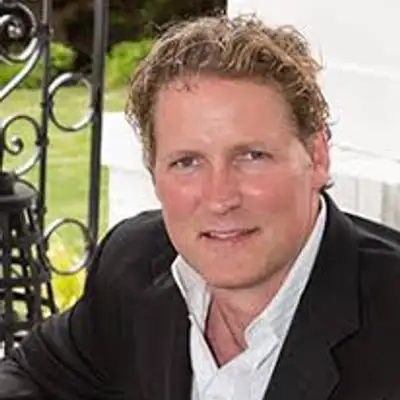
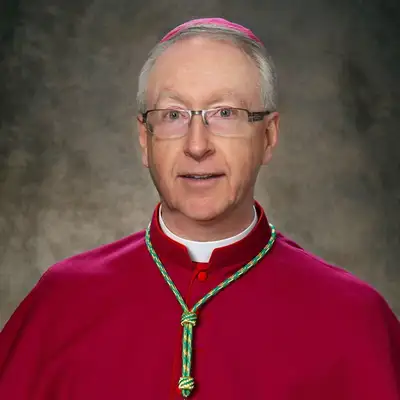
[00:00:26] Troy Van Vliet: Good day, everybody. And thank you for joining us here again today for Catholic Education Matters. And I am really excited to have His Grace, Archbishop Richard Yeah. Thank you so much for coming.
[00:00:36] Archbishop Smith: Oh, glad to. Of course.
[00:00:37] Troy Van Vliet: It's taken a while, but we finally pulled it off and you're tight.
[00:00:40] Archbishop Smith: A lot of people have the same complaint. It takes a while. It's okay. Glad to be
[00:00:43] Troy Van Vliet: with Yeah. That's all good. That's all good. So, welcome. First of all, welcome to Vancouver.
[00:00:48] Archbishop Smith: Thank you so much. You're still new here. Still new.
[00:00:51] Troy Van Vliet: Still feeling your way out around 77 or so parishes here
[00:00:57] Archbishop Smith: in It's all good. The welcome has been terrific. This is another instance of it. I'm very very grateful for that. Love what I'm seeing.
[00:01:05] It's a dynamic archdiocese. It has a very strong history. So I feel like I'm just sort of stepping into something that's really already a beautiful, powerful current moving forward in the service of the gospels. Good. It's a real blessing to be here and discover all these things like the academy, like this podcast, everything else that's going on.
[00:01:26] Troy Van Vliet: That's great. That's great. So I'll ask you this. What has been the biggest thing that you noticed about Vancouver other than the rain, but about the archdiocese, about living here? Because you're from Edmonton.
[00:01:39] Not originally.
[00:01:41] Archbishop Smith: I spent the last eighteen years in Edmonton. I was there, born and brought up, a priest, ordained a priest there, became Bishop in Pembroke, Ontario just next to Ottawa. In 2002 I was there just for five years. Then I went to Edmonton for eighteen and then came here.
[00:02:02] Troy Van Vliet: So you'll be here for another thirty years,
[00:02:04] Archbishop Smith: I guess? You know, it's all in God's hands, whatever he decides, whatever he and the Pope decide, just say we're ordained for yes, so whatever that is. Biggest thing, it's a lot, but what really strikes me is the diversity here. And I think in dioceses across Canada, they're all in one way or another increasing as cosmopolitan entities, but Vancouver is really, really remarkable in that respect. So many different ethnic nationalities that are here and all the different ministries that we've established over the years in order to respond to their pastoral needs and so on.
[00:02:43] It's quite broad in its variety and I'm finding that exciting. It's something that really enriches the church. So we've got the whole universal church, if you will, represented here in our local one, which is a beautiful thing to experience. So that's what's jumped out at
[00:03:02] Troy Van Vliet: me first. Cultures from around the world.
[00:03:05] Archbishop Smith: Cultures from around the world and it really highlights the evangelical challenge that we've got because the gospel lands in culture and transforms culture. And we don't have a monolithic one here, it's so varied. So how do we get our heads around that? And then how do people from those respective cultures help me understand the best way for the Gospel to land hearing and in the hearts of the people. These are conversations that we'll be needing to have in the future.
[00:03:33] Important ones to have.
[00:03:34] Troy Van Vliet: Yeah. Exactly. Big job. Big job here.
[00:03:36] Archbishop Smith: Exciting job.
[00:03:37] Troy Van Vliet: Exciting job. Never a dull moment for you.
[00:03:39] Archbishop Smith: None. No. I tell people I knew the job was dangerous when I took it.
[00:03:42] Troy Van Vliet: So here we are. Okay. Good. Talk to me a little bit about Catholic Education Matters is our podcast.
[00:03:53] Archbishop Smith: It does matter.
[00:03:54] Troy Van Vliet: We got a big Catholic
[00:03:57] Archbishop Smith: school
[00:04:02] Troy Van Vliet: What do you want to call it? A big Catholic school constituent in Alberta. And it's very different than here how it's funded.
[00:04:11] Archbishop Smith: Very much so.
[00:04:12] Troy Van Vliet: Yeah. Can you tell a lot of people don't know that. Can you tell us a little bit about that?
[00:04:16] Archbishop Smith: Sure. So we have in three provinces in the country, there used to be a couple of others, but right now three provinces in the country where Catholic education is constitutionally protected and is fully funded by the provincial government. So those provinces are Alberta, Saskatchewan and Ontario. So the full funding is there for capital, for operations, everything. And what we also have from that and the way that it was set up way back when is a particular governance structure, is different from what we have here in Alberta.
[00:04:53] So various school divisions and they're governed by elected trustees to whom the various superintendents of the respective school boards are accountable. The local bishop accompanies this and the one he's their reference point when it comes to understanding Catholic identity, mission and so on and fidelity to that. But the overall governance and the setting of direction is between the board of trustees and the superintendents. Here, the accountability to the local archbishop is far more direct through our parish school systems and now we also have our affiliate school systems together with that. But there's a recognition that yes, the archbishop is not just the symbolic point person, if you will, for our Catholic identity, but he's the one who really decides.
[00:05:44] The bishop doesn't get into the weeds of the daily management of the school, of course, but he's the one who can set the direction and can actually exercise an executive role within that system. The system here in BC, because of the funding arrangement is a lot smaller, our Catholic system, because we're accountable fully for capital costs and for up to half of the operational costs. That's gonna limit the size of things because our resources are limited. The key thing though is quality, is fidelity, is excellence, not so much numbers, size. So it's just starting here in Vancouver to visit the schools, it's going to take a little while.
[00:06:31] I usually like to do that in conjunction with a parish visit, I already have a good sense of the way things are structured here and the commitment of people to being a Catholic school with everything that that means. All for the benefit of students. We want our students to know, love and serve Jesus and that's at the heart of the mission of a Catholic school. We're gonna be making sure in everything that we do, that the education that's given to our students is excellent in every respect. Together with that at the heart of it is the person of Jesus and how do we help them grow in faith, the faith of the church and in their knowledge and love of him.
[00:07:09] It's a beautiful, beautiful mission that we've got. It takes a lot of effort, we can't take it for granted. So it takes a lot of sacrificial giving on the part of the people, which in those other three provinces I mentioned, is not a factor because everything is just given. Here we really have to step up to the plate in significant ways
[00:07:30] Troy Van Vliet: Very intentional.
[00:07:31] Archbishop Smith: People are be very intentional. That's right. Intentional and deliberate. But it's worth it because of those children that are entrusted to our care. Is.
[00:07:39] Depending on the faith.
[00:07:40] Troy Van Vliet: Spearheading spearheading Saint John Paul the second academy has been probably the most well, one of them outside having my own family, it's been probably the most transformational thing that I've done in It's my helped me to revert back to my faith.
[00:08:00] Archbishop Smith: Not
[00:08:02] Troy Van Vliet: that it was never gone, but it was never as strong as it is But my heart is full, I say that quite often now, when I see the impact it's having on the kids. And it's absolutely incredible.
[00:08:20] Archbishop Smith: More and more young people today are looking for hope and not able to find it. And that's why we're seeing especially among the young, not only but especially among the young, just this widespread anxiety that's out there. Where do they find hope? Where's their security? Where's their stable foundation?
[00:08:39] However you want to describe it. We know where to find it. It's in the person of Jesus Christ. And to see young people make that connection with him
[00:08:48] Troy Van Vliet: and
[00:08:49] Archbishop Smith: derive the hope that they're seeking and the meaning and the purpose in their life and all the way that's transformative for them can't help but also be transformative for us just as you've experienced. It is a beautiful thing to see. It is. And
[00:09:06] Troy Van Vliet: because it's so you know, we've had to account for every dollar that's gone into this project to get it to where it is today. We took on a lot of debt which was one of those things we had to, otherwise we'd still be talking about the school another thirty years from now. It'll be that much more to build it then. So it's one of those things that we had to jump into with two feet unlike you said in Alberta where infrastructure actually gets paid for. Here's a question for you: that bring on when there's not a financial commitment from the individuals, either the families attending, can that lead to some form of complacency?
[00:09:48] Archbishop Smith: Oh certainly, that's one of the risks and I've talked about that often in my years there in Alberta. Complacency, indifference, taking the system for granted, all of those different things flow from having it all just given and provided. And so we would have to work hard over there just to make everybody realize, listen, the at end of the day, Catholic education remains a gift, it's precious, we can't take it for granted. And we always have to in whatever way we can step up to the plate and assure its Catholicity, assure its strengthening, its future. All the more so here.
[00:10:25] But I have a sense that the people are willing to do it. And it does bring forth sacrificial giving, especially from the parents in order to make this possible for their young people.
[00:10:36] Troy Van Vliet: We hosted last week, we hosted a well, I guess it's like a seminar or an introduction to Catholic liberal liberal arts education and which is, you know, I guess taking Catholic education to another level where you don't just learn about your faith in religion class. It gets interwoven into all of the subjects, including math and science and everything. And Because people can't get their head wrapped around: How do you bring faith into math? It's actually quite amazing how you can and you do and when you see the miracles of mathematics and how that blends into biology and chemistry. It's incredible.
[00:11:26] So we had a great introduction to that and we hope to bring that into our schools to bring it up another level. Because keeping our Catholic schools Catholic is a challenge because especially we have so many different people of different different faiths that end up coming to our schools. Want that grounding. The families want the grounding, they want that foundation in faith, but they might not be practicing it so much outside of the school or within their own families. So we want to make sure that we influence them, they don't influence our culture.
[00:12:02] And that's a challenge. That's been a real concern of ours on our society board for a long time and the society board oversees education in our school.
[00:12:11] Archbishop Smith: I think the key there and I learned this from the experience in Alberta and also in Ontario when I was there, the key is a concept called permeation. One of the things that we always insisted upon is that the entire curriculum, just as you were saying, has to be permeated with the faith. The faith is not a compartment. The faith is not a compartment of our lives and infuses everything in our lives. Same in the school, it's gotta be reflected that faith infuses everything, call it permeation.
[00:12:39] What we'd also say though, is that permeation can't just stop at the curriculum. Everybody that's involved in Catholic education, particularly the teachers as they're interacting with the students, they too must be permeated with the faith. We all have to be permeated with the truth of who Jesus is and what he offers. And if we allow the Holy Spirit so to permeate our lives, we cannot help them become the witnesses before students and before their parents, before the community of the beauty of the Gospel, it radiates out. So at the heart of what we're trying to do in Catholic education is opening our hearts and our minds to be permeated ourselves with the wonder of who Jesus is and what he offers.
[00:13:27] Well, first of all, to our students, of course, but also to our families and to the world.
[00:13:30] Troy Van Vliet: Yeah. And we need that in our leaders. Like it starts from the top down within the schools. Yeah, it's amazing. And in order to be convincing, you have to be convinced yourself.
[00:13:38] Otherwise it's tough.
[00:13:40] Archbishop Smith: Truly. Oh yeah, it's very difficult. But once you're convinced of the gospel, you can't stop. I mean, is just so beautiful, life affirming, gives direction, everything.
[00:13:52] Troy Van Vliet: Well, built and we still have to have you out to come
[00:13:55] Archbishop Smith: and No, see the no, no, no. It's okay.
[00:13:58] Troy Van Vliet: I can't even imagine what your schedule is like. So you'll get there. And one of the things that you'll notice is the emphasis that we put on our chapel. It's big. We have 160 seats
[00:14:11] Archbishop Smith: in there.
[00:14:11] Troy Van Vliet: So we can even when the school is full, we'll have a full grade level Mass in there. And we've got Masses starting in Lent twice a week. Father Augustine is going be doing Masses before school. So we want to keep that as the center focus and the chapel can be seen from all parts of the school. It's not tucked away somewhere.
[00:14:33] Right as you drive up you see massive two stories of glass for our chapel. It's stunning and that was intentional. It was like this is what we are about. Make no mistake when you're coming here, this is what you're going get. And we have a courtyard in the back of the school.
[00:14:53] And the reason I bring this up is we've got a Last Supper table with 12 empty seats and bronze Jesus sitting at the Oh, that's terrific. So the kids can have lunch
[00:15:02] Archbishop Smith: right there with the Lord. I'm looking forward to seeing
[00:15:05] Troy Van Vliet: So that's beautiful. And there's many other things, but these are
[00:15:08] Archbishop Smith: some more spiritual things that Whatever we can be doing emphasize that he's the heart of the school and he's there for the students, he wants to be with them, friendship is so important for the kids. So yes, he's our Lord and Savior and Master. Yes, he's also our friend. He wants to be friends to these students and I hope that anything we can do to help them really embrace the love of friendship that Jesus wants to give.
[00:15:31] Troy Van Vliet: Yeah, absolutely. So we like to think of our school as an extension of the family and that we need both. We need the family and we need the school in our spiritual life with our young people. I know when I went to Catholic High School I went to St. Thomas More in Burnaby and I was there I played sports as well.
[00:15:52] I was there from I get dropped off, drive in with my uncle who was commuting in that direction. So I get there at 07:30 in the morning. School didn't start till 08:30. I'm just going back in my
[00:16:03] Archbishop Smith: own mind to when I was a kid. I don't think I'd have made it.
[00:16:06] Troy Van Vliet: Yeah, I know. It was a bit of a challenge then. But my basketball practice wouldn't start till seven at night. So I wouldn't commute all the way home. That would be an hour on the bus or whatever.
[00:16:18] So I'd be there all day and then I wouldn't get home until eleven after practice quite often. So that was a true extension of my home. I was there all the time, all day. But what a fantastic experience. I didn't appreciate it as much then when I look back at today.
[00:16:37] That gave me such a foundation and that culture, that community that was fantastic. And I'm proud to say I think we're capturing that same community feel in the school that we've
[00:16:48] Archbishop Smith: That's going terrific. And I've been accustomed to speaking of the relationship in terms of the three legged stool, so family, school absolutely, and the third leg is the parish. We How help to connect the young people with the parish priests, with their parish community, so that all the three go together.
[00:17:09] Troy Van Vliet: Yes, for sure. And we hope to be an extension of our parish as well. Parishes, because we've got
[00:17:15] Archbishop Smith: the people coming in.
[00:17:17] Troy Van Vliet: Exactly, yes we have quite a few. So we're a non regional school, so families can come from everywhere. You're probably still getting your geography down pat here. Sacred Heart in Tawson Ladner area. They're a bit orphaned out there.
[00:17:37] They're not really super close to any of the schools.
[00:17:39] Archbishop Smith: So we've
[00:17:39] Troy Van Vliet: purposely taken them under our wing and we've got a bus going out there saying: We want you to come out to SJP2. And so we've got, I think, 20 kids coming from there already. And next year we hope to get that up to 40. So we want to keep building it up and making sure that
[00:17:58] Archbishop Smith: That's a nice way to make that connection through bus.
[00:18:01] Troy Van Vliet: Absolutely. So you have another passion as well for the homeless and those that are, I mean, you've come to Vancouver. I was down the Downtown Eastside last night actually attending a function and it is incredible how that has transformed in the wrong direction, that whole area. And it's like it expands and gets worse and worse, our addiction problem in this city. Can you tell us a little bit about that in terms of, since you've arrived, what have you gotten to know?
[00:18:41] What have you gotten to learn about it? What are our challenges going forward, which are many, they're massive? How you express your thoughts?
[00:18:52] Archbishop Smith: Thank you for that. Thank you. When I came here to Vancouver, it was all entirely new to me, entirely new. I had been here two or three times maybe out at the airport for a meeting, didn't know the city. So what I knew of Vancouver had always growing up had always been hearsay.
[00:19:12] So beautiful part of the world, beautiful city surrounded by the mountains and the ocean, these sorts of things. But always together with that was mention of something called the Downtown Eastside. It was part of Vancouver's reputation, fairly, unfairly, but it's out there. And so I would see the pictures or here see something on the news and I thought, my heavens. So when I came here, wanted to see for myself.
[00:19:40] The gospel this is not just Archbishop Smith, the gospel moves us all towards the poor, the suffering and the need. So I knew anecdotally that this was here. I So wanted to see for myself, so I made my first parish visit to the Downton East Side, so that involves St. Paul's Parish as well as Sacred Heart, not too far
[00:20:01] Troy Van Vliet: away. And
[00:20:03] Archbishop Smith: I could see firsthand how would I put it? This vast sea of suffering, this vast field of crushed humanity, however they got there. That however they got there, I think is something we need to pause on because each one of those people, it's not just a statistic, each one of those people has a story. They were born within a family or some kind of went wrong? Something went off the rail.
[00:20:39] And now in their lives, just totally addicted to whatever the latest drug is. And they're getting as I understand it, the drugs are getting more and more lethal and addiction just deepens and deepens and deepens to the point I understand that a person's understanding of hope is I'm to get my next fix within the following seventeen minutes or something. So how do they get there? That's one question. But the other is, we can't just leave it like this.
[00:21:15] One of the things that I think is in any city that has this issue, one of the temptations that I think we need to fear and be on guard against is it's always been this way. It's always gonna be there. We just have to live with it. We just have to manage this. But we can't forget that the heart of it all are human beings.
[00:21:36] Human beings that are endowed with a dignity, endowed by God in virtue of the fact that they're created in the image and likeness of God, a dignity that cannot be taken away, but in their own minds perhaps these people feel that that dignity has been ripped from them because of stigma that's attached to this, because of the conditions in which they're living, What can we do? Rather than just leave it there, how can we as citizens, how can we as members of the church step into this with a goal of actually transforming things for the sake of these people. We just cannot leave them to be lying on the streets from these addictions. So the gospel impels us, there's not a choice. When Jesus in the Gospel of Matthew said, you did it to the least of these, you did it to me.
[00:22:32] But we have the least of these on our streets, if I dare put it that way. So Christ is present in them, among them and inviting us to reach out and touch and love and heal. It's massively complex. I get it. Yeah.
[00:22:47] That's gonna involve multiple partnerships, I would think. And so I'm at the stage of just asking questions. Alright? What what can we do? Now the church has been present there for a long, long time.
[00:23:00] Right? Outreach through the parishes, there's the men's shelter, there's the doors open. Yeah. We've got we've got young adults Mhmm. Wondrously and beautifully that take time in the summers walking through the streets just to get know people, call them by name, show them their dignity.
[00:23:16] We have the missionaries of charity, other religious orders that are there. So beautiful stuff, beautiful commitment, really trying to bring the gospel there. My question is great, and what more can we do? That's where I think it's important for us to find ways to have some round table discussions and ask the question who needs to be in this conversation? So the church, what's that mean for us?
[00:23:39] And I'm asking people here within the archdiocese take a look, what are we doing? What can we do better? How can we think outside the box to use that trite expression now, move things forward? And then who else needs to be there that we need to partner with? Because I do sense in the city there's a lot of goodwill around this, nobody's happy with this situation, but sometimes perhaps there's a need for deeper conversation questioning of the whys and the hows and what might be possible.
[00:24:10] So I'm certainly happy to be part of that discernment and see what might move forward.
[00:24:16] Troy Van Vliet: I've been exposed to it more so like sort of the partial remedy, I guess, to help people that have gone down that road. So I've learned a little bit about it in the last few years, a little bit more about it through the John Volkmann Academy. He's been absolutely incredible in what he does, how he pours out resources to help those that are afflicted, that are in need, that are not just homeless but that are addicted. And also Rick Diamond from Rick's Heart Foundation. Both of them are supporters of our school as well.
[00:25:01] Archbishop Smith: I'm anxious to learn more about all of these wonderful things that are there.
[00:25:04] Troy Van Vliet: Yeah, and they pour their hearts into it, not just finances, but they pour their hearts into it. Know Rick gets in his van himself and he goes downtown, died in the middle of the evening and helps people
[00:25:20] Archbishop Smith: talks and And how do we tell those stories? So fantastic those things to learn about and we can all learn from them. How well known are these or other individuals that are doing this stuff? Because I think the more we can get the story out that folks it's possible to do something and help and make a difference, the more I think that encourages others to say: can I step up and help?
[00:25:44] Troy Van Vliet: There's a lot of great organizations. In Surrey, Night Shifts is one out there that's been going for a long time. I was just at a function a week or so ago, a fundraiser for their organization and they've done so much.
[00:26:00] Archbishop Smith: And
[00:26:02] Troy Van Vliet: at the time something struck me. The mayor of Surrey spoke there too and she had said that she believed it was the faith community that was going to help us out of this mess. And I believe that too because it's funny, the more government is involved I'll be a critic of governments it's like the efficiency is not there and it just gets messier and messier and messier along the way. And I think it is going to be the private sector and the faith communities that actually have to take the lead in getting some And
[00:26:35] Archbishop Smith: show and demonstrate that solutions are in fact possible.
[00:26:39] Troy Van Vliet: Yeah, they are. So how can we
[00:26:41] Archbishop Smith: do that? And then other partners, government included, can see that and come on along.
[00:26:49] Troy Van Vliet: Well, and I'm going to speak for myself in this scenario because I don't want to put words in your mouth when I'm saying this. Our current provincial government, I don't agree at all with the safe drug supply that's going on right now. It's not helping the problem. We've seen nothing but the drug problem in Vancouver get worse and worse and worse since this plan of compassion has been brought in and the safe drug supply is coming out. It's just made it worse.
[00:27:22] And it's great for us like the Vulcans and the Rick Diamonds of the world to go around and try and stay in the night shifts to try and help all these people that are having these problems. It starts with trauma and then the fix is a drug because it's there, it's available, it's being pushed criminally both at a public level and also at a private level through gangs and what have you. A public level, I'm talking about governments. Our governments aren't pushing it, they're making it available and it's not regulated enough and it's actually a mess. It's an absolute mess.
[00:27:57] So there's got to be change with that. But we can try and fix people but if it's this massive waterfall and we're trying to catch the water but we've to build the dam upstream is what has to happen. Where is the
[00:28:11] Archbishop Smith: I think the key thing is, and it's a little early for me to get into the weeds of the what works and what doesn't, the key thing is to be clear on the goal. What's the goal? The goal has to be, it seems to me, we want to be fully respective of a person's dignity, is to help them recover the truth of their own dignity to get them back up on their feet. Where can we help them find a hope? Hope that really draws them out from and away from what they've come to know as their familial situation, their communal situation that's really causing such harm for them.
[00:28:46] How do we feed them with real hope that invites them out of that into a brand new transformative life? That's got to be the goal. How we get there? I'm sure there's people that can debate different methodologies and so on, but the more we're stuck on that, the more we are convinced together of the goal that we want to have for these beloved brothers and sisters of ours and fellow human beings, then the more we can say, okay, what's going to work towards that goal?
[00:29:20] Troy Van Vliet: And that's a lofty goal, isn't it?
[00:29:23] Archbishop Smith: Have to have it, it seems It's a
[00:29:26] Troy Van Vliet: It's growing exponentially right now. Well, if in
[00:29:32] Archbishop Smith: fact we do see on the ground that the problem is not changing, but only growing and worsening, then we all I think have to honestly take a look at that and admit it and say, okay, do we need to pivot? Do we need a new way of doing things for the sake of these people that are so suffering?
[00:29:53] Troy Van Vliet: One of the things I know that we spoke with Rick Diamond about is where our schools can be part of the solution is we're trying to keep kids from falling into those traps. So there's some of the prevention and we're a small part in our school right now. But all we can do is try and just do our part there first of all, just to try and keep them off the streets, keep them educated, them loved, keep them in their faith. I've said many times that the fall of Christianity in the West is destroying what we've built because we were built on Judeo Christian values. Our legal systems, our hospitals, our schools all of them were built on that.
[00:30:45] And we've sort of been riding on the coattails of that as secularism becomes more and more popular, Christianity falls, the next thing that falls is the family. And the family starts falling apart as Christianity falls apart. And then what happens when families fall apart? Well, society starts falling apart. You've got trauma on top of trauma and people are just looking to empty answers to try and fix themselves.
[00:31:15] And I think there's a lot of people reverting back to the faith or finding Christianity again. I see some of our churches are growing again, which is great to see. But until we can kind of get that going, like that in terms of getting Christianity back as a foundation for all of us. And what I mean by we've been riding on the coattails of Christianity. You know, when people say: like: Oh, well, being a good person, it's just innate.
[00:31:47] It's within. It's written on our hearts. I'm not buying that. And in fact, if you're not a Christian, you've got a great heart. I can pretty much guarantee you that if your parents weren't Christian, their parents were most likely Christian.
[00:32:01] And they've instilled those Christian values on your parents and then on you, even though you might not be practicing anymore. But the further we get away from that original source of Christianity, the less chance we have of keeping it together. And that's where you've got massive amounts of relativism now, where everybody is just anything goes, do whatever you want all of the time. Does it feel good? Well then it must be good.
[00:32:28] Do it. And it's a hot
[00:32:32] Archbishop Smith: mess There's right a couple of things going on there for sure. Yes, there's the individualism. In fact, I've talked to a lot of young people over the years and they've said they've had this message given to them again and again and again. You've got to cut yourself in the name of so called freedom. You have to cut yourself off from all ties, including family and create yourself, create your own destiny, create your own meaning and everything else.
[00:32:56] And they will tell me that that is leaving us terrified because we've got no moorings, no bearings by which we can guide this this ship that we're calling ourselves. What happens also is as they discover the emptiness of that and ultimately the foolishness of that, then they'll start to seek their identity not so much in themselves, but in the collective, in the group. And there's a whole host of groups that are competing for a person's attention, right? And leads societally into identity politics and all these sorts of things. The truth is, I mean, we do have an inherent dignity as individuals because of being created in the image and likeness of God.
[00:33:44] But in virtue of that very active creation, God has created us relational. Relational, first of all, to him and to his love and how he makes that personally available in the person of his son incarnate Jesus Christ. But then also fashioned with that, around that is the community of the church. And so, for example, I had one young guy who was coming out of this false messaging about create your own self and everything else. And he said, I started to find my identity finally, when I stepped into a church.
[00:34:20] And I was thereby immersed in this long tradition of truth, beauty, goodness, of meaning and purpose, all centered on the person of Jesus Christ. So I don't have to create my own identity, I don't have to go to another group to tell me what my identity is gonna be according to certain parameters. My identity is given. My identity is given in the fact that I am created in the image and likeness of God, and I'm able to deepen it and live it out within this communion that we call the church, the community of Christ's disciples. So we've got a wonderful opportunity now, evangelical opportunity right now in the secularizing world in which we are with all the pain that flows from that to say, listen, there's a reason for hope.
[00:35:05] And so to put that back to the whole homeless question, how do we say to folks you don't need just to be on your own, you can't be on your own, none of us can, but you don't need to be looking to this particular community of drug use or whatever it may be to find your identity, here's where real hope is found and how can we help you get there? Now getting there, depending on the depths of a person's addiction, for example, all the layers of hurt in their lives, that can be really complicated. We have to be patient, have to take our time and walk with people, accompany the people and so on. But the goal is clear. There's hope, there's possibility of a transformation and we can help you get there.
[00:35:49] Troy Van Vliet: Wow. A lot of moving parts there.
[00:35:51] Archbishop Smith: But
[00:35:54] Troy Van Vliet: it's good. I do see hope. I see change. Think there's always hope. And like I speak within our own school just because I happen to be spending a lot of time there now and I see it's not without its challenges, there's many still.
[00:36:08] The products that we're turning out Worth the effort. Oh my goodness. Even with my own girls that have gone through school, my oldest daughter is in her second year at the Catholic Pacific College at Trinity Western And she's doing great. Seeing her growth in her faith, I can't imagine where she would be at if she was not in a Catholic high school today. Like I don't want say she's easing the influence.
[00:36:35] I think we've given her some good foundational roots. But it's really a roll of the dice or that much of a roll of the dice when you put your kids in the public system because you don't know who or what they're being influenced by today. And the chances of them coming out strong in their faith is just that much lower. And then they're that much more susceptible to hurt, to pain and then some of that pain also being fixed by drugs so to speak and it becomes that much more tempting.
[00:37:17] Archbishop Smith: The influences are everywhere. Our young people are so vulnerable, whether they're in a Catholic school or public school or homeschooled, social media, everything, it's all coming at them, right? Again, I don't want to sound trite because we know this to be true, but I think we have to keep emphasizing it. The real key is the family. The real key is the family.
[00:37:40] I grew up in Nova Scotia where there were no Catholic schools, it was all public. So my faith formation was in the home. It was because of mom and dad and their insistence on the importance of faith and going to mass and everything else that the faith became more and more implicated in my life. Family is key. We can our utmost in our Catholic schools as we must and on the faith.
[00:38:10] If it doesn't have the support of the family, it's vulnerable.
[00:38:14] Troy Van Vliet: It's very vulnerable and vice versa. Well, the
[00:38:19] Archbishop Smith: more we can support families through the school system. Absolutely.
[00:38:22] Troy Van Vliet: I know families that have reverted to their faith because of their exposure to our school
[00:38:28] Archbishop Smith: when they start sending their kids to school.
[00:38:30] Troy Van Vliet: And they're all sort wow. And I learned something recently. Like we built we took a lot of pride in our architecture in
[00:38:38] Archbishop Smith: the school.
[00:38:39] Troy Van Vliet: And when we first started it's like: need a school, we need it now. Let's just get something built. Then it was like: Well, wait a minute, Vancouver College had just celebrated one hundred years. We've got to think about this long term. We have to build something that's inspiring as well.
[00:38:56] That when people come, they're inspired with architectural beauty in its own way. I struggled with it a little while because that quite often costs more money too. You think, okay, where is the line of frivolous versus practicality? I think
[00:39:12] Archbishop Smith: there's wisdom in that. I mean, the church we say this famously, the church thinks in centuries. And if you look at the great edifices of the church, people took their time. They did. Sometimes these great, great churches took one hundred and fifty years to build.
[00:39:28] So those that were involved in the building knew that they wouldn't see the end of it, but understood they were part of a long term beautiful project. That we don't need to wait one hundred and fifteen
[00:39:38] Troy Van Vliet: years. No.
[00:39:39] Archbishop Smith: Do it real quick. The principle is the same: take the time we need to do it right for the sake of the long term future.
[00:39:45] Troy Van Vliet: I was listening to Bishop Barron the other day and he explained it and I'm sure you've heard it explained this way. It just happened to resonate with me that time. But he had said that the the beauty in architecture in the churches is like the tip of the spear when it comes to evangelization. When somebody comes into a church that is short of spectacular, like it's beautiful, it speaks to people right away. And then it opens them up to more.
[00:40:20] It's like: Wow! This is incredible! I can feel the Holy Spirit in here. I might not know what it is but I can feel it and I want to know more.
[00:40:32] Archbishop Smith: But it also speaks to those that actually built the church. So I go into a church of great, great beauty and the first thing I'll think is, boy, the faith was really important to those that designed and built this church. Because it reflects beauty of the faith, it also reflects the commitment of those who built the edifice to the faith. So that's something we want to be communicating all. If you go into a building that's just kind of banal, you could and it would be mistaken probably, but you could draw the conclusion perhaps this wasn't all that important to the people that were building that kind of a thing.
[00:41:12] Our buildings really must be beautiful and reflect the beauty of our faith and our commitment to the faith.
[00:41:18] Troy Van Vliet: I didn't realize how important that was because I've seen it in action now in our school as people are coming in. It's a big checkbox that they're like: Wow! This facility is spectacular! And my favorite place to take them at the end of the tour is: I've saved the best for last, come to Cedar Chapel! And I've seen them moved by it.
[00:41:42] I've seen people that come to tears when they come in there and it's like: Okay, I think we did it right. I think we've done something right. And especially when I see that in their young families and they're not sure whether or not they want to send the kids to the school or whatever and then they come and they're just like: Oh my goodness! We have to have them here! Finances is quite often a big part of it.
[00:42:07] When families, especially Catholic families, if they decide not to come, it's due to financial reasons of which we pledged from day one when we started the school that we would not turn families away for financial reasons. But they have to be humble enough, I guess is the word, to ask or brave enough to ask. And they have to have courage when it comes to that. If they're fearful of not getting financial help, they've got to do it Just ask and we'll make it work somehow.
[00:42:36] Archbishop Smith: Great to have that commitment there.
[00:42:37] Troy Van Vliet: Yeah, it's a big commitment. It costs money but our fundraisers every year are for bursaries. That's what they're for. So it's a huge part. Well, we hope our school can continue to make a difference in today's society.
[00:42:50] Archbishop Smith: And I'm looking forward to getting out to see it And
[00:42:54] Troy Van Vliet: we hope it turns out true leaders in our community that can also help us get through some of these crises that we're facing right now in the homelessness and the addicted.
[00:43:07] Archbishop Smith: Well, raises up the leaders that we need in every age and please God will be blessed to be part of the formation of
[00:43:13] Troy Van Vliet: them. And servant leaders. Absolutely. Archbishop Smith, I want to be respectful of your time because I know I could sit here and talk
[00:43:22] Archbishop Smith: for We these can all go on for hours
[00:43:25] Troy Van Vliet: on this for you. But I know you have other meetings. So thank you very much for attention. I know we'll have you back on the podcast to get further updates as to what we're doing. And also we're going to get you out of school soon.
[00:43:39] Archbishop Smith: Hope so.
[00:43:40] Troy Van Vliet: All right. Thanks very much. God bless you. Thank you for listening to Catholic Education Matters. If you enjoyed this episode, please follow the podcast on your favorite listening platform, rate it, and also leave a review. Don't forget to share this episode with your friends and family to help spread the word about the impact of Catholic education. Be sure to listen again.