Subscribe
Share
Share
Embed
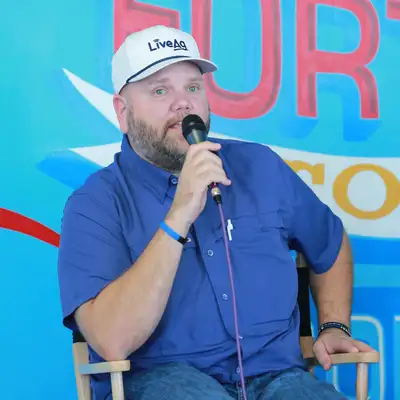
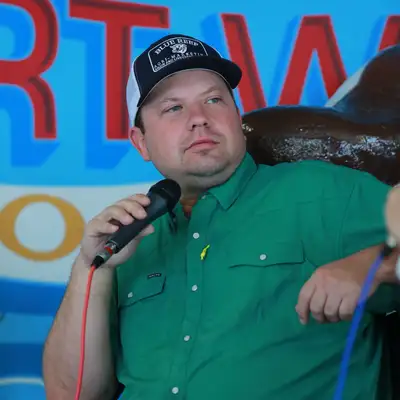
Welcome to the "We Live It" ranch and livestock marketing podcast, where cattle market intelligence meets ranch-ready wisdom. Join hosts Ty deCordova with LiveAg and Casey Mabry with Blue Reef Agri-marketing as they bring you straight-talk market analysis, proven strategies, and insights from industry leaders who understand ranching isn't just a business - it's a way of life.
From livestock market trends to cattle management practices, each episode delivers actionable knowledge to help take your ranching operation to the next level. Whether you're in the saddle or in the truck, tune in for conversations that matter to modern cattlemen. Because we don't just talk about the cattle business...we live it.
So I often talk about this. And, Henry Gardiner was and is my hero. And I remember Doctor. Harlan Ritchie at that time from Michigan State University was the the beef cattle prognosticator. Whatever Harlan Ritchie said, oh, holy moly.
Speaker 1:That's what's gonna happen. Well, Harlan Ritchie in 1995, 1996 wrote a paper called Five Years to Meltdown. And at that time, what he was saying was, at the rate we were losing market share in the beef industry, in five years beef would not be a relevant protein. So in 1996, I'm 35 years old, I have twin two year old boys, this is my chosen line of work. And I remember asking Henry, I go, Is that right?
Speaker 1:He goes, Yeah, we're in big trouble. Because people didn't like our product. You know, they would consume it at a price.
Speaker 2:That's a head on. We live it, the live ag podcast. From seed stock bull sales built on generations of performance to commercial video auctions backed by real relationships. To equipment auctions that keep operations moving forward. Live AG connects cattle producers to opportunity.
Speaker 2:Quality cattle deserve premium prices. The right bulls deserve more buyers and dependable equipment deserves a fair bid. Whether you're consigning to a live AG video auction, marketing seed stock, or moving iron through the equipment exchange. We combine local representation with nationwide reach. Connect with your live Aggra by scanning the code on your screen or visit us online at live-ag.com.
Speaker 2:We are proud to be powered by BioZyme, the makers of Vita Firm and GainSmart. Value added nutrition partners trusted by cattle producers across the country. Now here are your hosts, Ty deCordova and Casey Mabry.
Speaker 3:Welcome back to the We Live It Podcast, myself, Ty deCordova and co host Casey Mabry. We are joined by Mark Gardiner out of Ashland, Kansas with Gardiner Angus Genetics. Kind of a I've known Mark for, oh, a long time. I've first heard of him. Yeah, of course, your bulls and all that, but the horses he raises and the horses he rides, I don't know if you know this about him or not, but he's a pretty good pretty good aback of a horse, a cutting horse.
Speaker 3:So, he him and my dad knew each other quite a bit there just by cutting, I've and known the family name a long time, but he can swing his leg over a pretty good horse, and he can stick on one of his back pretty good. So, the family connection's been there for a while. He shared the same passions as my family with horses and cattle and great bulls. They have one of the premier Angus outfits that's around, have four sales a year, and we appreciate him trusting us to market some of those for him, own those sales. I mean, we can't thank y'all enough for allowing us to be there.
Speaker 3:And it all goes back to a relationship basis on how that all worked out. So, Mark, if you want to just kind of jump in here, tell us a little bit about yourself, kinda how it all started, where
Speaker 1:where you all come from, and and and all that. You bet, Ty, Casey, it's a real joy to be here today, and we're we're looking forward to visiting. And I am Mark from Ashland, Kansas, and that's in Southwest Kansas, which sounds like it's a long ways away. It's just when I talked about driving down here this morning, it's the same as if I was going to drive to Topeka, Kansas. It's the same distance, so it's not that big a deal.
Speaker 1:But my family, like yours, Ty, and The beef business has been our passion. My family homesteaded there in 1885. My granddad was born in that homestead in 1889 and didn't get married until later. My dad was born in 1931. So, always been a part of the beef business.
Speaker 1:I think it's very similar to most of us in agriculture today. But Henry Gardiner was, like I said, born there in 1931. And he went to school at Kansas State, and that was at the beginning and the advent of artificial insemination. He was very curious about learning how to do that technique. And interestingly enough, the way they were doing it back then, Ty, they weren't very successful.
Speaker 1:Glass pipettes, they didn't go all the way through. I used to tease him, you get anything, Brad? He said, No, not very many. But he went to school there from 1949 to 1953, and the technique got better. Henry got better.
Speaker 1:And in 1964, he made the decision to become total artificial insemination. I usually just say AI, but in this day and age, we there's I'll tell you about AI boys. It's the real AI, that's artificial insemination. But in 1964, when I was three years of age, he made the decision to breed all of our cows at that time total AI without the use of cleanup bulls, which that was pretty revolutionary. And the difference then was we didn't have near as many cattle then.
Speaker 1:He had about 500 cows. And my brother, Greg, and I were his main heat detectors and all that. But he worked very hard trying to make Angus cattle and cattle better. And he kept immaculate records from 1964 to 1980. Our wean weights of our steer calves would have been five twenty three pounds.
Speaker 1:And that would be okay for a 175 old calf or something. But we're primarily fall calving, and those calves were weaned at 10 of age. So they were the shorty blacks. They weren't very good. And when we look at that system and dad always said, well, maybe we can't make cattle better.
Speaker 1:But he said, dang it. Look at what the dairy industry has done. So you fast forward to 1980 when I was in college. I remember coming home for Thanksgiving in the fall of nineteen eighty, and Henry Gardiner says, I finally know what we're gonna do with our breeding program. I said, great.
Speaker 1:What are we gonna do? He said, we're only gonna use high accuracy, Progyny proven bulls for the traits of merit. I said, how do you know who those are? Well, the American Angus Association and many of the other breed associations did so at the same time was the very first sire summary where they compared all the widely used bulls of the Angus breed against each other for the economically important traits. And so being the know it all kid, I said, you know, that's right.
Speaker 1:He said, pay attention, Mark. He said, I took all the bulls I used from 1964 to 1980, where I made absolutely no change. 523 pounds in 1964, 523 pounds in 1980. I averaged all those bulls up. And when I averaged those bulls up, their EPDs were zero, zero, and zero for birth weight.
Speaker 1:We'll call it growth, and we'll call it milk. So what that told him was that if he used that in a total AI situation over that seventeen year period, he'd make no change. He was convinced it would work. And I said, Yes, sir. Okay.
Speaker 1:So we go forward and we look at that. And a lot of times when he would share that information, or even when I share that information today, they'd say, Well, Henry, Mark, you picked the wrong bulls. And Henry would say, I did. And he would say, But you probably did too. How did we pick those bulls?
Speaker 1:He might have won a purple ribbon. He might've won we had lots of bull tests back in the day, and there's still some good bull tests around. We called it an eating contest, so you pick the biggest, fattest bull. Or dad was great friends with his former county agent who became the manager of the largest Angus ranch in Kansas, the Ramsey ranch. His name was Dale.
Speaker 1:Dale says he's a really good bull. But Henry's point was you couldn't make an objective selection for the economically important traits. So on average, we were all selecting those cattle to be average. We might've changed their shape a little bit. We might've made them taller or shorter, whatever we did, but we didn't make any change.
Speaker 1:And so from that day forward to this current day, that discipline and that selection for calving needs first, simultaneously selecting against mature size, within those things, if I keep birth weight and mature size in balance, I'll never get out of balance. Then I can select for as much growth as possible, provided it's superior for barbling and muscle and the right fat content, and then ultimately the maternal function to replicate the process. That sounds very, very simple, and it is. But the key to that is discipline. And the key to that discipline is what we've learned with those records.
Speaker 1:That very first year, we went from five twenty three pounds to a six sixty pound weaning weight calf.
Speaker 3:In one year.
Speaker 1:In one year. And now Henry would tell you, I would tell you, that's too much. It probably rained that year. And so when we look at that and that steady progression, we started seeing 800 pound, 10 old steer calves. That's the off cal weight.
Speaker 1:That's not the two zero five day weight. 10 old, Remember, they'd been five twenty three pounds. And we've had a philosophy at that time, and we still have that philosophy today. If we can do it with one, we can do it with all of them. So we started seeing those 800 pound calves, and we finally reached our entire calf crop reaching that ten month old weight of 800 in 1988.
Speaker 1:Since that time, and now I talk a lot more about off cow male weights because we raise lots more bulls. We had 50 to 100 bulls back then, we were just measuring the steers. But we can typically wean those at 10 of age at nine fifty pounds in an average year. Now, we're in an arid environment, 18 inches of rainfall. Some people get a lot less, some people get twice as much.
Speaker 1:But in our situation with native range, wheat pasture, and improved grasses, if it will rain, we can have rain on a year round basis. So the only thing that is different in our equation today from back then from a forage standpoint is the genetics. So we're very convinced that that genetic component has allowed us to stay in business and to make those cattle better and take those same concepts to our customers. Because our job is to we don't want to cause any harm, calving ease comes first, dead calves don't grow. Then you get paid for the growth.
Speaker 1:So the pounds of growth that grows up to the endpoint, which we'll call that a year of age or a steer, let's call it harvest. Believe But the sister that quits growing. And how do you define maternal? Well, we define maternal as she bred in your environment. She had a live calf.
Speaker 1:She bred back. If she had a steer, it went and made a prime carcass. If she had a heifer, she did the same thing year after year. And that's how we define maternal. So that discipline And a lot of times I'll say that and talk about those weights.
Speaker 1:It's not the absolute. It's not a two zero five day weight. It's a 10 old weight. But it's the same today as it was the weaning at 10 of age back in the sixties, clear up to 2026. But it's not single trait selection for growth.
Speaker 1:It's multi trait excellence and what I would call the Michael Jordans of the Angus breed, these bulls that excel for all of these traits of merit. My job, and I can nerd out on all that stuff as far as you want to go, but the reality of it is we got the magnitude, the points of economic merit for our customers. So let's have a live calf. Let's have it grow fast and efficiently for us, for our customers. Let's have it have value added whenever our consumer's gonna eat that, and then let's have a female that replicates the process.
Speaker 1:This stuff works. It works amazingly well. I mean, Henry Gardiner, the things we're able to do today, he envisioned, and he would say, You betcha, we can do this. We've just begun. I I guess we're forty six years in, but it's really gonna get good now as we have the acceleration of these genetics that get better and better and better.
Speaker 1:Ty, both you're both young. You probably don't remember the war on fat of the '80s when we were in a race- We talked about that earlier. With the chickens and the pigs. And every commercial, I used to think, Oh man, eating red meat is bad because all you could hear was that you're not supposed to have fat. Well, fast forward to today, and the GLP-1s and all that, and the protein.
Speaker 1:Beef is the best food in the world for lots of reasons, including your brain and your body. And back in the '80s and the '90s, they were trying to get you to eat more carbohydrates. It's a lot of things. But the science wasn't really science, it was following the money. Let's just say maybe Kellogg's or something.
Speaker 1:But that being said, our product wasn't very good. And so when we look at what we had done trying to make these cattle I'm an Angus nerd. Back then, could talk about Angus cattle being all these things people wanted. I can make them be born alive. I can make them more efficient.
Speaker 1:I can make them weigh and be harvested. And I remember probably in about the mid 1990s, we've always fed cattle, Ty. And in that time, the feedlot manager and you mentioned, Casey, your cargail roots. And so the feedlot manager would sell your cattle. I said, you get our calves sold, our steers?
Speaker 1:Ken Burt's was the manager. He said, yeah. Yeah. I got them sold. I go, well, what'd they bring?
Speaker 1:Well, 70¢. I go, is that good? I didn't know. He said, Yeah, yeah, that's the mark. I said, Well, what'd those rope and steers of the next pin bring?
Speaker 1:And he said, Oh, they brought 72 because if I let them have these good blacks, then they would pay that same price. I said, That's not right. That's not right. And so when you think about it and you think about how we have changed this beef demand from, again, you guys are young and I'm more mature, the National Beef Quality Audit, 1991. We did all these measurements, one out of four steaks eat bad.
Speaker 1:Had portion size. We were too fat. We had injection site lesions. They used to, they'd tell you your black leg was in the muscle. You know how that worked.
Speaker 1:But all that being said, we did that audit again in 1995, we as in the industry, and we still hadn't made any improvements. So I often talk about this. And Henry Gardiner was and is my hero. And I remember Doctor. Harlan Ritchie at that time from Michigan State University was the beef cattle prognosticator.
Speaker 1:Whatever Harlan Ritchie said, oh, holy moly, that's what's going to happen. Well, Harlan Ritchie in 1995, 1996 wrote a paper called Five Years to Meltdown. And at that time, what he was saying was, at the rate we were losing market share in the beef industry, in five years beef would not be a relevant protein. So in 1996, I'm 35 years old, I have twin two year old boys. This is my chosen line of work.
Speaker 1:And I remember asking Henry, I go, Is that right? He goes, Yeah, we're in big trouble. Because people didn't like our product. They would consume it at a price. And so I'm a long ways from Mark from Ashland, Kansas.
Speaker 1:I took you all these ways, but we did some things, myself and six others that knew or knew of each other at Kansas State University. We were in big trouble. And what are you going to do to change the game? Well, we came up with a business plan, and we bought a packing plan. And we bought into National Beef and formed US Premium Beef.
Speaker 1:We went on what I called the Blue Sky Tour, because there's a lot of the same rhetoric we've heard through the years about the evil packer. I'm right there with them, all these different things. But in their defense, they harvested and boxed up whatever we brought them. And you remember the national beef quality audit, our product wasn't very good. So we raised with producers, and today it's about 500 producers, but we raised $40,000,000 of producer equity, and then we borrowed the other 40, and we bought into National Beef.
Speaker 1:And so, again, I'll make fun of myself. I joke that I came out of K State, Mark Smart Gardiner, which I wasn't that smart. All that being said, we're going to change the world. We're going to do all these things. I used to have to go get carcass data with my dad from grade school on.
Speaker 1:Those packing plants, those guys were big and tough, it was cold. I didn't enjoy it. I and a couple others, but primarily because I had gotten carcassed data and because I was the genetics guy, we bought this National Beef and became partners with National Beef. So I remember in October 1997, they sent me negotiate the very first grid. And so when I say this, I'm not making this up.
Speaker 1:I was scared. Okay? And so John Miller was the CEO of National Beef at that time, and he's a very charismatic, a very good man. And we walk in there, I can still get PTSD in that conference room at National Beef. But he's like, okay, we're partners.
Speaker 1:What do want to do? And I was like, well, Mr. Miller, what makes you money? And he said, Well, that's easy. That's the high quality cattle.
Speaker 1:That's the prime, the certified Angus beef of choice. So think about this. Again, I've pointed out that I'm an Angus guy, and so I always thought National Beef I still think that today. They were the highest quality packer out there because they had an Angus heifer as their logo. What do you think in 1997 their percent choice was at that time?
Speaker 1:And it made me sick in my stomach.
Speaker 4:1997?
Speaker 1:I'd
Speaker 4:say 52.
Speaker 1:You're being very kind. It was 47.
Speaker 4:Was gonna
Speaker 1:say. 47%. And that's terrible. Yeah. Okay?
Speaker 1:I get it. And so, we talk and we this and that go, these producers aren't stupid. We design it, we've to design it to where we pull through the cattle that you want and the consumers want. And this is where I got my air back. He said, Well, we've to be careful because if we get too much prime, too much CAB, then it's just only worth the commodity price.
Speaker 1:And that's where we came back after a few hours and said, well, then we got to quit being meatheads, and we have to build beef demand. So if you look back and you think about the history of Certified Angus Beef, started in 1978, Sam Elliott Beef, it's what's for dinner. I used to say, if you don't buy it, I won't have a job. Well, in 1976, we needed more choice cattle. What did we do?
Speaker 1:We just lowered the standards. And the good grade, I mean, it was all just that didn't change the quality, that just changed how it was labeled. They took the good grade and made that choice minus. Well, American Angus started certified Angus beef. My dad was actually on the board when they started that.
Speaker 1:And for the next dozen years or so, there any premiums. And really, until 1998, when we set that day in Dodge City, Kansas, and we designed a grid that Prime makes you more money. We've had the Prime choice spread all those years, the four week wheeling weighted average, rolling average. Year in and year out, that's been 20¢ a pound or $20 a hundredweight. Then we put $3.50 a hundredweight in for each and every certified Angus beef for 3.5¢ a pound for each and every pound.
Speaker 1:And then we had the choice select spread. We did all those things. And if you think back to that time period, remember I said, Ken, what'd you sell our steers for? And then the more average cattle, rope and steer, they brought the same price per pound. Well, now all of a sudden And think about the beginning of time on cattle and how do we market cattle.
Speaker 1:And I'm not making fun of this, but we're in Fort Worth. Okay. Great. One of the best ways most people's lives was to take mismanaged cattle and upgrade those to average. So we'll pick on the Southeast.
Speaker 1:Let's buy some cheap cutter bulls from the Southeast. We'll castrate them, and we'll get them healthy, and we'll get them up to that average price. So fast forward to that October 1997, and National Beef is a small four of the big four. And we came out of there after we set those in those grids that helped redefine things. Bob Peterson was the CEO of IBP at that time.
Speaker 1:And we came out of there smiling and saying, We'll take the best. We'll let Bob have the rest. Well, Bob taught us a lot of other lessons, and so did the other big three as far as just market presence and being that. But whether you liked us or not And we actually had to go testify in DC before the Department of Justice because there was legislation that would have put us out of business in the first year because outlawing producer owner I mean, packer ownership of cattle. Well, these 500 pack producers owned a packing plant, and the unintended consequences would have been we'd have been out of business.
Speaker 1:But when we did that, whether you liked us or not, and many people didn't like us, they all the other processors had to do that too to get those higher quality cattle because really and again, Casey, you were a Cargill, you know this. But in general, the margin is in the quality, and you have to make it with the drop and the hide and the blood and all those things. But the margin, it's just like I sell bulls for a living and Ty, if a bull flunks his semen test or breaks his leg, he doesn't have the margin of a bull that gets to go be seed stock. So all that I take you through from the database systems to the pricing systems leads us to what I would say today, we have a demand driven market, and we have differentiated ourselves as what I would call the greatest tasting protein in the world. I mean, beef, the world has said, We want your product, it's the protein of celebration.
Speaker 1:Know?
Speaker 3:Just like the one that said that. We just had this same conversation.
Speaker 1:But if we're going to celebrate our anniversary or our birthday, I'm not going go buy chicken or a pork chop. I'm going to buy the best beef. And so we think about that, and we think about that value equation. Think back to mid-'90s. If you went and bought a steak back then, it was comparatively very expensive versus some other choices.
Speaker 1:But if one or two out of four ate bad, what did you do the next time? You just spent $20 on that steak and it was terrible. Well, you probably bought something else and put some sauce on it. But today, people really want beef and the world wants our product. And so when we look at that opportunity, we look at that demand, and I know the prices are a record high, and a lot of people want to talk about the supply side of that.
Speaker 1:But think about the demand side of it, why people And buy think about how actually we're still producing, what, lowest cow herd sixty, seventy years. Well, we're still, because of genetics, management, nutrition, we're still producing the same amount of beef. And so that's exciting. So I've been doing all the talking, but that's I can get really pumped up about all this because you haven't seen anything yet, what we can do as an industry. And is it volatile?
Speaker 1:Is it up and down? Does Trump tweet stupid things and the market goes apart? Is there a fly south of us here? That's just life. I used to think about all these different challenges.
Speaker 1:We've had fires and things, fires, blizzards, tornadoes, whatever it is. And it's like, I have a friend, his name's Rex McCloy. He says, Normal is a setting on the dryer. And and and the rest of it I like that. We don't like people.
Speaker 1:The rest of it's just life.
Speaker 3:It comes to selling cattle, performance matters. That's why BioZyme Incorporated and LiveAg have partnered to bring more value to beef producers across the country. Cattle fed VitaFirm and GainSmart products are backed by proven nutrition programs designed to support reproductive efficiency, feed efficiency, and overall herd performance. And now through LiveAg's nationwide video auction platform, those nutrition backed cattle are positioned in front of buyers who recognize the value of a documented premium feeding program. This partnership connects what happens in your pasture with what happens at sell time.
Speaker 3:Better nutrition, better documentation, increased market exposure. Talk to your buyer's arm or your live ag rep, or visit your local dealer to learn how Biotofirm and GainSmart paired with LiveAg marketing can help your cattle stand out when it matters most.
Speaker 4:So a lot of my clients, they get freaked out. Cause I deal with markets every day, right? Futures and different things. And it's always a headline or whatever. And like, I'll I tell my guys all the time, I'm like, you just gotta stop talking about it and like, stop freaking out about it.
Speaker 4:And you just gotta get calm because we're always gonna have something. And no matter what. I mean, every year of like, whether I was at Cargill for all those years and then been out of Cargill for about a decade now, and now I'm hyper focused on being calm and and going, don't freak out. Let's just chill out and trade your plan and manage that plan. But to your point on the genetic progression and the snowball of that, I've always made this exact same statement because people don't realize this.
Speaker 4:When I started with Cargill in 2005, I was in Plainview as a cattle buyer trainee. And so every day I would have to rattle the the quality grades of the plant off. You know, a shift graded this, b shift graded this, and we would go through those things. And the ends the economic incentive that we had always driven to your point was yield and that's dressing percentage, carcass yield. And then the the choice select spread was relatively narrow for so long.
Speaker 4:And then we had about, I don't know, a third of the cattle or less that were on a, you know, a marketing arrangement, you know, that were benefited on quality grade.
Speaker 1:But that was 'five, think back to 1990 I know.
Speaker 4:I know. And it was like the beginning of all that stuff. And I and I and in Dodge City, we would get on the same conference call together. And Brad Hewlett, who's now a cattle buyer for Kuril, he's yeah. So he's he would've been the one that would've been scheduling at the time.
Speaker 4:He would rattle off the grade in Dodge City every morning. And during that time, I was being generous what national was. Cardio is probably great in '35. And so, and that was in 2005. And when I tell people that, like, they sent me when I started buying Cargill or cattle for Cargill in the country, they sent me to, to Western, Western Nebraska and Eastern Wyoming right there in Torrington, that area.
Speaker 4:And my job was to go buy the highest quality cattle ever, and you would buy these guys calf crops that were straight Angus calf crops, and they were grading 55. And so, we and think to think where we are today, we've made massive progression in a very short period of time. And, and I can only imagine what it's gonna be like going forward. You and I talked about this a little bit before, but the involvement of taking having the ability to take terminal on sires that are gonna be the ones that have the best genetic traits for profitability, and then now breed them to in the dairy herd, and start to make massive changes in that way. You wanna talk about that for a little bit on what you're seeing as far as what I was at a I don't know if I coined this slogan, but I went to this Beef on Dairy conference in Yeah.
Speaker 1:I was supposed to be there, I had it prior
Speaker 4:to That's the third one that they've done. And the first one I did, I had I got to speak, with with, John Sticka. And we we spoke together. And I and I got up there, I said, this is the first this is the biggest collection of cowboy boots and rubber boots that we ever get in one room. Amen.
Speaker 4:And so I believe that as we move forward together, that used to be, like I said, a byproduct. That used to be those dairymen just shipped us whatever. It didn't even matter. And now was I in there the other day back in May, and they are now cattle feeders. Not just not just Randall Grimius of the group buying their calves.
Speaker 4:I mean, these are dairymen that are vested in the cowboys. Because of value. Because of Incentives. Absolutely. And they you know what they love?
Speaker 4:They love quality. And they love marbling. And they love that way. So they've they've done that. So let's let's so so think about where where your family's come, and it's it's miraculous that you guys have been able to, like, withstand all that.
Speaker 4:And then, obviously, your enthusiasm around the industry has not fizzled out at all. What do you see going forward?
Speaker 1:Well, like we said, you know, the setting on the dryer and normal, it'll be bumpy. It's always been bumpy. But I'll just use Ashland, Kansas for an example. And I would suggest that no time in my life I graduated high school in 1979. I came home from college in 1983, and my class had 35 kids in it.
Speaker 1:And there's two or three of us from that class that are still there. But no time in my life have more young people come home to that community, which is strictly agriculture, which is basically 90% beef production. They've come home as school teachers. They've come home as nurses, as bankers, as veterinarians, as cattlemen. Because one of the things that we often think about, the tradition and the heritage, there's never been much margin to any.
Speaker 1:And I was lucky enough to be born in a family, and we're still trying to pay for the ranch like everybody else's families. But where I had that opportunity, not everybody had that. But because as we've seen value driven markets expand the opportunity, we have more young people back in our community. Half of my boys' class, and both of my boys, or all three of my boys are back home now. The majority of their class, and their class would have been smaller than mine, but majority of them have come back to do all those things.
Speaker 1:But I think when you have value I mean, again, you guys are young. When I got out of college, it was a sin to borrow money. Why it was a sin to borrow money? Because it was 18 to 20% to borrow that money. Henry Gardiner 101 is we're to not spend money on anything we can't pay for.
Speaker 1:Just everybody was borrowing, borrowing, borrowing. Saw my boys freak out a few years ago when we'd been at 34% interest, and then all of a sudden it bumped up to seven and eight. And they're like, Oh my God, what are going do?
Speaker 4:Should have said nothing, boys.
Speaker 1:And so you look and I'm not here to talk about high finance, but I look in the mid-90s and interest had come down so much, and we had that opportunity. I said, Dad, I thought we weren't supposed to borrow money. Well, now we can use that equity to grow the business. Because at that time it was eight or 9% there, maybe 10, but it sure wasn't 20. So all those things, it's no different than any business.
Speaker 1:If the business can operate and can make a profit, then they can grow the pie. And I think I like to look at the beef business. Everybody talks about getting diluted. Well, grow the pie. Make it accretive.
Speaker 1:When you grow that business and you have that value Think back to COVID, and our prices will go down again. But when we look at COVID and we look at those prices, we look at that bottleneck, that's part of the whole relationship matrix. When they closed down the plants, when they opened them back up, we're owners of the plant. We were the first ones back in. But we never went under $1.4 and they even got to the 90¢ range in some of those places.
Speaker 1:Well, the $1.4 is like National, as our partners, they said, We'll put it right here. We'll leave this as the floor. And so, all that working together and to having the market access, to having that information. But then, there was so much strife about the margins of the packers. Well, margins, they had the same issues we did because they couldn't get the cattle.
Speaker 1:The people were sick.
Speaker 4:Yeah, was per head and there was less head.
Speaker 1:Yeah. And it was a bottleneck. So the beef on the other side was high priced, but they couldn't get it there. So all that being said, when you look at where we have come since then, and primarily with the better product, think back to 1995, five years to meltdown, people didn't like our product, To when you at you're talking about John Stitka and Certified Angus Beef. Going on ten years now, they've sold over 1,200,000,000, £300,000,000.
Speaker 1:I keep giving John a hard time. When are gonna get to 2,000,000,000? Quit messing around. Well, part of that's on us because we gotta build more supply. And probably one of your next questions is gonna be, well, when is enough quality enough?
Speaker 1:Well, we're 10 to 12% prime today. If I get a 10 or 12% on my math test, I failed. And so I can get better, we will. I keep charts on all this, and we have customers in our home raised cattle consistently 75% to 85% prime. But we've raised our prime of all of our customers that we keep charts on up to 40% today.
Speaker 1:We still got 60% to go. And making those cattle fit the environment, make those cattle fit wherever we are, but make it a consumer friendly product that people want. At the same time, everybody else in the process can benefit from it. But back to the beef on dairy, what so many of those folks do. I think back to fifteen years ago, a lot of those guys and there wasn't much margin in the dairy business.
Speaker 1:They would call guys like me wanting to clean our tanks out to get semen. They'd call all over, and they might give you 50¢ or a dollar, but you weren't going to use it, so you would clean them out. And I would like to think that fifteen years ago our bulls were quite a bit above average, but at the same time, not everybody I mean, a lot of those tanks were just what was there. Maybe it was a bull that was designed for a different reason. Today, and you mentioned Randall Grimius, he's been one of the leaders in those dairies accessing the absolute best genetics of the beef industry.
Speaker 1:And Randall Grimius has been a good customer of our family. He's got a lot of our bulls in that system. But we talk about the pride we have in the beef industry and how proud we are of the cattle. Those are pretty good cattle. Because they focused on these things from a quality standpoint and a growth standpoint and efficiency, those are pretty good cattle.
Speaker 1:So I would say the beef on dairy, it's totally changed the artificial insemination world, where a lot of those big dairies have owned those sires, and they've made the marketplace very, very competitive on a price basis for using that AI semen. We all know the select sires, the ABSs and STs and all that. But they've driven that price way down, so the margin is much lower. But they've done that with the very best genetics in the business. And what they all want to do is access those absolute And they're using the Michael Jordan's or the Angus breed also.
Speaker 1:They might have a little different philosophy than I do. They'll go after more growth than I would and not worry about stature even carcass weight to a point. But all that being said, that's opportunity. And I would say with this smaller cow herd due to drought and economics, it's filled in some cracks there. And those are good cattle.
Speaker 3:No.
Speaker 4:I think back, 20 the last beginning. I I don't know if it's the end of the last cycle or the beginning of the cycle. It's right at ten years ago. Mhmm. And I was still in Wichita, and I was managing part of the cattle procurement team there.
Speaker 4:And I was over all the grids and things like that.
Speaker 3:Did you
Speaker 1:work with Hal Sankey?
Speaker 4:He was my boss for a while.
Speaker 3:I was
Speaker 4:gonna ask you that after this deal was over with. Hal's a great mentor of mine. I still talk to Hal quite a He's
Speaker 1:a good one.
Speaker 4:I'm gonna text him when we get off here. But when whenever I was there so I got to work on the pricing desk with Hal for a couple years, and then I went with Bill Thoney on that procurement team there. And I remember we were killing Holstein steers, and we were killing a lot of them at Dodge City, and we were having massive problems with different things, liver abscesses, carcass length, etcetera. And we decided as a company not to kill them anymore. And so, we pushed all the Holsteins back.
Speaker 4:And then, you know, a year or two later, we start getting, you know, some, you know, interest from some different players out there. It had been like some Semangas type deals on, you know, there were semen companies wanting to know, hey, would you guys look at, you know, what are these things worth? And we started kinda dialing through that. I remember them telling me they had 3,000 cows bred. And and I said, when you get to a 100,000, we'll do a a fab test.
Speaker 4:And we just needed, like, critical supply. At that time, we didn't need the numbers in. I mean, at this time, we're like, appetite's full. We don't need any cattle. I don't care to where we are today.
Speaker 4:And there's so many of these things. And and not only is it is it changed to where now they're making genetic decisions to breed to those and making these incredible animals, that is here to stay forever. And and what I've said to different people and different groups is the one thing that's changed from our industry standpoint is it takes it it where they're less impacted by weather. And so the because they control the weather. They're controlled.
Speaker 4:So they're drought resistant is what I was so we've added this drought resistant component to the cattle industry that we've done there. The other interesting thing is if you raised the best Angus bull at that time in the breed, that bull's purpose was to come back and raise the next Angus bull in the breed. Because you wouldn't breed it for anything that was gonna go to food consumption, really. Right? It's not like you were taking that bull and taking that bull and AI ing it to some or selling that bull, and he goes and covers 40 cows or whatever it is during that time period.
Speaker 4:Now you get to take the best Angus bull in the breed at that time, whoever decided y'all can all arm wrestle and say who's got the best one. You might take the best 12 and then take that semen and breed it to a 100,000 dairy cows to make a 100,000 calves that are gonna go into the beef supply chain. So, we're making the absolute best genetic decision that's going to go into food consumption. And like I've said, in my opinion, all that needs to be isolated out and marketed in its own package because it doesn't need to be in the mix.
Speaker 1:And and you're exactly right, Casey, as far as what was being done back then. And especially, you talked about the Holsteins and all those issues. And, of course, our affiliation with US Premium Beef and National is like and so I'm I'm on the US Premium Beef board still. And And national, we'd talk about it. Well, we don't take them.
Speaker 1:And then, you know, a few years ago when beef on dairy, well, we don't take them. It's like, you may not be taking them, but you're getting them. You know?
Speaker 4:Yeah. But
Speaker 1:but then all of a sudden, the the the tune changed because they didn't want those Holsteins. They didn't want that. You And think back, yes, our Angus bulls were not good enough in 1995, 1996, and really from 2005. I used to argue with Henry Gardiner all the time. Why are we getting carcassed?
Speaker 1:Nobody pays us for this. And he'd say, Mark, we're no better than the worst bull we sell. We gotta know the truth. And they used to make fun of my dad. He'd go into the plants and we'd get the carcassed.
Speaker 1:He sold them grade and yield. Henry, that's just grade and steel. He said, We kind know what that is. And so you look at that and you look at that progression and you look at the opportunity. Let's just say 2005 when you were at Cargill, what the best bull of the Angus breed then, there was hardly a bull that was over one for marbling for Angus.
Speaker 1:And then by 2000 well, it was 2012, bull 73, '72, his name was Momentum, so he was a raised bull. He was the first bull in our family that went over one for marbling and rib eye. And so but I talk a lot about Michael Jordan because yes, he could dunk it, but he could play defense. He could shoot the jump shot. It's multi trade excellence.
Speaker 1:So I talk about multi trade, and we can have all these things. And I said the dairy guys might have a little different selection than us, because they can ram full speed ahead. They don't care how big they get to a point. They'll get the dragon again, and they'll have an issue. But one of those guys came to me and he used to spend time with me.
Speaker 1:Why do you care so much about marbling? Well, I've got charged since 2017 today on 30,000 head of cattle that we've fed through US premium beef. And those cattle have averaged $165 a head, above the base price. Now, I'm not saying that's profit, but a lot of times that margin makes the difference between being profit and not. And I would say, Why do you care about unmitigated growth?
Speaker 1:Well, their grids were different, but those have narrowed more towards quality. And yield, you said it very well, yield is dressing percent. I remember being in the boardroom with all these cattle feeders and such. By God, yield doesn't matter. By God, yield does.
Speaker 1:They're about to have fist fights. I'm just the nerdy seed stock guy that went to college. I go to Steve Hunt, who was our COO, Aren't they just arguing about dressing percent? Yes. And that's what yield is.
Speaker 1:But most of these grids have a base yield. Ours is 63.5%, and so if you're at 63%, you've got to make up all those pounds before you get the premiums. And I'm telling Noah how to build the ark. You know all that. But a lot of our listeners may not.
Speaker 1:But all those things coming together, that's what's so cool because I grew up hearing everybody say, Good kettle or good kettle. Well, on average, we're going to be average for most of these traits unless we make the disciplined decision to make directional changes in a way that helps our ranch on the ranch, and at the same time helps the processor get what the consumer wants and everybody be profitable. And that's good stuff.
Speaker 3:Yeah. So how long before you name a bull Michael Jordan? I mean, you're gonna hold that one for the next year.
Speaker 4:Do you have the Michael Jordan right now?
Speaker 1:No. No? I've always wanted Ty to name a bull Nirvana. But the thing about Nirvana, when you think about reaching that utopian state, we're never going to get there. So I can't ever do that, but I'm going keep trying.
Speaker 3:And
Speaker 1:so I don't know if Mike would like that or not, but I think somebody has never talked to me, I think being called the Michael Jordan of the Angus breed is a pretty good thing.
Speaker 3:He'll probably call you that.
Speaker 4:Then you'd have to come out with MJ-two.
Speaker 1:No, it's fun. But you look at the opportunity of what we've been able to do, what I would call in a quick forty six years with these database systems, and we copied all that after the dairy industry. Remember 1964, nineteen eighty, five twenty three pounds, no change. Well, that bluff procedure, the best linear unbiased prediction that the dairy industry, we didn't get that till the fall of nineteen eighty. And so since that time sometimes you've to walk before you can run, so we go all through the eighties.
Speaker 1:We made them a little more fish, a little more growth in the Angus breed, the other breeds did what they needed to do. But you mentioned the mid nineties, how bad the quality was. Well, were on the war on fat. We were trying to be chickens and pigs. Instead of taking our ruminant animal, taking cellulose, turning it into the world's greatest tasting protein, we forgot the basics of why do people eat beef?
Speaker 1:Because it tastes better. And so we took the taste out of it just trying to have extreme growth with not paying attention to those other things. So when I say multi trade excellence, we can have it all. We have to be disciplined. There's always trade offs.
Speaker 1:Okay, let's say I did name one Michael Jordan. Well, maybe for the market or for the industry or the consumer, something changes. And that's why I can't name it Nirvana, or maybe I just call him Mike or whatever, but we'll always make those adjustments to do what we need to do. But that's the power of information. When you were working in that group in Wichita, Kansas, you may not have shared the information with the producers, but you knew what you had.
Speaker 1:And you were talking about those plots, they sent you up north to get those best quality cattle. And even those people, I would think today is like, oh, 55%. That's not very good.
Speaker 4:People forget our memory is short.
Speaker 1:Oh, yeah. But where we are today, let's just say it's 88% today on a quality grade. I'd say, you talk about John Sticka, he's my friend. He's like, Hey, John, CAB ain't good enough. Let's go for prime.
Speaker 1:Let's differentiate CAB prime. And I said, The tough thing for that as an Angus breeder is because the processors, and you were one of them, they already were getting all there was to get for prime. So I go, We've got to prove how much better CAB prime is than generic prime. And we will.
Speaker 4:No, I've said that here recently where I'm like, Ultra prime. Because what's the what's the deal where where if we if we stop it where we're at, which we're not stopping it where we're at, now we start we gotta differentiate the next level because I've always believed this. Humans were all about, you know, just acceleration. Right? If you drive a Lariat Ford, you want a King Ranch the next time.
Speaker 4:If you get King Ranch, now you need an Ultimate. Right? Everything's about escalation, you know? And so if you're eating you know, I used to be satisfied with choice. And then when I worked at Cargill, and then we'd get some CAB rib eyes.
Speaker 4:And once you get a year have the ability to eat prime, the the best thing in the world today, in my opinion, is that we have the ability to buy prime everywhere when the consumers got access to it. And once they eat it and they love it, they don't want to go back.
Speaker 1:But you know where we got there? A lot of that was because the prime went on the market through COVID and people rediscovered beef. And maybe we sold that at a lesser price at that time, but all of a sudden we got beef eating addicts. My dad made the statement in 1998 that in the near future we would be having prime carcasses at the rate we were having CAB at the time. That has come true.
Speaker 1:He said, when that happens, vegetarians are gonna be becoming beef eating addicts.
Speaker 4:Well, that'd be like compensatory gain, right? You're like, what have I been missing
Speaker 1:for That's the last 30 pretty good stuff. I think that's what's so exciting, is that opportunity. We have the information, we have the cattle, we have the science to do that. And so I think about that fall of nineteen eighty using those very best bulls of the breed at that time. And like begets like, it's the best bulls of today.
Speaker 1:I mean, back then I said, If we even found them, we were lucky and it was an accident. Today, it's not an accident. It's by design.
Speaker 3:Yeah. Well, so what do got coming up? When's your next sale? Is this fall?
Speaker 1:We have four sales a year, like you said, Ty. But September 28 will be our fall production sale. And, you know, we are excited to have that. And we typically we'll we'll sell, oh, 450 bulls and about, oh, 700 bred commercial females and then about a 125 bred registered females. And then we have a customer sale in November all by video, and then we have a January, April, and a May sale.
Speaker 3:What's the customer sale?
Speaker 1:We call that the profit proven. And we've done that going on twenty years now. And most of those customers, well, frankly, all of them have been the longest running customers first bought their bull sixty years ago from us. But most of them have been with us for decades. And they all, just like we do on our cattle and today, that's back to the data, we can genomically test and get genetic predictions on on commercial cattle.
Speaker 1:And they have made the investment to do that. And and those cattle are some of the very best commercial cattle that I know of, and they all have genetic predictions for the same traits I do. And that differentiates that value for them, because we all like cattle of a certain phenotype and a certain type and kind. But I've always said, if genetic predictions are good for me, why wouldn't they be good for my customers? Well, today, they have access to that too, and that's exciting.
Speaker 3:Good. Good deal. Well, anything else we need to touch on?
Speaker 4:No, appreciate you coming on here, man.
Speaker 3:I've been sitting here and listening all day long. It's been an conversation. I love the information and where y'all were and where you have come from and where you are now. Just the change in the industry and how y'all helped the industry grow and the different things y'all did as a family for the industry.
Speaker 1:Well, I appreciate that, Ty. And I always say, it's not me, it's we. And I think about you you think about, okay, LiveAg, and they've helped us ever since you started. We've had you in our sales. Absolutely.
Speaker 1:And that you know, and and I'm the guy that when I was in school, they were trying to teach you how to program a computer. And my friend said, Yeah, you don't want to do that. Someday you're going be able to just push and touch and whatever.
Speaker 4:Talk to it.
Speaker 1:That came true. But you think back, and even just the technology available to have an online auction and to be able to do that, to sit at home or to buy from your phone. I mean, we live in a fast paced world, but we live in a wonderful world. And what all that you have done to make beef better is exciting, and we say thank
Speaker 3:you to you. Joe, appreciate you. Thank you for coming on.
Speaker 1:Absolutely. Thank you.
Speaker 3:Good luck tomorrow.
Speaker 1:Thank you.
Speaker 3:Stay in the middle of him. I will. I'll tell you. So thank you everybody for watching. As I always say, be and I don't get your email address.
Speaker 3:Send any-
Speaker 4:Can you my email address, I'm gonna give everybody your phone number.
Speaker 3:Send any questions to Casey, because he loves to answer questions, so just put in the comments CaseyMabry and he will answer all your questions. Thank you all for watching, don't forget to hit subscribe and like. It's gardineragus.com, is that where you found it? Gardineragus.com or you can look all the sales up on LiveAg, also at liveag.com, we'll have all the sale dates listed on there as well, so tune in and watch and get you several females and several bulls, they have a great product. So once again, thanks for watching, hit subscribe and like, and as always, God bless.