Subscribe
Share
Share
Embed
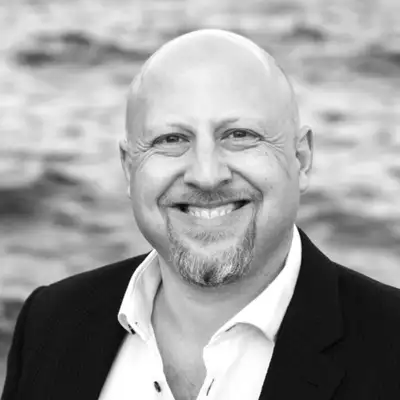
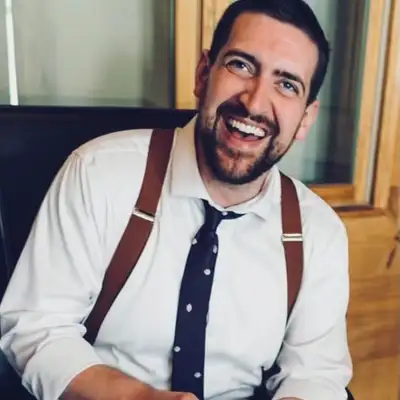
The Lion Counseling Podcast helps men escape the cages that hold them back and become the Lions they were created to be. It exists to help men obtain success, purpose, happiness, and peace in their career and personal lives. The podcast is hosted by the founder of Lion Counseling, Mark Odland (Licensed Marriage and Family Therapist and Certified EMDR Therapist), and Zack Carter (Counselor and Coach with Lion Counseling). In their podcasts, they address a variety of topics relevant to men, including: mental health, relationships, masculinity, faith, success, business, and self-improvement.
Welcome to the Lion Counseling Podcast. Jordan Peterson has 12 rules for life, but best selling author Mark Manson says you only need three. So today, and I are putting his rules to the test to see which ones we agree with, which ones we challenge. What are three rules are really enough to live that meaningful life? Zack, let's do it.
Mark Manson:Alright. Rule number one, you are responsible for everything in your own experience, even if it's not your fault. This concept of radical responsibility, it comes from existentialism, Jean Paul Sartre more specifically. Now Sartre had this amazing insight, which is that in every moment that we are conscious, we are choosing. We are constantly making choices not only of what to do, but also of how to see things.
Mark Manson:You know, if somebody says something that pisses me off, part of that is because I chose to see it in a way that pisses me off. I chose to have values that caused it to piss me off. I chose to to listen to the guy who pissed me off. Now, Sartre said that this constant choosing, this this necessity for choosing of perception and action in every single moment, it is a massive load on us mentally and emotionally. We are terrified of shouldering this constant responsibility.
Mark Manson:And so as humans, what we tend to do is we find ways to give other people responsibility to say, oh, well, it's not my fault. He made me do it. Not my fault. We defrauded a charity out of billions of dollars. He did it.
Mark Manson:You can probably relate to this. We all love to blame other people for our shit. That's normal. That's just human nature. But Sartre took this even further.
Mark Manson:He said that we often look to other people to adopt our values, to adopt our principles, to adopt our belief systems and what we care about. And this is a much more subtle shirking of responsibility. You know, it's saying like, my dad was a doctor and his dad was a doctor and his dad was a doctor, so of course I have to be a doctor. It's saying like, well, everybody else is doing it, so I should do it too. It's this very subtle form of avoiding responsibility that Sartre called living in bad faith.
Mark Manson:It's basically like living for other people rather than for yourself. Now, on the flip side of bad faith, called living with responsibility, making... Consciously making those choices based on your own principles and values in every single moment, and also being aware that you're making those choices in each each and every moment. Sartre called this living in authenticity. Today, we think of it just generally as being yourself or finding who you are, finding out what you care about, what your values are, what you're willing to stand for, and then be willing to make that choice when it comes, even if you're gonna be punished socially for it.
Mark Manson:Now, this is an extremely profound philosophical concept. It's really changed how I see the world and how I see my life. But, you know, if you've read my books, I also present this in in just a more pragmatic way. Personal responsibility, it's kind of just step one of any sort of self improvement. Because think about it, you can't improve something if you don't believe that you're responsible for it.
Mark Manson:If you don't believe that you're capable of choosing something different. You can't improve yourself if you don't think you are empowered to make different choices. And so until you have that perception of personal responsibility of I am the one who makes the choices, I can choose differently next time, then there's no path to improvement. Responsibility is at the cornerstone of what I teach and what I write about for this very reason. Now the biggest hang up that people have about this whole responsibility thing is what I call the responsibility fault fallacy, which is this assumption that if I'm responsible for something, then it means it's my fault.
Mark Manson:But that's not true at all. Right? Like, I can go get hit by a bus tomorrow, and it's not my fault I got hit by a bus, but it's absolutely my responsibility to recover from getting hit by a bus. Somebody can leave a newborn baby on my doorstep. It's not my fault that somebody left a newborn baby on my doorstep, but it is absolutely my responsibility to take care of that baby.
Mark Manson:These things happen all the time throughout our lives. We are often responsible for things that we are not to blame for and understanding that and accepting that, as upsetting as it can be, it's so core and fundamental to doing anything else, to improving yourself, to having mental health, emotional health, to being an ethical and reasonable person, having good relationships. Like, the responsibility piece is right there front and center every single time. So for me, that's rule number one, radical responsibility.
Zack Carter:Alright. Radical responsibility. What do you think?
Mark Odland:And there's a lot there. I mean, interesting he said, my dad was a doctor and my grandpa was a doctor. Literally, that that's my story. So I guess I passed the test by not becoming a doctor. I'm living my own life.
Mark Odland:I don't know. You know, I think there's a lot of truth. I mean, it wasn't too long ago I had the privilege of, you know, shaking hands with Jocko Willink at his... One of his muster conferences talking with him and some of the guys at Echelon Front, and I followed him for a while because I've been so compelled by his call to radical responsibility. Radical Ownership, I believe is the name of one of his bestselling books.
Mark Odland:And there's something really empowering about that. But if you're not... If you can't trust in your own capacity to handle responsibility well, I could see how you could shirk from that responsibility, kind of take the easy way out, kind of blame other people. So all in all, I think I I think I'm tracking with him. I think I pretty much believe that philosophy as well.
Mark Odland:The only caveat would be... This is a crude example. Right? But if, you know, if I came up to you and say, hey, Zack. Good to see you.
Mark Odland:And then I, like, splashed hot coffee in your face, and then you, like, kinda flip out and get pissed off at me. I mean, for me to say, Zack, you're choosing to be angry right now. You're choosing to have such a big reaction. I just don't understand why you're not taking responsibility for... So Yeah.
Mark Odland:You see us with couples counseling a lot too. Right? There there is a chain reaction that happens in relationships. And I don't buy you can't make someone feel anything. Like that I think that's been overused.
Mark Odland:I think you can make people feel things because there's a cause and effect relationship. But the key is the moment after you have that response, you have to wrestle back your autonomy and say, now what am I gonna do with it? How do I... What do I choose from this point forward? And I think in a way he gets at that by differentiating fault from responsibility.
Mark Odland:I think he's getting at the same idea. And so even if I had the most hardened materialistic atheist who's saying it's all cause and effect, there's no free will, I'd still say, but you probably live like there is. Like you have to live like you have choices, or else it's not gonna be a great life for you. So that's that's what I got Zack.
Zack Carter:Yeah. I think I'm like so close to being there. I think my mind with, like, CBT is, like, so programmed to try to see the nuance for better or for worse because in the in the attempt at saying, hey, most things are in Nuance, I often think everything is in nuance. Right? And so, like, I also have to be careful with that.
Zack Carter:But to nuance what he's saying and to give him credit for that little asterisk of, like, it may not be your fault but your responsibility. That's why I say to a lot of guys that have addictions or behaviors that are habits that they don't want any longer. But my hesitation with it is that I have clients on both ends. Like some people are like, Oh yeah, complete everything is my responsibility. And people that are like, Dude, it's not my fault.
Zack Carter:My wife did it. And there's something called the blame pie that I can do with clients. You may have heard of it where it's like, no. Oh, so like Okay. If you if you have a, you know, you draw a circle on a sheet and we call it the blame pie and we say, okay, you were suicidal.
Zack Carter:You were depressed. You were drinking. You cheated on your wife. You did all these things. At the same time, your parents were abusive.
Zack Carter:You were sexually abused as a kid. You were a cop or you were in the military and you experienced major PTSD, major traumas in the act of just doing your job. How much do you own and how much is the things that happened to you that have contributed to the addiction, right? There's something called ACEs adverse childhood experiences. And when those add up, what we see is higher rates of depression, higher rates of suicidality, higher rates of addiction.
Zack Carter:I don't think that's an accident. And so there is this like really fine line to walk of like, hey, man. This is not all your fault, dude. At the same time Yeah. Like he said, the baby got dropped off at your porch.
Zack Carter:You gotta take care of the baby, my friend. Like, so what are we gonna do here? Right?
Mark Odland:Well, are... Yeah. Those are great thoughts, Zack. I mean, I think I I constantly wrestle with that paradox too because, you know, my training as a marriage and family therapist was steeped in family systems theory. And we're looking at all these patterns that interconnect and that ACES study I I think about a lot doing EMDR work.
Mark Odland:And, and it can be freeing, for a client to finally hear someone say, you know what, yeah, that was real what you went through. That was traumatic. That shaped who you were. And yes, you actually truly were victimized. That doesn't mean you're a victim today as your identity, and that's that's the bridge that's important to to cross.
Mark Odland:But, I appreciate you bringing up the nuance piece because I think, you it's easy to go in extremes especially with all the crazy stuff in our culture. And I see a little bit of what you're saying too even in I've got a few clients lately know at Lion we work with a lot of high functioning guys and a lot of them are Christian guys and some of them are going to these like boot camp Christian like conferences. Some are just for men, some are for couples. And the part that I love is they're like step it up guys, let's do this. Like, be a man, be a leader, do all...
Mark Odland:You know, it's like there's something that inside us that wants to rise to that occasion. But then there's this other part where it's like, dude, you've already been rising to the occasion. You've been a great provider. You've been a great protector. You've actually showed love to your family and your wife in all these ways, but somehow it's still all your fault.
Zack Carter:You're still not good enough.
Mark Odland:You're still not good enough. And if so, it's there's this weird back and forth with like this manosphere space where you have like more secular guys who are like, I can't stand these these Christian guys because they're still they're still saying it's all the guy's fault. Just step up more. And then it's like, you know, how do you make sense of all this?
Zack Carter:Yeah. And and but I think he's probably 80% right. I think especially this guy isn't a psychologist. He's not a counselor.
Mark Odland:Yeah.
Zack Carter:And I think he does do a good job about trying to like pull in the nuance and all the things that you say. And it is something that we have to wrestle with constantly. It's like we just like be on the lookout for, like, you taking too much blame? Are you not taking enough blame? Like, ultimately, are the you you can only control yourself and you're the only one that has the biggest control over your destiny outside of God.
Zack Carter:And so like, you know, it is on you to take this stuff over. And so, yeah, man, such a hard tension, man.
Mark Odland:For sure.
Zack Carter:Alright. Ready for rule two? Do it. Let's do it.
Mark Manson:Going a reasonable person, having good relationships. Like the responsibility piece is right there front and center every single time. So for me, that's rule number one, radical responsibility. Rule number two, there is no such thing as a bad emotion. There are only bad reactions to emotions.
Mark Manson:For some reason, whenever I say this, it reminds me I... So back when I was in music school, I was studying jazz and I remember I had a jazz teacher who said, there's no such thing as a bad note. There's only bad musicians, which is brutal. But the analogy kind of works. Like, there is no bad emotion.
Mark Manson:There's just bad people. Like, everybody gets angry, everybody gets upset, everybody gets sad, everybody gets depressed, everybody gets anxious. These are all normal basic human functions. What determines whether it's good or bad or not is how the person responds to those emotions. So there are people who handle anxiety extremely well, and there are people who handle anxiety extremely poorly.
Mark Manson:There are people who handle their anger extremely well, and there are people who handle their anger extremely poorly. The term emotional intelligence has been in the lexicon for a long time. I actually think of it more in terms of like emotional skill. The same way some people are naturally very talented at like basketball, but are terrible at, I don't know, water polo. Some people are just naturally very talented at managing guilt and terrible at managing, you know, sadness or whatever.
Mark Manson:So we've all got our strong spots and our weak spots, but we all need to train ourselves to deal with emotions better, and to train ourselves to become better at dealing with our emotions, we have to be willing to experience those emotions. We can't label or judge those emotions as bad or wrong or shameful or assume that we're losers because we're like so sad at the end of that Pixar movie. No. This is just life. You feel things and you get on with it.
Mark Manson:The truth is is that emotions are really just biological feedback mechanisms. They are ways that our nervous system evolved over thousands or millions of years to help us survive better. When we get scared, it's because our our body detects some sense of danger, some threat to our our ability to preserve our own lives. If we get angry, it's to motivate us to overcome some sort of obstacle or or to strike back, you know, at a foe or something like that. Like, these are all intrinsically useful tools in our biology.
Mark Manson:I think step number one to emotional health is simply learning not to block any of them. Let it out. Be willing to experience them. Step two is then to experience or express these emotions in a way that is healthy or at least not damaging to yourself and others.
Zack Carter:Alright. Emotions aren't inherently bad. What do you think?
Mark Odland:Yeah. I mean, I think I honestly mostly agree with him. I mean, I think in my were... You know, world as a EMDR trauma therapist for guys, I think people... Lot a of the typical guys in our office, they still come with that paradigm.
Mark Odland:I have good emotions and bad emotions. And a wise person once told me that almost all the emotions, probably all the emotions that we have, are hardwired into us to do one of two things, either to connect us or to protect us. And that's really stuck with me. Right? Movements like, emotions like curiosity, joy, excitement.
Mark Odland:These things move toward connection. They move move you forward. And they're, and then protection. Right? You've got protection like anger, fear, even sadness, a quote unquote negative emotion.
Mark Odland:I mean for whatever reason we have these things called tears that fall from our eyes and it's a visible cue that someone needs some help, someone needs some support, put our arm around them, ask them if they're okay. They're these signals we give each other. So, it's interesting he talked about no bad notes, only, bad musicians. Like a metaphor, I've never heard that before, but a metaphor I've used for years with clients is that our emotions are like strings on a guitar. And they can be either flat or sharp.
Mark Odland:And the goal of our process together is to get them back in tune so that they function the way they're supposed to. They can give us accurate information about what's dangerous, what's what's good. We don't want emotions to rule us. We want our our our logic, our reason, our values to be master over our emotions, but our emotions still give us pretty good information in real time. And so I think for the most part, I think he's probably on the money.
Mark Odland:What do you think?
Zack Carter:Yeah. I I didn't I didn't have a lot to argue with, honestly. I thought the emotional skill was very interesting. I'm going to have to chew on that for a bit. That he, it's not less about emotional intelligence and more about emotional skill.
Zack Carter:I thought that was super interesting. Yeah, what I tell clients is my version of what you say is emotions are two things, information and motivation. And what it's telling you something and it's trying to get you to move faster, to move slower, right? Anxieties, you need to move faster. Something bad is going to happen.
Zack Carter:Depression, sadness is you need to move slower, something bad happened. We gotta make sure that bad thing doesn't happen again, right? And so, yeah, I I I love it. I I think he's I think he's on it. I think that's what I try to teach my especially male clients as well.
Zack Carter:And then it also just helps with communication with your wife, like especially if you're married, like understanding what the heck is going on underneath the surface. Like I'm mad. Like we got it. Like I feel mad. I feel bad.
Zack Carter:Most men, those are the two we got. Or I feel fine. Fine, mad, and bad. And so, like, being able to say, hey, you and me had this argument last night and you were saying that there were certain things I couldn't do with the money and I felt powerless. And I didn't know what to do.
Zack Carter:It is embarrassing as a man to say that I felt powerless, but that's how I felt. And I just wanted you to know. And like suddenly this other person like knows you on a deeper level. Hopefully they have empathy for you in that moment. Say, oh man, well, I was just feeling stressed.
Zack Carter:I was like overwhelmed by the finances and I didn't know that this was going to make you feel powerless. Then suddenly you're able to like connect on a deeper level. So yeah, there's a lot of benefits to like figuring out what the heck is going on beneath the surface.
Mark Odland:For sure. And I... It makes me curious too about that skill comment that he made, emotions being a skill. I wonder if a lot of the guys we work with have reached that place of burnout or addiction or marital strain because they actually never had anyone teach them that skill, and they've been thriving in a world, in a job, you know, whatever it is, where they can get by for the most part without having that skill be on on point until until it doesn't work anymore, and then it catches... And then they find us.
Mark Odland:Right? And we we help them get tuned back up and and get back in the game. Exactly. Like, if
Zack Carter:you're an engineer, emotions aren't helping you very much. Like Right. You got a problem to solve the problem. Right?
Mark Odland:Right.
Zack Carter:Awesome. Well, let's get to the last the last rule for life. That's number three. Alright.
Mark Manson:Rule number three. Every action and decision you make should be motivated to improve lives, both yours and others. Now, obviously this is a very difficult rule to uphold, not only just because, you know, sometimes we just wanna sit on the couch and drink beer all day, but like also because it's very hard to know like what is improvement? What makes a life better? Are you pampering that child or are you simply giving them opportunity?
Mark Manson:Are you actively loving somebody or are you smothering them and making them feel trapped? It's very difficult to know where the line is pretty much in everything we do, but that's why the rule here is intention. You know, the intention is always towards growth and improvement. It's always towards greater health and greater functionality. You know, I just think of this as like having a value towards radical growth.
Mark Manson:You know, if the first rule is radical responsibility, the second rule is radical acceptance, the third rule is radical growth or radical improvement. Always maintaining that intention that in everything I do in life, it's for the benefit of some living being, whether it's me or somebody else or the furry squirrel down the street. So those are my three rules. Simple, straight to the point, pretty much impossible to live up to. I think that's probably every rule for life should be like that.
Mark Manson:You know, it's like you don't want a rule for life that you can like easily hit, and then a year later you're like, well, was easy, and then you go back to drinking beer on the couch. I think one of the reasons why the virtues are the virtues is that in ancient Greece, they realized that like some of these things like require constant effort. Like honesty, like you can never stop trying to be honest. It always require... It doesn't matter how honest you were yesterday, you have to try to be honest today.
Mark Manson:And I think any good rule for life is like that. So those are mine. Radical responsibility, radical acceptance, radical growth.
Mark Odland:Good stuff.
Zack Carter:I think. Yeah.
Mark Odland:Yeah. I mean, I'm... I thought that squirrel was really unnecessary, offensive many ways. I'm not gonna get into it right now. But that aside that aside
Zack Carter:Mark has a thing about squirrels, you guys. Like, don't... Just don't bring it up if you
Mark Odland:talk to them. I mean, years ago, when I was thinking and praying and brainstorming, I almost named this practice squirrel counseling. And then I decided, you know what? I think Lion captures it a little better. But honestly, I mean, it resonates with me because that is really part of the...
Mark Odland:One of the values at Lion Counseling is we're striving. Right? Like, it's this paradox, right? I mean, God might love us just as we are, but we have a high calling in this life, to heal, to grow, to be there for others. You know, a theological spin on this is what's the rule for life is to love God with all your heart and soul and mind and strength and the second is like it to love your neighbor as yourself.
Mark Odland:Well what does that look like? I mean he actually gave some really practical ideas for what it looks like to live a good life, to help other people. And that idea that we're we're being sanctified, we're being sharpened, we're being you know improved over time. We're gonna have setbacks, we're gonna make mistakes, but if the mindset is I want to continue to heal, I want to continue to grow, I want to continue to make the world a better place, I mean that's definitely one of my values. I think a lot of the guys that that come to Lion Counseling, have that value as well and that makes it such a pleasure, a privilege to work with these guys.
Mark Odland:And that's honestly one of the biggest red flags in premarital counseling or in a marriage is someone who you know you're unequally kind of yoked in the sense of one person has that mindset and the other person doesn't. And I feel like, yeah, things will grow. Things will change over time. Your personalities might shift. But if you're growing, if you're both growing and and and healing and and striving together, you can go overcome so much.
Mark Odland:Right? But if one person's just... That guy is gonna slip back into the couch and give up on life and blame everyone else, that's tough. And it's tough if it's your... If if it's the wife too either way.
Mark Odland:Right? It's like you wanna feel like you're moving through life together. So what... Yeah. What what stands out to you, Zack?
Zack Carter:Yeah. I don't I don't have a ton of comments on it. I think it's hard to argue with spend your time, energy, and effort on improving yourself and improving the lives of others. Like you said, you... As Christians, God God, you know, love God, love others is the top two rules.
Mark Odland:And so Yeah.
Zack Carter:Yeah. I think it I think it's hard to argue with that third one. So what do you think? Are those are those a good three rules for life?
Mark Odland:You know, pretty solid. I mean, you know, again, outside the religious context, I mean, I think it sums up a lot. I I hadn't come across his material before, but I think he... He's able to distill big ideas down to some really practical wisdom, and he does it in an entertaining way. So it makes me curious to watch more of his stuff.
Zack Carter:Yeah. I'd give him an a. I I... Well, I'll I'll leave some room for improvement. So it's like like a 95.
Zack Carter:90, 95, somewhere in there. Like, you know,
Mark Odland:There's the nuance. There's the nuance coming out, Zack.
Zack Carter:Yeah. Yeah. So like overall... But I think overall, I mean, though... He's really nailing it.
Zack Carter:Yeah. Like I said, I'm I'm really having to look for things to to be critical of. It it was it was hard. It was hard to find things to be critical of. So it's probably pretty solid rules.
Zack Carter:So why don't you see this out Mark?
Mark Odland:Sounds good. Well as always if you are finding benefit to you know listening to what we have to say, of reacting together, feel free to hit that like, subscribe. We always appreciate it. Helps us grow the channel. If you have any ideas for future topics to discuss or things to react to, throw it in the comments.
Mark Odland:We try to read as many as we can. And as always, if if you feel like you could use a little extra support, maybe you're a high functioning guy who's got a lot of pressure, lot of responsibility on your plate and you are one of those guys who wants to get the most out of life out of not only career but also relationships, your spiritual health, your mental health, reach out. You know, we'd be happy to do a clarity call with you and see if it's a good fit. We serve
Zack Carter:a lot
Mark Odland:of states through coaching. We have less states for counseling itself, but I know Zack and I both do concierge counseling as well where we can kind of to find a place to meet you that's convenient for you. And yeah until next time talk to you later. Thanks Zack.