Subscribe
Share
Share
Embed
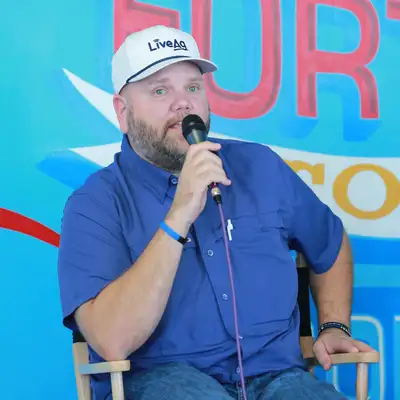
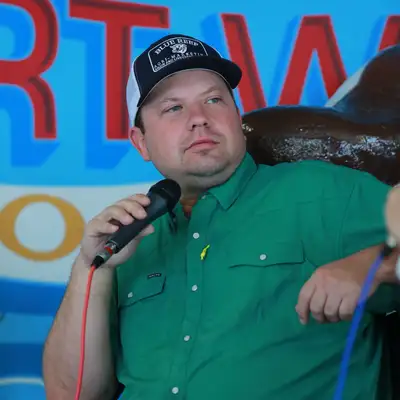
Welcome to the "We Live It" ranch and livestock marketing podcast, where cattle market intelligence meets ranch-ready wisdom. Join hosts Ty deCordova with LiveAg and Casey Mabry with Blue Reef Agri-marketing as they bring you straight-talk market analysis, proven strategies, and insights from industry leaders who understand ranching isn't just a business - it's a way of life.
From livestock market trends to cattle management practices, each episode delivers actionable knowledge to help take your ranching operation to the next level. Whether you're in the saddle or in the truck, tune in for conversations that matter to modern cattlemen. Because we don't just talk about the cattle business...we live it.
This year we'll go over a million head of cattle enrolled in the program and just Angus verified actually we're well over a million head. And we calculate premiums, we compare it to Cattlefax's top of the market price for that state that week. It's not perfect at all those programs, But there would be about a $100,000,000 in premiums returned since the beginning of the program to the producers. So we're pretty excited about those two milestones that we're gonna hit this year.
Speaker 2:That's a head on. We live it, The live AG podcast from seed stock bull sales built on generations of performance to commercial video auctions backed by real relationships. To equipment auctions that keep operations moving forward. Live AG connects cattle producers to opportunity. Quality cattle deserve premium prices.
Speaker 2:The right bulls deserve more buyers and dependable equipment deserves a fair bit. Whether you're consigning to a live AG video auction, marketing seed stock or moving iron through the equipment exchange. We combine local representation with nationwide reach. Connect with your live ag rep by scanning the code on your screen or visit us online at live-act.com. We are proud to be powered by Biozyme, the makers of VitaFirm and GainSmart, value added nutrition partners trusted by cattle producers across the country.
Speaker 2:Now here are your hosts, Ty deCordova and Casey Mabry.
Speaker 3:Welcome to the We Live It Podcast. Casey Mabry and myself, Ty deCordova, are here with, Troy Marshall from the Angus Association. Welcome, Troy. We appreciate you. Appreciate you coming in today.
Speaker 3:Casey and I, we just kinda we like sit around and talk and we really don't have nothing formal. We have a sheet we're supposed to go off of. Casey never reads it. I hardly ever see it. And we kinda just printed it out about five minutes ago, but we'll try to stay on topic today.
Speaker 3:We just wanna thank you for joining us today. First thing we'd kinda like to do is kinda get to know our guests. Where you live, where did you come from? How did you end up at Angus? I mean, kinda give us a little five minute background.
Speaker 1:I'm Troy Marshall, I'm a director of commercial industry relations with American Angus Association. I've been there for about five years now, a little over five years. Prior to that, I was born and raised in Wyoming, ranched in Colorado for about thirty years with my family. We raised registered Angus and some Angus cattle there in Eastern Colorado. I guess I started out right out of grad school at Catalfax too.
Speaker 1:So that's kind of my background and currently live in Prague, Oklahoma. We've been there for about three years. So I'm almost officially an Okie at this point. I don't
Speaker 3:know how much I would put that out there, but okay. I got family in Oklahoma. Man,
Speaker 4:there's a lot of people that have been at Cattlefax, probably pretty good alumni association around.
Speaker 1:It's a tremendous learning experience. It was just, I learned more in the two or three years I was at Cattlefax thing. Did. I appreciate the opportunity of getting to go to work at Catifax.
Speaker 4:Yeah, we were with Randy not that long ago and it's just an impressive facility there also.
Speaker 1:Good people.
Speaker 3:So how'd you end up at Angus? I mean, where'd that fit in?
Speaker 1:Well, I've always had a passion about genetics and honestly when you kind of looked at the cattle industry, I was always frustrated that some of the better cattle were kind of subsidizing the poor cattle in our system. And when they came to me about the AngusLink program and the commercial programs and kind of the vision they had for that, I got really excited about the opportunity to help put an objective way of describing genetics into pricing of feeder cattle. And so that's kind of how I ended up at American Angus.
Speaker 3:Where did you before?
Speaker 1:Yeah, we were ranching in Eastern Colorado for that. Right out of grad school, was at Cattlefax, but then we ranched for about thirty years there in Eastern Colorado.
Speaker 3:Okay. Yeah.
Speaker 4:Yeah. So you, I mean, you, you got to experience a lot of these things that you're working on now on your own cow calf herd.
Speaker 1:Oh, you know, when you talk about genetics, until you've lived it and you see it, and it's not just about the numbers on the paper, there's kind of an art to the breeding of cattle. And you also learn that management plays such a crucial role of expressing these genetics and getting them right.
Speaker 3:Right genetics, right spot, and right climate and all that. All that comes into configuration when you're talking about all this. Kind of, I guess let's dive right into it. Sure. What is the generic merit scorecard?
Speaker 3:Identify that, tell us what that is and then we'll kind of go into how
Speaker 1:The you get into genetic merit scorecard, or we call it GMS just for short too, is simply a way of, I kind of liken it to a CARFAX report in a way where it's an objective reliable way of describing the genetic merit in a pen of feeder cattle. And so what we do is we use the bull battery, so those sires that actually sire those calves and their EPDs for those traits And we come with four scores. There's a beef score, which is kind of what drives the whole profitability throughout the chain. The feed yard score, which is post weaning growth, average daily gain, feed efficiency, those traits there, how the cattle do in the actual feed yard. And there's the grid score, so that marbling, rib eye area, fat thickness, all those traits that combine to determine carcass value on the grid or when the cattle actually hang.
Speaker 1:And the grid and feed yard scores are basically combined to come up with a beef score. And then we also on replacement females on just the heifer calves, we do have a maternal score as well. And so that encompasses 17 different traits, that maternal thing is a little harder to define. So those are the four scores and they go from zero to 200 with 100 being industry average, which is kind of different than the way we typically look at these numbers because can always just continue to see a progression getting better, whether it's your own weight EPDs or marbling EPDs or whatever. In this scenario, it's a great way to benchmark the cattle.
Speaker 1:Every year that 100 gets a little higher. Know, the industry gets a little bit better, but a 125 compared to 125 last year is in the same position within the industry.
Speaker 3:So this is all tied back to their sire and y'all done in the genetics of their sire. So y'all went back and tested the genetics and the DNA and all the performance out of that sire group. We're taking the
Speaker 1:most of the time they're genomically enhanced DPDs from the bull battery, but in some cases they're not, they're just straight DPDs too, sometimes from the association. And so all the bull battery information is going in over time that builds the cow herd. Initially if we don't have all the history on that it's just the breed makeup of that cow herd and we use the industry averages for the various breeds at the beginning. But that just continues to compound over time to better describe those cows as well.
Speaker 3:How accurate would it be on a set of Angus bulls and crossbred cows?
Speaker 1:Doctor. Yeah, that's the exciting thing. We've done a lot of validation data on about 120,000 head. It's actually more accurate than what you would get on most of your yearling EPD type bulls. And we know how does a really pretty good job of describing the genetics of those cattle.
Speaker 1:I'll send you guys the graphs, but you can kind of see as that score card just steps up, know, each 10 increment, whether it's rib eye area, fat thickness, average daily gain, marbling, it just kind of goes up with the score. And the nice thing is the average bull battery size is about 10 to 12 in our data set or the people enrolling in AngusLink. And so that variation or that takes out a lot of the variation having that larger size of contemporary group. But it does a really good job of predicting the performance of those cattle. Right now, 100 score will get you about 11% prime cattle, about a 37% CAB acceptance rate on average, which is pretty close to what we see from an industry standpoint.
Speaker 1:And if you go out to the real extreme, which these are really good cattle, the 160 five's are higher, and those cattle are going about 88% CAB or higher, about 40% prime at that time.
Speaker 3:It comes to selling cattle, performance matters. That's why BioZyme Incorporated and LiveAg have partnered to bring more value to beef producers across the country. Cattle fed VitaFirm and GainSmart products are backed by proven nutrition programs designed to support reproductive efficiency, feed efficiency, and overall herd performance. And now through LiveAg's nationwide video auction platform, those nutrition backed cattle are positioned in front of buyers who recognize the value of a documented premium feeding program. This partnership connects what happens in your pasture with what happens at sell time.
Speaker 3:Better nutrition, better documentation, increased market exposure. Talk to your BioZyme or your LiveAg rep, or visit your local dealer to learn how BioFirm and GainSmart paired with LiveAg marketing can help your cattle stand out when it matters most.
Speaker 4:That's unreal to see how some of these cattle can progress. So let's take it down a notch and maybe simplify just a minute. Right? So if you're let's say I'm a cow calf guy and I've got a couple 100 cows and I want to get involved in this program, tell me how to do that.
Speaker 1:Yeah. Actually it's a very simple process. They do have to be agent source verified for the program. So you have to have a beginning and ending caving date. Just mark on your calendar there.
Speaker 1:And the only other thing we need to get the process started is your bull battery. So registration numbers and our names will help look those up of the bulls that sired that calf crop. And from there, about a ten minute questionnaire, a few things on your cow herd size and that sort of thing. If you do AI, we do need the receipts on that just for documentation, but we can use those AI sires as well. But honestly, that's all we need, it's just the bulls that you turned out on that set of cows, and then we provide you the scorecard, which is used in marketing.
Speaker 1:And it's just to simplify things for that buyer. It's a quick, easy way for them to understand the genetics in there. From the Angus Association standpoint, the way they or the reason they started this program, think, was just there's a lot of producers that have made a lot of investment in genetics and are maybe doing things right from a management standpoint. But when they moved through the channels, those cattle kind of got lost and they really didn't get credited for that. And so, this program was just designed to help those guys get rewarded for the investment they've made in their genetics.
Speaker 4:No, I think it's a really neat way to do it, Ty. And if you think through it, instead of telling people, you know, this is the bulls I use, this is the bulls I use, here's the EPDs or whatever, It's a really simple kind of one form of communication.
Speaker 1:And it's really no different than your reputation cattle because people knew how those cattle performed. The problem with reputation cattle is only maybe three or four people know your reputation because they had to own them and feed them. And this is a way of just putting an objective measure behind it. So, and I love the quote, Tom Fanning was at a conference manager at Buffalo Feeder's and he said, what the scorecard does for him was it just gives him the confidence to be able to pay a premium for those better calves.
Speaker 4:Yeah. And I mean, if somebody's gonna go through the effort and and the ability to do that, then they're not lying about the sires they're using or.
Speaker 1:Well, that's the neat thing. We check that those bulls have to be transferred into their names and all those things too. We do provide that third party verification so they can have a little more faith in those numbers too, as you said.
Speaker 3:So y'all do the third party? I mean, who does your?
Speaker 1:We do that. IMI Global actually helps manage the program for us because a lot of our cattle are going through those other programs And as so they do the agent source verification and Angus verified for us. And we do the genetic merit scorecard at the American Angus Association to help calculate that. Perfect.
Speaker 4:Yeah. Know you guys have a relationship with National Beef also, right? And so, and on the USPB grid, so can you talk about, you know, so there's some partner feed yards that are buying these cattle, they're running them through the grids. What date are you seeing on that?
Speaker 1:Been really exciting. Was neat. First time ever that a packer stepped out and paid for just genetic merit on top of the premiums for Prime and all the other things on those grids. So we've seen really good results with about the first 20,000 head of cattle through there. The cattle with the Scorecard had a gross of about $300 more than the other cattle going through the grid.
Speaker 1:So they've performed really well. The average of those cattle were a little over 40% prime when the average of the cattle going through those again was about 11%. Pretty significant increase in terms of the quality of cattle going through there. It's been kind of neat to see from the feeder standpoint is they've always known there was value in genetics. That's not hard to calculate, you know.
Speaker 1:They see it every day. But this just kind of gives them a way to know what those genetics are and reduce the risk. And I really see it more of a risk mitigation tool than anything else. Just because as you guys know, when you're paying $3,000 plus first cost on some of these cows, the amount of risk associated. If you can remove some of that uncertainty in the buying process, it really helps.
Speaker 4:Well, I think a lot of people are bidding the grid premiums into the cattle now. And so, I mean, to make sure that you're at least gonna get a grid premium because, I mean, I've always said this and it's probably not gonna be a real popular statement, but the premium has almost been commoditized to where it's table stakes. I mean, for what the cattle are bringing in and what the swap that everybody's buying, I mean, people are putting that in their bid. So we gotta make sure that you've got the integrity of the cattle and the reputation of the cattle and the predictability in the cattle to be able to hit those grids.
Speaker 1:Well, when we were talking, there's a lot of things that affect how genetics are expressed to your nutrition and health and management and all those things. And everything has to be lined up to really hit that home run as well. But So the analysis we've done, we really think genetics determine about 30% of the difference in profitability between pens of cattle. That's including market swings and all that in there. It's a big player in terms of how profitable those cattle are going to be.
Speaker 4:Yeah. I mean, most people can't just be the lowest cost operator out there because, you know, so then you gotta like, try to look for, you know, pushing the middle part of it, or even the revenue side of it hard.
Speaker 3:What is there? What's the gene max advantage? That's
Speaker 1:kind of a new thing that we just incorporated this fall and that gene max advantage is our genomics test on feeder cattle and producers that are testing the replacement heifers or calf crop that use to help make it just goes into the genetic merit scorecard to improve the accuracy of it and does that. And it also is used as kind of a proxy and so it helps us better define or estimate the genetics in that cow herd. And so it just is a way of, for those really progressive producers that are using genomics in their heifer selection and that sort of thing, that it is incorporated now into the scorecard. I think we've just in the last, it got introduced in January, so we've only had a few of those, but we've already had 30 or 40 sets of cattle come through with the GeneMax Advantage. I think we're going to see as we go into this expansion phase, there's a lot of interest in testing these heifers as these guys are making their heifers.
Speaker 5:Parnell, trusted by cattle producers and veterinarians for over thirty years, manufactures its own premium quality, reliable veterinary generics for The US cattle market. Introducing Nixie Floor. With two proven ingredients in one powerful dose, it fights infection and reduces fever. And with just one shot, you can see results in as little as six hours. Helping cattle breathe easier, recover faster, and get stronger.
Speaker 5:Nixie Fluor works as hard as you do.
Speaker 4:Again, we may have circulated around this a little bit. Like, if a guy wants to enroll in the program, what's he need to do?
Speaker 1:All they need to do is to either call us or IMI and tell them they're interested in being part of the AngusLink program. They'll start get your ear tags sent out to you, do the agent source verification. It's no audit, that kind of thing with that program, about a ten to fifteen minute phone call. We will provide you, if you're using all Angus bulls, we have all those in our record base. So we'll send you a sheet and you can just cross off the bulls that are no longer there or the ones you're using.
Speaker 1:If you're using some other breeds or those sorts of things, we just need the registration numbers of those bulls. And so if you really have your herd bull battery, that's all you really have to do to initiate that process.
Speaker 4:And then Ty, once they get enrolled, they can mark these cattle if they're going to sell them on LiveAg?
Speaker 3:Yes. We pull all that data from my MI. Once they have the scorecard and all that, it all comes from, well, Angus, we send it to Angus too, and they send us the scorecards and all that stuff to put up on the screen or put in the comments and all that. Yep. It works, works pretty good.
Speaker 3:We've, we've had some on there already. Almost as much as been. The last set.
Speaker 1:Yeah, we did.
Speaker 3:The cattle out there, them heifers that were out the replacement heifers were out in Virginia, maybe, I think. Yeah. I'm pretty sure that those were on it for sure, but we've had quite a few sets come through already. Anything else you kinda wanna go over, you wanna cover that, I mean, that we that we didn't touch base on?
Speaker 1:I think we did a pretty good job. It's just we've really been excited in the way the program has grown here over time, just as you said, as we've seen more industry acceptance. This year we'll go over a million head of cattle enrolled in the program and just Angus verified actually, we're well over a million head. And we calculate premiums, we compare it to Cattlefax's top of the market price for that state that week. It's, you know, not perfect at all those different programs.
Speaker 1:But there would be about a $100,000,000 in premiums returned since the beginning of the program to the producers. So we're pretty excited about those two milestones that we're going to hit this year.
Speaker 4:So if a guy wants to retain his cattle, let's say that, because that's one thing we didn't necessarily cover. A guy retains his cow herd or his calf crop and he feeds, finishes them out himself. He connects with a feed yard that's tied in with national and USPB.
Speaker 1:That's right. They, and everyone's competing for cattle right now, as you know, too. And so there's available slots just pretty much if you're close enough to the national plants, you can get a slot there with the USPB and get the premium additional premium still on that grid. Before having the scorecard.
Speaker 4:Okay, so you just reach out to the feed yard you got your cattle into and they can reach out to National and get them.
Speaker 1:Yeah, it's really a painless process. When they put them on the show list, they say, I have the scorecard, and we do it through National and it just gets credited on the grid. So there's really nothing. From a producer standpoint. It's just a matter of letting them know that the cattle have a scorecard.
Speaker 1:Me go in there.
Speaker 3:Simple enough. Appreciate you being on. Thanks for taking the time to come down, leaving the great state of Oklahoma to come down here to Texas, visit with a few Texas boys here. But, thank you
Speaker 1:for that. Well, we really appreciate it and we appreciate all that LiveAg does to help, capture value for commercial cattlemen as well.
Speaker 3:So appreciate the partnership.
Speaker 1:As do we.
Speaker 3:Thanks everybody out there in social media land, y'all just be sure to subscribe and like, if you have any comments or any questions, sure to send those in and tag Casey because he loves to answer questions On that, if you wanna be involved in the podcast or do a sponsorship deal with us, if you'll reach out to katielive ag dot com or just send her any questions you have or if you wanna try to do something on the show, we'd love to see you. God bless.