Subscribe
Share
Share
Embed
Celebrate the joy of reading with the Book Love Foundation podcast. This is a show filled with information and inspiration from teachers and leaders across grade levels, states, and school systems. We interviewed authors and educators for the first five years and now turn our attention to leaders in public, private, and charter schools. Find out more at booklovefoundation.org or join our book-love-community.mn.co of 2500 educators from 28 countries. We sustain joy together, one kid and one book at a time.
Penny Kittle 00:00
The Book Love Foundation. Podcast is produced by the teacher learning sessions, connecting teachers with ideas, experts and each other.
John Irving 00:16
My job is to make you, if not love someone, at least care enough about them so that you don't want them to be hurt and and then hurt them.
Penny Kittle 00:32
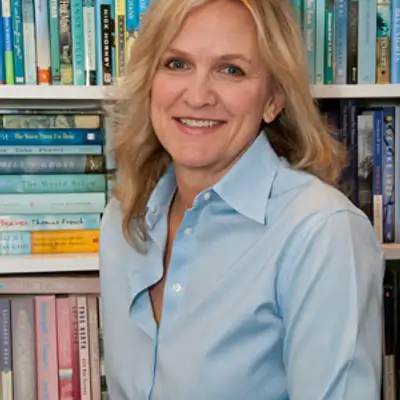
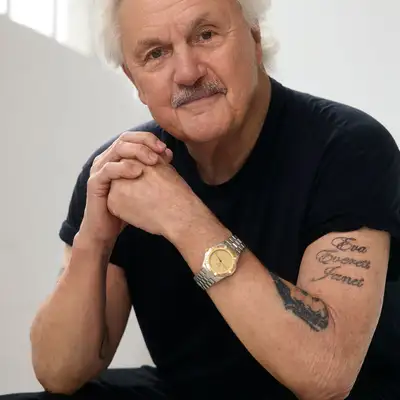
Welcome back to the Book Love Foundation Podcast. I'm Penny Kittle, and I'm your host from the gorgeous mountains of New Hampshire, where we're due to get about another foot of snow soon. Surprise, surprise, our fourth big nor'easter of the season. So what's better than snuggling in with a good book lately, for me, it's been Scythe by Neil Schusterman, and now, of course, Thunderhead Volume Two. This is a series that your fans of Hunger Games and Maze Runner all the real super action fantasy books that connects you deeply to characters those kids are going to love these. This new series, so highly recommend it. I have been struggling to do anything but read, trying to figure out what's going to happen to Citra and Rowan, so I wish you well in your journey of finding a perfect book. Let me give you just one more the Dorothy Must Die series. Have you heard of this book? Two just came out, so I'm in the midst of racing through oz again with a whole new spin on things. What is it about fantasy in this winter? I don't know, but I am having a blast. There are, of course, all kinds of books for all kinds of readers. And today's podcast is a terrific interview with John Irving. He is an American literature legend, as you know, and for me, just the opportunity to talk with John was a thrill. I loved The World According to Garp, it was the first book that took me on a journey that was that was so expansive and made me hungry for the next John Irving book, another favorite, A Prayer for Owen Meany, was the book I chose for the summer book club last year for the Book Club Foundation, thanks to all of you who participated, we raised enough money in the summer book club to fund eight classroom libraries. It's an exciting group of educators who help us bring books to teachers who put them in the hands of kids. Sit back and enjoy. John Irving
John Irving 02:38
Penny, yes, hi. This is John.
Penny Kittle 02:42
Hi, John, it's so exciting to talk to you. Oh, well, thank you. So there are a couple things that I really want to talk to you about, and I divided them up in my thinking between your process as a writer and what you might have to say to teachers. I have about 700 teachers reading A Prayer For Owen Meanie this summer, and they'll be listening to the podcast. And one of the things that I think is interesting that you do in your work is you define loss in a really specific way. It has clarity and tenderness. And so many of your books that I've read circle this idea of loss, and I was just curious how memoir or your own personal history weaves into your fiction.
John Irving 03:30
I think my personal history is a lot less present in my fiction than it is in the fiction of many writers, especially many writers today we live increasingly in an aged memoir. And at a time when those writers who are writing most autobiographically in their fiction, even asserting that this is the only valid and authentic fiction there is the kind they do autobiographical fiction, I find it interesting that over time, the writers who lack the imagination to write other than autobiographically, when they write fiction, are the most insistent that this is the only way, or the best way, to do it. I don't say that the way I make things up is the best way to do it. I just continue to assert that it's the way I do it. The way other people do it, that doesn't offend me, but I'm. And over time, Mark Twain was a great advocate, not only of himself, but he insisted that it was the only valid way to write fiction. And there are many people today insisting on the same thing.
John Irving 05:29
I I've always found personal history or personal memories to be insufficient, unless you change them. I've always believed I can make up a better story than any real thing that happened to me. And often when I say make up a better story, what I mean is a worse one. The people often write me that their lives are like a John Irving novel. What they mean is that they've lost someone. What they mean is that something terrible has happened to them, and I have to be careful when they tell me their life stories, I have to be careful not to say, Oh, I could make that worse. You think that's bad? I could make that much worse. So those few things that are or were of any lingering interest to me autobiographically? Yes, I have written about them. If something happened to me in my real life that I think is worth writing about, I'll not only use it, I'll use it more than once, but the difference between me and a lot of autobiographical fiction writers is that I always change it. I don't feel that the true story has any sacredness to me at all. Look at how many movies we see today that are to us on the basis of based on a true story? Yeah. Well, you know what that says to me? What that says to me is that now it has an excuse not to be very good when you get to the end of the story and the ending is completely disappointing. Well, the filmmakers or the storyteller can always say it really happened. It really happened that way. Well, that's just not good that's not good enough. It's well known about me that I did not have a whole lot of information about my biological father and that it was quite late in my life, already into my 60s, before I learned other details about him and met other children, half siblings of mine, who had known him as a father, which I did not, and even as forthright as I have been about that in interviews, the presumption is that I'm always writing about my mother and my missing father. Well, the truth is that my mother's actual story, and from all I hear from the half siblings who knew this man, for whom, in their cases, he was a very present and active father in their lives, that he was a very nice guy and a very good father, it doesn't sound like anything I would have written about and my mother was was was very loving to me, and was never abusive or withholding in what she would say to me about my biological father, but made it plain that she didn't really want to talk about it and didn't really have much more to say about it than what the facts were. And the reason he wasn't really a part of my life. He'd asked to be was that my mom didn't need his support to raise me, and she didn't want him to be an ongoing part of her life or mine in any fashion. I couldn't write a short story about that. Yeah, I thoroughly understand why she felt that way. I regret not having known him as a father and from other children who did know him, I realized I missed something, but I also had a very sweet still have a very sweet stepfather, and you know, I don't really have any issues with my childhood.
John Irving 10:47
And perhaps because none of this is particularly sacred to me, I have felt free in novels, many of them, as many as half of my novels, to invent these mothers who have something enormous to hide my mother didn't, and to invent these fathers whose reasons for being elusive from Their children are labyrinthine and severe, so that even those parts of my fiction that are autobiographical aren't autobiographical. I continue to maintain that my job is to make up a story that worsens something that happened to you and something you hope never happens to you or to anyone you love, so that the issue of loss isn't something I've experienced, it's something I've here. And I think where that everyone wants to know where writing comes from. I mean, really, I know where that comes from. It also is not terribly interesting, except that I was a very young father. For the first time, I was very young husband. For the first time, I was married and had a child when I was still in college, still an undergraduate, and from the moment that first child was born, I had something to be afraid of that I'd never been afraid of before. I had the fear of losing someone whom I already knew, realistically, I could never, always for every second of his ongoing life, protect, and if you're a father or a mother and you have an imagination, your Imagination does not stop like a water faucet when you stop writing at the end of the day. In my imagination, I have lost my children many times over and over again. Well, you know, no one who ever interviewed me, or frankly, most people who have written about my book never understood me as well as my children do, beginning with my eldest son, who was himself, not yet 13, when he read the world, According to Garp and I was anxious he was reading that novel at that age, but I would have been a hypocrite as a father, having exposed him to anything he wanted to read to say, No, you can't read that. You're not old enough, or it'll surely upset you, and we talked about it when he was reading it, and probably there was no one who knew me as well as as as he did at that Time, and he never thought that Garp was me or and he knew that the things that happened in that novel were not things that happened to me. Oh, he knew that he recognized the wrestling. He recognized the anger at people who are reckless around children. He that was reckless. Destructible to him, but only a very few years after that, he was 14, I was showing him various prep schools around New England, and we were at one of them, and because I was showing him school, I had agreed to give a little reading to students at the school. At the time, I think I was reading from the Hotel New Hampshire. It was Garp was a book ago, and the kids at that school knew that I was touring my son as a possible student to go there, and Colin was there in that audience. And one of the kids, after I'd given this short reading, instead of speaking to me, spoke to Colin. I felt very badly for him at the time. Oh, gosh, he's been put on the spot by these older kids, kids. He's not yet as old as they are, and he wouldn't be as old as the youngest of them until, if he went to that school, he was starting a year hence. And you know, when you're that age, when you're 14 and somebody's 16, they years older to you, absolutely. And this was one of those situations where a young girl, I'm guessing, 1617, who had read a couple of my book, pointed to Colin and said, Have you read the world, according to Garvey, as Colin said, well, is, is That? Is God, your father said, who your father is? And I thought, Oh, gee, you know, I'm used to that question, but I felt Colin had, I don't think Colin had ever been asked that before, yeah, and Colin basically says what I'd been trying to say to journalists who don't listen for number of years. Colin said, Oh, no, my dad isn't garb that novel is about everything he's afraid of. Wow, period. And he said it with a shrug. He said it, you know, like, no big deal. That's easy. It was like a one sentence answer, hello.
Kevin Carlson 17:30
I'm Kevin Carlson from the teacher learning sessions. There is much more of this conversation to come in our next two episodes. In part two, Penny and John explore the planning that Irving does that helps bring such complexity to his writing. And in part three, he talks about endings and how he is an ending driven writer, and how by the time he starts writing his novels, he knows almost everything that happens in them. I think the conversation is fascinating all the way through, and I hope you will enjoy it as well. All three parts are available now. Please check them out. This conversation was recorded last summer as part of the Book Love Foundation summer book club. The 2018 summer book club is coming up soon. Look for details at booklovefoundation.org. Thank you very much for listening to this podcast, supporting the Book Love Foundation podcast and supporting the teacher learning sessions. Support comes from Booksource, a leading distributor of authentic literature for K 12 classrooms. Booksource believes that engaged reading is the key to a brighter future, and that creating better readers has the power to create a better world. When students have access to a rich and varied classroom library and the ability to choose books that explore their personal interests they enjoy reading and spend more time doing so. Visit booksource.com to discover how booksource can help you foster engaged reading in your classroom by getting the right books into the hands of your students. The Book Love Foundation podcast is produced by the teacher learning sessions, connecting teachers with ideas, experts and each other.