Subscribe
Share
Share
Embed
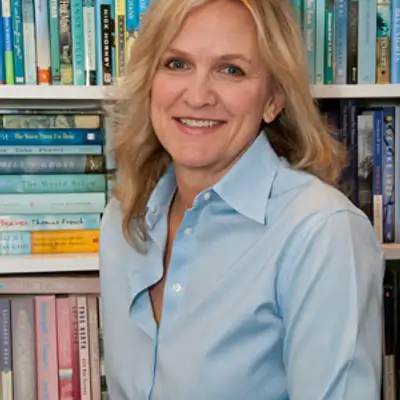
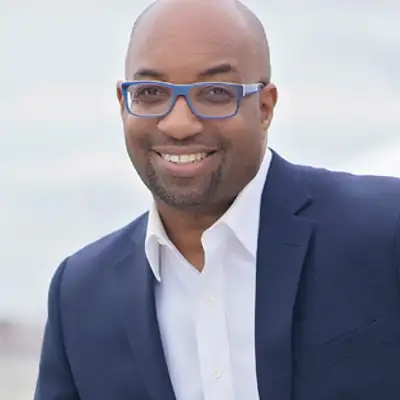
Celebrate the joy of reading with the Book Love Foundation podcast. This is a show filled with information and inspiration from teachers and leaders across grade levels, states, and school systems. We interviewed authors and educators for the first five years and now turn our attention to leaders in public, private, and charter schools. Find out more at booklovefoundation.org or join our book-love-community.mn.co of 2500 educators from 28 countries. We sustain joy together, one kid and one book at a time.
Penny Kittle 0:00
The Book Love Foundation podcast is produced by the teacher learning sessions, connecting teachers with ideas, experts and each other.
Penny Kittle 00:17
Welcome back to part two of our first episode of the Book Love Foundation podcast. We are going to continue my conversation with Kwame Alexander Newberry award winner and truly incredible poet. If you haven't seen take a knee, you really should Google it so you can listen to the first half of the conversation in our previous episode. And if you haven't heard it, please go and give it a listen today. Here's Kwame talking about his writing process, his Writing Studio and all things, the Crossover.
Kevin Carlson 00:49
Support for the Book Love Foundation podcast comes from book source as a leading distributor of authentic literature for K 12 classrooms, Booksource makes it easy for educators to build, grow and organize classroom libraries that engage readers with 300 title grade level starter libraries for grades K 12, featuring a mix of fiction and nonfiction and covering a variety of topics and genres. Booksource can help you build a strong foundation of books at every grade level to stock your classroom library with titles that engage readers. Visit booksource.com, today.
Penny Kittle 01:31
I want to talk to you about your life as a writer, and I want to talk to you about the Crossover. That's fine. Okay, a couple things I want to know so I read in one of your biographies that you were a high school teacher, is that right?
Kwame Alexander 01:47
I lasted for one year? Wow, yeah, I they wanted me to come back. And I really wanted to. It was the hardest job I ever had Penny. I hear you. It's the hardest job I ever had. And I said, You know what? I think I'm better served, and the kids are better served if I, if I just go write books and and show up in schools to supplement what you awesome teachers are doing. Because I just, man, that was the hardest thing. Hardest job I've ever had.
Penny Kittle 02:21
Was it in high school English.
Kwame Alexander 02:23
It was high school English, high school creative writing. And it was in a school for for kids with ADD ADHD and, and so it was, it was a lot of work, and it was, it was fulfilling work, and, and, and it left very little time for for the writing and for that creative process that I that I also love. And so I had, I had to make a choice, and and I said, well, maybe I can still interact with students and still share my my philosophy, on on on life and an education through through school visits, but perhaps the teaching thing is just not going to be for me.
Penny Kittle 03:07
Totally makes sense. I'm really glad that you're out there writing all the time, because you share all this amazing stuff with us. And I was, you know, I was thinking about all these things that you've produced from books and, you know, picture books and a mixtape that was on your website. I was listening to your TEDx talk and your keynotes, and I've seen you present with teachers. And there's so many different ways that what you have to say comes out in words. And so what I'm curious about is, what is your writing routine? And also, do you prefer paper or technology.
Kwame Alexander 03:42
I prefer technology. When I'm actually writing. I could be taking notes on paper or but when I'm actually sitting down and doing the writing, it's, I'm definitely on a laptop. The writing, you know, process for me is changed drastically since the Newberry before that, it was maybe five or six hours a day, every day. And after the Newberry, with the schedule and, and just the the appearances and and that kind of public work, the writing is now probably a couple of hours in the morning, very early before, you know, I may visit a school or have a meeting or and then it's a couple of hours in the evening, and and that could be in a hotel, it could be In a it could be on an airplane. It could be, you know, like right now, after you and I finish our lovely chat, I'll write in my in my bedroom for an hour or so. So it's definitely changed a little bit, and I think probably it'll change a little bit more in the fall, because I'll be off the road more and. And I'll be at home, and I'm building a Writing Studio inside. My plan is to be in there a lot, you know, four or five hours a day during the during the fall and in the spring.
Penny Kittle 05:13
So is this Writing Studio in your house?
Kwame Alexander 05:16
Yeah, yeah. It's, it's, it was a screened in porch that I'm having turned into a Writing Studio with a loft and and I'm so excited because me and my writing friends, we usually go to Panera or a local cafe and write, and now we're sort of, I'm going to create my own Panera Bread in my house.
Penny Kittle 05:41
Filled with cookies and espresso.
Kwame Alexander 05:45
Nah, we're not gonna have the food, but we're gonna have the comfy seating and the little fireplace. And of course, I have a bunch of books which Panera doesn't have, so I'll have them beat on that, but just that whole ambiance and and I love being around people when I'm writing. So creating this space so so so my friends and my colleagues can, sort of, you know, be a part of this. I find myself, I'm not the solitary writer. I like to be around others, so I'm excited about that. So hopefully Penny you can come by.
Penny Kittle 06:17
All right, except that I don't like to write with other people around that's so interesting to me, I'll just come and listen. Right, right? So tell me how that works, though, if you got all these people in the room talking to you, are you writing while they're talking?
Kwame Alexander 06:31
We're not talking.
Penny Kittle 06:34
They're just writing.
Kwame Alexander 06:36
We're just writing. And we got, some of us have earphones in listen to jazz music and and then, you know, somebody will ask a question, and then we'll maybe take five or 10 minutes, and if you don't feel like being a part of that conversation, then you just turn your music up, or you just tune it out and keep writing.
Penny Kittle 06:54
I could totally do that. I could do that. That's awesome.
Kwame Alexander 06:57
Oh yeah, it's very respectful, but, but I think we all and then there are times where you just need to be, you know, by yourself, but you know to but I mean, for the most part, I love being around people, which is why I wrote the Crossover in Panera Bread. Yeah.
Penny Kittle 07:19
Well, so the Crossover had 20 rejection letters before it got published. Is that true?
Kwame Alexander 07:26
No, I was more like 22.
Penny Kittle 07:29
You kept track?
Kwame Alexander 07:30
Yeah, I mean, but who's counting, right?
Penny Kittle 07:34
So what was that like over how long did you get all those rejections?
Kwame Alexander 07:38
Maybe about three or four years.
Penny Kittle 0:42
Oh, my word.
Kwame Alexander 07:44
Yeah, yeah. You know when I think back on it, I'm sure I must have been disappointed and a little frustrated and upset. But of course, you know, it's hard to put myself back in that space with when, with all the good that came out of that. But I sure I had to be pissed. I mean, I can remember one particular editor who kept telling me the same thing, it's just not there yet. It's just not ready but, but I could never get from this editor, what needed to be there for it to be ready. And that frustrated me a lot. But yeah,
Penny Kittle 08:28
Was it a lot different when you first started getting it rejection, and what it ended up as?
Kwame Alexander 0:36
The first rejection was probably about 50 pages. The book was 50 pages. So, and, of course, the book ended up being 238 pages. So, yeah, there was a huge difference in that first rejection. But, you know, after those first three or four rejections, it is sort of evolved into the book that it is now and, and so it was, in my estimation, it was a pretty good book. The common critique for the book was that it's poetry and nobody's going to read it. And so that became the thing that I could never get over that hump. And it took so long to finally get somebody who saw the value in the fact that it was poetry.
Penny Kittle 09:22
Wow, wow. Were they wrong?
Kwame Alexander 0:27
Yeah, you know, but I love it. I'm glad. I mean, it worked out great. So sometimes, like I tell people all the time, Penny, sometimes you got to embrace the nose, because they're just saying they're clearing out the way so that the yes can come. And boy, did it come.
Penny Kittle 09:46
No kidding. Did you cry when you got the Newberry?
Kwame Alexander 09:53
I didn't cry that day. I didn't cry that day. I laughed and danced a lot. Right? So there was no crying. And I don't think I cried until that next week, when I was taught I had to give a speech at SCBWI, and then a speech in Florida. And so my speeches became, basically what happened on February 2, 2015 when I got the call, because it was the thing that was at the front of my mind. And so as I got to the end of that speech, you know, I'd be on stage balling.
Penny Kittle 10:33
Yeah, powerful. It's such an affirmation. The book itself, I was already loving it when it won. I mean, I just think it's, I want to talk to you about how you wrote it, because I use it all the way down in second third grade and all the way up in my high school classroom to talk to kids about the way you put words on the page. They're all over the place. They move, they sing, they have energy. And I want to, I want to understand. Like, how do you decide how to lay out the structure of a, you know, one of those, they're not really, are they chapters?
Kwame Alexander 11:09
Somebody, people have called them chapters. I never viewed them as that, but, you know, they are what they are. If you need to call them chapters, call them chapters. I don't it's not a deal breaker for me. How you view them, what's what's most important to me is that you know when you read it, you read it like I imagined you should read it, or you or or you read it like I hoped you would read it when I wrote it. So if you see the word slanted going down the page in a diagonal fashion, that that would say something to you when you read it. Or if you see a word bolded next to a word that's not or if you see an entire poem that's lowercase, you know, or so that the way I wrote each poem would dictate how you read it. That was important to me. And I remember, you know, at the beginning of my career, being told you're a spoken word poet or you're a performance poet. And and I remember wanting to write books and thinking, well, that's cool, and I love performing, but I want people to read my poems and and not necessarily have to hear me or see me read them in order to really feel it. And so how do you write a poem to get that feeling? And of course, that that sort of challenged me to be, to become a better writer. And then, with the crossover, I said, Well, hey, we got a chance here to really put these performance poems on the page so that that that kids can, can, can act them out or perform them. They will. They'll almost be called to perform them, because it's not sort of traditional, you know, layout of text on the page, and I found that it to be exciting. I mean, it was certainly a risk. But I I felt like it was, it was hybrid experimental and and ultimately, you know, after having done this for so long, for 20 years, I felt like it would work.
Penny Kittle 13:22
Oh, yeah. Well, I took it into an elementary classroom, and I had different pages, and kids could choose which one, but I had them in, you know, groups of one or two, and they told us how they thought it should be read. And I just love the way it created all this conversation in the room. You know, I'd say, Kwame is not here. You can't do this wrong. You just tell us what you think this should sound like, and just to listen to the way they would interpret what you had done on the page. And then they started reading them as two voice poems, like they'd read lines together, you know, and then trade off lines. And just the way they brought this energy and life to your work, because you invited them to bring that by giving it that unconventional look, right?
Kwame Alexander 14:01
When you look at some of the poets from the 60s, from the Civil Rights and the Black Arts Movement, like Nikki Giovanni and like Sonia Sanchez and and some of these poets, I think that same thing happened, you know. They They experimented, not only with the language, you know, but with the way the language appeared on the page. And I always found that fascinating, because, you know, that was something EE Cummings did. So how do you how do you read an EE Cummings poem? Well, you don't read it the same way you read a traditional, you know, like a Frost poem or or Elliot poem, and so what do you do differently in the in the reading of that piece? And I like that. I think that's I think that's cool. And if I'm a 40, you know, seven year old man who thinks it's cool, and I mean, certainly, these kids are probably going. Think you're cool because I'm old, you know, and he and he and he, Cummings is way older than me, and he's gone, and so I just think, you know, the more things change, the more they stay the same. And, and I'm sort of in that kind of tradition, just doing it on a in a different, a little bit of a different way with my own sort of originality,
Penny Kittle 15:23
Absolutely, and you're opening up possibility for kids to say, Well, how do I say what I want to say? The how, right? That becomes like, alive. Yep, awesome. So my last question, I'm a what? Wait, wait, it's over. Well, I told you I'd only take 30 minutes of your time, and now you told me that you got to go write for an hour. How could I steal time for Kwame to write. True, true. So what I want to know about is, we're a nonprofit foundation. We're working hard to, you know, get these libraries to teachers, and you have a an amazing foundation, the LEAP foundation. Can you talk about that leap for Ghana?
Kwame Alexander 16:03
Yeah, Leap for Ghana is a literacy nonprofit that I founded about five years ago to train teachers in Ghana to teach reading and writing. I found it interesting that on my first trip to Ghana to visit schools, there was no storytelling going on. There was no reading to kids going on. And I just found that really strange in this place where the oral tradition is such a big thing and storytelling is such a you know, by the Fireside Chat is such a big thing in the in the community, but they've gotten away from it and, and it's just not happening in schools. And I was like, What are y'all doing? And I just felt like I could maybe sort of offer a reminder that we learned storytelling from you all. And so, you know, and here's, here's some of the values of the read aloud, and, and then I, and then I, you know, the other piece of it is, well, one of the reasons they weren't reading to the kids in this particular village I was going to because there were no books, is, I said, Well, let me see if there's a way that I can help get books. And then, of course, that led to, well, let's build a library, and let's have a literacy camp during the summer. So just trying to sort of do some things to further the mission of of helping children. You know, imagine a better world for themselves, because that's where it starts. The mind of an adult begins in the imagination of a child. So we've been doing that for five years, and this summer, we cut the ribbon on on the library that we've been building. So it's pretty exciting.
Penny Kittle 17:41
Oh, that's beautiful. That's life as a poem.
Kwame Alexander 17:44
Yes, indeed, life as a poem.
Penny Kittle 17:48
I love that story. So Kwame, what are you working on right now?
Kwame Alexander 17:55
I'm rewriting the prequel to the Crossover.
Penny Kittle 17:59
Oh, I can't wait to read that. So I'm gonna let you get back to writing, and I just want to thank you so much for talking to me. I know you squeeze this into all these other things you're doing, and I appreciate it so much.
Kwame Alexander 18:15
Well, thank you, Penny Kittle, and I remain inspired by your writing and your work and, and the few times we've been able to to be in the same space and and have been inspiring for me and and I look forward to that happening again soon, like real soon.
Penny Kittle 18:35
I'm coming down to hang out in the Panera Bread writers retreat.
Kwame Alexander 18:40
Bring your earphones.
Penny Kittle 18:42
Okay, I have some good night. Kwame. Thank you so much.
Kwame Alexander 18:47
Cheers. Life is a poem.
Penny Kittle 18:49
Life is a poem, bye, bye.
Penny Kittle 18:57
Thank you for being here. Our next episode includes Deborah Wiles. She's the author of a trilogy of historical fiction nonfiction books that bring together primary source, photographs, documents, music and quotations from time periods in the history of the United States that not only engage students, but inform them of the complexities of each time period you might have already read part one countdown, which explores the race to nuclear arms, or part two revolution, which we discuss in this podcast. It follows the Freedom Riders to Mississippi in 1964. Deborah Wiles was 11 years old and living in Mississippi when the Freedom Riders came to town, so she not only gives you that inside view, but this deeply complex book that explores all of the factors that our country was wrestling with. I don't know about you, but I am anxiously awaiting part three, which is going to be focused on the Vietnam War. You simply must tune in. And to listen to her discuss her writing process. I learned so much from this woman. I'll see you next time. Happy reading. Hello.
Kevin Carlson 20:08
This is Kevin Carlson from the teacher learning sessions. I want to tell you one more time about the Share. It's a new online space from the teacher learning sessions that celebrates the writing thinking and excellent work happening in classrooms and schools across the country. We built it because we think that's something worth celebrating. The Share is a community of leading teachers, educators, librarians and advocates for student literacy. And we built it to help you feel less isolated, to help you recognize how important your work is, and to help you share your voice, connect with other people. You are not alone. There are a lot of stories out there to be told, and there is a lot of brilliant work being done in classrooms all over the place. I hope you will share some of yours, visit teacherlearningsessions.com/theshare to learn more and start your free membership today. Thank you. Support for the Book Love Foundation podcast comes from Booksource as a leading distributor of authentic literature for K 12 classrooms, Booksource makes it easy for educators to build, grow and organize classroom libraries that engage readers with free teacher resources to accompany over 13,000 titles. Booksource helps busy teachers integrate classroom library books into lessons and save valuable research and planning time, visit booksource.com to bring your classroom library to life with Teacher Resources. Today, the Book Love Foundation podcast is produced by the teacher learning sessions, connecting teachers with ideas, experts and each other.