Subscribe
Share
Share
Embed
Since 1986, Convene has been delivering award-winning content that helps event professionals plan and execute innovative and successful events. Join the Convene editors as we dive into the latest topics of interest to — and some flying under the radar of — the business events community.
Convene Podcast Transcript
Series: From Print to AI: Michelle Russell on Leadership, Media Change, and the Value of Events
*Note: the transcript is AI generated, excuse typos and inaccuracies
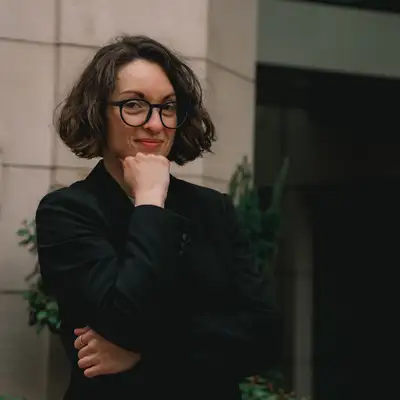
Magdalina Atanassova: This is Season 12 of the Convene Podcast, brought to you by Louisville Tourism. This season celebrates 40 years of Convene—reflecting on where we've been and looking ahead to what's next. Today my guest is Michelle Russell,
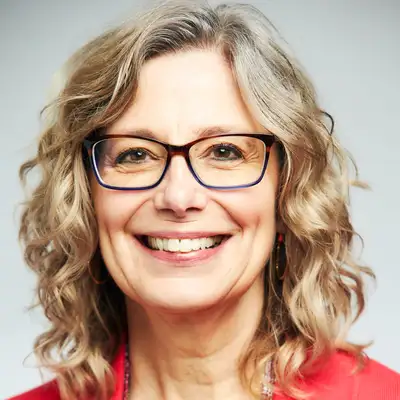
longtime editor in chief of Convene and one of the most influential editorial voices in the events industry.
For more than two decades, Michelle helped shape how meeting professionals see their work,
elevating the role of events as engines of connection,
learning and impact,
while guiding Convene through massive shifts from print to digital,
social media, and now AI.
Over her career, she's interviewed leading thinkers across business, culture and society,
mentored generations of editors and writers,
and consistently pushed the industry to look beyond logistics to purpose,
curiosity and meaning.
In this episode, we talk about leadership, legacy,
the power of asking better questions, why face to face experiences matter more than ever,
and what it really means to let go of a role that has defined a career.
We start now.
Hi Michelle and welcome to the Convene Podcast.
Michelle Russell: Hi Maggie. Thank you for having me.
Magdalina Atanassova: It's interesting to have you as an official guest of the podcast because this conversation brings me back actually to when we reintroduced the podcast some two, three years ago and we had to do this little intro, but yeah, the podcast is back, so now you're a guest, so it's cool.
Michelle Russell: Yeah, it's weird having the tables turned. I'm usually the one asking the questions, not answering them.
Magdalina Atanassova: So you stepped into the editor in chief role more than 20 years ago at a time when you were still learning about the events industry yourself.
So when you think back to that moment, what initially drew you to convene and what surprised you most about the role Convene would come to play in the industry?
Michelle Russell: I answered an ad in the New York Times and back in those days,
that's how you responded to job opportunities.
And I did some research, I went on the website and it was a bonafide association, had been around for a while. I took a look at the magazine was publishing some really interesting,
you know, specific to an audience content, but not like,
you know, rocket science where I wouldn't understand what they were talking about.
And I just, I went through the interview process. I was actually hired as the managing editor and then within the course of a couple of months,
the person who hired me left and the person beneath her also left.
And so at that time the he was an editor in chief. I forget what his title was, but he had a marketing function as well. And we were looking for someone in the editor in chief role.
And I said,
would you take a chance on me?
And he agreed to it. And the CEO at the time agreed to it.
And so it was very scary for me because it wasn't that I was learning about the industry. I knew nothing about the industry except that I had myself attended conferences and other roles and I was in my 40s, so it wasn't like I was brand new to working.
So I had been at conventions and conferences. So I understood it as from the point of view of someone who experienced it. But of course,
like many people, I didn't know that there's an actual industry behind it and that there are people,
it just doesn't magically happen. And there are people who work really hard to put together every aspect of an event.
So what I thought was my downfall or deficit was actually a positive thing, a good thing, because I really looked at the industry with the lens of someone who wasn't so fixated on the nitty gritty and logistics.
I recognized right away that there were a lot of other places where people could find their how tos or their checklists,
but it didn't seem to me like there were enough publications talking about the actual,
you know,
30,000 foot view of what it is that event organizers do and what they accomplish.
So I feel like my focus has always been what is the good of this industry? What does it do, what does it accomplish?
Constantly trying to remind people who do this work to kind of lift their head up from the logistics and recognize that they're doing important work, meaningful work,
and it's having positive outcomes in the world, whether it's science or medicine or technology.
And I think that's what our focus has been.
Magdalina Atanassova: In what ways do you think convenient has served as a mirror for all the changes that has happened in the last two decades and in what moments did it help push the industry forward rather than just reflect it.
Michelle Russell: So I would say one thing I've always said to my team because I have never hired a meeting planner who's turned into a journalist. Although you are different. You have experience in association meeting planning, planning to stop using should or we.
You need to do this when we're talking to meeting planners because we don't have that actual experience.
The mirror that we've held up is having people share who do this work, share what has worked for them and what has not worked for them. That's the mirror.
I inherited two annual surveys, which one is a salary survey, one is a meetings market survey.
So this is actual data that supports trends that Supports challenges, that supports, you know, where the industry is going.
And I think the thing I focused on with those or I came to focus on it and AI makes this so much easier now is the open ended responses. And that is where I kind of picked up on themes that weren't necessarily in the numbers or the percentages but were what people were thinking about,
what they were wrestling with and what they were proud of.
So I think that has been a way to mirror what's happening. But also when you have those kind of nuances, you're also like showing where our meeting professionals heads are at and what they're thinking about for the short term and the long term.
And then I think the biggest thing we have really tried to do it convene for me is to recognize bigger,
whether they're business trends or societal trends or things that are happening outside of the meetings industry per se and show how they can be applied to the work that meeting professionals do.
So one way we, we have done that is speak to best selling business authors who will speak to us because it gives them an audience of meeting planners who may actually hire them to speak at their event.
So there's a reason why we've been able to speak to really incredible thought leaders and include them in convene.
And I think having them talk about what's going on in the world has been a way to present to meeting planners something outside of their usual sphere. Again,
looking up from what they're doing day to day and recognizing these bigger trends that are happening in the world and how they need to apply them. Does that answer your question?
Magdalina Atanassova: Yeah. I'm curious, who's your favorite business person you've talked to?
Michelle Russell: Oh well, there have been so many.
I have Dan Pink was great to talk to.
I talked to.
I'm going to blank on his name. I need to find it.
Anyway, he wrote two books about questions and the Big Beautiful Question is one book. I'm going to look him up. I loved talking to him because I think one of the.
And you know this because you ask people questions for a living also.
So it's Warren Berger and it's the book of Beautiful Questions and then he wrote a sequel.
And it's just a way of recognizing that curiosity is such an important attribute and it is the one thing I have said to editors on our team is you need to be curious about everything and don't be afraid to ask questions because it doesn't show that you're ignorant.
I mean there's a difference between not doing your homework Right. When you talk to someone and asking questions that go a little deeper because you're curious, and sometimes you don't use the answers in the story you write, but it helps to inform you about this person and what their approach is.
So I would say he's a real standout because I interviewed him twice,
and I think that there is a lack of critical thinking happening in this world.
And he really talks about the value of asking questions so that you can figure out,
you know, what your goals are, what your audience wants.
It could be in the way you ask questions when you have your registration set up. Right? It could be in the way you ask questions for your feedback forms. It could be any number of ways.
It could be in the way you ask questions with your team.
And I saw that there is a way to phrase it so that it doesn't look like you're questioning someone's authority,
but you're just showing openness and curiosity.
Help me to understand is one of the phrases that. That he uses. I'm just curious why you think whatever.
So I would say I. I love speaking to him, and I think that his approach really solidified what we do as journalists.
Magdalina Atanassova: So tell me,
which is the other one of the other methods which I love.
So tell me, how has curiosity guided your growth as a leader also? And how has that mindset influenced the stories that you chose come into toe?
Michelle Russell: You know, the thing that comes immediately to mind is AI.
So I have, like,
really enjoyed using AI to help me. Like, if I have a huge long transcript, right, I'll feed it to AI and I'll say,
give me the themes or organize this in a way, and I get a response back.
Initially, I look at it and it's like, oh, this is pretty good.
But it's. When you start reading it more deeply, you realize it's very generalized.
And AI doesn't have the ability to pick up the real interesting little bits that make a story,
I don't know, come to life or that you lead with or that you weave throughout.
It's just like one little detail or a quote that you are really, you know, taken with.
So I would say that kind of curiosity where you keep asking and editing other editors work, I will say to them when I'm editing, like,
well, what did they mean by this?
And sometimes a writer said, I'm not really sure.
That's when I say, but you should have asked.
Like, that is. That's your opportunity if you don't understand what they meant.
And I'm guilty of the same Thing, there's a good chance that the reader doesn't understand what they meant.
So again, it's asking like, oh, okay, that's interesting. Can you tell me a little bit more? Can you give me a for instance? That is my favorite thing to ask.
Please give me a for instance. Because I think we all have a tendency to speak in generalities,
and it's when you give a concrete example that people can latch onto it and understand what it is you mean.
Magdalina Atanassova: Now that you mentioned AI,
I was thinking, also falling down the trap of asking it what to write about.
Right. Or if you're thinking, if you're in the shoes of an event planner, what topic should I cover at our event? And it would give you such general topics.
Yes. They may be current.
But what my parallel is always,
are all those stories that we cover that I'm wild about, because I would never have thought this is something that we could zoom in into.
And an example is I'm thinking of two stories that Barbara recently wrote in the last few months. One was about a conference of people hard of hearing who had all this backlash on social media.
And she gave actually their point of view,
which was like, no, that's how we want to organize our event. We've organized it for so many years. So she gave that side of the story, which I was like, wow, I would have never thought of asking.
Michelle Russell: That was actually a social media post where somebody commented as an observer that nobody seemed to be helping the deaf people. Who. No, blind people. They were blind.
Magdalina Atanassova: Blind, yes. Correct.
Michelle Russell: Yes.
Who were at a conference for blind people.
Nobody was helping them.
And what I loved about what Barbara did is she's like, well, let me reach out to the association that hosted the event and ask them what was going on here.
How did you respond? So that was like a lesson in, first of all, understanding that blind people or people with limited eyesight,
there may be things they don't want help with.
And the whole point is to help people feel more independent than to feel like they can't, you know, navigate their environment.
And the other thing that was interesting to me is how you handle negative pr,
especially social media, where it kind of went off the charts there.
I don't know that it was viral, but it got a lot of pickup.
So, yeah, I give Barbara a lot of credit because she.
And that's really what a true journalist does, is try to get both sides of the story. And they're not even both, like, every side of the story, because a lot of times it's very nuanced.
So what was the other story you really liked that she did?
Magdalina Atanassova: The other one was the one that she picked, one of her trips to Vancouver or British Columbia in Canada.
And the story about the lawyers who. Who hired a local.
Michelle Russell: An indigenous woodworker.
Magdalina Atanassova: Yeah, yeah. Woodworker.
Michelle Russell: Yeah.
Magdalina Atanassova: That was.
It had a lot of heart. Just the story had a lot of heart. And it was like.
It was.
It made you feel good reading it, but also learning something about how it. How it came to be.
All the difficulties that are seen, how people just sometimes just mark the idea of,
you know, acknowledging that they're on ancient lands and the local people but doing it in a very,
I don't want to say pompous way, but just, you know, doing their basics and how this association really went and went for something deeper. They wanted more connection to the locals.
Michelle Russell: I agree sometimes it's performative where it's like a land acknowledgment.
And this was definitely deeper. But the connection you made reminds me of a story you wrote about an event you went to where there were handmade slippers given to everybody as a gift.
Like, that really struck me because again,
it just shows how the value of face to face events is for me is it reminds us that we're human or just we're human and we are creative people and we connect with people and that's so valuable.
Magdalina Atanassova: Yeah. And there's always. There's a meeting for that. Yes, there's always a. There's a cherry on top.
Michelle Russell: Yeah, there's a meeting for that came to be. And then here, if you want to look at how things have evolved,
there's a Meeting for that is a series in every issue. And it's the last,
you know,
feature that we have in the issue.
And we started it as sort of like.
I'll go back to my second day working at PCMA where I had an established email account, and I got an email from someone from the Colored Pencil Association.
Colored Pencil Association. And I thought to myself, oh my God,
there is an association for everything.
And we started seeing like weird, odd off the wall conferences. And it became a way to showcase those off the wall conferences. I think if you go back to when we first started the series, they were all a little,
what's the word? You know, unique.
But then it really evolved to events that fly under the radar but are doing some really valuable work.
So,
you know, like tribal.
I forget their actual title, but leaders,
financial leaders and tribal groups,
that's a place for them all to have conversations. They would not have in any other space.
The Trail Builders was a more recent one. These are people who are doing,
you know, like, we all have learned one thing about mental health, I think maybe during COVID is that going outside and going for a walk or being in nature is so restorative.
These are the people who actually create those pathways for us to do that.
So it's all these ways that we're showing that these very niche associations or organizations or events are actually,
you know, helping stitch together the fabric of our lives.
AD: In Louisville, the most memorable moments don’t happen at a podium — they happen through shared experiences. As a city that blends rich history with fresh perspectives, Louisville helps planners create meetings that connect attendees to the destination and to one another. From iconic attractions and walkable bourbon experiences to vibrant neighborhoods and authentic Southern hospitality, Louisville brings meetings to life in ways guests remember long after the event ends. Learn more at GoToLouisville.com/meet.
Magdalina Atanassova: I really wish we could go back and cover everything and the evolution of all the.
All the departments in the magazine.
I think we'll see quite a lot of changes. But speaking about change,
you've let convene through enormous changes. So from print first to digital platforms, through social media now, we have, like we mentioned already, AI.
So what leadership lessons did those transitions teach you about adaptability,
relevance and trust?
Michelle Russell: What has it taught me?
First of all,
I'm just in enormous awe of our industry and its resilience.
So if just reporting on an industry that has weathered so many ups and downs and Covid was the biggest test, I think. And so the fact that our industry was able to withstand that inability to meet in person and figure out, you know, we talked about pivot.
That was like the word we used over and over again. But to really pivot and do innovative things with digital events and hybrid events and then as things opened up, regional events.
And so I've been really in awe, as I said, of our industry in terms of that. As far as me, I think the most important thing is just to keep your eye on who your audience is and what their needs are.
And I say this all the time to my team, like, why would they care?
You're writing about this, but why would they care? Sure,
I may find it interesting personally, but you got to find a way to really make it worth their while to read it because there's so much competing for their attention today.
And I think that's the one thing that I keep returning to trying to think what other. Well, certainly economic,
you know, now geopolitical.
And I think that we kind of tread a fine line between writing about things that are very real and happening and having an impact on the industry and not, you know,
making it look like we're being very negative or that we are,
I don't know,
casting a particular destination in a bad light.
Right. That's very. We have to be careful of that. Just because these are the. These are the destinations that first of all support convene I'm very aware they advertise and convene, they support pcma and they're the very backbone of the events industry is destinations that host events.
So I think that's been something that's been learned.
Trying to think what else?
I just think being flexible, being resilient and focusing on your end goal is what I have used as the way that's brought me back to my desk every single day.
But I love this. It's such an interesting industry and to me it's always been interesting.
And I think for people who are entering the industry is more valuable than ever before. Everything I've been reading from people who are not in the events industry saying that face to face has more value than ever before because of AI, because we don't know what we can trust because of deep fakes,
because virtual still isn't the same thing as looking somebody in the eye and in person.
And that element of trust that you have when you are in person with someone is just going to become more important.
Magdalina Atanassova: You've often written about the challenge the events industry faces in clearly articulating its value to the world.
How has convey helped shift that narrative? And where do you think the industry has made the most progress during your tenure?
Michelle Russell: Well, I wish I could say that we have made more progress in terms of the way event organizers are perceived in their own organizations. And I say this because I think our goal has always been to elevate their status and to make them aware of the value they provide.
But again, when you look in the open ended comments to our studies,
our surveys,
you still see there's a lot of frustration that they don't feel like they are recognized within their own organizations,
that a lot of the work they do is invisible.
And I feel like that really maybe the needle has moved a little bit, but not enough. I do think that many event organizers still have the challenge of being seen as leaders within their organization.
And it's not just the revenue they bring in at associations, which is huge.
It's the thought leadership,
it's all the content that they bring in. It's the way that they are recognizing that this new generation of attendees want the content to be delivered in a different way.
And that since COVID people recognize they can get information online.
They're not going to a conference for information. They're going to a conference to talk to people,
to ask questions of speakers, not just to passively sit back. And I think that is a huge evolution that I have seen. And certainly as a baby boomer where that was the mode of learning that we always had was you sit back and you take notes when somebody's speaking.
And maybe, you know, 23 years ago when I started here, there were Q and A's at the end of sessions, but they were very short. Right. It wasn't where a lot of time was spent.
And also there's a lot of. I saw this myself, where people would go to the mic and they wouldn't ask questions. They used it as an opportunity to talk about themselves and their knowledge.
You know, that famous. This isn't so much a question as a comment,
but I think now there's this recognition that people are coming to events to have conversations and to ask speakers questions and to have interactive experiences and for it to be more experiential.
And they're not looking for a passive experience where they. Because they could have that at their desk, they could turn on their laptop and they can watch a session and have the same experience.
But there's something again about being in person.
And I've just seen more, you know, kind of workshops and more roll your sleeves up and have conversations and more tabletop kind of conversations.
And I think that's been one evolution I've witnessed over the last couple of decades.
Magdalina Atanassova: You know what it reminds me of? I recently read it in a completely different sense about art and creation and writing, producing artwork, really.
And someone said there's so much great content out there,
but if you only consume, it's like you just.
I don't know exactly the parallel that they made, but it was like you just consume, consume, consume. It's like drinking water non stop.
At some point you have to stop.
It wasn't water, it was something like,
you know, you consume, but then you have to give back as well for the cycle to work. So it really made sense in the moment. But I can't recall the exact parallel,
Michelle Russell: but I think I know what you're saying. It's not just like, it's like drinking from a fire hose, right? You just sit back and it just all comes washing over you.
But recognizing for me, I've seen that there's been like more white space in programs for people to actually reflect on what they learned. Not just like, oh, that was.
My head is so full from that session. And then give me five minutes to grab a cup of coffee and I'm rushing into another session.
It's giving people more time to process,
to reflect,
and to compare notes with other attendees or participants.
I've seen that also where there's more White space in the program. And that comes through in research that Freeman's been doing where people feel like they don't want an over programmed event, they want spaces and they don't want too many choices because it's overwhelming to them.
Magdalina Atanassova: Yeah.
And so much of your work has been about elevating other voices.
So what has mentoring and collaborating with your team taught you about leadership, especially as you've moved further into your own career?
And here I really think the value is in the leadership lessons because you've seen so many leadership lessons also, like you said, from thought leaders, from writers, from business people.
So what really influenced you? What did you take away from for yourself?
Michelle Russell: You know, I think part of it is just the way I approach things, which is like everyone's voice matters and everybody has the same, you know, it's, I think Convene has been, I hope in my mind at least has been very democratic where people feel like any idea they come up with is going to be valued and that I'm not the smartest person in the room.
I don't like leaders who act like they're the smartest person in the room. I think humility is so important in a leader.
But there is this fine line between recognizing that you're the person in authority and you're also the person who needs to listen to everybody. So listening is very important.
But yet recognizing that you're in this position which you know, I hate being a boss. I'm never,
I would say is my least favorite thing that I have experienced in the last 20 something years is being a boss. My least favorite thing. I like being part of a team.
I like feeling like we are a team, we're all in it together,
everybody contributes something valuable.
I don't have strengths in particular areas. I'm terrible with social media.
It's not something that has ever fascinated me. But I recognize its value.
And so I'm grateful to people on the team like yourself who use it and help us promote stories. That has been something that I have not been great about doing and I recognize that as a shortcoming that I have.
But again, I think for me leadership is about being humble enough to recognize you are not the smartest person in the room. You don't know everything,
you have authority that should be taken seriously, but you use it wisely and listen to people, give people.
I think if I have erred in one direction, it's just like letting people talk. Because I think for our team we're all remote.
So two times a week we have the opportunity to brainstorm, to share updates, to do status checks.
And for some people on the team, they're not surrounded by other people in their lives.
They're not in an office where you have a water cooler and they need this time to check in with everyone else. And so I think I've enabled that. I hope, I think it's important,
but I do think that other people may have been maybe in a better spot to,
you know, take, to kind of toe the line there.
Don't know.
Magdalina Atanassova: So we celebrate 40 years of convenience this year.
Yes,
it's a big milestone for me. It's really a start of a new season.
Literally this is the start of the new season for the podcast, but also for Convene. It's quite,
quite the beginning of a new season as well.
So when you look ahead at its next chapter,
what do you hope remains unchanged about the publication and what are you most excited to see continue to evolve both for Convene and for the events industry itself?
Michelle Russell: Well, first of all,
I hope that the quality continues to stay high because I do think that as you know, because you're part of that process. First of all, we read, reread, proof check, double check.
So I hope that that standard stays there, that what we put out in the world is accurate and mistake free. That's kind of like a baseline for me. So I hope that happens.
But also the quality in terms of high level content and you know,
as I said before, I do think there are any number of places that our audience can find how to information,
where they may be looking. What I hope they're looking for is inspiration,
ideas,
like we really rely on case studies. I would hope that that reliance on case studies continues, that we continue to convene, continues to use. I have to stop saying we because it will not be mine shortly,
but that it continues to use case studies, examples of real life,
you know, events and speaking to meeting planners to hear the ins and outs of different initiatives.
So I hope that continues.
I'm looking forward to seeing somebody put their own mark on Convene because that's the role of the editor in chief is to have a voice and to make sure that voice is conveyed in the content.
I'm looking forward to seeing our digital presence really be amplified because I feel that we have struggled in that area and I don't think any of this is unique to Convene.
I think it is a media challenge today.
There's just so much competing for people's attention online and print is not a, you know, It's a scary place to be.
In fact, I just read that the Devil wears Prada 2 is coming out. And one of the themes is that,
you know, when it was first published, the magazine, which was, like, supposed to be a takeoff on Vogue, was, you know, super popular. But now they're struggling with print like every other publication out there.
So I hope to see that convene stays in print. But I'm also cognizant of the fact that things are not moving in that direction. Hopefully there will be a place for the print version.
And I really do think, and I'm not just saying this, I really do think that the events industry has such a bright future for the reasons I said before, which is that in this world where everything is,
you know, it's really hard to trust sources in person. Is a place where people find their communities, where they find their purpose, you know, where knowledge is shared in ways that you can't get by sitting at your desk and looking at your screen.
Magdalina Atanassova: If you could offer one piece of advice to someone early in their career about building a meaningful, lasting professional life, what would it be?
Michelle Russell: I'll be very honest.
First of all, curiosity. Just be really curious about everything about the industry and don't think that you have all the answers. Ask people.
Don't be afraid to ask people. One of the great things about being a journalist is that you have, again,
there's a difference between not doing your homework and being a journalist asking questions. You have a license to ask questions, right?
So think like a journalist and ask questions.
I would say I am so much in favor of the new generation wanting a balance in their life. And I feel like my generation, and I am so guilty of this,
has always,
you know,
prioritized work over all the other stuff in life.
And work is just a part of life.
And you need something that you care about because you can't spend eight hours a day, you know, just toiling at something meaningless. You need to feel that you are making a contribution.
You need to feel like you are contributing to something larger than yourself.
And so definitely make sure you find ways for you to think that about the work you're doing,
but then also recognize that it's equally important for you to have a life and to feel that you are enjoying your life. Because for me, I see now at, you know, my ripe old age, that it is.
That's really what it's all about, is just finding, I don't want to say a balance,
but a way that the two can kind of feed each other and that you are giving enough attention to the other parts of your life, because I think that will in turn fuel you to do your work more meaningfully
Magdalina Atanassova: as you think about the transition ahead.
What does it take emotionally and professionally to begin letting go of something you've helped shape for so long?
And how are you approaching this moment?
Michelle Russell: You know, I've been thinking about that a lot, just because I am going through the transition, and it has.
This job has defined me for a very long time. Like, if you were to have asked me,
what is it you do for a living? That's a question people always ask. And it has been a way that I have defined myself. Oh,
I'm the editor in chief of a magazine for people who plan meetings. And then there's, like,
the inevitable question. There are people who plan meetings because, again,
an invisible industry.
So I have been trying to let go of that and to define myself in other ways.
I have kept. Like I've done on this call.
I have to keep reminding myself it's not we anymore.
It's no longer something that I'm directly responsible for, which is an enormous weight that is lifted off me because,
you know, and I have always felt, at the end of the day,
everything that happens with the magazine is my responsibility.
So we don't meet deadlines. My fault.
It's not up to snuff. My fault.
So that I think that weight will be.
It will be nice. It is nice. I'm already starting to feel like I'm less weighed down by that.
But, you know, it's a mixed bag. And that's just the way it is. Like,
I'm not going to pretend that, ooh, this is all great.
It's hard. It's a very difficult thing to let go of.
But for me,
I focus on what I will be doing in place of it. So I have grandchildren I'll be spending more time with. I have hobbies. I'll be spending more time on exercise, which I've neglected because I feel I sit at my desk for way too long during the day.
And it's been a very sedentary job.
So I'm looking forward to having more opportunities to be more physically fit, to spend time with my family, to spend time outdoors, to do things I enjoy doing, hobbies I like,
and also like exploring other things.
I feel like if you can look at something and not necessarily replace it, but not see it as a loss, but as an opportunity to do other things,
you feel less. I feel less sad. I will be sad to leave because again, it's been a huge part of my life for. It's been the biggest part of my career.
So I will be sad,
but I will also be, like, sitting back and looking forward to seeing what happens and also making sure that as a person, I need to always be productive and feel like I'm contributing.
So I'm going to continue to do that in any way that I can.
Magdalina Atanassova: I love it. And I think it also ties nicely to that advice about balance. I think it's not really the balance,
but the definition that we give to ourselves and how we define ourselves.
Balance, the definition. It's not necessarily because it will be always. The percentages will change,
one will require more than the other, but how we define ourselves.
Michelle Russell: I have reminded myself throughout the years I have, and I've said to people,
as a mother,
I could mess up this job and life will go on.
But for me, my children were teenagers or preteens when I started and being. And working from home, I did travel a lot. Working from home gave me an opportunity to spend more time with them,
to see them with their friends, to overhear interactions.
And like I said, I could mess up my job here and life would go on, but to mess up bringing, you know, two children in this world,
I couldn't.
I just would not be happy with myself about that. So it's just constantly reminding yourself, what are the things, what are the other roles in your life that you value that you want to pay attention to?
And, you know, for you, Maggie,
it's your husband, it's your family, it's your. Your dog, it's your friends, and that is, like,
pay attention to those things because they're important.
Magdalina Atanassova: Exactly. I think all of us, especially for event planners. Right. Who overwork so much.
Michelle Russell: Yes.
Magdalina Atanassova: Remember, the real important things in life. Miss a deadline. Yes. It will be noticed. It's not the end of the world.
Michelle Russell: Yeah.
Magdalina Atanassova: So was there anything we didn't mention we definitely should before we wrap up? Yes.
Michelle Russell: I am so excited about the talent that's come to convene, including yourself. I am so excited that you're going to continue to be here and to do these incredible podcasts that the editorial team, the writers,
they're talented. They know what they're doing. I'm just really grateful that I've had this period, this transition to kind of smooth things over,
but I feel like convene is in really good hands. So that's my last word.
Magdalina Atanassova: Yes.
And it will be interesting for you to listen back to the episode when it comes out, because you'll be doing different things.
So this is for our audience. Now. Leave it in. We're recording way ahead of air date on purpose.
Michelle Russell: Yeah.
Magdalina Atanassova: So, yeah, it will be interesting to see how this sounds a few months ahead.
Michelle Russell: I don't listen to myself, so I won't be listening.
Magdalina Atanassova: You read the transcript. I know what you. I'll send you the transcript and I'll say read that and see how it lands.
Well, Michelle, thank you so much for being now a guest on the podcast and helping us reflect back as we're kicking off season 12.
Imagine 12 seasons and we look at these 40 years of convene and how it has shaped not only the magazine as a product, but also the industry.
And it will be an interesting season, I'm sure of that. So thank you so, so much.
Michelle Russell: Thank you, Maggie.
Magdalina Atanassova: Remember to subscribe to the Convene Podcast on your favorite listening platform to stay updated with our latest episodes. We want to thank our sponsor, Louisville Tourism. Learn more at GoToLouisville.com/meet. For further industry insights from the Convene team, head over to PCMA.org/convene. My name is Maggie. Stay inspired. Keep inspiring. And until next time.