Subscribe
Share
Share
Embed


Navigating Net Zero is a podcast featuring conversations with practitioners and experts who are working through the complex realities of corporate decarbonization and sustainability.
We demystify and highlight the challenges, opportunities, and real-world experiences faced by the people leading their institutions' net-zero journeys.
Hosted by internationally-renowned climate change expert Alexia Kelly and brought to you by the Carbon Policy & Markets at the High Tide Foundation, Navigating Net Zero hopes to inspire action from this generation of climate leaders and the next.
Navigating Net Zero – Episode 8
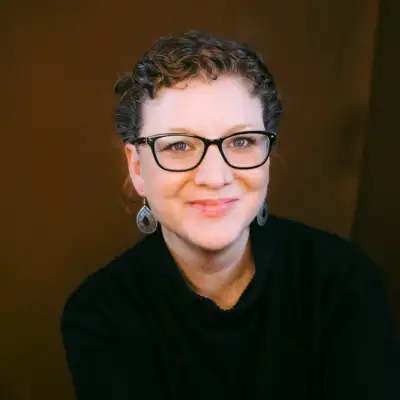
Guest: Holly Lahd
Host: Alexia Kelly
Alexia Kelly: Welcome to another episode of Navigating Net Zero, where we talk about what’s working, what’s not, and what’s next on the global journey to net zero. I’m your host, Alexia Kelly, and I’m absolutely delighted to be joined today by my longtime friend and colleague, Holly Lahd.
Holly has spent her career at the intersection of carbon accounting and energy strategy. From 2009 to 2011, she was part of the Greenhouse Gas Protocol’s Scope 3 and Product Lifecycle Standards project team — which is actually where we first met, when I was at WRI.
Holly Lahd: We even shared a wall!
Alexia Kelly: We did. Since then, Holly’s built deep expertise across both public and private sectors. She’s worked at Fortune 100 companies, gaining firsthand insight into how businesses set climate targets and execute decarbonization investments. She’s negotiated renewable-energy power purchase agreements in both regulated and wholesale energy markets, provided expert testimony in utility dockets, analyzed rate and market data, and even served as a state energy regulator.
Holly, it’s an absolute pleasure to have you here today — thanks for joining me.
Holly Lahd: Thanks for having me, Alexia. I’m looking forward to it.
Alexia Kelly: Let’s jump right in. You’ve had a rare vantage point — working in standard setting, as a regulator, and now on the corporate buy side. How have those experiences shaped the way you think about what’s working — and what’s not — in corporate climate standards today?
Holly Lahd: It’s definitely been a journey. I joined the Greenhouse Gas Protocol in 2009, fresh out of grad school, completely obsessed with how to account for emissions across value chains. I even found my first environmentally extended input–output dataset recently — on a CD-ROM! That gives you a sense of the era.
At the time, “Scope 3” mostly meant business travel. We knew there were many other sources of emissions out there, so the work was about defining and quantifying those across supply chains. That experience really grounded my understanding of both the potential and the limits of carbon accounting.
Later, I got deeply into electricity — which is one of the most vital and complex parts of climate strategy. It’s a just-in-time delivery system that everyone depends on, and its costs, emissions, and reliability are all tightly intertwined. Working as a regulator gave me a front-row seat to how electricity markets and policies shape what’s possible for companies.
Alexia Kelly: Let’s unpack that. Electricity is such a huge piece of the corporate footprint puzzle. Why is it so important — and so complicated?
Holly Lahd: Electricity is in everything, even things you wouldn’t expect. For most companies, Scope 2 — purchased electricity — makes up the majority of their operational emissions. But it also shows up all through the value chain.
Think about the electricity used to produce cement, steel, or even professional services. When you start analyzing those upstream processes, you realize how much embedded electricity drives Scope 3 emissions. At one company I worked for, nearly half of our Scope 3 emissions came from electricity used in our supply chain.
That’s actually good news, because we know how to decarbonize electricity through renewables and storage. But it also means that understanding how and where that electricity is generated is crucial.
Alexia Kelly: Exactly — and it’s not as simple as “inside my supply chain is good, outside is bad.” What do you wish you’d known back when you were helping to write the Scope 3 Standard?
Holly Lahd: I wish I’d understood just how much scale matters. Back then, we thought companies would soon have access to abundant product-level carbon data — that every good and service would come with an LCA and an emissions factor. That world never materialized.
We were focused on tracing every emission back to its source and assigning it to products. But in practice, if you want to decarbonize, you need scale — enough emissions in one place to finance big, impactful projects. You can’t finance meaningful renewable or decarbonization projects if your footprint is too fragmented.
So today, I’d tell people: bundle your impacts, look at the underlying energy sources, and tackle those at scale.
Alexia Kelly: Speaking of scale — renewable energy is one of the biggest climate success stories of the past two decades. Costs have plummeted and adoption has exploded, but it’s still uneven. How do you think about the roles of government policy and voluntary corporate action in that evolution?
Holly Lahd: The regulatory side deserves a lot of credit. In the U.S., state renewable portfolio standards created demand for renewables, and the REC tracking systems that supported compliance became the foundation for today’s voluntary markets.
But I always say: price doesn’t get renewable projects built — credit does. Developers can’t build projects without long-term contracts that convince lenders the project will earn stable revenue.
That’s where corporate buyers come in. By signing power purchase agreements, or PPAs, they’re providing the credit assurance that makes new projects financeable. Even if renewables are “cheap,” financing them still depends on creditworthy buyers.
Alexia Kelly: That’s such an important distinction. So much of this comes down to project finance and who’s willing to take the risk.
Holly Lahd: Exactly. I’ve seen projects that looked “in the money” on paper — two cents per kilowatt-hour — but developers still couldn’t get financing without a corporate offtake agreement. The analogy I use is buying your first house: a bank doesn’t care that you should make $75,000 a year based on statistics; they want to see your W-2.
Renewable projects are the same. Without a contract guaranteeing revenue, the financing doesn’t happen. That’s why voluntary corporate PPAs have been so important — and why we’ll need them for a long time to come.
Alexia Kelly: You’ve also been outspoken about the limits of our current greenhouse-gas accounting frameworks, especially as they relate to electricity. What’s broken?
Holly Lahd: The Scope 2 Guidance wasn’t originally designed to stimulate renewable-energy development — it was designed to decide how to allocate emissions among companies. It asks, “How do we divide the pie?” not, “How do we shrink the pie?”
That’s the crux of the problem. We’ve been using attributional accounting — dividing up existing emissions — to try to drive consequential outcomes, like building new clean projects. That’s not what the system was built for.
Alexia Kelly: Right — and that ties into the broader debate about attributional versus consequential accounting. Can you explain the difference?
Holly Lahd: Sure. Attributional accounting says, “This is my slice of the emissions pie.” It’s about dividing up responsibility within a system that already exists. Consequential accounting asks, “Did my action change the size of the pie?” — did I cause more or fewer emissions overall?
In a regulated world with carbon pricing, attributional accounting makes sense because the goal is risk disclosure. But in today’s voluntary landscape, where companies are trying to drive change, we need consequential accounting — we need to measure impact, not just allocate responsibility.
Alexia Kelly: I couldn’t agree more. Attributional systems give us static snapshots of emissions, which are essential for inventories, but they don’t tell us what’s working. That’s part of why we launched the Task Force for Climate Action Transparency — to create a space for companies to talk transparently about impact.
Holly Lahd: Exactly. And that’s why I always tell people: you can’t “better-data” your way to Scope 3 reductions. Even with perfect data, you’d still face the same structural barriers. If your strength as a company is creditworthiness and procurement power, use that to finance big, system-level decarbonization — not endless data collection.
Alexia Kelly: So if you could rewrite the corporate climate playbook, what would it emphasize that’s missing today?
Holly Lahd: First, be clear about what your numbers represent. Are you reporting the emissions allocated to you, or the emissions you’ve helped reduce? Those are different statements.
Then, recognize that not every company should have the same theory of change. If you’re vertically integrated, lean into supplier engagement. If you’re large and creditworthy, lean into market-making — long-term offtake agreements, early investment in new technologies, helping scale solutions like carbon removal.
Microsoft is a great example of the latter — they’re using their balance sheet to create entirely new markets. Not every company can or should do that, but we need systems that allow for multiple valid approaches.
Alexia Kelly: Exactly. We spend so much time debating the actions of companies that are doing something — while 85 percent of companies are doing nothing. We need more on-ramps, not more purity tests.
What advice do you have for companies navigating this period of uncertainty while the standards are still evolving?
Holly Lahd: Don Draper said, “If you don’t like what’s being said, change the conversation.” I think that applies here.
If you’re trying to reduce emissions, but you’re using tools designed to allocate emissions, you’re asking the wrong question. Stop waiting for perfect clarity. Be transparent, substantiate your claims, and use the right tools for your purpose.
We may not get new GHG Protocol guidance for years. In the meantime, companies should act — and report transparently using frameworks like TCAT’s. We can’t afford to wait.
Alexia Kelly: That’s exactly right — transparency and substantiation are key. So, last question: what’s giving you hope these days?
Holly Lahd: Believe it or not, I’m inspired by what’s happening in the electricity markets right now. It’s turbulent, yes — policies are shifting, costs are volatile — but it’s also a moment of incredible creativity.
I’m seeing companies step up with long-term offtake agreements for energy storage and new clean technologies, getting projects financed that wouldn’t otherwise happen. The market is responding.
Necessity is the mother of invention — and people will always need electricity. That keeps me optimistic.
Alexia Kelly: Holly, I could talk with you about this for days. Thank you so much for joining me, and for everything you’re doing to move the field forward.
Holly Lahd: Thanks, Alexia. It’s been a pleasure.