Subscribe
Share
Share
Embed
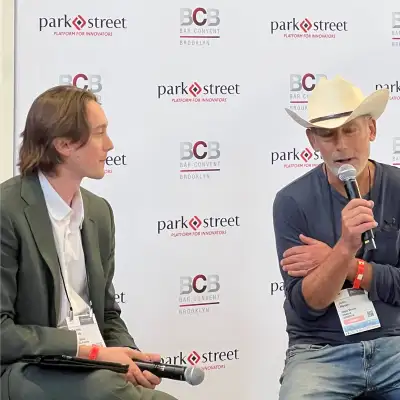
In episode 57, we've created a cross-episode with the Park Street University Insider Podcast.
I spoke to Emmett Strack, and we dived into the latest 2024 trends in the drinks industry.
We compared the US and Europe, talking about the cross-pollination of trends in the cocktail scene,
and in the overall bottom-up trade.
I hope you will enjoy our chat.
Time Stamps
0:00 Intro
2:16 Role of Convenience & Occasion
8:51 Ascension of Flavor
15:38 Pressurization
18:35 On-Trade In Europe
23:05 Euro Cocktail Trends
30:51 Gen Z & Drinking Occasion
36:42 Euro Drinking Categories
41:41 American Drinking Trends
46:14 Outro
About The Host: Chris Maffeo
About The Guest: Emmett Strack
In episode 57, we've created a cross-episode with the Park Street University Insider Podcast.
I spoke to Emmett Strack, and we dived into the latest 2024 trends in the drinks industry.
We compared the US and Europe, talking about the cross-pollination of trends in the cocktail scene,
and in the overall bottom-up trade.
I hope you will enjoy our chat.
Time Stamps
0:00 Intro
2:16 Role of Convenience & Occasion
8:51 Ascension of Flavor
15:38 Pressurization
18:35 On-Trade In Europe
23:05 Euro Cocktail Trends
30:51 Gen Z & Drinking Occasion
36:42 Euro Drinking Categories
41:41 American Drinking Trends
46:14 Outro
About The Host: Chris Maffeo
About The Guest: Emmett Strack
The MAFFEO DRINKS Podcast is a leading drinks business podcast delivering actionable insights for drinks leadership.
For founders, directors, distributor MDs, and hospitality leaders navigating the tension between bottom-up reality and top-down expectations.
20+ years building brands across 30+ markets. Each episode features drinks builders: founders, distributors, commercial directors, sharing how the drinks industry actually works. Not the conference version. Honest conversations.
Insights come from sitting at the bar.
Beyond episodes: advisory for leadership teams, subscription with episode deep dives and principles to navigate your own reality.
Beer, wine, spirits, Low and non-alcoholic.
Bottom-up Insights & Episode Deep Dives at https://maffeodrinks.com
Welcome to the Maffeo Drinks Podcast. I'm your host, Chris Maffeo. In episode 57, we've created a cross episode with the Park Street University Insider Podcast. I spoke to Emmett Strach and we dived into the latest 2024 trends in the drinks industry. We compared US and Europe, talking about the cross pollination of trends in the cocktail scene and in the overall bottom up trade.
Chris Maffeo:I hope you will enjoy our chat. One last thing, if you enjoy this podcast, you will also like the Mafayer drinks guides. You can subscribe free or paid on mafayerdrinks dot com.
Emmett Strack:This is Emmett Strach with the Part Street Insider podcast, and we are back today with a very special episode. I am here with my good friend, Chris Mafeo. Chris Mafeo is from the Mafeo Drinks podcast. Chris, how are you doing today?
Chris Maffeo:I'm doing fine. Thank you. Great to be here, Emma. Great to have you and great for you to have me on the podcast because it's a nice cross episode.
Emmett Strack:Absolutely. Yeah. Chris is out in Prague today, and I am in Philadelphia. We are gonna be having a conversation today on 2024 industry trends, some things that Chris and I are seeing right now in the market and how brands can potentially react to these things that will be good for them to be aware of. Chris is going to represent an EU perspective.
Emmett Strack:He spent a lot of time working and activating in The US as well, and I will be the voice of The US. So, Chris, do you want to give the people a little bit of context on your podcast and what the Maffeo Drinks Podcast does?
Chris Maffeo:Fantastic. I'm Chris Maffeo. I'm the founder of Maffeo Drinks and the related podcast, the Maffeo Drinks Podcast. I'm the host. I'm a drinks advisor.
Chris Maffeo:I come from a corporate background back in the days, and now I'm, I've been four and a half years on my own, on my solo journey. I cover Europe mainly, but also The U S and I advise brands on how to commercialize and build from the bottom up as I like to call it. So I'm a big advocate of taking the strategy down to execution and really understanding how to move the needle and how to go from one bottle to one case to one pallet.
Emmett Strack:Let's transition and just jump into it a little bit here. I think the first trend we want to talk about for 2024 is especially in The U S we're seeing a lot of shifting shopping behaviors and priorities change. And one of the most important factors for that is definitely convenience. Right? Convenience is something for consumers, I think, across the board, that's just becoming increasingly important.
Emmett Strack:And this is both filtering down in terms of halves of purchase and packaging formats. And what I mean by that is in terms of packaging formats, people want canned option. This is something we all know. They want things that are easy to grab, easy to enjoy, and ready. The RTD segment has boomed in The US, and I'm sure Chris can speak to it that it's moving in parity in Europe as well, but they also want frictionless paths to purchasing.
Emmett Strack:Right? So they want their favorite products to be available in channels and easily available to them. And that is partly due to online purchasing. They want something that's built in and integrated. And 44% of people, according to a Nielsen study actually say that a convenient location is the most important factor to them when they're choosing an in store location off premise to, to buy products.
Emmett Strack:So it speaks to the importance of things being available to them. And I think something we're also seeing is that the moment of purchase and the moment of consumption is shrinking. There are a lot of outlets reporting on that these days. That time between purchase and consumption is is getting less and less. Just as it relates to the RTD segment as well.
Emmett Strack:Right? Like, RTD brands is something Chris and I were talking about before we got on recording here. But RTD brands, I think there's this time old adage that they are built off premise. That's something that actually Merrily Kick told me when she was on the Parsheet Insider podcast representing Buzz Balls a couple months ago, but they're also increasingly being seen as an acceptable category to consume as well. So it's something that convenience is starting to shape the way we drink and the way we view occasions as well.
Emmett Strack:Does that kind of track with what you're seeing, Chris?
Chris Maffeo:Yeah, absolutely. I mean, like the, I think like when it comes to RTD specifically, I think it's still very much like when I, when we talk about Europe, I think there's always a, let's say a clarification to be done between, for example, UK, which is very being Anglo Saxon, like it's much closer to The U S in terms of consumption occasions, I feel versus Continental Europe, which is a little bit more traditional in that sense. But when it comes to convenience, I think it's something that goes across the board. And it's a trend that I'm seeing and working more and more with Us brands for myself is also that I also had to change my mind in, in the importance of off trade when building brands, because I've been known as the on trade guy for forever in the drinks world and in my previous companies. But I think there's a more and more interaction now between on and off premise.
Chris Maffeo:And what I feel is that like I've changed my, let's say the nomenclature of what I'm using, for example, on and off premise, I now call it bottom up versus top down trade because the bottom up trade is where you can actually engage in conversation in storytelling where consumers want to have a conversation about the brand, whether through a bartender, through a clerk, a wine shop, a bottle shop owner versus the top down trade where you scale the brand. So where basically like supermarkets, modern trade, all these big stores where actually you drive volume, but you don't drive much conversation with consumers. And coming from the pandemic, I feel that people got so used to drink also at home that before they used to be like on premise brands and off premise brands kind of thing. Like I drink certain brands when I go out in some cool cocktail bars and then I drink other brands when I'm staying at home with, which is a bit more like mainstream brands. But now you also, like when it comes to cool and craft brands, you want to build them in both channels because people, they not necessarily want to go out all the time.
Chris Maffeo:And then if you got consumers on the liquid on lips, as they, they say in the industry in a bar, then they may look for it in the surroundings of a bottle shop and they may want to bring it home. And then next Saturday when I'm having a host host, I'm hosting a party at home and I'm not going out, I want to have a similar type of experience and I want to drive those brands. So that goes back to what you were saying about canned as well, that sometimes you may do the journey the other way around. So you may have, you may start from a can in an off premise store and drink it at home and then you continue out and you will look for those kind of brands. And especially depending on occasion, I remember, for example, when I was working for Peroni, when I was building Peroni across Europe, we launched cans and they had been seen in specifically in Europe as a like like evil, cans are mainstream, they are 50 CL, they are like these huge cans and they are, they don't drive premium.
Chris Maffeo:But then for example, in Norway and Scandinavia specifically when I was working, it was very interesting because we launched it because we identify that there was this kind of occasion where people were going out on a boat trip and they wanted to have a beer with them and they couldn't drink. They couldn't bring bottles, glass bottles, and so on. So that was a perfect, it was like a sleek can 33 CL, very sleek and premium. And consumers were bringing that on that occasion because it was either like a picnic or going out on a boat trip. They wanted to have something specific.
Chris Maffeo:So it also goes back to the occasion on, on the pack that is the right for that occasion.
Emmett Strack:Yeah. And I think a big part of this is just meeting consumers where they are. Right? Like I, there's no doubt that being able to have your product placed on a menu in a bar delivers an educational opportunity that is definitely not there in the off premise. So that's really important.
Emmett Strack:But from a channel strategy perspective, if consumers want things readily available to them to meet certain occasions, I think consumers value a diversity of occasion right now.
Chris Maffeo:So they're going
Emmett Strack:to parties, they're going to music venues and you need to think about these things as you develop a well rounded channel strategy. So, yes, that is definitely really important. Another thing we wanted to flag was the importance of flavor to the modern consumer. This is something that's been developing for a long time now. You see it across categories.
Emmett Strack:You see it within gin. Gin has been a really exciting place to track over the last few years because, you know, you see the shift from classical styles of gin. You see more botanical influence. You see more like fruit flavors and varieties being put in. And it's a really, really cool place to be.
Emmett Strack:But, you know, there was a recent study by Erica Ducey of the Business of Drinks and Roger Brooks of Research and Marketing Strategies. It was fond of millennial and Gen Z purchase behavior. And what they found was that flavor as, was actually one of the most consistently desired attributes across both segments, millennials and Gen Z, to the point where it was actually a factor that was weighed more heavily than health or eco friendliness. And, know, we, me as someone who's representing gen Z, you know, grew up in a, in a world where there were unlimited options, flavor wise to all of us. So it's almost like consumers are trained these days to have a plethora of flavor options available to them.
Emmett Strack:And this is filtering down to how these types of consumers are interacting with the world. So having innovation from a flavor standpoint is almost crucial these days in terms of how you're shaping your strategy a little bit.
Chris Maffeo:Absolutely. Absolutely. I mean, I see it also when it comes, when I go to bars and I talk to bartenders, always ask how are people choosing what to drink? You know? And there's always, does the category people and the flavor taste profile kind of people know, because some people say like I'm a whiskey drinker.
Chris Maffeo:I'm a rum drinker. I'm a gin drinker. I'm a gin and tonic drinker. Some people are specific on a cocktail kind of thing. I'm an agroni drinker.
Chris Maffeo:And then some other people may take it from a flavor. They don't know what, especially those that don't know what to have. I, because I like to sit at the bar and observe like how people order, no. And they say like, oh, I don't know what to have. And okay, what do you, what would you like?
Chris Maffeo:Do you like something sweet? Do you like something sour? Would you like something bitter? And that is actually the entry very often is like, okay, I'll make something up for you. And this is very important when, especially when with more and more brands struggling within a certain category that I've seen zillions decks, the companies that I've been working with.
Chris Maffeo:And there's always like recruit from outside the category. The grass is always greener. Sorry. It's always greener now on the other side. And in the end, it's also like, okay, but how are you gonna do that?
Chris Maffeo:And you do, you can do it through the taste profile and the flavor because it could be ABV. We've seen that, like you mentioned on health and like less consumption on the low and low on, on raw materials. What are you actually using? Is it grain? Is it fruits, distilled and so on?
Chris Maffeo:But then also like from a flavor perspective, you know, like sweet, bitter, sour, or even like smokiness and so on. And you can transition, you know, I always use example. If you like, like for example, you can transition from tequila to mezcal, which is still agave, but then of course mezcal is smoky, but then maybe you can transition a scotch drinker, like an Islay scotch drinker that likes peated whiskey, which is also smoky. And you can actually introduce them to the agave category through mezcal rather than through tequila because you use smoke as the vehicle or smokiness as the vehicle to recruit people in or I dunno, maturation the barrel. So I always have, like, I have a friend of mine that is a rum drinker.
Chris Maffeo:He's one of those guys that is like, I'm a rum drinker. I don't drink whiskey. And I took him to the whiskey festival here in Prague. And the way I introduced him to, I I used a whiskey that was aged in x rum casks. And I said, try this one.
Chris Maffeo:And then it was smooth as a transition for him to enter whiskey. And then he said, oh, actually, like, I don't mind whiskey. But then when we were going further from the rum cask, like maturation, then he was getting more into, okay, that actually, this is a little bit too much for me. I like that kind of like sweet notes that rum is bringing in. So I think it's also very important again, like as we always discuss education, because some pew, you don't know what you don't know.
Chris Maffeo:Sometimes you may say, I don't like whiskey or I don't like gin, but it's what is it that you don't like?
Emmett Strack:I think you're making a great point about how it transcends categories, right? Flavor allows you to access different categories. If you know you like a certain profile, a good bartender, when you sit down at the bar, a good bartender will be like, how are you feeling right now? Like, what do you want? What is it like a bitter profile you're going for?
Emmett Strack:And then they will pair it to that specific feeling that you're having. So it's, it is like a factor that's almost with the amount of innovation happening in the industry right now, you're able to access these similar profiles from different categories, which is a really cool thing.
Chris Maffeo:Yeah. No, absolutely. And I, I mean, I, I remember for example, I, when I, I didn't like gin for a long time, but then I realized that actually what I didn't like was the citrus element because I always, I was always getting the gin and tonic with a slice of lemon and an Indian tonic water. And I didn't like the element of the Indian tonic water and the lemon. But then with the trend of like all these premium tonics that came in, I started with Mediterranean tonics and so on.
Chris Maffeo:And then gin, they were different and they were having a different serves like with cucumber or rosemary or thyme, or then all of a sudden I say, oh, actually, like gin and tonic, but it was like that citrusy element that I didn't like. So it was the sourness that I didn't like, not the gin, but I just assumed it was the gin. So, and I'm, I bet it's exactly the same with whiskey, with rum, with especially because many people, they may have a bad experience once, like they didn't like it or they had a bit too much of it. Then all of sudden they just ban it from their plan, you know, like set of choices. But then in the end it's like, okay, try from a different perspective, different angles.
Chris Maffeo:And then you can recruit a lot of people like that.
Emmett Strack:I, I, I know way too many people who had a bad night with Jose Cuervo at one point, and they're willing to get rid of tequila as a category. I'm like, well, you're right. You're missing the boat a little bit here. Exactly.
Chris Maffeo:No, but that's the, that's a typical, that's a typical situation, which is like, that opens the old Pandora box of the premiumization and trainings and education and, and all those nice things that we always talk about.
Emmett Strack:Premiumization is, is another interesting subject because like, I think obviously it was one of the most gripping trends in the industry over the last three years or, or so. And then in the last year or so, we've seen it moderate a little bit in 2023. So it's a big question on everyone's lips is, is where will premiumization go from here? Nielsen actually put out a really interesting study at the end of this past year where basically they took a set of survey members and they gave them a fixed amount of money. And they said, given this fixed amount of money, how would you spend this at a bar on premise?
Emmett Strack:So would you spend all of that money on five value drinks? Would you spend it all on one super premium luxury drink? And what the survey found was that 31% actually said that they would spend it on the super premium luxury drink as opposed to five value drinks. But the most significant result from this was that 39% said they would spend it on two high quality premium drinks. So when people go out, they are willing to sacrifice volume for quality, I think.
Emmett Strack:So it's definitely still a factor and still something that brand owners should probably be targeting right now.
Chris Maffeo:And I think this is really, it's really important. I didn't know, I didn't know this study, but you know, it's something that I'm always pushing. For example, I'm always using this kind of like three elements when I do a selling story for a brand to sell in on and off premise. I think about it that way myself, you know, it's like, okay, don't want to have the cheap offer. I don't want to have the very expensive one.
Chris Maffeo:I want to go with something in between where I know that I'm getting the bang for bucks kind of experience because I don't need that super, especially like people that are not trained from a palate point of view, they will not get it anyway. So there's no point in overdoing it and overstretching yourself and your wallet on a super premium offering, especially depends on who you are. I always give this example. It depends who comes to my place for dinner. And I'm not gonna open the same bottles for different kinds of people.
Chris Maffeo:Like some people I know that they don't understand anything about whiskeys or rum. And then I may introduce them with something more appropriate to them and to their budget. And then with some other people that I know they, I know that they are whiskey drinkers, then I will treat them with something more specific. But of course, if, if I'm having like 15 people over, I'm not gonna open the 26 year old whiskey bottle, a single malts like that, that will finish that night just with guys drinking it and, and then finishing the bottle, because it depends again on the occasion on who you with, are you celebrating something? Are you having just an easy night out and so on?
Chris Maffeo:So that middle ground plays a huge role into driving premium at scale.
Emmett Strack:Yeah, that's a great point. That's a great point. So we've talked about like consumer purchasing behavior and what's the trends that are motivating that a little bit. We talked about how flavor is transcending drink categories at this point. Now I think we want to get a little bit into on premise trends and speak to what we're seeing in The US and Europe.
Emmett Strack:There was a recent Nielsen report that said that consumers, I think in 2024 and beyond will be actually making a conscious decision to drink locally and visit these establishments. In The US as of, I believe it was October 2023, on premise total on premise drinking outlets were up 3.1% driven by neighborhood bars and sports bars. So it's definitely something that the consumers are still investing in and they do want to go out and have these experiences. I think we're in a very experience driven culture right now. But Chris, just really quickly, what's your take on the on premise scene in Europe?
Emmett Strack:What are we seeing over there?
Chris Maffeo:I, I think overall, I mean, there is a, on trade has struggled obviously like as everywhere in the world. I, I see that the more average bars are struggling and probably even closing down, many are even closing down, but the more premium ones and, and by premium, I don't mean like expensive. I mean like people that deliver a premium experience on something. It could be like best burgers in town kind of thing. I, that that's what I mean by premium.
Chris Maffeo:No. So you go there because it's the best pizza, it's the best burgers, it's the best sushi, it's the best cocktails. And then you see those outlets are as really rising because people want to go, like, I mean, also with inflation, things are getting more expensive. So I want to have an experience when I go out and the normal average experience doesn't give me anything. And then I may actually stay home and order something, take away and eat it at home.
Chris Maffeo:But then when it comes to, I want to have a great cocktail and maybe I go out and I want to have one single cocktail that night, but I still want to go out and have, and have that. And, and the same thing happens with other, with other categories. So I think it's very interesting. And also like it brings back to the previous point that we were discussing about the importance of building on and off premise presence for brands in the neighborhoods. When your, I always say when your home turf first, because that's where you actually can build this sense of, I used to call it like local bigness.
Chris Maffeo:You're perceived bigger than you are because you are in the five places that are relevant for the brand in the five bottle shops that are relevant for your brand. Yeah. And then people in the neighborhood will see, okay, this tequila or this whiskey is everywhere. It's huge. You are in 30 places all around the city, but you are in 15 in that neighborhood.
Chris Maffeo:And then all of a sudden it feels like wherever I go, I find it. And then it becomes part of my repertoire.
Emmett Strack:Yeah. And that's what, I mean, that's what distributors want to see from brands as well. They want to see you going deep and not wide. They want to see those reorder rates. They want to see consistency of your reach in a certain area as opposed to, you know, it's, we always say in The US, it's better to be in one state, but own that state rather than be in 45 states, but only selling 4,000 to 5,000 cases.
Emmett Strack:One state with a more substantial volume is far, far in a way, the better strategy. So I could not agree more.
Chris Maffeo:Absolutely. And I, and I think to wrap that up, like it's also that the fact that you also build credibility of your brand, because if you're coming from, I don't know, Texas or Florida or wherever you're coming from, like, you you need to show that you won in your home turf because otherwise, I always give the example. If it's like a gene from Rome and I'm from Rome and I've never heard of that gin. And when I called my friends back, back home in Rome, like nobody has ever heard it. You can be big in Germany, but it's a little bit of a gimmick because then it's like, yeah, but people back home, they never heard about your brand.
Chris Maffeo:So build that relevance with your kind of like friends and family and the inner circle of the city. And then you move out to the next, to the next level. And that comes from on trade perspective and from bars perspective.
Emmett Strack:Yeah, absolutely. And yeah, building, building that relationship in the entree is one of the most meaningful ways to do this. From a cocktail perspective, we have seen kind of a shift in, in The U S in recent years with the popularity of certain drinks. So just recapping 2023 a little bit. The espresso martini had a huge year and it was something that entered the top 10 in terms of the most popular cocktails in The US on premise.
Emmett Strack:But we're also seeing like applications with coffee in general, be a little bit more ubiquitous and take the form outside of espresso martinis. It's just a really popular base as a base ingredient. And it also offers a little bit of a reliability point for consumers. There's like a functional caffeine hit there that I think people are really interested in as as they edge towards more functional flavor profiles. Chris, earlier you mentioned Negroni as something that people are experimenting with, and I think Negronis offer a really interesting platform for flexibility.
Emmett Strack:As a cocktail, you can use in different bases. There are lots of variations that can come from it that actually have made it also one of the most successful cocktails in The US. And I think that this speaks to it potentially being a big year for gin in The US on premise on the whole. It's definitely one of the categories that's benefiting from greater skew innovation with kind of flavor and botanical applications. But as of mid summer twenty twenty three, a collection of venues in The US reported a 44% increase of their order rate year over year for the Negroni.
Emmett Strack:And it's just something that's so flexible. Are there any cocktail trends you would like to bring up for what's popular in Europe right now?
Chris Maffeo:Rightfully said, I mean, like the Negroni is a, is a typical one that like, I mean, Italian, it's one of my favorite. And I remember the days where I was living in Stockholm in Sweden and my friend that introduced me to the Negroni there, we used to have it on Americano or Negroni depending how, what the intake we wanted to have, like with soda rather than gin. And, and I remember many times when I asked for an Americano, I got a copy because the level of ignorance in the sense of like not knowing was huge at that time. And now everybody talks about Negroni like it has always been there, but I remember the days fifteen years ago when nobody knew what Negroni was and people were scared of the Negroni, like, because it was one of these spirit forward cocktail and so on. So it's very interesting because I think it brings back to the relevance of the different categories because with the raise of all the amaros and all the bitters and the vermouth that has been happening that has driven because everybody were talking about the Negroni all of a sudden it wasn't anymore like a Campari realm anymore.
Chris Maffeo:It was like the Vermont brands were talking about it. The bitter brand were talking about it. The gin brands with the proliferation of gin all across Europe, especially they were talking about it. So all of a sudden, like if everybody talks about it, then it becomes a thing. No?
Chris Maffeo:And then I think another element that is interesting for me is that the element of like cuisine and how does because there's the trend that is happening is also like I mean, I remember when I was there, you've got cocktails everywhere with every, like, restaurant. No? Every restaurant has got a cocktail bar basically or, you know, a cocktail list. It's very different in Europe. I mean, like in London, maybe you will find it, but in Europe, you wouldn't find it.
Chris Maffeo:You know, you know, you would find only the basic stuff like a spritz. And I mean, if you're in Italy, would make an egg rollie, but, you know, nobody would make an old fashion in a in an Italian restaurant kind of thing. So I think there is an element of these cuisines that are trending and they bring their cocktails with them. So if you take like Latin American, like Peruvian with the Pisco Sour and all the Nobu and all the fusion cuisine, like Japanese, Peruvian, Japanese, Brazilian,
Emmett Strack:you know,
Chris Maffeo:and a snack, They bring certain cocktails with them. Italian cuisine, of course, like trending almost everywhere. And with the Negroni and the spritz and everything when it comes to Mexican cuisine that is trending everywhere. I mean, like in The U S you've always had basically, but in Europe is quite a new thing to have like quality, top quality Mexican restaurant that they used to be just some basic chains. Now you go and you spend €200 on a super premium dinner in a Mexican restaurant.
Chris Maffeo:And that comes with a nice range of agave spirits and they will push the margaritas in it, which has never been, you know, margarita hasn't really been a thing in Europe prior to that. Like it was like something you would get on a summer beach resort. And it's very interesting how all this trend cross pollinate each other, whether it comes from food or where, I mean, you mentioned espresso martini is also the renaissance of coffee, all this craft coffees that came out. There is all of a sudden a different kind of attention to certain element to the espresso, to the beans and everything. And that drives something about the martini.
Chris Maffeo:And there is this this new coming back of the old cocktails that all of a sudden were forgotten and now they are they're back.
Emmett Strack:Yeah. I think you're absolutely right. And I think it speaks to something that we've been dancing around for a lot of this conversation, but haven't actually hit on yet, which is that consumers are more increasingly willing to explore and they really want to have a a sense of of of discovery with a lot of these things. Like they want to be trying new things and not only that, but they're drinking across categories. Like it's much more likely for someone these days to sit down in a bar, start with a cocktail, move on to a craft beer, or even drink between spirits categories in one sitting.
Emmett Strack:So it's something that's really helping all of these fringe categories. I'm I'm sure in Europe too, with agave spirits and the margarita as something that might have been on the periphery, but now it's like more acceptable for a consumer to sit down and enjoy that on any occasion. Almost they need less of an excuse. While there are drinks for sure that lend themselves to certain food choices or certain occasions. This sense of exploration is definitely driving an interest in a multiplicity of those cultures and occasions.
Chris Maffeo:Yeah, absolutely. And I think the, let's say the, the foot in the door or the excuse, you know, facilitate that to bring it at scale because your exploration can be just like relegated to certain type of people. But then when you give them the ex the excuse, so to say, I remember like going out for dinner with my wife, one of our favorite places here in Prague. And like they have, they're famous for the jalapeno margarita there. And the waiter offered it because we were having some tacos as a starter.
Chris Maffeo:And then that was a nice bridge for my wife to say, okay, like I'll try that. And then all of a sudden, like she had a couple and then she said, I didn't know I like Margherita because she never thought about it, like in, in that sense. But you know, if you build the bridge is a little bit like you having fish and you want to have white wine. Like if you build that kind of combination or a red wine with a steak, then you have that it's you feel it's almost mandatory for that type of food to enjoy that. I'm having a Peruvian influenced meal and I need to have a Pisco Sour as an aperitif because that's traditional and otherwise people get offended kind of thing.
Chris Maffeo:And then all of a sudden it's like, oh, actually I like this, this taste profile and I would repeat it.
Emmett Strack:Yeah. Yeah. And I think this is definitely more true for some demographics as opposed to others. When you came to Barcom at Berlin last year, you gave a really great talk on gen Z and the importance of kind of winning these demographic over early on in the life cycle. Yes.
Emmett Strack:And I think gen Z is someone or is a, is a group of people who definitely are more flexible with their associations with these things. They don't sit down and have a steak and immediately think red wine. The amount of variety of drinks that they've had available to them their whole lives makes them a little bit more inclined to branch out a little bit. And Gen Z is also a demographic that's changing the dynamic of the on premise a little bit too. So we talk about how the biggest influences over the last couple of years have been convenience and at home.
Emmett Strack:Right. But study was done and gen Z actually their gen Z preferred place to drink the spirits category is an on premise occasion. That's even beating out places like bringing spirits to a party or having it for dinner or as a treat. So this is like a segment that really likes to pair imbibing with occasion. And so I think like with an eye towards brand building, that's something that brands should be really aware of taking advantage of the on premise.
Emmett Strack:And I think that this is something that you could definitely speak to really well, Chris, but education of gen Z consumers, while I think it needs, it does happen a lot in the on premise, it needs to start happening before they get to the bar. Because we know that a lot of these consumers come to the bar already knowing what they wanna try. So engaging them on social media, getting them to your brand's website or the bar's website where your brand is placed is a really important thing in terms of driving that, their motivation. Is that, is that something that kind of tracks with what you see?
Chris Maffeo:Yeah, absolutely. Absolutely. And I also think that there, there is an element of what I see and how I'm always pushing as a narrative that, you know, like to build the category before building the brand, know, because if you build education, like if you do a training, a brand training, explain you may have a gin brand or a tequila brand, but speak about the gin categories, speak about botanicals, speak about what am I supposed to taste in the gin category as such, then tell me the role of your brand within that. And the same with agave spirits. Is it like, is it smoky?
Chris Maffeo:Is it how smoky it is? Like, what's the level of the, like the agave? What's the retention of the water, whatever in the in the agave plant based on species and tell me like, what what's in it for me rather than what's in it for you? Because very often, and this is what speaks a lot to the, especially to gen Z as a generation now, because it's like, I don't care your narrative. Like, I want to know what's in it for me.
Chris Maffeo:What the, how does that affect? How does that water retention affect the flavor? I don't care about your two hundred years generations of distilling. If it doesn't bring anything to me, like, I want to know what am I supposed to taste? These botanicals you're talking to me about these 35 botanicals, but which one is the main one?
Chris Maffeo:Which one is the one that gives this flavor? How can I explain that? And the more you can educate about the category and you give free choices, then the more people will actually be loyal to you because you are the one, you are the brand that facilitated that knowledge. And you explain to them, okay, now I understand the whiskey world. Now I understand the scotch whiskey.
Chris Maffeo:Now I understand American whiskey because this particular brand, I was there and they didn't talk just about them. They explained it to me with other competitors that didn't talk badly about their competitors. They just explained, they didn't say they were the best one. They explained why they were different and why they were right for me for that occasion. And I think that's very important for brands to, to understand, like focus on one occasion and stick to it rather than trying to grasp every opportunity and try to say that you're the best for whatever occasion because you're not.
Emmett Strack:No, it makes
Chris Maffeo:so You much simply cannot be.
Emmett Strack:Yeah. It makes so much sense to me. If you build that kind of meaningful connection, you will generate that loyalty down the road and they'll keep coming back to you as a source of education. And just because they've formed that bond from a flavor perspective or from like a familiarity perspective, they'll be more likely to come back to you. That makes a lot
Chris Maffeo:of sense. And it's almost like, like there's some guys that I follow that I love, like they're Americans as well. And they call it like the non selling life. It's almost like that, at least that resonates very much with me and my style. Like I don't like to sell for like as a, as a mainstream kind of selling.
Chris Maffeo:I think that's been
Emmett Strack:sold to either. Like they don't like to feel like they're being targeted in that way.
Chris Maffeo:Exactly. And that happens to everyone. No. And then I educate and the information is out there and whenever you will need it, you'll come to me. And I see it myself, for example, like people say that I've been listening to your podcast for one and a one and a one year now, like it's one year old now.
Chris Maffeo:And then they, that's the moment where they decided to reach out to me and ask me for being their advisor. But sometimes it takes twelve months or six months or nine months. And you don't rush it into trying to monetize everything as soon as possible, like trying to sell the bottle after, after that training, just leave it there and just focus on building distribution. And then people will talk about you and especially generation Z, they will think about it and they will, they will digest that information and then they will make it theirs.
Emmett Strack:Wow. That's such a good point about building organic connections with consumers as opposed to, like, like you said, monetizing every moment. It just does not need to be done that way. So that's, that is a really valuable point. Chris, let's talk about trending categories in Europe a little bit.
Emmett Strack:So that is, that's something that we are monitoring and we'll wanna delve into the differences between The US and The EU in terms of what's trending there. So why don't you start? Why don't you kick us off with this whole category discussion? What's happening in Europe from your perspective?
Chris Maffeo:Yeah. I think in Europe in general, I think the biggest difference, we take the two main categories that are representing, I think us and Europe are probably agave spirits on the American side and gin on the European side. Yeah. And I think like, I mean, when I look at all the trends on the best cocktails and the top trending cocktails in The US, there's always Margherita. Any city, it could be number three, number one, number five, number seven, but there is Margherita there.
Chris Maffeo:No? So for me, agave, it's something that it's people are getting more and more into that because as you said, you had a bad experience back in the days with tequila boom or those kind of drinks. And, but in, in Europe, I think like gin is of course, there's a, there's been a proliferation of brands. So gin category is struggling because this is a bit of, it's in a moment of understanding where it wants to go because there's so many gin out there. So there is a quite a big fight.
Chris Maffeo:I think it's similar to agave spirits in The U S let's say. Vermouth is very, is trending here. And I mean, it's also driven by what we were discussing before about the Negroni. There's more and more talking about Vermouth and also because, I mean, having wine as a base is quite especially in the wine drinking countries, Italy, Spain, France. It's it creates quite a interesting bridge from the wine aspect.
Emmett Strack:Yeah. It's something that's benefiting from the rise of cocktail culture as well. Right? Like you can use that as a as an ingredient in a lot of cocktails and it pairs very well. So I'm sure that's Exactly.
Chris Maffeo:And I'm always asking the question when I'm talking to my friends or clients that are doing a vermouth. And I always say like, it's a chicken and egg question is like, was vermouth driving the rebirth of Negroni or was Negroni driving the rebirth of, of vermouth? Like, I think nobody really knows the answer. Now it's a little bit of a chicken and egg kind of dilemma. But then again, like whiskey, I think whiskey is one of the interesting ones.
Chris Maffeo:More and more people are getting introduced to whiskeys. I mean, I work with whiskey brands every day and I'm getting more and more into it. And I wasn't a whiskey drinker myself until three, four years ago. And I love it. And I love the element of all the, especially like the aging, the maturation, all the playing that you can do with the barrels.
Chris Maffeo:And so there is, I would say the whole element of this aged spirits that are more and more trending and especially with the world whiskey. Was talking to, a journalist friend of mine in Italy and they told me that this year, this coming year, there should be like, I don't remember if it's 10 or 15 Italian whiskey brands coming out. Oh, wow. They've done the aging. So they've done the minimum of three years and they can start to release the bottles.
Chris Maffeo:And that's very interesting. And I mean, like, it's something that has never happened. Like there's there, there were like few brands here and there. So there there's a lot of these categories that are seeing traction. There's French whiskey, German whiskey, even like Czech whiskeys here in the, in The Czech Republic.
Chris Maffeo:You see more and more local, whiskeys. And I think that's also a very interesting trend for me on where do we draw the line? I mean, I'm Italian. I'm very patriotic on food and beverages when I see all these denominations and appellations and so on. And, but then again, like when you think about it more holistically, you say, actually there's nothing wrong in having a whiskey that doesn't come from the major whiskey countries.
Chris Maffeo:No? Like it doesn't mean that it has to be bad just because it doesn't come from there. Like, like it was for the new world wines. So there is an element of that that is very interesting to think about it. It's more of a philosophical kind of like debate.
Emmett Strack:Yeah. Like your morals and your aesthetics are having a fight a little bit.
Chris Maffeo:Exactly. I mean, like, is this, is the same we were discussing, like on Agave spirits. I see more and more articles about agave being harvested and cultivated in Australia, in India, the countries that allow that kind of weather. And of course it's making a challenge to the agave spirits in Mexico, but then it's again, Okay. Don't call it tequila, but okay.
Chris Maffeo:Like it, it could be very good, especially on the restraint that the production of agave spirits are having like that they are putting on the ecosystem down in Mexico.
Emmett Strack:Yeah. Yeah, absolutely. I mean, you see a lot of us brands importing agave just to make their own agave spirit. It doesn't have the designation of origin and they can't call it tequila, obviously, but just to meet the demand for agave in The US, like this has been one of the most well established trends and honestly something we barely need to go over because it's something everyone's aware of at this point. But the margarita remaining the kind of comfortably the top choice for the most imbibed cocktail in The US on premise just from a value and a velocity term.
Emmett Strack:It was up in the 2023, 20% from what it was in 2022, and it's something that, like, it's just the most popular base spirit in The U S right now. So it'll be interesting to see how that evolves in the next couple of years as, as supply kind of clashes with demand a little bit.
Chris Maffeo:Yeah. And what do you see in The U S like, especially, I mean, like with the brands, for example, you work with, like coming from outside The U S trying to enter The U S like, do you see a, a difference in terms of categories or?
Emmett Strack:Well, it's interesting because I think specifically speaking to how the Europe and The U S kind of intermingle, like The U S remains the top export market for European spirits. A lot of these American consumers are seeking authenticity. They're seeking expertise. They're seeking seeking something that's hyper local, which is what I was thinking of when you were talking about world whiskeys. While these traditional cultures might have
Chris Maffeo:a little bit of a
Emmett Strack:of a problem adapting to it, it's still like something people want to see like local terroirs and local grains and these original whiskey coming out. So I actually, I do think EU spirits are pretty well positioned to align with kind of current American consumption trends because they offer quality products that uphold these sustainable values and provide people with interesting ingredients that can be paired with cocktails. But from, you know, a US category perspective, US consumers right now are, I think, particularly fascinated with Asian spirits on the whole. That's something that, that we're really seeing. There's a real interest in bars with Japanese soju, Korean soju, baiju from China.
Emmett Strack:These are categories that have been on the fringe, but are picking up more and more traction in The U S and yeah, so I think that's, we'll start to see a lot of those fringe categories gain more traction in 2024.
Chris Maffeo:This is something like, I think in Europe is still on a quite niche. You have to go to specific ethnic restaurants to find those brands. It's still not there yet. But I, I see more and more mentioning of that, but I think the first ones to arrive to Europe is gonna be the agave spirits. The agave trends is probably gonna be huge.
Chris Maffeo:It it has been held a little bit like because the focus is so much on The US and The US is consuming so much of agave spirits that then Europe has quite difficulties in actually getting the goods down here. So I think people are, it's building this kind of momentum and anticipation of when can I get it? When can I get it? When can I get it? Yeah.
Chris Maffeo:And I think the moment that they open the doors is going to really enter the market, especially because of the, the vegan components, like the, all these health aspects that are like this kind of like better for you aspects of the agave still in from a responsibility perspective, you can steal alcohol, but then as an ingredient, agave is getting so much of a good publicity that that is building this kind of momentum of like, okay, I don't wanna drink, but if I wanna drink, I'm gonna have an agave spirit.
Emmett Strack:Yeah. Yeah. And from, just from an outsider perspective, it's palpable in Europe. Like having gone there for a bar comment in Berlin over the last two years in 2022, like it was incredibly niche. You were lucky if you found more than five agave brands in that whole mass of convention, but there last year, it was all the rage.
Emmett Strack:It was on the docket for education seminars. You saw lots of brand popping up with that representation. So, and that's where it starts. Right? So I think a more and more substantial trend in Europe.
Emmett Strack:We were talking about before we got on the call, how a lot of European cities that are on the cutting edge end up taking their cue, especially regarding cocktail culture and spirits from a lot of these American cities. So it would make perfect sense that that would follow and, and just continue to, to build more, more traction as we go on here.
Chris Maffeo:Yeah, absolutely. And, and I think it's very much like, it's those kind of like lighthouses in the different cities with the 50 best bars and with all this bartender community mixing up and like people coming and going and moving country and so on. See, that's all for today. If you enjoyed it, I have a small ask. Please rate it, comment and share it with friends, and come back next week for more insights about building brands from the bottom up.
Chris Maffeo:One last thing, if you enjoy this podcast, you will also like the Maffeiro Drinks Guides. You can subscribe free or paid on mafeirodrinks.com.