Subscribe
Share
Share
Embed
A how-to guide for MPs and policymakers to change the law to improve women’s lives.
Reading this today would be a very for me personally, I think it would be quite emotional. Like, I think it's quite it's really important. So I think the, like, the pressure to ensure that the need, the importance is communicated. There's that pressure on the one hand, but also knowing that there is just hate or pushback already present in the environment there would be really difficult.
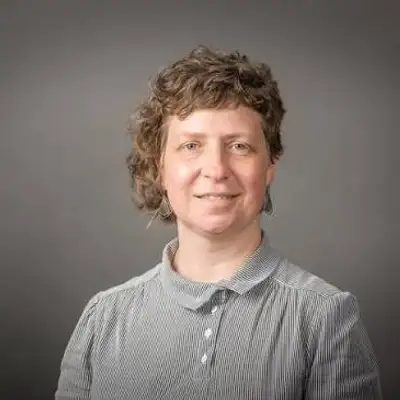
Kate Seear:That's Amira Aftab, senior lecturer at the Macquarie Law School, Macquarie University. And shortly, you're gonna hear more from Amira about what she finds so difficult. This is Feminist Acts. My name is Kate Seear. I'm a professor of law at Deakin Law School and one of the hosts of this podcast series.
Kate Seear:Now lawyers often talk about the rule of law. And by that, they mean that our laws apply to everyone alike regardless of who they are. This is a fundamental democratic principle, ensuring the fairness of our legal system. But what happens if the same law has a different impact on people because of who they are? Would that be compatible with the rule of law?
Kate Seear:Is that fair? And can we call ourselves a democracy if these uneven effects exist? In a society such as ours, where 32% of us have been born outside Australia, how can we make laws that work for all women, including those from religious and cultural minorities? In this episode of Feminist Acts, we're going to explore this issue by looking at family law, one of the main ways that people come into contact with the legal system. And we're going to focus on one of the key ways that people are encouraged to resolve their issues after they've separated, family mediation.
Kate Seear:Later on, we're going to be joined by Balawyn Jones, who's a senior lecturer at the La Trobe Law School at La Trobe University and an expert on these issues. But before we get to that, let's hear more from Amira. Amira's going to share with us her proposal for law reform. And after that, she's gonna sit down with my colleague, Becky Badigole, to talk about why this reform is so necessary. Now let's go to Amira.
Kate Seear:She's in the House of Representatives in the Commonwealth Parliament.
Amira Aftab:I move. Australia is promoted as a multicultural country, yet our institutions, including the law, do not always recognize diversity within our communities. This means the needs of different groups, especially women from diverse cultural and religious backgrounds, are often overlooked. With the potential to display inherently feminist values and principles and empower women, family mediation is a promising avenue to allow these women the much needed opportunity to speak and be heard. Fundamentally, family mediation offers flexibility by allowing cultural and religious norms as well as personal values to guide the process.
Amira Aftab:This is important when we consider the intersection of women's different cultural and religious identities. Looking at the example of faith based communities for a moment, religious people often find themselves subject to two different systems as they navigate family disputes in accordance with both state and religious laws and values. The bill considers the diverse needs of parties and introduces supports to strengthen the benefits and outcomes of family mediation. Recognizing the way that current models of family mediation are Western centric in values and do not adequately recognize the nuanced cultural and religious needs of some parties to family mediation, the bill introduces space for respected members of cultural and religious communities to be involved as part of the family mediation process. I commend this bill to the House.
Becky Batagol:Doctor Amira Aftab from Macquarie Law School, welcome. It's fantastic to have you here.
Amira Aftab:Thanks for having me.
Becky Batagol:Did it
Becky Batagol:feel different giving that speech to Parliament? Bit different to your usual way of speaking in front of a lecturer or giving a paper or speaking to colleagues?
Amira Aftab:Yes, absolutely. The process both in reading it now as well as writing the proposal is very different to what I'm used to in terms of academic writing, research, presenting a lecture. I think a lot of research, as we're typically used to it, is about interrogating the issue, identifying the gaps, looking at the why and the how and unpacking that. So I'm used to looking at things from an intersectional lens, engaging with marginalised communities but not really thinking about solutions because often our academic work stops at that point. We get to okay, well this is what's going on, here's the lived experience, we need to do something about it, here's the reform.
Amira Aftab:And so I think both drafting the bill as well as reading it is very different. It has to be quite definitive and persuasive in a way that, yeah, not used to doing that always.
Becky Batagol:So how would it feel being a Muslim woman standing up in parliament? We recently in Australia had a federal senator mock Muslim women through her dress. How would
Amira Aftab:it feel being a Muslim woman in parliament? I can't even imagine how the Muslim senators in the Senate actually felt. You could definitely see it in responses. For me personally, I think getting up and proposing a reform that is asking and really trying to persuade accommodation is difficult enough, but then when there's specific barriers and responses, stereotypes, fear mongering, I think reading this today would be a very for me personally, I think it would be quite emotional. I think it's really important.
Amira Aftab:So I think the pressure to ensure that the need, the importance is communicated. So there's that pressure on the one hand but also knowing that there is just hate or like pushback already present in the environment there would be really difficult. Thank you for
Becky Batagol:being in our Feminist Parliament today. You're very welcome and we love having you here.
Amira Aftab:Yeah, I'd much prefer to be in a Feminist Parliament for sure.
Becky Batagol:Amira, how would you describe yourself and your work to someone that you just met at a barbecue or doesn't know much about law?
Amira Aftab:Oh, I don't know if I've got my elevator pitch down for the barbecue very well, but how would I describe myself broadly? I would say I'm a socio legal researcher who's really interested in how state institutions in particular, but I've had a long focus on family law, how these institutions either work for and sometimes don't work for people, but particularly people from diverse backgrounds, from marginalised communities. I'm interested in the gaps, what the law's promising and what people actually experience when they're going through conflict, family conflict or difficult situations, so navigating divorce, child custody, as well as family violence. And as part of this, my work really involves listening to communities and it's about the lived experience. So taking an intersectional lens to those experiences that are shared within community and thinking about how we then go about, you know, looking to reform institutions.
Becky Batagol:You've said, Amira, that you identify as a feminist. What does that mean to you?
Amira Aftab:To me, feminism means working towards gender equality. I think a lot of people would agree if you say you're a feminist. But also ensuring women have genuine agency and choice within their lives, and I think that's why for a large part of my research career, I've been really interested in unpacking what's the landscape, what are the constraints that this agency's exercised within. But importantly, it means recognising that women and women within diverse cultural communities are not homogenous. They're not monolithic groups.
Amira Aftab:There's diversity in terms of how women would articulate agency for how they would understand equality. And also the lived experience is really different. So they'll experience different challenges based on their individual circumstances. So for me, it's really important to not impose one vision or one way to achieve empowerment and greater agency and choice for women, but really thinking about creating systems that allow women to define what that means for them, what does justice and fairness mean for them. And at the same time, the overarching, I guess, approach in my feminist approach is to think about always ensuring basic rights are protected.
Becky Batagol:As people interested in law reform coming from a feminist perspective, can we talk about women as a group? Is that even a useful term anymore? I guess I'd have two parts to
Amira Aftab:responding to that. One, I think when we're talking about family law, the unfortunate reality that continues today is that when we look at statistics, whether it's around family violence or, you know, experiences in family mediation, it is quite gendered, the statistics show that women often experiencing the power imbalances or experiencing violence at higher rates. And that language is used, and so I think in a sector where, you know, we're still operating in the binary in a sense, I think using women
Becky Batagol:Do you mean the binary of men and women? Yes,
Amira Aftab:the binary of the terms of men and women. It's still the reality I think in the family law and legal sector, so even though we hear that acknowledgement of same sex relationships having parallel issues when it comes to child custody and divorce and family violence, that language is just not taking place, it's not visible in the sector. And I think the other part for me then it's really important to, okay, I'm going to use this term women because that's what we're hearing and we're seeing, but we need to really interrogate what that means. So for me, and I mention it in my second reading speech, I use the term in an inclusive way.
Becky Batagol:What are the kinds of issue that trans women, that is women who are not born as women, from faith based communities and from culturally and linguistically diverse backgrounds might face? What are the key tensions in being gender and trans inclusive as a feminist on this topic?
Amira Aftab:Thanks for the question. I think it's a really important one. Trans women from faith based and culturally and linguistically diverse communities face compounded marginalisation and discrimination. So they are experiencing transphobia often within their cultural and religious communities, and this can include rejection, exclusion, or even violence. But then on the other side of it, even within the state system, the state institutions, the law, they face additional barriers to accessing services.
Amira Aftab:And that's not just due to their gender identity. It's due to a lack of competency around both their cultural identity and their gender identity. So they might experience, for example, their gender identity being dismissed or invalidated in culturally specific ways, and they may have particular concerns around how religious or cultural community representatives would respond to them in a family mediation setting. And I think that's one of the tensions I really grappled with both in my proposal but also I think broadly as I think about it. We can't ignore it.
Amira Aftab:There is this tension. I don't have a solution. I don't I guess what I've written into the
Becky Batagol:proposal is that this idea of parties consenting to having community representatives or leaders as those specialist persons involved in the process, That was like one way to maybe mitigate these experiences, but I know that that's not a fail safe approach. You focus on the area of family law. We know that's the area where people are most likely to come into contact with the legal system because their relationship has broken down. It may be quite a stressful time, quite a dangerous time in some circumstances. And they need to work out where kids are going to live, how they're going to divide property.
Becky Batagol:What's the problem that your reform proposal's responding to?
Amira Aftab:The problem is that our current family mediation framework, or as it's officially known in the law, the family dispute resolution process, while well intentioned and there's a lot of value to it, does operate from a very Western centric model. It doesn't adequately recognise the diverse cultural, linguistic and religious needs of many families in Australia. And this particularly affects women from culturally and linguistically diverse and faith based communities. So on the one hand, I would say going back to there's a gendered aspect to this problem because women from these communities are often facing compounded disadvantages. But, yeah, there's this inherent gap where it's not recognising the nuance of how culture and religion shape that experience when someone is coming into the family law system, when they're having that relationship breakdown or experiencing violence.
Amira Aftab:Like, what does that actually look like and what does it mean? So the proposed law introduces cultural, linguistic and religious needs assessment during the intake process of the family mediation. So we already have in the mediation model an intake as part of the process. So the proposal is simply saying that as part of this intake, we're not just screening for family violence, but let's try to get to, or at least start to identify what are the cultural needs or the cultural values, are there language barriers? What impact might that have in a family mediation?
Amira Aftab:And where these needs are identified, and of course, it's about both parties consenting, the bill allows for specialist advisers to participate in the family mediation process alongside the family mediator. So we're not doing away with the family mediator. They're still overseeing the process and ensuring that it follows the regulations as they're supposed to in the family law context. But the specialists are there to bring in that culturally specific or religiously specific knowledge to help unpack and understand those nuances. So these specialists can include respected cultural and religious community members, representatives from cultural or religious community support services.
Amira Aftab:So with these, I was really thinking about the multicultural support services that we do see with long histories spanning decades in our communities across the country. But also as part of this, you know, emphasizing a greater role for legal practitioners as well as interpreters because one of the things that we do see come up a lot in the family mediation space is how do we navigate the language barrier, because it is often one of the first barriers to seeking help and actually being able to participate meaningfully in a family mediation. And so how does it help? It helps in several ways. So first, it acknowledges and validates the party's cultural and or religious identities as being relevant to resolving family disputes.
Amira Aftab:Second, it provides family mediators with the and we use the term cultural competency because that is the term used in the sector, but it's providing them with that knowledge and understanding that they may feel not too confident in navigating. Third, it can help identify culturally specific forms of manipulation or control. So as much as we have family violence screening as part of the process, again, the reality is many parties who have experienced or are experiencing family violence do end up in mediation. And what happens then when you have a family mediator who doesn't understand those, like, culturally nuanced forms of control and abuse? So, like, this is really about responding to that as well.
Amira Aftab:And fourth, it's really aimed at creating a more comfortable space for parties to participate meaningfully. And finally, the involvement of legal practitioners in an advisory capacity is to really try to overcome the access to justice issues that we see as a reality in the day to day for many parties who are navigating family law. If we embed that into the framework, perhaps we can go some way to overcoming that as well.
Becky Batagol:So I'm wondering if you can take us through some of the basics of what family mediation is and maybe through an example of someone who's separating from a faith based community or from a culturally and linguistically diverse community. I wonder if you could paint a picture for us, Amira, of what it might actually look like for someone who's experienced relationship breakdown. Okay, so to paint
Amira Aftab:the picture here, there's a number of pathways that someone might take, especially from a culturally diverse background or coming from a faith based community. Well, one pathway is, and this is a fairly typical experience, their first point of seeking help is really informal. So it's often they might speak to a friend, but it could be that unfortunately the first time they come into contact with state services and institutions is maybe the police if there's family violence involved and they refer them on to maybe a community legal centre or a support service who then kind of starts mapping out the next steps and eventually that leads them into the family law system and into family mediation. But that's not to say that
Becky Batagol:So do they have to go to family mediation?
Amira Aftab:Well, it is compulsory in the Australian context. So in 2006, the family law reforms that came in introduced compulsory family mediation for parenting matters. There are exceptions, like if there's the presence of family violence, you can skip family mediation and go straight to court, but parties need to participate in family mediation. And the idea was really to divert and make it less adversarial, to make it more autonomy enhancing for parties to be involved in coming to an agreement. But, a lot of parties, especially from culturally diverse communities, may have never heard of family mediation and so the pathway into that process is quite different.
Amira Aftab:It can be quite informal. For someone who has access to a lawyer, the lawyer will talk them through that so that you can imagine would be a more seamless process than finding it out as you go along by word-of-mouth and being referred from person to person, which is a common experience unfortunately for some women. And so
Becky Batagol:why is it harder for women from marginalised communities to access help after separation?
Amira Aftab:Well, for the woman who has migrated to Australia and has a limited social network for it could be for a number of reasons, but especially if there was coercive control or family violence in some form, the lack of knowledge about how the Australian legal system works can be quite intimidating and frightening in many ways. So they're fearing losing their children in a divorce, and that may delay them seeking help until it's reached a crisis point. There's also cultural norms. So in some communities there may be an emphasis on maintaining the privacy of your family matter, that this isn't something to be shared or discussed beyond the family or those trusted. So they may be discouraging seeking outside help.
Amira Aftab:That is a challenge because then sometimes the legal system is seen as the last resort, like you really don't want to get there. For newly arrived migrants or for refugees and asylum seekers, this can be compounded by social isolation. So, you know, if you're fortunate enough to have a social network, your community may become your main support network. And so there's often a tendency to seek advice from, say, someone who's viewed as a community leader rather than, you know, going to a lawyer or a legal service. Like, that's, you know, intuitively the path that might be taken.
Becky Batagol:So you go with who you trust.
Amira Aftab:Yeah. And it goes back to that trust or keeping it within the family and maybe if it's not within the family it's within the community but it's not sort of outside of it.
Becky Batagol:But not sharing your problems with others?
Amira Aftab:Yeah, a little bit. And I think that sense really comes through in the help seeking pathway.
Becky Batagol:So I can imagine then that they end up in Family Mediation, so I'm assuming it's some kind of room and it might feel of, I can imagine, beige walls and kind of peeling posters on the walls.
Amira Aftab:And what happens next? So there's often an intake process or that first meeting that each party will have with the family mediator, and that happens separately. So, you know, the parties won't be sat together in the room with the peeling paint and posters just yet. But after the intake process, once the mediator has made the call, yeah, this is appropriate to proceed, we can be in mediation to work through the family dispute. Parties will come together in the same room.
Amira Aftab:If there is a safety concern, parties might not be in that same room. There might be
Becky Batagol:two rooms with the beige walls. They get one each. And they would see sectional ceiling too, you know, those little ceiling squares.
Amira Aftab:Yeah. And, you know, the mediator will shuttle between, so they'll go from room to room to discuss the different interests of each party. There's a number of steps. So it's like, you know, understanding both the positions and interests of parties, what's going on, what's the heart of the dispute, children, but then looking at options and getting parties to work through that and ideally coming to a parenting plan in this context. And why
Becky Batagol:is that a Western centric model?
Amira Aftab:Yeah. That's a really good question. Why is it western centric? Well, the current mediation model in, you know, especially if it's sitting parties together in a room with a mediator, well, one, the mediator is someone that is possibly seen as that outsider. You know, you're not necessarily supposed to share your personal issues with the outsider.
Amira Aftab:So it may, for some parties, make it quite difficult to open up and actually express, you know, what is it that you know, where where are they coming from? What are their interests in the dispute? You know, what do they value? For women from culturally diverse backgrounds, there's sometimes cultural norms, even hierarchies around how you engage with others. Something as simple, we see it in the literature all the time, the use of direct eye contact or body language.
Amira Aftab:So one of the things in the family mediation process that the mediator is doing is assessing whether parties are making a genuine effort. And this often is quite an interesting concept because we don't have guidelines on defining what is a genuine effort, so it's left up to the mediator. But they're then looking at parties, and if someone is seemingly withdrawn, maybe they're not speaking up as much, they're not making direct eye contact, that may, for the individual, be really shaped by their cultural background, their personal norms and values, but to the mediator who doesn't have an understanding of that cultural context and background, they may see that as not making a genuine effort and that can lead to quite negative outcome for the party. So that's just one example.
Becky Batagol:Doctor Mira Aftaba, want to ask you about the difficult topic of family violence. Is family violence specific to particular communities and how will your specialist advisers in the mediation process, how will they help the mediator to identify violence do you think?
Amira Aftab:Well, would like to start by saying absolutely not. Family violence is not exclusive to or particular to just one community. It transcends culture, religious backgrounds. It occurs across different communities, cultures, religions, and socioeconomic groups. So I think that's really important.
Amira Aftab:And I think it's really critical to be clear about that because there is often this dangerous tendency towards stereotyping certain communities as being more violent or more patriarchal, which is both inaccurate but also harmful. And not just harmful to the community at large but then for the women who are seeking help, it can create an additional barrier. So those views, stereotypes
Becky Batagol:that people hold are actually creating even more problems for those women from those communities who are experiencing violence.
Amira Aftab:Yeah. And to give an example, and I'm going to go back to the Muslim community in particular, but for some women seeking services and support, they may face racism or Islamophobia because of those stereotypes. And that's not to say every service is going to be Islamophobic or racist, but there is that potential, and there's definitely experiences that have been shared within a broad range of research where that is documented as a particular barrier that then intersects with maybe other challenges. I think what you're
Becky Batagol:saying Amir is that it's not that there's more violence in some communities but that people from some communities are less likely to seek help for violence.
Amira Aftab:Yep. And I don't think it's just a reluctance to seek help or an additional barrier but different cultural contexts can shape the forms that abuse takes. So for example, for women from particular religious backgrounds, there might be threats to withhold a religious divorce and that's a form of violence that takes place at this point when, you know, a relationship has broken down and separation has occurred. There may be immigrant status manipulation, so
Becky Batagol:Of of a visa or
Amira Aftab:something Yeah. Like like, threats to have someone's visa cancelled or revoked and when there's that dependence that someone has sponsored you or partner has sponsored you, you know, it's a really real threat and a real fear. What about around language? Yeah, definitely Like language, how you describe or how even across communities how family violence is understood. So sometimes the first time someone, like, will be told that what they're experiencing violence is from a service and they're like oh, that's coercive control' and someone just hasn't heard of that, that's not a thing.
Amira Aftab:It's not something that happens in their culture, it's almost normalised. But also I think invoking cultural shame can be an added layer or used as a tool of control in some contexts, there could be economic abuse but also the role of the extended family. So for different communities and cultural backgrounds, the importance of the intergenerational relationship and household makes the experience with violence and control very different. When we have these legal definitions or these very mainstream kind of definitions and ideas of domestic and family violence,
Becky Batagol:I think that is what then creates that additional barrier or challenge for women. So how will your proposal for specialist advisors in mediation, how will that help deal with this problem?
Amira Aftab:Well, the aim with having specialist advisors and particularly representatives from community support services and I'm thinking with this proposal it's really aimed at multicultural services. What we do have in communities across the country are multicultural services that are not tailored to just one cultural community, but what we do see in these services is that they have a more nuanced understanding of how family violence and control manifests and is experienced, and so there's this real value to having those the people in these professional roles being able to come into the process and assist family mediators in understanding that there are different ways that this occurs. So I'm keen to know, Amira, why you chose
Becky Batagol:to focus on this issue. In this podcast, across different episodes, different feminists have taken very divergent approaches to the problem of changing our law when we see gender injustice. And some feminist parliamentarians in this podcast have gone massive and big and changed the founding documents. Others have gone very specific. So why did you choose this topic?
Becky Batagol:How did you fit in on your topic? So
Amira Aftab:in selecting this topic, I thought really carefully about the practicality. I was initially drawn to big picture reforms, how can we rethink how multiculturalism is reflected in our legal system, particularly the family law system? And I realise that is just too big. Like, what does that even look like? Where do you begin with that?
Amira Aftab:I ultimately chose to look at something quite targeted for several reasons. So the first, as I said, there was a practical or pragmatic reason behind it. So this reform felt achievable because it was building on existing frameworks. You know, we have a family mediation framework embedded in the law. It exists.
Amira Aftab:Intake assessments already happen, so it was a lot easier to imagine a cultural and religious needs assessment happening as part of that. And there's even a precedent with Indigenous Family Dispute Resolution Services that were introduced in 2022, they were piloted in the Australian context. They are time limited, but we have a model of something that exists. Second, the reform is flexible enough to apply across different communities while being specific enough to be actionable. And so that framework of having specialist advisers can accommodate many different cultural and religious needs.
Amira Aftab:And so, yeah, it was really about addressing one gap but with something that
Becky Batagol:was realistic. Your ambition is to get shit done. And you've chosen a proposal that can be implemented and it could be done tomorrow. Yep. Something achievable yet meaningful.
Becky Batagol:How does your law help Aboriginal and Torres Strait Islander women?
Amira Aftab:This is a really important question. Thank you, Becky. As I explicitly note in the second reading speech, Aboriginal and Torres Strait Islander communities are a separate group with their own specific history, needs, and interests that stand outside of this broad umbrella of culturally and linguistically diverse communities. And I think it's really important to honour and respect Aboriginal and Torres Strait Islander women's experiences and not just lump them into culturally and linguistically diverse, that umbrella term. So why is that?
Amira Aftab:So of course there is the cultural and linguistic aspects to the lived experience of Aboriginal and Torres Strait Islander women, but I think it's important to acknowledge that Aboriginal and Torres Strait Islander peoples have a unique status as First Nations peoples with distinct cultural practices, kinship systems and governance structures. I want to acknowledge that there is currently a pilot indigenous family dispute resolution service available. But in addition to that, I think there's great value in what this bill can do
Becky Batagol:to kind of further. So it supplements. Doesn't It
Amira Aftab:doesn't It's absolutely about adding to, and I can see it helping in several ways. So the provision for respected cultural community members to participate as specialist advisers can of course enable elders or other culturally appropriate people to be formally involved in the mediation process, which aligns with First Nations dispute resolution practices as we know. The framework recognises that dispute resolution in First Nations communities may need to account for kinship protocols, respect for elders, traditional owners, ceremony and particular approaches to gender and so it's broad enough to really capture that. So my proposed reforms are really offered as a longer term and more sustainable reform that can continue beyond that pilot service, especially if that doesn't get renewed or continued. Well, let's embed something in the legal framework to ensure that longevity.
Amira Aftab:But of course, I want to be clear that First Nations specific services designed and led by First Nations communities are crucial and ideal. So my reform is a broader framework that can really accommodate the needs of First Nations communities but is not a substitute for First Nations led and designed services. Amira, want to
Becky Batagol:pick up on that point that you raised about longevity of feminist law reform. What can you do when you're making laws to try and make sure that what you've got sticks? That's a real challenge. It's What did you do in this reform?
Amira Aftab:It was trying to strike a balance. So not being too prescriptive because that had the potential while it was looking long term, down the line it could potentially be a barrier. So it was being specific but still broad enough. And that's why with the example of how can it add to and supplement existing services for First Nations communities. It's about making it broad enough that, you know, you can have like, when we talk about respected members of the community, that will look different based on the individual, their needs, and the community that they identify as belonging to.
Amira Aftab:So it was about being specific yet still having flexibility and an element of broadness. But, of course, with broadness, there's always the danger that it gets misappropriated or misused. So that's the real challenge and tension that arose here, I have to It's
Becky Batagol:it's yeah. I'm totally with you. What can we do? We keep thinking. And what I like about this project is each episode there are different approaches that different feminist parliamentarians have taken to that.
Becky Batagol:And I like your balance between specificity and broadness and trying to get somewhere in the middle that will hopefully work. I sure hope so too. Doctor Bellowine Jones from La Trobe Law School is critiquing your proposal in this episode. What do you think she's going to say?
Amira Aftab:I don't think it's going to be the critique that listeners might be expecting because I would say that she's got an interesting perspective but overall quite supportive of the reforms. So I might leave it at that. But I think it, from my perspective, won't be a critique that's like, no, this law reform idea is terrible. Stop. So, yeah, I'll be really interested to see what doctor Ballou and Jones
Becky Batagol:has to say. Thank you very much for being here today, doctor Amira Aftab from Macquarie Law School.
Amira Aftab:Thank you so much for having me, Becky.
Becky Batagol:We've just heard from Doctor. Amira Aftaab of Macquarie Law School with her proposal for changing family dispute resolution into a process that's more inclusive of everyone, regardless of what country or what language they speak or where they come from. My cohost, Professor Kate Sear is here and Kate, you were listening in. What did
Kate Seear:you think? Yeah, I thought it was fascinating. Someone who has worked over the years from time to time in family law, it really resonated with me. And so I was very keen to have a conversation with Doctor. Balawyn Jones, who is from the La Trobe Law School and the commentator on Amira's chapter.
Kate Seear:So Balawyn joins us now. And Balawyn, welcome.
Balawyn Jones:Thanks, Kate. Thanks, Becky. So happy to be here.
Kate Seear:Becky and I met each other many years ago now, actually because we were both working in and connected to a family law legal service. And so it's many years since I've really had my head deep in family law work, but this proposal and your commentary, Ballouin, are both extremely interesting to me and issues that I encountered a lot during practice. Very keen to dig into that discussion today.
Becky Batagol:Ballouin, before we get into your commentary, I wonder if you could describe yourself to listeners.
Balawyn Jones:Thanks. I'm joining you today from Dja Dja Wurrung country out in Castlemaine. I pay my respects to elders past, present. Particularly important given the context of what we're talking about because my practice draws on critical race theory and decolonial theories, and particularly the feminist work of First Nations scholars is a rich foundation for what we'll be discussing today. So I wanna credit that and acknowledge, that knowledge that we're drawing from.
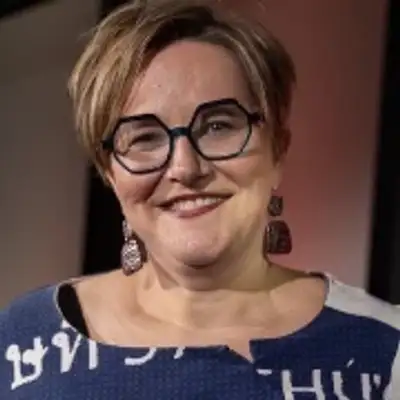
Balawyn Jones:I'm based at Latrobe in the law school, and I've had the pleasure of working with doctor Amir Aftab for many years. We are always finding excuses to hang out, including writing this book proposal and commentary together. And what really brings our work together is a shared passion for Islamic feminist theory and its application to family law, criminal law, and family violence with a focus on victim lived experiences and how we can platform those victim lived experiences in legal and policy contexts where there may not be that access to those forums and using our privilege as academics to be able to elevate the lived experiences of the communities that we come from and that we represent. So I'm really honored to be here today, not just talking about our work, but talking about the lived experiences of the communities that we're from.
Kate Seear:That's wonderful, Balawinan. I'd love to talk more about the sort of broader context of your work and how you bring those issues together in a moment too. But starting with the commentary on Amira's chapter, tell us a little bit about your reflections on it. Did you support Amira's proposal to introduce cultural, linguistic and religious needs screening and needs assessment, as well as specialist cultural advisors, inter family dispute resolutions, and and why or why not?
Balawyn Jones:Yeah. Absolutely. I think it's a very common sense proposal, and there's a few reasons for that. Firstly, there are already third parties that represent certain interests within the dispute resolution context in addition to practitioners or mediators. There are lawyers.
Balawyn Jones:There are support people. There are interpreters. So it's not a radical idea to introduce another form of support. So I guess if we're talking about support, then we need to talk about need. Why is this proposal needed?
Balawyn Jones:If you can't see that there is a need for people from culturally, linguistic, and religiously diverse communities to have their cultures and their religions and their languages included in the processes, then you won't find this proposal persuasive. But I think if you look at the evidence base around, well, linguistic diversity is already recognised. You know, there's already a right to interpreters or translators, which this is promoting and it's building upon in quite a logical way. The other two then are cultural and religious diversity. So what do we mean when we talk about cultural and religious need in the context of a compulsory state dispute resolution process.
Balawyn Jones:Well, this brings us to the evidence base around culture religious competency. Our legal systems are coded in a certain way. They're coded in an Anglocentric way. And that's not a criticism per se because that is the context of our colonial legal system, which is inherited from The UK. When we're talking about, for instance, cultural and religiously diverse groups, we know in the Australian system that their legal systems, value systems, they're not recognized in a formal way.
Balawyn Jones:So there's no formalized legal pluralism. They exist informally at the community level. People within culture and religiously diverse communities generally engage informally within those systems. So an example of this is Sharia legal systems. It could be an Adat legal system.
Balawyn Jones:Adat is a word that means kind of cultural or customary norms in the Indonesian context, and there's examples of that from all different kinds of cultures. It's just the most familiar with the Indonesian and Malay ones. And so those are informally recognized. And when you have family disputes, people from culture and religiously diverse communities are generally always going to go to their own communities and their own systems first. Then on the other side, you have this formalized state system.
Balawyn Jones:And in my mind, Amira's proposal is connecting the two. It's trying to create a bridge that takes away a barrier in terms of the lack of culture and religious safety that some people experience in the state systems and in doing so increases access to justice. The hill that I die on is always people's agency, particular women's agency. And Haji Maha Abdo, who is the CEO of Muslim Women Australia and Linking Hearts, which is a faith centered and culture and linguistically diverse family violence service provider in Western Sydney, she has this beautiful quote where she says, in order to exercise agency, you need to have options to choose from. And I think that at the core of this proposal, it's about decreasing barriers to access to justice and in doing so, increasing the available options for people to navigate these systems and make the choices that best suit them because people are the experts in their own lived experience.
Balawyn Jones:You give them the options. You give them the avenues. They are best placed to be able to choose between them. And that's why when I read this proposal, I didn't find it controversial. I thought it was very well thought out, very reasonable.
Balawyn Jones:And I think that more proposals should seek to create more avenues for people to exercise their agency and to treat those people with respect as experts of their lived experience.
Becky Batagol:Why is agency the hill that you would die on, Ballywyn? Why is agency so important for women from faith based and diverse communities?
Balawyn Jones:Yeah. Absolutely. I think it's important for everyone, all people, all all women. It comes back to personhood. And I think it's also grounded in my experience as a family violence scholar where we are talking about power and control, and particularly coercive control.
Balawyn Jones:If you respect someone as an equal, whether that's taking away, you know, discrimination based on race, discrimination based on ableism, discrimination based on sex or gender inequality. Right? If you truly believe in someone's personhood as an equal to your own, then you need to support their rights and their wrongs. You have to support women and and people making their own decisions in a way that is supported and compassionate and, of course, has informed consent. With respect to women from marginalized communities, so culture and religiously marginalized communities, I think agency is particularly important to emphasize because historically, women from those communities have been portrayed or perceived or stereotyped as victims without agency.
Balawyn Jones:So victims of their religion, victims of their culture, particularly post nine eleven and when you're looking at the justifications for engaging with diverse communities, you're always looking at women as victims and men as perpetrators. And although the vast majority of family violence, for instance, is perpetrated by men and perpetrated by men against men, women, and children, we also need to take an intersectional approach. And this is founded again in that really rich work of First Nations scholars and activists, but also in, for instance, Kimberle Crenshaw's work in The US. What we're seeing there is that we're talking about white feminism and the logic of white supremacy and feminism. You cannot expect women from these diverse communities to choose solidarity with women, for instance, white women, or women from other communities that have nothing else in common with them by villainizing men in those communities.
Balawyn Jones:Because it's far more complicated than gendered violence existing in the abstract. It's violence which is intersectional in nature, racialized violence, Islamophobic violence, anti Arab rhetoric. All of this is important for understanding women's lived experiences in communities and understanding how they're exercising their agency and why. And so for women from these marginalized communities, when we're talking about agency, as I said before, it links back to their personhood. Do you see them as equal people?
Balawyn Jones:And I think that that is important. When you apply an intersectional lens, you're not treating people less than based on their race, less than based on their religion, less than based on their gender or sex.
Kate Seear:Balawan, you've touched on some of this already, but I want to drill down into something in particular that really stood out to me in your commentary. And I want to use it as a kind of stepping stone, if you like, to a broader conversation about the law more generally and how well you think it does in managing the experiences of people from diverse groups. So in the commentary, you anticipate a criticism that might be made of Amira Aftab's proposal. And you say this, that some people might seek to criticize the inclusion of cultural or religious advisers on the basis of a perceived lack of neutrality. And you go on to say that these kind of concerns, and I'll quote here from you now, are often underpinned by imperialist thinking rather than evidence based critique.
Kate Seear:Even much feminist scholarship is built upon a presumption of whiteness or of cultural neutrality. Moving away from this particular proposal and even perhaps family law specifically, how emblematic do you think or how much of a problem is that in the law more broadly? That kind of imperialist thinking, presumptions of whiteness or cultural neutrality? Or is it a problem?
Balawyn Jones:I think that in contemporary Australia, for us as legal scholars and as people engaging even with, like, most basic media literacy on a day to day basis, it's a huge problem. It's a huge problem because race and religion and, you know, migration status and background are all being actively politicized and weaponized on a daily basis. And so for me, if you can't engage with or even reflect on the reality of white supremacy in our own country, in our own communities, then it's it's very difficult to be on the same page when you're having a conversation. And I I would like to say at this point that I am a white Australian. My parents migrated here from The UK, and I wasn't born knowing this.
Balawyn Jones:I had to learn and internalize and then unlearn and uninternalize so many things on a journey to realize that my faith in and my engagement with the legal system as a lawyer was not a safe space for so many as as I had assumed when I started my law degree that it was not just as a woman, but, as we mentioned before, from an intersectional lens. And so what I would say is that you've got to be open to listening to learn. I learned all of this by listening to people that actually had lived experiences of these things, both in my day to day life and then, through my scholarship and qualitative work. I mean, I didn't wake up as a legal student or as a young lawyer working in the courts or doing legal aid and have this epiphany overnight. It was a a decades long learning experience.
Balawyn Jones:My biggest learning is probably to always be aware of power, power inequalities, power dynamics, whose voices are included, whose voices are excluded, whose interests and needs are prioritised, and who's deprioritized. What are the news stories focusing on and who is being excluded? And this starts not only culturally and in our own communities, but it goes all the way up the line to our institutions and our laws and our policies. And I think there's a lot of good grassroots advocacy on this at the moment around the right to protest. I think that people are interested and engaged and want to be having conversations about representation and diversity and equality.
Balawyn Jones:You don't want disillusionment. You don't wanna say everything everything is a mess, and so we won't even try to make it better. So I really think that projects like this and a huge, you know, congratulations to Becky and your team. Projects like this are taking something that is hard and imperfect, and they are actually trying to make it better.
Kate Seear:Balawan, one of the things that we've been talking about across this podcast series is how we maintain as feminists, if that's a term that you identify with too, I shouldn't presume, but it's a term that certainly Becky and I do, how we maintain optimism and hope alongside the kind of disillusionment that you were just describing that can creep in or that can be a big part of action critical reflection and critical engagement with law. We've been asking our guests across the course of the series how they feel about the law more broadly in light of the fact that often law fails us or feels like it fails, doesn't live up to expectations, it generates unintended consequences, and often in consequences as you've been so beautifully describing that are very disproportionately impacting on specific communities. How do you maintain that? Or how how hopeful do you feel about the law and its capacity to shape lives for the good in light of all of that?
Balawyn Jones:A great question. I'll start by saying I absolutely do identify as a feminist. I know that people have complicated relationships to the word because of historical baggage differences in in the movement, particularly when it comes to intersectionality and race and queerness. And I think that whatever label you use, if you're working towards sociocultural, political, economic equality and equity for people and improvement of our communities across those intersectional lines, then the work that you're doing is deeply important. That's really the foundation for hope and the foundation for looking forward.
Balawyn Jones:Right? For being forward looking as opposed to, just a pool of of despair. Progress doesn't always look like a door being opened. It can look like a door being closed and finding another way. There are so many people doing such great things.
Balawyn Jones:Finding those people is critical to, I think, sanity, if not success. If you're not doing the work, then the work isn't getting done. And Bree Lee, in her eggshell skull, has a quote right at the back of the book that says that after crying, she she gets angry and she gets to work. I don't wanna speak for all legal academics, but notoriously, we're task focused. And so whether it's a commentary or a podcast or a law reform submission, moving forward through those very complex emotions by doing the work is a strategy that I've always found comforting.
Becky Batagol:I wonder, Balawan, if you've got any advice for law reformers who are interested in making better laws, particularly for women from faith based and culturally diverse communities that support women in their agency.
Balawyn Jones:Yeah. Absolutely. Listen to women. Believe women. It's always the starting point.
Balawyn Jones:I think that a focus on lived experience and the inclusion of people from diverse backgrounds when you're seeking lived experience is so important. I think it's critically important because lived experience is a great starting point, but lived experience also has to be intersectionally informed because not all women have the same experiences of engaging with the law and a cooch and yeet. And I have written on this in the context of family violence and family violence intervention orders and the criminalization of course of control. Sometimes there is a a prioritization of certain voices, people who have lived experience often along lines of class and race. And so I think that the the seeking out of lived experience has to be intersectional at its core.
Balawyn Jones:My other favorite piece of advice from people who are doing law reform is that good intentions are amazing, especially if backed by an evidence base. But before you propose something, just think of the worst person you know and think about how they may seek to weaponize that. Whatever you're proposing, I think that, you know, a lot of the law reform proposals are grounded in an intention to protect women, and you don't want that to be paternalistic. You don't want that to be depriving them of agency. But also, in the family violence space, have a lot of legal systems abuse and purposeful manipulative misidentification of the primary perpetrator.
Balawyn Jones:And so when we're talking about sex and gender in these spaces, we have to acknowledge the nuances around not only, you know, different people's experiences and whether they align with your own experiences, but also the purposeful misuse and weaponization of these systems. And my advice for people pursuing law reform is to treat those risks really seriously. Because if the the weight of the state, if the force of the state, particularly criminal justice systems, are weaponized against genuine victim survivors and the state is complicit in legal systems abuse, it's really the worst case scenario. So I think that's something that we really need to start grappling with in terms of the responsibility of people involved in the legal systems and including law reform.
Becky Batagol:That's a great answer. Thank you and wise words. Yeah. So Doctor. Bellowin Jones, why is Emera's proposal particularly important in your view?
Balawyn Jones:I think there's a core truth in the work that we do in family violence that's specific to culturally and religiously marginalised communities. And that is whilst family violence is not specific to particular communities, in that particular communities aren't more likely to have family violence. If you look at it from a quantitative point of view, statistically, the ways in which family violence, particularly coercive control, are framed and perpetrated is unique to particular culture and religious scripts. So I love Sally Engel, Mary's work on this, where she talks about the translation linguistically of different things. So it's not that the core of coercive control, it's not that the core of the abuse is different, but it's like going into a different country.
Balawyn Jones:And do you speak that language? You know? Do you speak Spanish? You don't know both the cultural subtleties, the linguistic subtleties of that. And so this is why we need specialist advisers.
Balawyn Jones:And this is why we need cultural and religious competency and safety in our systems. Because the number one barrier to engagement with legal systems when we're talking about culturally and religiously marginalized communities is that lack of cultural and religious safety. Because not only could there be tangible forms of discrimination based on religion, race, ethnicity, there is a deeply embedded and, you know, tangible fear within communities that they will receive discrimination or will be marginalized within those state systems. And this is informed by their day to day interactions and their realities. Right?
Balawyn Jones:But when we're looking at a proposal like this, we're trying to make more spaces safe for more people. So if you look at the culturally and religiously grounded community dispute resolution processes, then those are already accessible, But they're not connected to the legal protections of the state and the family law system. If you look at the family law systems, which are, as we mentioned, coded in a certain way, the language and and the values are informed by our Anglo legal system. If you think, well, that's not a problem, it's more accurate to frame that as that's not a problem for me. If you don't personally have a problem accessing those systems, then that's a privilege.
Balawyn Jones:But many, many people do. And we know that because we ask them, and we know that because they told us and we listened. So when we're talking about the evidence base in terms of cultural competency and religious competency and safety, we're responding to a need. And so this, in my opinion, is just a really good example of a law reform proposal that is not only evidence based and informed by lived experience, but it's from the grassroots. People are asking for this.
Balawyn Jones:People need this. And this is a response that is trying to formalize that need or that request in a way that the legal system can comprehend and respond to. And so I think that is best practice advocacy. Right? This proposal didn't come out of nowhere.
Balawyn Jones:It came out of, you know, Emera's experience over a decade working with culturally and religiously diverse communities and hearing the experiences of lived survivors and their engagement with the systems and those the barriers to their engagement with the system.
Becky Batagol:Balawyn, was there anything that you disagreed with in Emera's proposal?
Balawyn Jones:I would say that one of the things that stuck out to me in the initial drafting was around the definition of who a cultural or religious leader or adviser could be. And this isn't something that I disagreed with per se, but it was something that Amira and I had, you know, collegiate and collaborative conversations around to develop further in her proposal. It's something that we discussed. And so I guess I'm that makes me a bad lawyer. You know?
Balawyn Jones:Not very an adversarial approach. I didn't wait till she wrote it up and then jump on
Becky Batagol:it and be like, showing us what a feminist lawyer can be. Collaborative disagreement.
Balawyn Jones:I I just I love working with her, and and I really wanted it to be a process that was empowering for both of us. So it's just not how I approach the task at all. But what I would say is that we had these really deep conversations around the the entrenchment of patriarchy within all institutions. Right? So not just the Western legal system or the courts, but within community, cultural or religious organizations on the ground.
Balawyn Jones:So an example of this was when we were deciding what kinds of organizations could be represented on the register to be a specialist adviser. Obviously, you could not limit that to just the board of imams because imams are predominantly men. And when we're applying an intersectional lens, although that may represent a range of different cultural backgrounds, it doesn't necessarily represent women's experiences in terms of their desire to be represented by and to engage with other women in their communities. And so a lot of the time what we see on the ground is a tendency for formalization to drift towards patriarchal entrenchment. And so organizations that are on the ground no less important in their cultural and social significance, no less impactful in the work that they're doing, right, economically, politically.
Balawyn Jones:But they're coded in different ways. And I brought up Haji Maha before. Haji Maha Abdo from Muslim Women Australia is an example of a woman who has the utmost respect from her community as a culture and religious leader, regardless of the title that she has. And obviously she does have it. I'm pretty sure she has an Order of Australia medal in fact.
Balawyn Jones:She's got titles. But there are so many examples of women in communities that are doing the same work but have different titles. And I think that does come back to, you know, cultural and religious literacy. Like, what are these titles? What do they mean in different communities?
Balawyn Jones:But it was something that we are very aware of. And this is taken into account in the framing of Emera's proposal with the broadening of the proposed register to include cultural and or religious community support services. The other reason that that broadening was consciously done was to include services that have specialization on welfare, well-being, and in particular family violence.
Becky Batagol:Doctor Balawyn Jones from La Trobe University, thank you so much for joining us. Not only have you shared your views on Emera's proposal for law reform, you've shown us both how feminists can disagree collaboratively, which is so different to what we see in our national and state and territory parliaments, but also shared with us some really important views on the limited and I guess discriminatory nature of our legal system, how it is absolutely not neutral. And your call is for those who are involved in making laws and law reform to take that into account and to have that at the forefront and ask who is missing. And that's something we all need to hear. Thank you so much.
Balawyn Jones:Thank you so much for having me, Kate and Becky.
Kate Seear:You've been listening to Feminist Acts. On today's podcast, you heard first from Amira Aftab, who's a senior lecturer at the Macquarie Law School, and then from Bellowin Jones, a senior lecturer at the La Trobe Law School. Becky Badergold, thanks so much for this episode and this conversation.
Becky Batagol:It was fascinating. Thanks, Kate. Really enjoyed discussing family law, always my favorite topic. If you want to find out more about the law reform proposal in this episode or our book on the Australian Feminist Legislation Project, check out the show notes.
Kate Seear:This podcast was recorded on the lands of the Boon Wurrung and Boon Wurrung people of the Kulin nations. These people and families have lived sustainably off this land for over forty thousand years. More broadly, we know that Aboriginal and Torres Strait Islander peoples have had longstanding community led processes for resolving disputes within communities. These are systems that are grounded in place, which are culturally safe, and have been refined and navigated over more than sixty five thousand years. Such systems prioritise Aboriginal agency, autonomy and sovereignty and offer important alternatives to how to solve problems beyond the colonial state, drawing on generations of indigenous knowledge and expertise.
Kate Seear:We pay our respects to elders past and present and extend that respect to any Aboriginal and Torres Strait Islander people who are listening along to this series. You've been listening to Feminist Acts. This podcast was produced by Miniature and funded by the Monash University office of the deputy vice chancellor, research and enterprise.