Subscribe
Share
Share
Embed

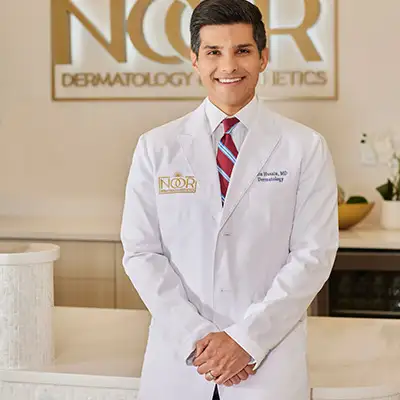
Welcome to Skinside Out, where science meets beauty, the ultimate dermatology podcast! Dive deep into the fascinating world of skin health with expert insights, evidence-based discussions, and myth-busting truths. Each episode explores the medical, cosmetic, and surgical aspects of dermatology, while keeping you informed about trending skincare topics. Whether you’re a skincare enthusiast, medical professional, or just curious about how to achieve your best skin, Skinside Out is your go-to resource for staying informed and inspired.
[00:00:00] Speaker: Welcome to Skin Side Out. I'm your host, Dr. Zane with Courtney and Heather. So today we're going live at our Blossom Into Beauty event where we're answering all your dermatology questions.
this is gonna be an informal discussion. We're gonna be a answering any of your questions.
There are no dumb questions, and we'll all learn from each other.
[00:00:25] Speaker 4: The only dumb question is, should I be wearing sunscreen every day?
[00:00:30] Speaker: That's a really dumb question. Um, so we're gonna open up to the floor first. We also got a lot of questions online, which we'll go through as well and answer as many as we can in the time allotted.
So I just wanna start off with the audience. What questions do you have about skincare, skin aging, and even common dermatology questions?
with it. Absolutely. Great question. So, just to, um, restate the question, we're trying to find out the differences between RF microneedling and traditional microneedling and what the risk involved.
So, um, I'll have Courtney pick this one.
[00:01:06] Speaker 4: I love RF microneedling. Um, I feel like the benefits, um, are definitely gonna be obviously the radio frequency part of it. So with traditional microneedling, what you're doing is you are creating a controlled injury. Um, that controlled injury kind of prompts your immune response.
So it's sending in it's fibroblasts, it's collagen to help kind of build and restructure that skin. The benefit with the RF microneedling is you're not only getting the traditional microneedling benefit of that injury response, but you're also getting that radio frequency, which uses heat to further stimulate the tissue.
So I think it's a phenomenal treatment. I think done in the right hands, um, you can really see some amazing results and we've been seeing amazing results by, um, pairing it with our lasers and whatnot. Um, yeah, I'm a big supporter,
[00:01:53] Speaker: but there are risks associated with RF microneedling, so I think that the public needs to be aware of it, and it's been getting a lot of traction in the media.
So RF microneedling, although it's phenomenal for skin texture, collagen production, acne scars, you really have to have a sound foundation of skin anatomy and the structures below. Because if you go too deep in certain areas, you can actually lead to something called fat atrophy. So there's fat in our skin.
When these needles go in too deep or at higher, um, energy levels than they should be, it can actually melt your fat and cause resorption and kind of getting the opposite of effect of what we were trying to do in the first place, which is, you know, build volume and tightening. So that's something that you have to be aware of.
Um, and that's why it's really, it's really important to know who's treating your skin, what their qualifications are, and what their training is. I mean, there are places like many spas that have, you don't know what the qualifications are for who's treating you, and they don't have a strong foundation of skin anatomy, and that's a little scary because they're using powerful devices that can do significant harm if done the wrong way.
And, you know, there's specifically a device that has been causing a lot of issues. You may have heard of this one before. It's called the Morpheus eight. Um, very common in Betty Spas and has been actually the, you know, the cause for many, um, lawsuits actually because against the company, because it's a very powerful machine.
Causing a lot of fat atrophy so people were getting like sagging or you know, loss of volume in certain areas and they were actually looking worse than when they first came in.
[00:03:34] Speaker 2: And I guess on the flip side too, if you go to superficial, you can actually get hyperpigmentation, especially for skin of color.
It's very important to make sure we're going into the right depth. Um, we do it a lot for face and neck, but we also use RF microneedling a lot for like stretch marks. It's really great for that too.
[00:03:54] Speaker 4: And if you do want the fat loss underneath the chin, that is a great area to go a little bit deeper to try and get some of that fat loss.
So,
[00:04:02] Speaker: yeah, and I've seen great results with, you know, stretch marks on the abdomen, postpartum patients who actually welcome the fat loss in those areas. While building that collagen thighs buttock area. So the nice thing about the technology is you can kind of use it in many areas safely. And depending on what you're trying to achieve, you can use that fat atrophy to your advantage.
But that's where your, the knowledge part comes in. It's really important to know that. Now the other question was traditional microneedling, correct?
[00:04:31] Speaker 4: Mm-hmm.
[00:04:32] Speaker: So tell us a little about traditional microneedling.
[00:04:34] Speaker 4: Um, yeah, traditional microneedling. I think everyone should be doing. I think it's such a great, um, treatment to maintain results after you've done, you know, maybe a series of rf.
I think, you know, we start losing collagen, what is it? 25, 26. So I think when you're looking at. Other treatments. You know, anytime I see a patient that's interested in like toxin filler, I think immediately, okay, we gotta supplement that with some traditional microneedling. 'cause you essentially wanna be building your own collagen and not so dependent on some of these things like the toxin filler.
And over time you'll end up saving yourself, I think, money and heartache by building your own collagen. So, um, traditional microneedling, you know, I think. Pain wise is so, such a easy procedure, downtime, you might be a little red after the procedure. It usually goes away by the 24 to 36 hour mark. Um, it's just a phenomenal treatment to kind of keep things going, I would say,
[00:05:28] Speaker: and it's low risk.
Um, we can do this on any skin type and, you know, you can use it for deeper acne scars, you can use it for rejuvenation. Um, there's just so many applications and it is extremely safe. Um, one of my mentors during training, um, when I was in Washington, DC she was one of the early adopters of microneedling and she was also known as the queen of lasers.
Like she was a big laser guru. She found a lot of the times she can get similar results with microneedling, traditional microneedling. With some of her fancy lasers at like $200,000. Um, and patients were recovering well, getting similar responses. So it does speak to the efficacy of it. Um, and you know, that was actually one of the first forms of micro knee I had done for my acne scars, and it worked really well.
I actually saw great results better than some of the lasers I had prior to that. So, um, easy. Effective, virtually painless with, you know, topical anesthesia. So it's a win-win.
[00:06:30] Speaker 2: And once you have those crea, um, channels created, whether it's standard microneedling or RF microneedling, we have the ability to get different serums through, down into those channels, down to the deeper levels of the skin to give us certain effects.
So if you're looking for more of like a brightening or enhancing the texture. Different things that we can add to kind of enhance your treatment result.
[00:06:52] Speaker: Yeah, so introduce this whole. Um, different avenue to introduce actives into your skin, specifically into deeper parts of the skin, like the dermis very easily.
And it's been revolutionary. I mean, we're using it for the actives that, um, you know, we have been using for many years. As well as novel ones such as PDRN, poly deoxy, ribonucleotides derived from salmon, sperm, and we're seeing some really nice rejuvenation collagen stimulation from that. Other growth factors.
You can use your own body's growth factors with PRP, um, and exosomes. I mean, these are all new cutting edge technologies that we're able to get into the skin with these tiny micro channels that we just developed. Mm-hmm.
[00:07:36] Speaker 4: Yeah, I love PRP. I think it's such a, um, great. What is PRP? Um, PRP is platelet rich plasma.
So what we do is we take your blood. Um, it's actually really interesting they've used. Plasma in ortho. I have a patient who's actually a vet and she treats horses with their own plasma, which I just think is so cool. Um, but basically the benefits of that, um, are using your own growth factors to further stimulate your collagen.
And I think it's a nice approach for people who, I think any micro kneeling in general is always a nice approach for people who wanna stay a little bit on like. The more natural side of things, like you're not using anything that's really foreign in that circumstance. Um, again, your, your platelets are your own natural growth factors.
Um, you do wanna make sure that during that process you're kind of at your healthiest point. So I always tell people if they're coming off like an illness or something, maybe to reschedule their PRP, but I think it's a great addition to add to either traditional or even to RF to further boost that.
[00:08:35] Speaker: Yeah, there's nothing more natural than your own body's growth factors.
And I think that appeals to a lot of patients who are moving more towards this natural wellness aesthetic. And I am a big proponent of it. I do think that there's so many properties that we have that our body uses to heal itself and regenerate, and we're just, you know, just get into the, you know, the tip of the iceberg.
I mean, there's gonna be more and more to come.
[00:09:00] Speaker 4: Traditional microneedling, there is no quicker downtime than that.
Um, your micro channels actually close within 36 hours. So I think even from that standpoint. The other thing I wanted to mention about microneedling is sometimes I'll see people, um, sometimes. As everyone on the podcast knows, and all my coworkers, I'm huge on Reddit. I'm like always on Reddit. But anyways, sometimes people will go a little overboard on the microneedling and you really actually don't need much to create that collagen.
Um, studies show that even just 0.5 millimeters of the, , microneedling depth can be enough to stimulate that collagen. So you really don't need a lot of downtime with that procedure. You really should be looking fine the next day, which I think is like revolutionary.
[00:09:44] Speaker: you can use it on any age.
Um, it's, it's a great option. And you know, it's non-invasive, right? So patients are comfortable with that. But even if microneedling sounds scary, which I can understand, um, you can dip your toes in with like a medical grade facial. Like that's a good entry point, like getting your skin cleansed. Mm-hmm. And, you know, germal infused with actives.
I mean, there's no pain involved. Um, you kind of restore your skin health, and that's a good way to maybe dip your toes in. If you are apprehensive about doing something like microneedling, then you can maybe also consider like superficial chemical peels. Mm-hmm. Those are also minimal risk, low downtime, and you get a nice glow, helps with skin health and skin tone.
So there are things that are less invasive, um, that you can always, you know, explore. First,
[00:10:32] Speaker 2: , She asked if there was any like sun exposure restrictions after the procedure.
[00:10:37] Speaker: So with anything that, you know, you're creating a controlled injury, you have inflammation that's going on in the skin and.
I always caution my patients, you should be using sun protection. Be smart. You just had a procedure done. Um, wear your sunblock. Don't bake out in the sun. But the nice thing about traditional microneedling is that there's no heat energy involved. So that's another factor that we see with a lot of hyperpigmentation issues with many cosmetic procedures, lasers especially 'cause that makes you highly sensitive to sunlight.
You can get higher risk of post-inflammatory hyperpigmentation. So lasers and energy based devices have a slightly higher risk of, you know, photosensitivity, but I say it with all procedures, even chemical peels. You should be really careful about the sun. So the way that I would characterize IPL, so IPL is thought of as a laser.
It's actually not a true laser because it's actually a broad spectrum of wavelengths of light. But we can kind of think of it as a laser. Um, I think it's kind of like. The gateway for energy and light-based devices, it's a good entry point that helps with common concerns such as hyperpigmentation from sun damage, um, blood vessels, um, that we see with rosacea.
Um, helps to stimulate a little bit of collagen, but it's different than what microneedling is trying to achieve. It's different, some than those other procedures that we had mentioned before. So it's more for like addressing. Issues with tone of your skin and redness and pigment. Um, it is a good entry point, but since it's not a true laser, it does also carry risks as well.
It's not as specific. So you do have a higher risk of complications such as post-inflammatory, hyperpigmentation burns. It's not suitable for, um, darker skin types because we can't be as specific. For the melanin component. So, um, it does limit our use, but most patients who are fair, um, have sun damage, have, you know, redness.
I think IPL is a great option. It's been around for a long time and with the proper training and use, I mean, it's very safe.
[00:12:52] Speaker 4: I've had some really nice results actually alternating IPL with microneedling for a nice collagen boost and I think it helps with texture, helps with collagen, and then overall like clarity and tone of the skin.
So. Um, I've really liked pairing the two alternating every other month. You know, microneedling laser, microneedling laser, or IPL.
[00:13:11] Speaker: And I've also found, um, really nice results with pairing, um, other energy based devices and lasers at the same time too. So, like, for instance. I have a patient who has multiple concerns, sun damage, rosacea, um, skin texture scars.
So I've been kind of combining IPL or a vascular pigment specific laser with either a non-ablative fractional laser or RF microneedling. So there is, there is like combination therapy that we can do, which is nice because then you have a single recovery. It's safe, effective, and they work synergistically together.
They all have different mechanisms by which they exert their actions and effects. All done. Mm-hmm.
[00:13:51] Speaker 4: Yeah, it's very interesting. Um, just when you think about the lasers, um, there's this really cool, if you ever type in wavelength, like laser wavelength chart, you'll actually get to see some of those wavelengths.
I kind of describe wavelengths on a laser, like different, almost like different programs. You can have, you know, your mac and your windows. Um, you could have the same wavelength with different lasers. So it's, it's. Each wavelength goes to a different depth. So when you're combining these treatments, you might get the benefit of, you know, let's say the derma V from a certain, um, level in the skin, and then the RF microneedling is able to go deeper into the skin.
So when we stack them, we're kind of going from the deepest level out to the most surface level,
[00:14:35] Speaker: and they're able to specifically target molecules. And that is how we see the effects. So like say for like blood vessels, it targets hemoglobin in our red blood cells that flows through those little blood vessels, um, for pigment is actually targeting melanin in our skin.
So lasers have come a long way in the past 30, 40 years. They're becoming a lot safer. We're seeing the ability to use higher energies with other mechanisms for increased safety. So we're achieving results that we have never seen before with a safety profile we've never seen before. So it's constantly evolving.
Um, lasers from 10, 15 years ago are very different than the lasers that we have today, and that's why, you know, also like places that invest in the technology and the safety for our patients yield happy patients. They get good results. They're not getting burned, they're not having any issues. So that's why the lasers that I bring into my office are, you know, tested, tried, and true.
Um, there's gotta be a lot of data. I've gotta get my hands on it, and, you know, that's how I make the decision of what I bring into my office, what technologies are the best for my patients so that they get the results that they're looking for.
[00:15:48] Speaker 2: I think you also have to be careful. Um, you know, if you do have lighter skin and you've got pigment, I wouldn't assume that IPL is gonna be the best thing for you.
Um, so there's um, a couple
[00:16:00] Speaker 3: conditions,
[00:16:00] Speaker 2: especially like melasma that don't do really well with IPL. Um, the IPL can actually make it worse because of that heat, and so melasma is a lot trickier of a condition to treat, but there are lasers that can help with it too.
[00:16:13] Speaker: And that goes to the point going to a dermatology office versus a MediSpa like we can discern and understand, hey, this is not traditional, this hyperpigmentation from sun exposure, this is melasma and he can activate and make it worse.
I can't tell you the number of times I've seen patients whose hyperpigmentation worsen after, you know, an IPL treatment or inappropriate laser for their skin type and it's much harder, much more expensive to correct those mistakes. So training, expertise and knowledge matters.
Any other questions from the live audience? Yeah.
[00:16:53] Speaker 3: What would you say is like a slept on, um, like skincare product that everyone should be using
[00:16:59] Speaker: I'll let you take that.
[00:17:02] Speaker 4: Um, slept on. Um.
[00:17:08] Speaker: And this is assuming that they're optimizing all the standard traditional like retinol, vitamin C, they can just add to like, Hey, I really believe
[00:17:16] Speaker 4: in this product.
Everyone should be using this. I, for me, I would say a growth factor serum. Um, I think. And I'll get into Plated a little bit too with the exosomes. Um, for me, I've been using neocutis, their growth factor serum for the last few years. Um, I know commonly TNS Advanced Serum, um, has been around as well. And basically these growth factor serums I think are a nice.
Thing if you are utilizing your retinoids, your vitamin C, your sunscreen, um, they're gonna help with multiple concerns. Um, mostly with that collagen production. I love pairing them with treatments. I love using them post treatments, um, especially microneedling when those channels are open, getting those growth factors in there so that they can really do their job and stimulate that collagen is fantastic.
Um, but even just for daily use. For helping. Um, yeah, those fine lines, wrinkles, some of that like freckling discoloration. I think they're just such a great booster to any, you know, skincare regimen, um, platelet or, um, plated is a newer, um, product that I've been using for the last month now, and I have to say I am obsessed with it.
I didn't really think much about it when I used my little trial size, but what Plated is, is, um, it. Derived from human exosomes. And those exosomes you can think of as like little messenger cells. So they are kind of exacerbating your skincare regimen. You're getting the most benefit out of your regimen when you're using something like those exosomes.
They're boosting everything else that you're using. Um, and I've had really nice results, like I said, over the last month or so,
[00:18:51] Speaker 2: and it's renewing and regenerating without causing like dryness or irritation, which is really nice.
[00:18:56] Speaker: Yeah, and the technology is so advanced, it came outta Mayo Clinic. So they initially had studied it for wound care and saw and saw the regenerative properties and have, hey, this is helping wounds, will it help skin?
And their studies have actually shown it really enhances skin health. And I do think that that's kind of like the future where we're looking at stimulation. On the molecular level. So exosomes, the poly deoxy, ribonucleotides, we're looking at our growth factors from PRP. These are all things that we know can help.
And then topical hormones are also big because they are also messenger signaling molecules. So topical estrogen has been really, really big lately because we are seeing. An increased awareness of perimenopausal and hormonal fluctuations and seeing the drastic changes that we see during that time in a woman's life.
And by replenishing it with topical estrogen, we've been seeing some improvement, um, with skin quality, texture and just overall glow. So that's kind of where we're thinking, um, especially after we've kind of enhanced and optimized our current skincare regimens.
[00:20:07] Speaker 2: I think going back to the exosomes, um, and plated specifically, so it is really important where the company is getting their exosomes from.
So there's a lot of like plant derived exosomes, animal derived, but plated uses platelet derived from human , blood. And so I know we kind of mentioned about like PRP, but platelet derived exosomes are kind of showing to be the most beneficial for the skin itself.
[00:20:35] Speaker: And it was the Mayo Clinic that perfected the purification process.
So that's why it's so safe. And it's also the product that has the most intact exosomes. 'cause these tiny little micro enveloped signaling molecules are very fragile. And during routine processing, they often get damaged. So a lot of products that typically use exosomes don't really have as many intact exosomes.
As they advertise and don't yield as much of a result. So that's why I've been really impressed with Plated. I did a lot of research before bringing that line in, and I think the evidence speaks for itself. I mean, the Mayo Clinic is an extremely, um, respected institution. I know some of the researchers who were on that team, and it's been phenomenal.
[00:21:22] Speaker 4: I think, um, like a fun fact about the plated is that they, um, when they were studying it for like wound healing and whatnot, the doctors and trainees and everyone, they were actually using it on their hands to help with their hand eczema, um, during the winter. 'cause their hands were getting all cracked and fissure as some people experience.
And, um, it was healing their hands. And they're like, well if it's healing our hand eczema, what else will it heal? Mm-hmm. So it's always cool to see medicine have that like light bulb moment where, you know, you might be using it for one thing. I mean just like our minoxidil and you know, our spironolactone.
But it's always really fascinating I think, to see kind of that origin story and how it just grows from there. So. Yes. Yeah. What age would you
[00:22:01] Speaker 3: start using the exosomes, or what age would you recommend to like a patient?
[00:22:07] Speaker: I would say probably mid twenties, early thirties, where you start seeing the very first signs of aging, so that way you can stimulate as much as possible and kind of maintain that throughout your lifetime.
It is always harder to treat after like damage or aging has occurred, um, compared to preventative treatment. So I think that's a good age. I feel like prior to that it's kind of a waste 'cause your skin is pretty, you know, renewed. It's constantly producing collagen, but then we start seeing that dip happening around that time.
[00:22:44] Speaker 2: I think also after 40 you might need more. Um, so you might need a more intense exosome regimen.
[00:22:55] Speaker: Yes. Um, is the estrogen top estrogen something that you offer in this office? Yeah, it's specifically compound compounded. Um, so it is a medication topically. Yeah.
[00:23:08] Speaker 2: We compound it with, um, aloe, which is really soothing.
Hyaluronic acid, which which is really good for, um, moisture. And then there's one other thing in there, maybe niacinamide ide. Yeah.
[00:23:23] Speaker: Yeah. And it's really good also for our patients who have more mature skin, very dry skin. Um, it's been very helpful for them.
[00:23:32] Speaker 4: I was gonna say, I feel like, um, what I hear most from like my, like perimenopausal patients is definitely like the dehydration in the skin.
And I feel like that product does a lot to really help kind of. Um, treat that aspect because I think I'll hear from patients, I use so much moisturizer and it's just not touching it. Like I'm still dry and dehydrated and I do feel like that's like that one product that really is, has been helpful for that.
Dehydration
[00:23:56] Speaker: and topical estrogen has been used off label for a long time. Women have been just using their vaginal estrogen on their skin. On their face. Mm-hmm. Yeah. But now we're able to formulate it specifically for skin and it's just enhanced. You get better results. Um, so that's something that, you know, is offered.
Now, if this is used on the face and the entire body, I would predominantly use it on the face. Okay. Yeah. Use it on the neck too. Okay. Can you use it on upper eyelids? Yes, absolutely. Okay.
[00:24:28] Speaker 2: Anything you put on the face, put it on your neck and chest too. Mm-hmm. And hands.
[00:24:32] Speaker: Mm-hmm.
What other questions do we have? Have you exhausted all of them? Is the topical estrogen prescription or, okay, it's prescription. Yeah.
[00:24:45] Speaker 2: Do we wanna look at our other list?
[00:24:46] Speaker: Yeah. So we got a bunch of questions online, on social media. So I'll read out the questions and then I'll have like Heather or Courtney answer, or I can chime in.
So what are the bumps around my eyes and forehead and how can I remove and prevent them?
[00:25:04] Speaker 2: I don't know. I'd have to see 'em first.
[00:25:07] Speaker: Good question. So say like, they were like white kind of pearly, little bumps.
[00:25:11] Speaker 2: Yeah, probably milia, um, which I'll talk about, but also commonly around the eyes are sebaceous hyperplasia and sn goma.
So lots of different girls, but um, kind of that pearly white is. Milia or mil is the singular, um, term. And this is a little pocket of skin protein called keratin. It kind of looks like a white head that never goes away. It's really hard. Um, they're very stubborn. Um, some people will try to pick at them or extract them and nothing happens.
They can be extracted, um, pretty precisely and. It's very satisfying to do. Mm-hmm. But they typically don't really go away on their own. Some people are more prone to them than others. Um, sometimes it's the cream that you're using might be a little too thick for your skin. Sometimes a retinol or retinoid can help prevent them, but it's not, probably not gonna treat ones that you already have.
But there's a procedure we can do.
[00:26:07] Speaker: I wouldn't mess with them on your own because you can cause more inflammation, cause it to grow more or lead to hyperpigmentation scarring. So instead, see this young lady right here. So Courtney is phenomenal at treating Milia. She has a variety of different ways to treat them.
What are your favorite ways?
[00:26:23] Speaker 4: Um, normally, so with Milia you do really need to create a little opening in the skin, and I think that always scares people, but I tend to use, um, a really tiny tip of a blade. Um, just go in once to create. And it's really cool, you can actually hear this like pop when you hit that milia.
, And normally I'll actually just use two Q-tips and just pop that sucker out and it. Gone. So, um, yeah, I love doing extractions and it's kind of like instant gratification when you get that out. Mm-hmm.
[00:26:52] Speaker: All right, let's move on. How do you treat melasma? Good question. This is one that we see very often.
Mm-hmm. Other, don't you take this one.
[00:27:01] Speaker 2: There are a lot of different ways. Um, I think topical skincare makes a big difference. Hydroquinone is probably the most well known treatment for melasma. Um, but you have to be careful with hydroquinone because you don't want eat. Use it too long because you can get other discoloration that's really hard to treat.
Um, chemical peels are really great. Um, there's some lasers, like I mentioned, you have to be really careful with melasma 'cause some lasers can worsen the melasma, but there are certain lasers that can help target that pigment. Um, there's oral medications too, so like tranexamic acid is really nice. Um, comes with some risks, especially if you have a history of like blood clots or maybe you're on birth control.
You just have to be really cautious with those kind of patients.
[00:27:46] Speaker: And this is a condition that worsens with hormonal fluctuations. So, you know, females who are pregnant or on birth control pills or going through perimenopause can notice, um, you know, changes in their skin. And the common denominator for all of these melasma patients, sun exposure without protection.
So you gotta be really careful about the sun. Use your sunscreen every single day. It's important because even when we're, you know, in the middle of winter, on a cloudy day, it's raining, you're still getting exposed to UV light, which has the ability to stimulate your melanocytes, which are the pigment producing cells to produce more pigment.
[00:28:25] Speaker 4: Even further than that, actually heat can stimulate, um, that hyperpigmentation as well, which of course we live like in the worst place for that with so much, um, like heat and humidity. And it's funny, I had a patient who, um, she's like a chef, so she works in a kitchen. She's like, I'm literally never outside, but my mema like always gets worse and it's, we kind of found out it's from like this.
Steam that's going on when she's cooking. Some of that heat sometimes can just trigger that. So I think just being mindful also of, um, other contributing factors that might not just be the sun.
[00:28:57] Speaker: And in this digital age, even blue light has been shown to have effects on melasma. So what I always counsel my patients, not only should you be wearing sunscreen, um, especially if you have melasma, but a tinted mineral sunscreen is the best form of protection.
The iron oxide, which gives the sunscreen its tint, um, actually protects against the environmental, um, you know, exposure from, you know, blue light from, you know, devices as well as heat in addition to UV light. Um, the, you know, sheer sunscreens do not offer that, so that's something a lot of people don't know.
So, tinted mineral sunscreen tends to be the best approach for melasma.
Any other questions about melasma? Okay. All right. What are the best ways to remove facial hair and what are the long-term treatment options? Courtney, I'm gonna give that to you.
[00:29:56] Speaker 4: Um, laser hair. There are obviously a few different things that you can do. Um, majority of the time I'm gonna recommend laser hair removal for any dark hairs.
Once they start getting light, that's when unfortunately the laser is not able to pick up on that pigment. So you would wanna switch to something like electrolysis. Which I'll get into. Um, but the laser hair, I, um, sometimes we'll actually use in combination with, spironolactone for patients who have some conditions like PCOS or hormonal issues.
Um, there actually is a topical cream from the same compounding pharmacy that we use that you can apply for those hairs. It is a nice adjunct treatment. I wouldn't use it. Solely by itself. But that is an option to kind of add on for those, um, hairs that are stubborn. , The longevity on the laser.
So the face is very, um, hormonally driven, so it can be difficult sometimes to give patients a answer of how many treatments it will take on average. Six sessions of laser hair, you'll see a good, um, 80% reduction in that hair growth. Um, at that point, sometimes we'll maintain just depending on how quickly that hair growth is occurring.
So I have some patients that after their series, they're coming maybe every like three or four months. I have other patients that might come every, like six to eight months, or I have some patients that just go, you know, once a year, every other year. So I think just depending on some of those factors, .
Depends on really how many treatments you'll need and the longevity of it. Um, electrolysis is another option. I don't, as someone that's done electrolysis, I do really like it for the white hairs, , I think it's a really tedious procedure. I think if I see someone that has mostly dark hairs, I'm always gonna recommend to do the laser first, and that way you don't need as much electrolysis because it is a very painful process.
They're essentially sticking a little probe into your follicle and zapping it. So you can only imagine doing that. 15, 20 times it gets repetitive and it gets really tender. , Also there's a lot more risk, I think, associated with electrolysis as far as scarring and hyperpigmentation. So I think being mindful of those risks and making sure you're going to someone who definitely knows what they're doing is important.
I've had really good success with the laser hair. A pretty, pretty painless machine that we have here. It uses cryo spray that helps alleviate any, like heat from the laser. It's been really successful, I think, um, in treating anywhere from the face to legs. Mm-hmm. Brazilian underarms and, um, yeah, it's fantastic treatment.
[00:32:26] Speaker: And the devices that we use for laser hair removal, they're not all the same. So there are certain wavelengths that are safe and appropriate for all skin types. Some that are better suited for lighter skin types, some that are better suited for darker skin types. So the nice thing about our device, it has a dual wavelength.
There's two wavelengths and you can pick which one is going to be the most effective option and the safest option. So for my lighter skin types, um, we have an Alexandria laser, um, in our device, and that will be safer and more effective for those patients. And then for darker skin types, we use the NDA laser, which is very safe and penetrates without causing disruption to the melanin in our normal skin.
a lot of patients ask like, what areas can you treat? So what areas do you typically treat for patients
[00:33:18] Speaker 4: everywhere that has dark hair? Um, I think most commonly we're doing underarms. Legs do great. Um, you know, face, I've treated men, I treat the beard line. Sometimes men don't wanna shave like that neck region, so we'll treat actually right there or even the back of the neck.
We've treated Dr. Hussein, um, you know, those kind of the scraggly hairs that come about. When I treat the legs, normally I'll include like the toes 'cause I think every woman has dealt with that Really frustrating. Toe hair, maybe I'm the only one. Um, just you, um, tops of the feet. Um, I think that's a place that commonly, you know, we forget about.
There's so many uses for it anywhere that you can really think of. As long as the hair is, um, dark, the laser can pick up on that pigment. So, and I always tell people it's always better to do it before the hair again gets gray. 'cause even as someone that's done electrolysis, even those white hairs, when they start getting really coarse.
With electrolysis, they are really difficult to treat and they will still take multiple treatments. So I always recommend if the hairs are still dark, go ahead and do it before they turn gray. Mm-hmm.
[00:34:25] Speaker: Any other questions? I know that we have a few people. Yeah. Um, how does like pregnancy, um, or. Postpartum effects like the laser hair treatment.
So, good question. So, um, the question was, how does pregnancy or the postpartum, um, period affect the efficacy of laser hair removal?
[00:34:44] Speaker 4: I think, you know, anytime hormones are involved, um. Things get a little wacky. So typically I think waiting until post pregnancy while things kind of stabilize, I think you'll get a much more effective treatment rather than, you know, trying to treat during or even like right after you've given birth.
Um, it's funny, I had a separate laser hair. I had a, um, rosacea patient I was treating with a laser, and we did like two or three sessions and she wasn't having any improvement. And I'm like. Stuck. I'm wondering why there should be something. And sure enough, she calls me like a week after our second session, I'm pregnant.
Mm-hmm. So I'm like, okay. Well that explains a lot. So I think when hormones come into play, you just wanna make sure things are kind of at a good baseline for the best treatment.
[00:35:32] Speaker: And if you know that you're pregnant, let us know. Mm-hmm. Because we won't be treating you then. Yeah. We're gonna be waiting until postpartum.
[00:35:39] Speaker 5: I have a similar question with like if you're breastfeeding too. So like you postpartum, I know there are certain things that. We should avoid or not partake in. And there are some things that are safe when it comes to skincare.
[00:35:51] Speaker: Yeah. Great question. Um, so what are procedures that are safe during breastfeeding and what aren't?
Because we get this question a lot. Um, so the nice thing is a lot of the risky procedures are during pregnancy when the fetus is developing. Um, the one thing that I typically avoid with lactating females is Botox. Okay. Neurotoxin. Because theoretically that neurotoxin can potentially get into, you know, the systemic absorption and can go into the milk and obviously it's a toxin, we'd wanna give it to a baby.
Um, but that's probably the biggest one that I say is a contraindication. Any others that you guys. I mean, fillers are fine. Lasers are fine. Baby's outside of you. You don't really have to worry about that. Good question. Any others? All right, we'll move along. What is facial balancing with Botox and fill?
And how do I know if I'm a good candidate? I'll give that to you, Heather.
[00:36:58] Speaker 2: facial balancing in general is using different products and techniques that can give us overall, um, rejuvenation while looking natural.
and it kind of depends on what you're looking for. So again, we'd have to take a look at your skin and see what you need. Um. Botox is really great for fine lines and wrinkles. Um, that is the classic use of tox. And Botox is kind of like the Kleenex brand, of neurotoxins or neuromodulators, but they're relaxing muscles to help prevent you from having lines set into place.
So very commonly like forehead lines in between your eyebrows, crow's feet. But we can use them. In other places too. So we use them on the lower face for macers. So if like you grind your teeth a lot, it's really helpful for that. Um, it can help your DAOs, which is a muscle that kind of downturns your smile.
Um, we use it on the neck. It really helps with like neck strain and neck pain and the trapezius muscle. Lots of different great benefits, but that is kind of the overarching, I guess. Botox 1 0 1. filler is really great for volumizing and there are different types of fillers. So there's a standard hyaluronic acid filler that's really meant to volumize, and we use it in different areas, very commonly, like on cheeks, um, jaw line, nasal labial folds.
It kind of depends on what you're looking for. But then there are also biostimulatory fillers, which are not. True fillers. Yes, they will help with a little bit of volume, but they're more so helping stimulate your own body's collagen. So like Sculptra and Radius are good examples of this. Um, this is where we're laying down a product that acts like a scaffold for your collagen to build on top of it.
So, um, like Sculptra, for example, is really great for. Fine lines on the sides of your face, like when you smile and you get a lot of little parentheses, it's really awesome for that. We can use it on the neck too for like tech neck if you have some horizontal lines. So lots of different benefits, but facial balancing in general is really dependent on the person, I think.
[00:39:10] Speaker 4: Yeah, I think there's definitely more ways to filler that PE that can be used than people realize. Um, you know, when I think of facial balancing, like. There are problems that people might have. For example, if they feel like their chin is not elongated, you can actually add a little bit of filler in there to kind of elongate that.
And sometimes what you think is that kind of double chin appearance, you might just need a little bit extra to give that, um, kind of snatch jawline or again, using tox in the macers to. Slim out the face. Um, because again, you're carrying a lot of tension when you're clenching. And if you have TMJ like I do, then you will know, like the pain of just feeling so swollen in this area.
So I think facial balancing really depends on the person and what they're looking for. I think that term just means trying to bring symmetry to the face. That's how I would look at it. But again, for some people having certain concerns, whether that be, um, yeah, maybe like the, the jawline not feeling structured or the cheeks being a little uneven, sagging, things like that.
[00:40:09] Speaker: And I like the term facial balancing. We're not chasing perfection, which a lot of people like, oh, I wanna look like this perfect person that I see a model on Instagram or anything like that. We are just trying to balance and enhance what you have. We want you to still look like yourself, but just more refreshed, more awake, more rejuvenated.
Um, and when you're looking at the face, um, we're looking at a lot of different factors. Volume, skin texture, skin tone, and we're trying to find the best ways to get you the best version of yourself. And there's a lot of different tools we can use. , But it does require an experienced and artistic eye.
It's not something that is easily, um, you know, learnable, over a weekend. I mean, it takes a lot of studying. Looking at many, many faces, different races, a lot of different, um, you know, differentiates between male and female. Huge differences. So there is a lot to it. It's not just sticking a needle in someone's face and praying for the best.
So, um, it's, it's a lot of nuanced detail and my perfect result is someone who gets a really refreshed look and their family and friends can't tell what they've had done, but they're like, you look good. You look really, really well rested. Um, you know, there's something about your skin's glowing. So that's what I would define as a really good result.
Well, I think we're out of time. A lot of great questions. Um, we covered a lot of information in a short period of time. If you have any other questions, um, we're always around. Um, you can text us on our app. You can, um, send us an email. You can just ask us in person. We're always here to educate. I think knowledge is power and we want to empower you guys to make the best decisions to live your best life and have the best skin that you can.
[00:42:03] Speaker 3: Skin side out.