Subscribe
Share
Share
Embed
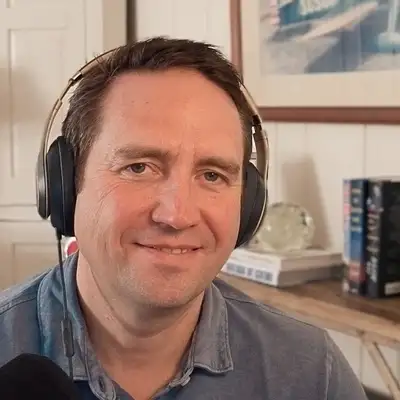
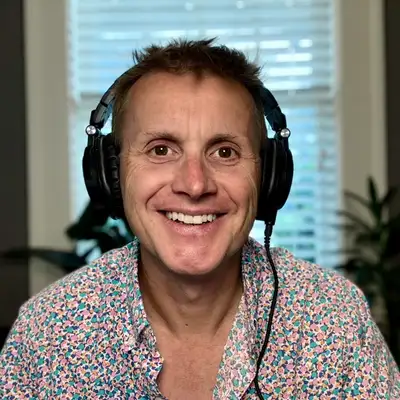
Space Insiders is your bi-weekly deep dive into the intersection of space, cloud technologies, and entrepreneurship. Hosted by Tony Sewell and Rob Ruyak, both seasoned space-tech executives, this podcast features candid conversations with founders, investors, and entrepreneurs shaping the future beyond Earth. Whether you're launching a startup, investing in innovation, or just space-curious, Space Insiders gives you the behind-the-scenes insights you won’t hear anywhere else.
New episodes drop every two weeks. Subscribe now and join the orbit!
Disclaimer: The views and opinions expressed in this podcast are those of the hosts and guests and do not necessarily reflect the official policy or position of any organization or employer.
Welcome to Space Insiders. I'm Tony Sewell, and Rob Reyak, welcome to 2026.
Rob Ruyak:Hey, Tony. Happy New Year,
Tony Sewell:my buddy. Happy New Year. How was your how was your Christmas?
Rob Ruyak:It was good. Had a really good time with the family and then went down to Florida to hang out with our family, which is always fun. But, you know, it was a little cold down there, surprisingly.
Tony Sewell:Oh, really?
Rob Ruyak:Yeah. I don't know what's going on with the weather in this country, but it was I know I know New York and, you know, other parts of
Tony Sewell:It's been surprising and warm here.
Rob Ruyak:Oh, yeah. It was you were saying that it was warm there, but then it was, like, you know, low mid fifties in in South Florida. So it was a little weird, but I had a great time. It was really nice time off.
Tony Sewell:Well, I'm looking forward to getting to the Australian summer in in two days. Like, we've been building up to this mood for the last six months and it's finally here. Did our sort of move and uplift just before Christmas. Thank goodness. We had initially planned to do it, but there was a lot more stuff just to get organised than I expected.
Tony Sewell:But it's been kind of interesting. I've been reflecting on it with Liz, my wife, about moving to another country is not just like moving to another state in that like I feel like we've really done a we've sort of taken stock of like how much stuff we have and you're looking at all your finances and your subscriptions and all this stuff and you're thinking about like how much of this stuff you actually need. It's almost been a bit of a cleanse. So there's a few things that I'd I'd like to do a bit differently. I'm trying to talk my wife into not re upping our Amazon Prime membership so we can be a bit more thoughtful about like just the stuff you can you can assume.
Tony Sewell:So that's probably I'll probably get in trouble
Rob Ruyak:for So as a lesson here, you gotta move out of the country to actually get organized because So Or get rid of all these useless subscriptions we all have. I was doing the same thing recently because, yeah, it's it's it's hard to look at this stuff all the time. And, you know, I was I was looking at all the different, you know, streaming subscriptions and all the other nonsense you just accumulate over the years. It's kind of like this. I remember this book that I read years ago around personal finance, and there was a chapter called The Latte Factor.
Rob Ruyak:And the whole thought of that was you can go day to day and, like, you know, do these types of things, but it's hard to think of it in the aggregate until you really sit down and look at it. So Yep. Everybody out there, I guess you got to move, you know, overseas and out of the country to actually reboot and get organized, which I I can't I kinda can see how that that could happen, Tony. So good for you.
Tony Sewell:Yeah. Anyway, we'll see how we'll see we'll see how how that goes. I'm getting I'm getting a bit of resistance to the the not not re upping Amazon Prime in Australia. So we'll see.
Rob Ruyak:I I don't actually understand that, but it's okay. I love you still.
Tony Sewell:Well, Rob, we we so apologies to our listeners. We obviously we this is our first sort of time we missed a a week with the Christmas period, but I don't know. I hope people haven't missed us too much. We're not it's not like we're Joe Rogan or anything. So
Rob Ruyak:No. We're close. But
Tony Sewell:it has been a cool time for us to kind of reflect on, like, what we've been doing over the last sort of eight or ten months. And 19 we've done 19 interviews, and and there's been some really good stuff.
Rob Ruyak:It's awesome. I mean, honestly, like, you know, we've talked about this before, Tony. I can't imagine a a better person, a better friend to actually do this with. And so it's been fun in general. But I think I can speak for both of us and say that we really didn't anticipate the fact that we would start seeing a lot of patterns across a whole diverse group of people that we've interviewed.
Rob Ruyak:Yeah. Everything from leadership and just the space industry and investing and all those things. And so, you know, for those of you out there listening, you know, Tony and I thought it'd be really good to take the last eight months, look at all the transcripts, and talk a little bit about kind of what we heard, what are those themes. And so we picked three today. One is around the software revolution in general, more specific to space, but just there's this kind of unbundling of different capabilities with the use of software, specifically in space.
Rob Ruyak:A whole pattern and theme around the data revolution and geospatial, geospatial intelligence and what that's starting to look like. And the last one really is around, you know, how do build and create a sustainable, profitable business like a startup, you know, with the changing capital landscape? So, we thought it'd be really fun for us to take some of those clips, talk about some of those themes, talk about some of the individuals that we interviewed. They're all were just fantastic people. And just and just have a conversation about them.
Rob Ruyak:And hopefully, those of you out there can can take some of these and learn from them and maybe put them to your own use. So, know, grab a cup of coffee or a beer or whatever time of day it is. Sit back and listen. And, you know, I'm excited to talk to you, Tony, about several of these.
Tony Sewell:Yeah, it's going be good. All right. Well, let's get started. So we're going to do a couple of clips on each of the themes. I love this first one.
Tony Sewell:So we're going to be talking about the software revolution. We're reaching back to our first two guests. So Laura Crabtree and Lucy Hoag, two amazing entrepreneurs that started software businesses. So let's start with this one.
Rob Ruyak:Let's start off with this first question. So try to tell us what really inspired you about starting Epsilon-three. What helped you make the jump from where you were before?
Speaker 3:Yeah, so I guess going back to 2020, when my life changed now for the better, I left SpaceX after almost eleven years and I really didn't know what I wanted to do next. If you've ever talked to somebody that works at SpaceX, you'll know that it's sort of like a divorce. And not that I've ever been divorced, I don't have that experience, but I've been through a lot of hardships and friendships and relationships and it feels like something is being ripped out of you a little bit.
Tony Sewell:Eleven years at SpaceX have got to be like dog years It too, I would
Speaker 3:is. Everything starts at one year at SpaceX is like three years in the real world. And so let's just say it was almost thirty three years at SpaceX. And I thought about what I wanted to do, and really the big picture of what I wanted to do was continue making an impact in the industry that I loved and still love to this day. And I thought that that might be at a bunch of startups.
Speaker 3:So I interviewed at a bunch of startups. And I interviewed at AWS. I talked to Aerospace Corp. I talked to Northrop Grumman. And the same story kept coming up, which was around software.
Tony Sewell:And
Speaker 3:you guys know this, but I'm not a software engineer. I disliked very much my software classes at USC when I attended there. But through the seventeen years I spent in the industry, I developed a love for software that I didn't know I could have.
Speaker 4:All
Tony Sewell:right. Laura's great.
Rob Ruyak:Yeah.
Tony Sewell:Yeah. It was a great way for us to start. I think the first thing that it's super interesting and less about the software piece, but I read an article over the last week, I couldn't find it, I was trying to find it, but there was an article in the news about the and I think it's in the wake of the news about SpaceX potentially IPO ing this year and just the, I guess, the alumni that that company has turned out, not only in space but across across all technology industries and the founders of companies that it turned out, and and Laura is a great example of that.
Rob Ruyak:She is. And you know what I find interesting about, well, the interview in general, but especially that clip. And I think this is why there's so many great engineers kinda turning out of SpaceX outside of, I think, probably obvious, you know, when we what we see on TV and and online, is that, you know, there is this huge, I think, unbundling of what companies are doing today with software. And when she talked about the software piece, as I think a lot of there's a lot of things underneath that that I think we've talked about with a whole host of other people too throughout the eight months. Right?
Rob Ruyak:I think one of them and I remember this, and I think she kind of alludes to this in my mind, you know, when she's talking about the software pieces. You know, there's a lot of these companies that are still sitting on Windows 95. We talked to Alvaro about that. Right? Yep.
Rob Ruyak:And Yep. You know, in in a lot of ways, it's not that surprising. But when some of the systems are upgraded in large companies, you know, there's kind of this like, wow, this is so nice after decades of 90s based, you know, technology. Like, that is kind of you got to wonder, like, how an industry like the space industry and what SpaceX is doing and everyone sees how advanced they've become and what they're doing, you have to ask yourself, you know, how important is it for companies to get out of this kind of monolithic, you know, hardware based era, especially in the space era now, and move to more software based modular systems. It's actually like should be not a privilege for its employees to have those tools.
Rob Ruyak:It's actually a right if they're actually going to Right? Be a successful
Tony Sewell:100%.
Rob Ruyak:And I think she'll lose to some of that, right, in some of her comments.
Tony Sewell:Yeah. I don't know if you've been on LinkedIn in the last sort of twelve hours, but Laura, she actually made a post sort of reflecting on the Epsilon-five and where she thinks going. She made this really interesting comment about how space is less about it's transitioning from being this niche thing to a real market. And I think what we're seeing going on in companies like SpaceX and Epsilon five and these new space companies are showing is that they're like, what that opportunity is. But I think as time passes too and this kind of bridges into the talent management side of it too and attracting the right talent, like, if companies want to continue to grow and sort of innovate in that space, the technology that they're running their business on needs to evolve as well.
Tony Sewell:Like she said, she was sick of what she saw in the in sort of the legacy space industry from a software perspective, and she wanted to make a change. And that's that's the stuff that's gonna attract the talent too.
Rob Ruyak:Yeah. 100%. Yeah. Absolutely. And I and I think she, also, I think, talked a little bit about it wasn't in this particular clip, but I remember she talked a little bit about just kind of the whole concept of these, like, you know, the on premises deployments versus the use of SaaS software.
Rob Ruyak:And I think that was part of her hypothesis she was proving out early days with Epsilon three, which I think she's proved, you know, which is in order to keep pace with not just quarterly and annual updates of products and software products and hardware assets. It's more around, you know, everyone wants these things now and they want it more iteratively and they want to see improvement and they want to see the feedback loop. And I think especially with, you know, with a Gen AI and the popularity of it, it's only going to get more and more that way where it's going be almost near real time that we're going to see, you know, insights and answers and software being able to be utilized for what, you know, engineers and other people need And to make so I thought it was a theme that we saw not only with Laura, but we saw it with Lucy, we saw it with Alvaro, we saw it with Will Crow, Chris Capon. A lot of these folks are all kind of, I think, in this kind of pioneering area around where software is the answer, legacy cloud based SaaS solutions are the answer.
Rob Ruyak:And that's going to make you competitive in the industry, especially specifically in space. And I think with space now, because it's so traditionally been a monolithic, you know, less competitive world, it's a lot more competitive now. So, adopting these things, looking at how to invest in them, and starting companies that make those kind of inroads are going to be really important to watch.
Tony Sewell:Yeah. And this will continue when we see the clip with Lucy. The last point I wanted to raise on this, and we did talk about this with a few people, but I think it's really interesting that Laura says, I'm not a software engineer. And she is such a great example of the opportunity for entrepreneurship in space. And we saw this in, I can't remember who it was we were interviewing.
Tony Sewell:We talked about how twenty, thirty years ago a career in space meant you're an engineer working for a Lockheed Martin or Boeing or one of these companies, but there is real entrepreneurial opportunity. And if you have that spirit, you have the skills, you know how to bring in the right people, you can build an amazing business.
Rob Ruyak:Think an important point to make too, Tony, because you and I both have been in this world, that it's also opportunity for being an intrapreneur. Like, you work for one of these big companies, you want to be a change agent, you want to do something different. It's really hard to do that. We've been in those roles before multiple times. But you also don't have to go to a startup to make a difference and take advantage of these trends these types of changes.
Rob Ruyak:So, you know, think about writing that business case. Think about writing that paper. You know, if you work at one of the big defense contractors, like, there's a lot of necessity. And I think, you know, there's definitely more than enough market trends going on right now to tell you that the these companies need to adapt. They need to get off of Windows '90 five.
Rob Ruyak:Yeah. They have to get off these old systems, you know. And just saying, oh, here's our new collaboration tool isn't the answer either. You know, treat your internal customers like, you know, their customers.
Tony Sewell:Yeah.
Rob Ruyak:So Alright. So, yeah, I think there's lots of opportunity.
Tony Sewell:Cool. Alright. Well, let's let's go to the clip with with Lucy.
Speaker 5:So the inspiration for the company and the product is a pretty classic founder stories story in a lot of ways, basically born out of frustration. I feel really lucky to have worked at these like world class institutions and you imagine you get there and they're building rockets and self driving cars and it must be the best software in the world and it's the total opposite. In fact, it it was shocking to me how consistently, you know, through all these different places and all the over all these years, it actually got worse in some ways.
Tony Sewell:Yeah. So for just to reintroduce Lucy. Lucy Hoag, she's the the founder of Violet Labs, but she'd previously been in she was in she was on Amazon, the Kuiper program in the early days, but she'd been at Google and Waymo and such a I mean, it's a pretty typical sort of observation, but again, a great example of someone that's just sort of seen how the opportunity to really kind of change the way things are being done.
Rob Ruyak:Yeah. I agree. And I think everyone can resonate with her comments, you know, around, frustration. There's integration problems like wiring systems talking amongst each other. Why is data not being shared?
Rob Ruyak:Are part numbers being I think she mentioned at one point why are part numbers copy and pasted all over the place with disconnected systems? It just reinforces the you know? And I think it's not okay for us to say, just do it. Like, are hard
Tony Sewell:And problems to solve. There've been good reasons why companies have kind of pushed back on trying to move forward. Like, really, I mean, you think about ITAR and cybersecurity and these are key issues that if not change managed correctly can really come back to bite a management team. And there are big stakes and it's not just the success of the business. I mean, there's jail time potentially if you don't manage this stuff right.
Tony Sewell:So, I mean, you can empathise with it, but then, like to your point about don't necessarily need to be in a startup to make these sorts of changes, I've seen examples. I mean, are really good examples in other regulated industries, like space is lighter to this, but you think about financial services and healthcare, they are regulated industries, different stakes, certainly different types of regulations. But they've they've been able to to make that change, and they've kind of leap forward with with cloud and SaaS and whatnot. So
Rob Ruyak:And these two extremely impressive entrepreneurs are taking advantage of those opportunities to try to solve those problems differently. Right? So, but you're right. I mean, there's so much risk in general with especially in this industry around export controls and in their tight hook and link to defense and national security that it's it's, you know, the change management piece is very difficult. Right?
Rob Ruyak:And and all this stuff costs a ton of money. And I think if you're in an industry, a large established company in this industry for decades, and you're seeing a lot of this activity happening, it's a bit of a wake up call, but it's also an opportunity for you to try to think about, like, where are areas that you can make a change and differ so you can be competitive? And again, these two voices are people that worked in large companies, you know. So, these are not, you know, know, with all due respect, they're not college kids with no experience having a good idea. Right?
Rob Ruyak:Know, this is a real thing. These are real businesses that these women have started, are going to be very successful in taking advantage of those opportunities. So, So, I think this kind of global unbundling of the way that space companies operate in particular, because this is a space podcast, is also part of the theme here. And I think the use of software is no surprise of where some of those opportunities lie. A few other people we talked to, I think Chris Capon, I think Elveraux, those two folks are also doing something very similar in different areas, yet connected to what Lucy and Laura are doing.
Rob Ruyak:And I think they all would, if we had them all on this podcast, they'd all share the same commentary around what the opportunities are and what the problems that they're trying to solve.
Tony Sewell:Yeah. And I think just sort of thinking about some space companies that have been doing it well and how they've approached it, I mean, lot of this because a company's not necessarily just going to make a decision about, well, there's a specific tool that Violet Labs or Epsilon or V or whatever have, but a lot of it starts with it's defining that having someone that has the vision around the data strategy and sort of and I mean, there's a really good example and this is a public use case. So David Barth, who was the CIO at OneWeb, embarked on this pretty ambitious project from a satcom perspective to bring in Snowflake, to really kind of reimagine the whole architecture and the way that data is shared across different parts of the organisation and sort of breaking down those silos and looking for ways to expose certain data sets to supply chains and whatnot as well. Once you sort of create that foundation, then it really unlocks opportunities to start modernizing in other areas as well.
Rob Ruyak:Yeah. No. I think and you need people like that. I don't know him, but I think you need people like that who are, you know, looking at the opportunity and saying, like, there's a compelling event or there's a competitive need, you know, that we need to needs need to drive us to do some of those changes. And I think if anyone reads any of the 10 Ks across the defense contractor, defense industrial base group, you will see each of them, at least some of the top ones, such as the Raytheon or the RTXs, the Lockheeds, and those, they are publicly talking about their transformations internally because of some So, of these it's an interesting way to look at it, too, if those out there are interested to see how the actual, the large defense contractors are doing it.
Rob Ruyak:They're publicly talking about it because I think they're realizing that they need to adapt some of this software revolution that we're seeing as well.
Tony Sewell:Well, I think this is a good transition now to the data revolution, and I prematurely hit play on the clip there. But let's start One this with of my favorite interviews was with Will Crow, the CEO and founder of HEO, an Australian company doing I'm gonna stuff up the acronym here. Space Imagery?
Rob Ruyak:Mhmm.
Tony Sewell:Yeah. Yep. So, as opposed to Or
Rob Ruyak:non Earth imaging.
Tony Sewell:Non Earth imaging. Non Earth imaging. Yep. Thank you. Alright.
Tony Sewell:So let's go to the clip.
Speaker 6:Co founder and CEO of Here, and what we do is take photos of satellites from other satellites. So we, use our software, kind of work with other companies that own satellites typically for Earth observation. And during that downtime, which actually is a reasonable amount, so over the ocean, they don't have a lot to do. There's not much to look at while they're at the ocean. During those times, we can, apply our software, turn the cameras around on the satellites, and take photos of other spacecraft as they fly past.
Speaker 6:And this, kind of area is actually it's got a name, not a great name. It's called non earth imagery or NEI. And, really, what it's about is just taking objects of or taking images of objects, sorry, in space that aren't the earth. Sometimes Earth is in the background, so Earth is part of NEI as well. But, yeah, that that's the name, and and it's kind of sticking, that's what we're dealing with here.
Speaker 6:So that that's what we do at here.
Tony Sewell:Yeah. I remember we met a couple of years ago and you were telling me about this term of non earth imaging. Super interesting. Mean, this it doesn't seem like there's a lot companies doing this. Is this something that HEO is really kinda pioneering?
Speaker 6:Yes. In a way. So, yeah, HEO, actually, I guess, invented this technology, but it was a reinvention. So this technology was already around, for at least the last five decades, so fifty years. And I believe it started as a declassified report now, the first, known NEI image.
Speaker 6:It was in the 70s and it was a US satellite looking at a Russian satellite as it flew first by. And I can't remember quite if it was an accident at first or if it was just convenient that they thought maybe we'll try and turn around and see what they see. So it's been happening for the last five decades, but it was super secret. No one was allowed to know that this was a thing. You couldn't even say the name of it outside of a special specially protected room known as a skiff.
Tony Sewell:That was such a cool story, and I'd I'd love love that that what what we'll share with you in that one.
Rob Ruyak:I thought he was one of the most interesting people. Yeah. Because, I don't know. When he when when when you guys were talking about the non Earth imagery stuff, which I had never heard that term before, and then he described it, you know, it it it made me, for whatever reason, it made me think of how Uber started, which was, you know, you you know, I think Uber started where, you know, you had like the black car limo service. And in between, you know, somebody picking someone up and dropping them off, there was a there was time that was wasted.
Rob Ruyak:And the idea was, can you create a business model where those folks could go? And maybe they do a couple trips in between within the scheduled time that they had been reserved for. And we described the non Earth imagery as, Well, there's satellites up there. And when they're over the ocean, there's some downtime. And so, why don't we turn the cameras around and start looking at other satellites?
Rob Ruyak:And we can use that data in a very different way. We take pictures of other satellites and see if they're actually operating correctly. There's probably other defense and national security use cases there as well. But I thought that was really neat because to me, the technology was fantastic. It was surprising that some of this stuff had been around for so long.
Rob Ruyak:Yep. God, that guy is so smart.
Tony Sewell:Yeah. They're
Rob Ruyak:incredible. Yeah. Then being able to create a new business around it.
Tony Sewell:Yeah. There are a couple of things that I love about the story. The first one is just the fact that what was really interesting, you go back and have a look at the interview, we'll talk a little bit more about it, but they were uniquely positioned to be able to do this because they were not an American company and the laws that were related to leveraging this technology didn't apply to them, which ultimately led to this whole concept of non earth imagery being declassified. And they're having success with the US government now, they've opened an office over there. So think that's just such a great aspect of that story and it just shows you don't necessarily these ideas are not all coming out of one place or they're not necessarily coming out of The US.
Tony Sewell:The other thing that I really love about it, and this will link to the funding discussion we're going to have in our next theme, is the fact that, I mean, kind space of one of the things that's been challenging for startups in space is because space tends to be a very hardware centric business. I know once we get to the discussion with Patrick, he talks about we'll talk about how like, funding is really challenging until you get you can drive revenue. So if you're developing hardware, it's really difficult to to get funding, to build your thing. So, like, what what is what's really cool about Will has done is saying there's this opportunity with hardware that's already there. We can invent a new business model, a new operational model around that to monetize it and bring something new forward.
Tony Sewell:And the other cool thing is this wasn't where they started. And he talks about the iterations of the business because HEO used to be called HEO Robotics and now sort of they're also really heavy into the sustainability side the sustainability side of space, which I absolutely love as well.
Rob Ruyak:Yeah. Huge market there, and I agree with you. I mean, there's it's just I mean, there's so many things I love about this market. I mean, there's the technology part. We talked about this too.
Rob Ruyak:There's technology part, but there's like, everything is being impacted or changed or looked at. You mentioned regulation. That's a big one. Policy is another one. You know, international collaboration, how all that works.
Rob Ruyak:You know, there really are no physical boundaries, you know, when it comes to space. Yeah. Really, there aren't.
Tony Sewell:Every business is a global business.
Rob Ruyak:Business is a global business, which is, you know, it's bringing people in, you know, in the world closer together in in in a whole bunch of different aspects. And then I think the other one, which is really kind of underpinning anything that has to do with imagery, whether it's, non Earth imaging or it's geospatial, and it's like this in enterprises for the last, I'd say, fifteen, twenty years, is this kind of concept of data democratization. And then the question is, what are all the interesting things I can do with it? You know? And I think for Will and his team, you know, there I think the I mean, there's I think there's an unbounded amount of opportunity.
Rob Ruyak:How many companies are actually in this non earth imaging space? You know? And then, no pun intended, and how you can actually what what can you do with that data? And what can you do with it, the derivative forms of that data, like intelligence you might derive from that data? Or what can you do with it once you mesh it with other information, which is like what we talk a lot about when we talk to Phil Cooper and Nadine Alame around geospatial.
Tony Sewell:Yeah. And one thing that he ends up going on to talk about, because obviously there's a strong intelligence component of their business, is why the US government and other governments will be interested in it. But he also talked about from a sustainability perspective, how they can apply the same sort of computer vision and those sorts of technologies to space assets. Because in the past, companies launched these, in some cases, hundreds of million dollar assets. And once it's launched, there's really limited opportunity to maintain it.
Tony Sewell:And he talked about an example of rail companies in The US, they'll drive these engines through tunnels that are set up with all these cameras looking for issues, safety problems, maintenance issues, being able to apply that same sort of concept to space now and help companies actually manage these assets and get more life out of them. The And sustainability component to that is really interesting. I think it's super important too because is becoming a big sustainability of space and of our orbits is becoming a much bigger issue.
Rob Ruyak:I like that, Tony. And first of all, I forgot about that with the train. I thought that was so cool. Yeah. But but, yeah, I I mean, frankly, you know, going into next year, I think we should I think we should have we should have a lot of discussions around space sustainability.
Rob Ruyak:I like what you said. Because we haven't had many of those. And, frankly, you know, you see it come and go, but I definitely think it's something that's kind of on the back burner in a lot of the most important conversations you see out there. So, yeah, let's let's get some folks on and
Tony Sewell:and talk about that topic. Focus on that. Yeah.
Rob Ruyak:It's a really good takeaway, though. Yeah.
Tony Sewell:Cool. Alright. So you mentioned our interview with Nadine Alameh, so let's queue up that clip.
Speaker 7:Yeah. No, absolutely. We often, Sohrab, you've probably experienced it, the most common use case that clicks with people is usually disaster response. And nowadays we're getting more frequent disasters, and we're getting more severe disasters. And disasters impact us as people, right?
Speaker 7:You, your family, your life, right? So imagine, right, that you're the mayor and you know a flood is coming and you've got to evacuate half of the town, right? And you have to figure out, you know, which like who do you evacuate? When do you evacuate them? Where do you evacuate them to?
Speaker 7:How do you send the critical resources there, right? Who do you notify? How long, right? How do you keep track of the weather and on top of all of this? What is the elevation of your town?
Speaker 7:So you can see which areas are more prone to flooding or not. What are the mobility patterns? Where are people concentrated? What's their socioeconomics? So all of this is why you need standards because the mayor or any decision maker doesn't have five days, right?
Speaker 7:You have, you know, hours, minutes, and now with AI, even faster, right?
Rob Ruyak:Yeah, Nadine is awesome, right? And I think what she, in my short summary, defined was that kind of this democratization of data moment in geospatial, right, and applying it specifically to a very important use case. You know, we, you know, in this world where we are not devoid of natural disasters and other, you know, challenges that we have, and we can probably do a lot better and and being able to have access to a lot more information. Traditionally, we've had access to information, but how do you actually integrate and make use of it is important. And I think the one thing she doesn't specifically call out, but what I think we heard with other folks like Phil Cooper when we interviewed him was, especially in this geospatial area, if you have more standards, you have more access to data, then it's not just about, you know, a location, but it's about, you know, being able to mesh that with context.
Rob Ruyak:Right? Yeah. Because it's not just about the satellite data. It's not just about maps. It's actually about how now, with all this access to information, you can actually build context around a particular use case.
Rob Ruyak:So, for example, a natural disaster, what's the availability of certain fire trucks and ambulances and just resource to actually respond in a timely manner? And Ken, based on a lot of that context, can you actually forecast the arrival of you know, help, you know, when it's needed? Or maybe even forecasting a particular event like a, you know, a bridge that might be in dire need of a retrofit. So, I think the one thing that I loved about our interview with Nadine was that, you know, the excitement and we talked about how exciting it is to talk to her because she's so excited about, you know, being able to have a lot of this access and being able to really have some intelligence around it so you can actually put it to use. It's not just about finding a location.
Rob Ruyak:It's about all the context we can do with it. And specifically around the natural disaster topic, I thought was interesting when we talked to her about it.
Tony Sewell:Yeah. And what is really cool about that discussion too, and she's so passionate about standards and I don't know, you hear standards and my eyes want to roll back in my head sometimes. But it's not about the technology, it's a key enabler of the technology. So it doesn't matter how good the tech or the algorithm is if you can't actually sort of bring together all these disparate forms of data. So, I think her mission around creating these standards, and know Phil Cooper was right into this as well, it's such an important aspect and unlock to all these new use cases.
Tony Sewell:So, yeah, don't ignore the boring stuff because it, like, that is a is a really important part of it.
Rob Ruyak:Yeah. Yeah. I you know, we also talked to her a little bit about it's not in the clip, but we also talked to her a little bit about how AI might you know? Is AI gonna kinda, you know, forego the necessary needs for standards? I I don't think it will, but I think it could help speed up Yeah.
Rob Ruyak:You know, the use of information and driving context and and all that that standards actually try to address. But I agree with you. I used to be in the standards world in my first stint in professional life. And, yes, that word is not sexy. And when you hear about it, like, actually, it's not even that.
Rob Ruyak:I think when you hear standards, it's like it has to be the ultimate kind of collaborative event to try to agree. Like, consensus is hard. And like, whenever I hear the term standard, I think consensus. And it's just it's yeah, I agree. My eyes roll back, too.
Rob Ruyak:Yeah. But she's definitely a pioneer in that area.
Tony Sewell:But it is another, like, another one of the another example of one of the things I love about the space industry, and we talked about how, like, every space business is global. There is a real like, the international collaboration is really important. It's not something that can be done by one country or one government. There is so much collaboration across it because it is truly an international space and orbits our international resources. That's why things like standards and sort of discussions around sustainability are really important for us to be able to get the most out of it and continue to, as a species, benefit from it.
Rob Ruyak:You know what? I love what you just said because I actually it'd be interesting to kind of do some research around this. How do standards come to be? And I think it's what you said. I think there needs to be something that's, like, really important that everybody shares that's important.
Rob Ruyak:Like, you know, dealing with natural disasters or extending human life or, you know, dealing with pandemics. Like, there are large things that normalize, you know, what what impacts us. There are not unilateral those events.
Tony Sewell:Yeah. They're not unilateral decisions that that move things forward or allow this stuff to work.
Rob Ruyak:Yeah. So maybe that's the lesson there is, you know, like, you know, let's, you know, pivot off of a, you know, I don't know, deterring that, you know, you know, international conflict of some way. Like, what is it that all all the stuff that needs to come together across multiple different countries, multiple different languages, multiple different cultures actually solve that particular problem? And I think then there's business opportunities that come out of that instead of saying, I have a really good idea and I need standards to do it. And then you push that rock up the hill, you know?
Rob Ruyak:So, that's a good point, Tony. Yeah.
Tony Sewell:Yeah. And just look. I'm not gonna get into politics, but, I mean, that is one of the kind of the, I think, the challenging things about the environment at the moment. It kinda feels like there's we're sort of retreating away from that global collaboration and it's super important. But anyway.
Tony Sewell:Yeah. Cool. Alright. Well, look. Next, we're going to touch on the, I guess, the capital discussion and a couple of super interviews with Patrick Johnson, formerly of Silicon Valley Bank.
Tony Sewell:I don't know if it's public where he's going yet. I haven't haven't kept up on that. And and also Carsten Drachman from from GumSpace. But let's check out the clip with Patrick.
Speaker 4:You can fund your business with customer revenue. You can fund your business with external venture capital, what kind of equity dollars that come in, or you can fund your business with debt. Those are effectively the routes ahead of you. And then obviously, if you look at various combinations of those three, kind of those three funding buckets, there's definitely a lot more attention on the customer revenue side. And that's even a thing where it used to be you could raise a seed round or even a Series A round pre revenue.
Speaker 4:Like that's no longer the case. Now venture investors are really demanding just different metrics in order to fundraise and for a company to be viewed as investable. Even So at the early stage, I'm hearing from founders that to raise a pre seed, they're expected to have like a million or more in recurring revenue, like for their own software company.
Tony Sewell:Yeah. I mean, sort of previewed my point on this in the last section, it's a real conundrum for the space industry in this, particularly if you're in the hardware game, he just said it, those early round funding opportunities are not there if you're not generating revenue. And it also reminded me of a point that Alvaro Ruiz, founder of Lanespace, brought up. They'd just gone through a funding round successfully in Europe, but he was sort of commenting on how investors are seeing the opportunity in space, but how, as a software company, he's being compared to other SaaS options, which can be more challenging for for these sort of these investors to to recognize as well.
Rob Ruyak:Yeah. Actually, you know what? I think the my favorite part of that interview, if you look at the video, is the big bandage on my forehead, forehead surgery and all these stitches.
Tony Sewell:Can still can see the scar on your head. Thanks.
Rob Ruyak:Yeah. Yeah. Yeah. Yeah. Yeah.
Rob Ruyak:For that for those of you out there, especially if you're young, like really young, you know, wear your sunscreen when you're young. Okay? Because about twenty, thirty years later, stuff starts popping up. But I digress. I thought it was enlightening to me as well because when you see all this activity around, let's say, AI in particular, you got to ask yourself, how in the heck are they raising all this money?
Rob Ruyak:Because they're not. Are they really making money now? No, I don't think these companies are. And that's fine. I mean, I think, you know, we've seen this kind of wave of there's lots of capital out there.
Rob Ruyak:There's lots of investors. There's private equity. You have venture capital. They need to deploy this capital in order to make any returns for their LPs and their own investors. So, I think for a long time, I would say over the last fifteen, twenty years, you've seen kind of these bursts of lots of investment in startups in areas that frankly haven't really proven themselves yet, especially in the earlier stages and the stages that redefine themselves too over time.
Rob Ruyak:But I think in this particular market, what I took away from this interview with Patrick was that the space market, at least from his view, seems to be a little bit more of that kind of traditional fundraising approach for investors. Maybe it's because, you know, I think he mentioned, you know, 80% of a lot of the deploy 60% of the venture capital dollars right now are going into AI companies. So maybe it's, kind of that's where a lot of the bets are being placed, and that's why. But I don't think so. He mentioned you've got to raise a lot of more money because there's a lot of CapEx in developing most space companies, you're not kind of what we were talking about earlier, purely software based.
Rob Ruyak:But I think that was pretty enlightening to me. It seemed to me that the takeaway is, probably have to rate depending on what you do. Let's say if you're a satellite operator, you're going have to raise more money. Have more capital needs, and therefore, there's more risk. There's longer development cycles.
Rob Ruyak:Your customers may be government. And we all know that those kind of sales cycles are very long. So, yeah, it's going to be harder to probably raise capital for your And I guess the last thing too to say is, which I think you and I talked a little bit about this, I think, in one of the intros around Firefly Aerospace when they had their IPO. The interesting thing there is that they have had a very concerted effort, at least it appears. And I think in their IPO filing where they have been focused on generating business within defense and national security.
Rob Ruyak:And they have a backlog and they've won contracts. I think that's the other thing too, to me, was kind of this proving the revenue part out. And I think for those out there, especially in the space industry, government is naturally going to be a customer in space still. And the backlog is important. Look at all the big defense contractors out there.
Rob Ruyak:What do they report against? They report against their revenue and they report against their backlog, right? And so, I think those to me, having interviewed Patrick, those are really important and probably more important than you would naturally think about if you're traditionally in a commercial market, start the It's different, right? And so, yeah, it was interesting. I I I thought it was very enlightening, some of those points that he made around the fundraising piece.
Tony Sewell:Yeah. That and that's a a super segue to this next clip with with Carsten Drachman, CEO of GomSpace, where he's going to where I don't know if we cover it in the actual clip, but it really emphasizes execution, and that's really what we're talking about. So let's check this out. Gomspace as a as a Danish Danish Swedish company, European company, do you see advantages or disadvantages as far as your posture looking at the global market and the opportunity in The US and elsewhere?
Speaker 8:Well, a couple of things and maybe winding back, while we say we are a Danish company and we are, we have founded here. We just one very distinct thing that I've said, I'm a lot in the media and Denmark also where I'm basically telling the government that I think they're really slow and they're completely on invested in space. Denmark is one of the few countries in the world that has not bought any space technology, maybe some grants and funding, whatever. But what that has created is at Comspace, we are really good at export, which means we never sold a single thing in our own country. There is many of our competitors, especially around Europe, Germany, France, Italy, they are feeding off the government because there's so much that's that's leading me into why can we compete in The U.
Speaker 8:S. Market. The U. S. Market is just another market, if you like, that has some distinct characteristics that you need to understand.
Speaker 8:I understand some of it. I'm not an expert. And then we've hired some good people that knows how to work with the IDIQs and firm contracts and all those kind of things, understand where the budgets are coming, the good old win, where do you find out what money is going on with that. So of course, we can follow that. And there's no reason why we can't sell in there.
Speaker 8:Maybe we don't want to hold a direct government contract, but we don't have to because I think The U. S. System is very allows for this competition where Europe is much, much less competitive. It's much, much more focused into individual countries, which makes it hard. Whereas I think The US is great because it's actually very open to innovation and other companies outside of US as well.
Tony Sewell:I love Carsten is he's so blunt and frank and and and just kinda tells it as it is, and you gotta you you'll see that from other other parts of the interview. But he was really as we spoke to him, he was very focused on because he's managing a business at a different time of the cycle, so they have the technology, this was a turnaround, but what you take away from that clip is that they understand how to execute business and how to bring in revenue. So I think the export message was a that was a really interesting kind of nugget out of our discussion with Carson and how he sees they can be really successful in this segment going up against potentially other American companies because they they know how to do business internationally, and that's that's how they've they've built their business.
Rob Ruyak:Yeah. And it's hard. I remember I asked him, you know, how do you even start with the international side of things? And, you know, there's a lot of opportunity out there, and I loved the interview with him too. I think one part was, like, the focus on people, which you and I need to talk about in a separate session because that was really enlightening for me.
Rob Ruyak:But back to
Tony Sewell:the That's a key ingredient for execution. It is. Well,
Rob Ruyak:you know, some would argue it's, like, the only main ingredient. Right?
Tony Sewell:Yep.
Rob Ruyak:But aside from that, and to your point, you know, it's it's one it's I think what we what what we talked about with him was there's there's how do you turn a company around? How do you focus on international as a key part of your business? Because like we've been talking about over and over again, space companies, I think by definition, global. But I think the other part, really, we also talked about with him a bit in that interview was the global opportunity has changed when it when it comes to things like the fact that now that European countries through NATO have to contribute 5% of their global GDP for defense. That is if you if you do the reading now after the last several months of that commitment, space is one of the number one parts of that.
Rob Ruyak:Right? And so if you look at what Patrick said about raising money and how important it is to focus on revenue, we've talked about having backlog of contracts. Karsten reiterates that, you know, with a couple of examples and how he's going global. Right. He said there's innovation opportunity in The U.
Rob Ruyak:S. Those are contracts. And then we see budgets like, you know, growing over in Europe for bigger opportunities. You know, a lot of these things, I think, are lining up for like a very rich business case for companies to raise capital and see that and implement the vision they have. The last thing I'll say, too, is, you know, if folks are listening and they're not that close to this, there is a fundamental shift happening in The US around how defense and national security agencies in a good way are now actually changing how they do contracting to embrace commercial products and not just working with requirements, building a new unique kind of exquisite platforms for their particular need, for a particular mission.
Rob Ruyak:And so, you look at opportunities to make that business case to raise money. You can look at the changing landscape around contracting in The U. S. You can look at the global defense contribution now, roughly a 5% GDP in Europe. And then you talk to someone like Carsten, who's really, really well versed in, okay, well, how do you take advantage of those opportunities?
Rob Ruyak:How do you build an international business plan? How do you focus on contracts? And then how do you get the people aligned? That was one of my favorite interviews. Like, I think it it was really enlightening.
Rob Ruyak:A lot of those takeaways were things that were like golden nuggets. I think that, you know, if you're a again, if you're an entrepreneur at a big company or an entrepreneur are are really were great takeaways.
Tony Sewell:Yeah. And I like how you bring up that point about how sort of the contracting landscape is changing in The US, but I think it's a really good example of that what customer orientation that's really important, and I think about it in the way that I do business in my day job, but understanding how customers want to buy. And Carson had a message in his like, one of the reasons that he said he'd been successful in, I think in Indonesia or Singapore or one of those markets was that they were addressing the customer's real problems. It wasn't necessarily about the tech, it was helping them solve problems. And ultimately this is what it's all about and you look back at all the discussions we've had today, like the message from Lucy and Laura and others, It's about solving problems, not just sort of forcing in new technology because that's what it's all about and that's where the opportunity So it's going be a fascinating year, I think.
Tony Sewell:It's not gonna be a dull year for space and defence and, like, there's gonna be some big sort of things happening in the market. Like a SpaceX IPO is gonna be super interesting to see what that leads. Amazon, Leo, I'll give them a plug. They're going live this year, so I'm excited about that. But there's so many many things going on.
Tony Sewell:So yeah.
Rob Ruyak:I don't know. Tony, I I think and I'm not I mean, '26 is huge for space Yeah. In so many different ways. I mean, like, everything you mentioned, and then there's also Artemis two. I mean, we actually might see humans orbit the moon.
Rob Ruyak:I mean, that is nuts. Yeah.
Tony Sewell:And all the comedian the commercial space station stuff. I mean, I I And the stations. Yeah. I think that's
Rob Ruyak:Axiom, StarLab, Blue, you know, all of those. Yeah. It's going to be
Tony Sewell:They're a blue going to go commercial this year too.
Rob Ruyak:So, oh, my gosh. So, Tony, we got to keep it up.
Tony Sewell:We do. This has been fun. It's been a fun little retrospective. And I think we'll do another one of the Rob and I have been sort of talking about the ingredients of the next episode, but we might even we've got an idea for a special guest we want to bring in, it could be a really fun one. That might be one for a cocktail, although I'm gonna be on the other side of the world.
Tony Sewell:So either I'll be having a really early drink or you will be. So
Rob Ruyak:It's fine. I'm fine with that. But let's get through let's at least get through January because I am trying not to do that.
Tony Sewell:Oh, really? Okay.
Rob Ruyak:Well, there's nonalcoholic beers, I guess. That's that'd be real. I think that might even be weirder to have instead of coffee. Yeah. But, Tony, I I've loved doing this with you over the last
Tony Sewell:or so
Rob Ruyak:months, and and I I wanna wish you luck with your move this week back to the homeland. I hope to see you down there this year. I think it might work out, you know, so we can do that. And and, you know, personally, I think you know, I I'd like to thank all those that have listened to our podcast. And I think the only ask that we really have for those that are interested is provide us some feedback.
Rob Ruyak:Send us direct messages if you'd like on LinkedIn. Yeah. Because this is a lot of fun for us, but, you know, we want to make sure it's interesting and fun for all of you too. So, recommendations on, you know, clips or themes, you know, topics, people to interview, what you want to see and hear better from us. We'd love to get that feedback.
Tony Sewell:Yeah. We'd love that. And definitely, write us a review as well. We'd love to get some internal feedback. We did talk about this a while ago, Rob, but actually perhaps surveying some of our followers.
Tony Sewell:Know we celebrated hitting the 400 mark on LinkedIn not that long ago. We're pushing 500 fairly shortly. But yeah, we're keen to try out a few different things this year and hear what you're enjoying. So with that, Rob, great show. Looking forward to the next one.
Tony Sewell:And I'll be next time I speak to you, I'll be speaking to you from Melbourne, Australia.
Rob Ruyak:Safe travels, my friend.
Tony Sewell:Good stuff. And thanks for listening, and thanks for supporting the show in 2025. We're really excited about '20 so we'll talk to you soon. Thanks, everybody.