Subscribe
Share
Share
Embed

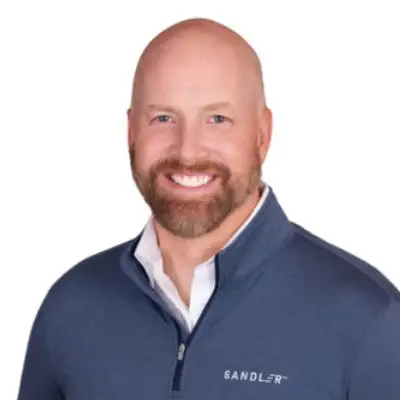


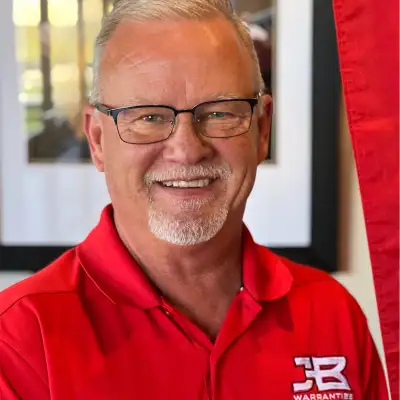
HVAC Full Blast is your bi-weekly dose of HVAC business growth, powered by Trane. Hosted by Mary Carter (Trane Technologies) and Stephen Ross (Sandler), this podcast is built for residential HVAC dealers who want to scale their business, sharpen their sales, and lead with confidence.
Tune in for expert interviews, dealer success stories, and practical tips on pricing, service agreements, workforce development, and more. Whether you're in the field or in the office, HVAC Full Blast helps you stay ahead in a competitive market.
Interested in becoming a Trane Dealer? Visit our website at https://partners.trane.com/
We'd love your feedback and suggestions on future episodes. Please email us at hvac_full_blast@tranetechnologies.com.
This podcast channel is for general informational purposes only. The views and opinions expressed in these episodes are those of the panelists and do not necessarily reflect the official policy or position of Trane Technologies. Trane Technologies makes no warranty or guarantee concerning accuracy or completeness of the content presented in this webinar.
Trane does not provide tax, legal, or accounting advice. This material is for informational purposes only and it should not be relied on for tax, legal, or accounting advice. Tax law is subject to continual change. All decisions are your responsibility and you should consult your own tax, legal, and accounting advisors. Trane disclaims any responsibility for actions taken on the material presented.
All trademarks referenced are the trademarks of their respective owners. ©2025 Trane. All Rights Reserved.
Join hosts Mary Carter and
Steven Ross as they sit down
with Tommy Q from GB
Warranties for an eye opening conversation
about extended labor
warranties, hidden business
liabilities, and protecting
what matters most.
Whether you're a contractor
navigating the complexities of
warranty programs or a
homeowner trying to understand
what's really covered
when your system fails,
this episode delivers the
insights you need to make smart
decisions and avoid
costly mistakes.
Let's get started.
Welcome back to HVAC Full
Blast. I'm Mary Carter.
I'm Stephen Ross.
And we have an
amazing guest today.
I'm so excited to catch up with
Tommy Q. Tommy, how are you?
Mary, I'm doing fantastic.
Thanks for having us.
Steven, thanks for the
invite as well, sir.
We appreciate it very much.
Yeah. You bet, Tommy.
So Tommy, for those
of you who don't know,
is the VP of Strategic
Partnerships at JB Warranties,
which is a company that we've done
a lot of work with side by side.
And you play, Tommy, in the
extended warranty space,
or is it even bigger than that?
Play in a lot of
different spaces,
especially with
Trane Technologies,
but typically HVAC and plumbing
extended labor warranties.
There's a little bit
of confusion about limited
warranty versus labor.
So let's make sure we understand
we're selling a labor product.
Okay. Perfect. Actually,
maybe we'll start there.
Can you maybe give us the thirty
thousand foot view of the difference?
Because I'll be honest, I have
sold JB Warranty's products
before, but even I get a
little tripped up on it.
Gotcha.
So the thirty thousand
view, if you will,
every manufacturer has a
base warranty and typically
when registered,
it could carry that base warranty
out to ten or even twelve years.
So that's on the manufacturer
to cover those parts for that
length of time.
What's changed over the last
several years in states like
Florida, Texas, California,
they don't require equipment to
be registered anymore.
So it comes with the longest
stated limited warranty.
We're starting to see that
migrate in other states.
So that's the limited side.
And what JBW does is
we sell labor plans.
So we're covering mechanical
failures at a purchase
labor rate of somewhere between
eighty five dollars an hour and
three hundred dollars an hour
reimbursement to the contractor.
Okay.
So we're covering
that contractors late.
Gotcha.
Because I feel like those
mechanical failures come up, right?
In general, these are machines with
moving parts that in most cases live
outside just like
your car, right?
And so mechanical failures
are bound to happen,
But the shocker as a
homeowner, at least in my case,
has been when the bill comes
to pay for the nice person
actually doing the
work on that unit.
Right?
I mean, you know, they're they
gotta make some money too.
Yeah.
Part of our onboarding process
with contractors across the
country is understanding the
value of ensuring that piece of
equipment for a length of time.
What we see happen more times
than not is they go out and
they buy a nice air
conditioning system,
a very efficiency inverter
driven air conditioning system,
a fan motor or blower motor fails
four or five years down the road.
All the homeowner remembers is it
had a ten year limited warranty.
Now your contractor is going
to give them a bill for several
hundred dollars to replace
that in warranty part.
So what we try to do in
coaching dealers and best
practices is offer warranties
at point of sale to the
consumer on their bid proposal
and be inclusive selling
whether it's a two year
plan, a three year plan,
a five year plan or
even a ten year plan.
We don't really care just
as long as you're providing the
consumer a peace of mind
Because what happens is
inevitably five
years down the road,
it's a bad experience if
they don't have a labor plan.
And the homeowner,
just like I would be,
I'd be upset if you give me the
opportunity to ensure what has
become a very expensive air
conditioning system in our industry.
Just like cars, we're all buying
extended warranties on cars, right?
It's a great example that
you started off with.
So it becomes a very valuable asset
to the consumer and for the dealer,
because what we're doing is
we're putting that dealer in
front of that homeowner every
year for maintenance, right?
And so they're building
that camaraderie with that
homeowner, building
that relationship.
Then and when they
have a failure,
because they will
have a failure,
the vast majority of them do,
that contractor is the
servicing agent of that
extended warranty.
So that's creating a lot of
stickiness for the contractor
that they need to own that home
for years because we all know
how expensive a
lead is nowadays.
You want to own that house
as long as you can. Yeah.
Tommy,
So you've got and
I'm a little rusty.
I sold my heating and
air company a year ago.
So I'm going off of memory,
but you've got kind
of the labor only,
but then you could also go
with labor plus where you've
got refrigerant included.
Is that right?
That is correct. So JBW has
got a few different plans.
Typically, it's about a fiftyfifty
buy between the contractors.
So labor only is going to pay
the labor rate they want to
purchase at, which needs to cover
overhead and cost, hopefully.
We try to encourage them to buy
up because it is a pass through
to the consumer, right?
And so they're going to
make a margin on it as well.
So we encourage them to either
buy labor only with a trip
charge and we've got
a flat rate price
that we pay out on claims,
or we have what we
call labor plus,
the same hourly repair
schedule, the same trip charge,
but we also do a
refrigerant allowance,
a reclaim fee and a parts
allowance based on the
value of the in warranty part.
So labor plus cost,
let's just say it's twenty to
twenty five percent more money,
but it pays you twenty five percent
more money on the claim side.
So each dealer gets to pick and
choose their menu and smorgasbord.
We don't necessarily guide them,
we just provide
them what they want.
Okay.
Can I tell you guys a story?
So this I I wanted Tommy to come on
because I just wanna pick his brain.
Like, it it the the extended warranty
thing just it's an interesting animal.
And Mary, I'm old. So
let me just preface this.
So let's, like, let's go back
in time to two thousand eight
if we could.
Mary was in fifth grade. I
mean, No, that's- Yeah. Oh.
Sorry, I'm just kidding.
All right, I'm kidding.
So, all right, so two thousand
and eight, so in our industry,
in the early 2000s, almost
all the manufacturers offered
a warranty and then
a labor warranty,
and they were doing it in house.
So they were
collecting the premium.
They were escrowing the money.
They were paying out the claims.
At some point in the early two
thousands, they were like, hey,
this is too much risk.
There's too much variance in
labor rates and everything else.
And so they stopped doing it.
You had an insurance company,
a very large insurance
company that said, okay,
we'll create an extended
warranty company.
And a lot of the manufacturers resold
extended warranties through there.
And and then in
two thousand eight,
stock market crashes and
that company goes under.
The insurance company sells it off
or bank that that company bankrupts.
And so I would say,
like, two thousand nine,
two thousand ten, we kinda
had a hole in our industry.
The manufacturers were only
offering parts warranties.
They weren't offering
labor warranties.
The biggest player in the labor
warranty market went bankrupt.
And so then what do you do?
And so I had a a so I was
selling sales training.
Like, I'm traveling
around the country.
I'm doing sales training.
I had a contractor that I
worked with in the Midwest.
It was pretty large.
Doing about fifteen million
dollars a year of residential
installs.
And they're like, hey.
Here's what we're gonna do.
We're gonna just do our
own warranty in house.
And so they just
made up a number.
They were tacking on about
a thousand dollars a system.
And this is, again,
two thousand ten.
Their average ticket was
somewhere around ten,
eleven thousand dollars.
So it's somewhere around
roughly ten percent of the
install was the ten
year labor warranty.
And so year one, I mean,
they collected roughly a
million some dollars in
premium, and they
paid out, like,
fifty thousand
dollars in claims.
And they're like, oh my
god. We're gonna get rich.
Right? And this goes on
year two, year three.
So in year one,
the owners take all the money
that should have been escrowed,
and they go buy a
condo in the Caribbean.
And so there's no money
in that escrow account.
And so when I got involved
in year three, they're like,
our service department
is bleeding money.
We need to sell more. Like so
I they bring me in to grow sales.
And once I kinda peel back some
layers of the onion, I'm like,
this is a Ponzi scheme because
what they're doing now is or
what they were doing then was
they were trying to sell these
extended warranties because
they needed that money to then
pay for the claims for the
extended warranties from
several years ago.
Highly illegal.
And so it it it took a long
time to unwind that mess.
So on we had to grow sales,
but we also had to have
enough margin in there to
backfill the escrow account,
and we needed to then
buy a third party labor
warranty to cover the unit that
was going in today.
So we stopped this cycle of,
yeah, just I don't know if
there's another word for it,
Ponzi scheme.
So it it's the the owners of
the company made a ton of money
in year one, but by year four,
their service department
was losing a lot of money.
And by year five or six,
that company would have gone
under if we hadn't kinda
figured out a way to
stop the bleeding.
So I guess, Tommy,
let's talk here's what I wanna
talk about is there's a couple
different things I see.
I'll let go ahead, Mary.
What do you think?
I mean, here at HVAC full blast,
we are here to ask
the tough questions.
So Yeah. Tommy, how many houses
in the Caribbean do you have?
I don't have any. I've
stayed away from that.
We've tried to run a pretty
good little company here out of
Texas and we take
care of business.
We're really good at what we do.
We're an ESOP.
So what I love about
that is my employees,
they really understand that and
we've actually got the whole
team coming in next week
to Texas and we'll share those
ESOP statements.
And it's been a really
good, solid growth company.
We don't invest in
condominiums too often.
We try to stay here in the
States and we're good to go.
What's an e stop for maybe
people who don't know.
So employee stock ownership.
So we've taken a percentage
of the company back in twenty
nineteen and have sold
it to the employees.
So every employee vest over
length of time and it's truly
a gift from JBW that you
earn your own ESOP and
it stays with you
for a lifetime.
It's a beautiful It's
probably helped us grow
substantially because our
people are staying with us.
We've got best places to
work six out of ten years.
We've got eight thousand
five out of ten years.
So it's really signified our
place in the space, if you will.
Now back to what Steven said,
when times got tough in two
eight and two nine and ten,
there was two or three other
companies in this niche space
because we truly are
in a niche space.
There's not many
competitors out there.
There's a few, But what we studied and
what we learned from the tragedies of
'eight through 'ten,
we brought the first employee
we hired was an actuary guy and
he came from the appliance
industry and he's brilliant.
And he had a little bit of
background in HVAC and a lot of
background in automobile
and appliances.
So that's what I
call our actuary guy.
So he sets my cost and he sets my
margins and he looks out for me.
So not only do I have my own
actuary company working for
us, my insurance underwriter
has an actuary company.
And then I actually vet it through a
third party actuary company as well.
So I actually look at
my book twice a year
and the actuaries help
me adjust accordingly.
The cool thing about doing
it that way is we're pretty
consistent in pricing.
I haven't had much of a price
increase in three years.
I will only have an increase
next year on a few select plans
that cover parts cost
years eleven and twelve,
because I know what that parts cost
is going to be eleven years from now.
So I have to buffer that.
But other than that, it's
a pretty simple product.
It's very easy to use.
Stephen, there's been bad
experiences across the country.
Our industry really
changed in twenty nineteen.
Something called COVID came
around and private equity saw
how lucrative the home
services space was.
And I'm not talking
just air conditioning,
I'm talking pest control, I'm talking
roofing, landscaping, all of it.
And what I didn't
know at the time,
didn't know how big of a bonus
that was going to be for an
extended warning company.
Because these guys are
a lot smarter than me.
Most of them are coming from Wall
Street and they understand reserves.
And as Stephen would
say, self insuring.
And we have created a nice
little book of business selling
extended warranties for systems
that are up to five years old
to many of these large PE
firms and even private companies that
are just expanding their
business portfolio because they
want an insured agreement and they
want the risk off of their books.
And so we've created a unique
space with a lot of the private
equity companies and larger
growing dealers to take that
reserve and put it where it
needs to be on our books.
So maybe back to
Stephen's story, you know,
there's risks with
self insuring.
Number one, you gotta
keep tracking the money, right?
But what else have you seen
and why might those risks be
mitigated with a JV
warranty program instead?
It all comes down to this.
I think Stephen hit
the nail on the head.
If you're putting reserves
aside and each state has their
own rules and
regulations in Florida,
the Department of
Finance in Texas,
it's Department of Licensing.
I've got a whole team that
keeps me legal in every state,
but what it comes down to is I pay an
insurance premium at point of sale.
When I sell a warranty,
I'm paying the,
if it's a three year plan,
I'm paying three years
worth of insurance.
Five year plan, I'm paying
five, ten years I'm paying ten.
And I have to keep that money
in reserve to cover claims.
And every time
they file a claim,
there's a transaction between
our administration company and
our insurance company and JBW.
That's how we get to set our
rates where they're at and
that's how we control the flow
and the cost and the expenses.
Because you don't want a dealer
keeping a reserve in his bank
account because everybody
knows when it comes tough and
shoulder season toward
the end of the year,
and that money sitting over
in that account and he's like,
you know, we can make
that up next year,
they'll take it away.
It doesn't work like that.
You just got to have the
right business mentality.
This is my cost,
this is my margin and this is
what I have to set aside for
this length of time.
Not many contractors do it
correctly in the country.
Mary, here's the other
thing that happens is, I've,
so now I've kind of gone
through the process of selling
my heating and air company and
then kind of walk through that
process with some other people.
And one of the things that'll
happen let's just make up numbers.
Let's say you've got a heating
and air company that that goes
out on the market
to do evaluation,
and they're gonna
come in and say, hey.
We think your heating and air
company's worth ten million dollars.
And so they get an offer
from a private equity group.
That private equity group's
gonna come in and do kind of a
quality of earnings report.
They're gonna dig in
deep on the finances.
And so if over here,
they've got a bunch of like,
they've just included
ten year warranties
on a system, a ten year labor
warranty that they sold,
but they never
tracked it anywhere.
Well, that's now kind of an off
the books liability that once the
private equity group finds that,
they're gonna come
back and say, hey.
We were gonna pay you ten
million dollars for your
heating and air company,
but we're only gonna give you
eight now because we have to
take two million dollars and
go buy insurance to cover these
ten year labor warranties
that you've taken out.
So it's like this hidden
liability that a lot of times
the contractor doesn't even know the
magnitude of what that liability is.
And I think that's the
scariest thing of of the whole
unknown risk piece for a
business owner is that you have
no idea what that number could
be if you're not tracking it.
And and most of us in the
heating and air business, like,
we're experts at
heating and air.
We are not experts at long term
risk and insurance products.
And so to to have
something like that
take down a decent sized
company is just scary, I think.
Yeah.
Because that number
of the liability isn't
necessarily the number that's
sitting in reserves because
what if they all
came to collect.
Right?
Yeah.
Yeah.
I mean, I because I think that's
the that would be the maybe the
back of the napkin math
that people would say, well,
my liability is this and that's
what I have in reserves and I'm
I'm a good good I'm I'm good.
But that's not
necessarily how, like,
time value of money and
reimbursement works.
So pulling pulling a little
finance out there. Yeah.
Yeah.
One thing to note on these
contractors itself ensure
right, wrong, or different.
What I always like to say,
that's my favorite quote,
is every manufacturer
will have an issue.
I don't care who you are.
We're gonna have it.
We're a mechanical product
that uses electricity. Right?
So we went through
a coils failure,
high percentage
of coil failures.
Those are the third most
expensive repair we pay out.
And if we had those coil
problems, that was a big hit.
Then a few years later, we had
what we called a TXV problem.
And that wasn't brand
specific, right?
That that hit every brand in
the marketplace because of the
change in the oil viscosity.
And it just plugged up TXVs.
And I saw claims just skyrocket
for a thirteen month period of
time on TXVs.
And I got so good at data that
I could tell you the serial
number it started with
by manufacturer and where it
ended because I had to
get out in front of that.
So that's the cool thing
when you're talking about an
extended warning company that's
familiar with the HVAC industry.
I picked up the phone and
I called the folks at Trane
Technology and I
said, big spike,
let's look at this.
There's got to be some data that
can help us figure what this is.
And we got it, we got out
in front of it really quick.
And with the help of
the manufacturers,
we could identify agreements
that were sold that would
potentially have a claim and we
let our dealers know about that
because together with
the manufacturers,
we help mitigate that expense
because they had a service
bulletin that paid part of it
and then I paid the rest of it.
So having that kind of
knowledge with the folks at
like Trane Technologies,
it was incredible to see how we
could get out in front of that.
So that's an exception to an expense
that a dealer would never forecast.
And I'm gonna tell you
that percentage of failure rate,
I don't wanna tell you what it
was, but amongst all brands,
it was a lot.
Yeah, definitely.
Well, it's a component
driven product, right?
It's not just one
thing inside of it.
And so things are bound to go wrong and
there's all different circumstances.
And so, that's why
manufacturers do have some
assemblance of a warranty.
That makes sense.
To some degree, we're all
admitting something might go wrong.
So
this now covers you on the
extra piece of that labor
portion, which again, back
to the top of the podcast,
think is the
perception that it's
being covered is there,
but what's really covered and
what's not are usually two
different stories.
Yes. I think that's
always the case.
I think Stephen told me when
we were up at the CustomCare
Conference in Chicago and I
think you'll get more negative
Google reviews from a failure
within the limited warranty
time than you
could ever imagine.
And a negative review
goes, I hate to say it,
it goes so much further
than a positive review.
It truthfully does.
So that's kind of what we teach
our team and our contractors guys.
The cheesiest form that I've
ever made has probably been my
most valuable decline
coverage form.
We teach our dealers, if
you offer a consumer a good,
better, best scenario,
and it's a three,
five and a ten year warranty
and they decline your warranty,
make them sign it.
Because four years from now
when they come back and they're
mad at Stephen Ross air
conditioning because he thought
he had a ten year
limited warning.
Yes, sir. You got a
limited warning, but not the labor.
So as cheesy as that form is,
and we customize it for dealers,
but as cheesy as it is,
it has an effect that consumers
giving that peace of mind away.
And I encourage you all dealers to
include that in their proposal tools.
Yeah. Nice.
I think I know we're we're kinda
cross pollinating a little bit,
but you can put that form right
into PriceBook Plus so that
it's getting signed off.
You can take that language and
put it right in there so that
when the customer signs
for it, it's in there.
So I I know lots of our
dealers use multiple
platforms in terms of field
service management type
software and proposal
tools and whatnot.
But but it was easy for
me because I was, again,
through that dealer program,
I'm using everything in that
program from Wells Fargo to JV
warranties to price book
plus to search Kings.
I just took it all,
but it's nice that it kind
of fit together that way.
All right, I got a question.
So what about, because we're
always looking for loopholes.
When I say we, I mean
like business owners, hey,
this is expensive.
Can I trim an expense?
Can I make a little extra
money somewhere else?
So I ran into a heating air
contractor that had a one
year renewable labor warranty.
So that way you didn't
have to escrow money.
So he would charge, hey,
it's three hundred dollars
a year for the maintenance
agreement and for another
hundred and fifty dollars a
year, we'll cover labor.
And the homeowner could do that as
long as they never broke the chain.
So in year one, it's
one hundred and fifty bucks,
year two, it's one
hundred and fifty bucks.
If you don't pay
it in year three,
you can't come back in year
four or five and add it on.
He was like, Hey, it's legal.
I don't have to escrow the money.
I'm collecting
the money upfront.
If I got claims in the same
year that I collect the
premium, it washes out.
Thoughts on that, Tommy?
That's the loophole, right?
So as long as you stay
underneath that one year
offering, you can
circumvent a lot of laws,
a lot of regulations.
Once you go to multiple years,
then you need to buy
an insurance product.
Absolutely correct.
And the dealers that can do
that and do it right, hey,
that's a great
opportunity for you.
If you do it and you do it
right and it's making you
money, that's a beautiful thing.
It's tough.
I mean, it's hard to be good at so
many different things as a business.
You're trying to
be good at install,
you're trying to
be good at sales,
you're trying to
be good at service.
And then all of a sudden you've
got this insurance product you
gotta manage as well.
And if you don't manage
it well, that risk,
that liability can negate
everything that you did well
that you were
actually an expert in.
So it's it is so
interesting to see
the pros and cons.
Who if you think through like the
dealers that do it well, I mean,
I'm sure it's it's always
interesting to be on kinda your
side where you can see
across the country.
You've got some dealers that
maybe sell five extended
warranty, extended labor
warranties in a year.
And then you've got some
that sell five in a day,
every single day of the year.
What the people that do it
well, what are they doing well?
Boy, that's a
secret sauce, right?
The dealers that are successful
are, and I hate to say this,
they're offering four to five
different options every time
they're selling a
system to a consumer.
And what I try to do,
especially if they're
an elite trainer,
American Standard dealer,
those dealers typically have
to carry sometimes a two year
labor warranty.
So we bake that into
their two year plan.
We put a two year on everything.
And then when they go up to the
seventeen SEER single speed,
we try to look at a three
year or a five year option.
If they go up to an
eighteen or a twenty SEER,
a ten year option.
So the good, better,
best sales guys
that are selling
systems with monthly
payments are having success.
You had a very good class up in
Chicago and you said how many
of you are not using financing.
And typically, I think you tell me it's
thirty or forty percent of dealers say
they don't do financing and
that's pooching up because of
the price of systems.
But if the right dealer is
selling monthly payments,
there is always a cash price.
You can make a cash price.
There's a credit card price,
but you've got to give the
consumer those options because
not everybody's paying cash.
And if you don't offer
them a financing plan,
you're not going to get a sale.
They're just going
to decline your plan.
They're going to call the next
guy and he's going to come in
and say it's two
fifty six a month.
That guy's going to get a
sale that you thought that you just
didn't sell them.
They just did my new system.
Odds are they bought a new
system from somebody else that
had the right offer.
Yeah.
Which kind of leads into
the next conversation, is,
somebody's gonna
buy a system today,
they probably need some
sort of monthly payment,
especially if you're
I wanna make this up.
Let's say your ten year
labor plus is twelve hundred bucks.
I mean, that's a lot
to tack onto a system.
So that then needs to be
included in that monthly payment.
So what we've seen in
our industry starting in
Canada and working its way down is
companies offering a leasing program.
Well, they'll say, hey,
we'll take the risk now.
You're leasing it from us.
We'll handle maintenance,
repairs, all that kind of stuff.
It's on us now.
Talk about that a little bit.
I mean, that's something that you
guys kinda play both sides of the
fence a little bit.
Like, you can sell the the
warranty coverage in that lease
program, but you could also,
we've talked about this a
little bit on this podcast,
you bundle it with the Wells
Fargo plan to come up with
something pretty similar.
Tommy, give us the quick overview
of leasing versus a long term
finance that bundles in
maintenance and warranty.
Couple of things.
I have worked with
Trane Technologies new leasing
partner Palmetto,
and they are rolling out
a leasing program that has a
warranty included and it would
be a labor plus warranty.
What's cool about these plans
is you can service them once a
year or twice a year.
So these are the Wells
Fargo approved bundles.
They're on the
customer care sites,
but they're five and their ten
year plan options at very more
higher labor rates than normal.
Because like you
just said, Steven,
if it's a twelve hundred
dollars warranty and this just
say the guy doubled it's two
thousand four hundred dollars
right to the consumer,
that's about an eighteen dollars
difference in a monthly payment.
That's actually
pretty affordable.
So we've built out bundles
for both the leasing side with
Palmetto and then the Wells
Fargo side that are five and
ten year plans that cover
refrigerant reclaimed fee,
parts allowance trip, a
filter allowance is built
into the pricing.
So it really is a turnkey
whether the consumer wants to
go down the leasing channel.
They can buy and
pay cash for them.
I've got dealers, very large
dealers selling homeowners
paying cash for them or they
can bundle them through Wells
Fargo and they're Wells
Fargo approved SKUs.
And it started off kind
of slow, truth be known,
but with the way our
economy is right now,
it's gaining more traction because
more and more people are financing.
So we've got both lanes covered
with a very good product.
They'll take that consumer's
peace of mind away.
Isn't the idea of even
putting an extended warranty
plan on a monthly payment
plan kinda new?
I mean, I I feel
like for so long,
the consumer finance
training was, you know,
you can only finance what's
being sold in the home today.
Like, how am I financing
something that is, you know,
an insurance policy?
Yeah, so what we do when we worked
with the folks at Wells Fargo,
think it was Casey and his team,
and they approved a product that could
be financed for five or ten years,
knowing that in my rules
and terms and conditions,
I have to pay the premium for
that length of time upfront.
So that's what gave Wells Fargo
the comfort to know that these
plans would be approved.
And it's worked really well.
It's gaining some traction
Just between the rules and
regulations of holding those
reserves, it becomes very
cumbersome for somebody to
try to do that on their own.
Think about all the
complications that we've
already discussed.
So this is just a new avenue
that we've created that is,
it's really starting
to gain traction.
It really is.
I think it's an important
distinction to draw because
banks are very
particular, right?
You know, they're,
and they should be,
I'm not even knocking
banks right now.
They're taking on the
risk of, you know,
writing the plan that or the
promotion that the customer is
now paying against.
But it is it is new
and favorable to
now add in one of these vetted
extended warranty companies
like JB Warranties,
because you've actually gone
through the process of getting
that sealed approval from the bank
to be able to transact that way.
It would still be
problematic to finance a
self funded extended
warranty program.
That that actually could come back
to hurt you in a finance transaction.
So why take that risk?
I I I think that's a huge
positive for working with the
JV warranties.
And I'm totally
biased because, Tommy,
I enjoy hanging out with you.
But, I mean, I think I think
that's a huge distinction.
You've already done the
legwork to say to the bank,
we are a legitimate company.
Here here's the
numbers to back it up.
Yeah.
It took a long time to
get it put together with Wells Fargo
and Trane Technologies and
all the leadership teams,
they saw the value and they
just said, have patience,
Tommy, we're going
to drag our feet.
We're going to make you sign
this, this and this and this.
And then we're going
make you do this.
And we finally did it
all and we rolled it out
probably sixteen,
seventeen months ago.
And then fortunately it was
talked about quite a bit up in
Chicago with the American
Standard Customer Care event
with your elite dealers.
Then the previous year we
rolled it out with the Train
Elite conference
over in California.
Amazing.
So the one other thing
though that so, you know,
if we truly were designing
a product to compete against
leasing, and, you know, on one
hand, I'm a sales consultant.
So when a dealer hires
me and brings me in,
I don't care what they're doing.
Whether if they wanna do
a leasing program, fine.
Like, we'll train the sales team and
the selling techs how to do that.
If they're like, hey,
we're gonna take this JV warranties
Wells Fargo bundle and sell that.
That's so we could
go either way.
But the other piece is if
you're gonna finance the
warranty with the equipment
for say ten years,
you have to include the
maintenance agreement in there.
And that's a little bit
of a unbacked risk too.
Because let's say
I say, alright,
my maintenance agreement's
three hundred dollars a year
for the next ten years.
There's three thousand dollars now
that I'm tacking onto this
Wells Fargo plan that
I have to finance.
And I might not be in
business for ten years.
So who's taken that risk, Tommy?
So in these bundles
that we created,
Wells Fargo approved
bundles, it is,
it's sold to the
consumer and paid.
Wells Fargo has financed it.
So the maintenance fee, if
the contractor goes out of
business, the plan still has
the maintenance fee built in it.
And it's my responsibility to
get that product serviced if
that dealer chooses to no
longer service that product or
if he goes out of business.
And the good thing about that
is I probably got fifteen to
eighteen thousand vetted
contractors across the country.
And I have another eight or
ten thousand that are on our
platform that don't normally
regularly engage with me.
So I've got a very strong
service network and gosh
forbid, Steven, you're right.
If company goes out of business,
I'll step up and fulfill the
obligation I have to by law.
The other I mean, the
other group, Barry,
that's highly interested in
making sure these things are
backed properly are
the big box stores.
Right?
Because if you're selling
heating and air through a big
box store and you're you're
self funding either this ten
year maintenance agreement or a
ten year labor warranty and you
go out of business,
the person on the hook
is the big box store.
So there have been there have
been some dealers who didn't
realize the mess they were
making that when the cease and
desist letters started coming
out and attorneys started
sending requests for
information and stuff,
they were like,
oh, we screwed up.
And and so that's the other
the other piece is, you know,
you gotta make sure you got
your i's dotted and t's crossed.
It's it can be a mess for sure.
I wanna maybe transition to
the homeowner part of selling
extended warranties because
I am I am married to
someone who is a skeptic
of these kinds of plans.
Full disclosure, they're
mechanically inclined.
So, you know, there's
nothing that we can't fix,
which is fun and
great sometimes.
But how do we work
on selling these to
homeowners who might be like,
oh yeah, don't need that.
I've never bought one before in
my life that don't even buy one
for the cell phone.
Know how?
How do we overcome objections
on selling extended home
warranties to homeowners?
I think Trane Technologies got
some relationship with a guy
named Stephen Ross who
does some sales training.
I think he's really
good at what he does,
and I think if you create the
presentation to the consumer
and again, it's a broken
record, but good, better,
best four or five scenarios.
It becomes a sales process
and it's as good and as bad
as PE's in our space.
These guys are putting together
a pretty good sales process,
And so they've got the service
Titan catalog, if you will,
and they've got their price
book and it's just baked in and
it's just a process.
And when I saw Stephen's
presentation in Chicago and
that crammed back full
room of contractors,
because it was packed, Stephen.
It's just repetition and it's
even it's just doing the same
thing over and over and over
because people when they call
you, they have a need.
You're there to sell
and satisfy that need.
Steven, your process is
pretty smooth, isn't it?
Well, it's, I mean,
it's, it is a challenge.
Mean, it's, you got to have
a good process. Absolutely.
And you got be able to overcome
an objection in any sales process.
Right?
And so Mary's question is,
hey, how about this objection?
I mean, I I was on
the flip side of this.
So last year,
I bought my daughter a car
and I bought my dad a car.
Now the car that I bought
my dad was way nicer.
It's same manufacturer
but he got the luxury
brand and then my college age
daughter did not get the luxury brand.
But I'm buying them
from the same dealer.
That makes sense.
Initially I thought kiddo
was gonna make out there,
but that makes No,
you gotta earn it.
I I'll get you four wheels,
but you want something nicer.
Gotta dad's a
different category.
Alright. But here
here's the argument.
So I'm sitting out with a guy,
and I don't I to your point,
Mary, I don't normally
buy extended labor warranties.
Right? I'm like, come on.
But I'm also buying
this for my dad.
I'm buying it for my daughter.
So I'm like, alright.
Let's do it because,
who knows what's gonna happen
four or five years from now and
and maybe whatever.
Let's do it. Here's the thing.
Like, my the warranty on the
luxury brand was twice as
expensive as the warranty
on the cheaper brand.
Again, same manufacturer.
Right?
Yep.
And I'm like, hey, man.
Like, your whole sales pitch
is the brand is better.
It's higher quality.
It's then why would the
warranty be twice as expensive?
Like, what?
And and so we had a we had
a decent little debate.
I I lost the debate in the
sense that I bought both
extended warranties, but I was mad
about it for a little bit.
So Tommy, can we
flip this around?
You've got multiple
brands in this industry.
The sales pitch sometimes
is, hey, our brand is better.
The quality is better.
The workmanship's better.
The components are better.
Therefore, it's more expensive.
And then by the same token,
we say to the homeowner, yeah,
you need an extended warranty.
Like sometimes the
homeowner is like, wait,
what just happened to
the quality sales pitch?
Right.
Yeah, that's a hard message to
articulate because you're right.
You see the Consumer Reports
magazine come out every three
years and it rates the
brands of air conditioning.
And if I'm going to buy
the top brand, I'm buying the Cadillac,
then I don't need to worry
about the little old Chevrolet.
But again, they're
mechanical products.
They're put in by human
beings and they go down a
manufacturing line.
There's always
going to be a risk.
You're buying a brand new,
what is a six figure truck now.
If you looked at replacing
the dashboard in my standard Dodge
pickup, that little screen,
it's about ten inches square,
that's out of warranty, that's
seven thousand dollars Yeah.
It's kind of mind boggling.
So I think most consumers
are being groomed to see the
value of extended warranties.
And I think the best example in
the country is go to Best Buy.
Go buy you a TV, go buy
you a new cell phone,
go buy you a new computer.
They're going to ask
you at point of sale.
Do you want a protection
plan? Click right here.
They even do it at Lowe's
now and Home Depot on tools,
so I think there's
a value there.
I think consumers are going
to start expecting it to increase
because everything's
increasing, right,
wrong or indifferent again.
But it's just protecting
your asset, right?
If you look at a house,
you look at a single story,
two thousand three
hundred square foot house.
If they put a five ton, twenty
SEER air conditioner in it.
Ladies and gentlemen,
that's north of twenty thousand
dollars When that fails and
that inverter board
fails in year nine,
that is going to be a
doozy of a labor bill.
So I think it's just the education
is becoming much more better.
There's a lot of coaching groups
out there that are teaching.
I think there's a lot
of groups like Nexstar,
like Praxis,
some of these coaching success
groups that really have toned
the message that you need
to sell the consumer and be
confident in what you're
selling and offer these
scenarios because consumers,
I think somebody said it best.
If you offer three scenarios,
the middle one's going
to sell the most.
If you offer five, they're
not going to sell one,
they're not going to sell five,
but you're going to sell
between two and four.
So that price point in air
conditioning becomes a sixteen
or seventeen SEER system.
So you eliminate the low end,
you eliminate the high end,
you're actually creating more
revenue selling in the mid tier.
I think we'll all
expect it to increase.
I think those are really
valid examples because even though I
just said that we don't
usually buy those warranties,
we actually did on our last TV.
And wouldn't you know, a
Pixel went out and it was a
non event for us.
It was literally a phone call,
a claim and new TV showing up.
And it did make it a lot easier.
The process was a lot smoother.
And we also have
dabbled in the new
truck industry and I'm
convinced that that screen in
the truck can take
us to outer space.
It's insane how
big they are now.
But to your point, we we
got the extended warranty
info and they kind of broke
down some of the costs of
like the screen or
some of the sensors.
And we both looked at
each other and said, well,
the cost of the warranty makes
it a no brainer because not
only is the warranty not as
expensive as some of these
parts, but if you don't
use, they had a policy.
If you don't use the warranty,
I think they they'll give it back
to you or something like that.
But it was interesting
how electronics,
our perception is changing
around that a little bit.
And then you think about how
an HVC system has changed and
especially some of those
inverter driven projects then
certainly are more sophisticated
communicating systems.
Same that concept, right?
Like more sensors, more
screens and more ways for
things to find a failure.
More things for me
to pay for that fail.
That's exactly right.
More complicated they get,
the more it costs me to
continue to do business.
Exactly right.
All right. I got one
more question, Tommy.
Let's say, again, I've kind
of put my dealer hat on
and
I've I've argued before because
I had a business partner.
We had a service manager.
Like, different people had
different opinions on these things.
So let's let's take an example.
We got an eight
year old unit and
maybe the control board's out.
Right?
So what what are we charging?
Well, we've got our flat
rate labor pricing built in.
We've got the cost
of the part built in,
and then we've got the
markup on the part built in.
So the argument
sometimes is, oh,
that labor warranty's bad
because it costs me money.
Now I might've made
eight hundred bucks,
but I'm gonna go handle this
under warranty and the warranty
company's gonna pay me three hundred
bucks or or whatever it ends up being.
And so therefore,
I as the company,
by selling more
extended warranties,
I'm actually hamstringing my
service department in the future.
That that's one argument
that I've heard as well.
How do you how do
you mitigate that?
Or what's the I like
what you said earlier,
which is one bad review hurts.
So wanna make sure you're
taking care of the customer,
but what about
just profitability
of your service department?
So a couple of things.
The contractor pick and
chooses the labor rate, right?
So he's determining what
he wants to be paid.
I hate to say it,
but most contractors don't
expect to be paid as much for
in warranty service as
out of warranty service.
We have to have that
conversation with dealers.
I've got dealers that are
multimillion dollar dealers
that tell me it cost them
seventy five dollars to roll a
truck and I just kind of
think, woah, hang on, hang on.
I don't think that's right.
However, if you want to buy a seventy
five dollars an hour warranty,
I'll sell it to you.
But you're going to guarantee to
service it for a length of time.
And so I think what we've done is
we've built up higher labor rates.
Believe it or not,
I can go up to five hundred
dollars per hour starting in
twenty twenty six to reimburse
a contractor for his labor.
So I can build
out what he wants.
But the other thing that
extended warranty does is,
again, it makes you own
that house for seven years.
Okay?
If you didn't sell the extended
warranty and Stephen Ross air
conditioning put that system in
and you come out in year eight
and you tell me it's twelve hundred
dollars to replace that blower.
What might I do?
I might call
somebody else. Yeah.
Because you're not
tied to that homeowner,
whereas a warranty shows the value
that it has to go through you.
We do ask dealers to make
a margin on the front.
You're not going to get rich
off the labor rate you're
buying me, trust me.
But you're going to own the
home and you're going to sell
the second system because
you're going to be in that
house every year for ten years.
Why would they ever
buy from somebody else?
You've got the relationship,
you own the house.
So I teach dealers
and we tell dealers,
all of our sales team
does it very good.
Figure out what your
true labor cost is.
And by the next labor
rate up and market up.
And as long as they do that,
they should be not
getting retail price,
but satisfying a consumer at a
profitable price for a length of time.
All right, I got two
more quick questions.
We're almost out of time. I
got two more quick questions.
Is it alright, Mary?
I'm just like dying to
ask Tommy all these questions.
Oh, yeah. Definitely.
So
scenario alright.
So here's a couple scenarios.
What if you put in an
eighty percent furnace,
local code changes no longer
allow eighty percent furnaces,
And now you've got some sort
of regulation that the unit's
under warranty, but we can't go
back with what we had before.
Or the similar example
was you had some people,
some manufacturers were
offering system warranties.
And let's say, the
system's four ten a,
so the heat pump's covered,
they'll get a new heat pump,
it's covered under warranty.
But now the air handler doesn't
match the heat pump anymore
because it's gonna the
new one's gonna use a new
refrigerant type.
How do you guys handle that?
Those are handled individually.
It doesn't happen that often,
but like what I see
more times than not,
I don't necessarily see furnaces
not being backwards compatible.
That's normally pretty, pretty
simple and air handlers too.
Where it gets me in a little
bit of a pickle is I do a lot
of mini split warranties.
And there is a ton of manufacturers
on the mini split side.
And in the mini split side,
I don't know why it happened,
but it's never
backwards compatible.
Probably because of
technology changing.
In those rare cases, when
that air handler fails,
a high wall air handler,
I would actually have to pay for
an air handler plus the repair.
So there are situations where I
would have to pay for the product.
There's also situations
like backwards compatible.
If you just sold a four ten a
connecting unit warranty today
and for some reason your
manufacturer couldn't get you
the compressor, which is
believe it or not happening.
Yeah.
The manufacturer would
give you a new unit.
I would pay the labor
to change out the unit.
Okay.
Okay.
Yeah.
Because if I get a warranty
and it's gotta be changed out,
I'm paying the labor.
Yeah.
With with my sales
team last year,
we were we were role playing.
And so we in our in our
price book plus lineup,
we had some systems
that were four ten a.
We had some systems that
were four fifty four b.
And we're selling against
companies that are offering
four ten a, four fifty four
b, or maybe r thirty two.
And so from a role
play standpoint,
I wanted my sales team to be
pretty proficient in discussing
the pros and cons.
But the answer in almost any
of those scenarios is get
yourself an extended warranty.
Because, you know,
the the guy if I'm selling
a four ten a product,
what's my competitor gonna say?
Oh, that's obsolete.
That's not gonna be around and
blah blah blah blah. Right?
If if I'm selling the four
fifty four b product and my
competitor's selling
the four ten a product,
what's he gonna say?
He's gonna say, oh,
that's new stuff.
That new technology
hadn't been tested yet.
We don't know how
well it's gonna work.
This is how he's
gonna sell his stuff.
So it was really interesting.
Mean, we as we role play this,
the answer really was you gotta
be able to talk fluently about
the extended warranty and what
it covers and what's gonna
happen in those scenarios
because we do want the If we
say to the homeowner, yeah, I
don't know what's gonna happen.
Well,
you're ultimately
selling is peace of mind.
And when you're
like, I don't know.
Well, there goes
the peace of mind.
Those kinds of conversations,
that was pretty important.
And it's hard, if you're
a selling technician and
you've a fixed up
and you gotta run.
I mean, it's a lot to
remember in your head.
And then you go out and you
get a customer beating you up over,
I don't wanna pay this
extended warranty.
It's expensive.
But but it you know,
getting good at that
conversation and then to your
point, offering it
bundled in with financing,
there's some dealers that's
absolutely killing it out there.
And and this is in an
environment where you have a
lot of dealers struggling.
We've kinda had a down
year as an industry.
But when you look around,
there's dealers that they're taking
a JV warranties and a
Wells Fargo and putting it
together and killing it.
Like, they're growing this
year. And how are they growing?
Well, they're just taking
customers from their competitors.
So that's what that
always gets me excited.
Yes. That's how it happens.
I love
to see dealers thriving in a
tough economy because I can
learn something from them.
And what's cool is when I
can have a very successful dealer
in Tennessee, and I've
done this many a times,
call a guy in Dallas and
say, give him some guidance,
give him some help.
Because we're fortunate enough
to have thousands of customers
and we continue to add
thousands every year and they
become true partners.
In fact, I'm bringing some
after our annual meeting,
some of my larger dealers,
we're going to have a couple
of them come out here and just
kind of share the success that
they've had over the last ten
years selling JBW.
So I got a lot of true
believers in there that
understand the space
and do it really well.
And I got one more question.
I know it was supposed to be
done. Got all these questions.
Alright.
So the when because
again, I like selling.
I got some competitors that I
just loved going up against.
Right?
And the leasing program that
one of my competitors offered
had this pretty large
balloon payment at the end.
And so most of the time,
they didn't really talk about
it much with the homeowner.
When I pointed out, the
homeowner was shocked.
So your product that
you're saying, hey.
We can take
a agreement.
We can bundle it with a
ten year label warranty.
We can use Wells
Fargo to finance it.
At the end of ten years,
that thing is paid for.
There is no balloon
payment at the end.
Is that right, Tommy?
That is correct. On just the
standard Wells Fargo platform.
If you went down the
leasing platform,
there's a bundle at the end.
That is correct.
Yeah. And it's, I've
sold the leasing program.
And so I believe that
that's the new generation.
To Mary's point, I mean,
the newer the upcoming
generation of homeowners,
they're used to
monthly payments.
They're used to
extended warranties.
This is just kind of
what they're used to.
So in that, for that
type of consumer,
I might be this old
guy going, well,
I wouldn't lease
an air conditioner.
But, like, I mean,
if you're thirty years old and
you own a house now and you
need to buy a heating
and air system,
a lease might absolutely
make sense to you.
So I have to adjust to
that, but I also you know,
I'm trying to beat
my competitors.
So it's, you know, how
do I sell against them,
and what can I offer to
go to go head to head?
Anyway, well, I appreciate
you being on here.
Mary, I I had a whole bunch
of questions at the end.
Do you have any other
questions for Tommy?
Well, I I do have one because
guess how many times I've
bought something from a
salesperson that said, yeah,
I don't really know
how that works.
So none no times have
I ever said, yeah,
that's my guy.
So where can people
go learn more about JB
Warranties and your programs and maybe
even work with you in the future?
So thank you.
If you're interested
in extended warranties,
whether it's my brand
or another brand,
for JBW, go to jbwarranties
dot com to register.
Basically need company
name, address, phone number,
state license number.
And then our team,
we have a very large sales
team and we have an outreach
onboarding process to where we
touch everybody physically in
person for about ninety
five percent of the country.
So we've also got
a YouTube channel.
We've got a little twelve
or thirteen minute video on the
history of JB warranties
that we did for a very large
event a few years ago.
So Google us, we're
pretty popular on Google.
We're really big in our space.
Again, we've got
about forty three,
forty four sales guys
out in strategic markets,
and then I've got an
inside sales team that handles the
more sparsely populated
parts of the country.
I love that Tommy ends the interview
because this is a football thing.
Right?
There was a reporter that asked
a football coach like, hey,
you took over this team
and you're winning.
Like, how did you do it?
And he just responds
with Google me.
And that's Tommy at the end.
That's how he wraps it up.
He's like, hey, man,
you wanna know more?
Just Google Tommy
Q, baby. I love it.
Oh, that's awesome.
And truly, Tommy Q is a
fantastic LinkedIn follow.
I gotta plug you there.
Nice. Thank you. Thank you.
We'll have some cool
stuff next week.
With our sales team coming in,
I've hired some folks to do all the
videotaping and some drones and stuff.
So we'll have some good
post out next week.
Awesome. Well, this was
incredibly insightful.
I know I learned a lot just on
extended home warranties and
what labor warranties and
what that really means.
And then just a little bit more
behind the curtain on what JD
Warranty says. So Tommy, thank
you so much for your time.
Yeah. Thank you, Mary and
Steven, for having me.
I appreciate it. Hope I
wasn't too rough for you.
That was I appreciate
the opportunity.
You bet.
And if you have any questions
for Tommy or JV Warranties,
we would love to pass them on.
Our email address
is ready for it.
HVAC underscore full underscore
blasttraintechnologies dot com.
And if you need to hear that
again, hit rewind. Okay.
We're done. Thanks so
much for your time.
We'll see you soon.
Thanks.
Thank you all very much. Bye.