Subscribe
Share
Share
Embed
The Garage Podcast from Sonatus brings you conversations with thought leaders from around the vehicle technology space discussing far-reaching topics about software innovation in vehicles.
These episodes will include industry experts, whether from Sonatus, or from our amazing partners across the industry, all of whom will share their Ideas and their outlook for the most important topics in vehicle technology. Episodes span from more technical topics, to business evolution, and market trends. Join us and learn about the future of vehicle in The Garage.
Today in The Garage,
we're recording live at Auto
Tech 2026 in Novi, Michigan.
All around the show,
you're seeing software and
technology being used in
exciting ways.
And as technology
becomes more complicated,
it's always a trade off,
and we've talked about this
many times in the podcast,
between what aspects of
technology are common and what
aspects of technology are
differentiating and different
across different
customers and OEMs.
And that's a difficult
tradeoff that affects not only
automotive and vehicles,
but many industries where
companies are always looking
for things they can protect,
innovations they can own
and have differentiation.
But at the same time, if they
do everything themselves,
the cost can be high and there's
unnecessary duplication of efforts.
One way to crack
that is standards.
And there are a number of
different standards bodies across
different industries and different
sectors of the world.
But in vehicles in automotive,
one of the most important
standards bodies is SAE.
And so we brought a senior
leader from SAE to talk with us
about what's the process
of creating standards,
what are some important
standards that exist now,
and some exciting ones
they're working on.
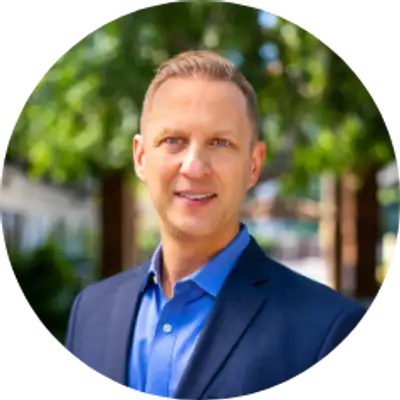
My guest today is Tim Yerdon.
Tim is executive leader at SAE,
and he'll talk about
this whole process.
And I learned a ton
in this conversation.
I hope you'll enjoy.
Let's go!
Welcome to The Garage.
I'm John Heinlein, Chief
Marketing Officer from Sonatus.
We're here at Auto Tech
2026 in Novi, Michigan,
and pleased to have Tim and
the podcast with us today.
Tim, welcome to The Garage.
Thank you for having
me. It's a pleasure.
Yeah. Tim, we've managed to
each other so many times.
We've been on two panels already
this year together, you and I.
So I was thrilled to be able
to get you to join us here at
AutoTech. It's great.
And thank you again
for for having me.
And it's hard to believe we're
halfway through the year and
the amount of work that we've
already done and the amount of
work that still has
to be done through
December.
So let's start by getting
to know you a little bit.
Tell us about you
and your background.
So, you know, I'm unique in the industry
as one of our my HR colleagues used to say,
we're all unique in the fact that
I've lived kind of a bifurcated life.
So half of my career has been very
technical on the R&D chief engineer side,
and the other half has
been on the marketing side.
And now I find myself,
after a career in
the supply side,
about twenty years on
the supplier OEM side,
two stints at OEMs.
I started my career at Ford
Motor Company in on the
electrical side.
Was at Visteon for
about twenty years.
Ended up going back to Ford
Motor Company in a chief
engineering role.
And now I'm at a not for profit.
So it's some some
different turns and twists,
but it's been a great journey.
Exciting. And we have to start.
We always like to ask our
guests a fun fact about you.
Tell us about you.
I spent some time in racing,
but not racing from
a driving standpoint,
racing from a technology
transfer perspective.
So while I was at Visteon,
we were actually building a
lot of the electronics for
different racing venues
for Ford Motor Company,
Jackie Stewart, Formula One, off
road truck, at the time,
IMSA Racing, which
is road car racing.
But my job was to take things
that either existed in the
portfolio and push them into
racing to test and validate or
things that were invented
in racing that could have a
commercial life after.
So it was that technology
transfer role that led me
trackside that
led to durability,
the the mindset of going
fast, driving speed, you know,
making quick decisions
on your feet,
all the things that really help you
throughout a thirty year career.
That's a great fun fact.
I don't think I can I can
touch that, but I will say,
resonating with your
earlier point, you know,
I had a PhD in engineering
and I started my career in
engineering before
moving to marketing.
And they were both
exciting parts of my life.
I love what I do now,
but I began my career
in engineering as well.
Yep.
Well, and I think, you know, what
led me to this was, you know,
somebody that can articulate
the technical things into
language that people
can understand.
Exactly right.
And, you know, that led to,
hey, can you talk to the board?
Oh, wait, can you talk to
our investors on Wall Street?
And I kept ended up more
and more with these speaking
engagements that led to
just a different, you know,
way to use my skills.
It's precisely my story exactly.
I tell it exactly like that.
And that's how I talk
with execs and investors
and journalists and board
members and analysts.
So tell us about SAE,
the company you're with,
and your role there.
Sure.
So one, I've been an SAE
member for thirty three years,
so I'm proud to state that.
Now, I've been with the
organization just two.
And when I came to
the organization,
I knew SAE International.
That's what I've
been a member of.
That's what most people are
familiar with, the standards,
the events that they do.
But what people don't
understand is there's many
other affiliates
within the brand.
And one of the things,
if you think of it from a
business flow perspective,
there's SAE ITC, Industry
Technology Consortia,
which convenes industry,
solves technical problems
on the billion dollar scale.
And that's what I run the
land systems and anything that
touches the ground,
that's what I focus on.
I like that... land
systems. I like that. Yeah.
And that helps feed the
International piece,
which really is the factory,
the big part of the
organization that helps deliver
the standards, the events.
And then behind that,
on the back end is what
I call the reoccurring revenue model,
which is PRI, Performance
Review Institute,
which does auditing
and compliance.
So think of things like,
did you use the right fasteners
in your manufacturing process
or the right materials?
So if you think of it,
the ITC piece is the
front end funnel.
Right.
You have the factory in
the middle and you have the
reccurring revenue
on the back end.
That's a really easy
way to understand it.
Thank you for sharing that.
And I think many many of our
listeners and including me, think,
used to think of SAE as
the Society of Automotive
Engineers.
But it's much more than that,
and I think there's also aeronautics
and other standards as well.
So tell us about the name change
and and the broader scope.
Yeah.
For for many years, it's really
been SAE, kind of like what,
you know, we used to call
Kentucky Fried Chicken, Kentucky
Fried Chicken, and
now you just
say, oh, we're going to KFC.
It's kind of the similar
vein, similar information,
or similar change.
But the key for us is going
back even to the founding
and one of my colleagues
actually recently found a letter
to Wilbur Wright asking
to be involved in this organization
to help set
standards for the industry.
And why Wilbur Wright?
Well, today,
half of our revenue and half of
our standards come from aerospace.
Things in consolidating
cockpit electronics across the
airline manufacturers, things
of that nature are standards
that the SAE organization holds
today that many people don't know.
That's an incredible story and
that Wilbur Wright story,
I'm going to tell that,
that's very good.
I like that a lot.
The other thing that's
unique too is the foundation.
So the SAE Foundation, which
is really the charitable arm,
if you've heard of things in
universities like
Formula SAE, Formula Baja,
that's another element to the
organization as well that is
very mission based on bringing
that education in those STEM engineers
all the way from early days of
kindergarten and grade school
in various programs that we have there
all the way up through those college programs.
That's right.
And then keeping them
engaged in industry.
And tell us a little bit more about
your role at the organization.
So my role is under
the SAE ITC piece.
So I have a colleague that
is his head is in the clouds
because he does
everything aerospace.
I try to stay grounded.
So everything that touches the
ground, passenger vehicles,
heavy truck, agriculture,
off road use vehicles.
So when you look at common
threads between those,
like software,
software doesn't care.
You know, it's the common
thread between many of these
forms of mobility.
And I focus in that
domain on what we call the
ACEs, Automated Connected
Electrified Programs and
Systems.
So we have a variety
of consortia,
which is really like
a table like this.
How do we get multiple
OEMs or suppliers or other
ecosystem partners around the
table to help solve billion
dollar industry problems?
Well, you mentioned earlier that
there's a myriad standards from
motor oil to fasteners
to, you know, metal,
everything and
everywhere in between.
But as we're moving to
a software-defined era,
especially for vehicles,
how is standard setting
for SAE changing in the
software-defined era?
Yes.
I mean, we're we're really at
the early days and we think of
organizations out there
that are driving open-source
software and we think of
kind of the history and the rigor of
SAE standards or ISO
standards or other standards
development organizations
that are out there,
otherwise known as SDOs.
But it's taking that rigor
and discipline in the history,
but also understanding how to
be flexible and fast in the
open source world.
And I'm not saying open source
software is the panacea of
solving everybody's problem.
I think it's like
a teeter totter.
There's a balance somewhere
in between those two spectrums
that we have to you know,
the the the older disciplined
ones need to learn how to be
fast and flexible,
but the ones that want to be
fast and flexible have to learn
a little bit of the
discipline as well.
So it's it's having the right
balance so we can all move
forward together.
We we talk a lot on the podcast
and and here at the show.
There's been many conversations
I know you've been involved in
about about what should
OEMs use in common
versus where should they
have differentiation.
And that's a bit of a struggle,
a bit of a arm
wrestle continuously.
What's your view of of
how of how high or what
sections of the stack warrant being
standardized from your perspective?
Yeah.
It's, you know, it's it's probably
the most common question that that we
get in the most debated
discussion that we have.
And obviously, the things that
are differentiating on consumer
side as you get closer to
that consumer, the HMI,
the experience, those are the things
that make our customers, the OEMs,
the people delivering the
product are going to control.
It's further down in that stack.
What can we do at the
firmware layer or at the
board, the BSP layer, board
support package layer that
people tend not to care about
that we're reengineering
power methodologies over and over
again or things that we
shouldn't have to do,
that we should have a baseline
or a reference design.
And it may not be a standard.
It may be a framework.
It may be a best practice.
But how do we do things
that, at the end of the day,
my kind of soapbox
moment is always saying,
we shouldn't be working on
anything in our organization
that isn't helping our
customers be more efficient.
And efficiency to them is
really cost through engineering.
How do we help reduce
engineering hours that drives
cost, which ultimately
drives efficiency?
So they can then focus on the
features and the end functions
that the consumers want versus
something way down in the stack
that may or may not matter.
That's excellent.
Now fundamental to to your job
and to the role of a standards
making organization is getting
competitors to sit down
across the table and agree.
How is that process like?
And what's the what's the magic
secret sauce that that you use?
So there's, you know,
there's three I call it the
three phases of consortia
building and, know, it's akin to, you
know, as they call it, herding cats.
But so for instance,
if we have a you know,
there might be a tabletop
discussion at an event,
which often happens, maybe over
a beverage, and somebody says,
man, we got this problem.
And then you find out
another customer has the same problem
and then a third and a fourth.
And if you can get at least
three of them around the table
to help articulate
what that problem is,
then we can start to bring
people together and convene
them in neutral, safe
spot where we can get the
legal framework in place so they
can share their information,
ultimately and potentially
even sharing some of their
intellectual property that
they put into the consortia,
so then we can start to
have these discussions.
And by that, we have to go through
the other phases, which are okay.
Let's I hate to say this,
but there's always somebody who wants
to be the smartest one in the room.
Well, when you bring three or
four smart people together,
they're all smart.
We have to dispel that
mythology that there's just one
person that has the best idea.
The second is
that their solution
that they might have
already started on is going
to be the ultimate solution.
It's not going to be any one
company's intellectual property
that's the end all,
be all solution.
It's usually bits and pieces and
the combination of the consortium.
So after we dispel
those two pieces,
it's then understanding
the problem statement.
And if we can all agree on
what the problem is that we're
trying to solve, these
things tend to take off.
And then we can maybe go
from three or four initial charter
members to maybe ten.
Whatever it takes to go solve
the problem depending on the
scale and the scope.
That's a really articulate
way of explaining it.
I really like your your
framework and your taxonomy.
I know I've been involved
in a lot of agreements where
intellectual property rights or IPR,
as they say, are involved,
not not on a standards level,
but in sort of a company
to company collaboration.
I've always found that we could
take an hour on this, so let's not.
But I've always found that that
IPR area can sometimes be the
thorniest because sometimes companies
feel as if, well,
I may have a patent on this or I
have some trade secrets on that.
And, yeah, you do.
But if we work together,
it's actually going to be more
valuable than that thing you
have, which by itself is
never going to be useful.
Exactly.
And it's getting people
comfortable with that.
And because of
SAE being neutral,
it gives us that ability
because we have the history of
the framework and the legal
documents and the way we run
these programs.
It gives people comfort that
they're in a safe spot and we
can actually share information
and solve the technical
problems because you know,
it's not about, you know,
just solving the problem.
It's about what are we doing
to deliver technology to the
market quicker for industry
and making vehicles more affordable
or mobility in general more
affordable for all of us as consumers.
So you mentioned ACES or
sometimes people say CASE.
Yes.
It's the same thing
in different order.
What are some of the standards
you're working on in that sector?
And maybe we should sell spell
out what ACES stands for.
For us, ACES is
automated, connected,
and electrified programs.
And we usually focus
on the consortia side.
So we've got some key ones.
So if we take the
automated side,
one of our premier ones is
the Automated Vehicle Safety
Consortium.
And if you go to
www.sae-itc.com with a
dash in between SAE and
ITC, all those programs
are listed there.
But you can see the corporate members
that are involved in each of those.
You see when I go back
to that herding cats,
it didn't start with eight
or ten members of these orgs,
it starts with three or four
and then you kind of continue
to build as word gets out on
how these come together because
they're creating, in
the Automated Vehicle Safety
Consortium, the best practices
that create the framework that
could potentially
lead to the standards
that help kind of
self regulate that industry.
So, you know, how are we
creating the frameworks before
there may be a potential
issue that maybe somebody from
Washington is telling you what
that framework needs to be?
So we're we're getting ahead
of the game on that one.
It's it's so good for you to
say that because and I've said
this to many people in in the
past that if you don't self
regulate, the government will
be happy to do it for you.
And it's much better if you
can self regulate and say, hey,
we've really thought through
these safety things or we
thought through these security
things or whatever and we think
this is the best practice.
We recommend this.
And they say, okay, okay, we
see that you've done good work.
Otherwise, they're gonna come
in and and want to do it.
And another really interesting
one that we just started in
January is
around digital road rules,
and it's called the DRRC,
Digital Road Rules Consortia.
And in in North
America and the US,
each state has their book of
road rules just like you would
go to take your driver's test.
You have to be take your driver's
test for California or for Michigan.
Well, technically,
automated vehicles have
to follow these rules.
In most cases, those are in a binder
with fourteen hundred pages sitting
on somebody's desk at
their state capital.
How do we get those
that information into machine
readable format that can go into
the software in these vehicles?
And that's just one
mechanism of it.
But more important is,
how do you understand what the
differentiation is in these rules?
Because state to state,
they're all different.
Now, when the operational
design domain was just
in a city or a region or
an area, it wasn't a big deal.
But as these things expand
and deploy across regions,
across states, we
have to think bigger.
We have to think,
how are we going to
light up highway corridors across the
country for automation.
And these things are
going to be needed.
It's true.
Today, most of the
autonomous vehicles,
sort of robotaxi and sort of the like
is mostly within a specific region.
But there's incredible
conversations and we've had
several guests on the podcast
in the past weeks and months
talking about highway long haul
trucking and so on like that.
So crossing state lines is I
would say only a matter of time
and it's not much time from now.
And you know, not to talk
too much detail on this,
but this is a multi-million
dollar problem for each OEM to
have to go solve by themselves.
Sure.
And at the end of the
day, they could go do it,
but they're going to come up with ten
different ways that they've done it.
Yeah.
But if we bring those ten
people together and they all
contribute a little
bit of money,
we we reduce their expense.
At the end of the day, we
have an industry standard.
The government is happy because we
we have a group that's doing
this and doing it together.
So it's really a
benefit for everyone.
I mean, we're we're here based
in the United States and but,
of course, my company and
and the industry is is worldwide.
When you look across the
US versus Europe versus China,
you see different levels of centers
centralization and standardization.
Obviously, China quite
highly centralized.
Europe has with its
member states, you know,
largely compatible, pretty
much symmetric approaches.
The US is not quite there.
The states are quite
different, quite heterogeneous,
very heterogeneous if you
know much about the US,
and even cities
and municipalities,
although that's not
so much for roads,
but more for other standards.
It's a big challenge that the
US system faces, unfortunately.
Yeah. It's it's funny.
So just a quick story on that
is when I started in this
project, I'm like, oh,
we're just gonna call one person at
each state DOT and get an answer.
Oh, wait a minute.
State of California, have
to talk to the DOT, the DMV,
the highway patrol because
they have a voice in this.
So,
often you say you're
talking to one state,
but you're really talking to
three to five people per state.
And that's just at
the state level.
If you're looking
at major cities,
that's another click
in to go into detail.
And so it's a very
complex problem,
but the industry is trusting
us as SAE to put this database
together that controls all
this information because it's
centralized and it's
kind of, you know,
neutral territory, so to speak.
That's a fantastic example.
And I'm sure there are myriad
other standards which we
probably don't have time for,
but I will redirect people to
your website and we'll put a
link to the URL
in the show notes.
Now, I know people are
probably very familiar,
many people are familiar with
the the SAE self driving levels
or level one through five,
and we've talked about that
many times even just this week
on the podcast.
But maybe you could start by
introducing that framework.
But then I know you're also
working on a new effort to look
at software defined vehicles
and standardizing the language
around that in a similar way.
Can you compare and contrast those
and tell us about that new initiative?
Yeah, sure.
So obviously,
I think J3016 is
the number for that.
And it's been around quite
some time and colleagues and
others in industry groups have
come together to agree on that.
That has provided a
framework and really,
less so the standard side of it,
but the framework
for discussion.
The language and
the nomemclature.
And look at how many people
reference and point to it,
not just the technical aspect,
but the media, the government.
It provides an avenue to
have the right conversations or
at least steer people
categorically into what
they may be in others.
You know, they've added pluses and
plus pluses and minus minus and this
and that, which it's beyond
what the original intention was.
But,
those are the things that
at least get us in the ballpark
of having a conversation versus
just having things kind of
completely open ended,
which is where we are
today with the SDV levels.
Every time I attend
a conference,
I'm in the audience and
I'm taking pictures of somebody
else's SDV level slide.
I think I'm up to eight
different versions of it now.
And over the last year or
eighteen months that I've been
collecting these, you just
start to realize, okay,
we must have a framework for
discussion around SDV levels.
So we're actively working
in some various small
groups on that to start to
get that voice of customer and
understand how do we
pull that together.
And this is a little bit
different than the automation
levels and the fact that
the automation levels were,
I don't want to say pretty
straightforward, but
it's a less complex problem.
It's clear that one of the
things the automation levels
give you is clarity
around who's in charge,
what capabilities, what's
the operating domain,
what's the ODD that is relevant.
So I think there's very
sensible, clear things there.
In SDV, and I've seen a number
of these levels as well.
They're kind of looking at
it from different angles.
One angle looks at it from
more of an app store angle.
One of it looks at it like how
much is the software upgradable.
One of it looks at you
know...there's different ways
to to look at this.
It starts from far end of
zero all the way to very
basic connectivity features
all the way up to potentially
AI-enabled SDVs. And
what does that all mean?
As we all know, if you ask ten
different people to define SDV,
you're going get ten
different answers.
And we just need to narrow that
down so we can have meaningful
conversations
across the industry.
And I see that as one
step in a very long
journey of how do we
rationalize the whole world of
SDV back to asking
where do we work?
What do we standardize?
What do we not standardize?
We have to work our way through
that as an industry because
each OEM, each tier, each
service provider always has
a different view and their views
are based on where is their value.
So it's hard to
put something on paper
from a level
standpoint when everybody's
coming at it from a different
perspective on where they
extract value for their business.
And when we we think
about the ability to add
software in vehicles and the
one of the things we talked
about is the fundamental aspect
of SDV is the decoupling of
hardware and software.
So as you're decoupling
hardware and software,
there's a desire,
there's a long term desire
to be able to bring flexible
software in, to bring
in third party software.
So there's lots of
different interesting,
potentially valuable
but complicated aspects.
And I think some of those are
the things you're trying to
crack into in this conversation.
Absolutely.
It's thinking of
that whole spectrum.
And I'm laughing because
I'm thinking back, boy,
about five or six years ago,
I was just working on how do
we bring app stores into the infotainment
piece of it.
And you're thinking, man,
that was a lot of work
and a lot of complexity.
So that was exponentially
easier than where we are today.
Right.
When you think of
you know the world of SDV
ranging from you know,
not so much from the levels,
but from the life
cycle development,
which of course is, you
know, a lot of your business,
all the way from the up early
strategy and planning of the
architectures, all the
way through to, you know,
OTAs after, you know, ninety,
one hundred and eighty multiple
years of deployment on the road.
I mean, you have
quite a spectrum Yeah.
Of the life cycle that we've
never had to deal with in this
industry before.
I don't envy the challenge
you've taken on because I think
there are multiple angles of
this and and I'll be curious as
you're able to
bring this together.
And we talked earlier about IPR
vis a vis other kind of standards.
Here, I think many different
companies have brought those
frameworks because,
for sensible reasons,
they feel like there's
some differentiation.
For example, whether it's
OTA or things like that.
So bringing a common framework,
I salute you for trying.
Well, and quite honestly, I
think it'll never be done.
It'll never be complete.
And that's in this
digital world,
we have to come to that mindset that
is it really a standard or
is it more of a framework
that always evolves and changes
under a certain cadence when we have a
certain number of people that say, yes,
now it's time to update or
it's time to change this.
And we have to live in this
new world. It's different.
It's somewhat uncomfortable
for for some, but, you know,
we we have to
face a new reality.
Well, if we if if we come back
to the the self driving levels,
think once I really
internalize that framework,
I think it's very sensible.
I like the framework and it's
helped me have a mental model,
but it also, as
you said earlier,
helps the conversation, helps
you be able to say, know,
the difference between,
you know, L2+ and L3,
as the saying goes, is like
sort of who's in control,
and then L4 and L5 is really
the higher ends of it I think
it's very helpful.
So I think in a similar way,
think your work is going
be helpful for SDV.
And kind of coming back to
the structure of SAE a little bit,
and I talked about
the ITC piece.
And these are things that we
can do to get out there and
get something out to the market
quickly and have these discussions.
And then as it flows
through the organization,
maybe it does or maybe it doesn't
become a standard down the road.
But as it gets into the larger
international piece with the
subcommittees and you know,
others can have a more of a voice
in that if they decide to do so,
you can have those deeper
discussions that may take two
or three years to nail down.
But at least we have something
out there in the market that we
can start to have a
discussion on That's great.
And figure out some of those
lower level details later.
If we wait three to five
years to get everything,
all the t's crossed
and all the i's dotted,
the market's gonna move by us.
You mentioned earlier open
source and obviously open
source is just an
enabling technology.
But what's your personal take
on open source in automotive?
Because it's really seemed
to, in the past few years,
emerge as a really viable thing.
I know I'll tell you a
funny story that, you know,
years ago, I worked
with Linus Torvalds.
He and I were colleagues
together at Transmeta, which is a
conversation for
another time over a beer.
But at that time,
Red Hat and a number of these other
companies were were just emerging.
And the idea was to bring it
into more sort of production use.
And it was crazy because most
people thought you're gonna
have open source in
like, production things.
Well, now IBM bought Red
Hat and there's all these
incredible uses of open source in
daily use that's very, very successful.
We're seeing that in
automotive as well.
But of course, automotive
has a safety aspect,
which is a little different
than other markets.
How are you looking
at open source?
We're on a journey. I'll
leave it at that right now.
But, you know, the thing that
concerns me most is the AI
aspect of this.
And, we can say open source,
but where is it
really coming from?
And that is going to be the
challenge of the future is
somebody's going to go into
their AI tool of choice
and compile a bunch
of information.
And that might be fine for a
proof of concept or, you know,
for an initial, you
know, starting point.
But somewhere that's got to be traceable
back to kind of the the source.
And I think that's going
to be the real challenge.
And I'm sure we could talk for an
entire hour just about that topic.
So let's leave it at that.
But it is an interesting,
exciting area.
I think open source in general
has a great opportunity.
But yeah, the confluence of that and
AI will bring additional complexity.
Tim, this has been
a wide ranging chat,
and I've learned a ton of
things in the past half an hour
that I didn't know.
So I'm so glad
you could join us,
and thank you for your
hard work and all this
standardization, which ultimately
will benefit all of us.
Well, thank you and really
appreciate the invite and and
good luck with everything.
If you like what you're
seeing on this episode,
please like and subscribe to
see more like it both from
AutoTech and other
shows around the world.
We look forward to seeing
you in another episode very soon.