Subscribe
Share
Share
Embed
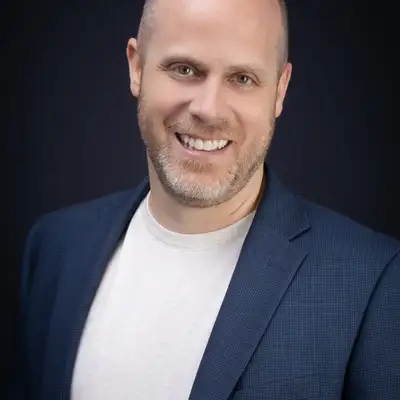
Welcome to Inside Marketing with MarketSurge — your front-row seat to the boldest business insights, marketing breakthroughs, and entrepreneurial real talk.
Hosted by Reed Hansen, Chief Growth Officer at MarketSurge and a digital marketing veteran who's helped scale everything from scrappy startups to Fortune 500 giants, this podcast dives deep into what’s really moving the needle in today’s marketing world. Find us at Marketsurge.io
Each week, we’ll break down the latest marketing and business news (minus the fluff), explore tech trends you actually need to know, and feature unfiltered conversations with the most interesting minds in entrepreneurship and marketing.
Whether you're a founder, a marketer, or just a curious hustler looking to level up, this is where growth happens—loudly, smartly, and with just the right amount of sass.
Subscribe, tune in, and let’s scale something legendary. 🚀
Speaker: Welcome to Inside
Marketing With Market Surge.
Your front row seat to the
boldest ideas and smartest
strategies in the marketing game.
Your host is Reed Hansen, chief
Growth Officer at Market Surge.
Reed Hansen, MarketSurge: To inside
marketing with market search, and
today we're joined by Jeremy Barker,
the CEO of Murphy Door, which is
America's number one hidden door brand.
If you've ever thought a door is just
a door, Jeremy is here to prove you
wrong, under his leadership, Murphy
door has exploded into an eight figure
business, hitting over a hundred.
And 17% year over year growth and racking
up more than a billion views online.
That's super impressive stuff.
But his story isn't
just about hidden doors.
It's about resilience From working as
a firefighter to facing bankruptcy,
to becoming a finalist for Ernst and
Young's entrepreneur over the year.
Jeremy's journey is a masterclass
in grit, creativity, and how to
blend design with marketing in ways
that capture massive attention.
how Murphy do scaled into a $56
million business, and what it takes
to engineer viral content and the
lessons Jeremy learned along the
way that every entrepreneur and
marketer can use to break through.
Jeremy, welcome to the podcast.
Jeremy Barker: Hey, thank you
so much for having me, Reid.
I appreciate you a lot.
Reed Hansen, MarketSurge: my pleasure.
And it's really nice to have,
uh, you know, a real success
story come from entrepreneurship.
you didn't always, you weren't
always an entrepreneur.
You were a firefighter.
You know, you've had, uh, some twists and
turns and have made it to, the Ernst and
Young Entrepreneur of the Year finalist.
So what did this all teach you
about resilience and, know.
Jeremy Barker: That it's the,
truly a little bit of persistence,
a little bit of resilience.
Patience is something I
never, that wasn't a gift.
I was received.
Uh, when I was born.
I had zero patience, spoiled,
rotten kid, you know, and, uh,
got whatever I wanted until.
Dad went bankrupt, and then we
couldn't get whatever we wanted.
So I learned a little
bit of patience there.
Um, but in my life, I always thought
everything happened overnight and,
uh, you'll find yourself sorely
mistaken, if that's what you expect.
you get too drunk on Instagram and TikTok
and he's overnight, 20-year-old multi.
Billionaires in their Ferraris
and Lamborghinis that they rent.
And I think it's funny and
it's all exaggerated, but
ultimately those do happen.
But I mean, you're like in the one
hundredths of a percent, so holding your
breath for that, you probably shouldn't
and realize, That it's gonna take a little
bit of effort, well, a lot more effort
than just a little bit and a lot of time.
I always tell my guys it takes,
it costs at least twice as much,
takes at least twice as long
and is at least twice as hard.
So it's like we always have this
tendency to get on Excel and we have
a tendency to add zeros and see how
rich we can get in such little time.
Like, we land this guy and the next
thing you know, we're gonna be rich
and we don't have to work anymore.
and it's unfortunately not the case, but.
I'll tell you what, it's absolutely
something I've loved to do.
I've been in and out of
entrepreneurialship since I was 18,
and, when I say in and out, it's
two bankruptcies along the way.
in the meantime it keeps bringing me in.
I don't know if it's the
dopamine drip of the difficulty.
I have found out, however, that it's
definitely not the money that I'm pushing
for, which is really, really nice.
'cause my mother was
always about chasing money.
Bless her heart.
It's something when you chase it.
You'll never catch it.
And if you can change the focus from
it being money driven to agenda or
goal driven, it's a much easier path
because money's elusive a little bit.
It's like a conveyor belt.
You can attest read.
When you get your pay, your
receivables finally come in.
And if you have a late payer, it's like.
The money's dead.
And I don't know if that makes sense
to you, but if you're 60, 90 days
old that a hundred thousand dollars
check you were getting has now you
owe a hundred and some odd, right?
So you never get to experience
the net margins you build in
the longer your receivables age.
I feel like it's this elusive.
Thing that we chase and it feels
like we never get accomplishments.
in order to maintain a drive
into something, we have to be
rewarded with achievement and
at least the littlest levels.
So we kind of teach in our office, set a
long distance, big hairy, audacious goal.
I know that's love it or hate it, that
word, but there's gotta be something
ridiculous that we're chasing.
And it's not necessarily, um, in.
It's not necessarily easy for our
employees to see that we can do that.
So you have to then chop it up into
little pieces that are more digestible.
we present the elephant and then we
show how we eat it by the toe at a time.
Right.
and then we set benchmarks, which
can be like, depending if they're
visionary or if they're like an
integrator, I guess if you're looking
at rocket fuel or those kind of things.
they can digest smaller pieces.
So you put stuff that's easier
to see, it's hard to achieve.
But when they get there, we celebrate
that little benchmark and then we keep
pointing 'em into that direction and
say, okay, let's set the next benchmark.
All while we're sitting at the
30,000 feet in the executive
level saying, Hey, this big.
Elephant sitting over here in the corner.
I don't want 'em to see that.
That's what I'm thinking about.
'cause it's so big they won't, it'll
get in the way of them seeing it or
being able to see how they get there.
So let's just set the marches, right?
Like for example, if I was driving from
Salt Lake to Chicago where you're at,
If I said, Hey, we're going to Chicago,
and I presented to you a wagon with a
thousand pounds in the back and we're
walking, it's gonna be like, holy crap.
But if I just say, Hey, we got this wagon
and we're gonna go push forward and all
I'm gonna do is we're gonna take the
exit at Provo or whatever, I mean North
Salt Lake, whatever the element is, but
keep those little bite-sized pieces.
But if you.
Dictated, or you clearly define
it like, we're gonna stop at
this exit and have a drink.
We're gonna get fuel and we're gonna
get food, and we'll take a nap.
And then we're gonna go to this Next exit.
And then we celebrate with a
sandwich or whatever it is, right?
And then they see that they achieve that
goal and, and you just keep pushing it.
they just don't want to know that
you're trying to go to Chicago today.
'cause your guys probably
won't join you on the trek.
Reed Hansen, MarketSurge: right.
Jeremy Barker: Fair enough.
Reed Hansen, MarketSurge: Yeah.
I think that's a great summation.
Well let, so, you know, in light of
that, you know, biting off small pieces.
So let's talk about the beginning.
You, you have Murphy Door, which
is a really interesting product.
how did you come up with the idea
and maybe let's talk about the
small steps that helped you get into
this huge brand that you have now.
Jeremy Barker: So I've always, early
on at 18, I started a shed company
that I supplied Home Depot with.
So that was like an early big huge win.
Got to 20 million in annual
revenue by the time I was 21.
And that was a big, I mean, we're
talking in the nineties, right?
So that's a pretty big
number for the nineties.
And uh, I realized what.
A really good marketing strategy
and working with Big Box can do.
And even though that was my first
big box retailer, um, which by the
way, my tastes have changed, but
at the time that was, I saw how big
that can really grow a business.
Um.
I thought, well, that, that
would be something awesome.
And when I, I've gone through these
other, I did go bankrupt in that
business 'cause I was really young
and did not know how to manage money.
Like we get into this race and we
start building a business, but we
don't know accounting and we don't
know anything about HR and we don't
know anything about the continuation
summation of forecasting and budgets
and profit and loss statements and all
the stuff that we probably should learn
in high school that they don't teach.
Um, just so we can at least manage our
own finances, let alone a company's
finances, let alone something
that's doing that kind of volume.
Um, and the discipline of
not being stupid with it.
I was the traditional, like
young sports star that by the
way, I don't play sports, but I.
what do I do with all this money?
You need the watch, you need the
cars, you need the trips, right?
And then all of a sudden the lumber
guy calls and says, you owe me money,
or We're closing your lumber account.
They're like, oh, well that's not
gonna work because I have no money.
So, um, in the meantime,
it gave me the taste.
And then, so I went into
these other ventures posts.
Some of it was construction, some
of it was direct to consumer stuff,
some of it was, you know, whatever.
And then I kept going back and forth
to fire, like it was like this.
Little emergency blanket that
every time I failed, I'd do that.
Or I would do something in that
realm that I knew, recharge my
batteries, rebuild the belief in
myself again, and then do it again.
So with Murphy Door, I was running
as a full-time firefighter paramedic
here in Weber County at Roy City Fire.
And uh, I love the job.
So it wasn't a desire to leave the job.
Um, this one, despite what I just
told you about money, it was a
desire to keep more than 750 or 62
bucks every two weeks in my pocket.
Like that was our take home for a
full-time firefighter at the department.
I was there and it was just not enough.
So I'm like, look, I could
find a side gig if I created
something, I could get into Depot.
I don't have to have salesman,
I don't have to have reps.
I could just buy third party and ship
it to them and they could make me money
and I'd have a little side pocket money.
Um, so I created actually the
hardware first where it stemmed
from, actually, I wanted a theater
room in our basement for my kids.
They didn't really have, I wanted a
ticket booth style door, kind of hunted
around for something, didn't have it.
Then I tried to create my own, and I used
like a piano hinge and the three hinges
on the side of the door, which by the
way, um, anybody trying to build a hidden
door, that is the wrong way to do it.
So before you start, stop, or if you
see companies selling it, it fells,
they twist, they rack, they pull
the, I mean, they just don't work.
So we created.
I do have a little bit
of an innovative mind.
I've, I've got several patents out there
and I'm like, look, I'm gonna make a hinge
that anybody can install that'll work and
carry huge amounts of load, and it'll be
simple, which is just a basic pivot hinge
that didn't require specialty equipment
to install like some of the other ones.
Ricksons been around a long time, a pivot
hinge, but you had to have more to sit in.
You had to have some specialty
equipment that I didn't, so I
wanted a surface mounted type style.
Product and I did that, um, and I
thought, well, that'll be perfect.
I can get it into Depot, I can
get it out and I can sell it.
It'll be great.
Well, the problem was, hidden Door
category did not exist as a category like
there, there wasn't one, and hardware for
Hidden Doors did not exist as a category.
So I had to not just build the
product, patent the product, build a
brand, build a website, try to sell
hardware, but then I had to teach
buyers that this is a category, and
they were like, well, where does it sit?
Cabinets?
Does it sit wherever?
So that was a little bit tough.
However, my first year in business,
which was 2013, we did 30 some
odd thousand dollars in revenue.
And, uh, was really high margins.
By the way.
My hinges were delivering
about a 500% margin.
So on $150 hinge, I was making 120
bucks, roughly 130 bucks, which,
you know, on 30,000 bucks, I'm,
I'm picking up some extra cash.
I'm like, that almost doubled my
take home for the month almost.
So this is great for me.
Well, as that started
to grow a little bit.
More and more people were asking
for doors, and I'm like, I've
never built a cabinet other than
the sloppy one that I did for my
kids and I don't know how to do it.
So we found a cabinet company
to, to create this, um.
And that was actually our horizontally
integrated supplier that would
build the cabinet box, we'd put the
hinges on and ship it to the client.
What I did not realize I was building,
um, when I did it, is something that
was more of or less like, I don't want
to call it a magic show, but it had
a beautiful reveal and you're in the
marketing world, so you understand.
But I could see, and I knew from
the very beginning, um, that
this was gonna be something.
I just didn't know how to
present it or explain it.
I actually didn't know
what I was building.
I knew what I was seeing.
I'm like, look, this is something that can
create a door that actually has more than
one function, which is keeping you from
seeing me change, keeping you from seeing
my dirty laundry on the floor, keeping
you from sitting the bathroom or whatever.
I'm like, what if we could create storage?
What if we could create a, like a reveal?
What if we could create like the.
Passage to your Dream way.
Like there's so many different
elements that this one door could
do more than be just a door.
I'm like, let's create something
that's multifunctional, that can
be a door and everything else.
So it was a hard thing to
understand and explain to merchants
and explain to customers like,
I get it, but I don't get it.
Why do you need one?
I'm like, well, no one
needs one, right, per se.
But actually everyone does.
Like if you have a little
house, you need one.
If you have a big house, you want
one, um, little house gives you 20
square feet of storage in your door.
Now, like if you only have a.
320 square foot home in
the downtown Chicago area.
You really need to maximize every
bit of wall space, every bit of floor
space, every bit of entertainment
space, vanities, bed space.
Like what if we created something that
had multifunction, that had a dresser
in it, a laundry hamper in it, a shoe
rack in it, and now everything's off
the floor outta your closet, and now
your wall space creates function.
And so explaining it and getting
the pitch, the elevator pitch
per se out was difficult.
However, Facebook was pretty.
Young then, right?
I had no money.
I couldn't pay for ads.
It was difficult to do trade shows.
It was difficult to really get my
friends, families, or fools to do it.
'cause our doors started around $3,000.
So I had to kind of do, I hate to
say this, but falsify the door, what
it would look like if it was a door,
and ask the cabinet guy if he could
build something like that, if we
were to sell something like that.
And then we basically engineered every
door off of a fake bookcase that we
made look like a door in an image.
And then we'd send them that hard to do.
Right.
And uh.
What I did see is when we started
Facebook, that was the free opportunity
that we had to kind of present our
story and really quickly we got a
hundred thousand followers, which
was really crazy at that time, but
you weren't having to pay for follows
and you weren't having to pay ads.
Like it really wasn't that platform.
And I'm like, well, this is really
working and why, and I never really
understood the why, but until
recently, it's really the reveal.
People see the sexy door,
they think it's beautiful.
Then they also wanna see what's behind it.
So our hold time on our
views is really long.
Like they, you can show the door
and then they wanna see what
you're really hiding, right?
Like if the intent was to hide
like every door, and it's not,
but people will still wanna see.
And it's kind of funny that our hold
time or our watch on video, every
video is so long, they always wait till
the end of the View, which is a cheat
code that kind of Murphy Door has.
Been, uh, I guess that's been our
magic potion to get such virality.
Reed Hansen, MarketSurge:
No, that's awesome.
Jeremy Barker: The right.
Reed Hansen, MarketSurge: tough, like you
said, it is really hard to engineer toity.
And, you know, your
product does lend to it.
You know, it has a reveal element to it.
it, in itself has like kind of a delight
and surprise which is, uh, I mean that,
that's a great thing to try to, introduce
into, you know, other businesses.
You know, that surprise and
delight and reveal element.
Jeremy Barker: I think in your world
too, not to cut you off, Reid, but
I think when it comes to marketing,
we get too concerned or we drink too
much of our own Kool-Aid feeling like
we're selling something and we gotta
stop selling something for price.
Like it's this race to zero.
When we start chanting price,
people aren't nearly as concerned
about how much does it cost.
'cause they're not waiting
for that in your video.
They're waiting for something that's
gonna make 'em feel something.
Like, that's why they're
watching the video.
So it doesn't matter if you're making
like Berea bombs on TikTok shopper,
the number one product on TikTok shop.
Like if you were just selling
product and that was what you
were selling, it's not gonna move.
But it's actually, what is it?
Like, what does it do for me?
And they, they wanna relate.
They wanna see themselves with it,
and then they hook to the price.
Like, they're not buying
Bria bombs for price.
they're wanting amazing B tacos.
And then they look for the price.
But I really think we spend too much time
thinking that our customers are so worried
about price, but really they're not.
They wanna feel a certain way.
They wanna understand what
you're trying to deliver.
They want to see themselves
in what your deliverable is.
And if you really look at every product
from a third lens, and it's like, what?
Why is the buy more than anything?
What is it that they're buying from you?
It's not that they're wanting
to just throw away 20 bucks.
It's not, we chant price.
It's like $20.
Well, they can throw
$20 away in a fountain.
Like let's really tell 'em why
the $20 is the value, right?
And what they're really gonna get,
what they really are gonna feel.
And I think it takes a different lens
to step back and kinda see it, and
it takes a little time to get there.
Now to give my team credit
on our creative department.
they always are looking at like, how
can I make people feel from this?
Like, the product should
be like the secondary.
And so many people in advertising
campaigns make the product the primary.
And if you think about Yeti, if you
think about the way they did their
campaigns, it was always the cooler
in the boat with the trip of fishing.
they were watching the fishing
thing and it was just a rider.
Along the way that made that
experience be part of something
that people could relate to.
And I, use them as an example because I
really looked at 'em as an example for me
to create that same kind of emotion doing
a lifestyle ad that we were a part of
their story, not trying to own the story.
Like I look at Murphy Door
kind of as the gateway to your.
Like Murphy door is like the
cherry on top to whatever it
is that you're going through.
If they're going into your office,
like you just get a passage
that into a place of serenity.
If it's your speakeasy, if it's your
man cave, or she shed, or whatever
it is you're building, like it,
what if it's just the passageway?
And it's not to steal from who you
are, it's just to make you feel into
what you're entering the way you
wanna feel when you pass through,
or how you want to present people or
get people excited about something.
Right.
I, and I think we need to do more of it.
Reed Hansen, MarketSurge: No,
that's great advice, Jeremy.
you know, you've had like this
rocket ship type success, with this
brand and, tremendous growth, and
obviously a lot of great learnings.
Have you had any missteps along the way
that were great lessons that we could
Jeremy Barker: More than one.
Reed Hansen, MarketSurge: go ahead.
Jeremy Barker: Let's just put it that way.
If, it's more than one.
And I say this with all due
respect and love for this,
but it's one every day, right?
We look for our missteps every day.
my banker, I met with him years ago and
he's like, dude, if you're trying to drive
daily, you're gonna drive yourself crazy.
You need to drive like monthly, quarterly,
or annually, or semi-annually or whatever.
But in my heart, I feel like, look, if
I can find the course correction daily,
It's easier to hit my weekly goal.
If I hit my weekly goals.
It's easier to hit my monthly goals.
If I hit my monthly, it's easier to hit
quarterly, et cetera, et cetera, right?
So I love to do course
corrections every day.
Now, you can't shake the whole
boat and do a 180 every day.
That's not what we're talking.
We're trying to find that 0.1,
0.2,
1% degree change that keeps us on
course or improves our course, right?
and most of the time, you're gonna
find your course improvements.
In your errors, not in what you're doing.
Great.
We spend too much time celebrating
greatness and not enough
time celebrating mistakes.
And I know that this is kind of the
trend everybody's talking about,
like celebrate your failure as well.
If you think about it in a mechanical
sense or mathematical sense.
You find those little failures,
those course corrections veer you.
Correct.
Like more incourse rather than like, if
we just constantly drink our own Kool-Aid.
I hate to say this, but we'll
have the Britney Spears effect.
We have 20 years of solid winds,
and then when we finally have a
loss, it's a big, huge train wreck.
And then they find them in
place, they don't recognize.
But if you can do these little eight
inch step falls rather than 800 foot
cliff falls, um, it's much easier to
adjust without having a huge collapse.
So.
I try to tell my team like, what, awesome
that you guys beat your goals yesterday,
but even awesome, or that we identified
a couple mistakes that we're making.
Reed Hansen, MarketSurge: Yeah.
Jeremy Barker: Right.
So then we can course
correct really quickly.
and, you know, in the marketing world,
I have a software that we created and
that's really what's propelled Murphy
door to go, where it's at today.
And it's finally available
for everybody to use.
But it's called Pure brand.io
and it's an app on Shopify,
which is really powerful.
I hate to give away my cheat code.
I finally decided to share it
with everybody else 'cause it was
something we created internally.
But what it does is it allows our past
customers to share their experiences
with future customers, and we are
so transparent that we give the keys
to every client we've ever sold to,
to talk good, bad, and different
about us to all our future clients.
So you'd go to murphy door.com,
talk to an actual customer, you have
a video call, they're all in line, and
we pay 'em $50, by the way, to take
the call regardless of what they say.
It's funny to watch, like
So you work for Murphy Door?
No.
Do they tell you what to say?
No, actually, it's really weird.
They just turn it on and say they're
gonna pay you, and I don't believe
it until you finally just start
getting deposits in your account.
and everybody can set there how much
they wanna pay for their meeting.
I understand there's value ticket
variances, but what this does for
us and what's been magic is those
customers give us all the pros and cons.
Is that what they
experience with Murphy Door?
And then the future customers are saying
all the pros and cons of why they're
concerned or what they couldn't find
on your website and all this stuff.
And we take these conversations and
we transcribe 'em, and then we do a
sentiment score, and then we do the pros
and cons from each person and then we put
an action plan from the past customer.
Are like, Hey, their hinge is squeaky.
Let's get that replaced.
Future customer couldn't
find this on the website.
Make that more prevalent or
talk more frequently about this.
Here's your action plan.
And by the way, salesman, here's the sales
pitch to talk to your future customer to
make sure you address all his concerns.
And then, I mean, it
does way more than that.
That's just a high level like step two
of 10, what this software does, and
it's all automated and it's amazing.
And I'll tell you what, our
conversion rate went from 0.24%
By the way, we get millions of visitors,
as you can imagine on our website.
So it's a fair enough conversion rate.
It's not where we want it.
But if they go into that pure brand
funnel and say, talk to an actual
customer, 41% conversion rate.
Reed Hansen, MarketSurge: Wow.
Jeremy Barker: So it's a 17000%
increase if they're willing to be
educated from past customers instead
of being sold by our sales team.
Right?
It's a really interesting piece, but, um,
what we gained is the insight of failure.
Like we're not celebrating the sell
as much as we are hearing the past
customers advice that they're giving
to a future customer and their
future customer's giving us advice
by talking to the past customer.
And we take that and we integrate it into
our business to improve all the elements
that the customers are experiencing.
So we look at it as like a 360 review,
whether you use pure brand or not,
it's an outside, external input about
what the world is thinking about you
and your business instead of what
we think about us in our business.
They're saying, here's all the
things that we love and hate.
And then we take, depending on how
you take that, you can either say, I
don't like that customer, they're mean.
Or you can say, thank you customer for
giving me these great points that I
can make sure you get your experience
improved and all future customers
don't have that experience either.
And then the future customer,
you can improve the search
process or the conversion
process on your website as well.
So, um.
I think more companies need to have
what, you know, the 360 review as well
as a 360 view of ourselves, like a full
perimeter view, good, bad, and ugly.
Whether we want to hear it or not.
It's what we do with that advice
that really, really matters.
Reed Hansen, MarketSurge: Yeah.
Well that is fascinating
and really line with.
You know, a great marketing practice
in terms of, exposure, transparency,
authenticity, uh, willingness to
really put your reputation out there.
And I love that.
um.
Any, you know, there's so many directions.
You know, we, we don't have a hours long
podcast, which you have more than enough
content for that just in your experience.
Um, but if people would like to
follow you, um, you know, even Murphy
Doors, or maybe we could repeat the
links, where are these links that
they could find you and contact you?
Jeremy Barker: So right now,
I'll tell you a few things.
because of my experiences and some of
the stuff, I've done a couple books.
I've got one out there right now
called Founder Fallout, which
is the a hundred Questions to
Ask, future partner like that.
You answer and they answer,
and you can get in alignment.
We've got one coming out right now that'll
also be posted here in the next week.
It's called Before You Blow It, the
a hundred Questions to Ask Yourself.
Before you start your own business.
And then my kind of autobiography
is called, ashes to Empires.
Now, you can follow me on
Instagram at j Barker 4 82.
There's Murphy Do on Instagram.
LinkedIn is Jeremy G.
Barker on LinkedIn.
My website's just jeremy barker.com
and Rob, we're working on
it, but I'd love to see it.
The book's on Amazon and
I love to help people.
I love to participate.
I love entrepreneurs.
That is really something
that I'm passionate about.
I've got a whole bunch of young
men to old men and women that are
asking like, what do I do next?
And the little guidance points.
People may take a little morsel love.
That's why I do these and I hope
that everybody beats me in this game.
I love to see people
surpass me in this ladder.
I'm not here to win anybody.
I'm here to just beat my own hurdles
and I want people to do that themselves.
'cause it's pretty rewarding.
Reed Hansen, MarketSurge: thank you.
That's very inspirational
and generous of you.
Uh, thank you so much for
joining us today, Jeremy.
Jeremy Barker: Reed.
Absolutely.
Thank you for having me, sir.
Speaker 2: Want to stay ahead of what's
actually working in marketing right now.
Head over to Market surge.io
and see how we're helping businesses
grow smarter, faster, and louder.
That's market surge.io
because your next breakthrough
shouldn't be a guess.