Subscribe
Share
Share
Embed

One of the most essential ingredients to success in business and life is effective communication.
Join Matt Abrahams, best-selling author and Strategic Communication lecturer at Stanford Graduate School of Business, as he interviews experts to provide actionable insights that help you communicate with clarity, confidence, and impact. From handling impromptu questions to crafting compelling messages, Matt explores practical strategies for real-world communication challenges.
Whether you’re navigating a high-stakes presentation, perfecting your email tone, or speaking off the cuff, Think Fast, Talk Smart equips you with the tools, techniques, and best practices to express yourself effectively in any situation. Enhance your communication skills to elevate your career and build stronger professional relationships.
Tune in every Monday and Thursday for new episodes. Subscribe now to unlock your potential as a thoughtful, impactful communicator. Learn more and sign up for our Newsletter at fastersmarter.io.
Matt Abrahams: Moments lead to
movements, which lead to momentum.
My name is Matt Abrahams and I
teach strategic communication at
Stanford Graduate School of Business.
Welcome to Think Fast
Talk Smart, the podcast.
Today I am super excited to
talk to my friends and mentors,
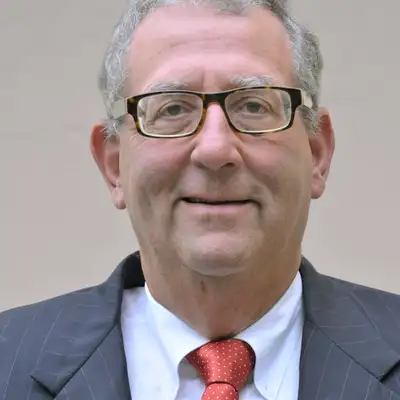
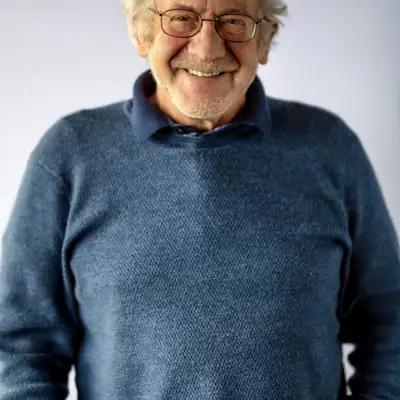
Jonathan Berek and Phil Polakoff.
Jonathan is a renowned
gynecological oncologist.
He is a professor at Stanford
School of Medicine and a former
chair of the Stanford Department
of Obstetrics and Gynecology.
In addition to his extensive
medical career, he is an active
documentary filmmaker, creating and
directing films on medical topics
with a focus on patient stories.
He's also the faculty director
of Health Communication for the
Stanford Center for Health Education,
where he promotes effective medical
communication and health media.
Phil is a distinguished health
transformation advisor, a consulting
professor at Stanford School of
Medicine, and a widely published author.
With a career spanning 45 years, he
has held diverse roles from a nominee
for US Surgeon General to CEO of his
own nonprofit, A Healthier WE, which
is dedicated to improving health.
He's the author of 5 books and
more than 200 articles, making
him a leading voice in healthcare
innovation, policy, and administration.
Welcome, Phil and Jonathan, I am
really excited to have you here.
It's been a long time coming.
Thanks for joining me.
Phil Polakoff: Thank you.
Jonathan Berek: Thank you very much.
Matt Abrahams: Shall we get started?
Jonathan Berek: Yeah, absolutely.
Matt Abrahams: Awesome.
Beyond being medical professionals,
you each have worked hard to draw
attention to and solicit money
for important healthcare issues.
Jonathan, can you share a bit about
your work to bring attention and
funding to women's cancer issues?
Jonathan Berek: Yeah, so when I came
to Stanford 20 years ago, I realized
in putting together the Stanford
Women's Cancer Center that we needed
more than just governmental funding.
I put together with the help of many
women, in particular, in the Stanford
area, a philanthropic project called
Under One Umbrella, where we raised
money for women's cancer research.
Those monies have been used to
recruit people to create endowed
professorships and also support our
clinical research trials group, as
well as giving out innovation awards.
And that's really helped to improve
our research capabilities and all the
activities at Stanford Cancer Center.
Matt Abrahams: People around
the area and around the world
have benefited from that work.
So thank you on behalf of all of them.
Phil, your turn.
Can you share a little bit about
what you've been doing to highlight
healthcare inequity issues?
Phil Polakoff: I go back in a
different direction, not better or
worse than my friend Jonathan's.
Mine's a little bit more
holistic on the word health.
In 1948, the World Health Organization
put forth, there's definition of health.
Health is a state of complete physical,
mental, social, and I inserted the
word spiritual, wellbeing, not merely
the absence of disease or infirm.
So I'm looking at how people improve their
health, and I've seen healthcare and sick
care through all the different lenses.
So the challenge has always been
how do you effectively have change
transformation, which is not easy.
Early in my career, I was a clinical
investigative officer for the
CDC Centers for Disease Control.
I traveled around this country with a new
organization called the National Institute
for Occupational Safety and Health.
And I got to see both urban and rural
issues, and that's where my passion's
been, to see the three Ps. Practicalities,
policies, and political will.
For me, the real opportunity now is can
we cross the chasm and bridge the gap
so it becomes for all of our society.
Matt Abrahams: And that work has
been really important in the past
and even more important today.
Phil Polakoff: It's mission
critical now, crisis to opportunity.
Matt Abrahams: Absolutely.
Not only are you both steeped in
the medical business and world, but
interestingly, you both use very
effective communication tools to
bring your message to the public.
You both, for example, use film.
I'm curious to learn your thoughts
on the importance of storytelling
to move and motivate people,
and what goes into a good story.
I know Jonathan, for example,
you've directed many films.
I'm curious to get your
take on storytelling.
Jonathan Berek: When I was an
undergraduate student, I was very
involved in creative writing.
I wrote plays, short stories, and I
was very involved in the theater, did a
lot of acting, directing, and actually
for a while thought I was going to
end up in the theater, but decided
to go to medical school after all.
But what I learned during that
time is the value of storytelling
and how powerful it is in terms
of engaging people with a message.
Sometimes much more valuable to do it
that way rather than just write it out.
I had the opportunity in the past
couple of decades to get into filmmaking
as more as a hobby originally,
although now it's become a passion,
and I do a considerable amount of
filmmaking, mostly short documentaries.
People are more likely to listen
to something that's in a film
than they are in the written word.
I think it's part of our
culture now because we're the
television film generation.
People feel the emotion
when they see a story.
In my case, I do a lot of medical related
types of films and I use patient stories,
which tears at the heartstrings often,
and I think that gets the message across
more than if I were to just say, well,
I'm doing this little science project.
And there's this molecule, and
we're trying to do that, and
people, their eyes glaze over.
But if they hear a patient's story,
if they hear someone saying, I
took this drug, or I was on this
medication and it gave me a remission
in my cancer, people get that.
They understand and they think, wow,
this is a very important medical advance.
Matt Abrahams: So I hear a
couple things in that response.
One is storytelling that has emotion
can really connect to people, and
storytelling that is personal, that
brings it down to an individual level,
can really help with that connection.
Phil, you have also used film
and media to really move people.
I recall watching one of your films
talking about Appalachia, and things
going on in healthcare, and was very
moved and part of what impressed me so
much was actually seeing the things.
It's one thing to read it.
It's another thing to see it.
What's your take on the
importance of storytelling and
what makes for a good story?
Phil Polakoff: I find it intriguing,
or the intersection between
Jonathan and I, our evolution
was almost along a similar path.
In the process I started doing radio
shows and back then I found they were more
interactive than podcasts today 'cause
I would get questions from the audience.
And then I saw it being a little
different than Jonathan, but I
was heavily involved in politics.
So at a very young age, while he was doing
his surgical training and his academic
and all that, I was running for Lieutenant
Governor of California when I was 32.
So you realize that you had to be
empathetic, but you had to say things that
were very precise and very short on words.
So that's my pearl.
I now have the trifecta of words.
So it could be what are the three
most important thing in one's life?
It's relationships, it's
service and purpose.
Two, how do you deal with social issues?
You listen more, speak less.
Three, think bold, start small.
Move with passion and purpose.
Because people don't have longevity.
Matt Abrahams: So a lot of insight there.
So being concise and clear, highlighting
bright spots are ways to enhance
a story so that it's memorable.
You are embodying, Phil, a saying
my mom has, which is to tell
the time, don't build the clock.
Be very concise.
Be very clear.
One of the things I have enjoyed in
our, in getting to know you and having
you as friends and mentors is you
both have really nice communication
styles that are really effective.
You're just both affable, super
bright, and very articulate.
Do you have advice for people on how
they can be better communicators?
You're around a lot of people and
you see a lot of people communicate.
Phil, are there a few things that you
would recommend, suggest, advise people
to do to improve their communication
beyond being concise and clear?
Phil Polakoff: Coming in front
with Jonathan and you, I thought
about what was important.
Make sure you do your homework ahead of
time and have the questions distilled.
Find mentors in your life that can
help you and look to have opportunities
that are outside of your comfort zone.
Matt Abrahams: Lots of
goodness in that statement.
Jonathan, one of the things that's always
impressed me about you is you are able
to take very complex, often scientific
information and make it very relatable.
Can you share how you do
that so we can all benefit?
What are some of the things you think
about to make the very academic, very
scientific information something that
we can all understand and access?
Jonathan Berek: I guess the first thing
I think of is the process of what some
people call leveling, which is be sure
that first of all, you know your audience.
And so, you communicate in a style and
with words and phrases that you think will
connect with that particular audience.
When you're speaking to a lay
audience about a complex medical
issue, you don't speak down to them
and you don't speak up to them.
You try to get to their level, and
that's the best way to connect.
Matt Abrahams: Absolutely.
And one of the things that you do,
and I'd love to get Phil's comment on
this as well, you listen very well.
Many people I know with the accolades
and backgrounds, such as you both
have, almost use listening as the
starting gun for their talking.
Jonathan, you and I, we met, uh, you
were a student in one of my classes and I
was so impressed right away with how you
listened to our MBA students who, whose
life experience is very different than
your life experience was at that point.
And yet, you would listen, you
would acknowledge what they said,
and then you would connect to it.
How important is listening in all of this?
Jonathan Berek: Well, I think
the two most important skills in
communication are empathy and listening.
And they are related because you
demonstrate empathy through listening
and of course, other phrases that
you use to connect with people with
whom you're trying to communicate.
You have to have an open mind
and an open heart, as they say,
when you communicate with people.
I think a couple of things that Phil
said are important to emphasize.
Doing one's homework, being prepared
is critically important, and to
quote an actor who says the other
important thing is show up on time.
It really has to do with demonstrating
your availability and your awareness
of the circumstance and the
situation, so people take you serious.
That's very important when you're
communicating to an audience.
Matt Abrahams: You're showing respect
and you're showing that I'm here for you.
Phil, talk to me a bit about your
perspective on listening and empathy,
and you're expert at both, I'm curious.
Phil Polakoff: As you get a little
older, two words have more impact
to me than they used to, and I've
gotten to the point where I'm
patient, but I like a yes or a no.
I don't like ambivalence or ambiguity.
If you don't want to do it, that's okay.
And if you do, don't constantly
ask for something without telling
what you get as your deliverable.
Doesn't matter if it's academia,
philanthropy, but make sure
there's some tangible, definable
results that you believe in as you
contribute to someone else's efforts.
Matt Abrahams: What I'm hearing
in what you just said really is
about this notion of clarity.
Clarity of the connection you have with
the person, and taking the time to find
those connections, and then clarity
in the actions and communication.
Jonathan, I wanna come back to
one thing that you and I have
collaborated on, along with my
friend and your friend, Adam Tobin.
You invited Adam and me to, and Adam
has been a guest on the show before,
to help bring ideas from the world of
improvisation into the medical profession.
Rather than build that whole story up,
I'm just curious for you to share why
you believe tenants from improv can be
so important in, in really high stakes
communication situations, such as a
medical professional with a patient.
Jonathan Berek: When we first
promoted this idea, of course,
my colleague said to me, improv,
I don't wanna do standup comedy.
And I said, well, just
think about it this way.
Every interaction you have
with a patient, you improvise.
You improvise what you say.
You talk around it.
You don't have a script, you may have
an idea of what you're gonna talk
about, but the advantage of practicing
a situation where you're improvising
within a group is that it allows you
to get more in touch with your ability
to improvise so that when you're in a
difficult situation with patients or
others, it helps you refine your skills.
And people got the notion and
the sessions that you and Adam
ran were very popular, very well
received, and they got the message.
Yeah, this is helpful, and a lot of
people afterwards said, this really
improved my communication skills.
Matt Abrahams: The point that I
wanna echo for everyone is that you
can practice spontaneity, right?
You can put yourself in situations,
learn some rules, and that
can really make a difference.
Because if you think about it,
most of our communication is
spontaneous, it's not planned.
And in high stakes situations,
having that preparation can help.
And I appreciate that you
invited us to do that.
You are both examples and role models
of people who've pivoted or expanded
their work later in their careers.
As I'm getting older and hopefully,
perhaps a little wiser, I'm curious about
your thought process behind the choices
you made and the moves that you made.
Did you always know you wanted
to become advocates or did
you discover this on the way?
And how has this felt and how have you
communicated this change to other people?
A lot of people change and pivot as they
get older, but we have to explain it.
Phil, how have you always thought that
this is where you wanted to end up?
Phil Polakoff: I don't think
that's exactly my thinking.
My thinking was how do you, as I
said earlier, have a role in making
meaningful transformation change?
I think what I learned is it's
less about I and more about we.
There's another line that people can
use in these times, if I is replaced
by we, even illness becomes wellness.
Only working together, will
we have a healthier society.
I tried many different ways, working
for large healthcare corporations,
looking for large corporations, the
government, not-for-profit, academia,
and I think what I did is I did not have
enough laser focus on fewer initiatives
because if you want to get something
done, you have to be laser focused.
And you can't be a clinician and a
politician and see patients at the
same time you're trying to be an
entrepreneur because you lose focus.
The other thing is I think I would've
benefited by some executive coaching.
So right now I'm much more laser focused
given the challenges we're facing on
trying to have a petition sign to make
health a basic human right and get
this to be a bipartisan hearing in
Washington so people can collectively
think it's their process, not mine.
Maybe we take it initiative, but you
get from moment to momentum to movement.
Three M'S are not easy to go from A to
B to C. So you have to have the passion,
but also as you get a little older,
and I'm not speaking for Jonathan,
moderation's a pretty important word.
Don't think you can do the
same thing you used to do.
I was a competitive athlete.
You cannot be on a rugby field
all over the world again, playing
rugby, it's a little bit too much.
So pace yourself and have fun.
I mean, I think that you're talking about
empathy on, tears are great, and I don't
have a problem tearing in public, but
it's also nice to smile and be happy.
Matt Abrahams: I like that idea
of seeing interactions as the
beginning of the next conversation.
The ability to be focused, to
moderate what you do, to have fun.
That's all great advice and
I hope everybody is listening
to how Phil uses words.
I love I to we, illness, to wellness,
from moment to movement, to momentum.
These are all ways to help us
not just remember, but to feel
a sense of ah-ha or motivation.
Jonathan, tell me about your
decision and arc and how
you've communicated that focus.
Jonathan Berek: I think as I progressed
in my medical career and matured,
hopefully, during that process, I was
trying to look more at the big picture.
You know, when you're laser focused
on taking care of patients and doing
research, in my case, cancer research, you
have to be very dedicated to the process,
but as you mature in the field, you
learn the importance of mentoring others.
Obviously, when I was younger, I
desperately needed mentors, and
I learned from that experience.
I learned from you and others
in the communication field.
So in a way, you served as
a very important mentor at
the time when I needed it.
Matt Abrahams: One thing I heard both
you say differently, you talked about
mentors and finding mentors, and you
talked about coaches and finding coaches.
It's not a single act.
You have to have others to help you,
and you both have served as mentors
for many people, including myself,
and I am greatly appreciative of that.
Before we end, I always
ask three questions.
One I create just for you, and two,
I've been asking everybody on the show.
Are you up for that?
Phil Polakoff: Always.
Jonathan Berek: Go for it.
Matt Abrahams: Excellent.
Phil, looking back at your career and
success and you've had many successes,
and in your case, many careers, what
is one thing you wish you would've
known when you were younger that
would've helped you along the way?
Phil Polakoff: Social interaction.
The best thing that ever happened to me
is when I married my wife, who's my hero,
and that changed my path of direction.
Matt Abrahams: So making those social
connections and being open to them.
Same question to you, Jonathan.
What is one thing you wish you
would've known that would've
helped you along the way?
Jonathan Berek: How to be smarter.
I think when you're young and you're
invincible and you think that whatever you
do is okay, you have to learn to be much
more circumspect and it takes a while.
That's part of the process of growing
up, becoming a mature human being.
Matt Abrahams: So learning to question
and learning to be empathetic earlier.
Jonathan, who's a communicator
that you admire and why?
Jonathan Berek: Phil Pizzo,
he's probably one of the best
communicators I've ever encountered.
His ability to speak extemporaneously
is quite extraordinary.
Virtually every time he gets
up in front of an audience,
afterwards, people, oh my goodness.
That's incredible.
Matt Abrahams: Phil, what are the
first three ingredients that go into
a successful communication recipe?
Phil Polakoff: Being invited to
participate, reflecting and stepping
back, and pause for a moment.
And three, to make it a
communication process.
The three I's.
Interactive, interconnected, and
interdependent, and that it's
the start, not the finish, of a
dynamic, meaningful interaction.
Matt Abrahams: All three of those
ingredients, although you slipped in
five there, really, are really important.
The one I wanna highlight for
everyone is the reflective piece.
Taking a pause, taking a beat.
A lot of us in our
communication rush through it.
I'm glad we did not have
to rush through today.
And to your point, this is just
the start of hopefully a deeper
conversation among the three of
us, but also everybody listening
to take away the advice from you.
Find mentors and guides.
Think about how you tell
stories and connect.
Make them concise.
Make them empathetic.
Gentlemen, thank you.
This was a true pleasure.
I'm glad we finally made it happen.
Thank you.
Phil Polakoff: Thank you.
Matt Abrahams: Thank you for
joining us for another episode of
Think Fast Talk Smart, the podcast.
This episode was produced by Katherine
Reed, Ryan Campos, and me, Matt Abrahams.
Our music is from Floyd Wonder.
With special thanks to
Podium Podcast Company.
Please find us on YouTube and
wherever you get your podcasts.
Be sure to subscribe and rate us.
Also, follow us on LinkedIn and Instagram.
And check out fastersmarter.io for
deep dive videos, English language
learning content, and our newsletter.
Please consider our premium offering
for extended Deep Thinks episodes,
AMAs, Ask Matt Anything, and much
more at fastersmarter.io/premium.