Subscribe
Share
Share
Embed
The podcast for high achievers who want to stay sharp, focused and full of energy despite their diagnoses. Those who know there has got to be something better than simply accepting decline.
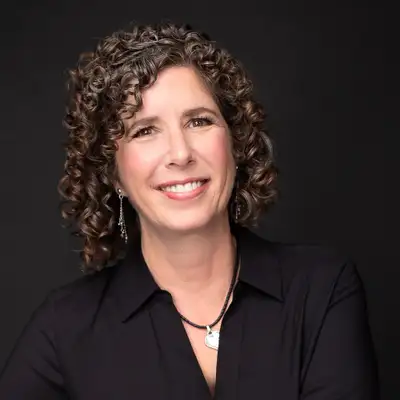
Hosted by Julie Howton, a National Board Certified Functional Medicine Health Coach who used to suffer from crippling Rheumatoid Arthritis until she learned the tools and strategies to take her power back from autoimmunity.
In this podcast, Julie brings you interviews with thought leaders in the Functional Health and Wellness space. You will get actionable recommendations to Take Your Power Back and catapult your health. No fluff, just concrete, useful steps to improve your health!
Coffee has benefits
beyond just the caffeine.
That actually having positive benefits
for the gut microbiome, supporting a
healthy gut microbiome, the postbiotic
products, the gut brain connection.
A cup of coffee per day is
actually good for their brain.
There's a lot that people don't
realize when they're drinking coffee
that could be hidden contaminants,
starting with pesticides.
If you're not drinking organic coffee,
you're potentially exposed to pesticides
that disrupt your gut microbiome.
And causes something called
dysbiosis, which then leads to
leaky gut, inflammation, weight gain
and scrambles your insulin signal.
Welcome back to the inspired
living with autoimmunity podcast.
I'm your host, Julie Michaelson,
and I'm excited to welcome Dr.
Vincent Pedre back to the podcast.
If you missed it, tune into episode
79 to hear our first interview.
Dr. Pedre is the medical director of Pedre
integrative health and founder of Dr.
Pedre wellness.
He's the CEO and founder of
Happy Gut Life, LLC, and has had
a concierge functional medicine
practice in New York City since 2004.
Dr. Pedre believes that the gut is
the gateway to excellent wellness.
Through his best selling books, he's
helped thousands around the world
resolve their gut related health issues.
In today's conversation, we're discussing
Dr. Pedre's newest contribution
to gut health, happy gut coffee.
We're talking about what to consider
when choosing your coffee, as well
as the importance of how you prepare
it in order to support your health.
Listen in to find out if happy gut coffee
may just be the low acid health promoting
coffee you've been hoping to find.
Dr. Pedre, welcome back to the podcast.
So great to see you again and be back
here with you to talk about something
new and exciting that I'm working on.
But also any, I know you're going to
have some really great questions for me.
Yep.
I don't even, fully know where,
what direction we're going to go.
I always enjoy speaking with you so much.
Um, and I was, I had to make myself
hit record cause I just wanted
to jump in and talk about your
new project, Happy Gut Coffee.
So for listeners that aren't going to
go back, let's do a really brief, You
know, I cannot encourage listeners
enough to check out episode 79, um, and
you'll, you'll learn a lot about Dr.
Pedre's journey and how he
just has become this gut guru.
Um, and, and you'll check out the
book, all the good things, but,
but for those that aren't going to
believe me, and they need to go back
and listen to that, you know, we're
going to get to how the coffee.
But let's, let's just talk a little
bit about your journey, um, and
because not all physicians end
up taking the direction you did.
No, um, and I consider myself
lucky that, that I did.
And actually the, the direction
I took was always based on
listening to my gut intuition.
Haha, I
see what you did there.
But you know how, you know how sometimes
you do things and there's like a little
voice inside of you that's saying,
no, this path isn't right for me, but
you're doing it because on paper it
looks good, but deep down inside you
actually feel that it's discordant with
where it is that you want to be in life.
And I think we, we all
struggle with that, right?
We, we all sometimes override our
own gut intuition and, and do things
that we know to the, to, that, that
very wise, intuitive voice within
us is against what we believe.
Um, and yet we do it because we're
pleasing somebody else, we're, you
know, and, and in some ways, like,
I, I went and became a doctor Partly
to please my, my mom and like,
like so many men,
you know, I hear the
word should write the, when
you're shitting on yourself is, is
what you're talking about there.
So it's so interesting cause, um, I'm
reading this book by Louise Hayes.
Um, it's called how to heal your life.
And um, she talks about the word should.
And she talks about how should is always
connected to a feeling of wrongness,
like I should be dieting, I should be
going to the gym, but the implied other
piece of it is that you're being wrong
with yourself, that you're not doing
what you should be doing, you know,
instead, um, she says, change it to could.
Yes.
You know.
Opportunity.
Yeah.
Yeah.
And then take ownership over, like, why
is it that you're, you're not doing it?
Um, for me it was like, I, you know,
I, I knew I was going to become a
doctor and I knew that I was going
to enter into a world that was
geared in one direction, right?
And that direction is
pharmaceutical driven medicine.
And I don't know that a lot of doctors
have reached that level of meta analysis
or self awareness that they've actually
been brainwashed, air quotes, by the
pharmaceutical industry, which has
bought into the medical schools in,
in the country, to think that the
solution for disease is medication.
Now, that said, I don't want to
say that all medications are bad.
Medications can be life saving.
Medications are tools.
that sometimes are required.
You know, you, sometimes you do
need prednisone for a patient.
Right.
Because there's no other way
that you're going to shut
off the inflammatory pathway.
But a lot of times, we're, we're
substituting medication for another
option that could be better.
And for me, before I went into
medical school, I actually discovered
meditation, breathwork, and yoga.
Uh, this was about eight
months before medical school.
I had finished college.
One semester early, so I went back home.
I was very lucky to have done that
because I don't think I could have
gone from, you know, from finishing
college in May to starting medical
school three months later in August.
I needed that time period and during that,
during that time, I had to deal with a
really big elephant in the room for me.
I wanted to become a doctor.
I wanted to help people.
I really wanted to aspire to that ideal.
But I was afraid of needles and I passed
out every time I had my blood drawn,
an injection, and I started doubting
how am I going to become a doctor if I
can't be in the room with needles and
the smell of alcohol makes me queasy.
So, how are these two things that
I love science, I love helping
people, but I don't like needles and
I don't like the smell of alcohol.
It makes me feel like sick to my stomach.
How can I do this?
And that's where I discovered
meditation, breathwork, and yoga.
And instead of thinking like, how can
I medicate myself out of that reaction,
which is what is happening throughout
our entire society, people medicate
themselves to be able to function.
I thought, what is happening internally
inside of me that needs to shift so that
I can be in a room with needles so I can
then pursue my dream of becoming a doctor
and helping people better their lives.
And so I discovered meditation,
breathwork, and yoga and started
doing it, I'm going to say almost
religiously, like I really, really
dove in and dedicated myself to this.
And you have to understand, I
mean, I think we're contemporaries.
This is going back to 95.
Right.
In 1995.
The internet is barely existent,
yoga studios do not exist yet, like,
this is not the trend where society was.
So I was actually exploring something that
there wasn't really a, a known pathway.
And the only thing I had in my
life was my outlier godfather, who
was a meditator, practiced yoga.
And was a pescatarian.
And he had always been kind of
like, every time he visited the
family, talking about what he did.
But everybody thought he was kind of
like this weird outlier, like nobody
does yoga, nobody does meditation.
And here I find myself finding it,
but from a very different angle, from
the angle of how can this provide
some sort of healing potential for me?
Because I am this type A wound
up person who can go into
an anxious panic so easily.
Right.
And how can I rewire this
because I'm tired of this.
I don't want to be this anymore, but I'm
not going to take a medication for this.
I'm going to completely rewire my brain.
And that's what I did for the eight
months before medical school started.
I was meditating, doing
breath work on a daily basis.
And as a result, by the time I got into
medical school, I was a changed person.
I had also, like, used that.
I always like to, I don't like free space.
So even though I had finished college
and you know, I could have been
partying and just having a good time.
I like to learn.
Sure.
So I started reading books by
Andrew Weil and Deepak Chopra and,
and look, both of them are MDs,
respected MDs who had the courage.
To go beyond their education and look at
what else is out there because everything
we've learned doesn't fully explain
how some people are capable of healing.
Right.
And so, by the time I got to
medical school, my, my mind had
been open to the possibility that
there is something else out there.
And regardless of what they're
going to teach me or they're going
to try to indoctrinate me with, I
experienced it for myself because
I was able to rewire my brain.
I was able to rewire the way I
react to stressors, to needles.
And because of that, I conquered my
fear of needles and I was empowered
to see that there is another pathway.
Yes.
Another pathway that empowers people,
that allows you to heal in a way
that does not require medication.
Didn't even require therapy.
Like, I didn't go to a therapist thinking
like, Hey, I'm afraid of needles.
Like, how do I conquer my fear of needles?
No, I conquered my fear of needles
not by thinking about it, But by doing
meditation breathwork to completely
rewire the way my autonomic nervous
system responds to a stress response.
That's amazing.
It served me really well in medical
school because You know, when you do
certain rotations like ER and trauma,
like you can't lose your head when
the other person's losing theirs.
Right.
Right.
Yeah.
I mean, I wish that,
could you imagine if, if your gap
was everybody's, you know, first
semester of medical school, like how
different medicine would be here?
It would be.
So different and I know they're like the
medical schools now are incorporating
some of them are bringing in nutrition
and other things that weren't available
when I went to medical school.
Um, but even, you know, there's a
gap in education too, like we're,
we're teaching our kids about
history, but we're not teaching
them how to be successful in life.
Right.
Right.
Right.
You know, so I like
you, like you teach a doctor in
medical school, how to be a doctor,
but not how to run a practice,
right?
Exactly.
Or, or even just.
Or balance a
checkbook.
The kids don't learn that anymore.
No, and that's really, we should
be teaching basic life skills.
Yeah.
And I think everybody should be taught how
to regulate their nervous system because
I think that is the single unifying
factor, not to simplify everything, but I
think if If the majority of people could
learn how to regulate their internal
nervous system, they would be walking
around feeling a very different way.
Yes.
Well, and, and that ripple effect,
you know, just energetically, if, if
everybody that you came into contact
with throughout the day, knew how
to regulate their nervous system.
I mean, wow.
Yeah, that would be incredible.
Amazing.
We would be a happier society.
Oh, that's an understatement.
We would, you would heal the world.
Come on.
It would be amazing.
Let's
do it.
Let's do it.
I think that's great.
I mean, that's
what, that's what Louise
Hayes wanted to do.
Um, but you know, it, it really takes an
ongoing effort and a lot of awareness.
Um, but I think we're, we're in a place
where information is, is so easily shared.
Yes.
Um, but I think I, I would
hate to be a patient now.
I would really hate to be a patient now.
And the reason is that we've gone from
like lack of information where you
had to go to bookstores and you had to
read a book to learn about something
and go to the encyclopedia to like
this explosion that there is so much
information out there that what do you do?
Like who do you follow?
What, what path do you go?
Because there's like.
Fasting, keto, paleo, like
do this, don't do that.
No, yes, do this.
All right, it's It's confusing.
It is.
It's information
overload.
I actually had this conversation
yesterday with a client who had
all these questions about her labs.
And instead of reaching out,
but you know, it was before the
lab review, she got her labs.
was in the rabbit hole, you
know, well, you know, I was
looking up, what does this mean?
And what does that mean?
I'm like, if only you had somebody you
could reach out to, like, don't do that.
She's like, I wasn't sure if I was dying.
And by the way, her labs are
beautiful, too, you know, um, yeah.
And, and, and I, and, and that's been like
one of those points of, It's an internal
debate for me because sometimes, you know,
patients want to see their labs before,
and a lot of times I've been old school
traditional where I say, no, you're not
going to get your labs until you and
I meet and we discuss what they mean.
The funny thing is, is that
sometimes we'll do that.
And then, you know, you know how a
lab is going to have like one result
that might be off in the CVC or,
yeah.
They'll reach back after the appointment
and ask me, well, what was this?
Why didn't you talk about that?
I didn't
do talk about it.
And like, I missed something.
I mean, I'm pretty, I'm a,
I'm a very detail oriented.
Like I, I missed something.
No, I didn't miss it.
I just didn't mention it because
I'm trying to keep the information
as streamlined, as simple.
Right.
Because I think, I think what people
don't realize is they want to know the
hundred details, but after they know the
hundred details, they are so overwhelmed
that then they, they're lost again.
They forgot the big picture.
Absolutely.
Absolutely.
No, I get it.
Amazing.
I don't know if you
agree with me, but I think our job as
practitioners is to simplify and make
things easy for people, uh, especially
now in this information overload.
World.
Um, yeah,
it goes back to you use the word
empowerment, which is one of my
favorite, you know, this is what
we're all about is empowerment.
I'm sure that has something to do with
also why you wrote the book and and right.
It's about allowing us to.
That's to have the tools to heal
ourselves, not talking about, you know,
God forbid you need emergency surgery,
you go to a Western hospital, please.
You know, but, but there's so many
things that we can do day to day
to, to take charge of our health.
And that's, it's the same with
when we're sitting down, you
know, and go going through labs.
If you're giving every little detail,
you might as well have said nothing.
Really?
No, you're setting the house on fire.
Yeah.
It's, it's almost better
to choose that one thing.
Right.
And then focus on that one thing,
but become really good at it, and
then you go and add the next thing.
Right.
I think when you try to do everything
at once, It can become too much.
Well,
that's, you know, the,
the coach approach, right?
As, as a coach, it's fine.
Let's find this, you know,
let's build on success.
What, where can we create change either?
That's going to have the biggest
impact or that takes the least
effort to be consistent with so
that then you can build on it.
There's no way we could, you know, if
we could, If we were wired that way,
we could do things like read a book
and have it all figured out, right?
If then we didn't read another book
that contradicted the first book.
So throw that into the ADD, social media,
dopamine hit world, where everybody
wants their, their results like this.
But true results take building a
foundation, then stacking layers
on that foundation as, as you
go down that healing journey.
Yeah.
Well, I can keep you
talking for hours, so.
I want to talk about stacking because in
my morning stack, coffee is important.
So I want you to tell us about
happy gut coffee and, and, you
know, how is it different and why?
And does that mean we don't have to give
up our coffee if we want to be healthy?
Isn't that great?
Ah, so excited!
Like, if you could not give up
your coffee and still be healthy.
Yes!
It is the number one most
drinked beverage worldwide.
Two billion cups of coffee
are served every single day.
A hundred and fifty million
Americans drink coffee every day.
And so I wanted to come out with a coffee
that was gonna be healthy and then also
from the perspective of gut health where
it would be easy on the stomach, easy
for people with sensitive stomachs, with
heartburn, acid reflux, and, and so I'll
give a visual here so people can see.
Oh, I love
it.
Look at that.
It's got a
beautiful sunrise image, kind
of like makes you want to
wake up.
The branding is reminiscent of the
70s, but I'm a child of the 70s, so I
wanted something that kind of reminded
me
of when I grew up because my,
in my culture, which is Cuban.
Uh, coffee is a very central part
of our culture, it's what brings
us together, it creates community.
Cubans and, and I know this is worldwide
with many different cultures, that
they gather around and have coffee.
Yes.
Um,
in Cuban culture, we would even,
like, if someone visited the
house in the afternoon, Mm hmm.
The first question you ask somebody
is, Would you like some coffee?
Right?
Yeah.
This is like 4 or 5 p.
m.
now.
I later learned I'm, I'm
actually quite sensitive.
I'm a, I'm a what you
call slow metabolizer.
Yes.
50 percent of people
are slow metabolizers.
And thus you have to be careful
about how much coffee you drink
because, uh, it's going to win.
Yeah.
And
when, uh, cause it's going to affect
the quality of your, your sleep.
I, I am a firm, which is, so
I, I lived in Miami there in
the Miami area for 13 years.
Um, and where I
grew up
and, uh, so I am familiar
with the Cuban coffee.
Yeah.
We used to joke that
Cuban coffee can revive.
A dead person.
Yeah.
I mean, in the, in the, in the
hospital where my kids were born,
there was a amazing coffee cart
that had genuine Cuban coffee.
Um, my, my, who was also a good friend,
OBGYN happened to also be Cuban.
So, um, you know, I was the like
clean, clean pregnancy until my doctor
handed me a Cuban coffee, kind of.
Um, but I, I still, I have
a firm 2 p. m. cutoff.
Yeah, for sure.
And, and I will throw out, you did
say sleep quality, even for people who
say, no, I still sleep really well.
It can really impact your quality,
even if it's not keeping you awake.
Cause I,
I would challenge people who think
that it's not impacting their sleep
quality to wear some sort of biometric,
uh, device like an oral ring or, or a
whoop band or a Fitbit, you know, to
eight sleep mattress pad, something.
Yeah, yeah, so document what your
sleep cycle looks like and see how much
deep sleep you're getting at least 90
minutes for adults, um, cause it can
affect you and, and what I learned from
actually one of the lecturers at the,
or the Institute for Functional Medicine
who is a fast metabolizer, he noticed
that any coffee even later after 2 p.
m.
was affecting his sleep architecture.
Even as a fast metabolizer, because
think of those people who go out
to dinner and then 9, 10pm they're
having an espresso right after
dinner because their body's going to
metabolize fast and they'll go to sleep.
But really what's happening
to their sleep architecture?
Yes, absolutely.
So yeah, I love the challenge.
If you think, if you think it's not
affecting your sleep, play with it
and track because what we can learn by
doing that is again back to empowerment.
I don't know.
So I love it.
So you, you write this amazing,
again, talk about empowerment,
the gut smart protocol.
So of course your coffee has to be
gut friendly, but not just, it's not
just,
um, easier on the gut.
Like what, you know, tell us a
little bit more about the coffee.
How is it so special?
I love it.
There's a lot that people don't realize
when they're drinking coffee that could
be hidden contaminants in the coffee.
You know, starting with pesticides
being the biggest one because coffee
crops are among the top 10 most
pesticide sprayed crops on the planet.
So if you're not drinking organic
coffee, you're very potentially
getting exposed to pesticides that are
going to disrupt your gut microbiome.
And when they disrupt your gut microbiome
causes something called dysbiosis, which
then leads to leaky gut, which then leads
to inflammation, which then leads to
weight gain and scrambles your insulin
signal and scrambles your blood sugar.
And next thing you know, uh, you can't
lose weight and you're wondering why.
So, pesticides is one big hidden danger.
Um, potential problem in coffee that a
lot of people are not thinking about.
The other thing is, is just the
potential for mold contamination.
And that's a, that's one that's a bit
harder to track, like how much coffee
is actually contaminated by mold.
It really varies by manufacturer
and how many corners they're
cutting, and what is the quality
of the beans that they're getting.
Okay.
Is it true that, that in North America
is, is the only place where we don't have
these standards for molds and coffee?
Or is that not true?
I always feel like I, I had
heard years ago, um, Basically,
we get the moldy coffee here.
That's not
acceptable.
I don't know if it's true.
I feel like I would have
to, I would have to research that.
Uh, cause I can't imagine.
I feel like you
would know at this point.
It might not
be a problem in other parts of the world.
Um, but I think, I think America is
probably likely, you know, it's still
profit driven that they're going to be.
You said cutting corners
that are cutting corners.
You know, if you're buying an organic
ba uh, bag of organic coffee and it's
costing $14 for the bag on Amazon.
Mm-hmm . I can tell you that those
beans are not of the highest quality.
So they may technically be organic, but
then there's other places where they
were able to shave that price down.
Yeah.
Yeah, exactly There there there's
something going on there, but definitely
when when looking at coffee, you want to
make sure that it's organic Ideally you
want to work with a brand that has Third
party tested their coffee beans to make
sure that they are free of pesticides.
Um, I had our beans tested
also for glyphosate.
They are, uh, free of glyphosate.
Um, make sure that they've
been tested for mold.
And I also went a step further because
of my concerns, especially with, uh,
cacao beans and how they found that a
lot of the, um, chocolate brands have.
Um, cacao that's been contaminated
with lead and cadmium, which
are, by the way, super important.
These are not things to be taken
lightly because, for example, cadmium
causes, um, prostate cancer that is
resistant to chemo or to any treatment.
So it's important to know, you know, it's
funny cause I told my son these things and
he's like, well, we can't eat anything.
What do you eat?
Cause everything, something's
contaminated with this.
Another thing has glyphosate, you
know, you have to be a savvy consumer.
And, and because of that, and because
this is something that people don't
want to give up and I wanted to create
a. a coffee bean product that would be
healthy for the gut, but also healthy
for the body and good for the brain.
And that's what inspired me to
create Happy Gut Coffee as our
first version is a dark roast.
And the reason for that
is that the dark roast
is the
best.
It's the best.
Well, the thing about the roasting
process, it's so it's really
fascinating because people often
think that a dark roast is going
to have more caffeine, right?
But it's actually the opposite.
The lighter the roast, the more
caffeine it has, and the darker
roast, it actually drops the caffeine.
So for somebody like me, like in the
50 percent of people out there, of
the 150 million Americans who drink
coffee every day, maybe about 50
percent of them are slow metabolizers.
Sure.
The dark roast lowers
the caffeine content.
a bit because of the the roasting process,
but also it, it brings out the flavor
notes in the coffee, which are not always
brought out with the, the lighter roast.
You get more of that very complex flavor.
The other thing that it does is it lowers,
it really drops the acidity of the bean.
And that's something that
was super important for me.
If I'm going to Come out with a coffee.
It had to be low in acidity
because so many people suffer
from acid reflux from heartburn.
They're taking back to the medications.
They're taking over the counter
medications that just keep them there.
But then they're drinking their coffee
even though it hurts their stomach
because they want their caffeine, right?
But they keep doing the same thing.
And so, I wanted to come out with a
coffee that was gut friendly, low acid,
but also good for your body, free of
all the different toxins, the hidden
toxins that can be found in coffee.
And also, put out a lot of education
around it's not just the coffee,
it's the, it's the habits, it's
the way the coffee is made.
You know, the The K Cups that
people love are lined with plastic.
I'm guessing
you're not going to sell those.
No, if we, if we actually, if we
did anything, we would actually
sell a K Cup replacement as a
steel filter that you can use.
in a K cup machine, because K cups,
but still, you know, you're going
through all the, you're still going
through the plastic in the machine.
Yeah.
So we have to think about the
microplastics is what I've
been talking about around.
And when you go out and pick up a
coffee and get it in a to go cup,
that to go cup is lined with plastic.
And when that hot water hits that
plastic, it's going to release
some little microscopic shards of
plastic that you're going to drink.
Now, why is this?
important.
One, um, studies are now showing
that microplastics lead to dysbiosis.
They actually destroy the mucus layer
of the gut, which is kind of like our
little neutral zone that helps protect
us from the bad bugs in the gut.
And it, when that you wear away at
the mucus layer, then the next thing
you're going to get is the leaky gut.
Once you have leaky gut.
You've just opened up the pathway
for every chronic disease out there.
Inflammation,
autoimmunity, cardiovascular inflammation,
you know, blood brain barrier issues.
So, not only did I want to come out with
a coffee, but also really educate people
around the habits of their daily coffee.
And, and you know, I'm one that, Before,
you know, I just, I want to just raise
my hand and admit that I'm the one
who would go to the local coffee shop
and get my, my coffee in their cup.
Until you think about it, you know, like
we all have this aha moment or hopefully
that's why we're having the conversation.
Um, and then you can't on, I, I re I
literally was thought, you know, this
is, this is how I live what I do.
I am in the rabbit hole and I was
literally creating slides for a
presentation on limiting toxins.
And I looked up, this was Many years
ago, but I looked up and it was in
that moment that I saw my old school
drip coffee pot, you know, it had
this stainless crab, but like in that
moment it hit me, Oh my gosh, that hot
water is traveling through plastic to
get to my stainless steel coffee pot.
Um, and, and, you know, we're
always finding the up levels.
I am that person that, you know, I, I
like to support local businesses, um,
and I will do my best to get my coffee
in a mug or, um, but, you know, once
I again thought through the whole,
to go coffee cup and then, you know,
how could we possibly make it worse?
Well, let's put a plastic lid
on top so that, you know, just
the steam can just condense and
drip back down into the coffee.
I mean, look, if, if you do one thing,
take the lid off, drink your coffee.
But if you can do something else,
which is what I've started doing is I,
I carry my steel line coffee tumbler.
Just bring it with you.
I bring it to the shop and actually
they charge you one dollar less when
you bring your own cup, which is great.
Uh, but, but most of the time I'm
making my own coffee at home because
I've got a better coffee than
the one that they make out there.
So I do it as a pour over.
Thank you.
That was going to be my question.
Okay.
Yeah.
Uh, pour over or French press, but even
a French press, like you have to make
sure that it's a steel or like made
from ceramic, because if it's plastic,
then you're getting, you know, again,
you're putting hot water and plastic.
Yeah.
And you can find the, the glass French
press with, with the stainless, or
what are your thoughts on old, this is
old school, um, stainless percolator.
That's just all stainless on the inside.
Yeah, exactly.
Like a mocha pot.
Yeah.
Yeah.
Yeah.
I mean, that's how Cuban, that's
how Cuban coffee is traditionally
made with a, with a mocha pot.
And that's
medicine, you know, going back to how
things have been done for generations,
it seems to work out better.
There is a price to pay for convenience.
Sometimes convenience is not
necessarily better for our health.
Right.
Yeah.
And there's a time
and a place, you know, for the exception.
This is again, back to you.
You mentioned the word foundation and
kind of back to what your son said.
My daughter is going through a phase,
um, right now where she's like, I
think I'm worse than you with, You
know, she's cleaning up her pride.
She already has used clean
products, but she's going further.
Um,
so much to think about there,
you know, especially women with
makeup and cream and all that.
Cause there's so many toxins
hidden in those things.
Yeah.
And it's, it's all really important,
but that's the whole point is.
So that you, you know, then we
can take the hit out and about
if our foundation is good.
And to me, like you say
coffee, that's foundational.
Yeah.
Um, I don't know.
So tell me.
And it's what
I call it's the, it's the micro habits.
Yes.
Because we
sometimes, sometimes we write
off things because they feel like
there's such a small piece of
our, you know, our entire day.
But I think it's the micro habits that
create the macro effects in our life.
And one of those is drinking
a cup of coffee every day.
And if you can just switch that and
make that a bit healthier for you.
Then you've just made a change that
is going to have a powerful macro
effect on your life when you add up
the number of days in a year that you
drink coffee and all the microplastics.
If you're drinking through those
plastic cups or using K cups, it's like
you're eating a credit card a week.
Do you want to be putting
that into your body?
Right.
So let's talk about, I want you to,
to educate listeners, because again, I
do have a very passionate relationship
with coffee, um, that not, so not only
is your coffee, not bad for you, right?
Like it's not hurting your gut.
It's, it doesn't contain these
things that we really need to be
avoiding in order to minimize.
But, I mean, you're a doctor, why not
just tell people not to drink coffee?
Tell us about, I know there
are health benefits, so share.
There, yeah, I mean, and look,
if you're doing like a major
detoxification protocol, you might
take coffee out, and, and temporarily.
But the truth is that anytime
I've done that, and you know that
too, they're asking us, okay,
when can I bring the coffee back?
Right.
Okay.
Okay.
Yeah,
and and that's coming from someone who
didn't drink coffee for seven years.
Wow actually gave up for two I thought
that I thought I was that was a lot
Seven years.
I did not drink coffee for seven years.
And when I had it again,
I Realized oh, wow.
I missed this
Yeah.
Joy is good for the health, right?
Yeah.
Yeah.
You
want, there's something about that,
that, that ritual, but also the smell
of coffee and don't knock it because
I love matcha and I've been to Japan
and had some really great matcha.
That's what I drank when
I didn't drink coffee.
That's, that's what I did for seven years.
I was drinking matcha instead.
But I, I really love coffee, but
there's other benefits to it.
There's the polyphenols and those
polyphenols feed the gut microbiome.
And as a result, your gut microbiome then
is producing these postbiotic products.
Some of which help to.
Even control your, your appetite
signaling through GLP 1.
So, we know that coffee has
benefits beyond just the caffeine.
That actually having positive benefits
for the gut microbiome, supporting a
healthy gut microbiome, the postbiotic
products, the gut brain connection.
We know that people with neurological
diseases like Parkinson's, early
dementia that a cup of coffee per
day is actually good for their brain.
And I love that you clarify, I
mean nobody's saying drink gallons
of of coffee and we've already
said don't drink it all day long.
Um, it's like, it's like anything good.
There is a too much limit.
Um,
yeah, especially if you suffer from
anxiety, you have to be careful with
not crossing that threshold because you
might not realize that your anxiety is
amped up because you had too much coffee.
You might not make that connection
and, and I've tested it out
even with my coffee being a slow
metabolizer and sensitive as I am.
I'm great with one cup.
Yeah, I don't crash and it's a large,
you know, it's not like a 12 ounce.
I do a, I do a decent size cup and
then I add like my different powders.
I'll put collagen in it.
And I, I love putting SBI in there.
Um, but But I saw that if I have a
second cup, even of my dark roast,
low, low acid, lower caffeine coffee,
that I do start getting amped up.
So it's super important.
Listen to your body, because if you tend
to be a person who suffers from anxiety
or you drink that extra coffee, and
then you find that your, your patient's
fuse is running slow, and yeah, You,
you then don't have the patience, uh,
with your employees, your workmates.
You have to think, like, there are
internal processes that might be
playing a role in that, and a lot of
times it's related to our habits or
things that we are ingesting, like
sugar, caffeine, uh, things like that.
Yeah, and I love that you point that out.
I've, I have had so many people with
specific symptoms that they literally just
either weren't willing or just because
coffee is just that part of their routine.
Um, they never considered
that it could be contributing.
Um, and so, and I actually, I have
one that I can't wait to introduce.
your coffee too, because I think it'll
really change her, her happiness level.
Um, tell us a little bit about,
is the coffee available now?
How can people find it?
Uh, it's available through our website.
If you go to happygutcoffee.
com, it'll take you there.
And we've got, uh, different
types of ways to, to buy.
You can get whole bean.
You can also get ground.
If you're buying ground because
we're still such a small operation,
it's actually getting ground
right before it gets put in the
bag and, and sent out to you.
So.
Because we know like the fresher
it's gonna be to have the whole bean
coffee and then grind it yourself But
not everybody wants to grind coffee,
but if you're ordering, just know
that you're getting it freshly ground
right before it's shipped off to you.
So you're going to have like really fresh
grounds versus grounds that have been
sitting around at the grocery store.
You can't even
smell it when you open the bag.
Nobody wants that.
Yeah, that's amazing.
So right now we deliver
that direct to consumer.
Our, our hope and goal for 2025 is
to also make it available on Amazon.
So that's one, one big goal.
And people can save money by buying
more than one bag or by joining and
doing a subscription for the coffee.
When they get a subscription, we
give them a pretty significant
discount on, on the cost of the bag.
Which is great.
And I mean, let's face it.
If you're a coffee drinker, why
wouldn't you do a subscription?
I wouldn't want to be without it.
Exactly.
Exactly.
Well, I am so excited.
This is my favorite
project of yours so far.
Thank you so much.
Um, and, and I can't wait
to, to help spread the word.
Coffee brings a smile to people's face.
Like.
It's another reason that it's been
what also one of my favorite things
that I've done because I just, and
especially when I've sampled and had
people taste test the coffee, I was
in LA for this pre Emmy Awards gifting
lounge where I got to sample the
coffee for celebrities and just seeing
everybody's surprise when they had the
coffee black with no sugar, nothing, yum.
at how smooth and low acidity it was and
and how easy it was on their stomach.
A lot of them said they don't
drink coffee because of acid
reflux or because it hurts.
Yeah,
well
now they can enjoy happy gut coffee.
Yeah, amazing.
See, it's just another gift to the world.
I'm so grateful for, um, I'm trying to
remember exactly how you put it, but
you don't like, like that void, right?
That blank space.
I'm so glad that you are that
person that's always just
bringing us the next project.
Um, and I'm excited for listeners.
to try happy gut coffee, especially
those who have given up coffee
thinking it doesn't serve them.
Um, because of, like you said,
the acid reflux or, or just,
you know, digestive fragility.
Um, I say it's, it's go out
and, and go to happy coffee.
com and get yourself a bag.
Happy gut coffee.
com.
Happy gut coffee.
com.
Amazing.
Thank you so much for joining
us again and, and sharing your
wisdom and, and spreading the
joy through coffee this time.
Thank you so much.
Thanks for having me back
for everyone listening.
Remember you can get the show notes and
transcripts by visiting inspired living.
show and all the links are
in there for you as well.
Hope you enjoyed this
episode as much as I did.
I'll see you next week.