Subscribe
Share
Share
Embed
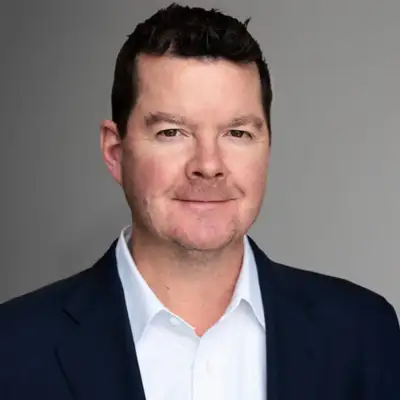
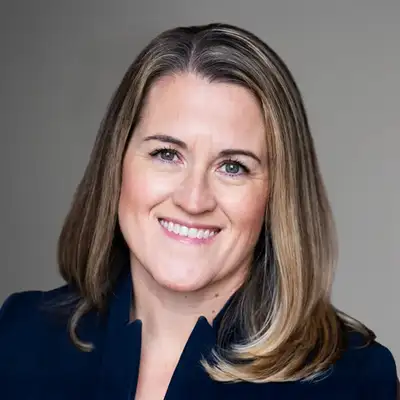
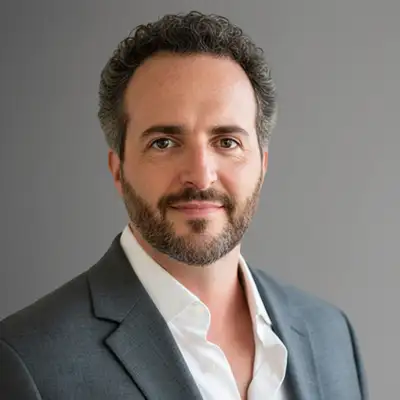
Meet the Insiders rewriting the rules of influence. Pulitzer Prize-winning journalist Brody Mullins and veteran DC strategist Lisa Camooso Miller interview the leaders who shape perception, move policy, and win when it matters. Not pundits or commentators – these are the operators driving some of the most critical strategies and outcomes in today's Washington.
Morgan Griffith We had a failure of the doctors to understand the danger because they were misled by the pharmaceutical companies. We had a blind eye turned by the distributors. We had a failure by the law enforcement, DEA in particular, and we needed to change the laws. So we started changing the laws.
ANNCR Behind every major policy decision, every corporate strategy, every Washington power play are the insiders shaping the game and the new rules to win it. The Deciders with Pulitzer Prize winning journalist Brody Mullins and veteran D.C. strategist Lisa Camooso Miller.
Brody Welcome to The Deciders, where we talk to the insiders rewriting the rules for effective advocacy in Washington. Today we're joined by Morgan Griffith, a Republican from the Commonwealth of Virginia and the health subcommittee chair of the Energy and Commerce Committee. Thanks for joining us.
Morgan Griffith Glad to be with you.
Lisa Before Washington, you were a trial lawyer and you were the majority leader in the Virginia House. Talk a little bit about your pathway to Capitol Hill.
Morgan Griffith Yeah. So people hear trial lawyer, they think ambulance chasers and that kind of thing. I did mostly criminal trial work. And then I was able to get into the Virginia House of Delegates and win that seat. It was not a huge upset, but it was a little bit of a surprise. Six years later, I became the first Republican majority leader in the history of the Commonwealth.
And then in the fall of 2010, I was elected to the United States Congress. My predecessor, nice guy, but he voted for cap and trade. And the 9th District of Virginia historically has been a coal and natural gas producing district, still is. I remember looking at my wife and saying, Rick Boucher is not going to run again.
She said, how do you know that? I said, well, because you can't win if you vote for cap and trade. And she said, I think you're wrong. Well, she was right. He was running again. She was wrong about that he could win. And that was a killer issue for him, and he just never was able to recover from that.
Lisa What did you learn from unseating a long-time incumbent in that race?
Morgan Griffith Campaigning is tough. The district's hard. The district is so large — it's currently over 9,000 square miles — that you really have to get out and you have to really hustle and you have to campaign for long periods of time. And you can't just show up once, you've got to show up more than once, and you have to have a wedge issue.
You have to have something that people look at and go, wait a minute, we've been generally satisfied, but here's a wedge issue that we are really upset about. And that's what happened with cap and trade. I have respect for him as a person. We disagreed on policy and I was adamant with my team, we're not getting any personal attacks. We attacked on issues, but no personal attacks.
Brody Yeah, I remember Rick Boucher back then. He was always a good guy. And I always found it interesting because he was always the Democrat voting with Republicans on energy issues until that cap and trade vote where he went the wrong way. Let's talk about your district. You've got parts of Appalachia, really poor district. You said it's the 409th poorest district. So I had a couple of questions about that. One is about the fentanyl crisis that is hitting that part of the country the hardest.
Morgan Griffith We were ground zero.
Brody Tell us about that. How does that impact your district?
Morgan Griffith Oh, it was huge. It was devastating. You take a population that already has more people who are on disability for various reasons. A lot of times because they've been doing heavy labor, working in the mines on their knees or working heavy equipment. The doctors told them to take it. The next thing you know, they know they're hooked and they're having a hard time getting off of it.
And it was devastating. I mean, there was a couple of years in there, 2 or 3 years where every time I went out, somebody brought me a story. Lost a classmate from college. We had lots of people who died or were addicted and had to get a lot of help to get off of the substances.
And a big chunk of it was people who thought they were doing what their doctor told them to. They had a situation, and I'm going to use fake names on the pharmacy. There was a pharmacy just over the line in West Virginia, and I'm going to call it the ABC pharmacy number one. They were getting something like 3,000 doses a month for every person who lived in the county.
I mean, it was obvious that there was something going on. And so the DEA comes in and they pop ABC pharmacy number one. And then it took them five years to pop ABC pharmacy number two. Wow. And we asked, why did it take you so long? And they started down this path — remember my background as a criminal defense attorney?
Oh, it's so difficult to get all the information together for a search warrant. You can go to any judge in any state, and I'm going to literally say 48 hours. The judge is going to sign off on it. These same people owned this one? Yeah. Search them. And it took them five years to get the search warrant. Wow. So we had a failure of the doctors to understand the danger because they were misled by the pharmaceutical companies.
We had a blind eye turned by the distributors, and we needed to change the laws. And so we started changing the laws.
Brody So let's talk about that. You've got a couple of bills on fentanyl. Tell us about them.
Morgan Griffith So the one that I think probably had the most impact in the early years was the drug prescription monitoring program. Because when you look at my district, I just mentioned West Virginia — if you planned it out, you could do five states in a single day. So if you got a prescription from a doctor, you could go to West Virginia, Tennessee, Virginia, North Carolina, and Kentucky in a single day.
Brody And just run that prescription each time.
Morgan Griffith Each. And you can run it each time because before that law was passed, there's no way that the pharmacist just over the line in West Virginia, just over the line in Kentucky, just over the line in Tennessee would know. And so I was very proud of that, that we got that included in one of the big packages. And then my bill, the HALT Fentanyl bill that I did with Bob Latta.
So we scheduled all the analogs — there's about 4,300 of them as schedule one. But we also allowed our research institutions to continue to do research without jumping through a lot of hoops, because we had made a mistake with marijuana. On marijuana when they scheduled as schedule one, basically you could do some research if you got the one strain of marijuana from, I think it was Mississippi State, and you had to jump through so many hoops that for most people it wasn't worth doing research on marijuana.
So we allow the medicinal usage of fentanyl, which is absolutely necessary for certain patients, mainly in surgery. But people with severe pain after surgery or after traumatic incident — that is still legal, doctors can still use it. But you can't come across the border with it. And I think it's going to be a big help.
And in fact, President Trump said it was probably the most important bill he would sign on the fentanyl crisis.
Lisa President Trump has also famously said that there should be a cap on some prescription drugs. But historically Republican Party has been mostly aligned with the pharmaceutical industry. You though, in your district, your constituents have really been affected by the costs of prescription drugs. Talk a little bit about how you square that circle.
Morgan Griffith Yeah, I don't think it's a square or a circle. I think it's a balance. The cost is important, and we need to continue to make sure that we have 340B, that we have the ability to have our federally qualified health centers be able to get the medicines they need because they're providing services to that really poor and underserved community.
And we need a balance because there are pharmaceutical companies who have abused it. There's also a PBM component. But the balance is we also, as Americans, we want to have the latest, newest medicine. I'm a beneficiary of that. As a result of Covid — one of the reactions I developed pre-vaccine, so none of the listeners will think this was a vaccine reaction — I developed blood clots.
The medicine that I'm using is Xarelto. Eliquis also does it. But this was 2020 when this medicine was prescribed for me. It was only about 12 to 15 years old at that time because Americans had developed two medicines prior to that.
I wouldn't have been able to drive around my district because driving — and I have done 2 or 3 days this year where I've driven 400 miles to get to different parts of my district in a single day. You can't do that on warfarin and heparin that existed prior to Eliquis and Xarelto.
I would have been grounded. They would have said, no way. In fact, when I was first diagnosed, I would not have been able to even come to a session of the Congress. There was a special session that was called the week I was diagnosed for that Saturday. And I called the docs and said I got this pain in my leg.
Can you see me on Saturday? And they diagnosed it correctly and said, I think you have blood clots. Go to the hospital. And sure enough, I did. But without medical breakthroughs — and everybody knows somebody who has a story like this — we wouldn't be able to do a lot of the things that we do today and life would be a lot less.
You've got to have that balance. You want the pharmaceutical companies to do the research, to find the new medicine, to find the breakthrough. We want to keep the jobs here in the US instead of sending them to China. At the same time, it's not fair — and President Trump's been all over this — it's not fair that other countries in the world use our breakthroughs at a much lower cost.
So he's working hard and I agree with him. They have to pay for some of the research cost too. It shouldn't just be the American consumer. And I agree with that. And that's the balance that we need to get. It's not squares and circles, it's reaching the right balance. And sometimes it is the pharmaceutical company, but sometimes it's the PBMs.
Let me explain. These are pharmacy benefit managers, and they have a role too. It's a balance with them too. I'm not one of those people that says we need to get rid of them, but they need to be reformed because they get paid a percentage of the prescription drug price as it originally sets. There are stories out there where they actually go to the pharmaceutical company and say, there's 2 or 3 medicines that do what you do.
If you don't raise the base price, we're going to take you out of our formulary for insurance company X. And as you know, there's only a handful of insurance companies. So if you lose the business of insurance company X, it could deeply affect your company's profitability. So then they raise their price.
Brody These are all incredibly complicated issues with huge industries. How do you explain to your constituents this big mess without them blaming you?
Morgan Griffith I do a lot of talking, and I go out and see people, and I try to make it as clear as I can that I'm doing what I can do. A lot of times they don't want to know all the ins and outs, but they do want to know that I'm aware that it's a serious problem and that I'm trying to fix it.
Brody We'll be right back on The Deciders.
Welcome back to The Deciders.
Congressman, you mentioned that you have the 409th poorest district out of 435. Increasingly, we see Republicans representing more rural and poor parts of the country, which is a change from how the Republican Party used to be. How is that changing the party and the work you do on the committee?
Morgan Griffith Well, I mean, it's still the same message. The base message is the same. We want to give people the opportunity. We want to make sure that there's opportunity to improve your lot in life. That is the American dream — to be a little bit better than your ancestor. I hope my kids do a little bit better than me.
On the financial side. And that's what we all want. But you've got to have those opportunities. And so I look for ways that we can make those opportunities available. It does mean that we look at things like the formerly called earmarks. They needed some reform. But there are areas of my district where I need to say, hey, wait a minute.
That county can't afford to do this or to do that, and they need help with a new fire truck, or they need help with a new water system. And so I think it has made some of our members more open to that, where 15 years ago, probably most Republicans were opposed. But in reality, I'm on the ground.
I can see the needs and I can see those issues, and I can recognize that the county doesn't have the money to be able to go out and tax their people anymore to fund it. Otherwise, I think the rural areas of the United States, they want the opportunity to have a good paying job. And that's what we've got to try to do — to make it so that we're not just giving you handouts, we're giving you an opportunity to figure out a way to make your life better.
But I'm going to try to make the laws better and make the circumstances so that you can have that.
Lisa Congressman, AI and data centers are all the conversation that everyone seems to be having, most specifically about the costs of energy and electricity. What can Congress do to protect American consumers?
Morgan Griffith I think the right answer — and I think it's bipartisan, but I will give Spanberger and the Democrats in Virginia some credit — I think the right answer is to make the data centers pay their own electric bills. I say that because what happens is you've got mom and pop small farm and they're trying to make ends meet, and here comes the data center.
And they want those high paying jobs and they want them to come into their county, but they don't want to see their electric bill go up. And it's easy for people in Washington to say, well, it's only going up 10 or $15 a month. No, no, my folks don't have that money.
So the right answer is to figure out a way that you pay all of your own upgrade costs to the electric system. You pay for your own substation, or as the case is with a facility that's being built in Wise County, Virginia, they're building a natural gas generator as a part of the data center. And that, I think, is the right answer.
Lisa Conversely, there is a lot of discussion about what displacement AI could have as it relates to employment and jobs. What are you hearing from your constituents and what are you telling them?
Morgan Griffith People are concerned. I was a history major, so I look back at the Luddite Rebellion of the late 18th, early 19th century, and everybody was concerned about the loss of jobs. It's amazing how that change in the weaving industry basically was one of the cornerstones of the British Economic Revolution known as the Industrial Revolution.
And guess what? There were plenty of jobs. Now, that doesn't mean that there won't be individuals who are negatively impacted, and we have to work to make sure we lessen that impact. But I think there are going to be so many new jobs created by the new technologies. What they are, I'm not a visionary enough to see what they will be.
But I am a student of history, and history tells us that every time there's a new technology, there are new jobs that follow. We need to make sure we're the first to engage these new technologies, but we have to make sure that the people who are the working poor and the economically distressed aren't left behind. That's our job, is to make sure they aren't left behind.
Lisa That's also hopeful too. That's such a hopeful way to think about it.
Brody You don't see many hopeful answers on AI these days. Sticking with AI — what do you think should be the right way of regulating AI? There's a bunch of states out there trying to do things, especially California. Trump is saying, hey, let's hold off and get one national law. What do you think?
Morgan Griffith It needs to be a national answer. It's not an easy answer, but it needs to be a national answer. There's so much, and I tend to be optimistic on the big picture. I'm having people come in to me weekly as chairman of health with new things that AI has helped them figure out they can do on genetic disorders.
I mean, we're moving so fast, we need reform at the FDA to help them move along too. And so we need to figure out that national standard. And there are a lot of smart people on the committee. This is not a field that I would claim to be an expert in, but it needs to be a national standard so that we're moving forward and we need to embrace it.
If we don't embrace it, then the Chinese will lead and they will be the world's superpower, and we will be relegated to a secondary role.
Lisa We'll be right back in a moment. If you're enjoying The Deciders, be sure to share it with someone you know.
Welcome back to The Deciders.
Brody We've talked a lot about affordability and job creation. Those two issues were to come together on permitting reform, I think, which would affect your district. Can Republicans and Democrats come together this year and get that done?
Morgan Griffith I think we can, but it will be after the election — certainly after all the primaries are over. Republicans want permitting reform. A number of Democrats want permitting reform. And the reason is that we want permitting reform for traditional fossil fuels and other energy sources. Democrats want permitting reform for wind and solar energy.
So there is an area we can come together. I think it'll have to wait till after the election. I think that there's too much potential fear mongering on both sides against the other side. The candidates and members will be hesitant to vote for anything that's got any questionable language in it until after this election is over.
And then I think we've got to move fast. We've got to do it either at the end of this year or the beginning of next year in order to get a product out there so that it doesn't become a political football. And so I think we probably wait for a final bill until November.
Lisa It strikes me that AI and permitting reform actually are very well aligned — in fact, because what you're saying is that it will keep us competitive if we get smart and stay smart. The only thing that really comes to mind that might hinder some of that is that President Trump himself has been introducing tariffs and other trade policies that could be out of alignment with that. More specifically, are tariffs a concern for your district?
Morgan Griffith Yes. Now, interestingly, it's a mixed bag. My lumber industry has been hit hard. The tariffs have cost them a lot of money. Even when they can sell the product, they're selling it for a lower price because the middleman is taking the tariff out of the local lumberman, not out of the buyer in Southeast Asia.
And cattle is another area that's interesting. The president has done some tariffs — which is a part of his strategy — has opened up Asian markets for a lot of the cows coming out of Southwest Virginia. And by the way, we're the number one cattle producing district east of the Mississippi. At the same time, the president's opened up Brazilian and Argentinian beef to come into the United States, which they consider to be a lesser quality.
It competes with their higher quality, but so it's a mixed bag.
Brody We've talked about a lot of business issues. Let's talk about something personal. Tell us about Colonel Ripley. Give us his story and your involvement.
Morgan Griffith He was absolutely amazing, both during Vietnam and subsequently he did all kinds of amazing things. The Medal of Honor is when — there was an invasion coming. The Americans and the South Vietnamese were not prepared for this large influx, but the North Vietnamese had to get across a very long bridge. Colonel Ripley put explosives on his back, hand to hand, underneath the bridge, on the girding, underneath the bridge, going from one to the next.
Planted the explosives. It was, I think, three trips back to get more explosives. He loaded the bridge up with the explosives while under fire from the North Vietnamese and blew the bridge, stopped that particular invasion. Wow. It's absolutely amazing. Everywhere I go, somebody stops me to say thank you for putting that bill in. I'm just so glad and honored that I was able to be the one that carried it.
Because he grew up in Radford, Virginia, in my district, went to Radford High School, and went on to be a great American hero. And his family should be very proud, and I'm honored to have carried the bill.
Brody That's amazing. Why did it take so long?
Morgan Griffith Best guess, and it is a guess, is that it was the Vietnam War. And when people came back and when it was time to review, it was not a popular thing to be giving out medals of honor and holding ceremonies. It came to the attention of some folks this year. Pete Hegseth talked it over with the Pentagon, and they said, this should happen, but it's been so long, we need a bill.
And they asked me to carry it because I represent his hometown. And that's why I say it's an honor. It should have been done beforehand, but I'm very honored to be able to say that we got it done, even if late.
Lisa That's what makes the job so great.
Morgan Griffith It is. This is one of the great opportunities. Yeah. I mean, I'm getting chill bumps just thinking about it and it's already done. The bill has passed. It's truly an honor.
Lisa We'll be right back.
Brody Welcome back to The Deciders. Congressman, we ask every guest the same three questions. The first one is — what's a decision that you're most proud of?
Morgan Griffith We talked about Colonel Ripley. Very proud of that. Legislatively, I changed the rules in the Virginia House when I was there to give proportional seating. Very proud of that. What proportional seating did was it said that if you won 52% of the vote, you got 52% of the seats on the committees. And we passed that in 1998.
And it changes everything that happens in Virginia. Every bill that comes through is now seen by whatever the voters sent to the House of Delegates. On a personal level, I got three great kids. They've had to sacrifice so that I could do my job here. My wife's great. She's raised them well. But there's a little sting.
I mean, it's understandable when they always call her for help and they don't call me. I'm available by phone. Come on, give dad a chance. But they rely on mom pretty heavily. And they're all great kids. And my wife has done a good job and I haven't mucked it up. So I'm proud that I haven't mucked it up too bad.
Lisa Is there something that you wish you could do over?
Morgan Griffith There are always things in life that you wish you could do over. Legislatively, you look at votes and you go, maybe I shouldn't have voted for that, or maybe I should have voted for that. If you're in — I would say even one term in Congress — and you don't look back at some of the votes and think, might have got that one wrong.
You're not analyzing your votes carefully enough.
Brody Last question. What is something that people in Washington are not thinking about but should be?
Morgan Griffith I do think that there does tend to be some knee-jerk reactions on big issues like AI and the electric costs. We need to be finding a solution. I think there's sometimes knee-jerk when it comes to energy — we cannot run this country on wind and solar alone. We need to come up with a fix.
And you can do coal. You can do coal very cleanly. It may cost more. And right now, natural gas is cheaper than coal. But there will come a time when we need our coal reserves and we need to be ready. We still use wood as a fuel source, not as heavily as we did in the early years of man becoming civilized or going into homes.
We still use charcoal. We use them all. We just use them in different ways or in different levels. And the same way we should look at coal and the fossil fuels — as we develop better fuels, it's a rung in the ladder to move man upward and we shouldn't eliminate it.
Lisa It's not like the use of energy is going down. We're going to need all the resources.
Morgan Griffith We can. And so we need to do it. And what we're not thinking about is — how can we reach an accord where we're not destroying the environment, but we're being able to use the resource? And there are ways to do that, but we haven't thought about it yet.
Lisa Great answer. Congressman Griffith, it has been a pleasure to have you.
Morgan Griffith Been great to be with you all.
Lisa Welcome back to The Deciders. That was Congressman Morgan Griffith. Brody, what did you think?
Brody What an amazing conversation. We talk a lot here about the rise of populism in the Republican Party and how the Republican Party is changing. And I think we saw how the party is changing in Congressman Morgan Griffith. He represents one of the poorest districts in the country, so he's trying to balance affordability, but he's still a Republican.
So he's still trying to talk about some of these pro-business issues on tariffs and on not having regulation on some sort of parts of the energy sector. So balancing those issues of affordability with job creation seems like it's exactly his job. And it's just fascinating to sort of try to get inside the mind of one of these new emerging Republicans. What do you think?
Lisa I also think that his point of view on AI and costs was actually very hopeful. And I like that because, as you say, his district could very well be affected by some of these technologies in a way that could really be a challenge. But he seems to have a really smart point of view on that, that really I thought was very hopeful.
Brody I agree, it's not very often that you talk to someone who represents a very poor district who is very optimistic on how AI can help his or her constituents. Well, thanks for joining us on The Deciders. We'll see you next time.
ANNCR The Deciders is hosted by Brody Mullins and Lisa Camooso Miller and produced by Dave Tobey. Subscribe wherever you get your podcasts. Find more online at deciders.show and follow The Deciders on YouTube, LinkedIn and X.